Deep in the limestone caves of southern China, archaeologists stumbled upon bones that would challenge everything we thought we knew about human evolution. These weren’t just any ancient remains—they belonged to people who lived as recently as 11,500 years ago, yet possessed features that seemed impossibly archaic. The Red Deer Cave people, as they came to be known, represent one of the most puzzling discoveries in paleoanthropology, raising profound questions about our species’ past and the paths not taken in human evolution.
The Discovery That Shook Science

In 2012, scientists announced findings that would send shockwaves through the archaeological community. Fossil remains discovered in Maludong Cave (Red Deer Cave) in Yunnan Province and Longlin Cave in Guangxi Province revealed humans with an extraordinary mix of ancient and modern traits. These weren’t your typical prehistoric bones gathering dust in some forgotten corner of a cave. The skulls showed thick bones, prominent brow ridges, and jutting jaws that looked more like our distant ancestors from hundreds of thousands of years ago. Yet carbon dating revealed these people lived alongside early farmers and pottery-makers, making them contemporaries of what we consider fully modern humans. The implications were staggering—had a separate branch of humanity survived in isolation far longer than anyone imagined? This discovery forced scientists to reconsider the neat timeline of human evolution they had constructed over decades.
Anatomy of the Impossible

The physical characteristics of the Red Deer Cave people read like a biological impossibility. Their skulls were unusually thick, their faces protruded forward dramatically, and their brain cases were surprisingly small for people living so recently in human history. Think of it like finding a flip phone in someone’s pocket today—technically functional, but completely out of place in time. The eye sockets were large and rounded, the cheekbones flat, and the lower jaws lacked the distinctive chin that marks modern humans. Most puzzling of all, these features weren’t just slightly different from contemporary humans; they were radically archaic. Some researchers compared the skull shapes to those of Homo erectus, our ancestor from over a million years ago. The combination of traits was so unusual that it challenged the very definition of what it means to be a modern human.
Living Fossils Among Us

Imagine discovering that Neanderthals had been living in remote European caves until just after the last ice age ended. That’s essentially what the Red Deer Cave discovery represents for Asia. These people survived in their mountainous refuges while the rest of humanity had long since developed agriculture, built permanent settlements, and created complex societies. The caves they inhabited were like time capsules, preserving not just their bones but their entire way of life. They hunted red deer (hence their name), gathered wild plants, and maintained stone tool technologies that had remained virtually unchanged for millennia. It’s as if evolution had forgotten about them, leaving them suspended in an earlier chapter of human history. This survival story reads like science fiction, yet the evidence carved in bone and stone proves it really happened.
The Genetic Ghost Hunt

Perhaps the most frustrating aspect of the Red Deer Cave mystery is the absence of recoverable DNA. Unlike their European contemporaries, whose genetic secrets have been unlocked through advanced sequencing techniques, these ancient Chinese remains have stubbornly refused to give up their molecular secrets. The tropical climate and acidic cave conditions destroyed the genetic material over thousands of years, leaving scientists to piece together their story from bones alone. This DNA drought means we can’t definitively answer whether these people were a separate species, a hybrid population, or simply an isolated group of modern humans with unusual features. It’s like trying to solve a murder mystery with half the evidence missing—tantalizing clues point in multiple directions, but the smoking gun remains elusive. Some researchers have even suggested that rapid evolution in isolation could have produced such dramatic physical changes in just a few thousand generations.
Tools of a Forgotten Time
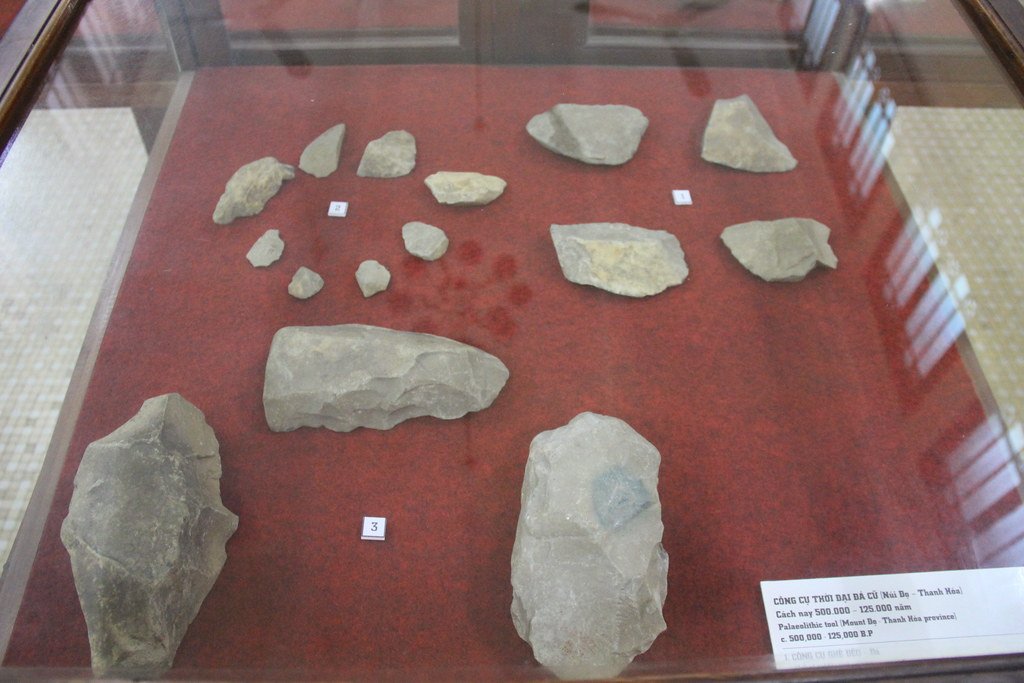
The stone tools found alongside the Red Deer Cave remains tell their own remarkable story of technological conservatism. While their contemporaries elsewhere were crafting sophisticated implements and developing new techniques, these people continued using simple, crude tools that would have looked familiar to humans from 100,000 years earlier. The tools were functional but basic—sharp flakes of stone used for cutting meat and scraping hides, with little evidence of the innovation that characterized other human populations of the time. It’s comparable to finding someone today who still exclusively uses a typewriter while everyone else has moved on to smartphones and laptops. This technological stagnation suggests either extreme isolation or a cultural choice to maintain traditional ways. The tools worked for their lifestyle, so perhaps there was simply no pressure to innovate. However, this raises intriguing questions about the relationship between technology, culture, and human evolution.
Diet of the Dragon Bones

Analysis of the Red Deer Cave sites reveals a diet that was both specialized and surprisingly sophisticated for such an apparently “primitive” population. These people were skilled hunters who primarily targeted red deer, but they also consumed a variety of other animals and gathered numerous plant species from their forest environment. Cut marks on animal bones show they were efficient butchers who knew how to extract maximum nutrition from their kills. The caves contained evidence of controlled fire use, suggesting they cooked their food regularly—a practice that would have been essential for processing tough plant materials and extracting nutrients from meat. Interestingly, some researchers have found evidence that they may have practiced a form of early food processing, possibly grinding certain plant materials. This dietary flexibility may have been key to their survival in an isolated mountain environment where food sources could be unpredictable and seasonal.
The Isolation Theory

Geographic isolation likely played a crucial role in preserving the Red Deer Cave people’s archaic features for thousands of years beyond what anyone thought possible. The mountainous terrain of southwestern China created natural barriers that could have effectively cut off small populations from the genetic flow that was modernizing humans elsewhere. Think of these mountains as biological islands where evolution took a different path, much like how unique species develop on remote Pacific islands. The caves themselves provided perfect refuges—stable temperatures, protection from predators, and access to water sources. This isolation may have been both a blessing and a curse: it protected them from outside pressures but also limited their population size and genetic diversity. Small isolated populations are particularly vulnerable to evolutionary drift and inbreeding, which might explain some of their unusual physical characteristics. The very remoteness that allowed them to survive as a distinct population may have ultimately contributed to their disappearance.
Climate Change and Survival

The end of the last ice age brought dramatic environmental changes that likely spelled doom for the Red Deer Cave people. As temperatures warmed and forests expanded, their carefully adapted lifestyle faced unprecedented challenges. The red deer they depended on may have changed their migration patterns or population sizes, disrupting a hunting strategy that had worked for millennia. Rising sea levels and changing precipitation patterns would have altered the entire ecosystem they called home. Meanwhile, expanding agricultural populations were beginning to encroach on their traditional territories, bringing competition for resources and potentially new diseases. It’s a story that resonates today as we watch how climate change affects isolated communities around the world. The Red Deer Cave people’s disappearance serves as a sobering reminder that even successful survival strategies can become liabilities when environmental conditions shift rapidly.
Hybrid Theories and Missing Links

Some scientists propose that the Red Deer Cave people might represent evidence of hybridization between modern humans and other archaic human species that once lived in Asia. This theory suggests they could be the descendants of interbreeding between Homo sapiens and unknown archaic populations, similar to how Europeans carry Neanderthal DNA and some Asians have Denisovan ancestry. The unusual combination of modern and archaic features in their skulls could be the physical manifestation of this genetic mixing. However, without DNA evidence, this remains pure speculation based on bone shapes and archaeological context. The hybrid theory gains some support from recent discoveries showing that human evolution was far more complex than previously thought, with multiple species coexisting and interbreeding across Africa, Europe, and Asia. If true, the Red Deer Cave people might represent the last remnants of an ancient genetic lineage that had been mixing with modern humans for tens of thousands of years.
Comparison with Other Archaic Populations

The Red Deer Cave people aren’t entirely unique in the archaeological record—other populations with archaic features have been found living surprisingly recently in various parts of the world. The Homo floresiensis “hobbits” of Indonesia survived until about 50,000 years ago, while the Denisovans persisted in Siberia until roughly 30,000 years ago. These discoveries have revolutionized our understanding of human evolution, showing that multiple human species coexisted for much longer than anyone imagined. What makes the Red Deer Cave people special is how recently they lived and how dramatically their features contrasted with their contemporaries. While other archaic populations disappeared as modern humans spread across the globe, somehow these people managed to persist in their mountain refuges until the dawn of recorded history. Their survival represents either an extraordinary case of evolutionary conservatism or evidence that human diversity was far greater in recent prehistory than we ever suspected.
The Role of Population Bottlenecks

Small population sizes likely played a crucial role in shaping the unique characteristics of the Red Deer Cave people. When populations become very small, genetic drift can cause random changes to become fixed in the gene pool, leading to unusual physical traits that might not survive in larger populations. It’s like having a small bag of mixed candies—if you only pull out a few pieces each time, you might end up with all red ones just by chance. The isolated caves could only support limited numbers of people, forcing them to live in small, closely related groups for thousands of years. This population bottleneck effect might explain why their skulls look so different from other humans of their time period. Inbreeding within small populations can also amplify certain traits, making them more pronounced over generations. The Red Deer Cave people’s unusual features might therefore represent the accumulated effects of thousands of years of genetic isolation and random evolutionary change.
Cultural Mysteries and Lost Traditions

Beyond their physical remains, the Red Deer Cave people left behind tantalizing hints of a lost culture that developed in complete isolation from the rest of humanity. Their burial practices, artistic expressions, and social structures remain largely mysterious due to the limited archaeological evidence. What we do know suggests they maintained complex behaviors despite their archaic appearance—they controlled fire, made tools, and successfully adapted to their environment for millennia. The absence of art objects or decorative items in their caves might indicate a purely functional culture, or it could simply mean that such materials didn’t preserve in the tropical conditions. Their language, mythology, and social customs vanished with them, taking countless generations of accumulated knowledge into oblivion. Imagine the stories they could have told, the unique perspective on human existence that developed over thousands of years of isolation. Their disappearance represents not just the loss of a human population, but the extinction of an entire way of understanding and interacting with the world.
Modern Human Migration Patterns

The persistence of the Red Deer Cave people forces us to reconsider how quickly modern humans spread across Asia and replaced archaic populations. Traditional models suggested that Homo sapiens rapidly swept across the continent around 60,000 years ago, quickly outcompeting or absorbing other human species. However, the survival of the Red Deer Cave people until 11,500 years ago shows that this replacement process was far more complex and prolonged than anyone imagined. Some regions remained refuges for archaic populations for tens of thousands of years after modern humans arrived elsewhere. This patchwork pattern of human evolution challenges the idea of a simple linear progression from archaic to modern forms. Instead, it suggests that human diversity was maintained in isolated pockets across the landscape, with different populations following separate evolutionary trajectories. The Red Deer Cave discovery has prompted archaeologists to search more carefully for other examples of late-surviving archaic humans who might have been overlooked or misidentified in previous excavations.
Technological Stagnation vs. Adaptation

The apparently primitive technology of the Red Deer Cave people raises fascinating questions about the relationship between innovation and survival. While other human populations were developing increasingly sophisticated tools and techniques, these people maintained essentially Stone Age technology for millennia. From our modern perspective, this seems like a disadvantage, but their long survival suggests their simple tools were perfectly adequate for their lifestyle and environment. Sometimes the newest technology isn’t necessarily the best—just like how a simple hammer can be more useful than a complex power tool for certain jobs. Their technological conservatism might actually represent a form of cultural wisdom, maintaining tried-and-true methods that had proven successful over countless generations. This stability could have been a strength rather than a weakness, allowing them to avoid the risks that come with rapid technological change. However, it might also have made them vulnerable when their environment changed or they encountered populations with more advanced technologies.
The Search for More Evidence

Since the initial discovery, researchers have intensified their search for additional Red Deer Cave people remains and archaeological sites throughout southern China and Southeast Asia. New excavations are ongoing in limestone cave systems that might have provided similar refuges for isolated human populations. Advanced dating techniques and improved DNA extraction methods offer hope that future discoveries might finally unlock the genetic secrets of these mysterious people. Scientists are also using sophisticated imaging technology to analyze the existing fossils in greater detail, looking for subtle clues that might have been missed in earlier studies. The search has expanded beyond caves to rock shelters, river terraces, and other locations where evidence of late-surviving archaic humans might be preserved. Each new excavation season brings the possibility of discoveries that could revolutionize our understanding of human evolution in Asia. The stakes are high—finding more Red Deer Cave people remains could prove that human diversity persisted much longer and was much greater than we currently believe.
Implications for Human Evolution

The Red Deer Cave people discovery has profound implications for how we understand human evolution and the nature of our species itself. If these people were indeed a separate lineage that survived until recently, it means human evolution was far more complex and diverse than our current models suggest. The traditional view of human evolution as a relatively straightforward progression from archaic to modern forms becomes much more complicated when faced with evidence of multiple human species coexisting until very recent times. This discovery forces us to question what it really means to be “modern” human and whether the boundaries between different human species are as clear as we once thought. The persistence of archaic features in a population living just 11,500 years ago suggests that human evolution might be more fluid and ongoing than we realize. It also raises the intriguing possibility that other isolated populations with unique characteristics might still be discovered, hiding in the archaeological record or even surviving in remote locations today.
The Final Chapter

The ultimate fate of the Red Deer Cave people remains one of archaeology’s most poignant mysteries. Did they gradually merge with expanding modern human populations, their unique features diluted over generations until they disappeared into the broader gene pool? Were they overwhelmed by climate change, disease, or competition from more technologically advanced neighbors? Or did they simply fade away as their small population could no longer sustain itself in an increasingly challenging world? The archaeological record falls silent after 11,500 years ago, leaving no trace of what happened to these remarkable survivors. Their story serves as a haunting reminder of the paths not taken in human evolution and the countless lineages that have vanished without a trace. The Red Deer Cave people lived through the end of the ice age, witnessed the birth of agriculture, and may have even encountered the first farming communities—yet their voices remain forever silent. Their disappearance marks not just the end of a population, but potentially the extinction of humanity’s last connection to our deep evolutionary past.
The Red Deer Cave people challenge everything we thought we knew about human evolution, survival, and the incredible diversity our species once possessed. Their story reminds us that evolution rarely follows a straight path, and that remarkable adaptations can emerge in the most unlikely places. As we continue to uncover their secrets, one question lingers: what other human mysteries are still waiting to be discovered in the world’s hidden corners?