Imagine wandering the ocean floor and stumbling upon a creature that not only hides from danger but also builds its own shelter, rearranges its possessions, and even carries tools for future use. The veined octopus, sometimes called the “coconut octopus,” is a master of underwater ingenuity and resourcefulness. Its actions challenge what we thought we knew about animal intelligence and blur the lines between instinct and creativity. Prepare to be amazed by a cephalopod that doesn’t just adapt to its environment—it transforms it in ways that seem almost human.
Meet the Veined Octopus: Nature’s Inventive Marine Engineer
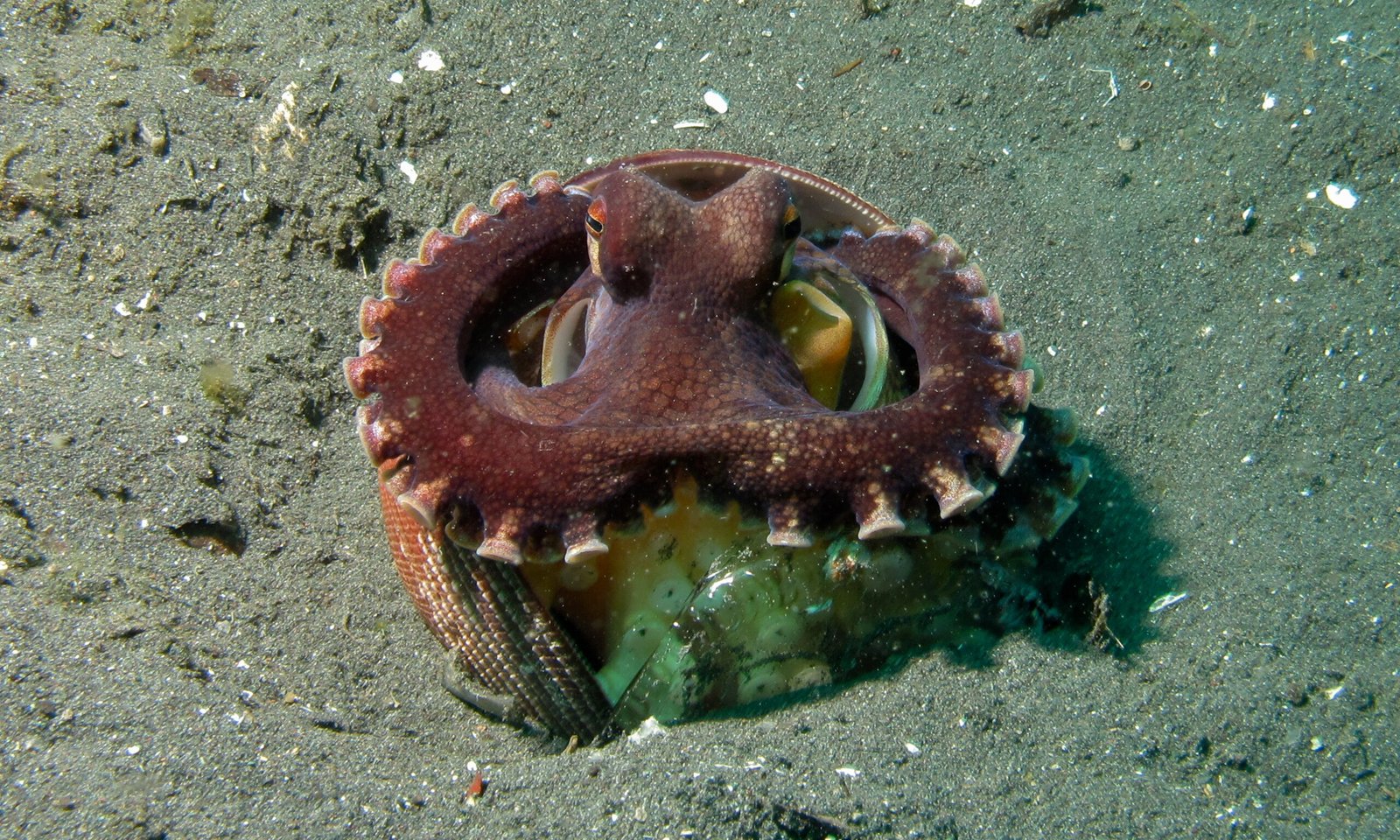
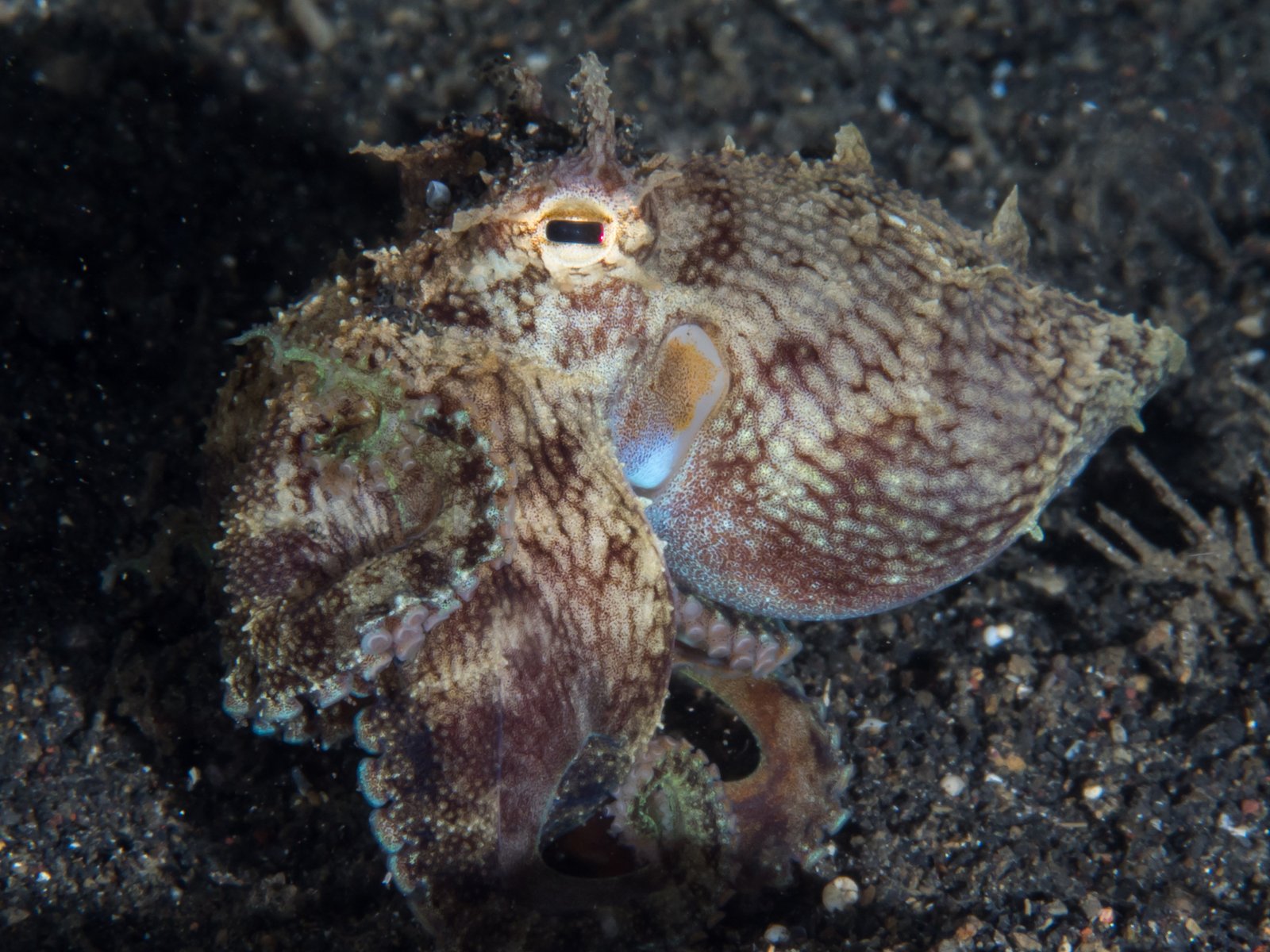
The veined octopus (Amphioctopus marginatus) is a small, unassuming creature with a mottled, brown-and-white skin adorned by striking veins. This octopus calls the shallow, sandy bottoms of the Indo-Pacific home, from northern Australia to Southeast Asia. Unlike its more famous relatives, the veined octopus isn’t content with squeezing into a rock crevice. Instead, it actively seeks out objects on the seafloor—coconut shells, seashells, and even discarded debris—to use as both shelter and tools. This resourcefulness has earned it a reputation as one of the most inventive animals in the ocean.
Tool Use: A Spark of Underwater Ingenuity
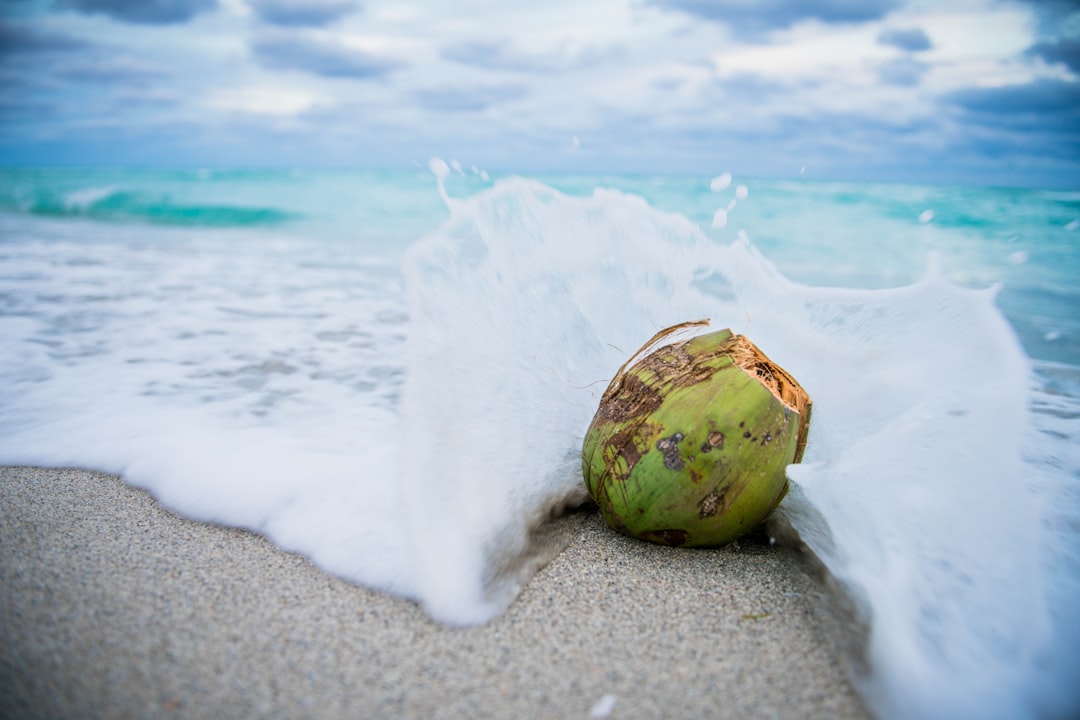
Tool use in the animal kingdom has always fascinated scientists, especially when it appears in unexpected places. The veined octopus is one of the few invertebrates to display this behavior. It collects coconut shells or clam halves, carefully stacking and transporting them across the sandy seabed. When threatened, it assembles its makeshift armor, constructing a protective “igloo” in seconds. This remarkable skill isn’t just random—observations show the octopus deliberately selects, carries, and assembles tools, hinting at a level of foresight once thought impossible for such creatures.
Rearranging Furniture: The Art of Home Improvement

The veined octopus doesn’t just use tools—it also arranges and rearranges its living space. Like a meticulous interior designer, it positions shells and debris to create hiding spots, fortresses, and even trapdoors. Sometimes, it spends hours moving pieces into the perfect configuration, demonstrating both patience and a curious sense of order. This rearranging isn’t just for comfort; it helps the octopus avoid predators, ambush prey, and even outsmart curious humans or nosy fish. The ocean becomes its living room, and everything on the seafloor is fair game for decoration.
Intelligence Beyond Instinct: What Drives the Veined Octopus?
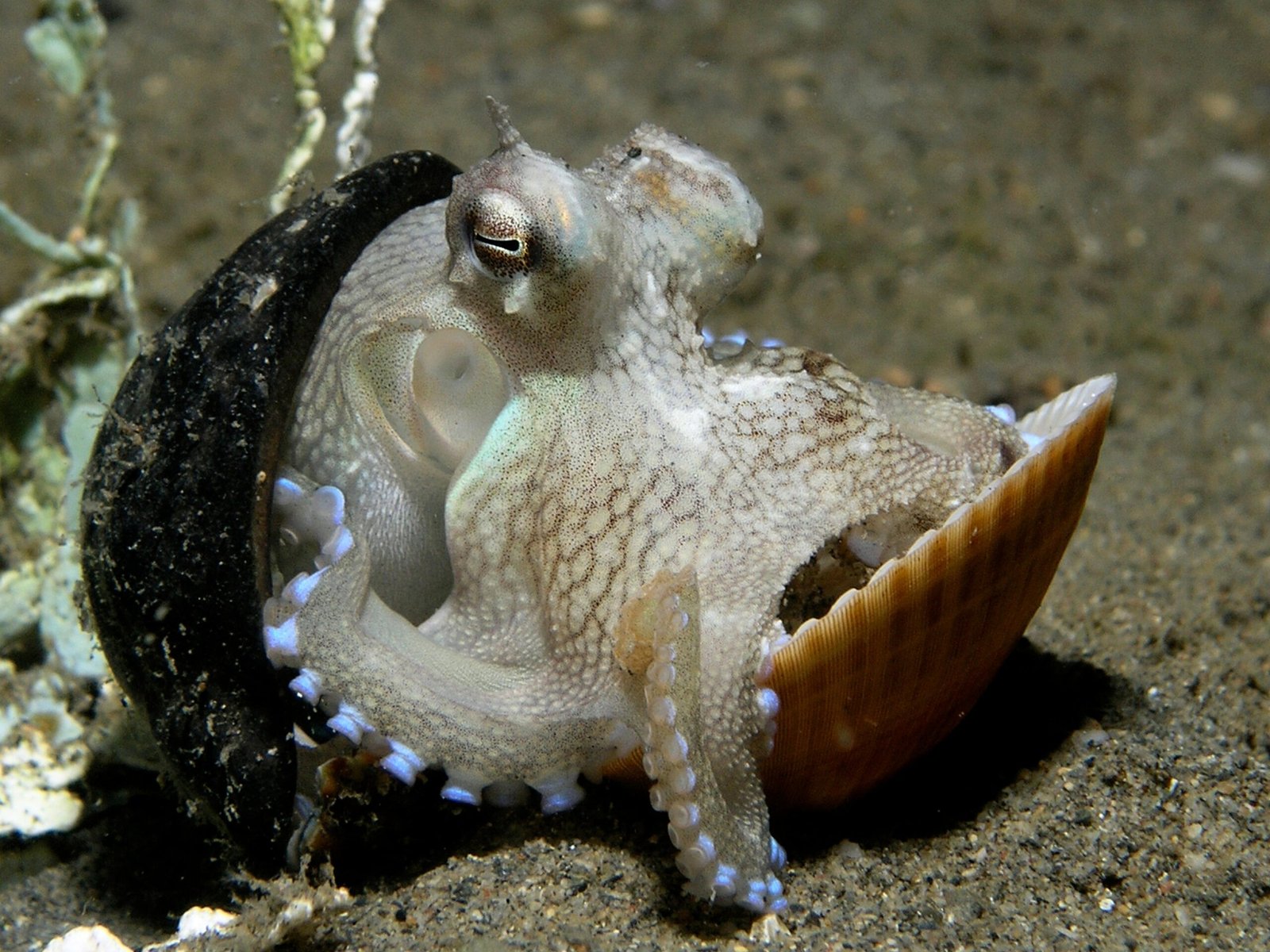
What sets the veined octopus apart is not just its behavior, but the clear evidence of problem-solving and learning. Scientists have observed these octopuses adapting their tactics based on past experiences—choosing better shells, refining their building techniques, and even learning from failed attempts. Such flexible thinking is rare among invertebrates, sparking debates about consciousness and intelligence in animals without a backbone. The veined octopus reminds us that brains come in many shapes and sizes, and that evolution can foster creativity in surprising forms.
Life on the Move: Carrying Tools for a Rainy Day

Perhaps the most astounding behavior is the octopus’s willingness to carry its tools over long distances. Picture a small octopus awkwardly “walking” on two arms, clutching coconut shells under its body as it scurries across open sand. This makes the veined octopus vulnerable to predators, but the risk is worth it for the safety these tools provide. Researchers believe this kind of forward-thinking—gathering resources for future needs—demonstrates a level of planning that was once thought exclusive to humans and certain mammals.
Camouflage and Deception: Masters of Disguise
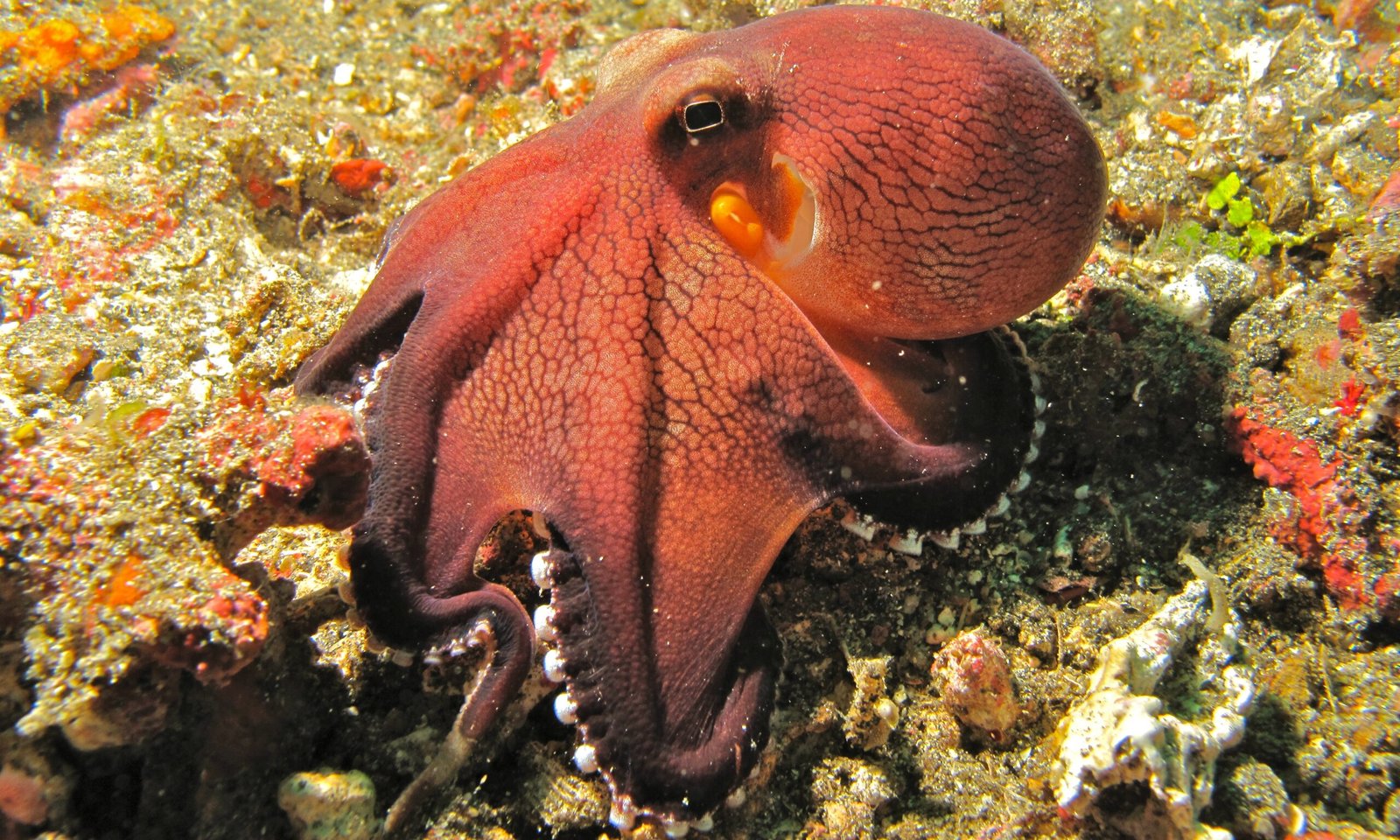
Camouflage is standard for most octopuses, but the veined octopus takes deception to another level. It not only changes color and texture to blend in, but also uses its tools as part of its disguise. By pulling shells or debris over its body, it can transform into a nondescript pile of ocean junk. This trick confuses both predators and prey, allowing the octopus to disappear in plain sight or spring a surprise attack. In the world of underwater hide-and-seek, the veined octopus is a grand champion.
Social Life: Lone Rangers with Occasional Neighbors

Despite their intelligence, veined octopuses are mostly solitary. Each one tends to its own little patch of the ocean, fiercely guarding its collection of shells and tools. However, in areas with abundant resources, these octopuses can be seen living surprisingly close to each other, sometimes forming loose communities. While not exactly friendly, these neighborhoods suggest that the need for good “real estate” sometimes outweighs their territorial instincts.
Feeding Habits: The Art of the Ambush
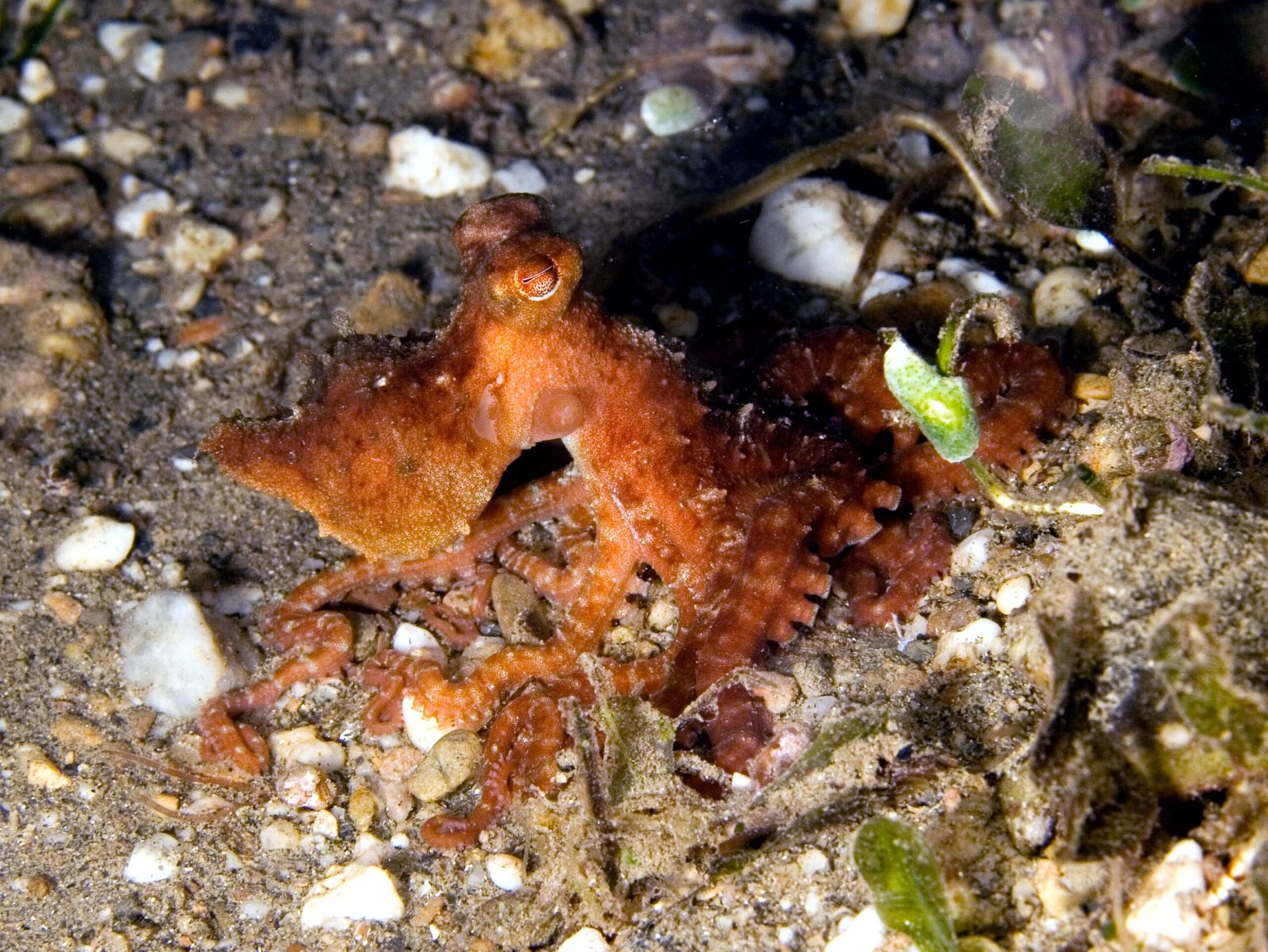
Octopuses are predatory by nature, and the veined octopus is no exception. It uses its carefully arranged furniture not just for protection, but also as a hunting blind. Concealed beneath shells or coconut halves, it waits patiently for unsuspecting crustaceans, fish, or mollusks to wander by. With lightning speed, it pounces, enveloping its prey in a cloud of arms and pulling it beneath its shelter. This ambush strategy is both effective and energy efficient, showing once again the calculated thinking behind the octopus’s actions.
Reproduction: Passing on the Legacy of Ingenuity
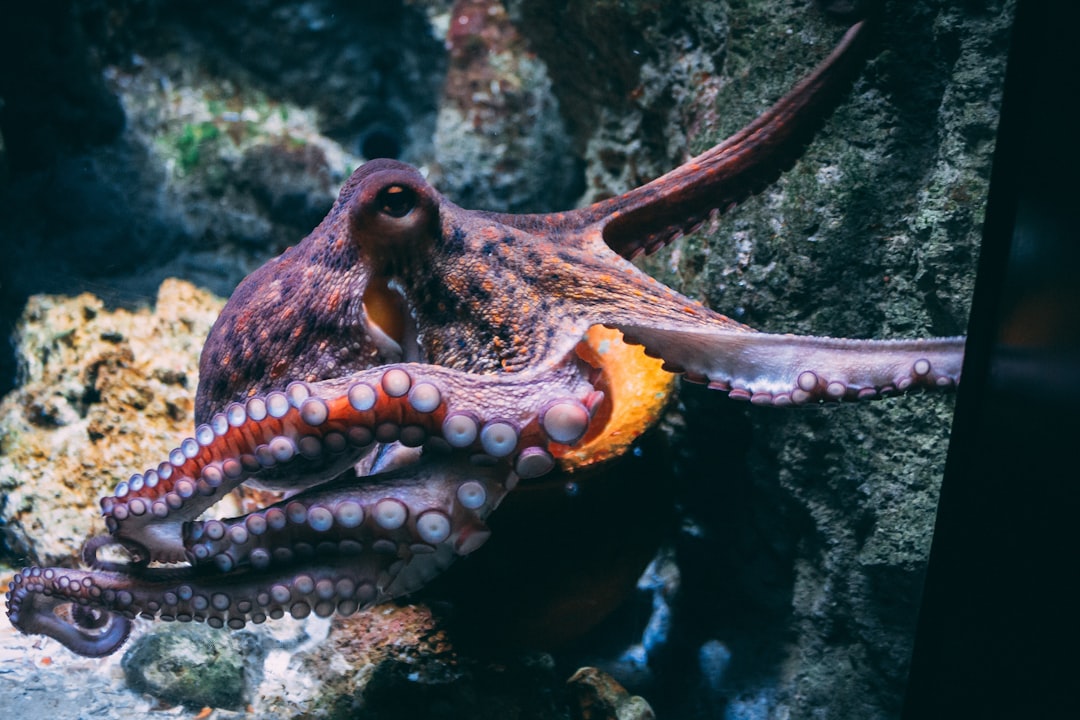
Mating for the veined octopus is a cautious affair, as both partners are wary of each other’s intentions. After a delicate courtship, the female lays her eggs inside her shelter, often reinforcing it with extra shells and debris for protection. She guards the eggs with unwavering dedication, sometimes for weeks, until they hatch. The young octopuses emerge ready to face the world, inheriting not only their mother’s genetic code but also the instinct for creativity and adaptation.
Challenges and Threats: Surviving in a Changing Ocean
Life is never easy for the veined octopus. Predators like moray eels, sharks, and larger fish constantly threaten its existence. On top of that, human impacts—such as pollution and habitat disturbance—are shrinking its available homes and resources. Discarded trash can sometimes become makeshift shelters, but it can also pose dangers. The resilience and resourcefulness of the veined octopus are being put to the test as the ocean environment continues to change, reminding us of the delicate balance between survival and adaptation.
The Broader Significance: Rethinking Animal Intelligence
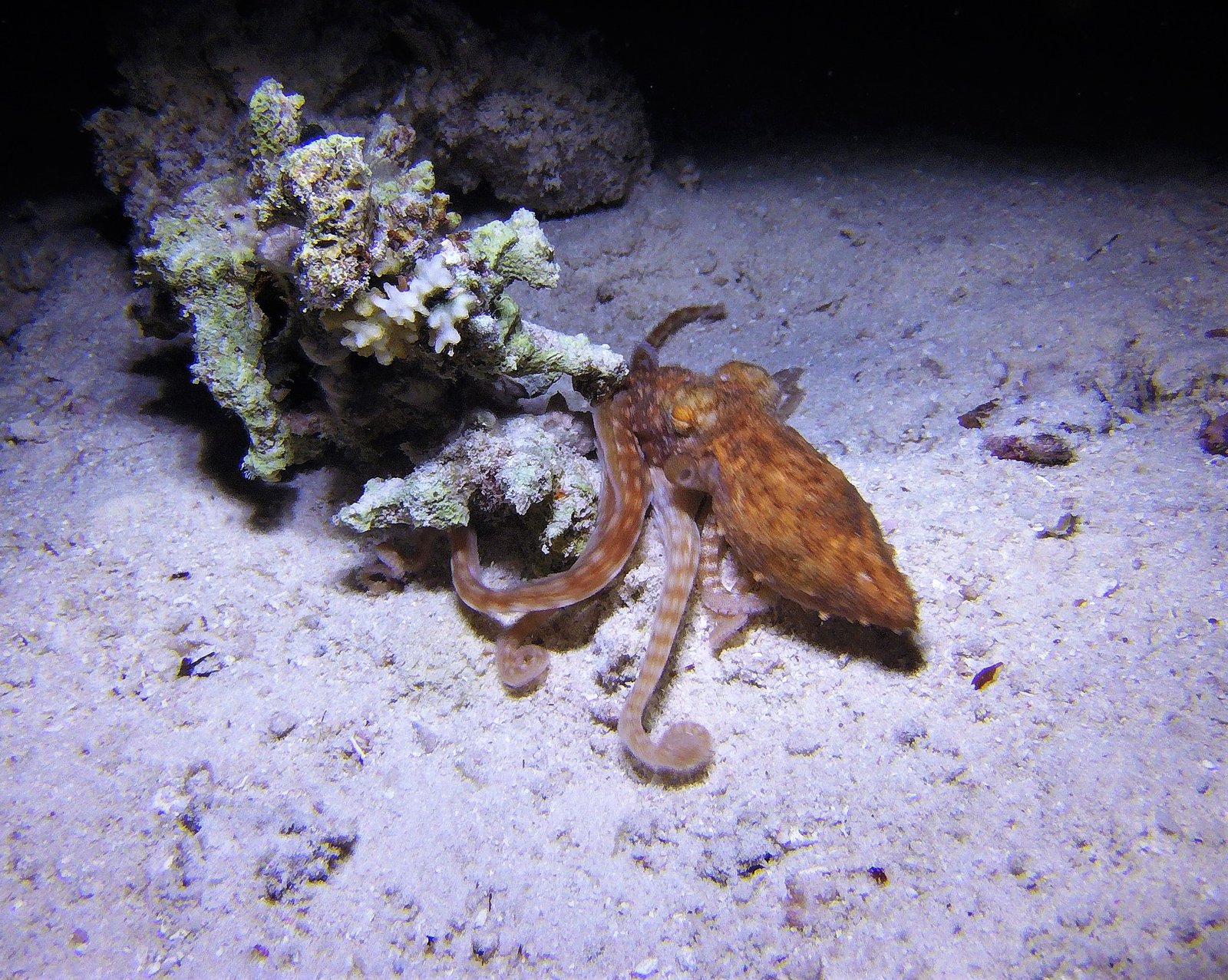
The story of the veined octopus forces us to question what it really means to be intelligent. Its tool use, planning, and creative problem-solving hint at a mind that is far more complex than its simple appearance suggests. This challenges our assumptions about the boundaries between “smart” and “instinctual” behavior in the animal kingdom. Watching a veined octopus at work—methodically building, hiding, and hunting—is a humbling reminder that intelligence wears many faces, and sometimes, they have eight arms.
Inspiration for Human Innovation: Learning from the Octopus

The veined octopus’s inventive behaviors have inspired not only scientists but also engineers and designers. Its ability to manipulate objects and adapt to changing circumstances offers clues for robotics and artificial intelligence. For example, soft robots that mimic the octopus’s flexibility and dexterity are now being developed for underwater exploration, search and rescue, and medical applications. Nature, it seems, is still the ultimate inventor, and the veined octopus is one of its most creative masterpieces.