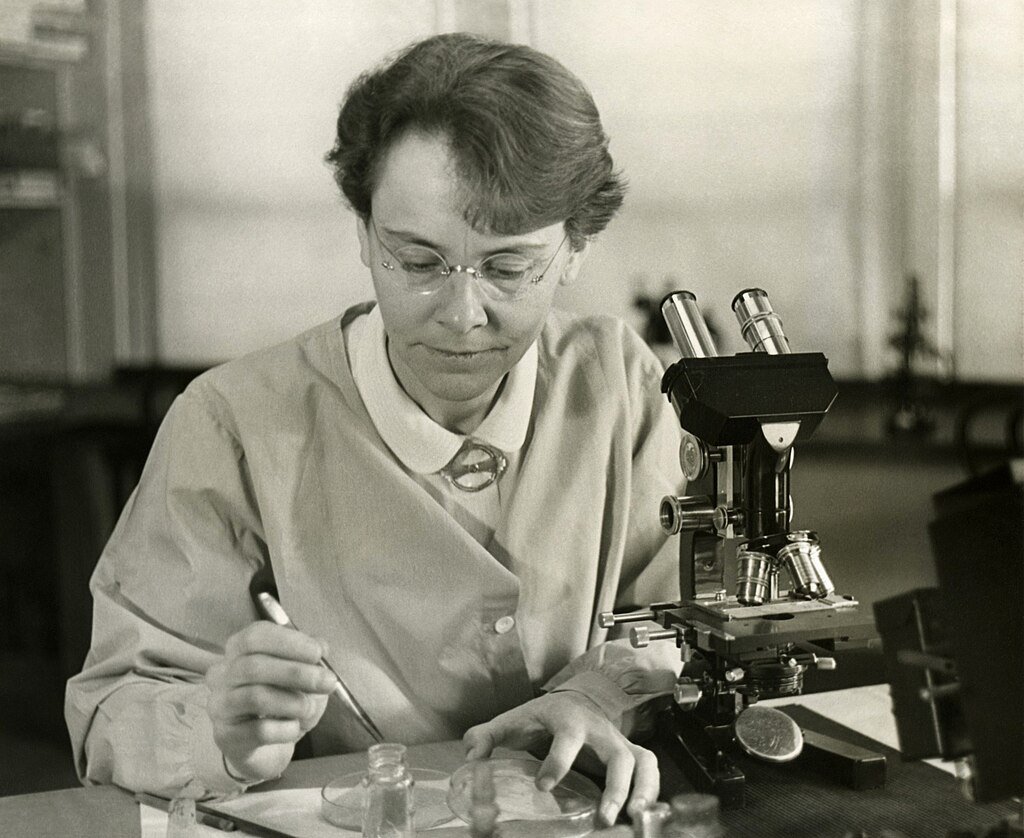

Barbara McClintock, born on June 16, 1902, in Hartford, Connecticut, developed an early interest in science, which she pursued academically at Cornell University. She earned her Ph.D. in botany from Cornell in 1927, marking the beginning of a storied career in genetics. McClintock’s early studies focused on cytogenetics, setting the stage for her groundbreaking work in genetic transposition.
Introduction to Genetic Transposition

Genetic transposition refers to the process by which DNA segments, known as transposable elements or “jumping genes,” move from one location to another within the genome. This concept was revolutionary at the time of its discovery, challenging the traditional view that genetic material is static and immovable. McClintock’s studies on maize (corn) were crucial in uncovering the existence and behavior of these transposable elements.
Discovery of Transposable Elements

McClintock’s pivotal research began in the 1940s with her work on maize, a model organism due to its large chromosomes and diverse phenotypic traits. Her meticulous experiments involved observing chromosome breakage and rejoining, eventually leading her to discover that certain genetic elements could change positions within the genome. These mobile elements, known as transposons, were determined to be responsible for genetic variation and the activation or repression of genes.
Impact on Understanding Genetic Regulation

The discovery of transposable elements had profound implications for understanding genetic regulation and stability. Transposons played crucial roles in activation and inactivation of genes, influencing growth and development in organisms. McClintock’s work highlighted the genome’s dynamic nature and its ability to adapt and reorganize in response to environmental stimuli.
Initial Reception and Criticism

Despite the significance of her findings, McClintock’s work was initially met with skepticism by the scientific community. Geneticists at the time were focused on understanding genes as stable units of heredity, and the concept of genes as mobile, flexible elements was difficult for many to accept. It wasn’t until decades later, in the 1970s, that her discoveries were fully recognized and appreciated following additional research on transposable elements in bacteria and other organisms.
Recognition and Legacy

Barbara McClintock’s groundbreaking contributions were eventually acknowledged with numerous accolades, most notably the Nobel Prize in Physiology or Medicine in 1983, making her the first woman to receive the award unshared. Her pioneering research on genetic transposition transformed the field of genetics, revealing that the genome is not a fixed entity but a dynamic system capable of adapting and evolving.
Continuing Influence in Modern Genetics

Today, transposable elements are understood to be widespread across all domains of life, playing critical roles in genetic diversity, evolution, and the regulation of gene expression. Research into transposons has expanded significantly, offering insights into genetic diseases, development, and genome evolution. McClintock’s legacy lives on, inspiring scientists to explore the complexity and adaptability of genetic systems.
Conclusion

Barbara McClintock’s work on genetic transposition revolutionized the field of genetics, offering a new understanding of genetic regulation and evolution. Her perseverance in the face of skepticism and her dedication to her research paved the way for future discoveries that continue to impact the study of genetics and inspire scientists worldwide. McClintock’s legacy serves as a testament to the importance of embracing unconventional ideas in the pursuit of scientific knowledge.