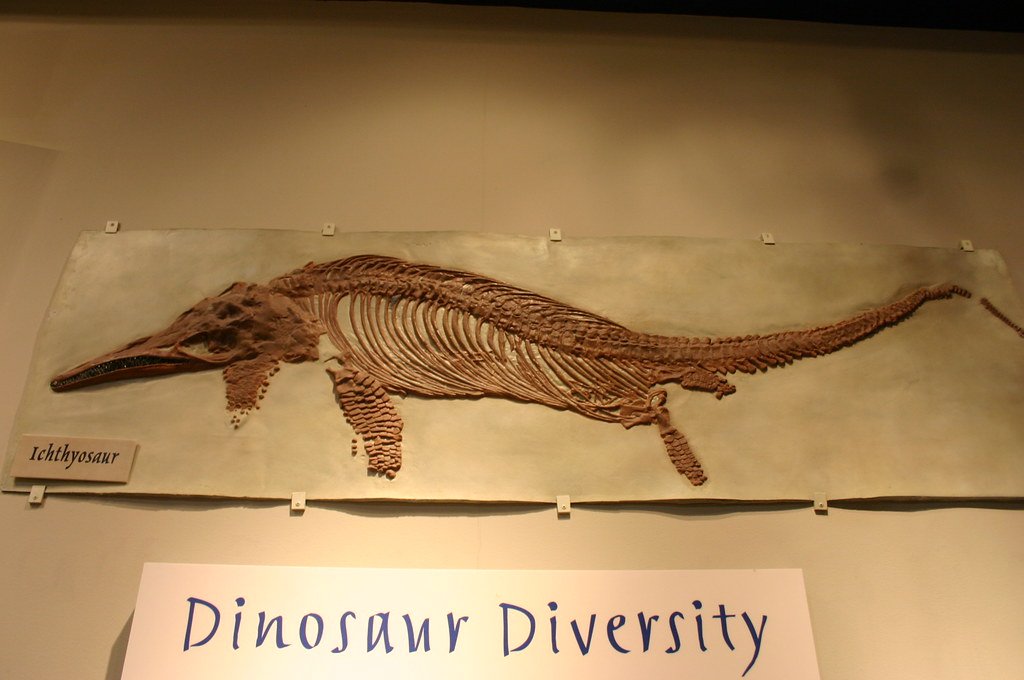

The Mesozoic Era, spanning from approximately 252 to 66 million years ago, is often referred to as the “Age of Reptiles.” During this time, while dinosaurs roamed the land, the oceans were ruled by a fascinating group of marine reptiles known as ichthyosaurs. These creatures, whose name translates to “fish lizards,” were an essential part of the marine ecosystem and exhibited remarkable adaptations for life in water. Let’s dive into the rich history of these marine reptiles and explore their fossil discoveries.
Anatomy and Adaptations
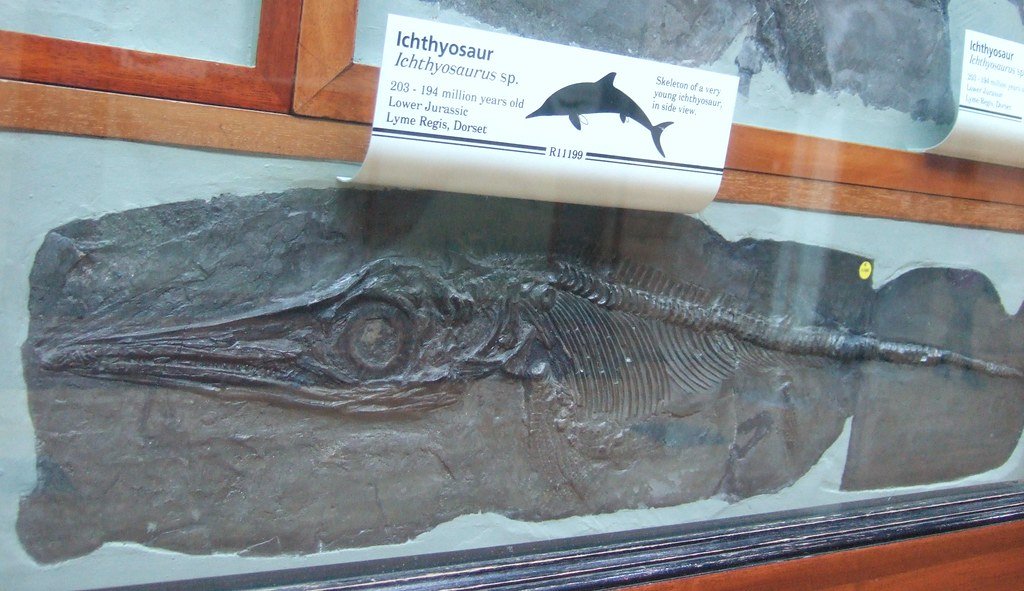
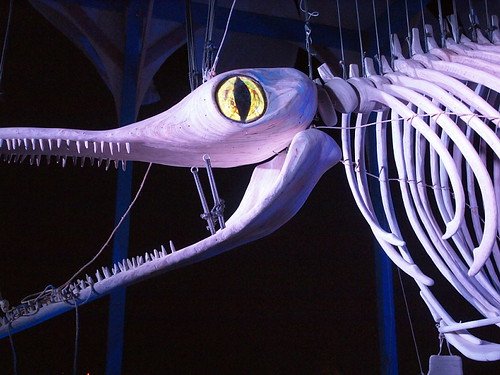
Ichthyosaurs were streamlined, fast-swimming predators with a body shape reminiscent of modern dolphins. Their anatomy was highly specialized for aquatic life. They had long, pointed snouts filled with sharp teeth, ideal for catching fish and squid. Ichthyosaurs possessed powerful, paddle-like limbs that allowed them to navigate the ocean depths efficiently. A key feature was their large eyes, which suggest excellent vision, possibly adapted for hunting in dimly lit waters.
Evolution and Diversity
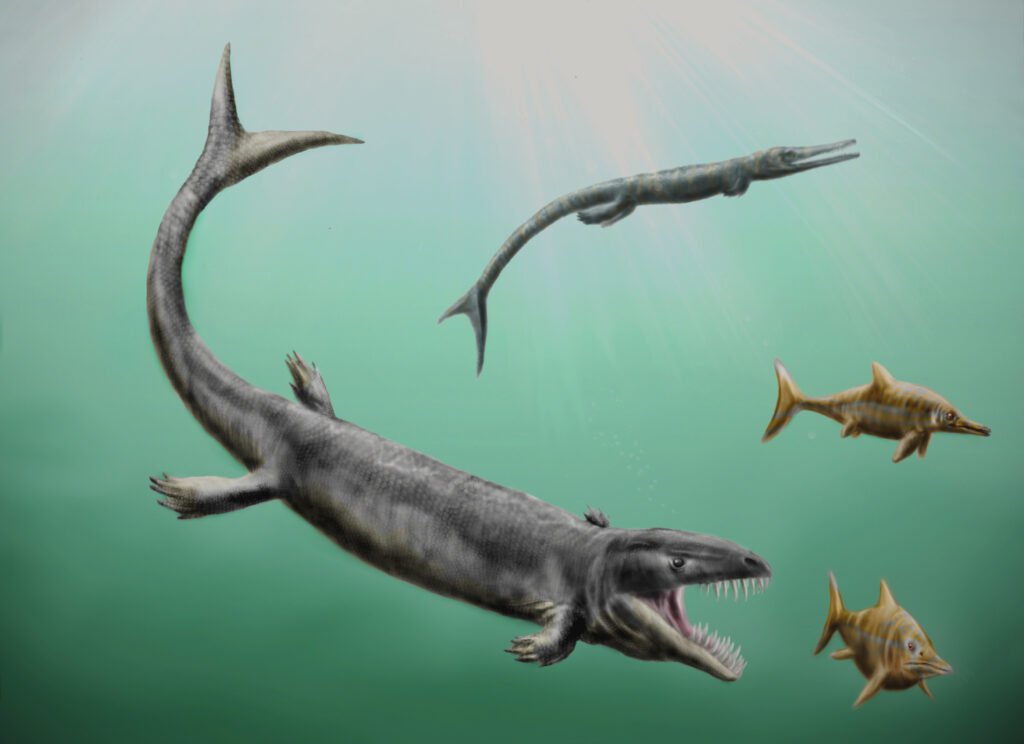
The evolution of ichthyosaurs is a captivating story of adaptation and survival. They first appeared in the early Triassic period, around 250 million years ago, shortly after the Permian-Triassic extinction event. Over time, ichthyosaurs diversified into various forms, adapting to different ecological niches. By the late Triassic and early Jurassic, they reached their peak in terms of diversity and morphological variation. However, their numbers started to decline by the Late Jurassic, disappearing completely by the end of the Cretaceous period.
Fossil Discoveries
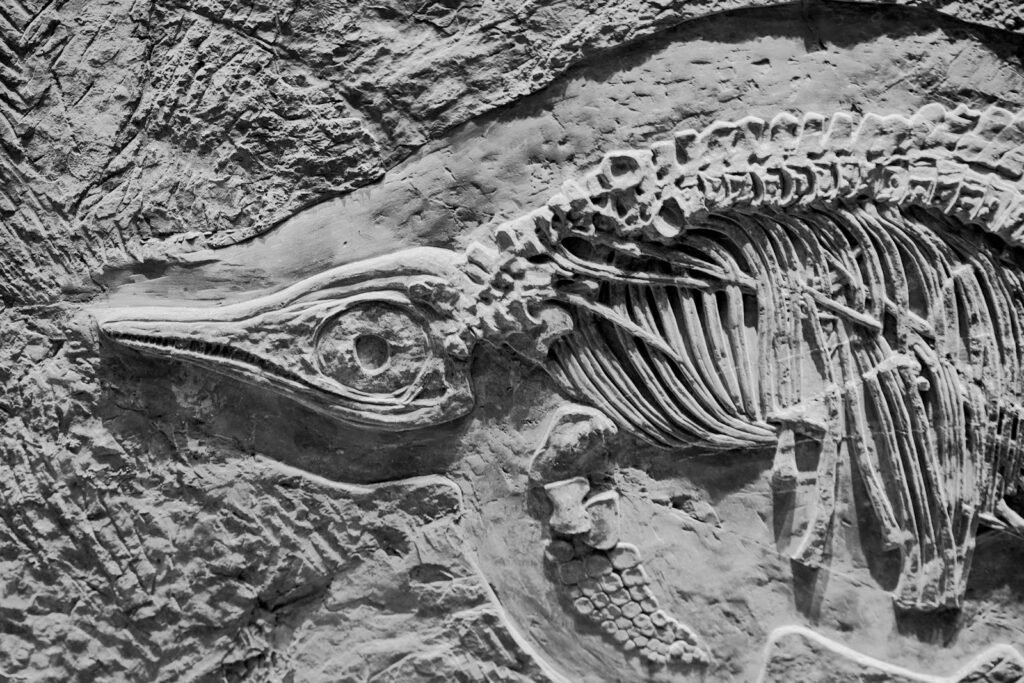
Ichthyosaur fossils have been discovered on every continent, offering crucial insights into their evolution and biology. The first ichthyosaur fossil was unearthed in the early 19th century by Mary Anning, a pioneering paleontologist, along the Jurassic Coast of England. Her work brought ichthyosaurs to the attention of the scientific community and helped establish the growing field of paleontology.
Since then, countless ichthyosaur fossils have been found, ranging from complete skeletons to isolated bones and teeth. Notable discoveries include the giant ichthyosaur Shonisaurus, with some individuals measuring over 20 meters long, found in Nevada’s Berlin-Ichthyosaur State Park, and the well-preserved Stenopterygius specimens from Germany, which have provided valuable information about ichthyosaur embryology and reproduction.
Paleobiology and Lifestyle
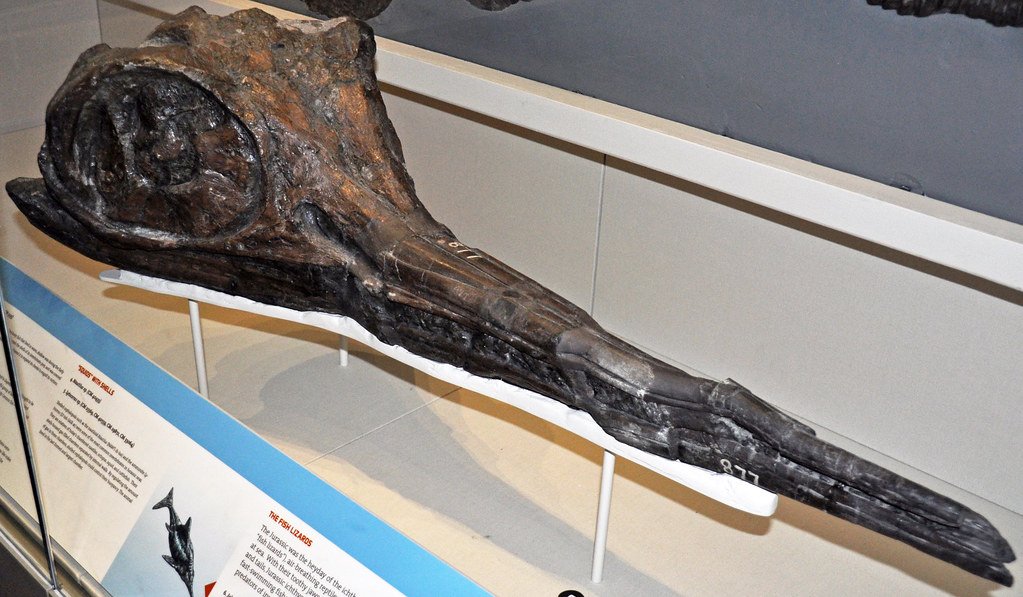
Understanding the paleobiology and lifestyle of ichthyosaurs has been a key focus of paleontological research. Ichthyosaurs were viviparous, giving birth to live young. Fossil evidence shows embryos preserved inside the body of the mother, suggesting that they had developed a sophisticated method of reproduction similar to modern marine mammals. Isotope analysis of their teeth has provided clues about their diet and migratory patterns, indicating that ichthyosaurs occupied various ecological niches, from coastal waters to the open ocean.
Extinction and Legacy
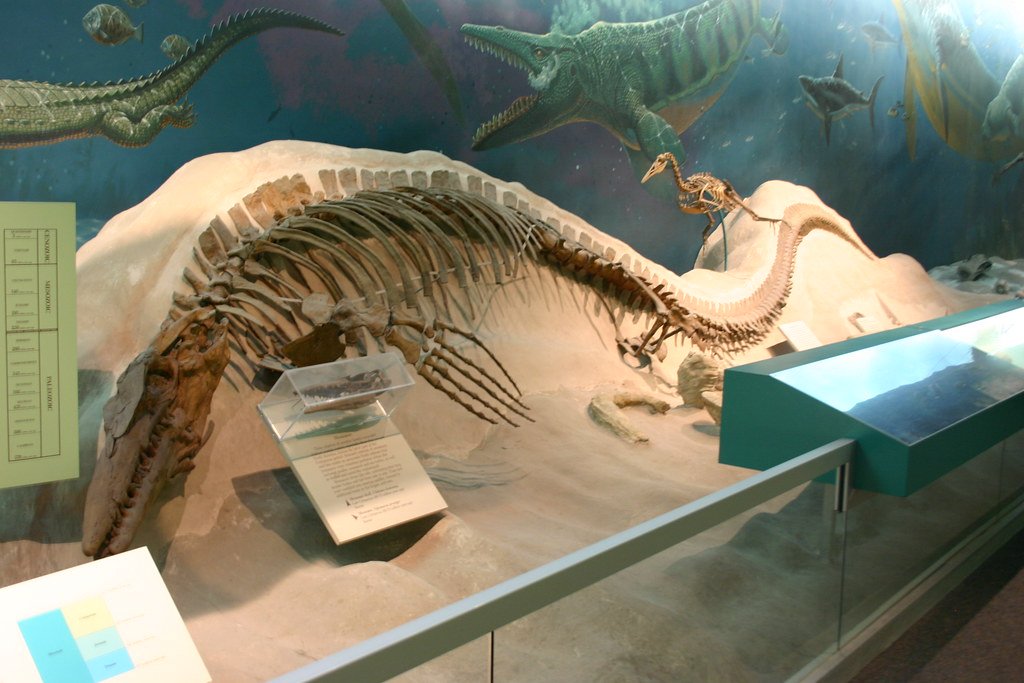
The extinction of ichthyosaurs around 90 million years ago remains a topic of debate among scientists. It is speculated that factors such as changing sea levels, competition with other marine predators like plesiosaurs and mosasaurs, and global environmental changes contributed to their decline. Despite their eventual extinction, ichthyosaurs have left a profound legacy, contributing to our understanding of marine reptile evolution and the dynamics of ancient ecosystems.
Conclusion
Ichthyosaurs were remarkable marine reptiles that thrived during the Mesozoic Era, leaving behind a rich fossil record. Through these fossils, paleontologists have been able to piece together their anatomy, evolution, and lifestyle, offering us a glimpse into a world dominated by reptiles both in the seas and on land. As research continues, new discoveries promise to further illuminate the fascinating story of ichthyosaurs, ensuring their place in the annals of natural history.