If you’ve ever seen a horseshoe crab washed up on a beach, you probably didn’t realize you were looking at one of Earth’s greatest time travelers. They look a bit like armored helmets with tails, not exactly glamorous, but they quietly carry a story that stretches back hundreds of millions of years. While dinosaurs came and went, these strange creatures just kept going, like that one old truck that never seems to die no matter how many winters it survives.
What makes horseshoe crabs so special is not just that they are ancient, but that they are still here, doing their thing, while entire continents, climates, and ecosystems have flipped and reshaped around them. The more I learned about them, the more they started to feel like living cheat codes for survival on a changing planet. Let’s dig into what actually makes them older than dinosaurs and why they’re far more impressive than their clunky look suggests.
They Originated Hundreds of Millions of Years Before Dinosaurs
Here’s the jaw-dropper right up front: ancestors of modern horseshoe crabs were already cruising ancient seas long before the first dinosaurs ever showed up. Fossils of horseshoe crab–like creatures date back to around the Late Ordovician to early Silurian periods, more than four hundred million years ago, whereas dinosaurs did not appear until the Triassic period, roughly about two hundred and thirty million years ago. That means horseshoe crabs were already ancient veterans by the time the first dinosaur took a step.
To put that in perspective, if Earth’s history were compressed into a single 24-hour day, horseshoe crabs would appear early in the afternoon, and dinosaurs would not show up until late in the evening. Then dinosaurs vanish before midnight, and horseshoe crabs just keep going, still crawling around the shoreline lights-out. When you see one today, you are looking at a blood-relative of animals that survived mass extinctions that wiped out nearly everything else, including the dinosaurs everyone talks about more.
Their Body Plan Has Barely Changed Over Deep Time
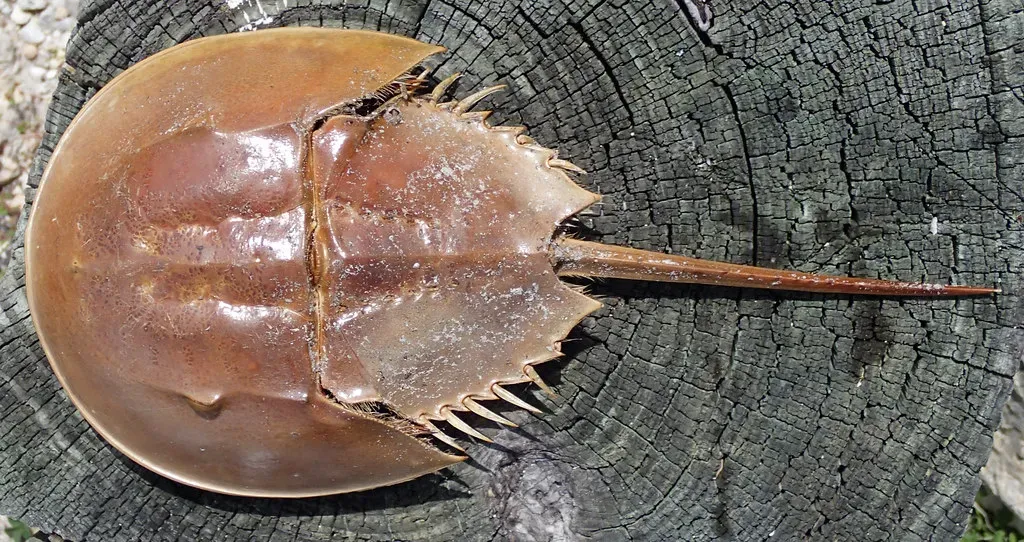
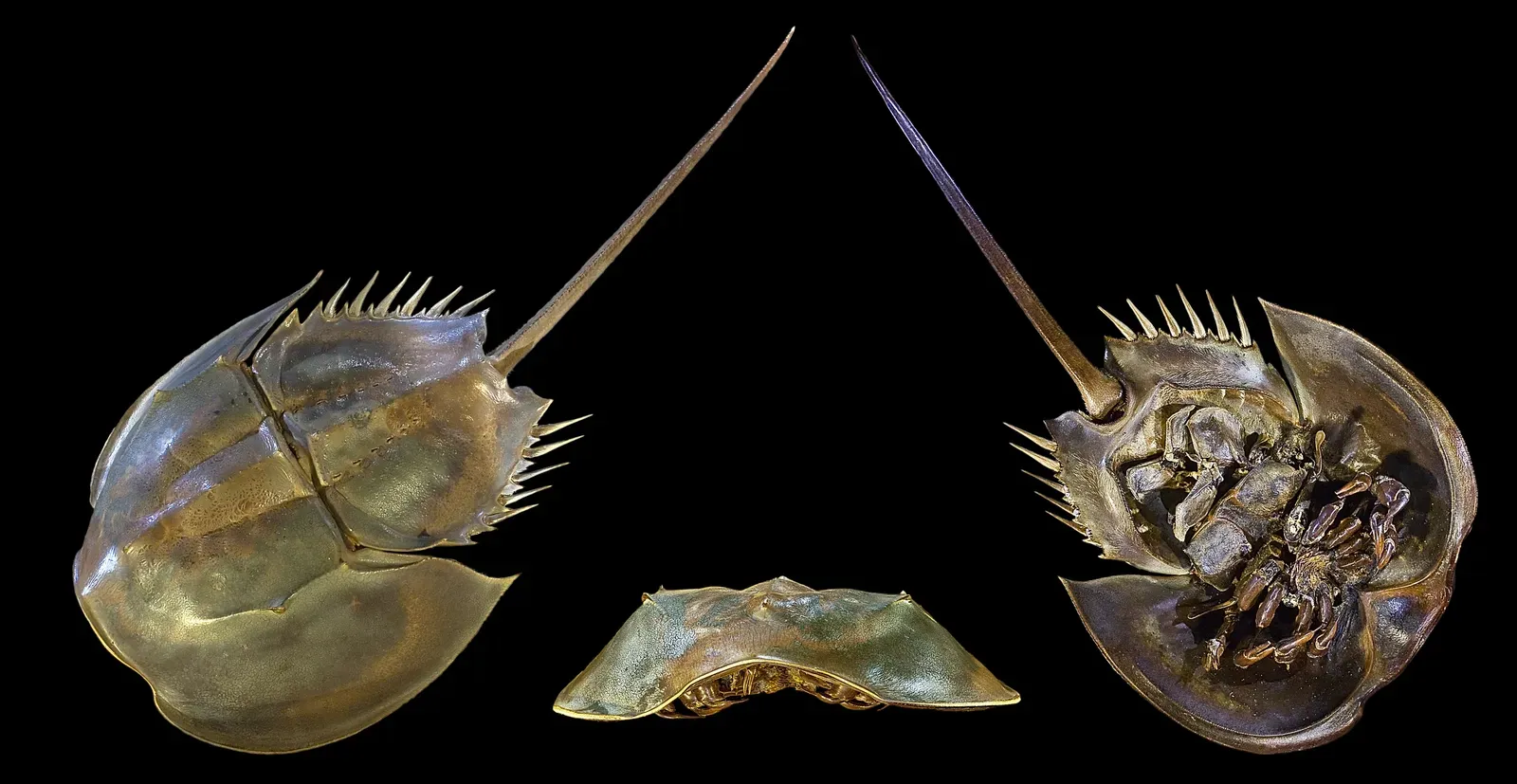
One of the coolest and honestly slightly eerie things about horseshoe crabs is how similar modern individuals look compared to fossils that are hundreds of millions of years old. Their basic blueprint – a domed, horseshoe-shaped shell, a long pointed tail spine called a telson, and multiple pairs of legs tucked underneath – has stayed remarkably stable. Paleontologists often describe them as living fossils, not because they’re primitive, but because their design has been fine-tuned for so long that evolution has had little reason to overhaul it.
If you put a fossilized horseshoe crab from a few hundred million years ago next to a modern one, you’d need a trained eye to spot the differences. Minor tweaks have happened, of course, but the core setup is the same: hard top armor, walking legs, gill flaps, and that unmistakable tail. That kind of stability over such a huge swath of time suggests their body plan is extremely effective for their lifestyle, kind of like how the basic design of a hammer hasn’t really needed a radical upgrade in centuries.
They Survived Multiple Mass Extinctions That Erased Other Lineages
Horseshoe crabs are not just older than dinosaurs; they are survivors of some of the worst extinction events in Earth’s history. They made it through the end-Permian mass extinction, often called the Great Dying, when the vast majority of marine species disappeared. They also persisted through the end-Cretaceous extinction that spelled the end for non-avian dinosaurs. Each of those events reshuffled life on Earth, but horseshoe crabs managed to cling on, adapt, and carry their lineage forward.
When you think about that, it forces you to respect them a little more than their odd, helmet-like shells might suggest. Surviving one global catastrophe is hard enough; surviving several is like winning the worst lottery multiple times. Their endurance hints at a mix of factors: flexible diet, tolerance for different environmental conditions, and a lifestyle that stays close to the seafloor, away from some of the more dramatic upheavals near the surface. They do not look flashy, but in the long game of survival, they are absolute pros.
They Are More Closely Related to Spiders Than to Crabs
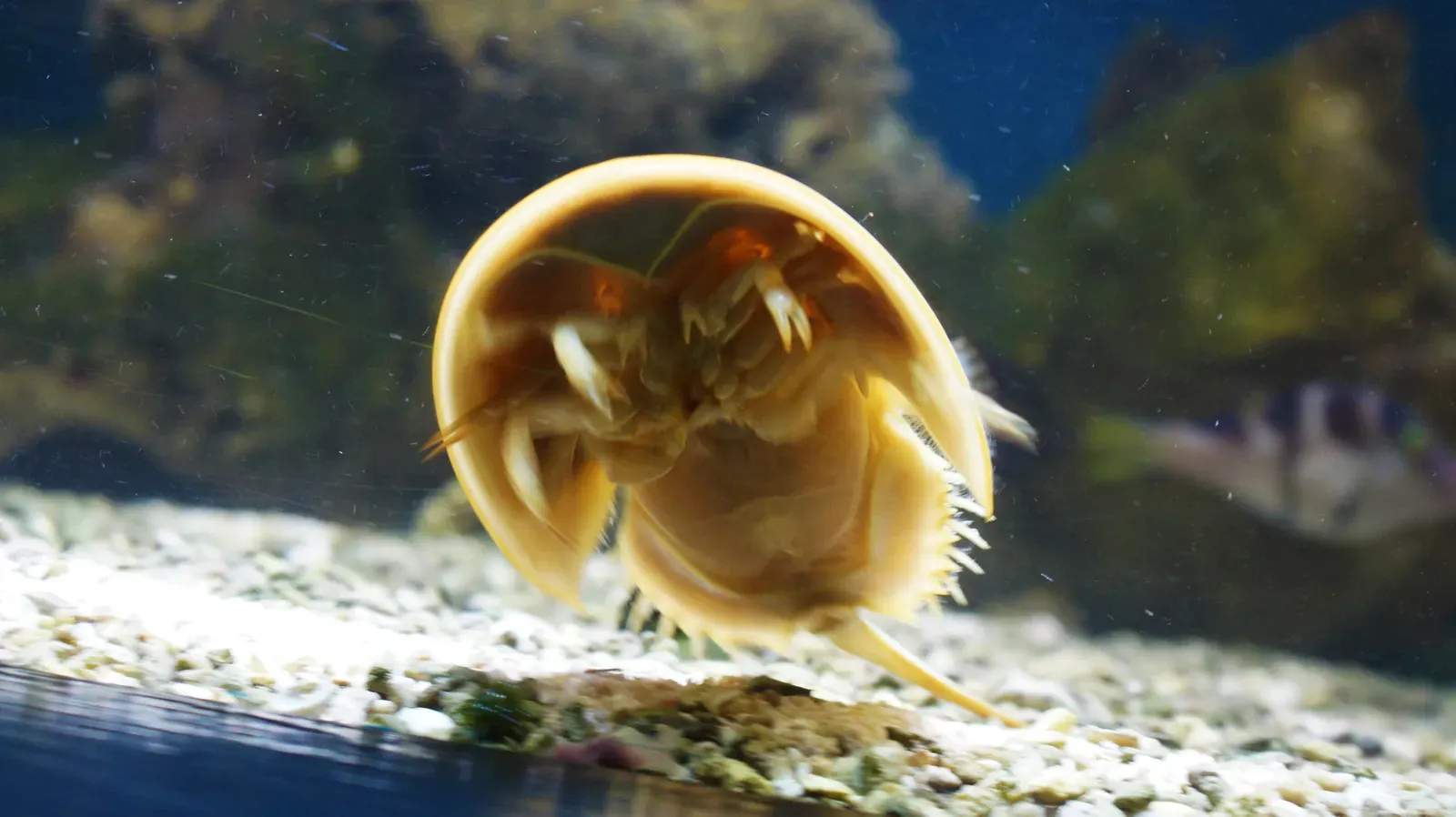
Despite the name, horseshoe crabs are not true crabs at all. They belong to a group called chelicerates, which makes them more closely related to spiders, scorpions, and ticks than to the crabs you eat at a seafood restaurant. Their mouthparts and appendages share key features with arachnids, even though they live in the ocean and superficially resemble armored crustaceans. It’s a classic case of appearance being seriously misleading.
This odd family tree connection is one more reminder that horseshoe crabs are part of a deeply ancient branch of the animal kingdom. While dinosaurs belong to the vertebrate side of the tree, horseshoe crabs sit on a much older arthropod branch that split off long before any dinosaur existed. I find it kind of delightful that when you see one, you’re basically looking at a weird, ocean-dwelling cousin of spiders that’s been following its own evolutionary storyline since long before any T. rex roared.
Their Blue Blood Has a Unique Immune Superpower
If you have ever received a vaccine or an intravenous drug, there is a good chance you indirectly benefited from the strange biology of horseshoe crab blood. Their blood is copper-based rather than iron-based, which gives it a pale blue color instead of red. More importantly, it contains special cells that react strongly to bacterial toxins, clumping together to seal off contamination. This reaction has been harnessed in a test that helps ensure medical products are free from dangerous bacterial endotoxins.
This means that an animal older than dinosaurs plays a direct role in some of the most advanced modern medical safety systems. That contrast blows my mind: ancient, armored beach-creepers quietly helping to keep vaccine batches safe in clean rooms and high-tech labs. There’s a real ethical debate today about how we collect their blood and how to protect their populations, which is fair. But it also underlines how much we still depend on the wisdom hidden in very old life forms that figured things out long before we did.
Their Compound and Simple Eyes Are Built for Ancient Seas
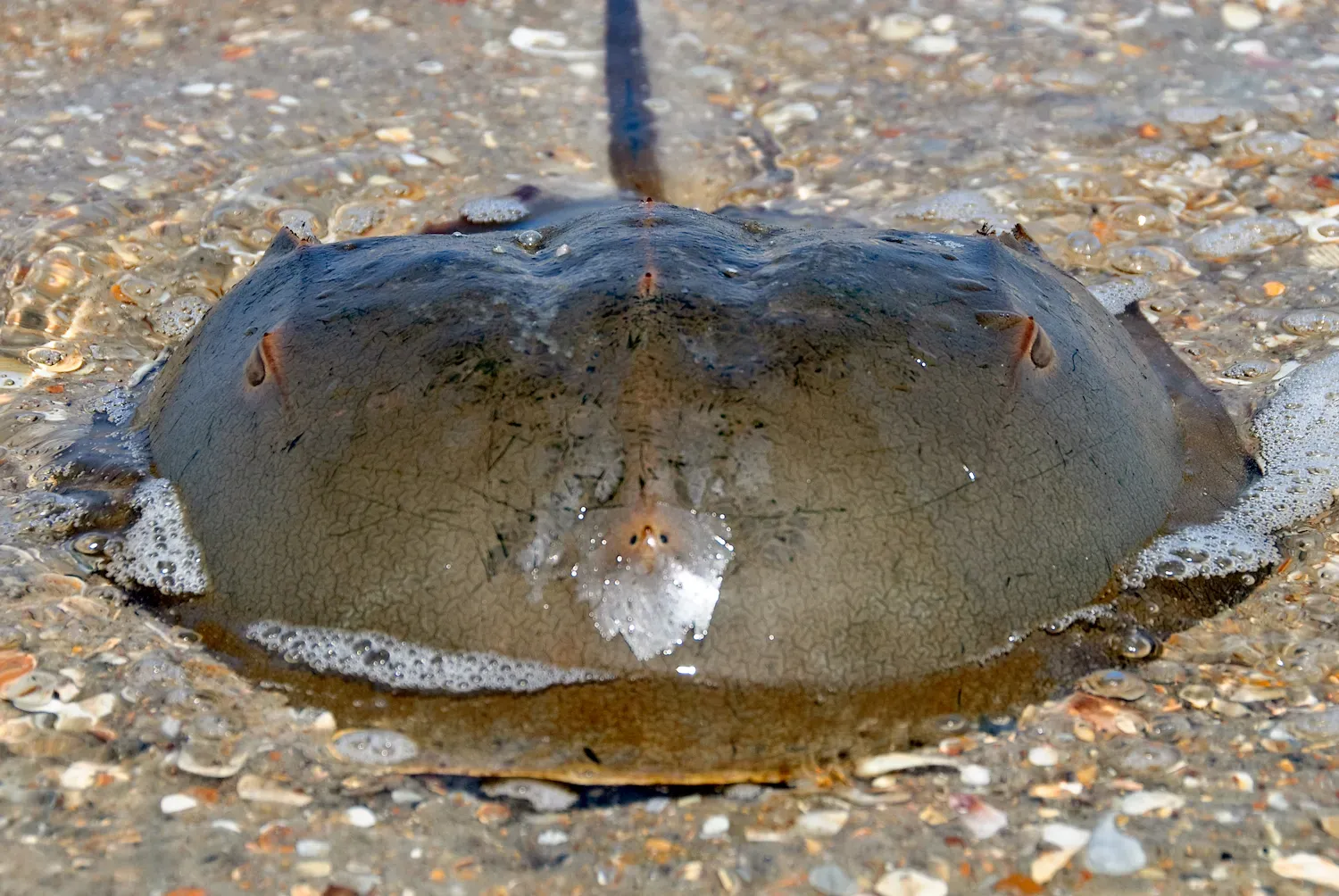
Horseshoe crabs have a surprisingly sophisticated and slightly bizarre visual setup. They have a pair of large compound eyes on the sides of the shell that are somewhat like those of insects, as well as several smaller simple eyes scattered around, including on top of the shell and near the tail. Some of these eyes are sensitive even to low levels of light, helping them navigate and find mates in dim, murky conditions that resemble the shallow coastal waters their ancestors used long before dinosaurs arrived.
What fascinates me is that their visual system has been a model for researchers studying how eyes work at a basic level. Because their eyes are relatively large and accessible, scientists have used them to explore how nerve cells in vision respond to light. So you have this really old creature, whose eye design dates back to long-vanished seascapes, ending up as a key player in modern neuroscience labs. It is like borrowing the blueprints of an ancient cathedral to design better modern acoustics.
Their Reproduction Ties Them to Ancient Shorelines
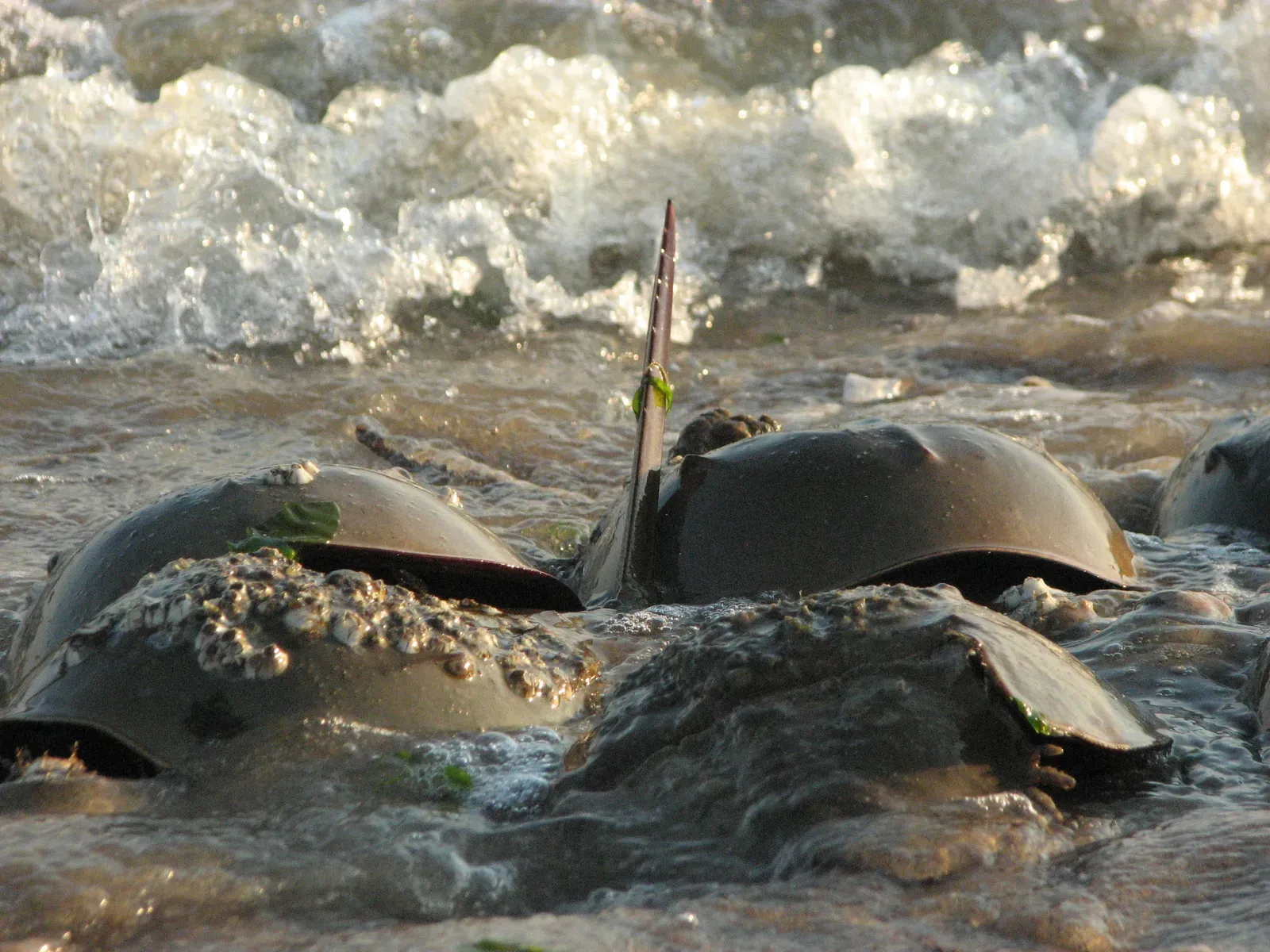
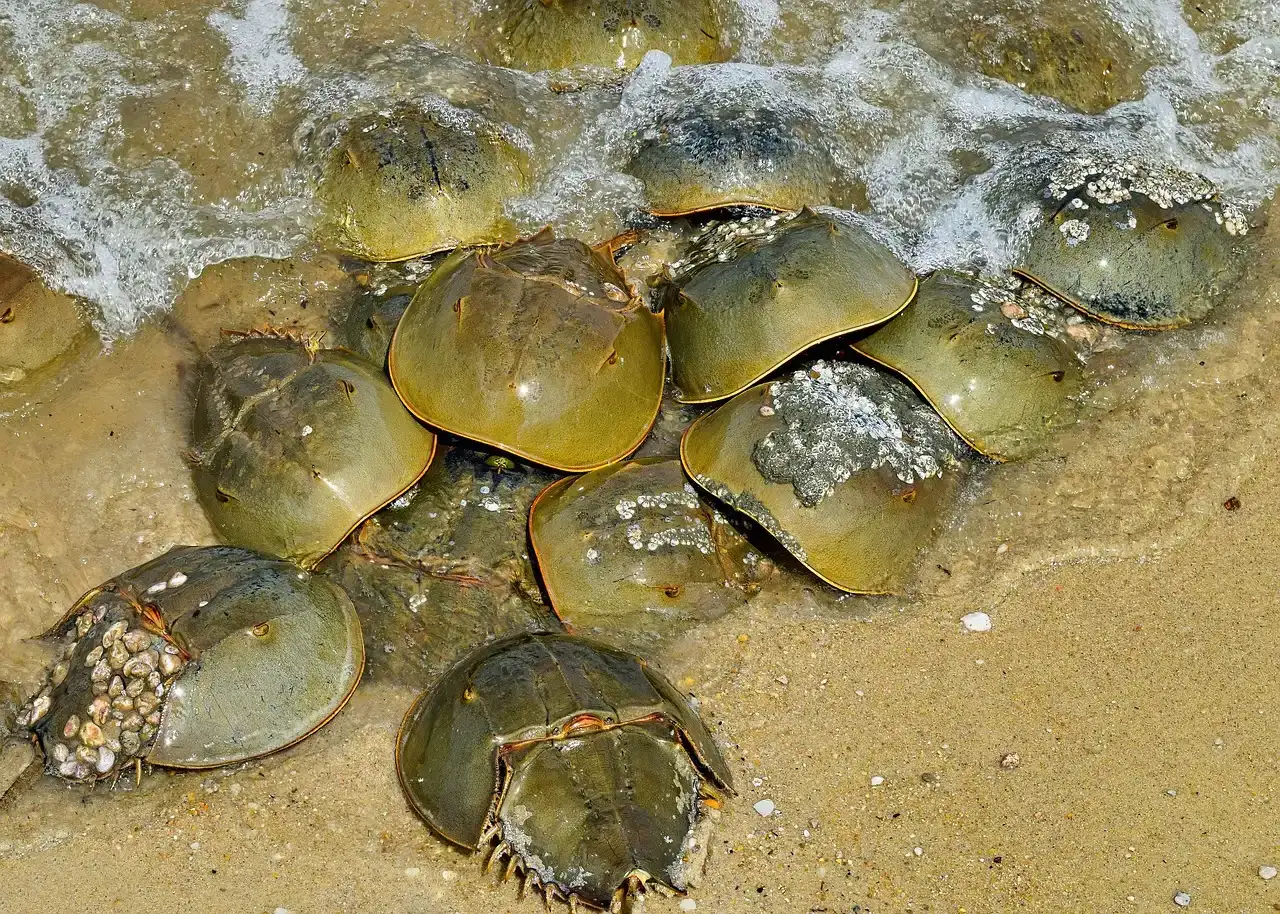
Each year, horseshoe crabs haul themselves onto sandy beaches in large numbers to mate and lay eggs in the tidal zone. This dramatic, synchronized gathering ties them directly to cycles of the Moon and tides that have been shaping coastlines since long before dinosaurs took their first steps on land. Females dig shallow nests while males crowd around to fertilize the eggs, a ritual that has probably looked broadly similar for millions upon millions of years.
Watching them, you get the sense that you are witnessing something that does not belong to our time at all, like a ritual that started in another geological era and simply never stopped. Shorebirds now rely on their nutrient-rich eggs during migration, meaning modern ecosystems have woven this ancient life cycle into their own survival strategies. It is another reminder that when something endures for so long, countless other species learn to depend on it, like an old bridge that everyone now uses without thinking much about who built it.
Their Simple, Bottom-Dwelling Lifestyle Is Built for Longevity
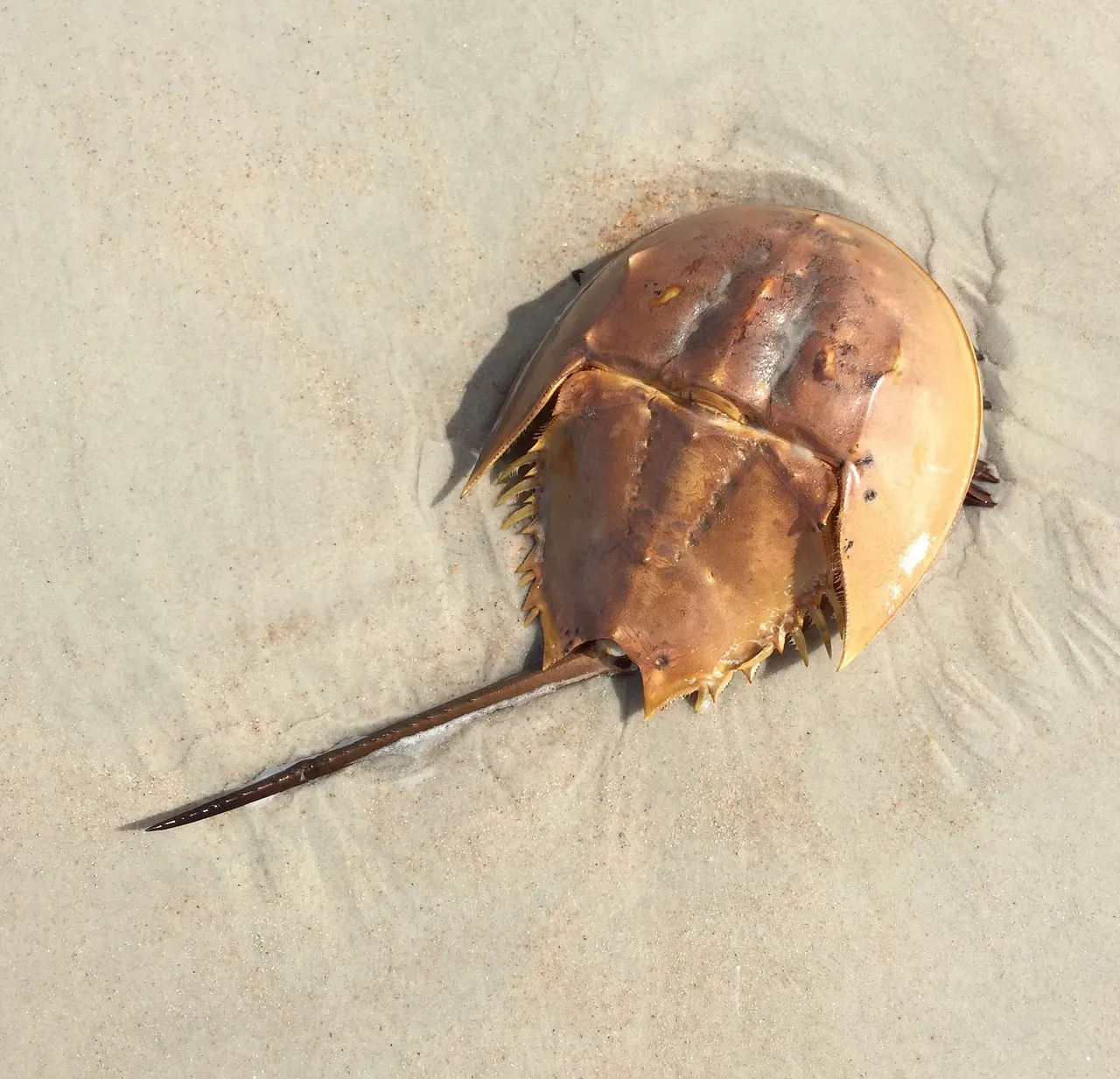
Horseshoe crabs spend much of their time plodding slowly along the seafloor, scavenging for worms, clams, and other small invertebrates. They are not high-speed predators or delicate specialists; they are generalists with sturdy armor and low-energy habits. That sort of lifestyle tends to be more resilient when the environment shifts. The fewer fancy tricks you rely on, the fewer ways things can go disastrously wrong when the world changes around you.
When I think of their role on the seafloor, I imagine them as quiet janitors, cleaning up bits of food and organic matter, causing very little fuss. That modest, low-profile way of living may be one reason they have outlasted flashier creatures that burned bright and then vanished. It is not romantic, but evolution does not really reward drama; it rewards what works. And for horseshoe crabs, this sturdy, unfussy bottom-dwelling existence has clearly worked for a very, very long time.
They Show How “Ancient” Does Not Mean “Outdated”
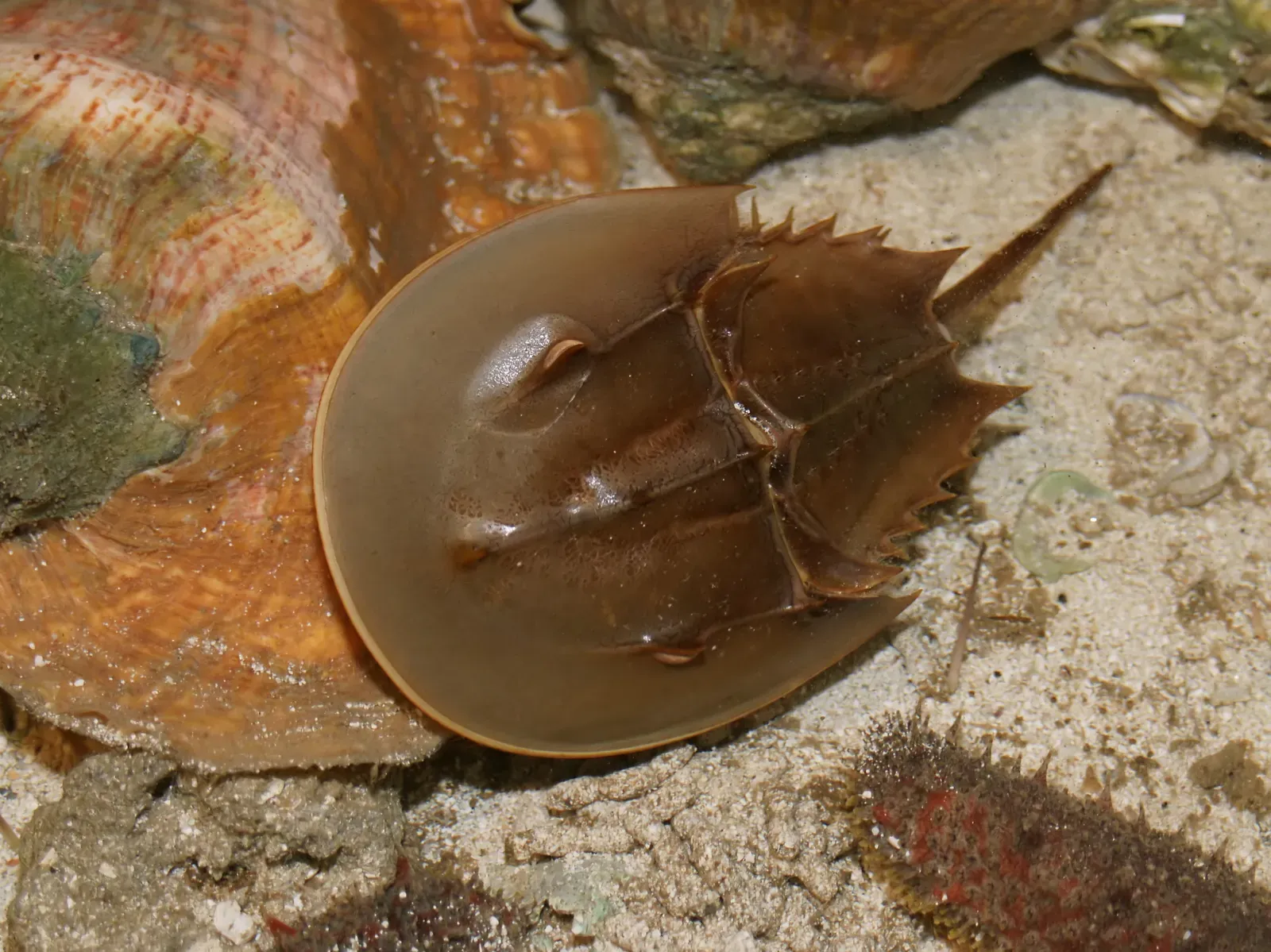
Calling horseshoe crabs ancient can sound like an insult, as if they are stuck in the past and have somehow missed out on upgrades. But their story actually flips that idea on its head. They are still here not because evolution forgot about them, but because their combination of traits – tough armor, simple diet, adaptable habitat range, and robust immune system – keeps passing the survival test, era after era. New species have emerged and disappeared while their lineage just kept rolling.
I think this is one of the most powerful lessons we can take from them. Being older than dinosaurs does not make horseshoe crabs obsolete; it makes them proven. In a world obsessed with the newest thing, there is something quietly radical about an animal whose design is so durable that it shrugs off extinctions that wipe out entire dynasties. They stand there, half-buried in the sand, as living proof that sometimes the best innovation is knowing when you already have enough.
They Are Living Reminders of What We Stand to Lose
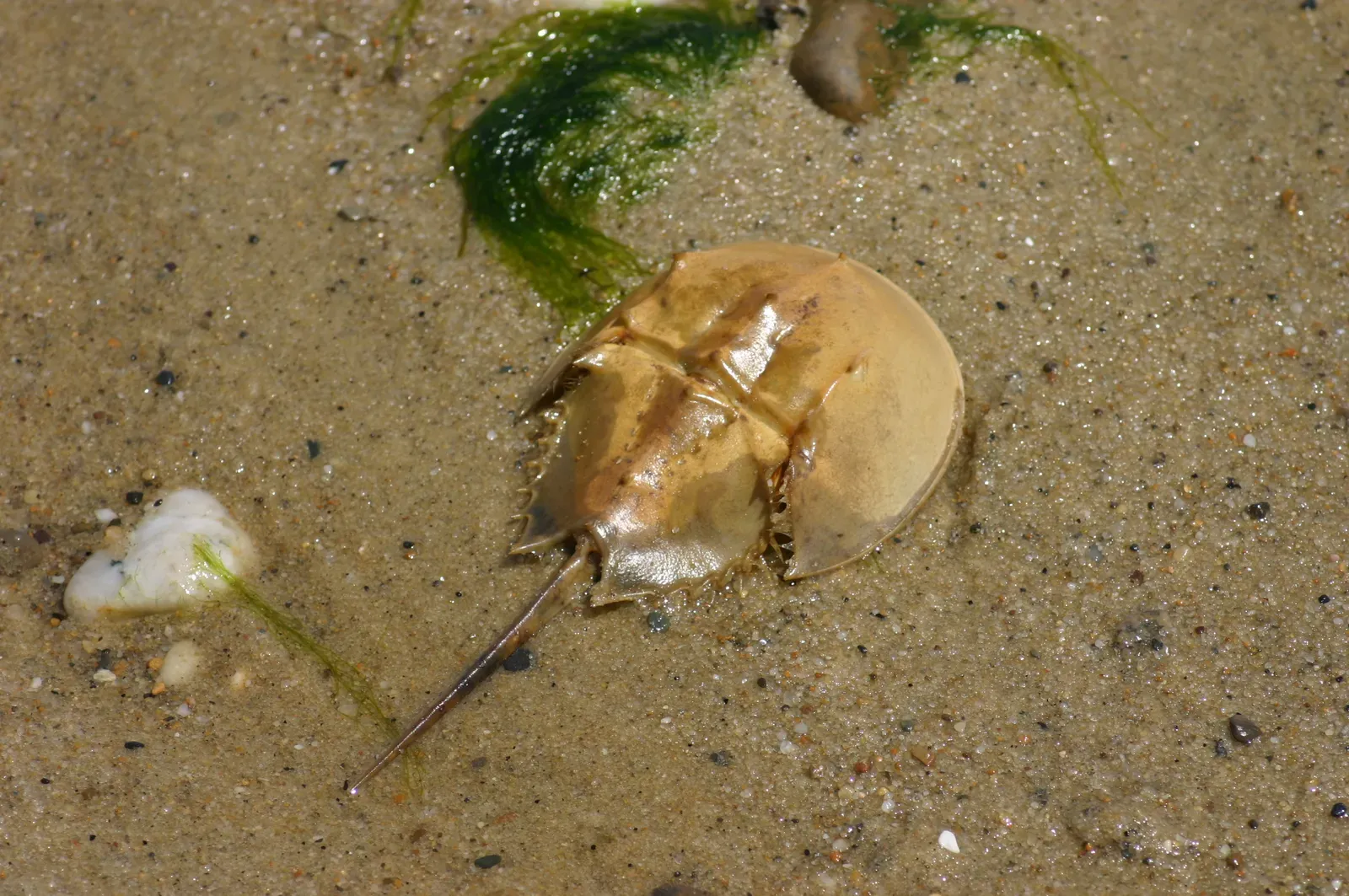
For all their resilience, horseshoe crabs are not invincible. Coastal development, overharvesting, and environmental changes are putting pressure on their populations in several regions. I find it a bit heartbreaking that creatures that survived asteroid impacts and volcanic winters could be undone by things like shoreline construction and poorly managed fishing practices. If we lose them, we are not just losing one species; we are cutting off a direct, living connection to a time far older than dinosaurs.
In my opinion, that would be a deeply short-sighted trade. Protecting horseshoe crabs is not just about saving an odd-looking animal; it is about respecting the staggering timescale of life on Earth and our tiny place within it. These animals carry a story written across almost unimaginable spans of time, and we are one of the first species capable of choosing whether that story continues. When you see one on the beach now, the real question is simple: will we be wise enough to let this ancient survivor keep walking?