You usually think of advanced tech as something that belongs to your world: smartphones, satellites, AI, and all the rest. But when you start digging into history, you realize something slightly unsettling and very inspiring at the same time: people thousands of years ago were solving problems with a level of creativity and precision that still surprises modern engineers. In some cases, if you saw their inventions without context, you might assume they were designed in a lab just a few decades ago.
As you walk through these nine examples, you start to see a pattern. Again and again, ancient builders, artisans, and thinkers pushed their tools to the limit, found clever shortcuts, and sometimes even hit on scientific principles that would not be formally explained until much later. You are not just looking at old ruins or mysterious artifacts; you are looking at working answers to real challenges – answers that were, for their time, dramatically ahead of the curve.
The Antikythera Mechanism: A Bronze Computer From The Ancient Mediterranean
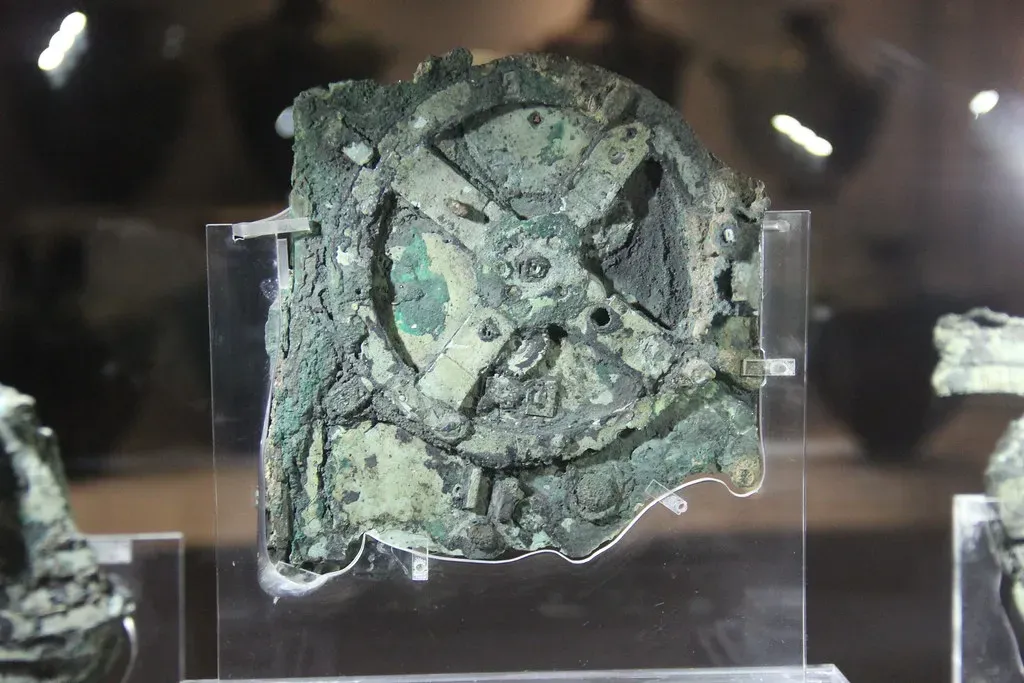
If you ever doubted how far ancient engineering could really go, the Antikythera mechanism forces you to reconsider. Pulled from a Roman-era shipwreck off a Greek island, it looks at first like a corroded lump of metal, but inside it you find a dense network of bronze gears so intricate that it functions like a mechanical computer. When you turn the crank, it models the motions of the sun, moon, and possibly planets, predicting eclipses and tracking complex astronomical cycles with impressive accuracy.
To appreciate how shocking this is, you have to picture the level of metalworking and mathematical knowledge required to design and cut interlocking gears, align them to astronomical cycles, and house them in a compact box. You are looking at a device that uses differential gearing and sophisticated ratios long before similar complexity shows up again in Europe. If you had seen this mechanism without context, you might assume it belonged in a Renaissance workshop or even a nineteenth‑century observatory, not on a ship that sank over two thousand years ago.
Roman Concrete: A Building Material That Gets Stronger With Time

When you walk through a modern city, you are surrounded by concrete that slowly cracks, spalls, and eventually needs to be repaired or rebuilt. Then you look at structures like the Pantheon in Rome, still standing with its massive unreinforced dome after nearly two thousand years, and you realize the Romans were doing something very different. Their secret lies in a special blend of volcanic ash, lime, and aggregate that reacts with seawater and moisture over time, actually strengthening the material rather than weakening it.
As a result, Roman harbor installations and coastal structures have survived repeated waves, storms, and centuries of wear more gracefully than many modern equivalents. When researchers look closely, they find mineral crystals forming within microscopic cracks, essentially self-healing parts of the concrete. You are dealing with an early form of durable, low‑maintenance building technology that many contemporary engineers are now trying to understand and adapt for modern sustainable construction.
Ancient Indian Surgical Tools And Techniques: Early Precision Medicine
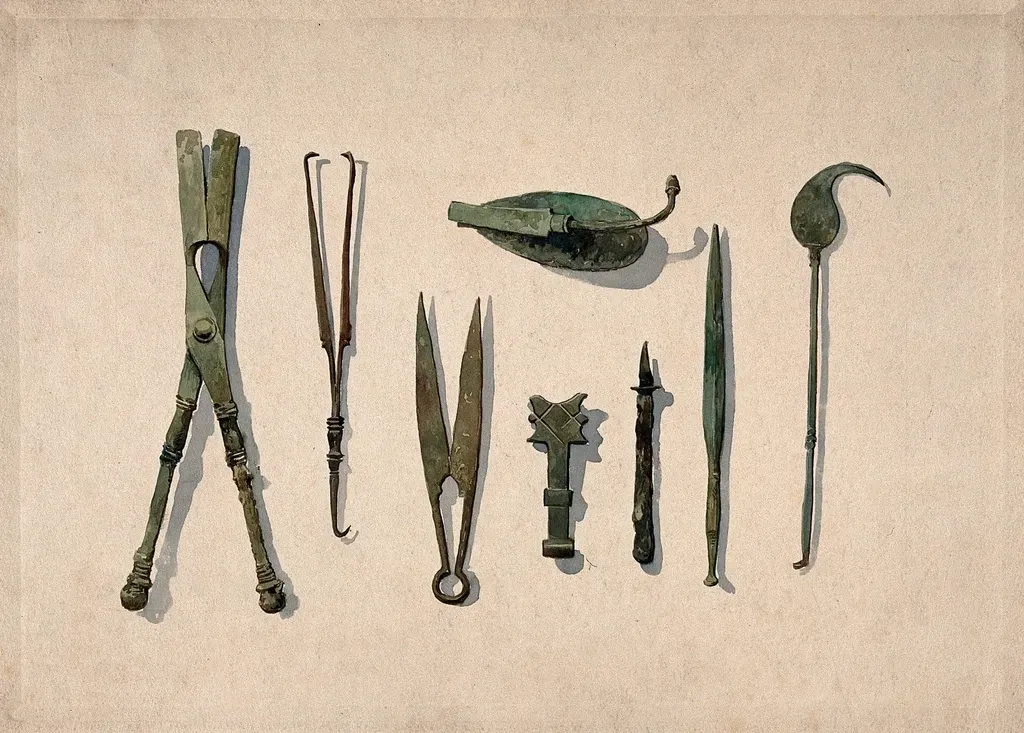
When you hear about surgery, you probably picture bright operating rooms, stainless steel instruments, and advanced imaging. But texts from ancient India describe a surprisingly sophisticated medical tradition that includes hundreds of surgical instruments and detailed procedures. You see accounts of operations like rhinoplasty, cataract treatment, and complex wound care that rely on precise tools made of metal and careful, methodical techniques.
These practices did not emerge by accident; they reflect generations of close observation, trial and error, and a willingness to systematize medical knowledge. Instead of relying purely on mystical explanations, these practitioners recorded symptoms, outcomes, and best practices in structured texts. When you step back, you realize you are looking at an early form of evidence‑based, procedural medicine that anticipated many ideas you now take for granted in modern surgery and clinical practice.
The Baghdad Battery: Mysterious Jars That Hint At Early Electrochemistry
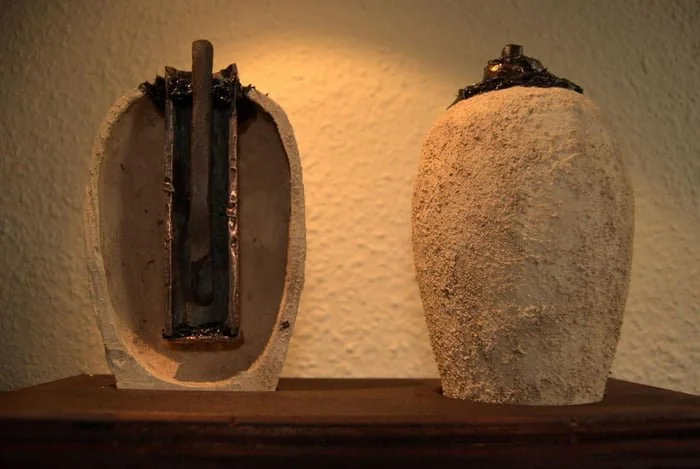
Imagine you are excavating in the Middle East and you come across clay jars containing a copper cylinder and an iron rod, sealed with bitumen. On their own, they look ordinary, but when you reconstruct them and fill them with an acidic liquid, they can generate a small electric potential. This cluster of finds, often called the Baghdad Battery, has fueled long‑running debates about whether people in that region were experimenting with electrochemical effects long before electricity became a formal science.
You are dealing with artifacts that could, in theory, function as primitive galvanic cells, even if their exact use remains uncertain. Some interpretations suggest they might have been used for electroplating or ritual purposes, while others argue they could simply be containers repurposed later. What makes them fascinating is not just what they may have powered, but what they represent: a possible early brush with the principles of electricity, centuries before systematic electrical science took shape.
Greek Fire: A Fearsome Weapon With A Closely Guarded Formula

When you think about advanced military technology, your mind probably jumps to drones or guided missiles, but in the medieval Eastern Mediterranean, Greek Fire played a similar psychological role. This weapon, associated with the Byzantine Empire, could be projected onto enemy ships and reportedly continued burning even on water. The exact formula has been lost, but accounts describe a sticky, flaming substance that struck terror into opponents and changed naval warfare.
From your perspective, what stands out is not just the weapon itself, but the layers of technology and secrecy surrounding it. You have to imagine pressurized delivery systems, specialized nozzles, and logistical planning for both storage and deployment. The empire treated the recipe and mechanisms as state secrets, tightly controlling who knew the details. In a way, you are seeing an early example of both chemical engineering and high-level technology security strategy, all wrapped into a single battlefield innovation.
Inca Road Systems And Suspension Bridges: Engineering Without The Wheel
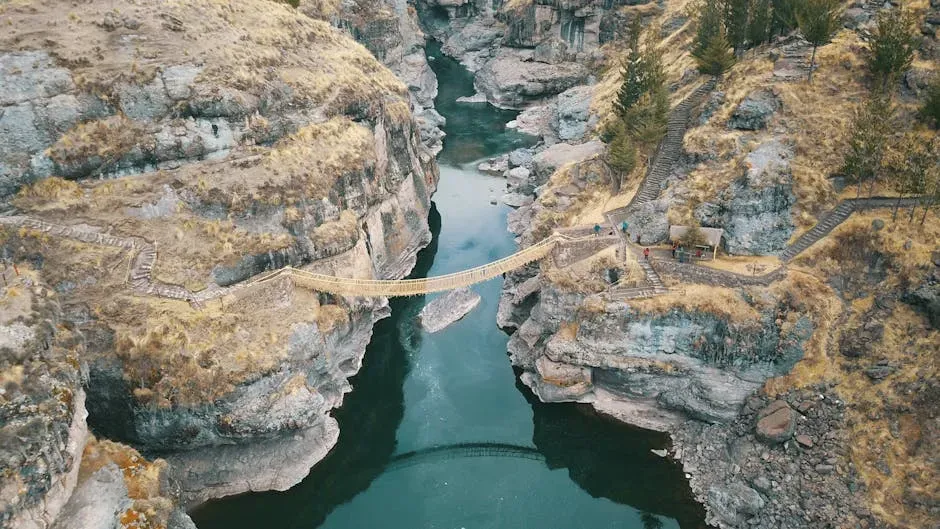
Travel through the mountains of the Andes in your mind for a moment and picture steep cliffs, deep valleys, and shifting weather. Now imagine building a road network across that rugged terrain without using wheeled vehicles, iron tools, or draft animals like horses. That is what the Inca Empire pulled off: a web of roads, stairways, and suspension bridges made of plant fiber that tied together distant regions across thousands of miles.
To do this, Inca builders relied on careful surveying, stonework fitted so precisely that it has survived earthquakes, and rope‑based suspension bridges that had to be regularly inspected and replaced. You can think of it as a distributed infrastructure system maintained by communities along the way, an early example of coordinated public works on a continental scale. Instead of brute‑forcing their way through the landscape, they adapted to it and designed routes that modern hikers still find both efficient and impressive.
Ancient Chinese Seismoscopes: Detecting Earthquakes Before Modern Sensors
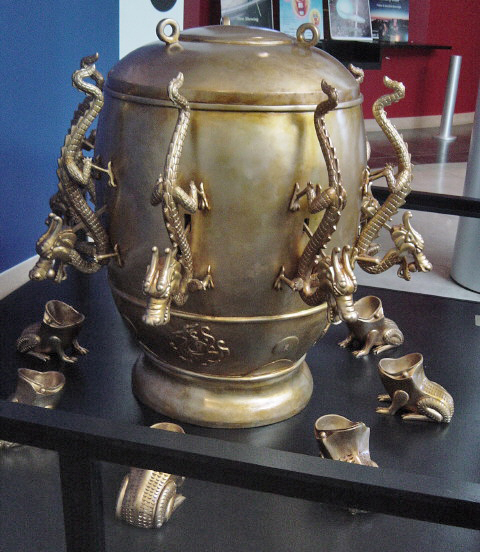
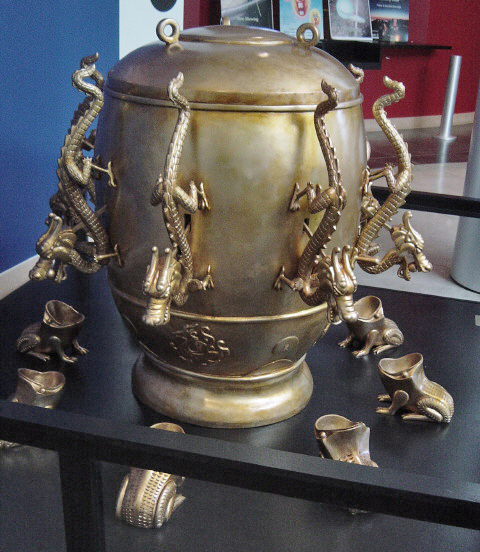
Picture a large bronze vessel decorated with dragon heads arranged around its sides, each holding a metal ball. At first it looks purely ceremonial, but when an earthquake occurs, one of the balls drops into a waiting frog‑shaped cup below, indicating the direction the seismic waves came from. You are looking at an early seismoscope, credited to a Chinese polymath who lived nearly two thousand years ago.
Even though the internal mechanism is still debated, what matters for you is the concept: a device designed to translate subtle ground motions into a clear, directional signal. This is not just superstition; it is an attempt to measure and interpret a natural phenomenon systematically, even when people at the time did not fully understand tectonic theory. In spirit, it is not so far removed from modern instruments that convert physical forces into readable data, and it shows that the urge to monitor the earth scientifically runs deep into the past.
Water Management In Petra: Hidden Hydraulics In The Desert

If you have ever visited a dry region, you know how precious water feels, and that is exactly why the ancient city of Petra stands out. Carved into sandstone cliffs in what is now Jordan, Petra thrived in an arid environment thanks to an intricate system of channels, covered pipes, cisterns, and reservoirs. As you trace the routes, you see how builders captured seasonal rains, diverted flash floods, and stored water safely away from contamination and evaporation.
This was not just about survival; it was also about comfort and resilience. You find evidence of fountains, gardens, and pools that would have made the city feel surprisingly lush for its surroundings. By smoothing channel interiors, adding gentle gradients, and protecting vulnerable sections, engineers there minimized losses and controlled flow. When you compare that to modern concerns about water scarcity, Petra’s integrated hydraulic network starts to look like a quietly brilliant lesson in long‑term resource management.
Bronze Age Clocks And Astronomical Alignments: Timekeeping Written In Stone

When you stand inside a stone circle or look at a massive monument aligned with the solstices, you are not just seeing a decorative arrangement; you are seeing a kind of giant clock. Across different regions, builders oriented structures to mark key moments in the solar year, such as when the sun rises or sets at particular points on the horizon. If you pay attention to these alignments, you can track seasons, plan agricultural cycles, and schedule rituals with remarkable precision.
You might not think of this as technology at first, because there are no gears or wires, but it absolutely is. You are looking at carefully chosen sight lines, measured angles, and foundations laid out to withstand centuries of shift while still hitting the right visual targets. In a sense, the entire landscape becomes an instrument for measuring time and celestial cycles. This kind of design shows that long before mechanical clocks arrived, people were already building durable, large‑scale devices to keep the calendar in sync with the sky.
Conclusion: Rethinking What “Advanced” Really Means

As you move through these examples, you notice something important: being ahead of your time is not just about having more powerful tools; it is about asking sharper questions and pushing existing tools to their limits. Whether you are looking at a corroded gear‑filled box from the seafloor, a self‑strengthening concrete harbor, or a desert city with invisible waterworks, you keep running into the same pattern of curiosity and careful experimentation. You might start out thinking of ancient people as living in a simpler world, but their solutions say otherwise.
When you look at your own era through that lens, your technology suddenly feels like one chapter in a much longer story of human problem‑solving. The next time you see ruins, artifacts, or old diagrams, you might ask yourself what quiet innovations you are missing at first glance. It is entirely possible that some of the tools you take for granted today will look just as mysterious and impressive to someone thousands of years from now. Which of today’s everyday technologies do you think will shock them the most?