There is something uniquely goosebump-inducing about people who have never met, never spoken, and yet swear they saw the same impossible thing. When that happens in an already mysterious place like the Bermuda Triangle, the story stops feeling like a campfire tale and starts sounding more like a data point. Eight sailors, rescued from different emergencies, reportedly describing the same strange phenomenon might sound like the opening scene of a sci‑fi movie, but it also taps into something deeper: our fear of the unknown and our hunger to make sense of it.
In a world where we can map distant galaxies and simulate black holes on supercomputers, the idea that part of Earth’s own ocean might still defy easy explanation is both unsettling and weirdly refreshing. The Bermuda Triangle sits right in that uncomfortable space between science and speculation, where radar blips, human error, fierce weather, and human stories all mix together. So let’s walk through what these eight sailors supposedly reported, what science can actually say about it, and why this mystery continues to cling to us like sea fog long after the rescue ships have gone home.
The Bermuda Triangle: A Real Place Wrapped In Unreal Stories
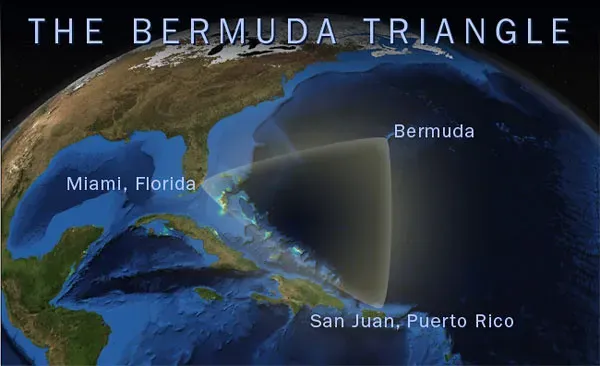
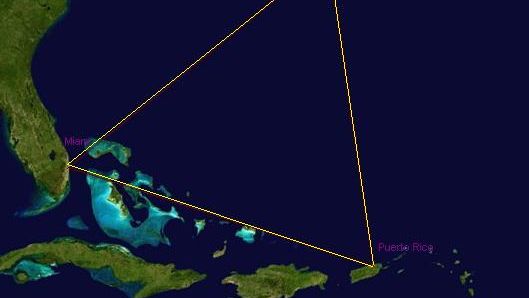
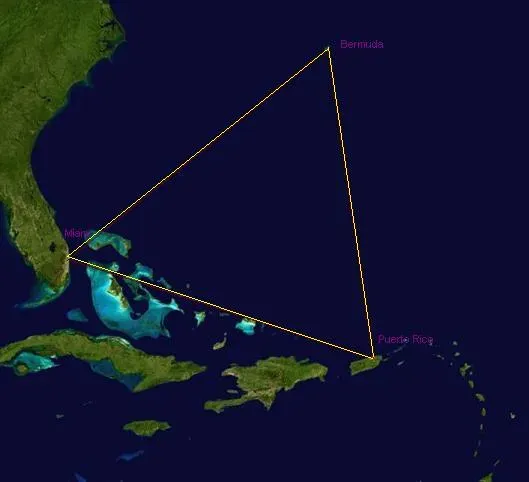
The Bermuda Triangle is not a secret zone printed on classified maps; it is a broadly defined area in the western North Atlantic, loosely bounded by Miami, Bermuda, and Puerto Rico. Commercial flights cross it every day, cruise ships glide over its waves, and cargo vessels plow through its shipping lanes without fanfare. Statistically, the region does not have a wildly higher rate of disappearances than other heavily traveled ocean areas with similar traffic and storms. Its infamy was built more by headlines and paperbacks than by raw incident data.
That said, the Triangle has a long catalog of maritime and aviation tragedies that genuinely deserve respect: missing ships, vanished planes, radio calls cut short, and weather that turned vicious in minutes. Add in the region’s physics – strong currents, shifting weather fronts, shallow banks, and deep trenches – and you get a natural recipe for confusion and disaster. It is the kind of place where a small mistake can quickly stack with bad luck and bad timing. Against that backdrop, you can see how a single startling experience, especially during a crisis, can feel like proof that the ocean itself is hiding something.
Eight Sailors, One Story: The Shared Vision Of A Luminous “Wall”
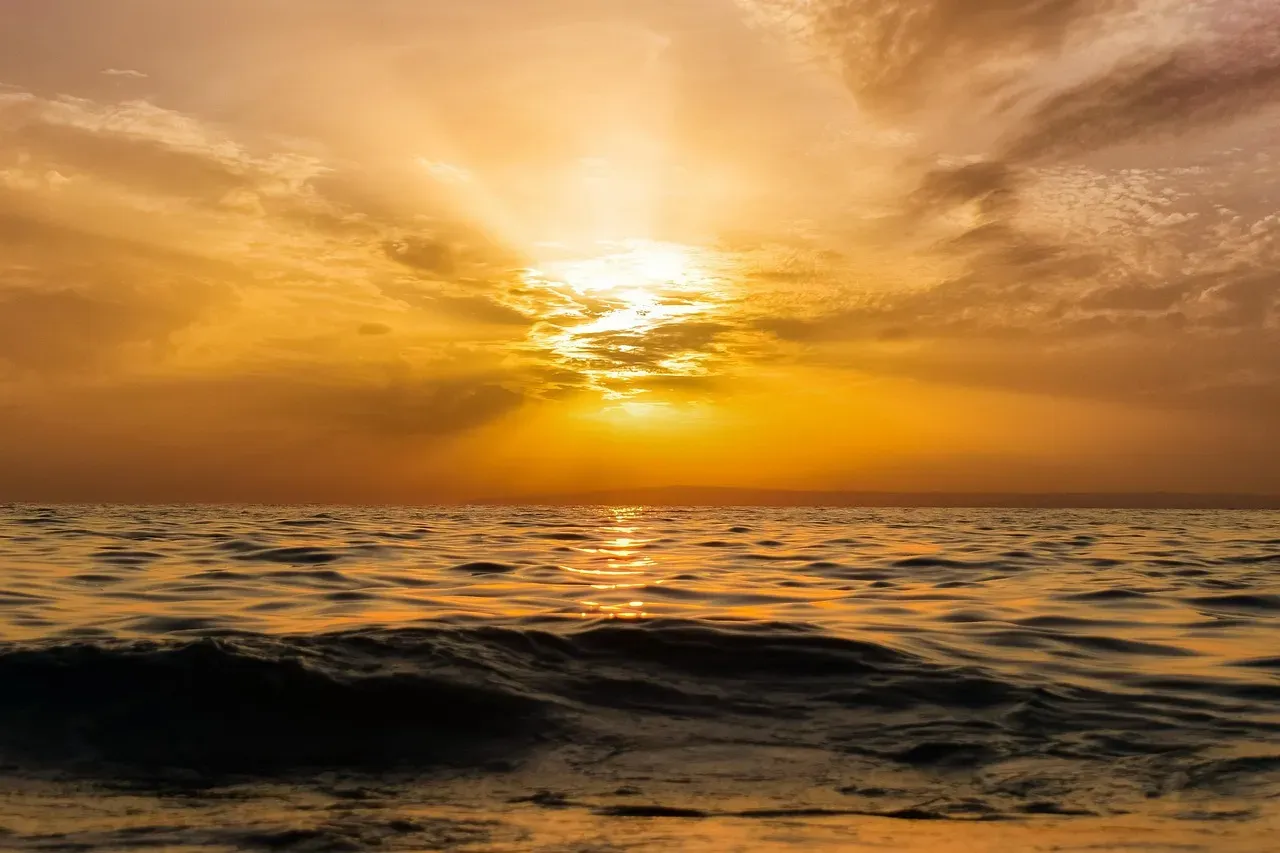
Across different accounts, one of the most striking recurring details from rescued sailors in the Triangle region is the description of a luminous boundary or “wall” appearing on the horizon or enveloping their vessel. Some describe it as a towering curtain of pale light that seemed to hang in the air, others as a glowing fog that was unnaturally uniform and strangely quiet. What hooks people is not just the glow itself, but how similar the language often becomes: a sense of crossing into somewhere else, like stepping off the edge of the familiar world.
When eight different sailors, pulled from damaged boats or life rafts at different times, latch onto the same kind of imagery – an illuminated barrier, a sudden silence, distorted instruments – it raises an uncomfortable question: coincidence, shared psychology, or shared physical phenomenon? From a scientific perspective, it is tempting to immediately file this under optical illusions, atmospheric effects, or stress-induced misperceptions. Yet the human part of us hears that repetition and thinks, what if they are all describing pieces of the same underlying thing we have not accurately modeled yet?
The Science Of Impossible Light: Fog, Plasma, And Optical Tricks
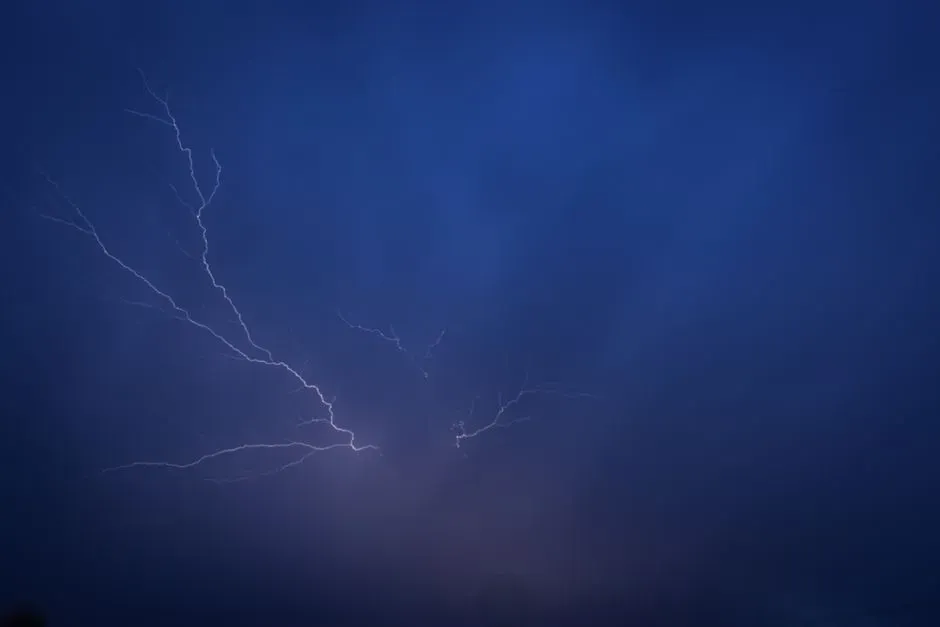
Before we leap to portals or other dimensions, it is worth remembering how weird light can get in the real world. Over the ocean, layers of warm and cool air can bend light, creating mirages and vertical distortions of ships and coastlines, sometimes stacking them or making them float in the sky. Dense fog can diffuse light sources until they appear to come from everywhere at once, erasing shadows and depth cues. To a frightened sailor with limited visibility, that can absolutely feel like sailing into a wall of glowing haze rather than just weather plus optics.
There are also more exotic possibilities that still sit comfortably within physics textbooks. Under certain conditions, electrical charge in the atmosphere can create eerie glows along masts, rigging, and wave tops, historically known as St. Elmo’s fire. In extreme storms, lightning can branch horizontally or appear as ball-like flashes that seem to hang and hover. While reports of stable plasma-like “walls” are not well documented in peer-reviewed research, the combination of thunderstorm activity, charged particles, and the human brain’s talent for pattern-making can convert scattered phenomena into a single coherent but misleading experience.
Magnetic Mayhem: Compasses, Navigation, And The Illusion Of Vanishing Time
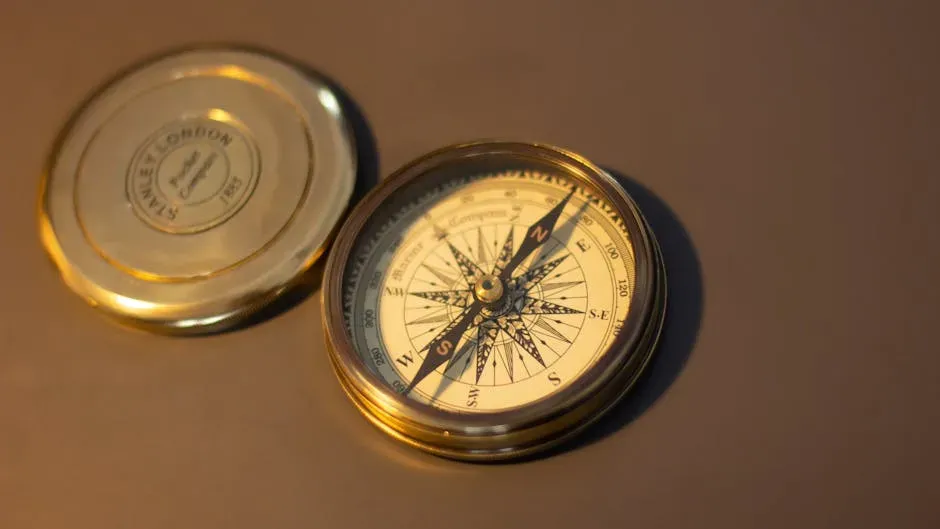
Another consistent thread in Triangle stories is the claim that instruments went haywire right as the luminous boundary appeared. Sailors talk about compasses spinning slowly or fixing on the wrong heading, GPS units freezing, or clocks that seemed wildly out of sync when they checked them later. Some even frame it as “missing time,” as if they crossed an invisible threshold where normal hours did not apply. This sounds paranormal at first blush, but even mundane navigation errors can feel uncanny when noticed too late.
Earth’s magnetic field is not a neat, perfectly even grid; it wiggles, shifts, and drifts. There are regions where magnetic north and true north line up closely, and others where the difference is pronounced, and the Atlantic around the Triangle includes zones with significant variation. A sailor misreading charted variation, an older compass with mechanical issues, or interference from onboard electronics can combine to create a sudden realization that the boat is not where it is supposed to be. Under stress, that realization gets retrofitted into the story: the instruments went mad exactly when the glowing “wall” appeared, so both must be linked in a single, mysterious cause.
Storm Cells, Microbursts, And Ocean Rage Disguised As The Supernatural
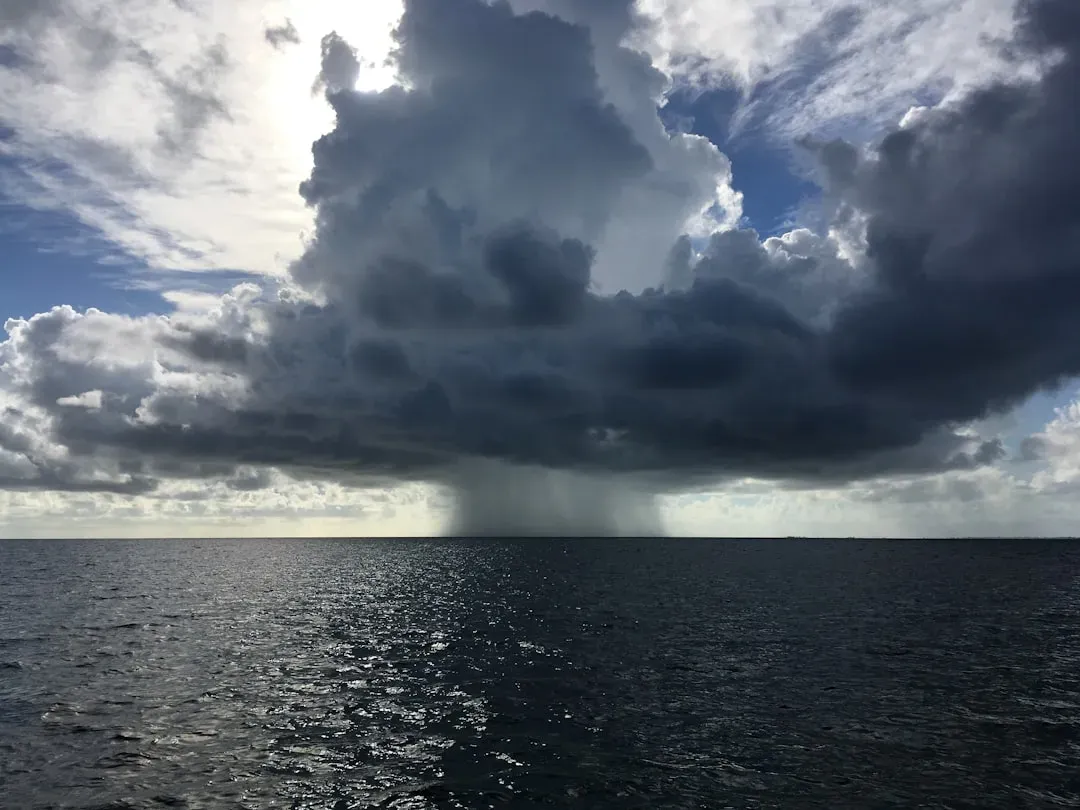
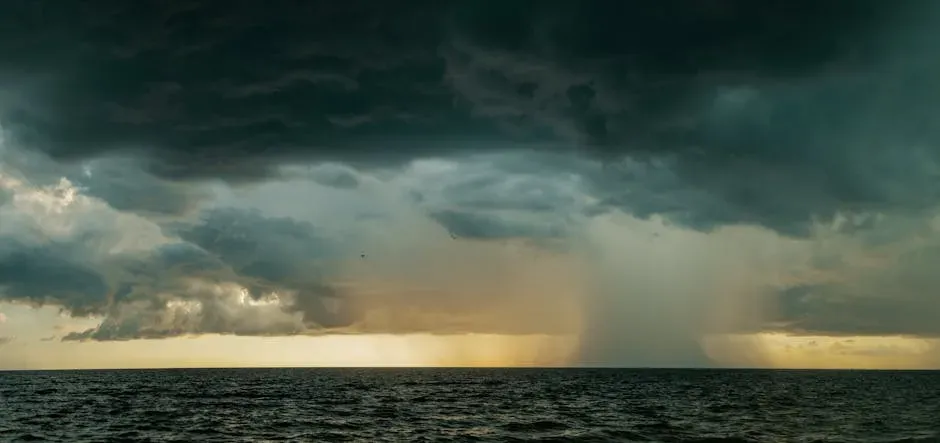
From a meteorologist’s perspective, the Bermuda Triangle is not a magical void but a hyperactive weather lab. Warm tropical waters feed thunderstorms that can explode into towering cells, split, reorganize, and ambush a boat that thought the radar screen looked clear ten minutes earlier. Microbursts – sudden, intense downdrafts of air – can slam onto the sea surface with shocking force, kicking up walls of spray and steep, short-period waves. To the naked eye, a fast-building squall line lit from within by lightning can absolutely look like a massive, luminous barrier rising from nowhere.
If those eight sailors all encountered some version of this – approaching storm fronts illuminated at night, curtains of rain backlit by lightning, walls of turbulent air and spray – they were dealing with something fully natural yet emotionally overwhelming. The human brain is not a dispassionate sensor; it is a story generator. In a life-or-death moment, that story will center on whatever feels most dramatic and frightening. In retelling, the jagged complexity of storm structure smooths into a single impossible wall, an oceanic doorway they swear they crossed and somehow survived.
The Human Mind Under Duress: Memory, Fear, And Shared Myth-Making
One of the hardest pills to swallow in mysteries like this is how unreliable our perception becomes when we are terrified and exhausted. Studies on eyewitness memory show that under high stress – like, say, clinging to a damaged vessel in bad weather – people focus on certain sensory details and lose or reshuffle others. Later, when recounting the event, the brain quietly fills in gaps with whatever fits the narrative best. If a sailor has already heard rumors about strange lights or vanishing ships, those cultural stories can slip into their own recollection without them feeling dishonest.
When eight sailors separately describe the same impossible wall in a place already famous for being dangerous and weird, we are probably not looking at eight independent experiments. We are looking at eight human minds drawing from the same mental library of legends, documentaries, movies, and secondhand stories. That does not mean they made it up or were lying; it means their raw sensory experience got filtered through preconceived expectations about what the Bermuda Triangle is supposed to be. Over time, those retellings harden into a shared myth that feels eerily consistent because the template was shared from the start.
The Temptation Of Portals: Why We Love The Wildest Explanations
Even with all the physics, meteorology, and psychology on the table, a lot of people still gravitate toward the boldest explanation: that these sailors glimpsed some kind of doorway, rift, or intersecting dimension. The idea that our planet contains hotspots where the rules fray at the edges has deep roots in folklore, from ghost ships and vanishing islands to tales of people stepping into circles of light and waking up somewhere else. The Bermuda Triangle just happens to be the modern stage where those older instincts dress up in nautical charts and aviation reports.
I get the appeal. The notion that the glowing wall is not just storm-lit rain but a threshold leading to another when scratches at the same itch that made me stare too long at horizon lines as a kid, half-hoping for something impossible to appear. But as thrilling as that idea is, it simply does not have the evidential support that storm physics, navigation errors, and human memory do. Believing in portals here requires treating eight emotionally charged, secondhand narratives as stronger than decades of consistent, boring data from ships and planes that cross the region uneventfully every single day. For me, that trade-off feels more like wishful thinking than honest curiosity.
So What Did They Really See? A Grounded Take On An Ungrounded Story
If you strip away the sensational layers and force yourself to be almost annoyingly rational, the most likely picture that emerges is a combination of harsh weather, tricky light, instrument issues, and human storytelling. Those eight sailors probably saw something real and frightening: storm fronts that looked like solid walls, fog banks lit in uncanny ways, stray electrical glows, or waves rising higher than seemed physically possible. They were scared for their lives, their reference points vanished, and their senses were working overtime. Later, in trying to explain the unexplainable feeling of that moment, the image of an impossible luminous boundary became the simplest, most powerful shorthand.
That does not mean the story is worthless or should be mocked. On the contrary, I think these kinds of accounts are valuable precisely because they flag where our emotional sense of reality diverges from what the data says. They remind us that you can be completely sincere and still be partially wrong about what happened to you. When eight people swear they saw the same impossible thing in the Bermuda Triangle, I hear less evidence of a cosmic glitch and more evidence that the ocean, weather, and human minds can still collaborate to produce experiences that feel like they have no business existing in a world of satellites and GPS. That gap between feeling and fact is where the real mystery lives.
Conclusion: The Triangle’s Real Power Is Not Supernatural At All
In my view, the most unsettling part of the eight-sailor story is not that they may have brushed up against another dimension, but that a fully natural world can still masquerade as something supernatural when the conditions are just right. The Bermuda Triangle is dangerous enough without adding portals or time warps; warm currents, volatile storms, and human fallibility already do a brutal job. Treating every eerie report as proof of something beyond physics lets the real culprits – poor preparation, underestimated weather, overconfidence in technology – off the hook. It feels romantic to imagine walls of light hiding secrets, but it is far more honest, and frankly more useful, to accept that the ocean can terrify us without breaking a single law of nature.
At the same time, I do not think we should try to sandblast the wonder out of these stories. Those eight sailors, whatever precisely they saw, walked to the edge of what they believed the world could do and came back changed. Their tales sit at the intersection of science, fear, and imagination, nudging us to keep asking questions without surrendering to the most dramatic answer just because it sells best. For me, the real magic of the Bermuda Triangle is that it forces us to confront how small we are, how much we still do not control, and how easily our minds can turn raw experience into legend. In a world obsessed with certainty, maybe the most honest question left is this: how comfortable are you living with mysteries that probably have boring explanations you will never fully see?