There’s something deeply unsettling about running into perfect geometry in wild, untouched rock. Your brain automatically starts scanning for human fingerprints, ancient tools, abandoned quarries – anything that says, “Relax, people did this.” But sometimes, no such explanation fits. You are left with razor-straight edges, uncannily regular angles, or near-symmetrical shapes in places where no known culture ever carved, and no known natural process neatly explains what you’re seeing.
This article walks right along that uneasy line. We’ll look at eight stone formations that feel almost engineered, yet sit outside the comfort zone of both archaeology and geology as they’re usually presented in popular media. To be very clear: nothing here “proves” lost civilizations or alien masons. In fact, much of the mystery dissolves when you understand how complex natural processes really are. But some patterns remain oddly precise, strangely geometric, and frankly, emotionally gripping. That tension between “probably natural” and “wow, that looks built” is exactly where things get interesting.
1. Giant’s Causeway: A Basalt Honeycomb That Looks Machine-Cut
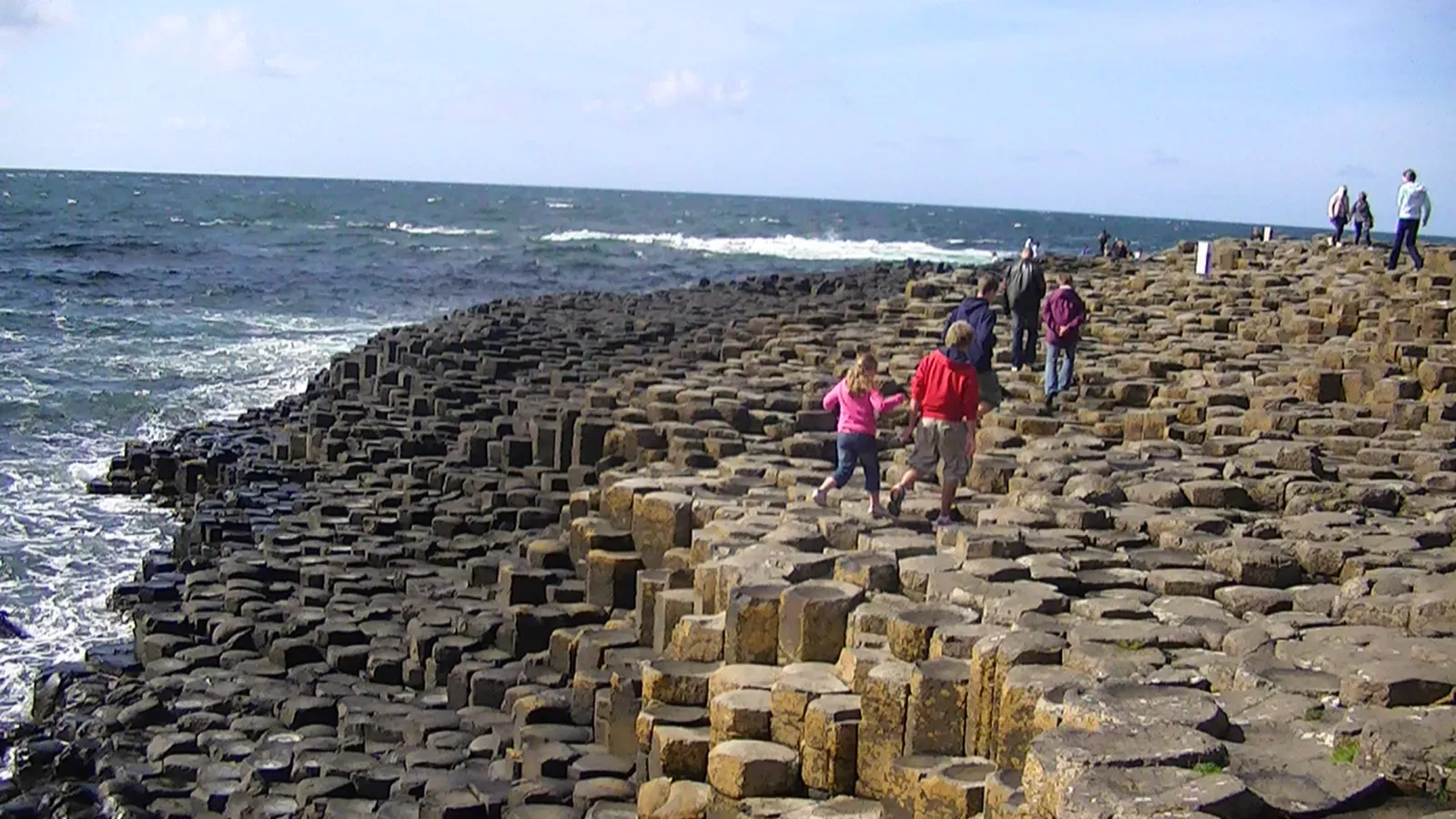
Stand on the edge of Giant’s Causeway in Northern Ireland and it feels less like a cliff and more like a broken city street, as if some enormous architect tiled the coastline with hexagonal columns and then walked away mid-project. The site is made of tens of thousands of interlocking basalt columns, mostly six-sided, packed together so tightly they behave like a geometric pavement. It is the poster child for “no way nature did that” reactions from first-time visitors.
Geologists, of course, do have a natural explanation: cooling and contraction of lava flows can create polygonal cracking, much like drying mud but on a giant scale and in three dimensions. Still, what makes Giant’s Causeway so emotionally jarring is the ruthless regularity of those shapes. The columns rise to similar heights, form level platforms, and create steps that feel uncannily engineered. Intellectually, we can say “lava did it,” but viscerally, you’d be forgiven for feeling like you’re walking across the ghost of some vanished basalt megastructure.
2. The Devil’s Tower Columns: A Vertical Forest of Geometric Pillars
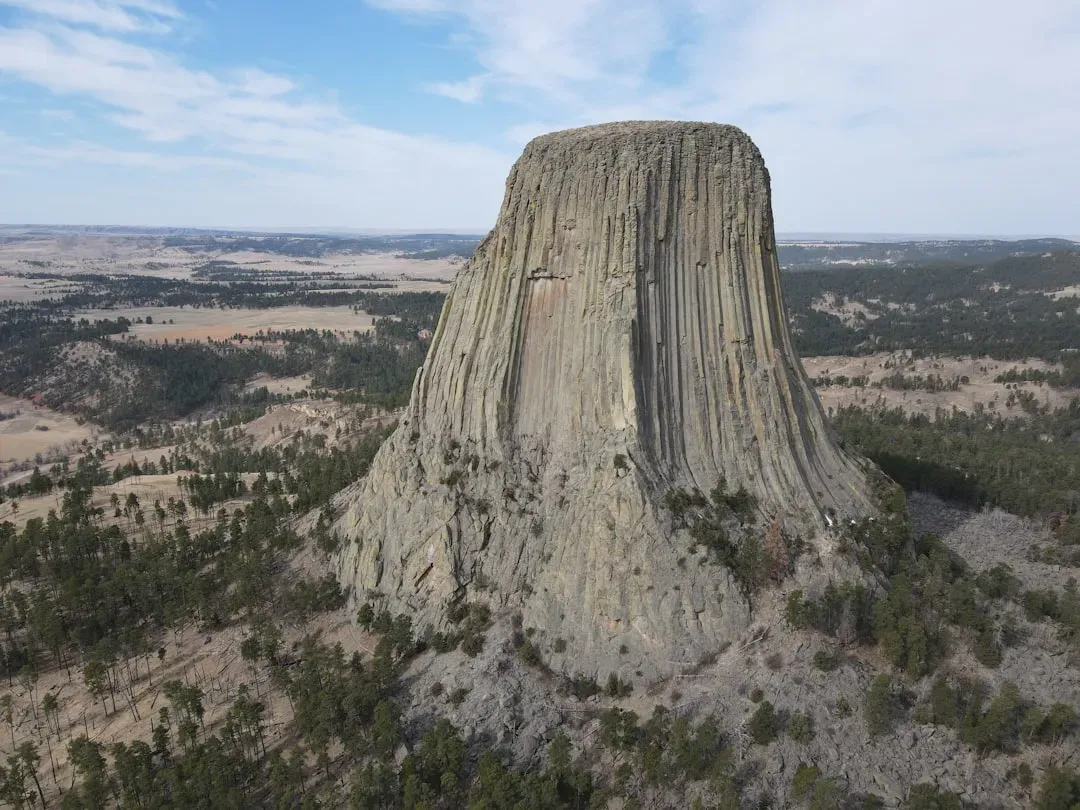
Devils Tower in Wyoming soars out of the landscape like a colossal tree stump carved by an impossibly neat woodworker. The sides of the monolith are lined with long, nearly parallel columns, some with polygonal cross-sections that once again echo that eerie basalt geometry. From a distance, it looks like a bundle of stone pipes lashed together, far too orderly to feel like random rock.
Here too, mainstream geology points to igneous processes: magma cooled slowly underground, cracked as it contracted, and left behind those towering prismatic joints. That explanation fits the basic physics, yet there’s still something almost theatrical about the vertical precision. The columns hug one another like closely spaced beams in a cathedral roof, and where they’ve fallen away, the breaks can resemble deliberate cuts. No human mason stacked these pillars, and no obvious sculptor’s tool marks exist, but the tower’s rigid, repeated patterns make our pattern-hungry brains itch for a designer.
3. Fingal’s Cave: A Geometric Cathedral Hidden in a Sea Cliff
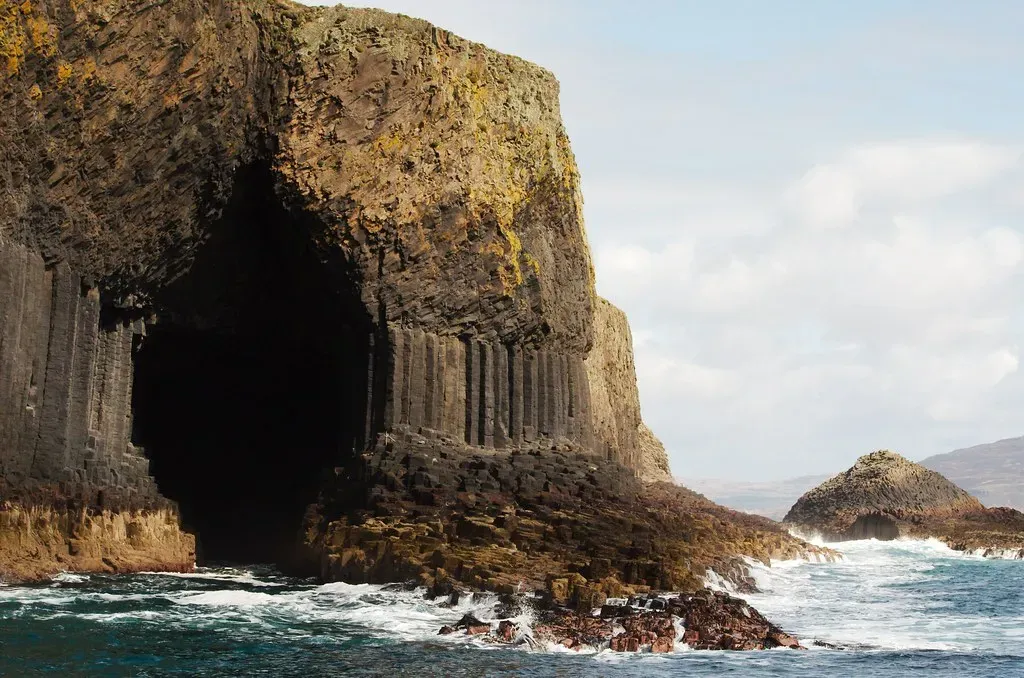
On the unassuming Isle of Staffa off the coast of Scotland, Fingal’s Cave feels like walking into the inside of a geometric organ pipe. The walls are formed by the same kind of basalt columns as Giant’s Causeway, but here they create a vaulted, tunnel-like chamber where the ocean surges and echoes. The rhythmic columns rise in clean vertical lines, almost like stone pilasters carefully aligned by a meticulous builder.
What makes Fingal’s Cave so unsettling is the combination of symmetry and atmosphere. The hexagonal columns line up with a consistency our brains instinctively label as “architectural,” and the acoustic properties of the cave amplify the illusion of design – the sound of the waves reverberates like it’s bouncing around a man-made hall. Geologists see thermal contraction joints and wave erosion; casual visitors see an abandoned stone temple. There’s no evidence of ancient stonecutters here, yet the whole place feels staged, like a naturally occurring optical illusion of intelligent construction.
4. The Hexagonal Jointing of Iceland’s Basalt Cliffs
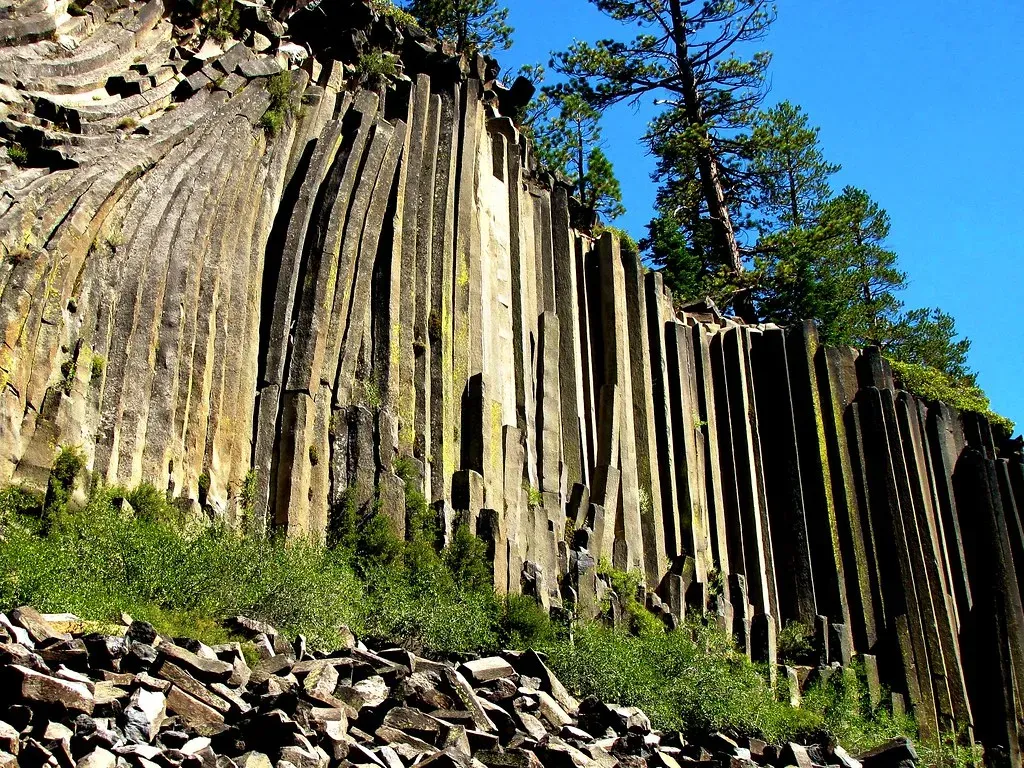
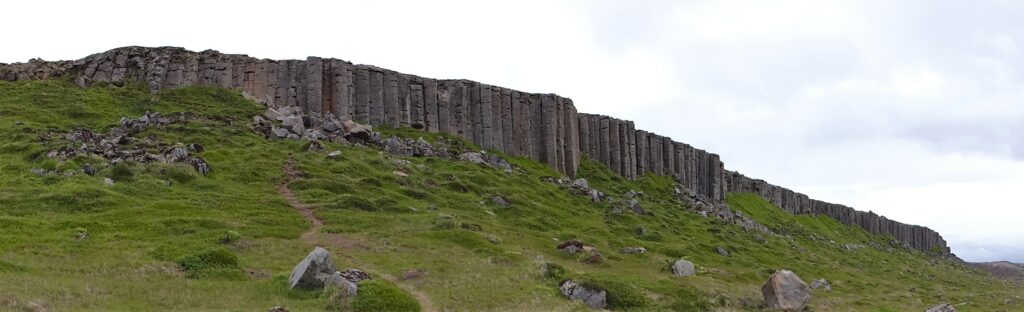
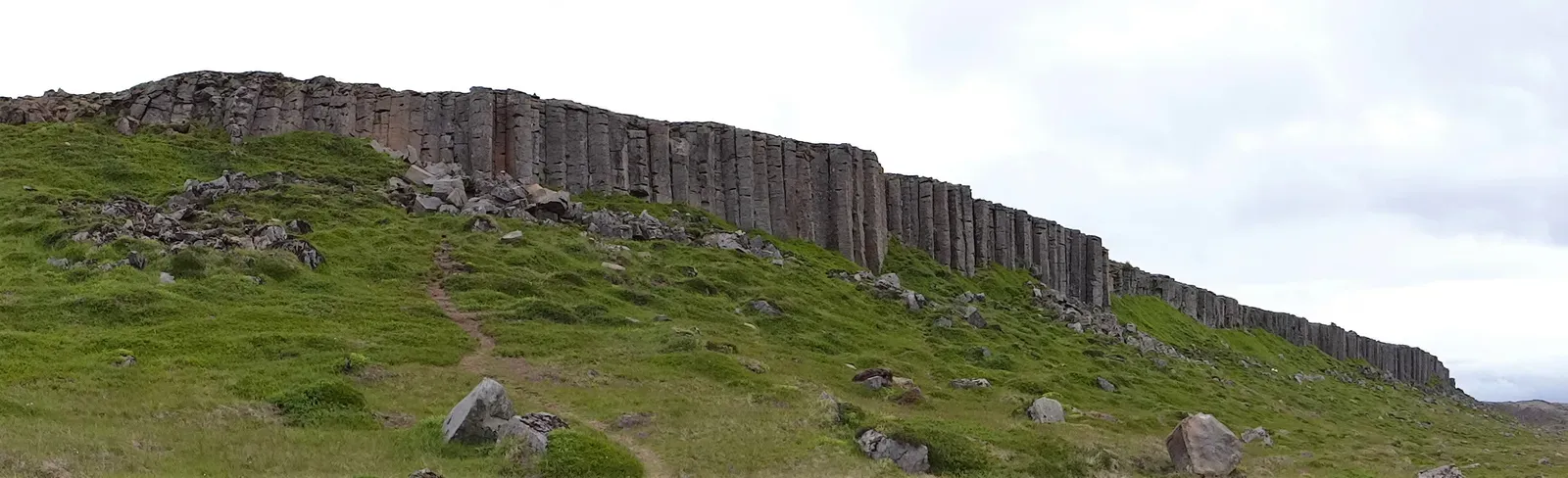
All over Iceland, you find cliffs, canyons, and sea stacks where basalt has fractured into hypnotically regular polygons. In some places, entire slopes look like stacked bundles of stone pencils; in others, column tops form near-perfect tessellated pavements. When you zoom in on the details, you’re greeted with repeating hexagons and pentagons that would not look out of place in a high-end architectural facade.
Again, the prevailing explanation is straightforward: lava flows, cooling rates, and contraction produce columnar jointing, and gravity plus erosion expose and shape them. Yet the precision, scale, and repetition of some Icelandic sites can feel like overkill for random geology. The human mind is wired to see grids, modules, and patterns as evidence of planning. So when cliffs break into evenly spaced columns with similar diameters and snug polygonal fits, it whispers of blueprints and builders, even as every bit of physical evidence insists this is just what molten rock does when it takes its time to cool.
5. Polygonal Ground in Permafrost: Nature’s Giant Stone Tilework
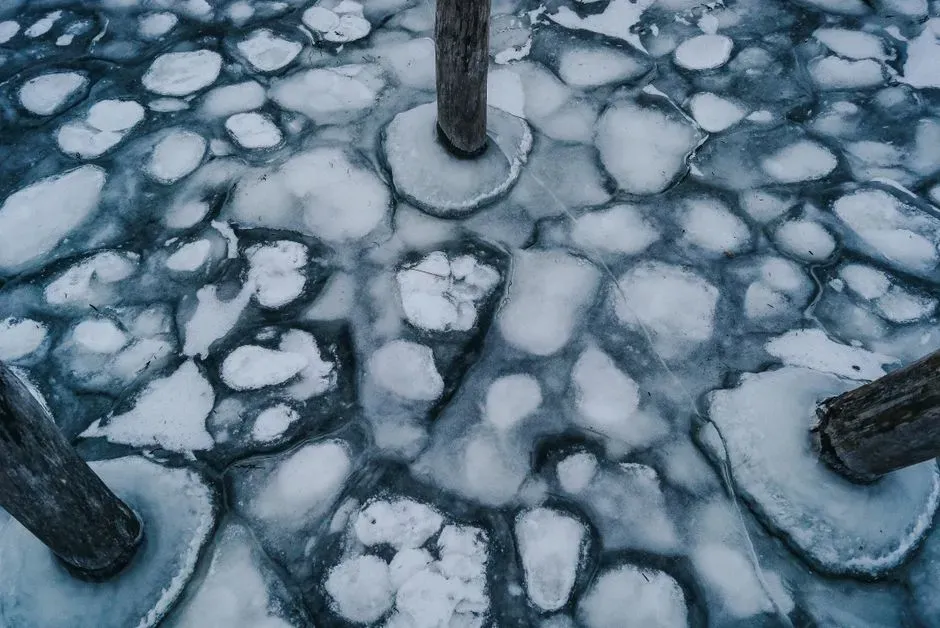
In polar regions and high-altitude tundra, you can look down from a drone or satellite and see the land divided into vast, stone-lined polygons, as if some patient ancient engineer laid out huge, irregular city blocks. These “patterned ground” formations can create networks of roughly hexagonal or polygonal shapes that stretch over large areas, edged by stones and separated by subtle ridges or troughs. From high above, they resemble an abandoned mega-pavement or a geometric agricultural grid.
The accepted explanation involves freeze–thaw cycles in permafrost: water expands, contracts, and sorts sediments and stones over long spans of time, gradually pushing rocks to form those borders. It is an elegant, physics-based account. Still, the sheer scale and consistency of the patterns can feel almost too intentional. We are used to nature making chaotic, flowing forms – meanders, dunes, fractal trees. Polygonal ground flips that expectation. It’s like the planet decided to experiment with large-scale tiling, and even when you know the mechanism, the aerial view triggers that uncanny sense of looking at a design, not just a process.
6. Tors and Balanced Boulders: Impossible-Looking Rock Stacks
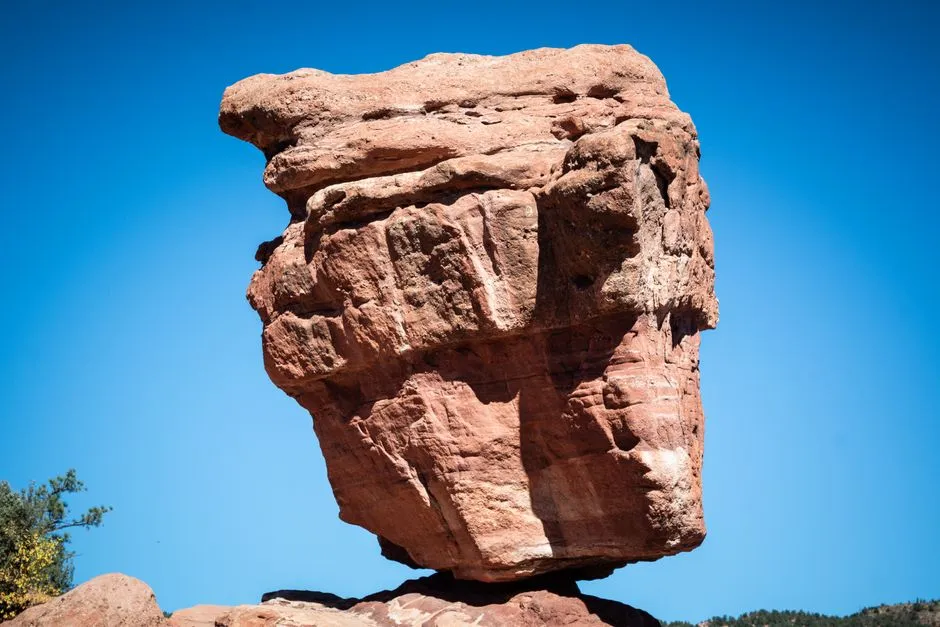
Across granite landscapes, especially on moors and mountaintops, you find tors and precariously balanced boulders that seem to violate common sense. Massive blocks rest on narrow contact points, or form layered stacks that look like they’ve been carefully arranged by a giant with a strange sense of symmetry. You can stare for minutes at some of these formations and struggle to accept they are the unintended outcome of slow erosion rather than deliberate stonework.
Weathering is the standard story here: cracks form, softer material erodes, and gravity gently settles blocks into new positions over millennia. That slow-motion rearrangement can easily produce odd balances and suggestive alignments. Yet when a multi-ton stone sits poised on a tiny base with a visually pleasing sense of proportion, it almost reads like a sculptural choice. That perception gap is important: scientifically, tors are classic products of natural processes; emotionally, they tap into the same reaction you have when you see a modern stone art installation and instinctively search for the artist’s name.
7. Tafoni and Honeycomb Weathering: Organic Geometry Carved by Air and Salt
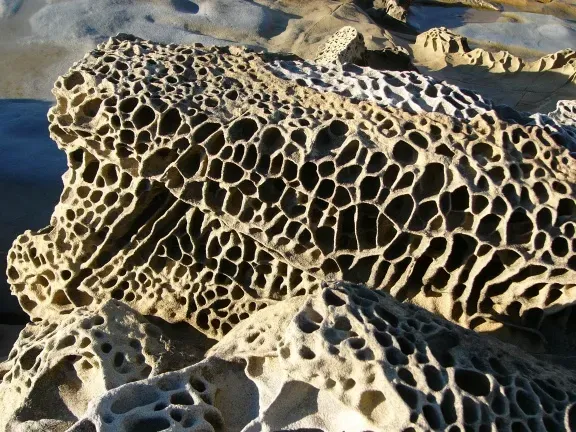
On certain coastal cliffs and desert outcrops, rock faces dissolve into intricate honeycomb patterns called tafoni, with cavities and thin stone partitions forming a delicate, repeating geometry. Some surfaces look like the inside of a beehive, others like eroded latticework or deliberately carved decorative panels. The regular spacing and similar size of the cavities can be mesmerizing, like an ornamented facade carved by an obsessive sculptor.
Scientific models point to a mix of salt crystallization, moisture, and mechanical weathering, which selectively removes material and leaves behind those weirdly consistent cavities. It is a textbook example of how simple rules, repeated over vast timescales, can produce complex and seemingly intentional patterns. Standing in front of a tafoni-covered wall, though, it can be hard not to feel like you’re staring at abandoned architecture. The pattern density, the rhythm of voids and solids, and the thin, delicate stone ribs challenge our intuition about what random erosion “should” look like.
8. Tessellated Pavements: Shorelines That Mimic Stone Floors
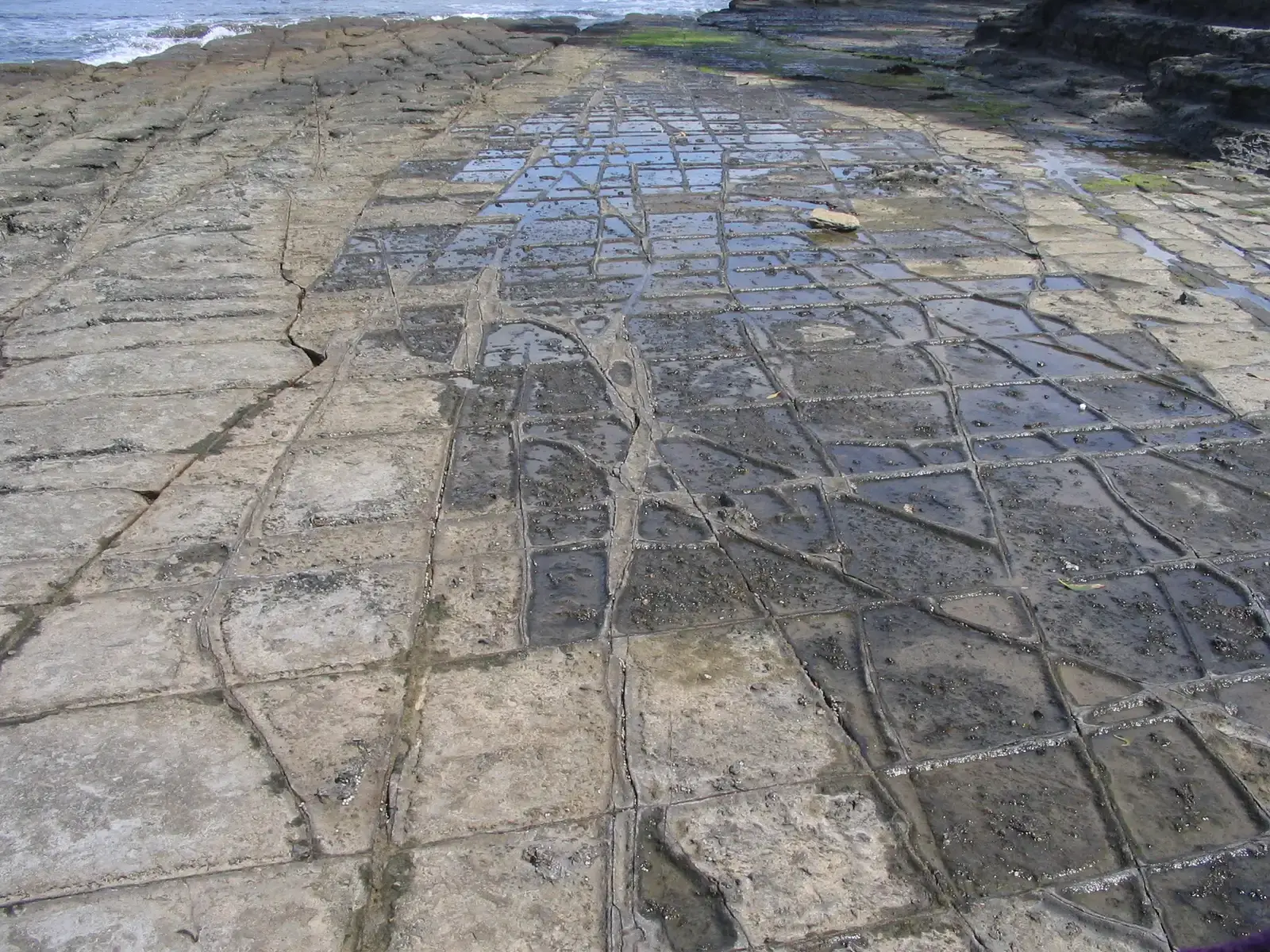
On a few rare coastlines, like parts of Tasmania, the bedrock is split into large, almost rectilinear blocks that look uncannily like man-laid stone tiles. At low tide, these tessellated pavements reveal long, straight joints and near-right angles, forming grids or offset rectangles that feel absurdly civilized for a wild shoreline. Some areas form “loaf” patterns with slightly raised centers; others form “pan” patterns with depressed central surfaces, adding another layer of apparent design.
This strange geometry is generally explained by jointing in the rock combined with differential erosion: cracks form in regular orientations, and waves plus chemical weathering wear certain zones faster than others. That recipe yields flat, tile-like blocks with fairly sharp boundaries. But to human eyes, especially from a bit of distance, you are basically looking at a natural plaza. There are no chisel marks, no cultural debris, no construction layers – nothing to suggest human origin – yet the visual message is, overwhelmingly, “somebody laid these stones here.” It is one of those cases where geology and intuition squarely disagree, and the dissonance is the entire charm.
Conclusion: When Nature Draws Straight Lines, Our Minds Add the Architects
Here’s the uncomfortable truth: every structure in this list can be framed as the outcome of known or at least plausible natural processes, even if some of the details are still being researched and debated. Cooling lava, freeze–thaw cycles, salt crystallization, jointing, and erosion offer powerful, physics-backed stories that do not require secret stonecutters, ancient global engineers, or non-human builders. From a scientific standpoint, the safest default is that these are natural systems, not hidden construction projects, and extraordinary claims need more than an eerie vibe to overturn that.
But emotionally and visually, these places land very differently. They look designed. They feel intentional. They hit that primal part of us that equates geometry with intelligence. My own opinion is that this tension is not a problem to solve away, but a feature of being a curious human on a complex planet. The more we learn how nature can mimic architecture, the less we need to reach for exotic explanations – yet the sense of wonder stays intact, maybe even grows. Next time you see a too-straight line or a suspiciously perfect hexagon in raw stone, ask yourself: is the real mystery out there in the rock, or in here, in the way your mind insists that someone must have meant for it to look that way?