
If you think time is a simple, steady tick-tock happening the same way for everyone, space will happily prove you wrong. The deeper you go into relativity, the more you realize that time is slippery, flexible, and incredibly sensitive to how fast you move and how close you are to massive objects. The wild part is that this isn’t just sci-fi talk; it’s baked into the way the universe works and has been measured with real experiments and real clocks.
When you start to grasp time dilation, everyday ideas like “now” and “later” stop being so simple. Your age, your memories, and even what you mean by “the present” can all diverge from someone else’s experience just because you took a different path through space. As you read through these eight facts, imagine yourself out there: orbiting Earth, skimming a black hole, or racing close to the speed of light. You’ll never think about a second the same way again.
1. Time Really Does Run at Different Speeds in Space
You might intuitively feel that a second is a second everywhere, but in space, that’s simply not true. The rate at which you experience time depends on how fast you move and how strong the gravity is where you are. If you are orbiting Earth on the International Space Station, time is actually passing at a slightly different rate for you than it is for someone standing in their backyard down here. The difference is tiny over a single day, but it’s real and measurable.
The strange part is that there’s no universal master clock that everyone can point to and say, “That is the real time.” Your wristwatch, the astronaut’s clock, and a deep-space probe’s internal timer all tick along at their own rates, fully valid in their own frames of reference. When you compare them later, you discover they disagree, not because any of them malfunctioned, but because the fabric of spacetime treated them differently. Once you accept that, you start seeing time as a personal journey, not a shared schedule.
2. Gravity Can Literally Slow Down Your Life
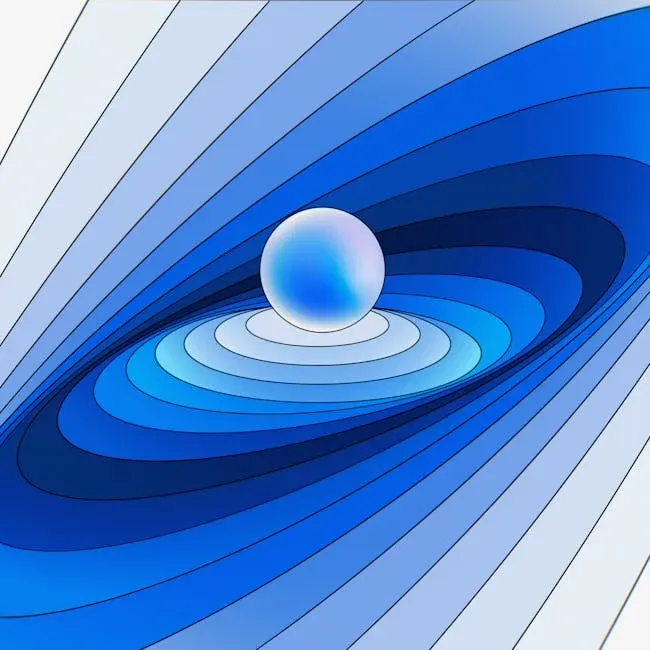
When you are closer to a massive object, like Earth, you’re sitting deeper in what you can think of as a gravitational “well.” Down there, time flows a bit more slowly compared with someone who’s farther out, floating higher up in that well. If you could watch a clock on a satellite from the surface of Earth with extreme precision, you’d see it tick slightly faster than your own clock, simply because it’s higher up in a weaker gravitational field. Your everyday experience hides this, but instruments do not.
This means that by just standing on the ground, you are experiencing time differently from someone in orbit. Even more bizarre, your head actually ages ever so slightly faster than your feet, because it is farther from Earth’s center and feels a bit less gravity. You don’t notice this in your daily life, but the effect is real and has been confirmed by extremely precise atomic clocks placed at different altitudes. You are literally stretching across slightly different rates of time every time you stand up.
3. Moving Faster Makes Your Time Run Slower

When you travel at high speeds, especially when you start approaching the speed of light, your personal clock ticks more slowly compared with someone who stays at rest relative to you. If you, as an astronaut, took a spaceship and accelerated to a significant fraction of light speed, your heartbeat, your thoughts, and your aging would all slow down relative to people back on Earth. From your perspective, everything would feel normal on board, but once you came home, you’d find more time had passed on Earth than had passed for you.
This effect, called kinematic time dilation, has been tested with fast-moving particles in accelerators and with high-speed aircraft carrying atomic clocks. Every time, nature sides with Einstein: the faster something moves relative to you, the slower its time appears to flow from your point of view. You can think of it like trading motion through space for motion through time – when you pour more of your “speed budget” into moving through space, you have less left to move through time. In space travel scenarios, this leads directly into the so-called twin paradox, where one twin can genuinely end up younger than the other.
4. Astronauts on the ISS Already Experience Tiny Time Shifts
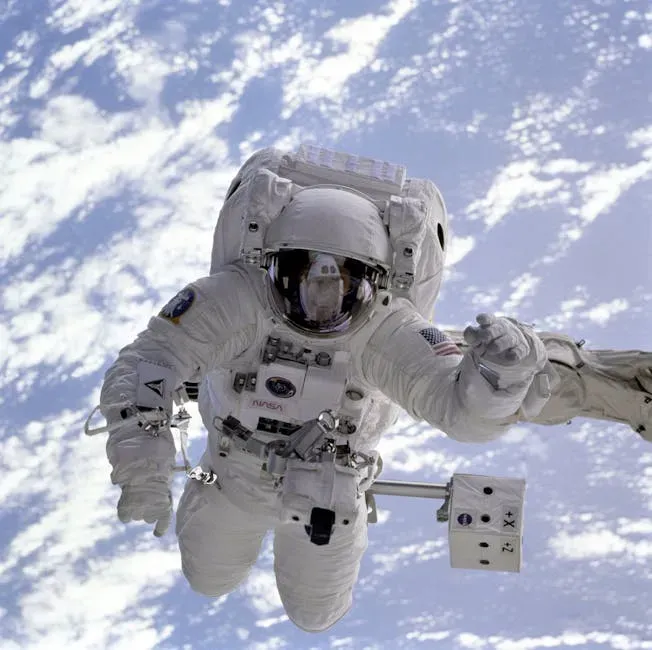
You might imagine that time dilation only matters near black holes or for starships racing between galaxies, but you’re already seeing it in low Earth orbit. As an astronaut on the International Space Station, you experience two competing effects: you are in weaker gravity than people on Earth, which tends to make your clock run faster, but you are also moving much faster, which tends to slow your time down. When you combine these, the speed effect wins by a bit, so your heart and your watch actually tick slightly slower than they would on the ground.
Over a typical six-month mission, this difference is only fractions of a second, so you won’t come back home noticeably younger than your friends. Still, from a physics standpoint, you truly have lived a tiny bit less time than everyone else on Earth during that same interval. When you see astronauts return and hug their families, you’re looking at people who have literally walked a subtly different path through time. Space travel is already reshaping what it means to live a human lifespan, even if only by slivers of a second for now.
5. Your GPS Only Works Because Engineers Correct for Time Dilation
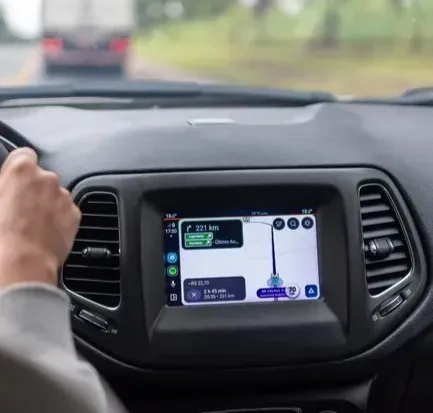
Every time you check directions on your phone, you’re quietly relying on Einstein’s relativity. The satellites that make up the Global Positioning System orbit high above Earth, where gravity is weaker and orbital speeds are high. Up there, their onboard atomic clocks tick at a different rate from clocks on the ground. If you didn’t account for both gravitational and motion-based time dilation, the satellites’ timing signals would drift away from Earth’s clocks.
For you, this would quickly turn into chaos in your navigation apps. Without corrections, your GPS position would become wildly inaccurate, with your location estimate drifting by kilometers in just a single day. To prevent that, engineers build relativistic adjustments into the satellites’ clocks and the software that interprets their signals. The end result is that you can casually find a coffee shop or a hiking trail, unaware that the system is constantly negotiating with the flexible nature of time just so your blue dot lands where it should.
6. Near a Black Hole, Time Becomes Almost Unrecognizable
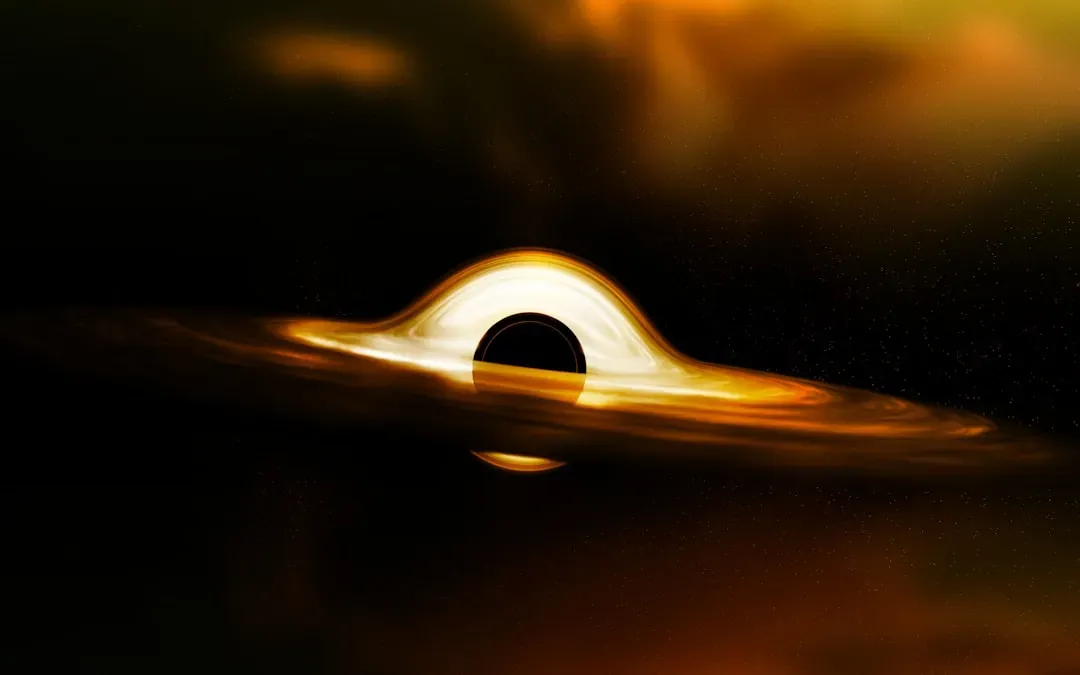
If you venture close to a black hole, time dilation stops being something you can ignore and turns into a dominant feature of reality. As you approach the event horizon, the gravitational field becomes so intense that time for you slows dramatically relative to distant observers. From your perspective, you might hover near the edge of the horizon for a few minutes or hours, but someone far away could watch ages pass while you linger in that lethal neighborhood. To them, your motions appear to slow and freeze as you approach the boundary.
From your own point of view, though, your personal time flows normally, right up until tidal forces tear you apart or you cross the horizon with no way back. You don’t feel yourself slowing down; instead, you would see the outside universe speed up. Galaxies would evolve faster, stars would live and die, and cosmic events would play out in a kind of fast-forward while you crawl ever closer to the point of no return. You can think of a black hole as an extreme time machine in which you can travel to the far future of the universe, but never return to tell anyone what you saw.
7. The Twin Paradox Shows How Space Travel Changes Aging
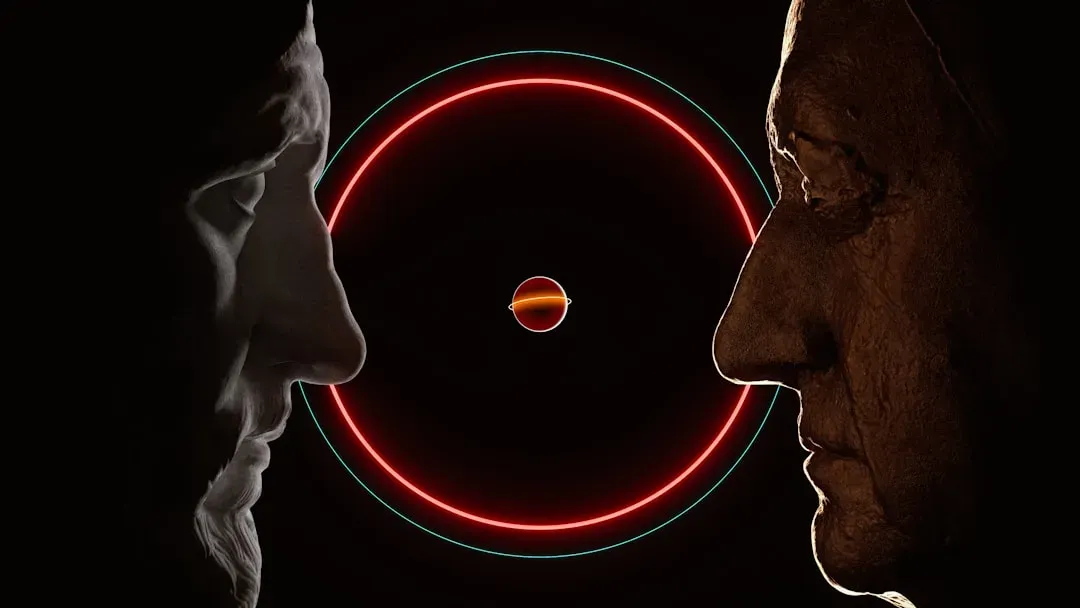
The famous twin paradox is a thought experiment, but it captures the emotional punch of time dilation in a way that equations never can. Picture yourself with an identical twin. One of you stays on Earth, while the other boards a spaceship and accelerates to a speed close to light. After a long, looping journey, the traveling twin comes back and finds that the stay-at-home twin has aged many more years. The paradox is emotional, not logical: it feels unfair that two people born at the same moment could end up different ages just by choosing different paths.
In reality, there’s no contradiction because the traveling twin’s journey includes acceleration, deceleration, and changing directions, while the twin on Earth follows a simpler, nearly straight path through spacetime. Time dilation calculations applied to real scenarios show that this age gap is not only possible, but unavoidable if the trip involves extreme speeds. When you imagine making such a journey yourself, you’re forced to think of time not as a fixed background, but as something you sculpt with your choices of motion and gravity. Your future self quite literally depends on the routes you take.
8. Even Standing Still, You’re Already Moving Through Curved Spacetime
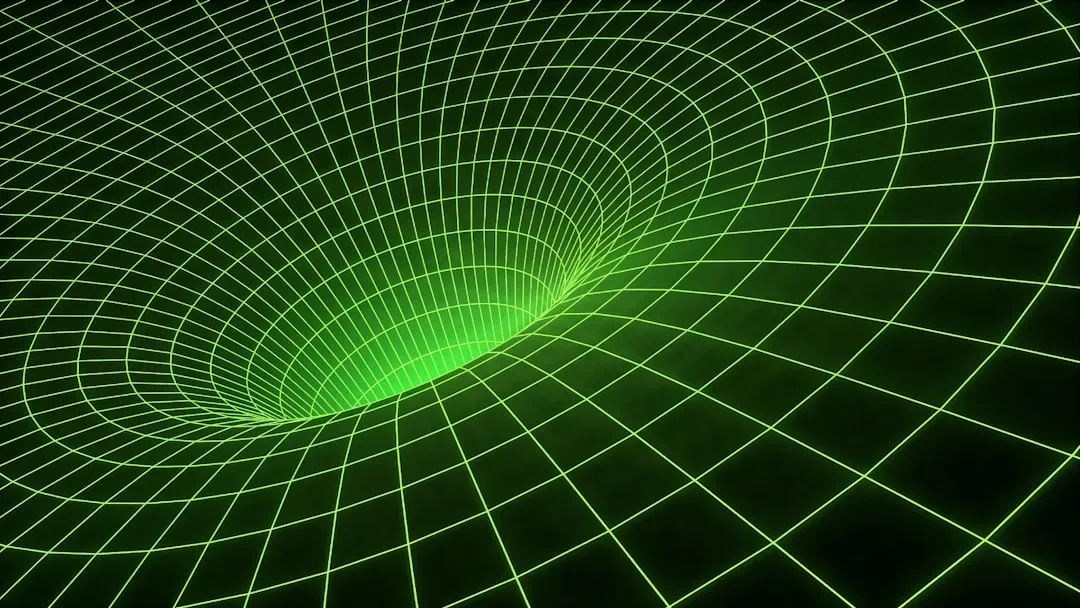
You may feel like you’re not involved in any of this relativity drama if you never leave the planet, but you’re already swimming in curved spacetime every second of your life. Earth’s mass warps the spacetime around you, and its rotation and orbit give you motion whether you want it or not. You are constantly experiencing mild gravitational time dilation compared with someone high above the surface, and mild kinematic time dilation compared with someone moving differently. The differences are tiny, but they’re there, shaping your lifespan in subtle ways.
On longer timescales and bigger distances, these small effects add up. Clocks on mountaintops, in airplanes, and in orbit all tick at slightly different rates, and when you synchronize and compare them, you expose the underlying curvature of spacetime that you inhabit. Even if you never strap into a rocket, you’re still a traveler through a warped, flexible fabric where time is not perfectly uniform. Once you see that, you can never quite go back to thinking of a second as a simple, identical beat for everyone, everywhere.
Conclusion: Your Life Is Already a Relativistic Journey
When you pull all of this together, you start to see that time dilation is not just an exotic effect reserved for sci-fi explorers. It’s woven into the GPS that guides your road trips, the clocks that keep your technology synchronized, and the subtle differences between your life on the surface and the world above the atmosphere. If you ever travel faster, go higher, or venture near more extreme gravity, you’ll simply be turning up a dial that’s already quietly in play.
In a very real sense, you and everyone you know are already stretching and bending time just by existing in a curved, dynamic universe. Every path you take, every altitude you live at, and every speed you move shapes your personal timeline by tiny but real amounts. The universe doesn’t hand you a single shared clock; it hands each of you your own. The only real question is this: now that you know your time is so personal and elastic, what will you imagine doing with it?