
Every time we think we’ve finally figured out how the universe works, nature quietly drops another riddle at our feet. Some of these puzzles go beyond tricky math or obscure physics; they challenge our sense of reality itself. Scientists can describe them, even predict them, but when you ask the simple question “Yes, but why does it really work like this?” the answers suddenly get shaky.
I remember the first time I read about one of these paradoxes as a teenager and felt a kind of vertigo, as if the floor under my everyday assumptions had cracked just a little. That feeling never totally went away. These are the paradoxes that tug at that crack, reminding us that for all our progress, we’re still just scratching at the surface of something far stranger than we expected.
The Quantum Measurement Paradox: Does Reality Exist Before We Look?
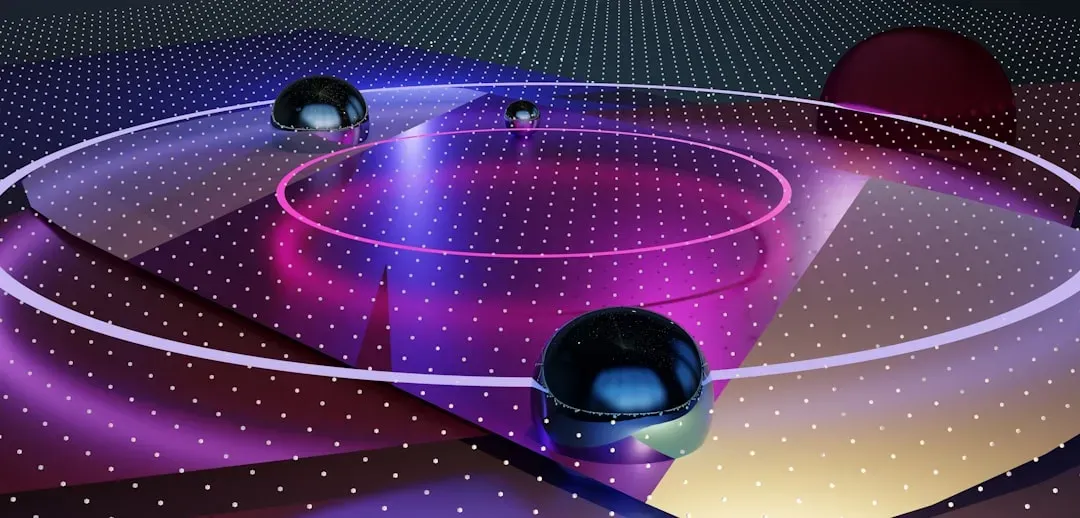
Imagine you flip a coin, but until you actually look at it, the coin is somehow both heads and tails at the same time. That is roughly what quantum mechanics says happens with tiny particles like electrons: before we measure them, they exist in a cloud of possibilities called a superposition. The paradox hits when you realize that the instant we observe the particle, its fuzzy state “collapses” into one definite outcome, as if reality only makes up its mind when we pay attention.
Physicists can calculate these effects with astonishing precision, and quantum theory reliably powers technologies like lasers and computer chips, yet nobody agrees on what this measurement collapse really means. Does consciousness somehow play a role, or is there a vast branching multiverse where every outcome happens in parallel? Or is there some deeper hidden mechanism that we just haven’t uncovered yet? The equations are solid, but the meaning behind them still feels like a magic trick we can’t quite see through.
The Wave–Particle Paradox: How Can Light Be Two Opposite Things at Once?
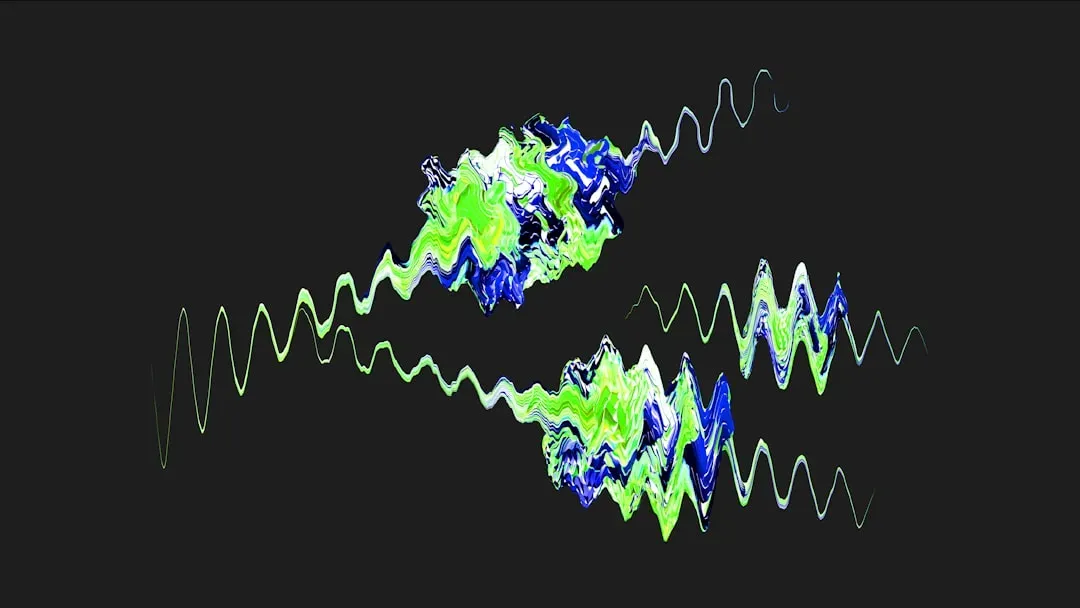
Light behaves like a gentle wave spreading through space and also like a stream of tiny particles called photons, and that combination simply should not make sense. In some experiments, light produces interference patterns, which is what you’d expect from ripples overlapping on a pond. In others, it hits detectors as individual, countable “clicks,” just like pellets fired from a gun. The same weird dual personality shows up for matter too, including electrons and even much larger particles in carefully controlled experiments.
We now talk about “wave–particle duality” as if it’s a normal thing, but it’s really a label slapped onto our confusion rather than a full explanation. The deeper question is what these objects truly are before we measure them: are they spread-out waves of probability, or compact particles, or something stranger that our everyday words cannot capture? I sometimes think of it like a person who is both a friend and a coworker, shifting roles depending on the situation, except here the roles are woven into the fabric of existence. The paradox lies in the fact that both descriptions work, yet neither feels like the whole story.
The Arrow of Time: Why Does Time Flow One Way in a Reversible Universe?

Everyday life screams that time has a direction: eggs only scramble, coffee only cools, we only grow older. This “arrow of time” feels so obvious that we rarely question it, but the microscopic laws of physics do not care which way time runs. If you were to film atoms bouncing around and then play the movie backward, the motions would still obey the same underlying equations. On the fundamental level, nature looks eerily time-symmetric, while our experience is anything but.
The usual explanation leans on entropy, the tendency for disorder to increase, like a deck of cards becoming more jumbled the more you shuffle it. But that explanation quietly assumes the universe started in a very special, low-entropy state, and nobody truly knows why it began that way. Why did the cosmos roll the dice in such an unlikely direction, setting up a future where broken glasses never unbreak and memories work only one way? The arrow of time may be the most intimate paradox of all because it shapes every moment of our lives, and yet its ultimate cause remains out of reach.
The Black Hole Information Paradox: Do Black Holes Destroy Reality’s Bookkeeping?
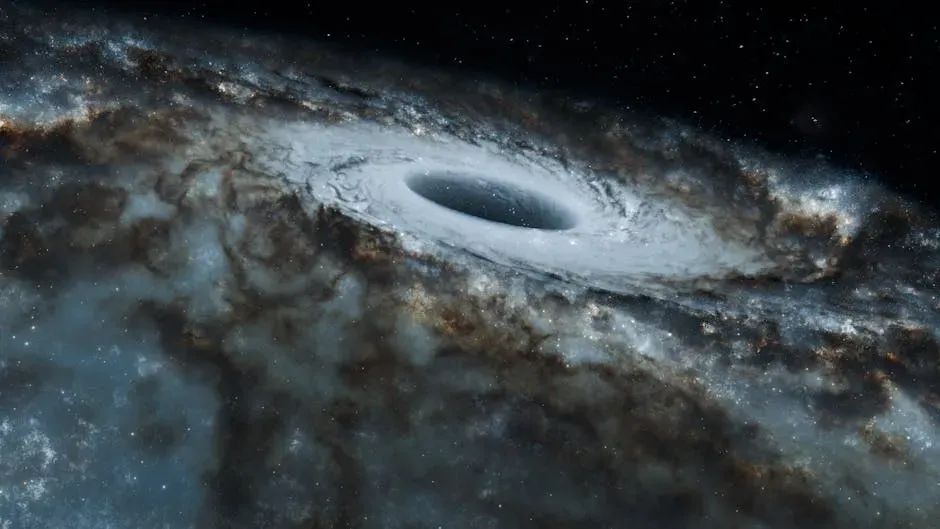
According to general relativity, a black hole is a region of spacetime so warped that nothing, not even light, can escape once it crosses the event horizon. If you throw in a book, a planet, or an unfortunate star, all the detailed information about what fell in seems to vanish forever behind that invisible boundary. The problem is that the rules of quantum mechanics insist that information about a physical system can never be completely destroyed; it can be scrambled or hidden, but not erased from the universe.
This clash between gravity and quantum theory creates the black hole information paradox, one of the most stubborn puzzles in modern physics. Some ideas suggest that information might be subtly encoded in the radiation black holes emit over unimaginably long timescales, or that the event horizon is not as simple as it looks. Others hint that our picture of spacetime itself breaks down at this extreme edge. When I try to imagine a love letter or a photograph disappearing into a black hole and somehow still existing in a scrambled form on the horizon, it feels like reality is running an encryption scheme that we barely understand.
The Fine-Tuning Paradox: Why Does the Universe Seem Perfectly Set for Life?
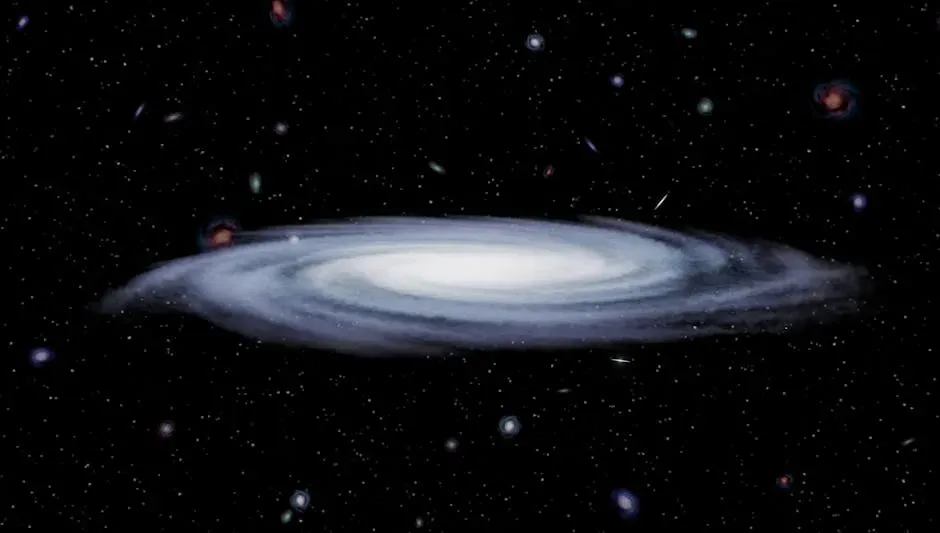
The basic constants of nature, like the strength of gravity or the mass of the electron, appear to sit in a surprisingly narrow range that allows stars to form, atoms to be stable, and chemistry to work. Change some of these values even a little, and you get a universe where matter clumps too fast, or not at all, or where complex structures never have a chance to arise. It is as if the knobs on the cosmic control panel were dialed in just right for life to eventually show up and wonder about them.
This eerie “fine-tuning” sparks a chilling question: is this incredibly unlikely alignment a cosmic accident, a sign of deeper physical laws we do not yet see, or something else altogether? Some researchers turn to the idea of a multiverse, where countless universes exist with different settings, and we just happen to live in one where life is possible. Others suspect that our picture is incomplete, and that once we find a more fundamental theory, these values will turn out to be inevitable, not delicate coincidences. Until then, the universe feels a bit like a house built exactly to your preferences before anyone knew you were moving in.
The Quantum Entanglement Paradox: How Can “Spooky” Connections Ignore Distance?
Quantum entanglement links particles so that measuring one instantly affects what you can say about the other, even if they are light-years apart. When you test one member of an entangled pair, the outcome is correlated with the partner in a way that cannot be explained by any ordinary signal traveling between them at or below the speed of light. It looks disturbingly like the universe is coordinating events behind the scenes, as if distance is less fundamental than we think.
Experiments over the past decades have repeatedly confirmed that these strange correlations are real, leaving little room for simple hidden-variable explanations. Yet they do not allow faster-than-light communication or time travel, so they sit in a limbo where they seem to defy common sense but not the letter of relativity. When I first tried to picture this, I imagined two perfectly synchronized dice that always match rolls no matter how far apart they are, without any message passing between them. Entanglement is nature’s way of saying that our usual idea of separate, independent objects may be more of a comforting illusion than a basic truth.
The Origin of Life Paradox: How Did Chemistry Cross the Gap to Biology?
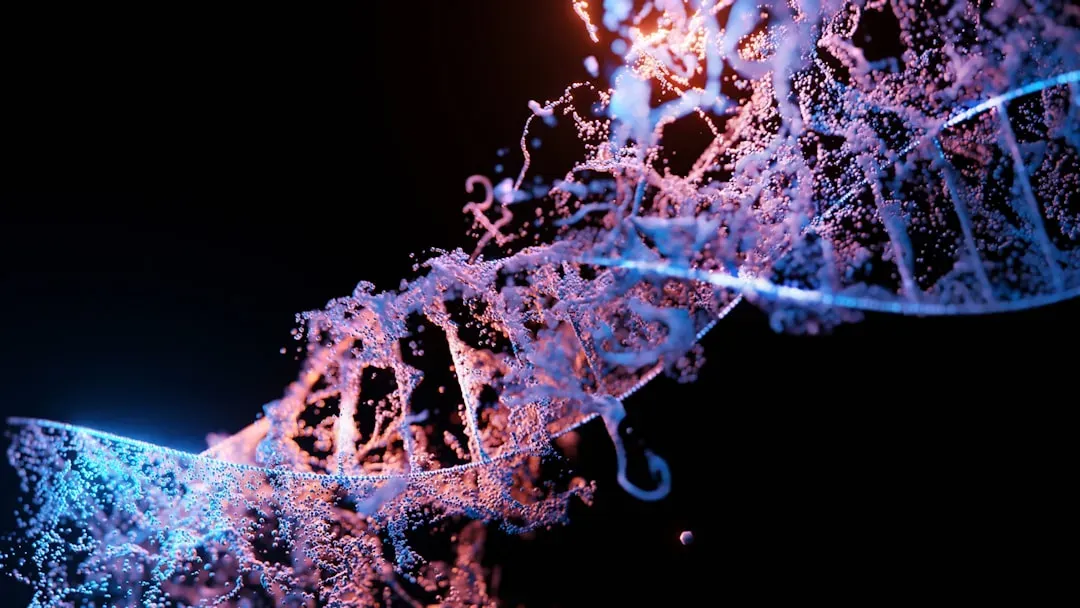
At some point on the early Earth, simple molecules dancing in water and on rocks somehow organized themselves into the first self-replicating systems. From that humble start came cells, plants, animals, and eventually us, but the precise path from non-living chemistry to living biology is still a massive question mark. We know that basic building blocks like amino acids can form under plausible ancient conditions, and we have several promising ideas for how primitive genetic molecules might arise.
The paradox sits in the gap between “possible in principle” and “happened in reality.” How did such a wildly improbable sequence of steps actually unfold in a specific place, at a specific time, on a specific world? Did life start in deep-sea vents, shallow ponds, icy surfaces, or somewhere we have not even considered yet? I sometimes think of it like trying to reconstruct a long-lost recipe when all you have left is the final dish and some of the ingredients. We can taste hints of the process, but the exact instructions remain elusive.
The Consciousness Paradox: How Does Matter Produce Experience?
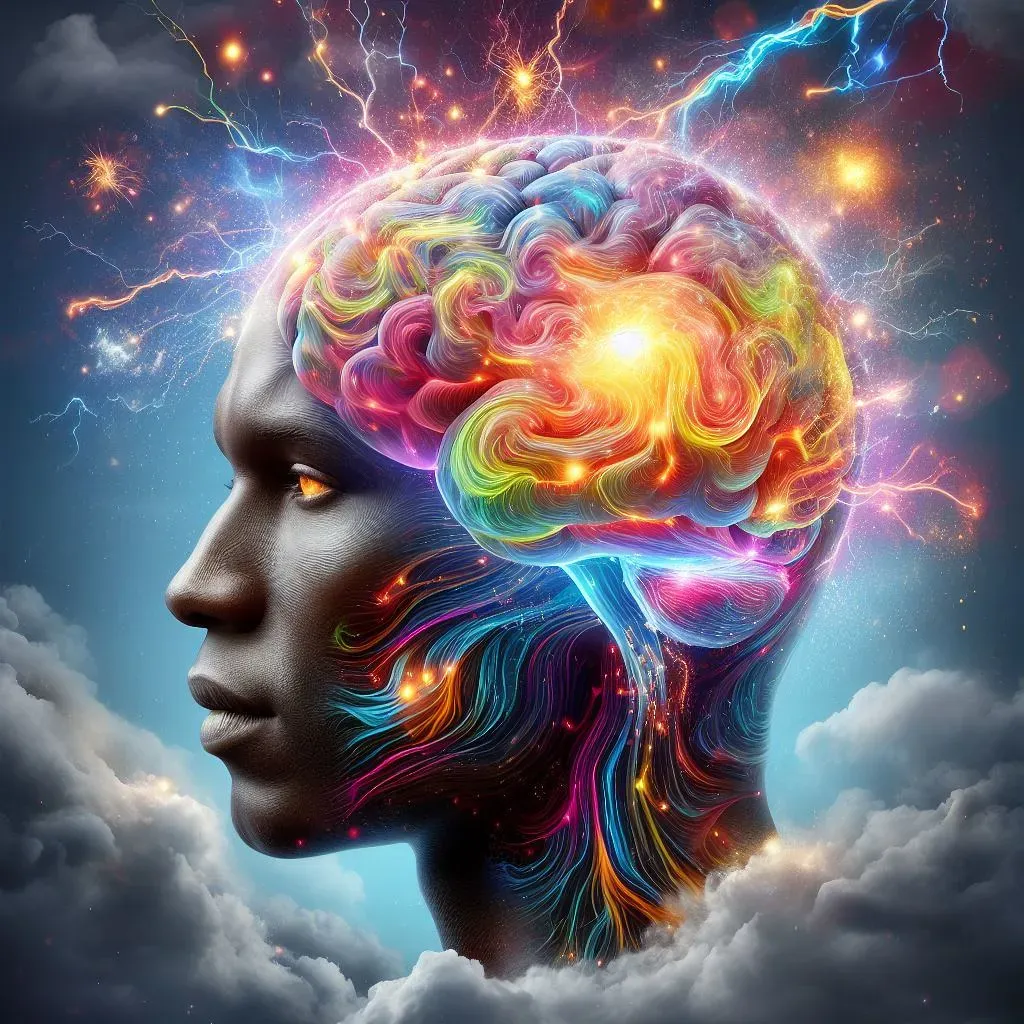
We can trace signals in the brain, measure electrical patterns, and map which regions light up when you see a color or remember a song. Yet none of that explains why any of this activity should be accompanied by an inner life, by the feeling of being you. This is the paradox of consciousness: how physical processes in neurons and synapses give rise to subjective experience, something that does not seem to fit neatly into equations or brain scans.
Some thinkers argue that once we fully understand the brain’s information processing, the mystery will dissolve, while others suspect there is something fundamentally missing from our current scientific worldview. Are thoughts and feelings just an emergent pattern, like a storm forming from swirling air and water, or is there a deeper property of the universe that we are only dimly sensing? When I sit quietly and notice the simple fact that there is a “me” having these thoughts, it feels like standing at the edge of a cliff, staring into a question that science has only begun to approach.
Conclusion: Living with Questions at the Edge of What We Know
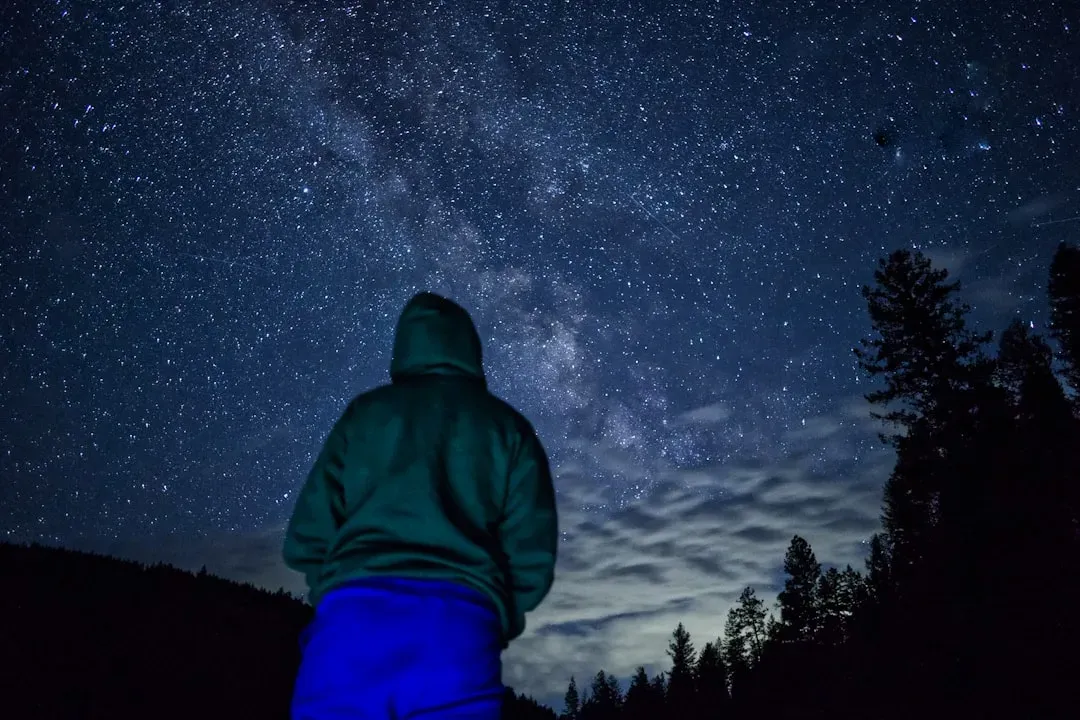
These paradoxes do not just make for clever dinner-party conversations; they reshape how we see ourselves and our place in the universe. Each one is a reminder that even our most successful theories are maps, not the territory itself, and that nature is under no obligation to match our intuitions. Instead of closing the book, every advance in understanding seems to flip to a new chapter filled with even stranger questions.
There is a quiet kind of courage in learning to live with these unanswered riddles, to let them stretch your imagination without demanding a tidy resolution. Maybe the real gift of these mind-bending paradoxes is that they keep us humble and restless at the same time, pushing us to explore further while accepting that some mysteries may outlast us. In a universe this strange, perhaps the more honest question is not whether we will ever solve them all, but how we choose to live while the answers are still unfolding. Which of these paradoxes will you find yourself turning over in your mind the next time you stare up at the night sky?