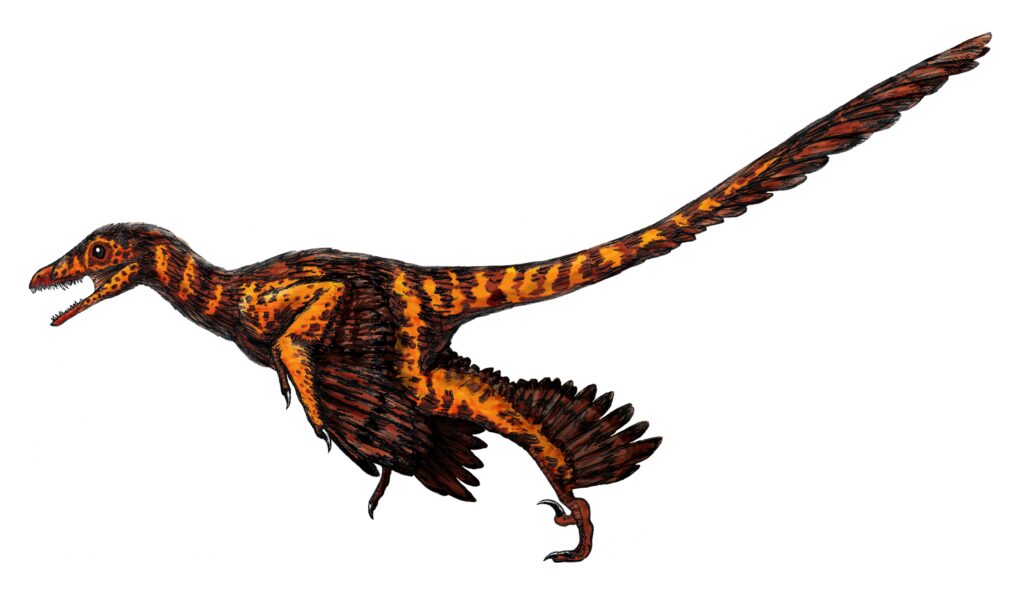

You grew up with scaly, roaring monsters on screen, but the real prehistoric world was a lot fluffier than Hollywood ever showed you. Over the past few decades, fossil sites in China and Mongolia have revealed something wild: many of the most famous “lizard-like” dinosaurs were actually cloaked in feathers, proto-feathers, or full-on wings. Once you see them as shaggy, birdlike animals, those old movie designs start to look almost like fantasy creatures instead of history. As you go through these eight dinosaurs, you can picture how different your mental image becomes when you add a coat of plumage, a fan of tail feathers, or even four wings. You are not just tweaking the look; you’re watching the entire story of dinosaur evolution tilt toward birds. And the biggest surprise? Some of the fiercest predators you know from movies would have looked more like oversized, murderously intense birds than like reptiles from a monster flick.
1. Velociraptor: From Scaly Movie Villain to Murderous Bird
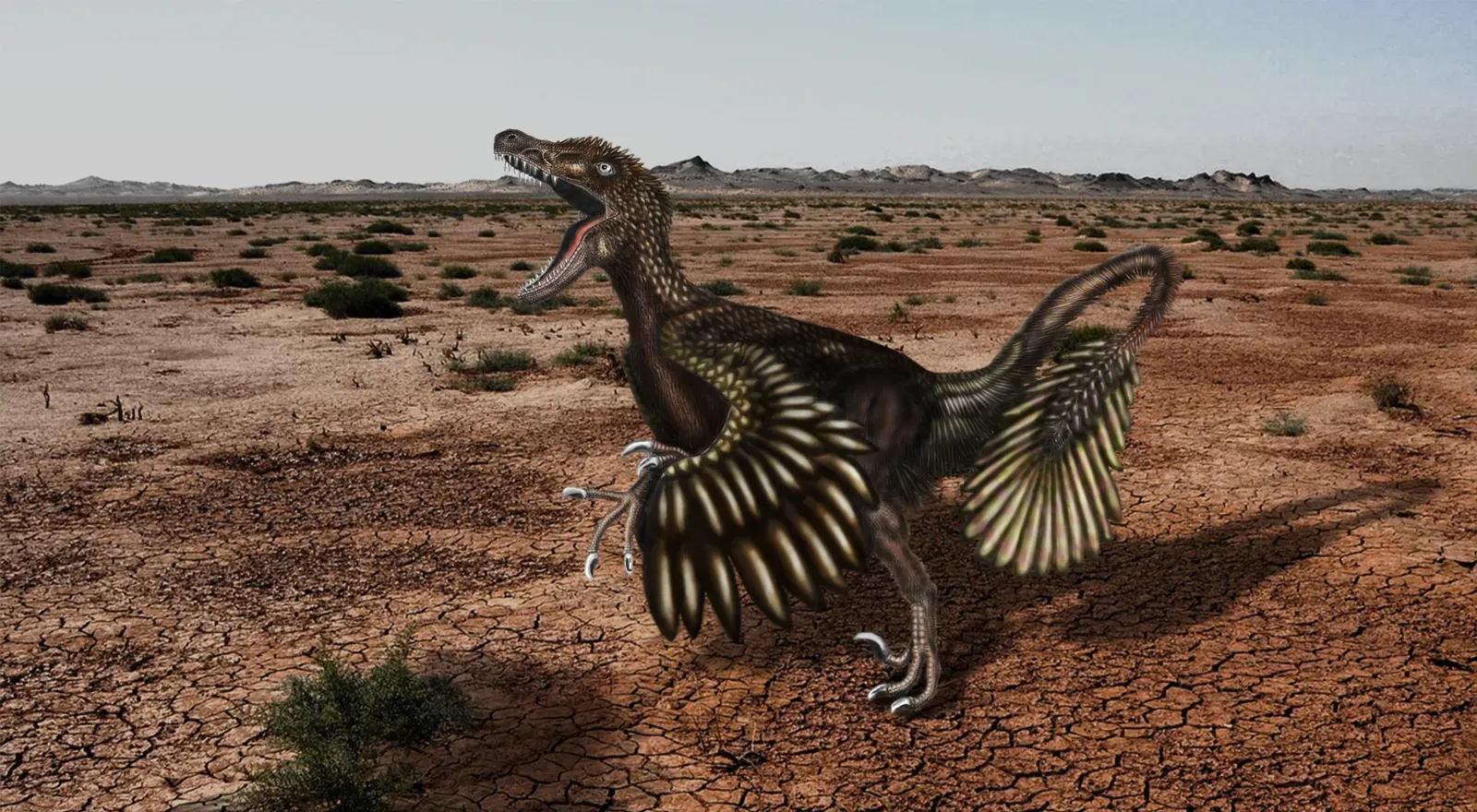
When you picture a Velociraptor, you probably see a man-sized, scaly pack hunter from a certain blockbuster franchise. The actual animal was smaller, closer to the size of a large turkey, and the evidence says you should picture it with feathers. On its forearms, bones show bumps called quill knobs, the same kind of structures birds use today to anchor strong wing feathers, so you are looking at an animal that carried proper plumage rather than bare skin. You can imagine a lean, lightweight predator with a long, stiff tail used for balance, arms sheathed in feathers, and a head that would not look too out of place on a giant, predatory bird. It likely did not fly, but its wings could have helped with maneuvering, display, or shielding its young, more like a bird of prey than a reptile. Once you put that image in your head, the movie version suddenly feels like an underdressed cosplay instead of the real thing.
2. Deinonychus: The Raptor That Should Have Always Been Fluffy
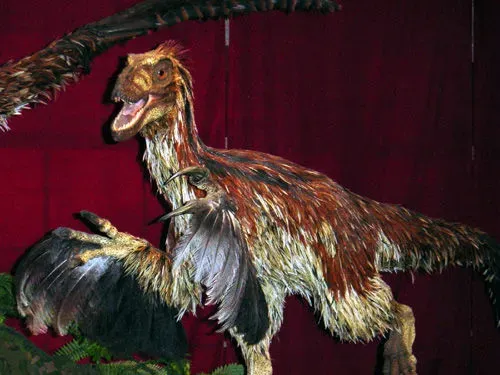
Deinonychus is the dinosaur that helped inspire the pop‑culture raptor image, yet you typically see it in art and older documentaries as a sleek, scaly predator. Today, you can safely treat a feathered Deinonychus as the default, because it sits deep inside the same family as Velociraptor and other clearly feathered dromaeosaurs. The modern reconstructions you would see in leading museums now give it a full coat of feathers, especially over the body, tail, and arms, turning it into something that looks almost like an oversized, land-bound hawk with a killer toe claw. You can picture it forest‑hunting with a light, birdlike step, using feathers to regulate body heat and maybe to signal to others, the way many birds flash their plumage. Instead of the glossy, crocodile-like hide you grew up with, you get a predator that feels far more alive and active, with bright eyes, a narrow snout, and a halo of bristling feathers. If a feathered Deinonychus walked into a modern city park, you might mistake it, at a distance, for a terrifying ground bird before you realized its claws do not belong in your century.
3. Yutyrannus: The Giant, Shaggy Cousin of T. rex
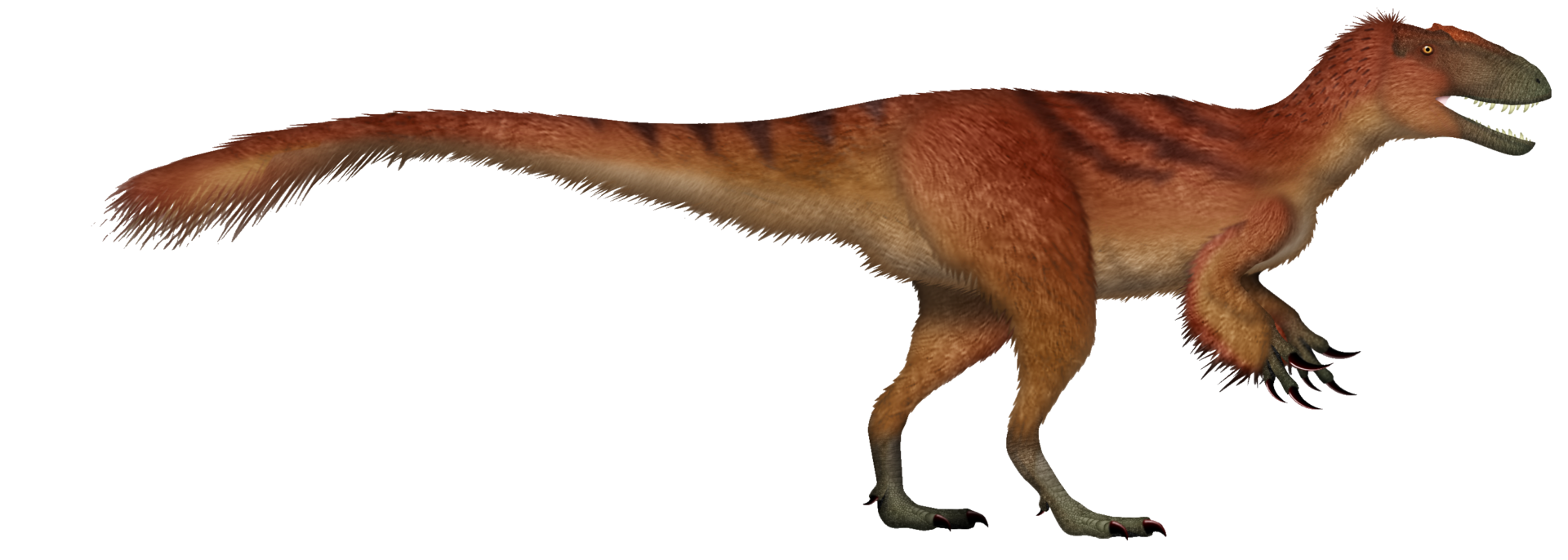
You might assume that feathers were just a small‑dinosaur thing, but Yutyrannus blows that idea apart. This huge predator, a relative of the later Tyrannosaurus rex, was roughly the length of a bus and lived in what is now northeastern China. Fossils preserve long, filamentous feather-like structures over much of its body, showing you that even large tyrannosauroids could be extensively feathered, almost like a giant, murderously inclined emu wrapped in a winter coat. When you imagine Yutyrannus, you are not looking at a naked, leathery monster towering over the landscape. Instead, you get a bulky, deep‑chested animal, its head massive and toothy, but its torso, neck, and tail cloaked in shaggy filaments that probably helped it stay warm in cooler climates. If a director tried to drop this version into a movie next to a classic scaly T. rex, you would immediately see how out of date the old style is; the feathered giant looks stranger, but it is the one that fits what the fossils actually show.
4. Caudipteryx: The Little Peacock‑Dino With a Tail Fan
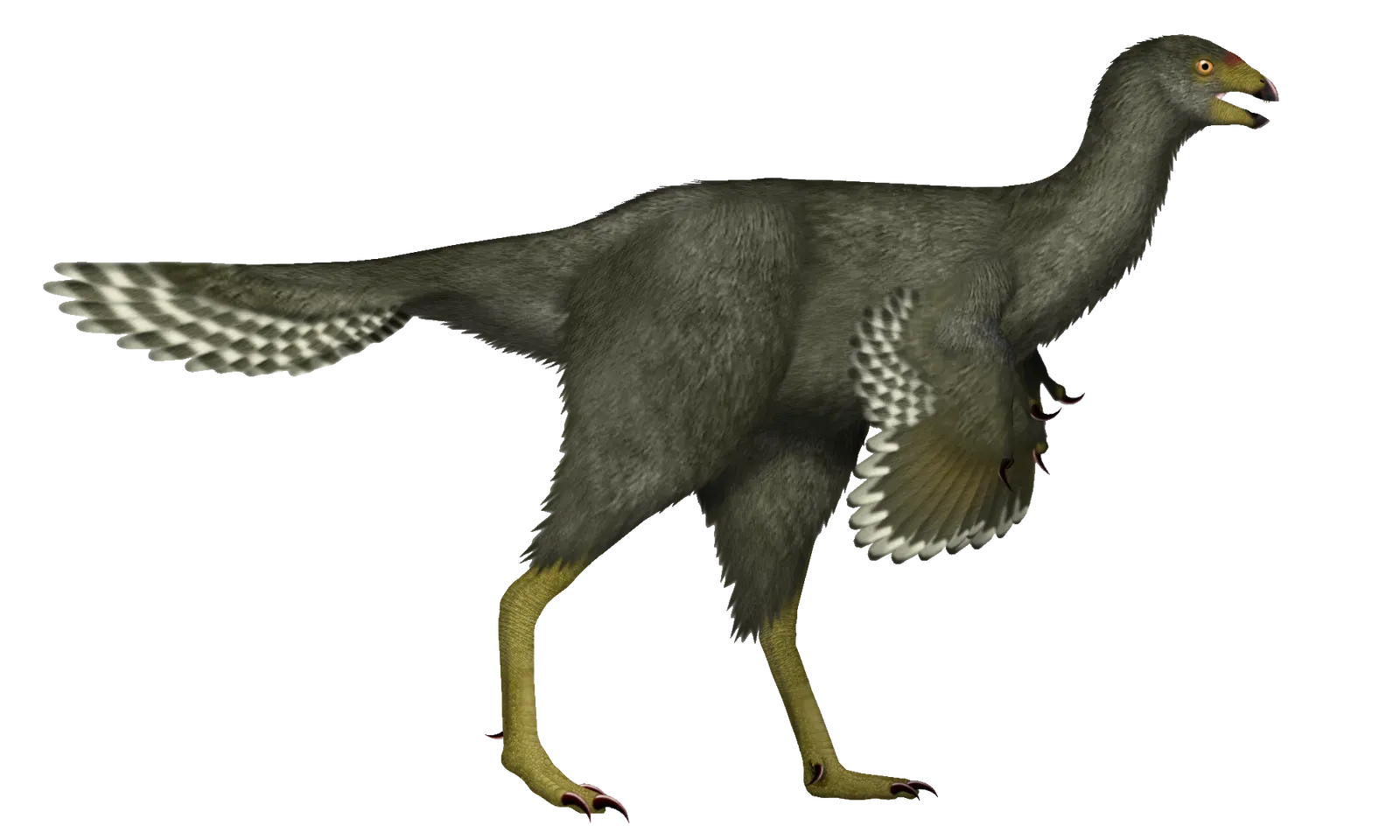
Caudipteryx is one of those dinosaurs that forces you to rethink the line between “dinosaur” and “bird.” When you look at fossil slabs from northeastern China, you can actually see the impressions of its feathers: a fluffy covering over the body, plus proper vaned feathers on its arms and a showy fan on its tail. You are looking at an animal roughly the size of a peacock or small turkey, with a short snout, big eyes, and strong legs, more like a flightless bird than a Jurassic lizard. Instead of prowling like a reptilian monster, Caudipteryx probably dashed around lakeshores and forest edges, picking at food and flashing that tail fan in courtship or displays, the way a modern peacock or pheasant would. If you mentally swap in a scaled skin and remove the feather fan, you ruin exactly what made it special. To see Caudipteryx correctly, you need to let your brain accept that some “dinosaurs” basically were ground birds in every way but name.
5. Microraptor: The Four‑Winged Glider You Never Saw in a Movie
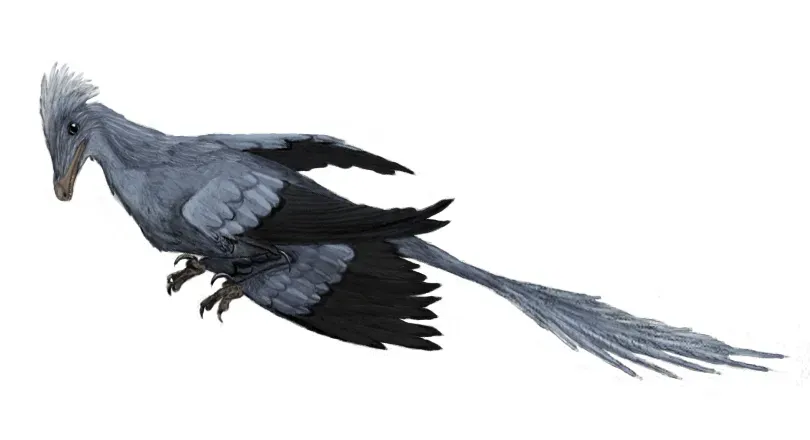
Microraptor may be one of the strangest dinosaurs you will ever imagine. Its fossils show long, fully formed flight feathers not only on the arms but also on the legs, creating something like a four‑winged glider. When you picture this animal leaping from a tree, you should see a small, crow‑sized predator spreading both arm and leg wings to control its glide, a dark, feathery silhouette slicing through Early Cretaceous forests. That is a long way from the simple, two‑legged, lizard-like designs you were fed as a kid. If you tried to plug Microraptor into a classic dinosaur chase scene, it would not run alongside the ground hunters; it would be in the branches above, waiting to pounce or glide between trunks like a feathered flying squirrel. Its teeth, claws, and long tail gave it all the tools of a tiny predator, but the feathers turned it into an aerial acrobat. When you accept this four‑winged body plan, you see how messy and experimental evolution really was on the road to modern birds, and you watch the Hollywood template crumble.
6. Sinornithosaurus: The “Chinese Bird Lizard” That Looks More Like a Hawk
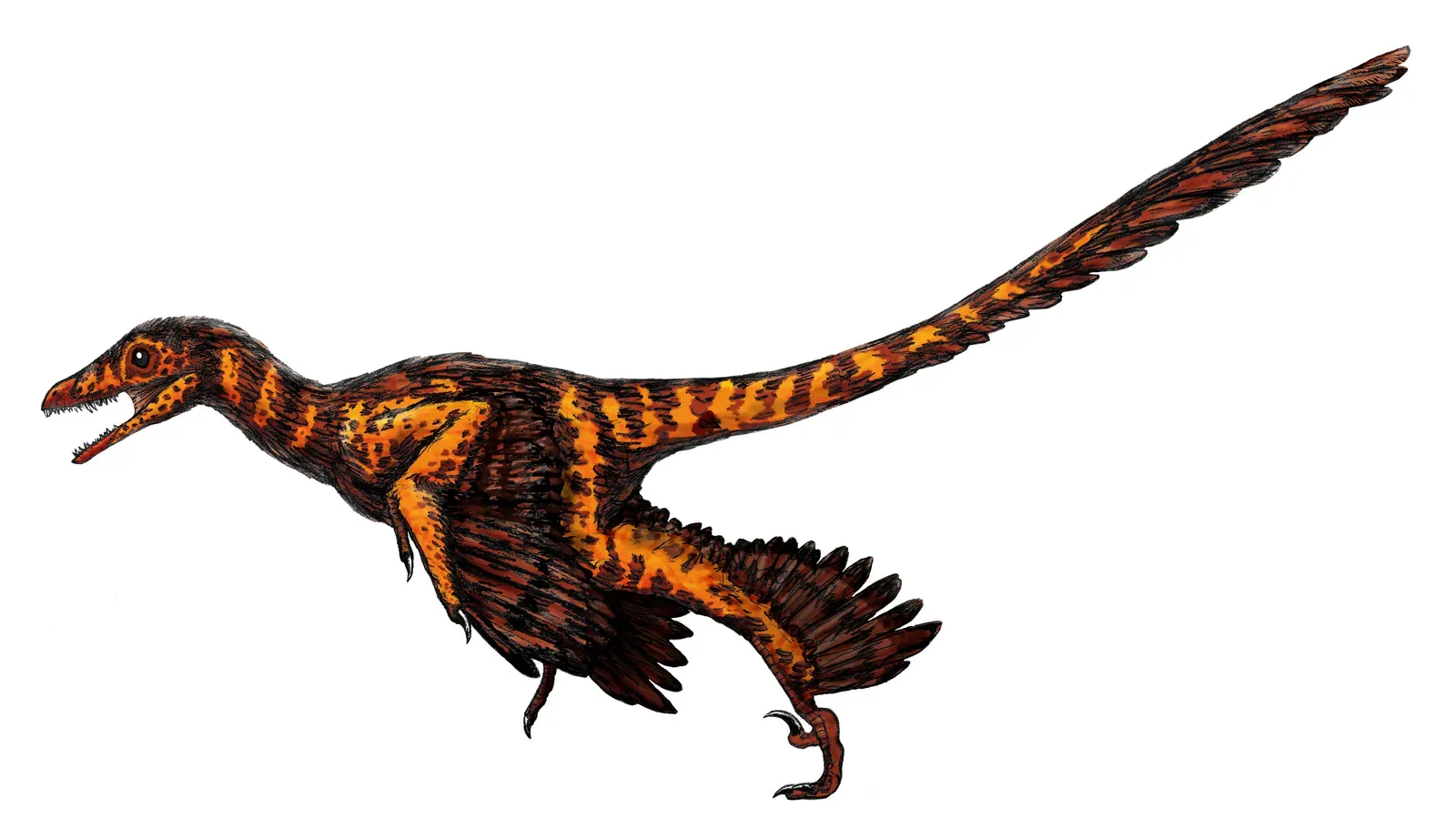
With a name that literally means “Chinese bird lizard,” Sinornithosaurus almost warns you up front that it is not a classic scaly beast. Its fossils, also from northeastern China, preserve a coat of fine, branched feathers all along the body and tail, plus wing-like structures on the arms. You can think of it as a small dromaeosaur, related to Velociraptor, but wrapped in a dense feather covering that would make it look to you more like a long‑tailed ground bird with a terrifying weaponized toe. If you placed Sinornithosaurus next to its movie counterparts, the biggest difference would not only be the feathers, but the entire posture and vibe. Instead of a crocodile-skinned sprinter, you would see a creature that seems ready to leap, pounce, and twist, its plumage puffing out when it is alarmed or displaying. In your mind, you could compare it to a hawk that lost the ability to fly long distances but kept all the attitude, stalking through undergrowth with a rust‑and‑black color pattern inherited from those fossilized feathers.
7. Citipati: The Feathered Nest‑Sitter, Not a Bald Skeleton‑Head
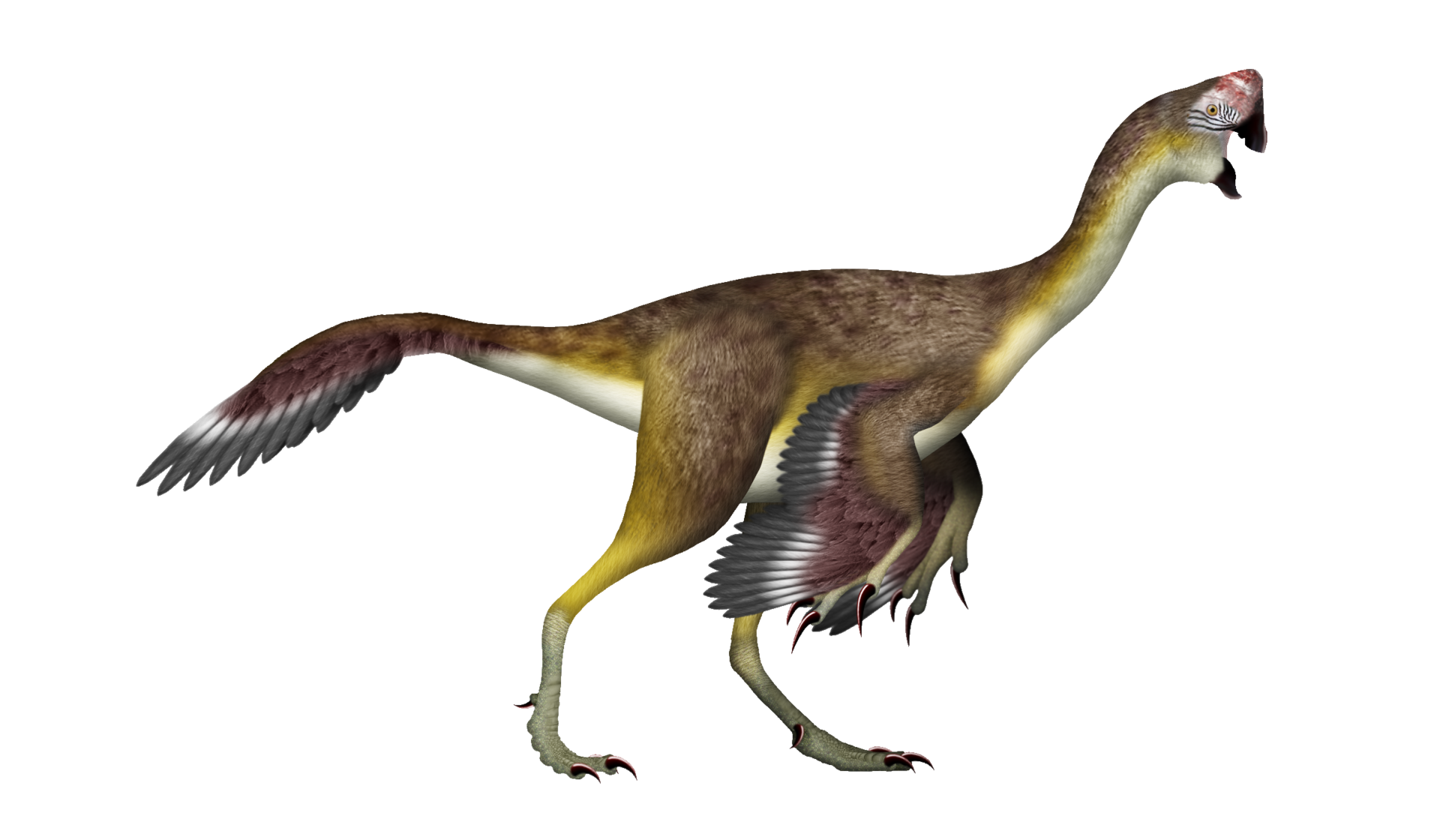
If you have seen Oviraptor‑type dinosaurs in art or games, you might remember them as bald‑headed, almost vulture‑like animals with bare skin and scaly bodies. Citipati, a well-known member of that group from Mongolia, tells you a different story. Fossils preserve skeletal features that strongly suggest tail feathers and a short, birdlike tail tip, and its close oviraptorosaur relatives from neighboring formations are preserved with full feathered coats. You are dealing with an animal that most likely carried a bird‑like covering over much of its body rather than a naked, reptilian hide. One of the most striking fossils of Citipati shows it sitting brooding on a nest, arms spread over its eggs, in almost exactly the same pose you see in modern birds as they warm their clutches. When you add feathers to that pose in your mind, it suddenly clicks: this is not a horror‑movie monster, but a giant, dedicated, bird‑like parent. In place of a scaly, skull‑faced scavenger, you get a feathered, crested animal that guarded its nest on windswept dunes, looking uncannily like an oversized, ground‑dwelling bird from some alternate Earth.
8. Dilong: The Fluffy Little Tyrant at the Start of the Line
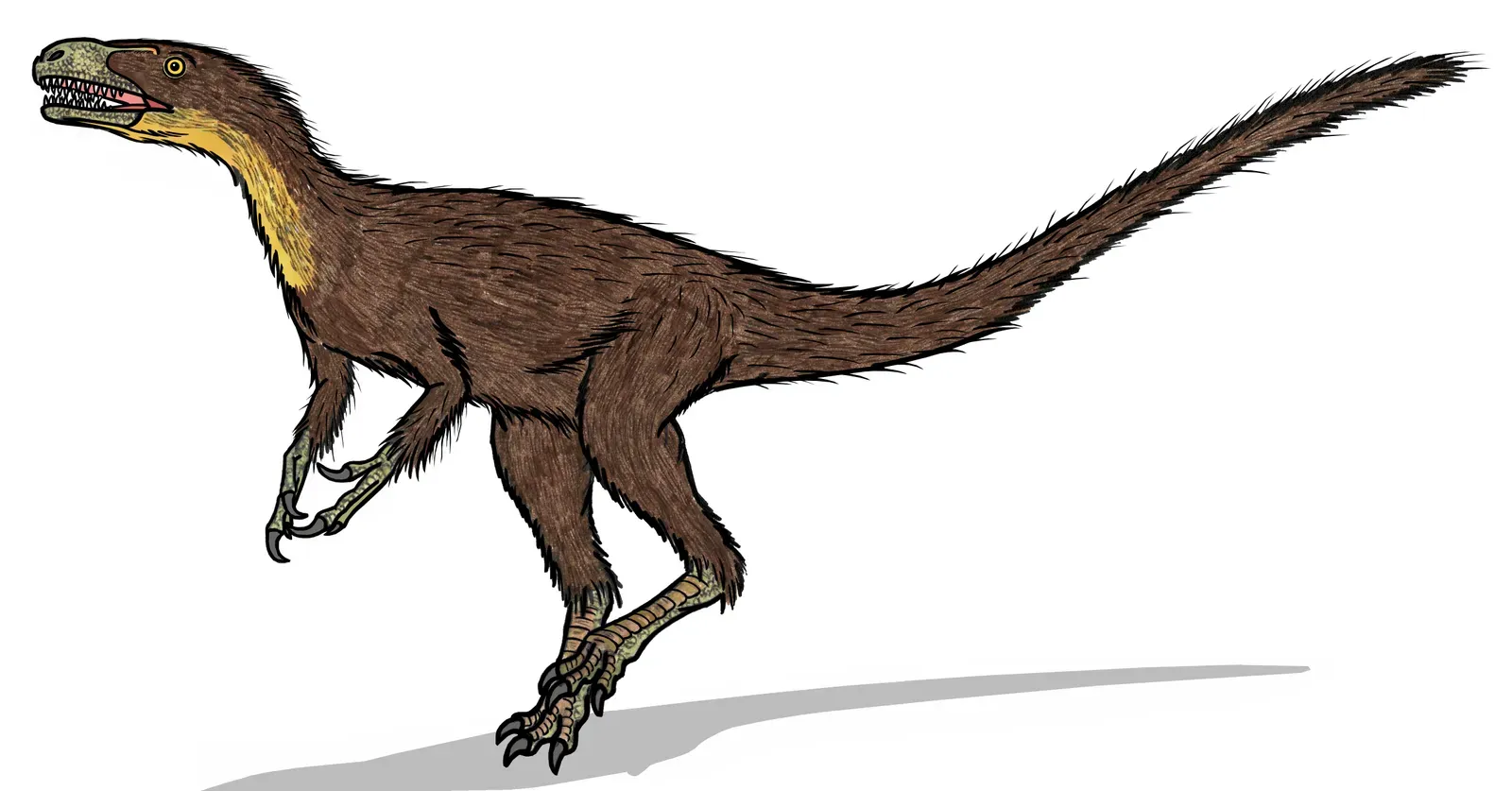
You might think of tyrannosaurs as massive, bare‑skinned apex predators, but Dilong represents an earlier, smaller stage in that lineage, and its fossils were found with traces of filamentous feathers. This dinosaur was much smaller than T. rex, closer to the size of a large dog, and when you coat it in those filaments you end up with something that looks to you more like a predatory, long‑tailed cassowary than like a mini version of the classic movie tyrant. Those filaments likely helped with insulation and may have been especially useful for a small, active hunter. If you mentally strip the feathers away and turn Dilong into a miniature scaly T. rex, you lose the key evolutionary hint it gives you: early tyrannosaurs were not just scaled‑down movie monsters, they were agile, feather‑coated animals thriving in cooler environments. That makes you rethink the whole family as a group that may have started off looking much more birdlike than you were led to believe. Once you accept a fluffy little tyrant at the base of the family tree, a feathered giant like Yutyrannus suddenly feels far more plausible, and the old scaly stereotype starts to feel outnumbered.
Conclusion: Once You See the Feathers, You Can’t Unsee Them
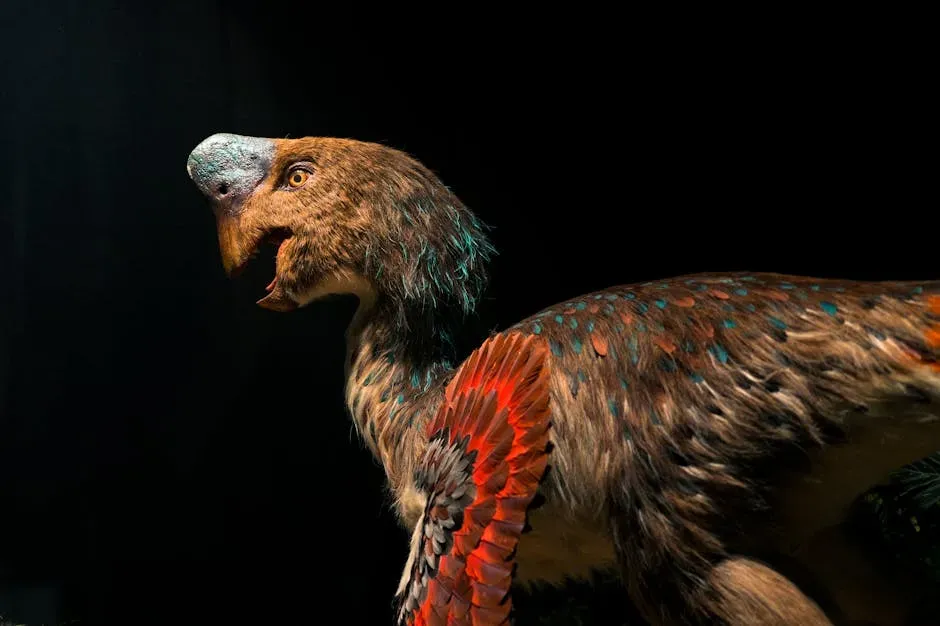
By the time you have walked through Velociraptor, Deinonychus, Yutyrannus, Caudipteryx, Microraptor, Sinornithosaurus, Citipati, and Dilong, you are probably noticing a pattern: once you add feathers, these animals stop feeling like movie monsters and start feeling like strange, powerful, prehistoric birds. You see nesting behavior, display structures, insulation, and even experiments with flight, all built on top of those classic dinosaur skeletons you already know. The bones stayed; the outer wrapping changed in your mind from scales to plumage, and suddenly the gap between dinosaur and bird almost disappears. The next time you rewatch a dinosaur film, you might catch yourself mentally “fixing” the designs, draping feathers over bare arms, adding tail fans, or shrinking that raptor down to turkey size. You are not ruining the fun; you are layering real science over the spectacle and appreciating just how bizarre and beautiful these animals really were. Now that you know how fluffy prehistory actually looked, which of your favorite movie dinosaurs do you find hardest to see the same way again?