

If you think quantum mechanics is just about mysterious particles and giant labs full of equipment you’ll never touch, you’re selling your daily life short. The strange rules that govern atoms and electrons are quietly pulsing underneath your phone screen, your computer, your medical scans, and even the GPS that gets you to the right coffee shop. You don’t see it, but you’re swimming in quantum effects from the moment you wake up and tap your alarm.
Once you start spotting these invisible influences, everyday objects feel a lot less ordinary. Light switches turn into gateways for electrons, bank cards hide quantum puzzles, and a blurry black‑and‑white MRI image transforms in your mind into a precise dance of spinning atomic nuclei. As you read on, you’ll see that the quantum world isn’t somewhere far away in a physics textbook – it’s humming quietly in your pocket, lighting your home, and even helping doctors look inside your body.
1. Your Phone’s Microchips Run On Quantum Rules

Every time you unlock your phone, you’re relying on a crowd of electrons that refuse to behave like tiny billiard balls. The transistors that make up modern microchips are built so small that classical physics just doesn’t explain how they work anymore. At those scales, electrons can act like waves, slip through barriers, and occupy energy levels in ways that only quantum mechanics can describe. You might think of your phone as a solid, dependable gadget, but under the hood, it’s a carefully engineered quantum playground.
You benefit from this in a very practical way: more powerful processing, smaller devices, and less energy use. Designers of microchips lean heavily on quantum models to predict how electrons will move in semiconductors like silicon. Without those models, your processor would be slower, bulkier, and wildly inefficient. So when you swipe, scroll, or stream, you’re really harnessing decades of work figuring out how to make quantum behavior stable and predictable enough to fit in your hand.
2. LEDs, Screens, and Lasers That Light Up Your World

Take a look at the nearest screen or tiny status light, and you’re probably staring at quantum mechanics in action. Light‑emitting diodes (LEDs) work because electrons in a semiconductor jump between quantized energy levels. When an electron falls from a higher level to a lower one, it emits a packet of light with a specific color. That precise control of color and brightness is why your TV looks vivid, your phone display is sharp, and your home lighting can shift from warm to cool at the tap of a button.
Lasers push this quantum story even further. In a laser, atoms or electrons are nudged into higher energy states and then encouraged to release their energy in a perfectly synchronized way. Because those energy changes are quantized, the light that comes out is incredibly pure and focused. You use this in ways you might not think about: barcode scanners at the store, optical drives, fiber‑optic internet signals, and even some medical procedures. All of that precision rests on the simple quantum fact that energy in atoms comes in fixed steps, not a smooth slide.
3. GPS and Satellite Systems That Need Einstein and Quantum Together

When you check navigation on your phone, you’re depending on two pillars of modern physics at once: relativity and quantum mechanics. The satellites that feed your GPS signal keep time using atomic clocks, which rely on the quantized energy levels of atoms, often forms of cesium or other carefully chosen elements. Inside those clocks, electrons flip between specific energy states, and the frequency of that transition gives you an extraordinarily precise “tick.” Without that stable quantum rhythm, your map would quickly drift off target.
Here’s the wild part: those quantum‑based clocks are so accurate that even tiny effects from relativity start to matter. The speed and altitude of satellites cause their clocks to run at slightly different rates than clocks on Earth, so engineers must correct for those shifts to keep your position accurate. The combination of quantum timekeeping and relativistic corrections is what lets you find a restaurant, track a delivery, or hail a ride within a few meters instead of somewhere in the next town over.
4. Medical Imaging That Sees Inside You Without Cutting You Open

If you’ve ever had an MRI scan or know someone who has, quantum mechanics played a direct role in that experience. MRI machines rely on the tiny magnetic properties of atomic nuclei, which behave like spinning tops with quantized angular momentum. When you lie in the machine, strong magnetic fields line up those spins, and carefully tuned radio waves knock them slightly out of alignment. As the spins relax back, they emit signals that can be measured and converted into detailed images of your tissues and organs.
Those nuclear spins and the energies involved are purely quantum phenomena; classical physics just doesn’t give you the right predictions. Because this technique is so sensitive to subtle differences in your body’s water and fat content, doctors can spot tumors, inflammation, or injuries without making a single incision. You walk in, lie still, and walk out, while quantum properties of particles inside you quietly give up their secrets to the scanner.
5. Secure Communications and Banking That Rely On Quantum Limits

When you use online banking or send a secure message, your data is protected by cryptographic techniques that in a deep way are shaped by quantum mechanics. Even though current mainstream encryption is not yet full‑blown quantum cryptography, some of the mathematical assumptions behind it trace back to what is and isn’t possible in the quantum world. More directly, experimental systems for quantum key distribution are already being tested and, in some networks, deployed. In those systems, the security comes from a very simple quantum rule: measuring a quantum state inevitably disturbs it.
Imagine sending someone a series of single photons prepared in special quantum states. If an eavesdropper tries to intercept and measure them, the act of measurement changes those states in a way you and the other person can detect. That means you can know whether the line is secure before you send your sensitive information. Even if you’re not yet using such a system personally, some research networks and government projects already are, and the principles are being developed for broader use. In the long run, the same weirdness that once sounded like science fiction could be the backbone of how you keep your digital life private.
6. Everyday Electronics Shaped by Quantum Materials

From the metal in your laptop’s circuits to the magnetic strip on an old bank card, materials work the way they do because of quantum behavior inside them. Conductors, insulators, and semiconductors all differ based on how electrons fill up quantized energy bands in a crystal lattice. When you plug in a device and it either carries current easily, blocks it, or does something in between, you’re watching a macroscopic consequence of those quantum band structures. Engineers manipulate these structures to create special materials with tailor‑made electrical, optical, or magnetic properties.
Some of the most striking examples show up in technologies you might brush past without noticing. Magnetic storage in older hard drives, for example, relies on how tiny regions in a material can switch their quantum‑driven magnetic orientation. Emerging devices may use exotic materials called superconductors, which can carry electrical current with essentially no resistance when cooled below a certain temperature. All of this design work is guided by quantum theory, even if all you see is a sleek gadget that simply “works” when you hit the power button.
7. The Coming Wave of Quantum Computers and Sensors
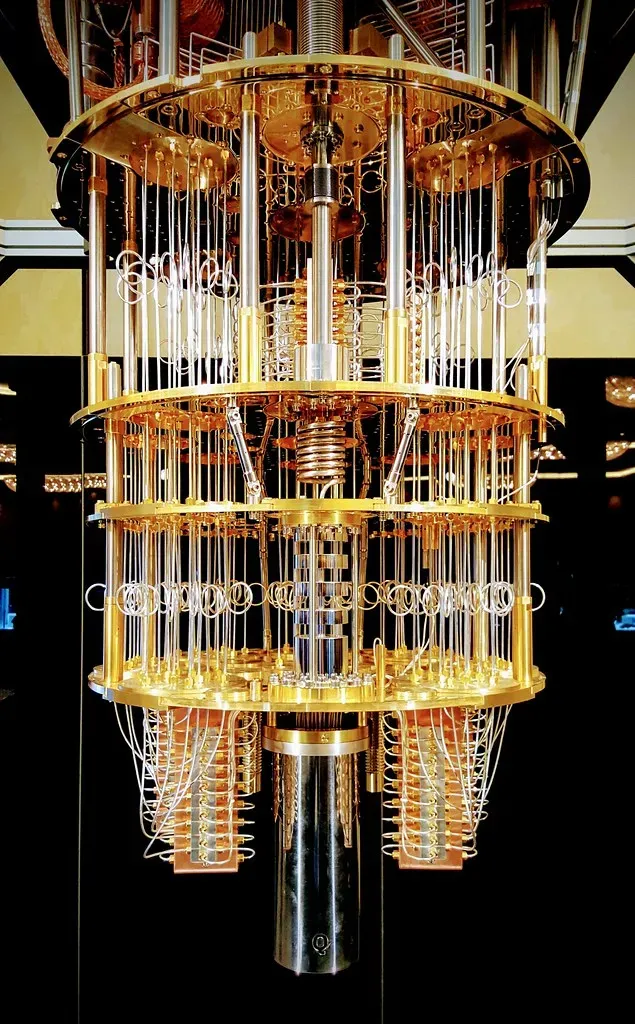
Even if quantum computing feels like something far away in a clean room lab, its ripple effects are already starting to touch your life. Companies and research labs are building early quantum processors that use qubits, which can exist in superpositions of states and become entangled with each other. While these machines are still in their infancy, they’re being tested on problems in chemistry, optimization, and materials science that could eventually shape better batteries, new medicines, and more efficient logistics. You might not run a quantum algorithm yourself, but you may benefit from a drug or product that was designed with one.
Quantum sensors are another growing frontier that is much closer to everyday reality. These devices exploit extreme sensitivity of certain quantum states to measure things like time, acceleration, or magnetic fields with astonishing precision. In the future, that could translate into more accurate navigation in places where GPS fails, better monitoring of infrastructure like bridges and tunnels, or early detection of subtle changes in the environment. As these tools mature, you’ll be living in a world where many systems around you quietly depend on keeping fragile quantum states under control.
Conclusion: Living in a Quietly Quantum World

Once you start noticing it, you realize you’re not just a spectator peeking into a distant quantum universe – you’re surrounded by it. From the chip in your phone to the scanner in a hospital, from the lights in your home to the satellites overhead, everyday life is stitched together with technologies that only make sense if you accept that particles can act like waves, energy comes in chunks, and measurement itself can change reality. These ideas may sound abstract, but their consequences are sitting right on your desk and riding around in your pocket.
You don’t have to solve Schrödinger’s equation to appreciate how much this hidden layer of physics does for you. Just knowing that your most familiar tools are built on top of something so strange can change how you see the world. The next time your map updates in real time, your screen glows to life, or a doctor reads a scan of your body, you’ll know there’s a quantum heartbeat underneath it all. Now that you’ve seen how deep it runs, what other ordinary object are you suddenly curious to see through a quantum lens?