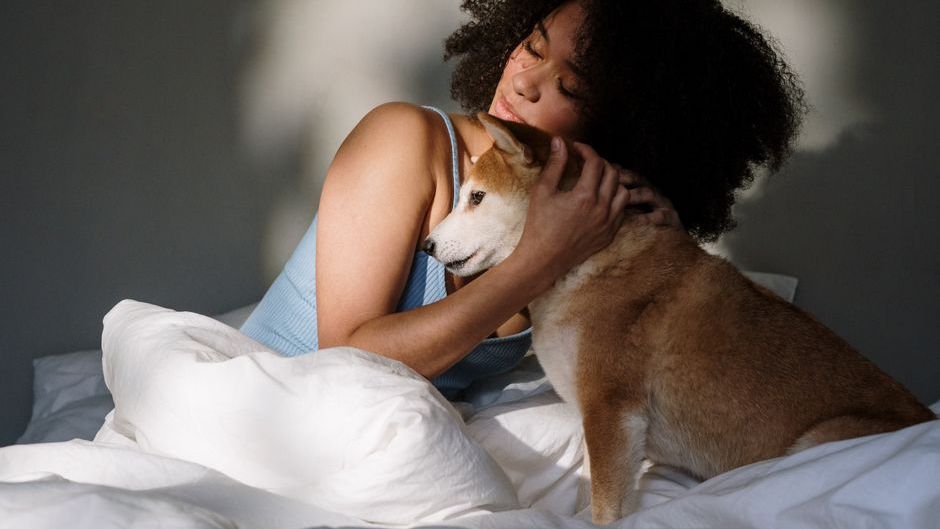

There’s a strange kind of silence in the room right after you cry. Your breathing is uneven, your thoughts are messy, and then you feel it: a wet nose on your hand, a warm body pressed against your leg, those big eyes watching you like you’re the only thing that matters. In that moment, your dog is not thinking about training cues or treats or toys. They’re reading you, responding to you, and in their own dog way, saying the clearest thing they know how to say: you’re not alone.
Science has started to catch up with what dog people have always suspected: dogs don’t just notice our emotions, they react to them. Studies using heart-rate monitors, scent analysis, and behavior tests suggest that dogs can detect physiological changes linked to stress and sadness, and often move toward their humans instead of away. But the magic is in the little details – the specific things your dog does right after you cry. Those tiny behaviors, which can look so simple on the surface, reveal a deep, emotionally intelligent bond that many people never experience with another human. Let’s unpack seven of those moments and what they really say about love.
1. They Rush Over And Refuse To Leave Your Side
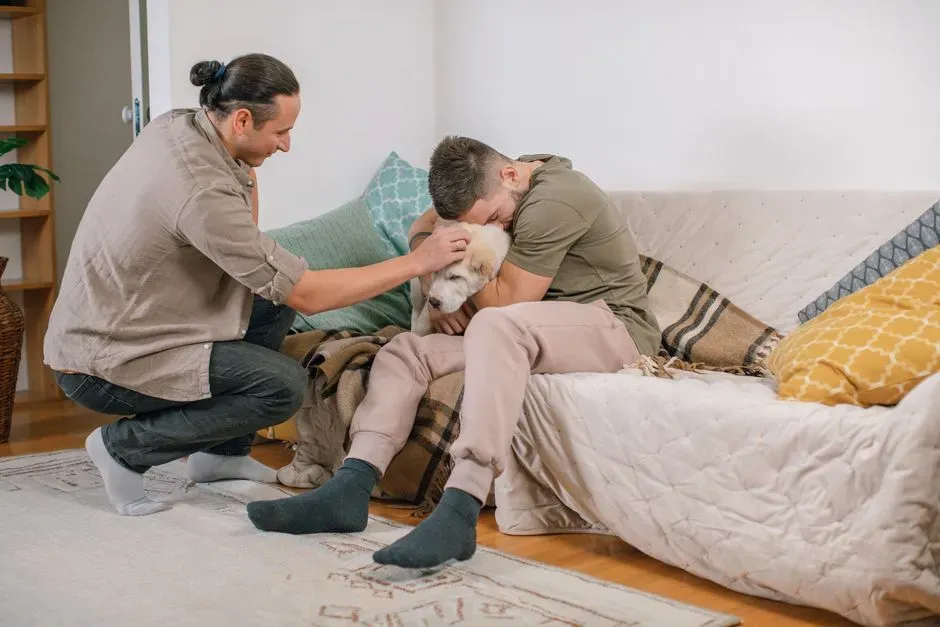
Have you ever noticed that the second you break down, your dog seems to appear out of nowhere like they’ve teleported? One minute they’re in another room, the next they’re pressed right against your leg, staring up at you with ears slightly back and body soft. This is often the first and clearest sign that they’ve picked up on a shift in your emotional state. Dogs are extremely sensitive to changes in our breathing patterns, posture, and even the tiny sounds we make when we sniffle or sob, and many of them instinctively move closer when they sense distress.
From a behavioral perspective, this is called proximity seeking, and it’s a classic attachment behavior. Just like a securely attached child runs toward a caregiver when scared, a bonded dog tends to move toward their person when something feels off. I remember sitting on the bathroom floor after a particularly rough day, thinking I’d hidden it well, and my dog nudged the door open with this determined little shove. He lay down across my feet like he was pinning me to the earth so I wouldn’t float away. That quiet, stubborn decision to stay – no checking the window, no chasing sounds, no wandering off – says a lot about where you rank in their world.
2. They Gently Lick Your Face Or Hands
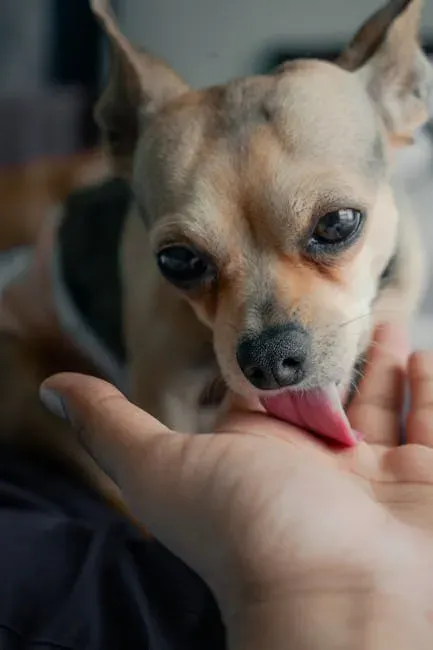
That soft, insistent licking your dog does when you cry can feel oddly grounding, even if you have to wipe your face afterward. Licking is a multi-purpose behavior in dogs; it can be calming, affiliative, and a way of maintaining social bonds. When directed toward your tears or your hands, it may be partly triggered by the salt on your skin, but it’s also deeply tied to comfort-giving in dog social life. Young puppies lick their mothers and littermates, and adult dogs often use gentle licking in friendly, peaceful interactions.
There’s also a self-soothing angle here: licking can lower arousal and help your dog manage their own stress, which often rises when they sense you’re upset. In a way, when your dog licks you while you cry, they’re calming themselves and you at the same time, like a shared emotional reset button. It’s imperfect and a little slobbery, sure, but it’s real. In a world where so much comfort arrives in the form of text messages and vague assurances, there’s something raw and honest about a dog who simply presses in close and says, with every tiny lap of their tongue, I’m here with you, right now.
3. They Stare Into Your Eyes With That Soft, Melty Look
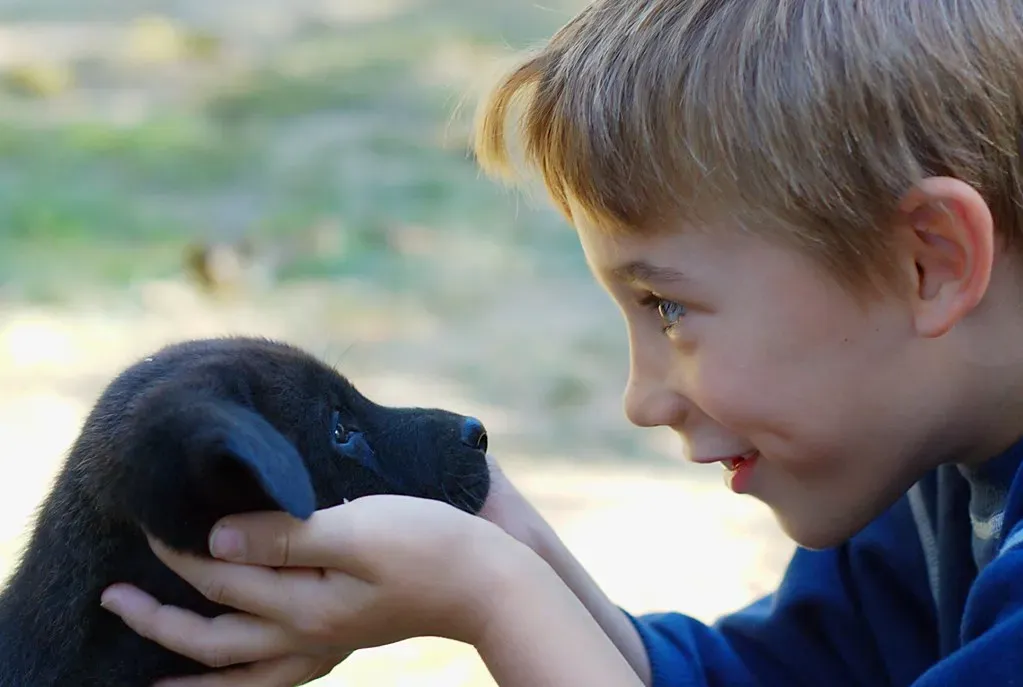
There’s a particular kind of eye contact dogs give when you’re crying that hits completely differently from their usual “is that food?” stare. The muscles around their eyes relax, their gaze softens, and sometimes they tilt their head just slightly as if they’re trying to tune in a better signal from your heart. Researchers have found that mutual gazing between dogs and their humans can increase levels of oxytocin, often called the bonding hormone, in both species. This is the same hormone that plays a key role in the connection between parents and infants.
In other words, when your dog holds your gaze while you’re upset, they’re not just being cute – they’re literally participating in a biological loop that deepens trust and attachment. That soft stare can feel like someone is quietly holding your feelings without trying to fix you or rush you through them. Personally, I think this is one of the purest forms of love dogs offer: they don’t look away because the sadness is uncomfortable. They look right at it, and by extension, right at you, as if to say that your most unfiltered, messy emotions are still completely acceptable in their eyes.
4. They Climb Into Your Lap Or Lean Their Whole Weight On You
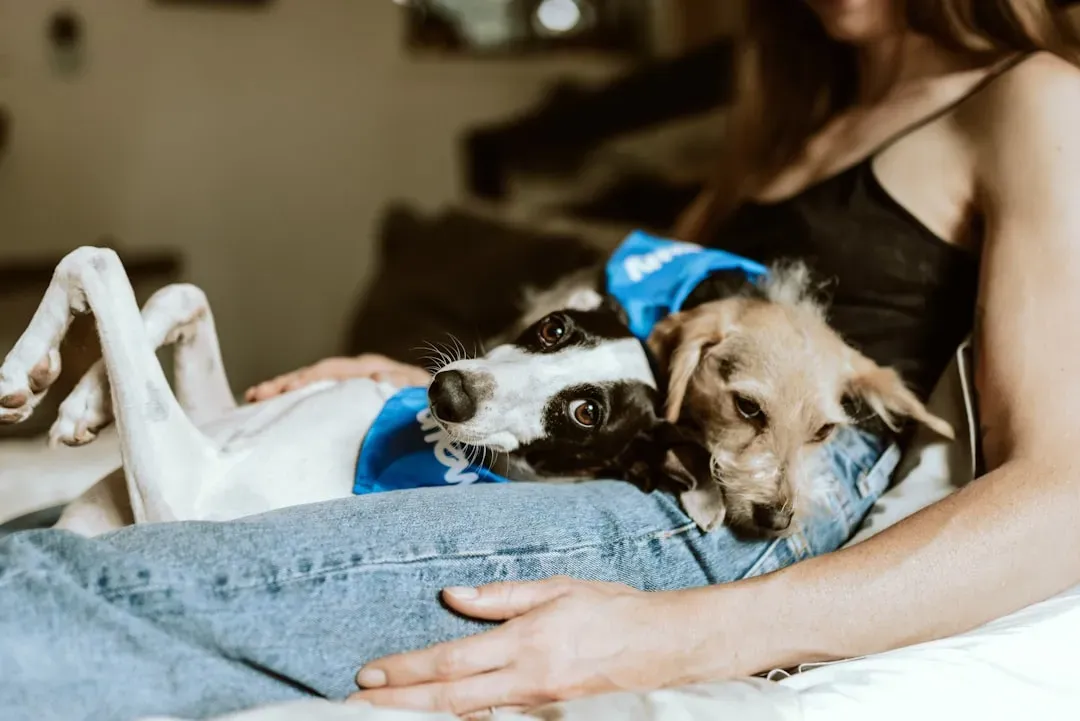
Some dogs respond to tears with what can only be described as full-body commitment. They don’t just sit near you; they attempt to merge with you. They climb into your lap even if they weigh as much as a small boulder, or they lean their entire body against your side, hip, or legs. Physical contact is one of the most powerful regulators of the nervous system. Gentle pressure and warmth can slow your heart rate, lower stress hormones, and help bring you out of a fight-or-flight state. Your dog is not reading a textbook on nervous system regulation; they’re going on instinct, but that instinct happens to line up beautifully with what your body needs.
In dog behavior, leaning and close contact are signs of social closeness and trust. A dog will not press their vulnerable body against someone they don’t feel safe around. When my own dog sprawls across my thighs like a weighted blanket with paws, I can literally feel my shoulders drop and my breathing even out. It’s as if he’s saying, if I glue myself to you, nothing bad can get through. It’s a clumsy, fur-covered version of an embrace, but at its core, it’s the same message humans try to send with a hug: let me share some of the weight you’re carrying.
5. They Bring You A Toy, Sock, Or Their Favorite Object
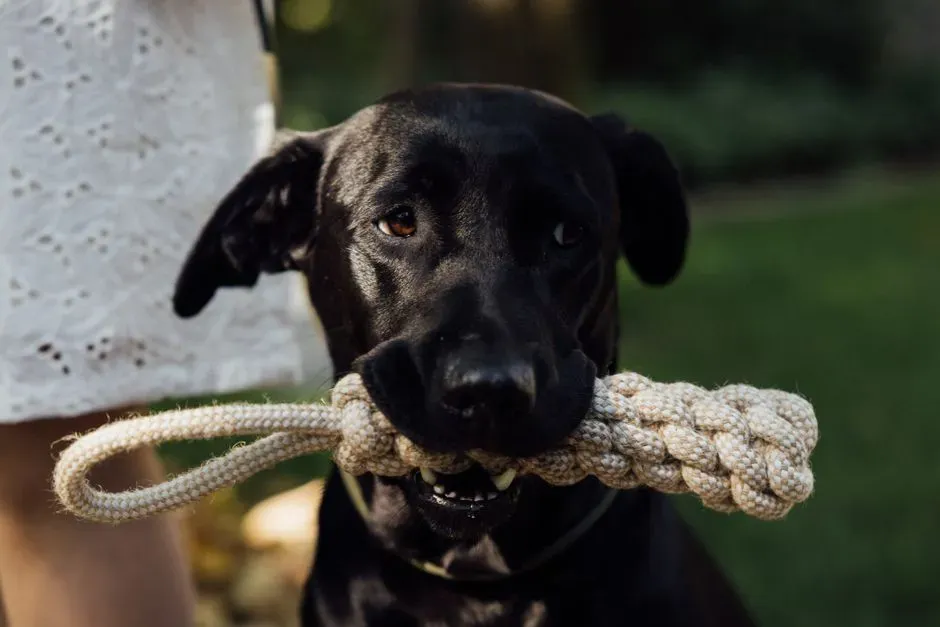
It can be almost comical: you’re crying, your chest still tight, and suddenly your dog appears holding a torn plush toy, a tennis ball, or occasionally, a truly disgusting sock. On the surface, it might look like they’re just asking you to play, and that can be part of it. Play is a powerful stress reliever for dogs, and some will try to shift the emotional energy in the room by inviting you into a familiar, joyful routine. But there’s another layer here: sharing valued objects is, for many dogs, a sign of social bonding and trust.
When a dog brings you their favorite toy right after you cry, they may be offering you what they themselves find comforting. Think of a child bringing their beloved stuffed animal to a parent who looks sad. It is both an offering and a request: take this thing that makes me feel safe, and also, please be okay. I’ve had moments where my dog dropped his absolute most prized chew at my feet while I was tearing up over something I couldn’t even explain out loud. It felt like he was saying, this is all I have, and you can have it. That small, slightly ridiculous gesture is one of the clearest signs that love, in dog language, is often about shared resources and shared joy.
6. They Quiet Down, Move Slowly, And Mirror Your Mood

Not every dog responds to tears with obvious affection or big gestures. Some do something more subtle but just as powerful: they dial everything down. A normally bouncy dog might become unusually calm, walking more slowly around you, resting nearby without demanding attention, or even yawning and stretching in a way that seems almost exaggerated. This shift is part of emotional contagion, where one being picks up on and reflects another’s emotional state. Dogs are remarkably attuned to human facial expressions, vocal tone, and body language, and many will adjust their own behavior in response.
From a scientific perspective, this mirroring might be a basic empathy-like process rather than full-blown human-style understanding, but emotionally, it can feel very much like your dog is gently matching your energy so you don’t feel out of sync with the world. I’ve noticed that on days when I’m low and on the edge of tears, my dog will choose to nap near me instead of zooming around the house. No dramatic comfort scene, no cinematic moment – just quiet solidarity. It’s as if he’s saying, if today is a low day, I’ll keep it low with you. In its own way, that kind of attunement is a deeply respectful form of love.
7. They Check On You Repeatedly Afterward, Just To Be Sure
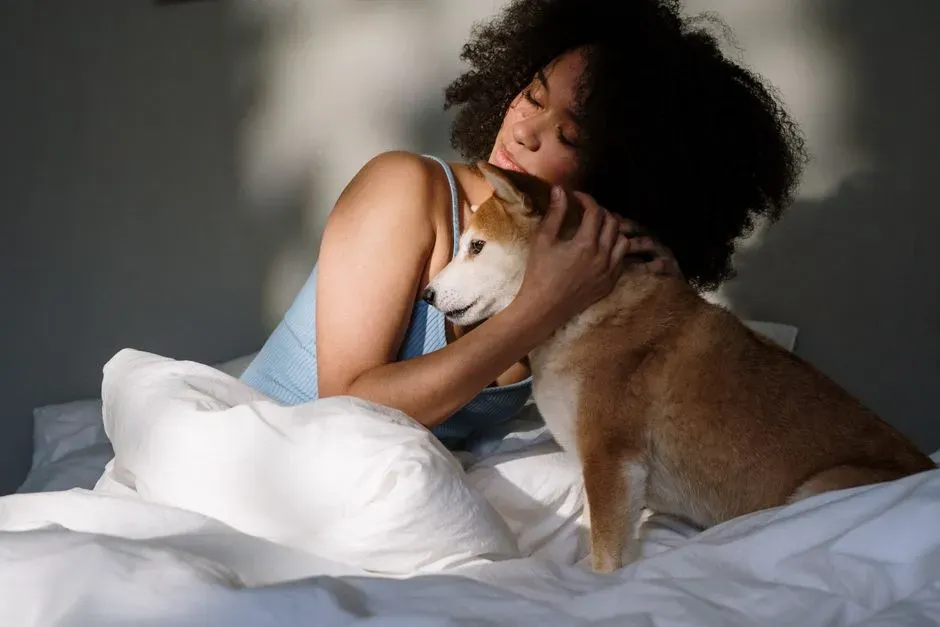
One of the biggest tells that your dog truly cares about your emotional state comes not in the immediate aftermath of your tears, but in what happens later. After you’ve wiped your face and tried to move on, many dogs will keep checking in. They might walk over and sniff your face, glance up at you more often than usual, or come back to lean against you again even when you’ve switched to doing something “normal” like scrolling your phone. This follow-up behavior suggests that, at some level, they noticed something was wrong and are monitoring for signs that it’s resolved.
In attachment terms, this looks very similar to how securely bonded individuals keep an eye on each other after a distressing event. They do not just rush in once and disappear; they circle back, reassess, and adjust their behavior based on what they find. I’ve had evenings where my dog would wander off, then return ten minutes later to rest his chin on my knee and stare up as if he were running a silent systems check. That ongoing vigilance can feel almost parental, like having your own personal emotional guardian. It’s one of those behaviors that quietly screams love without saying a word.
Conclusion: Dogs Redefine Love In The Quiet Moments
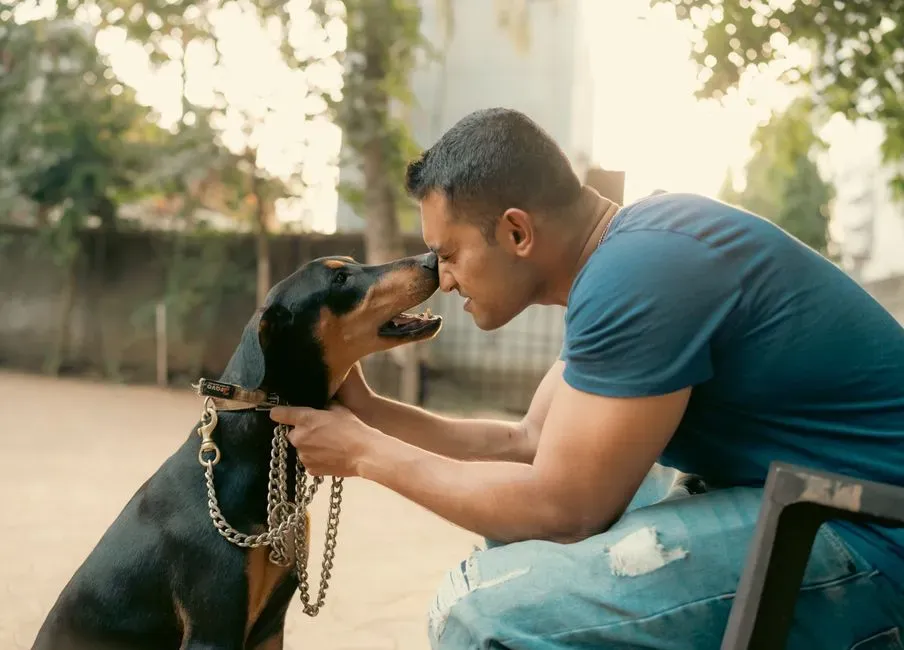
When you zoom out and look at these seven behaviors together – the rushing over, the licking, the soft staring, the leaning, the toy offerings, the mood mirroring, the follow-up checks – it becomes hard to treat them as random quirks. They form a pattern that looks a lot like a living, breathing definition of love: attentive, responsive, physically present, and stubbornly loyal when things get hard. We can debate all day about whether dogs experience emotions exactly like humans do, but honestly, at some point the labels start to matter less than the experience. What you feel when your dog stays with you through your ugliest tears is real, and it changes the shape of loneliness.
My own opinion, after years of living with dogs and reading the research, is that dogs may not write poetry about love, but they practice it far more consistently than many people. They do not care why you are crying, whether it is logical, whether you’ve made mistakes, or whether you’ve cried about the same thing twelve times already. They simply notice that your nervous system is on fire and do their best, with the tools they have – touch, closeness, play, presence – to help you cool it down. Maybe that is what love really means at its core: showing up, again and again, without needing a perfect explanation. When your dog nudges your hand after your next wave of tears, will you see it as just “dog behavior,” or will you let yourself believe it might be something deeper?