
Everyday life feels solid and predictable: objects stay put, causes lead to effects, and reality seems comfortably objective. Then you look at quantum physics, and that cozy picture shatters like glass. In the lab, particles behave like ghosts that can be in many places at once, communicate in ways that seem faster than light, and even change the past when no one is looking.
The seven experiments below are not sci‑fi plots or fringe ideas; they are real, repeated, and taken seriously by working physicists. Each one corners nature with a very specific question, then delivers an answer that feels almost deliberately mischievous. By the end, you may not trust your own idea of what it means for something to “exist” at all.
1. The Double‑Slit Experiment: When Particles Refuse To Pick a Side
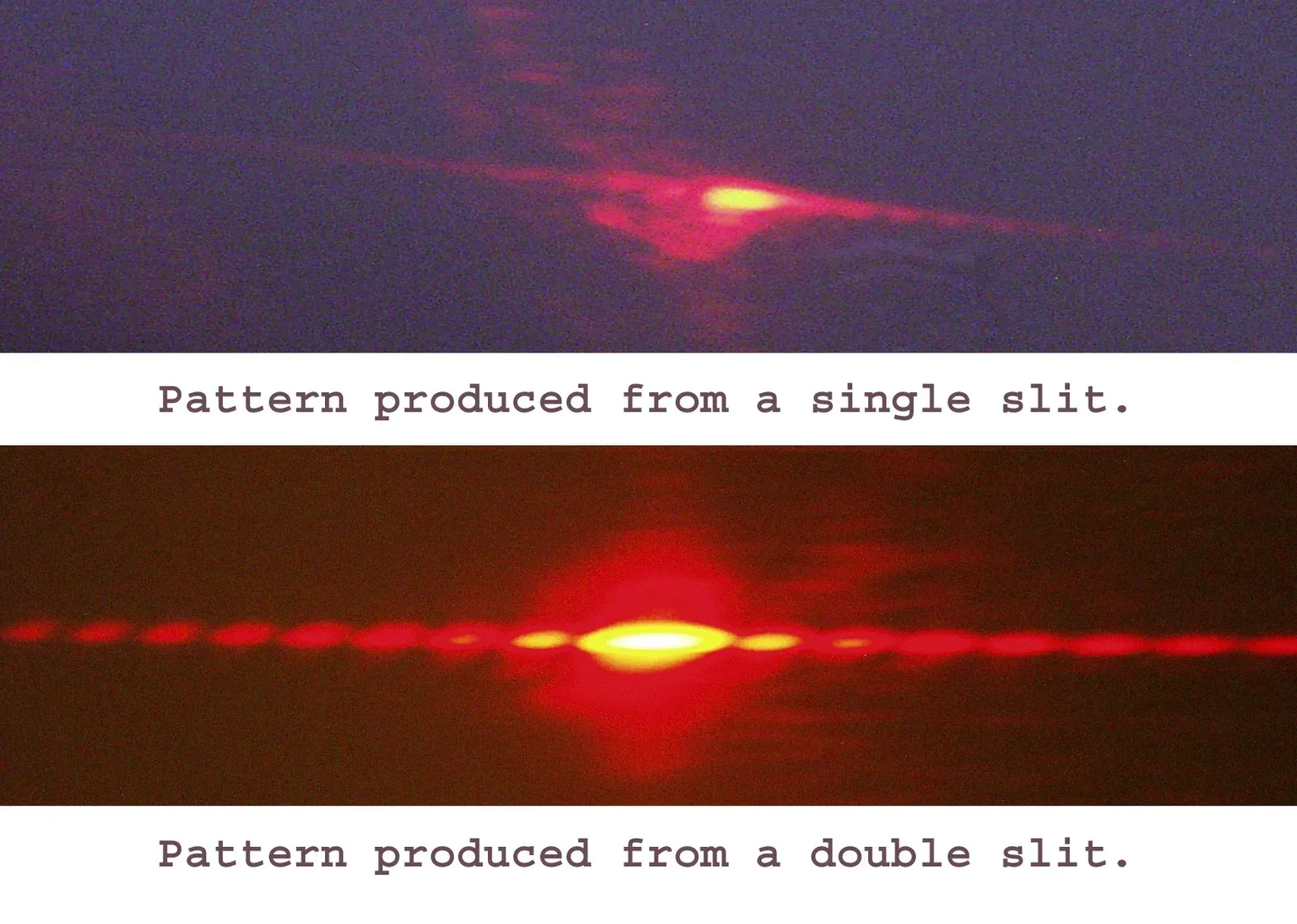
Imagine firing tiny bullets at a wall with two narrow openings and a screen behind it. Classical intuition says each bullet goes through one slit or the other, leaving two neat bands. But when you shoot individual electrons or photons, one at a time, they gradually build up an interference pattern on the screen, as if each single particle went through both slits simultaneously and interfered with itself. It is as though reality keeps its options open until the very last moment.
Things get stranger when you “look.” If you place detectors to check which slit the particle passed through, the interference pattern disappears and you’re left with two ordinary bands, as though the particle suddenly decided to behave like a mundane, classical object. The act of measurement does not just reveal what was already there; it appears to change what happens. I remember first reading about this as a teenager and genuinely feeling a little dizzy, realizing that the universe might not be a fixed film reel but more like an improvisation that solidifies only when observed.
2. Quantum Entanglement: Spooky Links Across the Universe
Entanglement starts with two particles created in such a way that their properties are deeply correlated. Measure one particle’s polarization or spin, and you immediately know the other’s result, even if it’s light‑years away. Experiments have repeatedly shown that these correlations are stronger than any explanation based on shared hidden instructions set at the start, violating what are called Bell inequalities. In plain language, the world does not seem to be built from tiny, local parts each carrying a fixed, secret script.
What really rattles people is that entangled particles behave as if they’re part of a single, non‑local object. Change what kind of measurement you choose to perform on one particle, and the statistics of what you see at the other end adjust in ways no classical model can mimic. There is no way to use this effect to send usable information faster than light, but it still feels like nature is quietly ignoring our common‑sense idea that distance should matter. When I think about entanglement, I picture reality more like a web than a collection of beads; pluck one strand, and the whole pattern subtly rearranges.
3. Bell Test Experiments: Closing the Doors on Hidden Variables
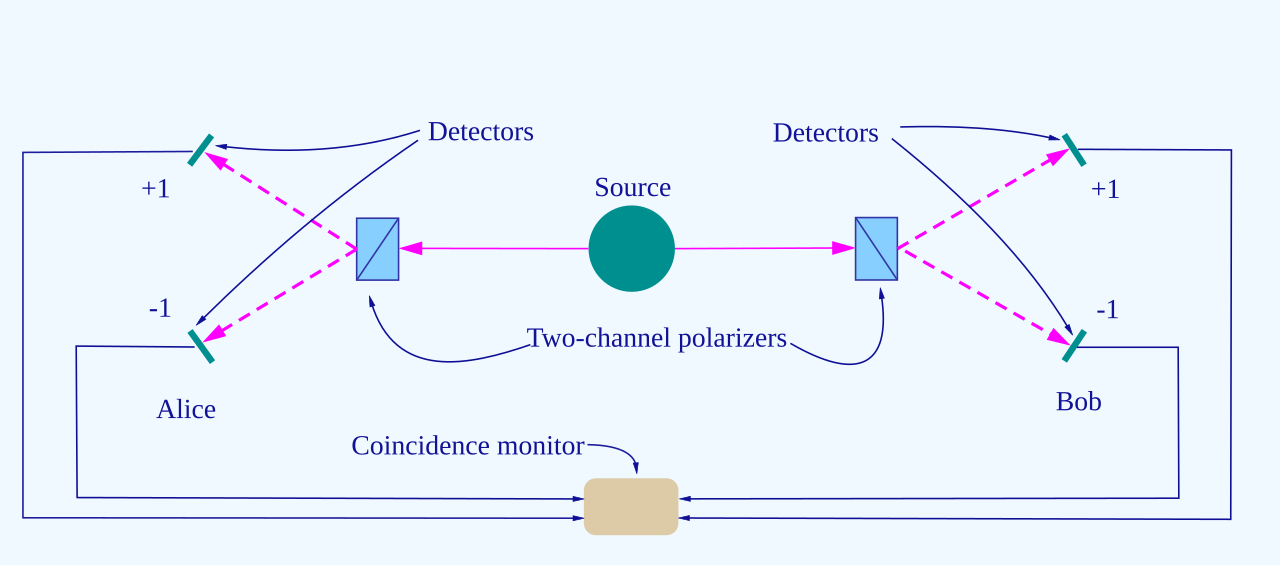
Theoretical arguments are one thing; brutal experimental tests are another, and that is exactly what Bell tests set out to do. They pit quantum predictions directly against any worldview in which particles carry pre‑existing properties and cannot influence one another faster than light. Over decades, ever more sophisticated Bell experiments have been run, from table‑top photonics setups to satellite‑based tests spanning hundreds of kilometers. Each time, the quantum side has won by a clear margin.
Researchers have systematically closed potential loopholes, such as detector inefficiencies, communication between devices, and biases in how measurement settings are chosen. In some modern versions, even starlight or distant quasars help decide how to measure, just to avoid any hidden conspiracy in the setup. The cumulative message is unsettling but powerful: if the experiments are sound, then at least one of our cherished ideas about reality – locality, realism, or the notion that properties exist independently of measurement – has to go. Personally, I find this oddly liberating, like being forced to admit the map you’ve been using for years was never the territory in the first place.
4. Wheeler’s Delayed‑Choice Experiment: Deciding the Past at the Last Moment
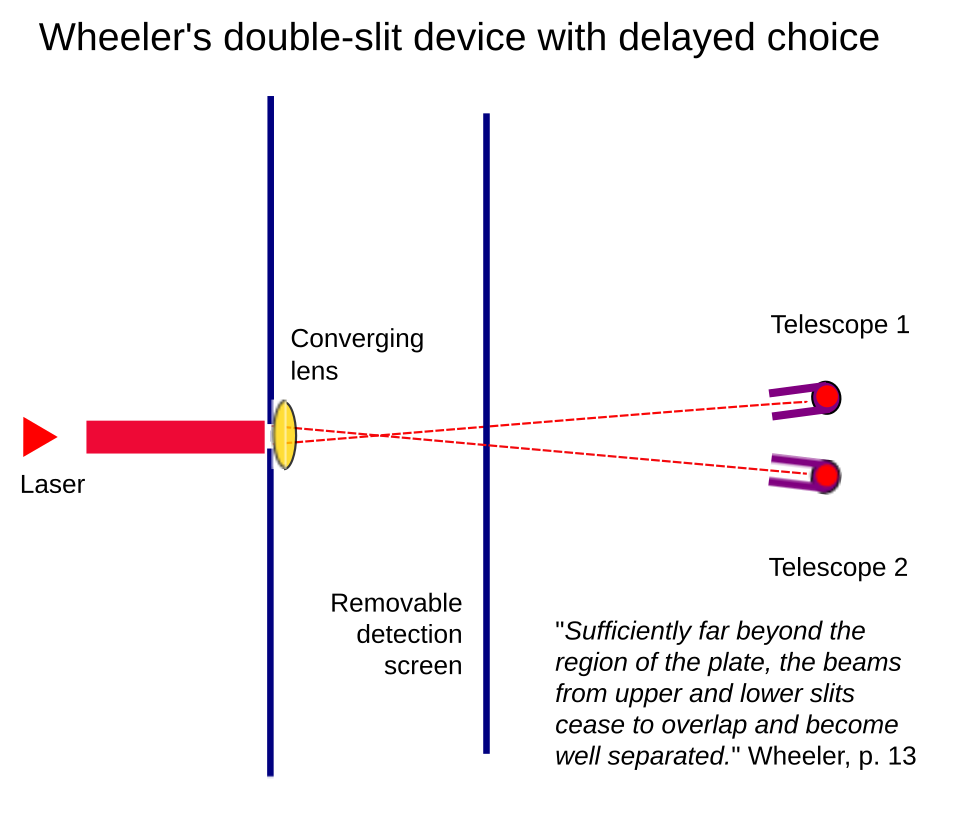
Wheeler’s delayed‑choice experiment takes the weirdness of the double slit and adds a time twist. Instead of deciding beforehand whether to observe interference (wave‑like behavior) or which path a photon took (particle‑like behavior), the choice is made after the photon has already entered the apparatus. Shockingly, the results still line up with whichever measurement you decide to perform, as if the photon somehow waited for your future choice before settling on what it “was.”
Modern versions using fast optical switches and quantum random number generators have pushed this idea very hard, and nature keeps playing along. It is tempting to say that the experiment changes the past, but a more careful statement is that the past is not completely defined until the full measurement context is fixed. That is an idea that would sound right at home in philosophy or even mystical writing, yet it emerges here from extremely controlled lab setups. When I try to wrap my head around it, I end up with the uneasy impression that our everyday sense of a fixed timeline is more of a comforting story than a fundamental feature of the universe.
5. Quantum Eraser Experiments: Erasing Information Erases Reality
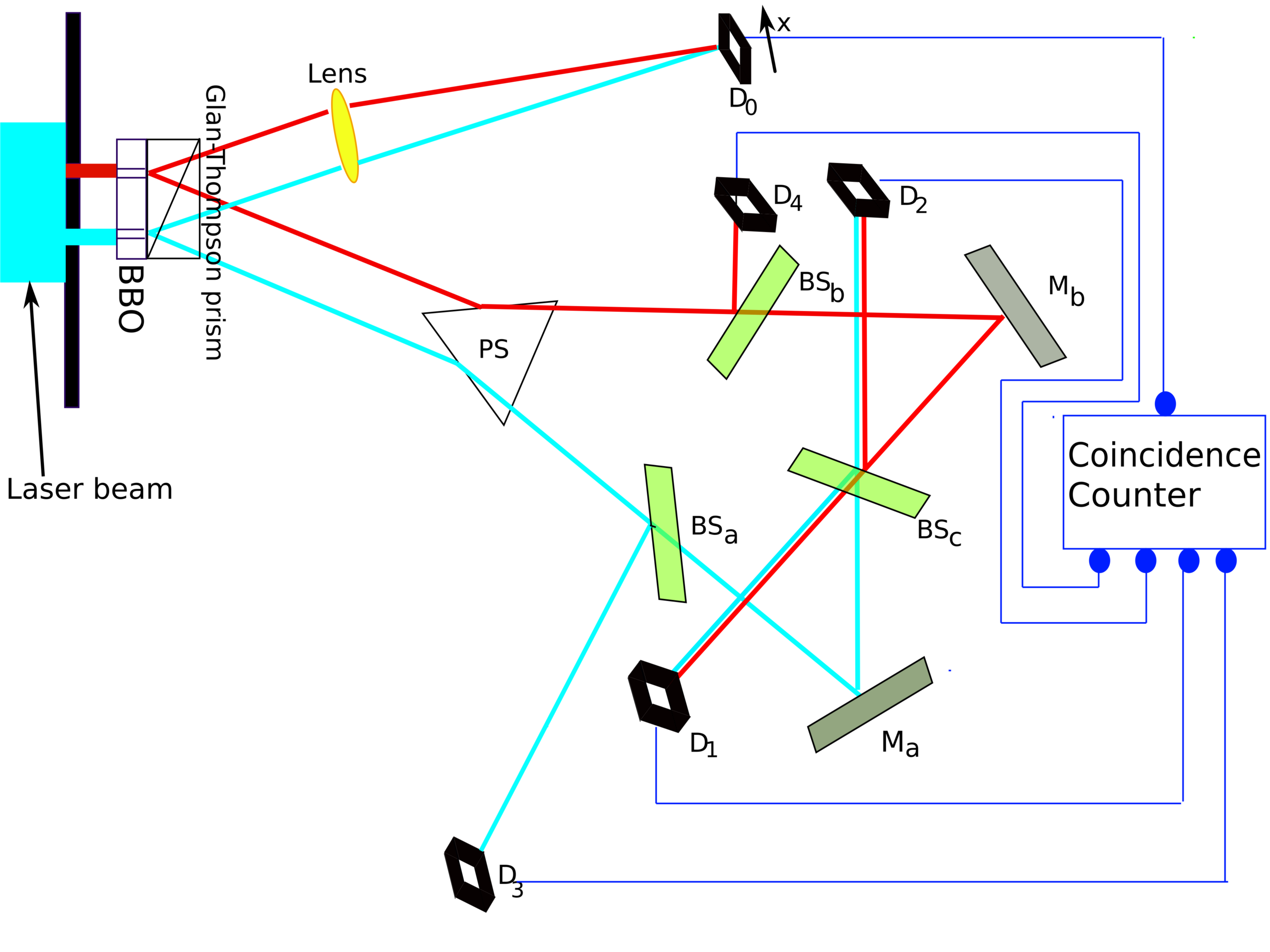
Quantum eraser setups start from the classic two‑slit interference and then tag each path with extra information so you can, in principle, tell which route a photon took. Once that which‑path information is available, the interference pattern disappears, just as you’d expect from measurement disturbing the system. The twist is that you can later “erase” that information in a clever way, and when you do, the interference pattern reappears in the combined data, even though the photons were already detected.
In the most mind‑bending delayed‑choice quantum eraser versions, the decision to erase or preserve the which‑path information is made after the photons have been registered on the screen. The results seem to suggest that what counts as a real event depends not only on what happened, but on what could in principle be known about what happened. That moves reality uncomfortably close to information and knowledge, rather than things and trajectories. To me, this is one of the clearest hints that at the quantum level, the universe behaves less like a collection of marbles and more like a vast accounting system for possibilities.
6. The Leggett–Garg Experiments: Is Reality There When We’re Not Looking?
Leggett–Garg experiments tackle a different intuition: that physical systems have definite properties at all times, and that we can, at least in principle, measure them without drastically disturbing them. This idea, called macrorealism, feels obviously true when we think about everyday objects like chairs and cars. The Leggett–Garg inequalities give a way to test it experimentally using time‑separated measurements on a single system, analogous to how Bell inequalities test space‑separated correlations between two systems.
In laboratory tests with superconducting circuits, photons, and even larger systems, quantum predictions again win out over macrorealist expectations. The measured correlations over time violate the inequalities that any classical, always‑definite description would have to obey. While these are not yet tests on full‑blown macroscopic objects like a coffee mug, they push steadily outward into regimes we once would have called almost classical. Every time another experiment crosses that line, it chips away at the comforting idea that the world has definite properties all along, with our measurements simply reading them off like a gauge on a dashboard.
There is a personal irony here I can’t ignore: we humans crave stability and solidity, but the closer we look at matter itself, the more it wriggles out of our grip. Instead of a world where things simply are, we find a world where what is depends delicately on how, when, and even whether we ask.
7. Quantum Zeno Effect: Freezing Change by Constantly Watching
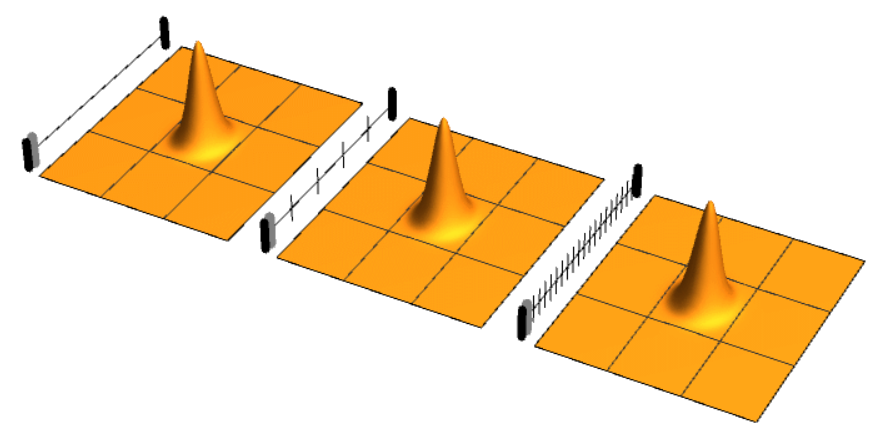
The quantum Zeno effect sounds like a paradoxical life hack: check on something often enough, and it stops changing. In quantum terms, if you prepare an unstable system that is likely to evolve or decay, rapid repeated measurements of whether it has changed can effectively halt its evolution. Experiments with trapped ions, atoms, and other systems have confirmed this strange prediction, showing that too much observation can genuinely freeze dynamics.
This effect flips the everyday relationship between watching and doing on its head. Normally, we think of observation as passive; you look at a clock, but you do not stop time by glancing at it more often. In quantum mechanics, measurement is an active physical process that can reshape the system’s future. There is also a counter‑intuitive anti‑Zeno regime, where certain kinds of monitoring can accelerate change instead of blocking it. The broader message is unsettling: the boundary between spectator and participant is thinner than we like to think, and at the deepest levels of physics, there may be no such thing as a truly neutral observer.
Conclusion: Reality As A Work In Progress
Taken together, these seven experiments paint a picture of reality that is radically at odds with the solid, camera‑ready universe many of us grew up imagining. Particles seem to test out multiple histories until a measurement forces a decision, distant systems behave like parts of a single holistic object, and even the past looks fuzzy until our observations pin it down. The more carefully physicists push on the cracks in classical thinking, the more quantum theory responds with results that are not just surprising but deeply unsettling for any straightforward notion of an objective, observer‑independent world.
My own opinion is that quantum physics is not being perversely mysterious; it is simply telling us that our folk ideas about “what is real” were always rough sketches, never the final canvas. I suspect future theories will make today’s puzzles feel as quaint as ancient debates about the four elements, but they will probably leave us with new paradoxes that are just as disturbing. Perhaps the most honest way to see reality is as a work in progress – a shifting interplay of possibilities, correlations, and information that resists any single, comforting story. If that is the universe we inhabit, the real question is not whether it fits our expectations, but whether we are ready to update what we mean by reality at all; are you?