
If you think space exploration is all neat diagrams and solved equations, you’re in for a surprise. The deeper you look into the universe, the more you run into stubborn questions that refuse to give you a straight answer. Even with powerful space telescopes, interplanetary probes, and decades of data, some of the biggest cosmic puzzles remain maddeningly unsolved.
What makes these mysteries so gripping is that they’re not small details. They cut right to the heart of what you are, how you got here, and whether you’re alone. As you go through them, you might notice a strange feeling: the more you learn, the less certain you feel. That’s not a bug; that’s the thrill of real science at the edge of what anyone understands.
1. Dark Matter: The Invisible Stuff Holding Everything Together
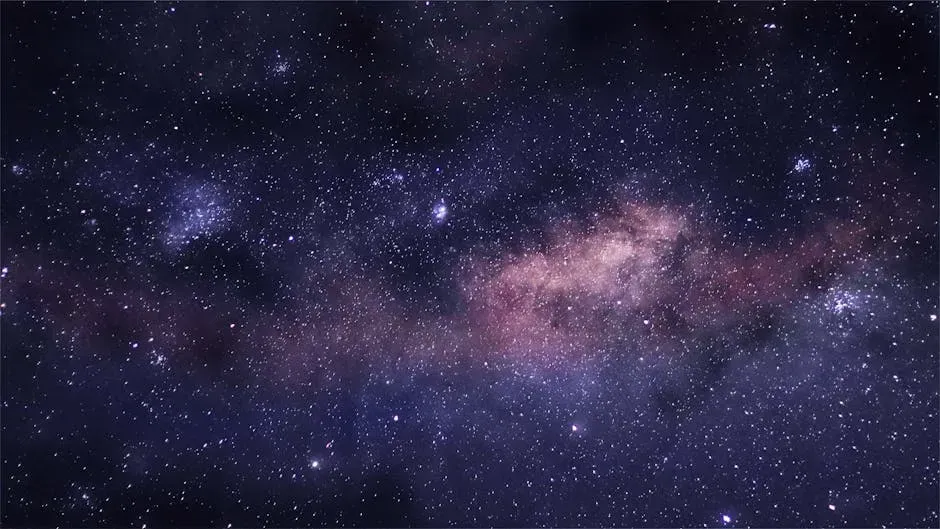
You live in a universe where most of the matter is completely invisible to you. When astronomers measure how fast stars orbit inside galaxies, the numbers do not add up if you only count normal matter like gas, dust, and stars. To keep galaxies from flying apart, you need extra mass, something that does not shine, does not absorb light, and does not behave like anything you can touch on Earth. That hidden mass is what you call dark matter, and it seems to outweigh normal matter by roughly about five times.
Here’s the weird part: you can see the effects of dark matter everywhere, but you cannot catch it in the act. You detect it indirectly through how it bends light from distant galaxies, how it shapes galaxy clusters, and how it influenced the early universe. Yet when you try to detect dark matter particles in underground detectors or particle accelerators, you get silence. You’re stuck with competing ideas, from exotic new particles to tweaks to gravity itself, and so far, the universe is not telling you which, if any, is right.
2. Dark Energy: Why The Universe Is Speeding Up Instead Of Slowing Down
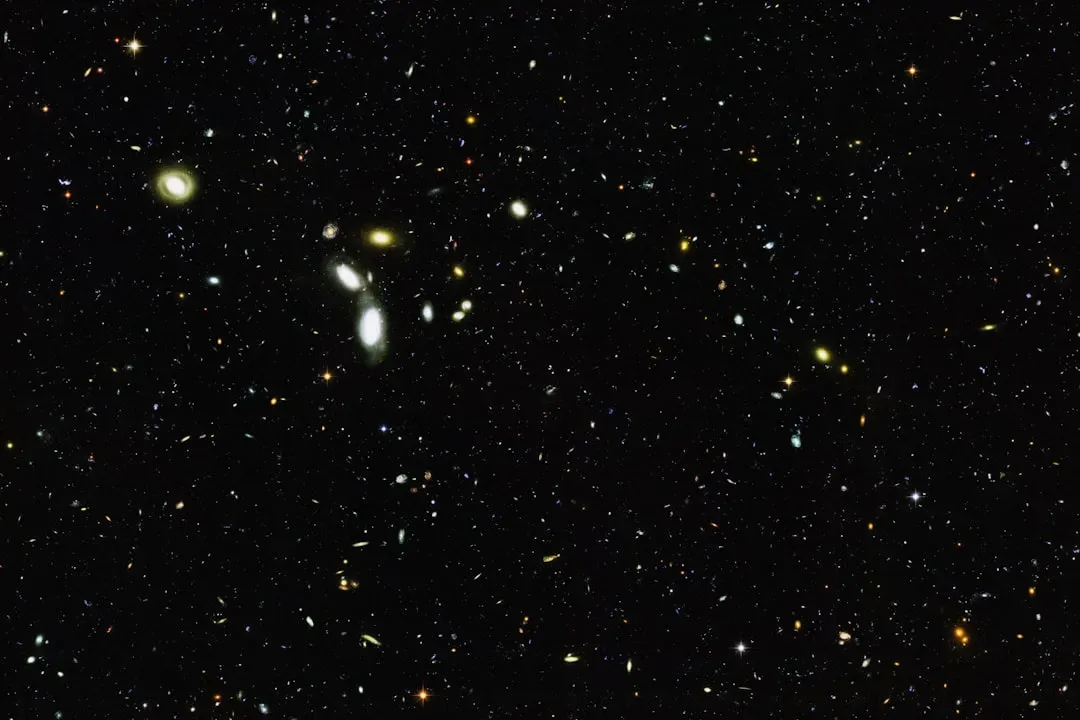
If dark matter is unsettling, dark energy feels downright bizarre. You might expect the expansion of the universe to slow down over time, as gravity pulls galaxies together like a gentle brake. Instead, when astronomers studied distant exploding stars, they discovered that the expansion is speeding up, as if some mysterious cosmic accelerator is built into the fabric of space. To explain this, you need something that acts like a kind of negative pressure, pushing galaxies apart.
This something is what you call dark energy, and it makes up the majority of the energy content of the universe, yet you have no agreed explanation for what it actually is. It could be a property of empty space, a new kind of field, or a sign that your understanding of gravity is incomplete on the largest scales. You can measure its effects with maps of galaxies and the cosmic background radiation, but you cannot bottle it or test it directly in a lab. You are left watching the universe accelerate and trying to reverse‑engineer the cause from a distance you can barely imagine.
3. Fast Radio Bursts: Millisecond Signals From Who-Knows-Where
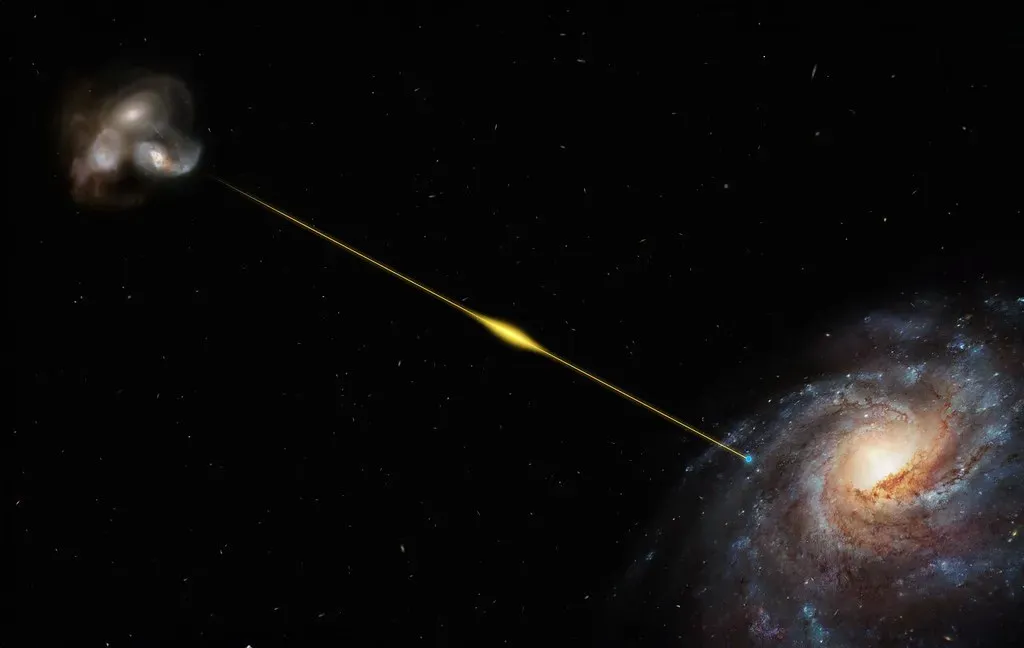
Imagine listening to the sky and suddenly hearing a powerful radio blip that lasts less than the blink of an eye, then vanishes. That is what astronomers call a fast radio burst, and when you calculate how much energy is packed into that tiny fraction of a second, it is staggering. These bursts come from far beyond your galaxy, traveling for billions of years, and yet they arrive as sharply as if someone flipped a cosmic switch.
You do know some of them repeat, which lets you track them back to host galaxies, often small or oddly active ones. You also know they likely come from extremely compact, powerful objects, such as neutron stars or magnetars, but the exact process that produces those intense radio flashes is still up for debate. Are you seeing starquakes on ultra‑magnetized stars, collisions, or something you have not even imagined yet? You keep building better radio telescopes to catch more bursts, but every new catalog of signals seems to add more complexity rather than a clean, simple answer.
4. The Fermi Paradox: Where Is Everybody?
![4. The Fermi Paradox: Where Is Everybody? (Flickr and the review where it was used on Lonely Speck : [1], CC BY-SA 2.0)](https://nvmwebsites-budwg5g9avh3epea.z03.azurefd.net/dws/d49bb9e53632f620c830e7a27639fac6.webp)
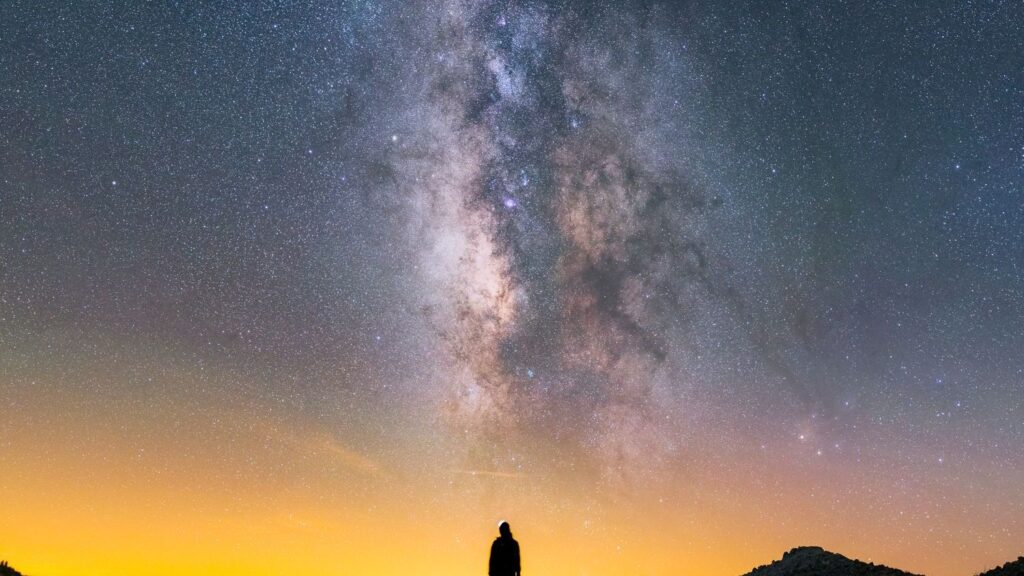
When you look at the size and age of the universe, it feels almost obvious that life should have popped up in many places. Your galaxy alone holds hundreds of billions of stars, and many of them have planets in the right zones for liquid water. If technological civilizations are at all common and can spread, even slowly, the Milky Way should have had plenty of time to fill up with noticeable activity. And yet, when you actually listen and look, you hear only static and see mostly natural phenomena.
This disconnect between expectation and observation is what people call the Fermi paradox, and NASA feels it as sharply as anyone. You send probes, design telescopes to study exoplanet atmospheres, and scan radio signals, but you still do not have a confirmed sign of alien technology or even simple microbes beyond Earth. Maybe intelligent life is extremely rare, maybe it tends to self‑destruct, or maybe you are not looking in the right way yet. Until you find even one clear example of life out there, every explanation is more of a story than a solution, and you are stuck in a universe that seems tailor‑made for life, yet looks empty from your tiny corner.
5. The Origin Of Life: How You Went From Chemistry To Biology

You know that life on Earth started surprisingly early in your planet’s history, once the surface cooled enough for liquid water to exist. Fossil evidence and chemical clues in ancient rocks suggest that simple life was present billions of years ago, when Earth was still harsh and unstable. But when you try to trace the steps from simple molecules to the first self‑replicating systems, the details turn slippery. You can sketch out several plausible pathways, but you cannot yet point to one and say with confidence that this is how it actually happened.
This matters for space exploration because if life can start easily wherever conditions are right, you might expect it on Mars, on the icy moons of Jupiter and Saturn, or on planets around other stars. NASA sends rovers, landers, and orbiters to search for chemical hints of past or present life, yet so far you only see intriguing but inconclusive signs. Is life a cosmic fluke or a natural result of the right environment and time? Until you can recreate that leap from chemistry to biology in a way that matches early Earth, the origin of your own existence remains one of the most personal unsolved mysteries in science.
6. What Happened Before The Big Bang (If “Before” Even Makes Sense)
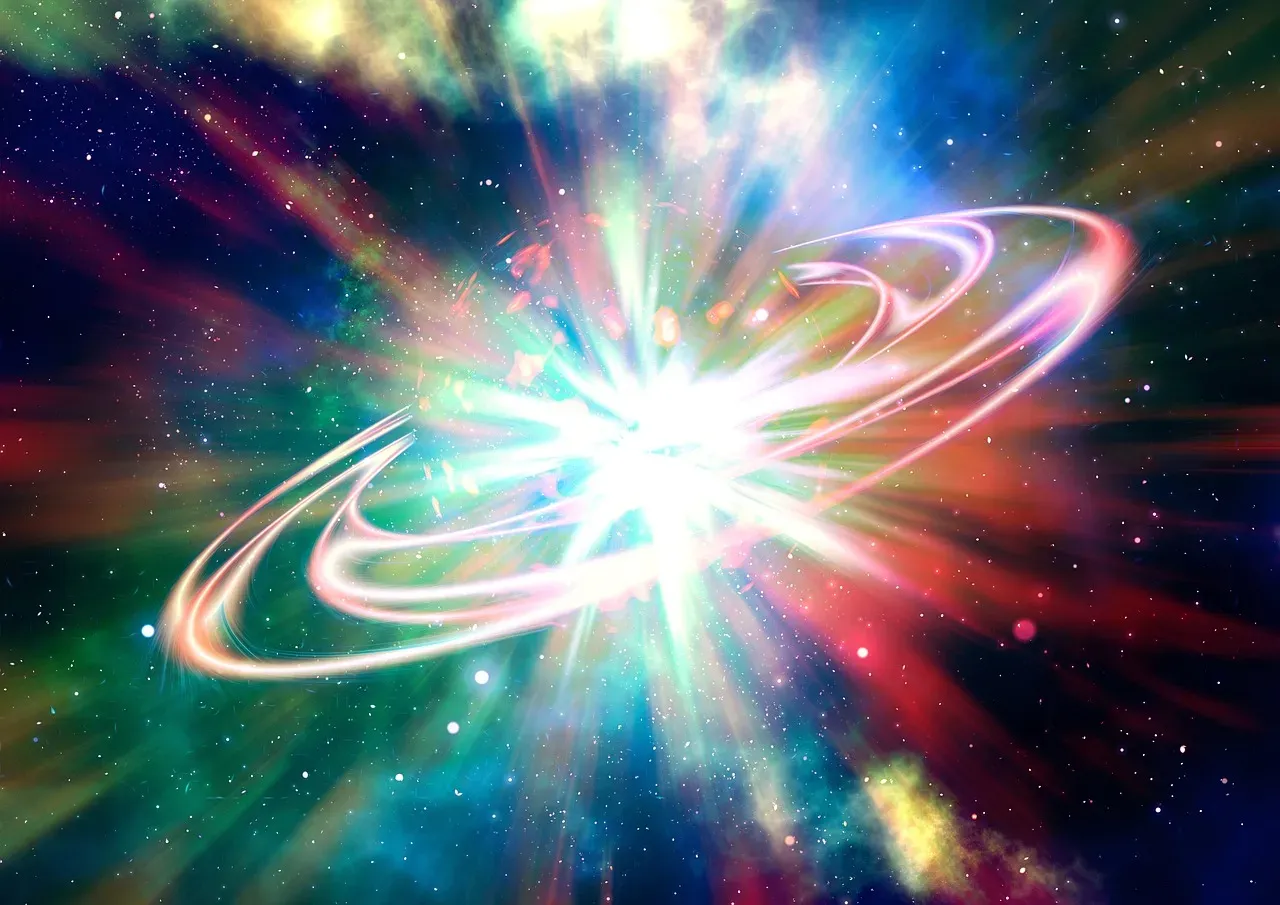
You live in a universe that appears to have had a hot, dense beginning around many billions of years ago, a moment you call the Big Bang. Observations of the cosmic background radiation and the expansion of space fit this picture incredibly well. But when you ask what caused that beginning, or what, if anything, came before it, you quickly run into a wall. Your current theories of physics break down when you push them all the way back to the very earliest instant.
Some ideas suggest your universe might be part of a larger multiverse, others imagine cycles of expansion and contraction, and some even hint that time itself might have started with the Big Bang, making the question of “before” meaningless. NASA cannot point a telescope at the moment before everything and take a snapshot; the information is, as far as you can tell, hidden or erased by the extreme conditions. You can only infer and model, testing the edges of your theories with precise measurements of the early universe’s afterglow. For now, the ultimate origin story of reality is a blank chapter you are still struggling to outline.
Conclusion: Living With Questions In A Restless Universe
When you step back and look at these six mysteries together, you see a pattern: each one exposes a gap in what you thought you knew about reality. You once imagined you had a pretty solid handle on gravity, matter, and the story of the cosmos, only to discover that most of the universe is made of unknown ingredients and powered by forces you do not understand. Instead of neat closure, you get open doors and long corridors of unanswered questions, stretching far beyond any one mission or generation.
If you love certainty, this can feel unsettling, even a bit unfair. But if you treat curiosity like a muscle, these unknowns become invitations rather than threats. Every mystery on this list is already shaping what NASA builds next, from more sensitive detectors to bolder interplanetary and space‑based observatories. You are living in a time when your species has just started to ask these questions in a serious, testable way. When you look up at the night sky, knowing how much you still do not know, do you feel smaller – or more awake?