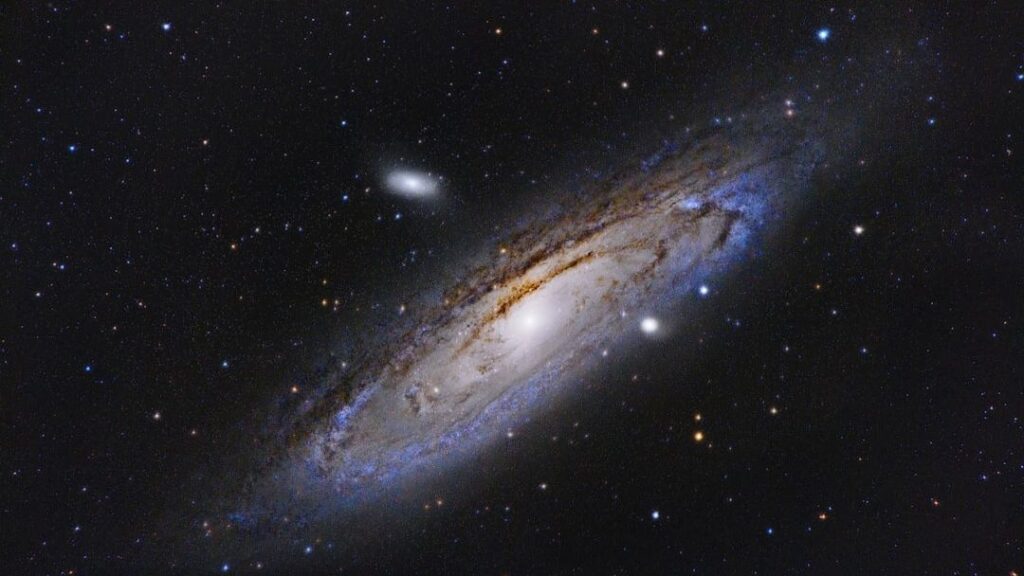

You live on a small rock circling an ordinary star in a pretty average galaxy, yet the universe you sit in is anything but ordinary. When you look up at the night sky, you mostly see pinpricks of light, but behind those quiet dots lies a set of puzzles so deep that even the brightest minds on Earth are still guessing. You are surrounded by a cosmos that is mostly made of stuff you cannot see, cannot touch, and do not yet understand.
As you start to explore these mysteries, you realize how thin your slice of knowledge really is. The more precisely scientists measure the universe, the more contradictions they seem to find, as if reality is politely telling you that your picture is incomplete. These six cosmic riddles are not just fun facts; they are open wounds in modern physics, the kind of questions that pull you in at 2 a.m. and will not let you go.
1. Dark Matter: The Invisible Skeleton of the Cosmos
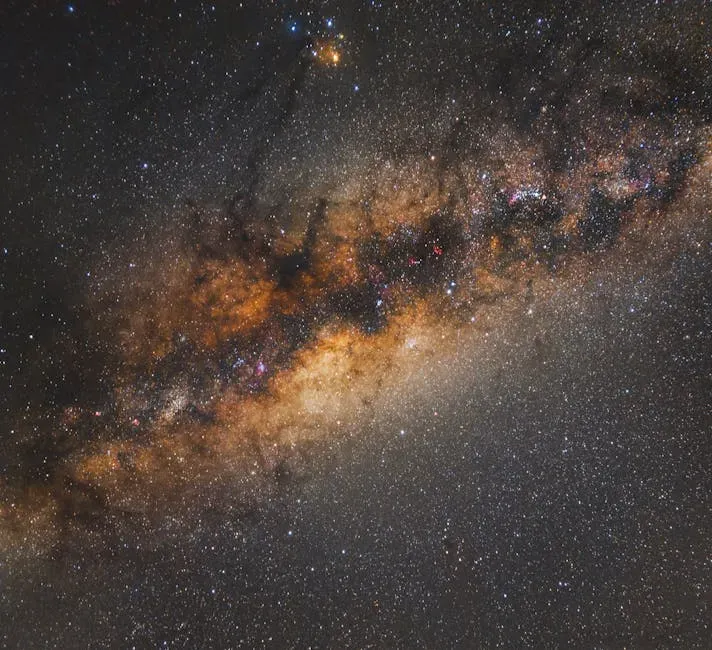
If you could switch to a kind of cosmic X‑ray vision, you would see that what looks solid and bright in the night sky is only a tiny fraction of what is really there. When you measure how fast stars orbit inside galaxies, they simply move too fast to be held together by the gravity of the visible matter alone. The only way the galaxies do not fly apart is if they are wrapped in a massive halo of unseen material that outweighs the visible stars by roughly a factor of five.
Physicists call this missing stuff dark matter, and for decades you have chased it like a ghost in a haunted house. You have built detectors deep underground, flown experiments on balloons and satellites, and smashed particles together in massive colliders, all in the hope that one elusive interaction will give it away. Yet so far, nothing has conclusively shown up, leaving you stuck between two uncomfortable options: either there is an entirely new kind of matter lurking in the shadows, or your understanding of gravity itself is incomplete on cosmic scales.
2. Dark Energy: Why the Universe Is Speeding Up Instead of Slowing Down
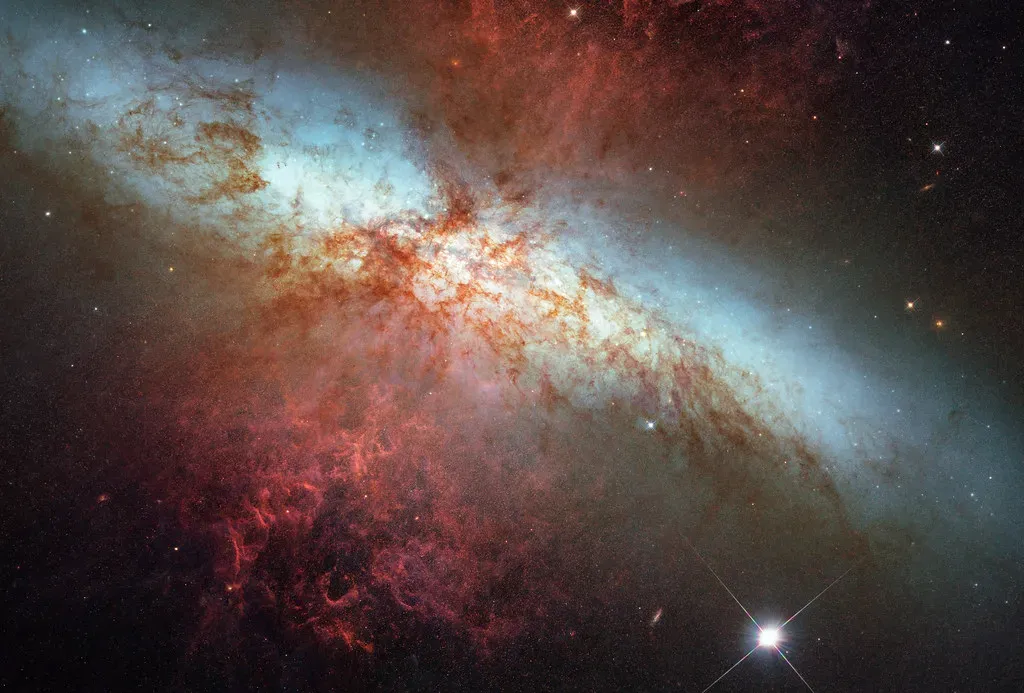
Imagine throwing a ball into the air and watching it speed up instead of slow down as it climbs; that is basically what the universe is doing on the largest scales. When you look at distant exploding stars and map how space has expanded over time, you find that the universe is not just stretching, it is accelerating. To make the equations work, you have to add a strange ingredient called dark energy, a smooth, invisible pressure that seems to push space apart everywhere at once.
This dark energy makes up roughly about two thirds of the total energy content of the cosmos, yet you have no solid idea what it actually is. It might be a built‑in property of empty space, a sort of energy of the vacuum itself, or it might be a new dynamic field that slowly changes over cosmic time. Either way, this silent driver determines the ultimate fate of everything: whether galaxies drift forever into isolation, whether space tears itself apart in some distant future, or whether something even stranger happens that you cannot yet name.
3. Black Holes and the Information Paradox
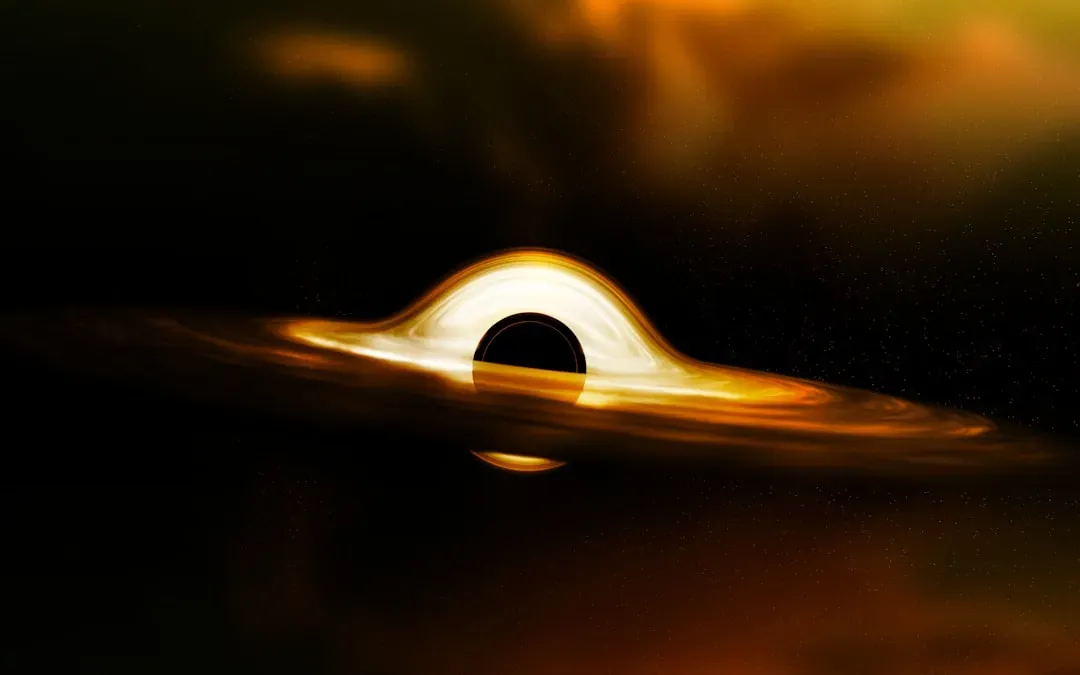
Black holes are the universe’s most dramatic punchlines: regions where gravity has won so completely that not even light can escape. From far away, you can describe a black hole with just a few numbers, such as its mass and spin, and anything that falls in seems to be erased from the story forever. But when you combine this picture with the rules of quantum physics, you run into a sharp contradiction, because quantum theory insists that information can never be truly destroyed.
This clash is known as the black hole information paradox, and it forces you to admit that your best theories of gravity and quantum mechanics do not fully agree. You know that black holes slowly evaporate through a faint glow called Hawking radiation, but you do not yet know how, or if, the details of whatever fell in are encoded in that outgoing light. Some researchers suspect that space and time themselves might be woven out of quantum information in a way you have not yet grasped, turning black holes into laboratories for the very foundations of reality.
4. The Hubble Tension: A Cosmic Ruler That Refuses to Agree With Itself
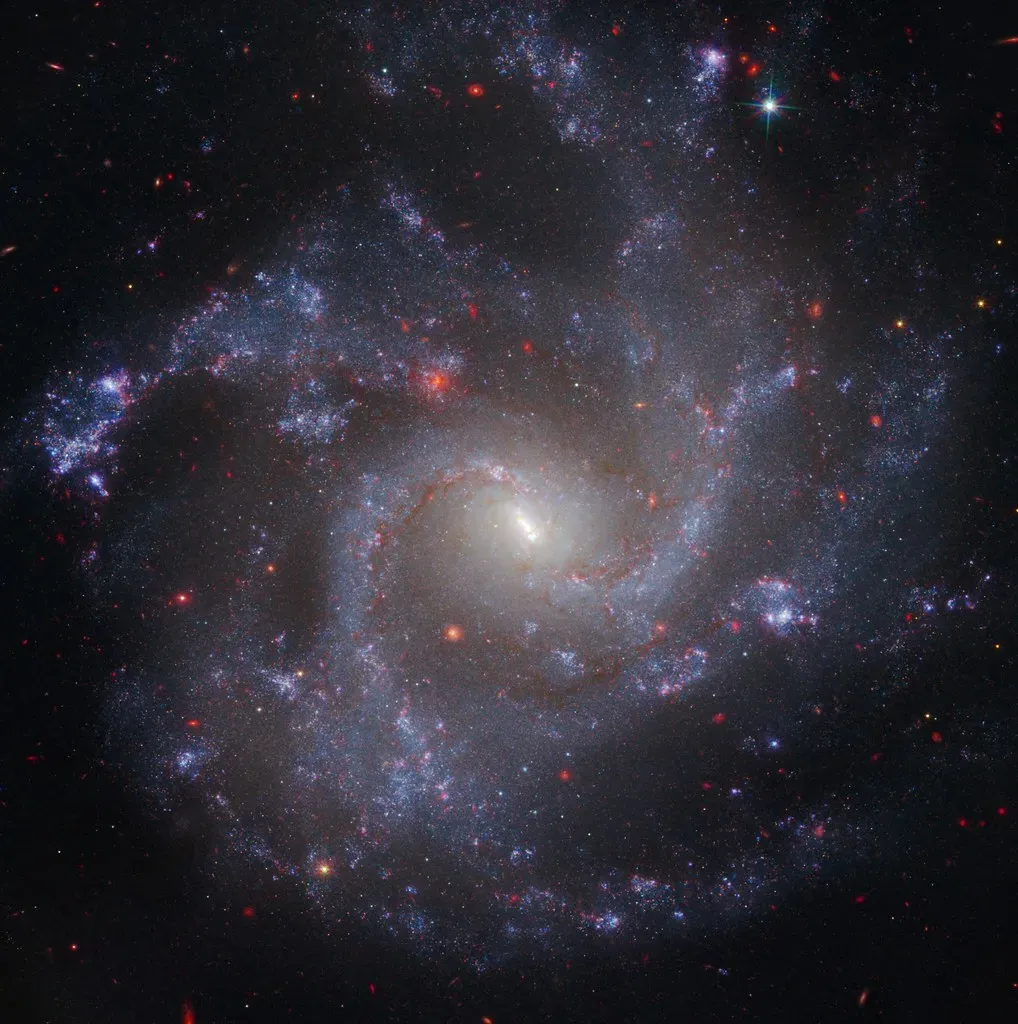
If you try to measure how fast the universe is expanding today, you quickly discover that the cosmos behaves like a stubborn patient refusing to give a consistent temperature. When you infer the expansion rate from the afterglow of the Big Bang, using the cosmic microwave background as a kind of baby picture of the universe, you get one value. But when you measure it directly in the nearby universe, using galaxies and supernovae as distance markers, you get a noticeably higher value.
This mismatch, often called the Hubble tension, is not just a small rounding error; with better data, the disagreement has grown harder to ignore. For you, that raises a worrying possibility: maybe your standard model of cosmology, which has otherwise worked brilliantly, is missing a key ingredient. Some ideas suggest an extra early burst of energy in the young universe, others tweak dark energy, and a few even hint at new particles or forces, but so far no explanation has cleanly solved the puzzle without creating new problems elsewhere.
5. The Origin of the Universe and What Came “Before” the Big Bang
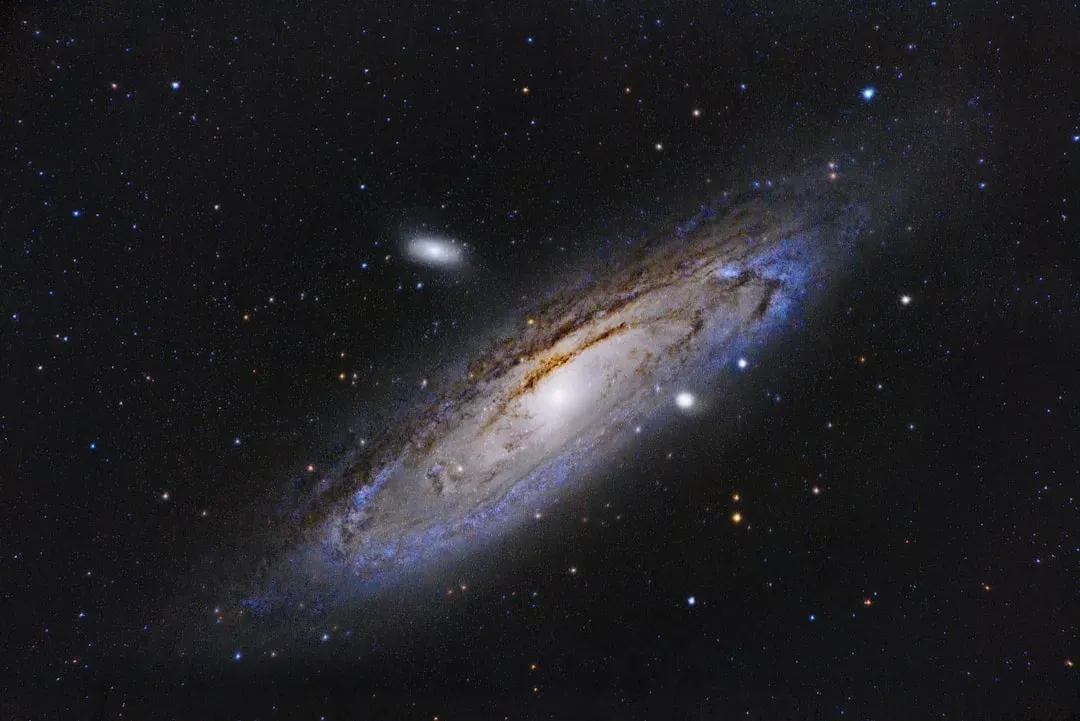
You have a surprisingly detailed story for how the universe evolved from a hot, dense state to the web of galaxies you see today, but the very first chapter is still a blank page. The Big Bang is not really an explosion in space; it is the rapid expansion of space itself from an earlier, denser phase. When you run your equations backward, they point toward an initial singularity, a point where densities and temperatures blow up and the known laws of physics simply stop working.
To go further back, you need a theory that merges quantum mechanics and gravity into a single framework, something you still do not fully have. Some models imagine a brief period of ultra‑fast expansion called inflation, driven by a mysterious field, while others suggest that your universe might have bounced from a previous contracting phase or emerged from a larger multiverse. From your vantage point, you are peering through a keyhole at the first instants of time, knowing that whatever happened there set the stage for everything you will ever experience.
6. The Possibility of Life Beyond Earth
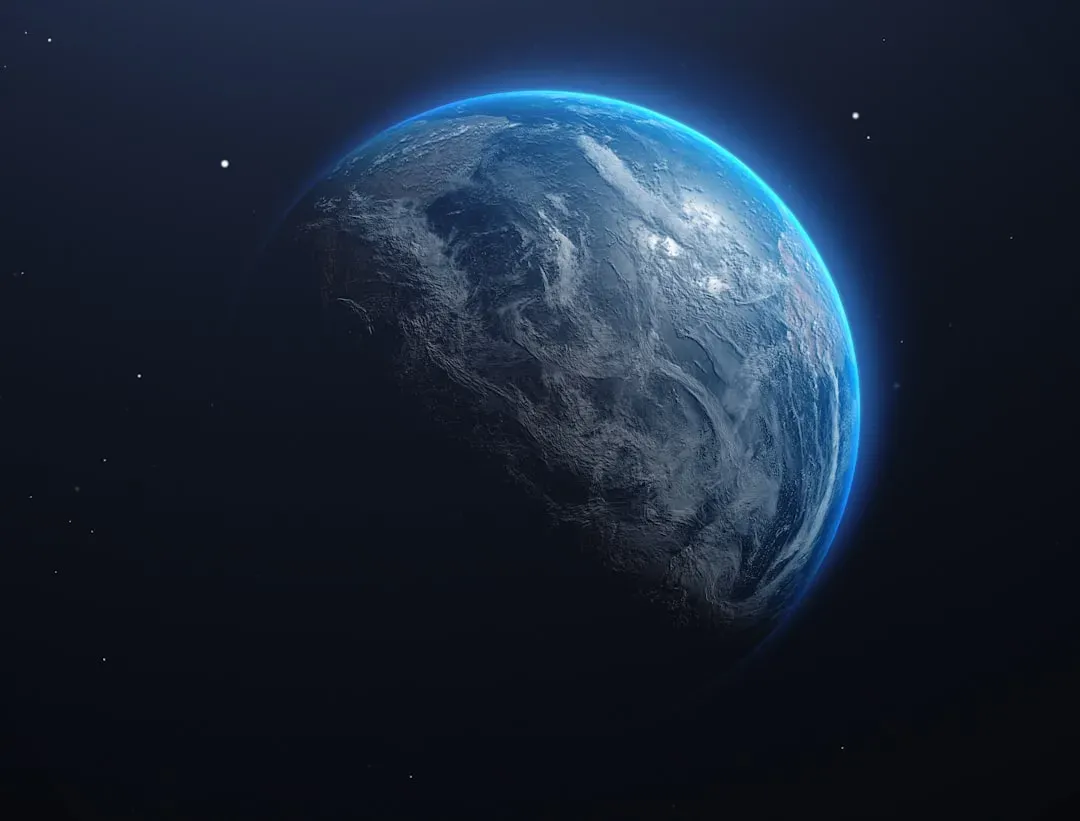
Out of all the cosmic mysteries, this is the one that grabs you in the gut: are you really alone? You now know that planets are common, and that nearly every star you see likely has worlds circling it, some of them rocky, some with liquid water, and some sitting at just the right distance for life as you understand it. You have discovered complex organic molecules in interstellar clouds and on icy moons, hinting that the raw ingredients of life are sprinkled generously across the galaxy.
Yet, despite listening for signals, scanning exoplanet atmospheres, and exploring your own solar system with rovers and probes, you have found no clear sign of another mind looking back. This silence is what fuels the so‑called Fermi question: if life can arise and spread, why do you not see even a whisper of it? Maybe simple life is common but complex, technological civilizations are incredibly rare, or maybe you are simply not listening in the right way or at the right time. Until you know, every new rocky planet and every strange moon feels like a possible neighbor you have not met yet.
Conclusion: Living With the Unknown Sky Above You
When you step back and look at these six mysteries together, you realize how small your island of certainty really is. You live in a universe where most of the matter is invisible, most of the energy is mysterious, the deep past is only partly understood, and your cosmic company is still unknown. Yet instead of being discouraging, that uncertainty can be strangely comforting, because it means there is still so much left for you to explore and understand.
Every time you ask what dark matter is, why the universe is accelerating, how black holes handle information, why your cosmic rulers disagree, what lit the first spark of the cosmos, or whether anyone else is out there, you are really asking what kind of universe you belong to. You may never see all the answers in your lifetime, but you are part of the generation pushing the questions into sharper focus, building tools that can finally test ideas that once sounded like science fiction. As you look up at the night sky, knowing how much you still do not know, you might quietly wonder: which of these mysteries will fall first, and which ones will still be keeping someone else awake a hundred years from now?