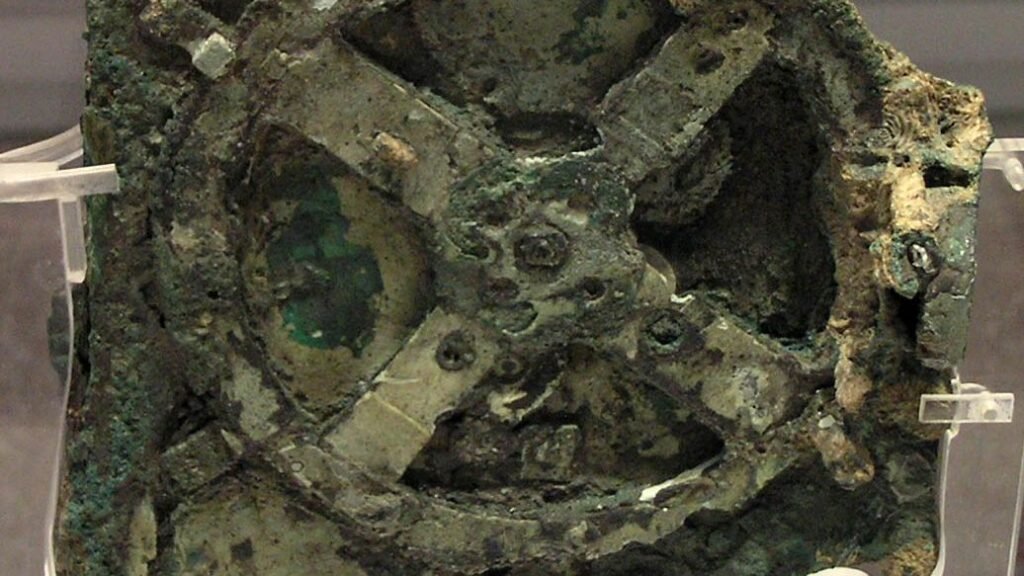

You’ve probably scrolled past countless posts celebrating modern technology like smartphones or electric cars. That’s all fine and good. Still, what if I told you that some of the most brilliant engineering feats didn’t come from Silicon Valley or NASA, but from civilizations that existed thousands of years ago? Think about it. These ancient cultures didn’t have computers, advanced metallurgy labs, or engineering software, yet they created devices and materials so sophisticated that modern scientists are still trying to fully understand them.
It’s honestly kind of humbling when you realize our ancestors weren’t just building simple shelters and hunting with sticks. They were constructing self-healing concrete, computing astronomical predictions with mechanical gears, and crafting metals we still struggle to replicate today. Let’s dive into some of the most astonishing ancient inventions that make you wonder what else we’ve lost along the way.
The Antikythera Mechanism: An Ancient Computer Hidden Underwater
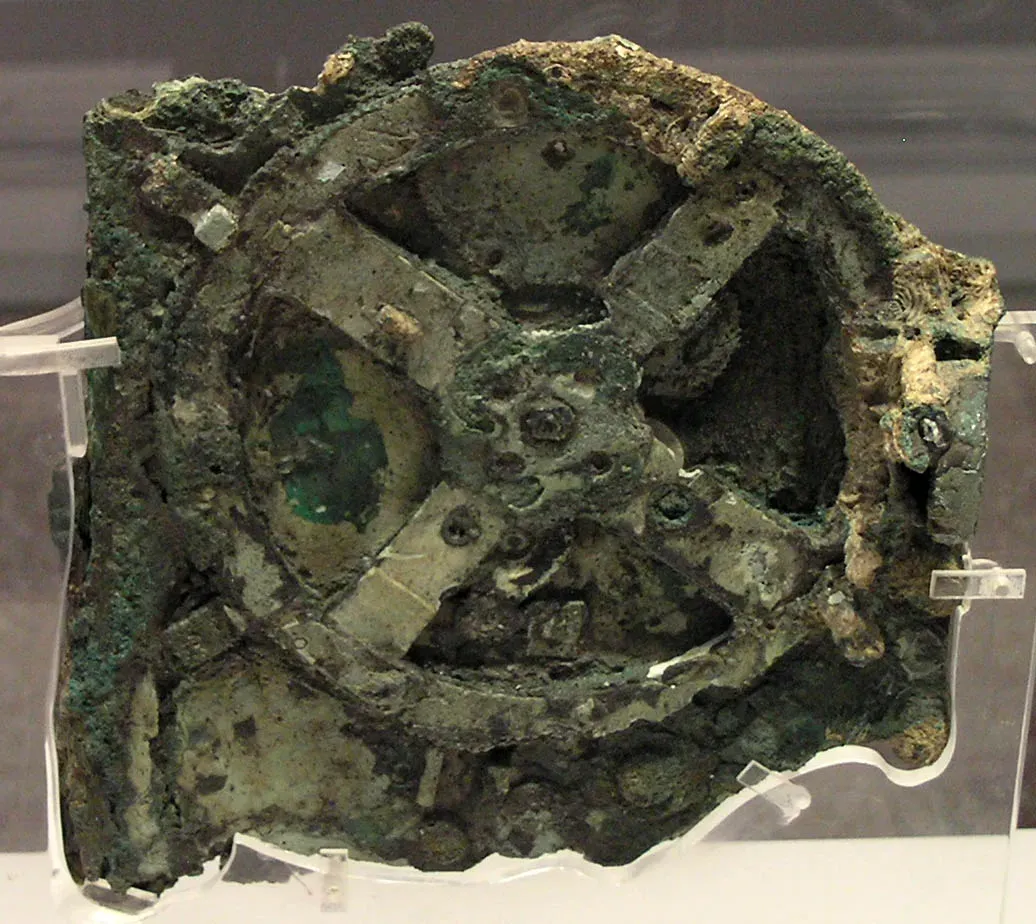
In 1901, sponge divers discovered a corroded lump of bronze in a shipwreck near the Greek island of Antikythera. At first glance, you might think it was just another piece of ancient junk. It turned out to be the oldest known example of an analogue computer that could predict astronomical positions and eclipses decades in advance.
The mechanism showcased intricate metalworking skills, including finely carved gear teeth about a millimeter long. Here’s the thing that really gets me: this kind of advanced gearing wasn’t expected to be seen before the Middle Ages. By turning a crank, users could view the positions of the sun, moon and five known planets at any given date in the past or future. The device was essentially a portable planetarium and calendar system wrapped into one bronze box.
The Baghdad Battery: Electricity Two Thousand Years Early
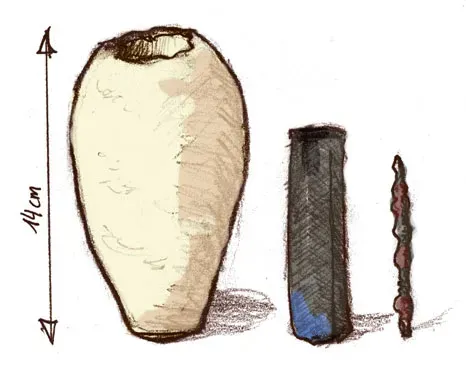
The Baghdad Battery consists of a ceramic pot, a tube of copper, and a rod of iron fixed together with bitumen, discovered in present-day Iraq in 1936. Wilhelm König, director of the laboratory at the National Museum of Iraq, suggested that the object functioned as a galvanic cell. Honestly, the idea that ancient Mesopotamians might have harnessed electricity is wild.
When researchers built replicas using lemon juice as an electrolyte, they produced about four volts of electricity when connected in series, capable of minor electroplating and electrostimulation. The purpose remains heavily debated, though. Some theorize that ancient physicians may have applied electric currents to patients to treat affected areas, while claims of electroplating are universally rejected by archaeologists. The controversy makes it even more fascinating.
Roman Concrete: The Material That Refuses to Die

The ancient Romans constructed vast networks of roads, aqueducts, and massive buildings, and Rome’s famed Pantheon still has the world’s largest unreinforced concrete dome and some ancient Roman aqueducts still deliver water to Rome today. Meanwhile, modern concrete structures often crumble after just a few decades. What gives?
Researchers determined that Romans used quicklime directly with pozzolana and water at extreme temperatures in a process called hot mixing, and this was actually the key to the super-durable nature. When small cracks formed in the concrete and water was added, the lime lumps dissolved and recrystallized, effectively filling in cracks, and this Roman-inspired concrete healed cracks up to point six millimeters across. That’s self-healing concrete, something we’re only now trying to commercialize. The Romans figured this out roughly two millennia ago.
Damascus Steel: The Lost Blade That Cut Through Legend
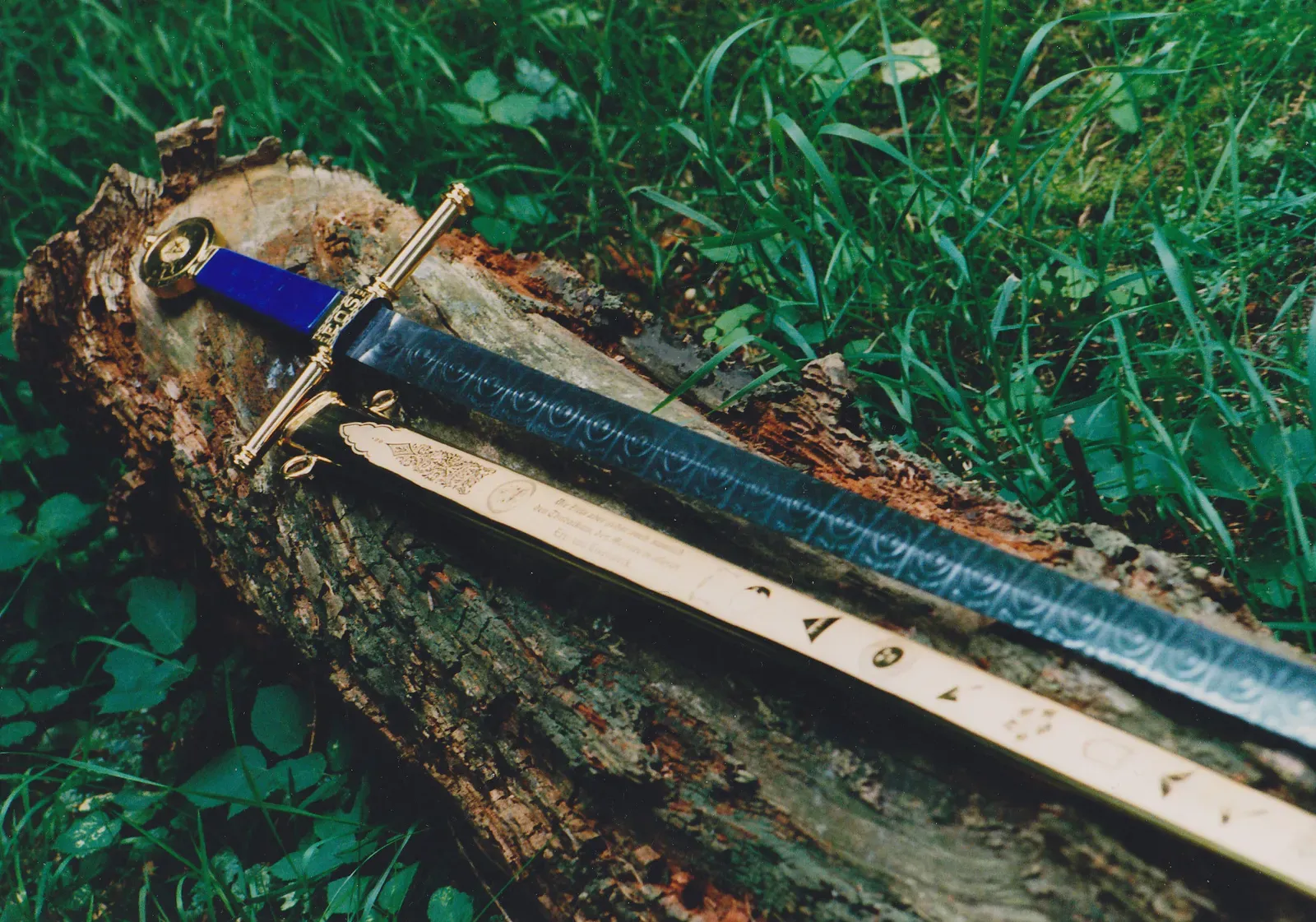
Damascus steel was the high-carbon crucible steel of historical swords characterized by distinctive patterns of banding and mottling, and it was reputed to be tough, resistant to shattering, and capable of being honed to a sharp, resilient edge. It was even said that blades made of wootz steel could cut through a silk scarf as it fell. I know it sounds crazy, but historical accounts suggest these swords could maintain their edge even after cleaving through stone or other blades.
The formula for wootz Damascus has been lost to history, and by the early nineteenth century it was no longer being produced, possibly because metalsmiths kept some of the process secret and possibly because the special combination of ores dried up. Research has established that the distinct surface patterns result from a carbide-banding phenomenon produced by microsegregation of minor amounts of carbide-forming elements, and it is likely that wootz Damascus blades may have been produced only from wootz ingots supplied from regions of India having appropriate impurity-containing ore deposits. When those ore sources ran out, the technique vanished.
Zhang Heng’s Seismoscope: Detecting Earthquakes From Afar
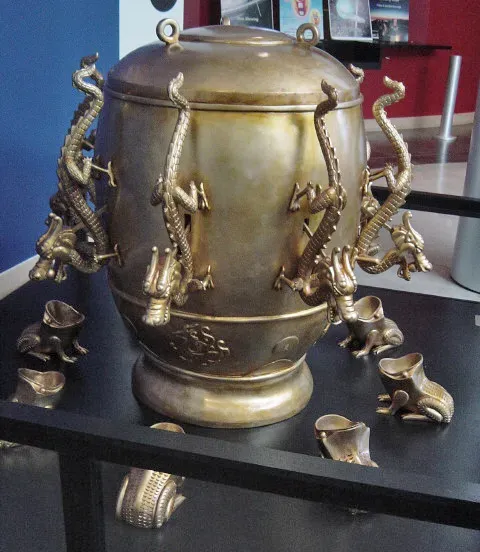
In AD 132, Zhang Heng invented the world’s first earthquake detector, and though not as advanced as today’s seismographs, it could determine the occurrence of the slightest earthquake as well as its general direction. Picture this: a big bronze pot adorned with eight dragon heads and eight toads at the base, where each dragon held a small bronze ball in its mouth that dropped into one of the toads’ mouths to show the direction of an earthquake.
The device was remarkably accurate in detecting earthquakes from afar and did not rely on shaking or movement in the location where the device was situated. In 2005, scientists in Zhengzhou, China managed to replicate Zhang’s seismoscope and used it to detect simulated earthquakes based on waves from four different real-life earthquakes in China and Vietnam. The fact that a device from nearly two thousand years ago could accomplish this without modern sensors or electronics is genuinely impressive. It makes you wonder what other brilliant inventions have been lost to time.
These five inventions challenge everything we think we know about ancient civilizations. They weren’t primitive societies waiting for the modern era to save them. They were innovative problem-solvers who created technologies that, in some cases, we’re only now beginning to understand or replicate. The Antikythera mechanism shows astronomical calculation abilities we didn’t think existed until medieval times. Roman concrete outlasts our modern materials. Damascus steel remains partially mysterious despite all our metallurgical knowledge.
What strikes me most is how much knowledge has simply vanished. These weren’t flukes or lucky accidents. They were the results of generations of accumulated expertise, careful observation, and brilliant engineering. Yet somewhere along the line, wars, changing trade routes, or simply the passage of time erased the understanding behind them. It’s a reminder that progress isn’t always linear, and that sometimes looking backward can teach us how to move forward. What do you think we’re creating today that future generations might struggle to recreate?