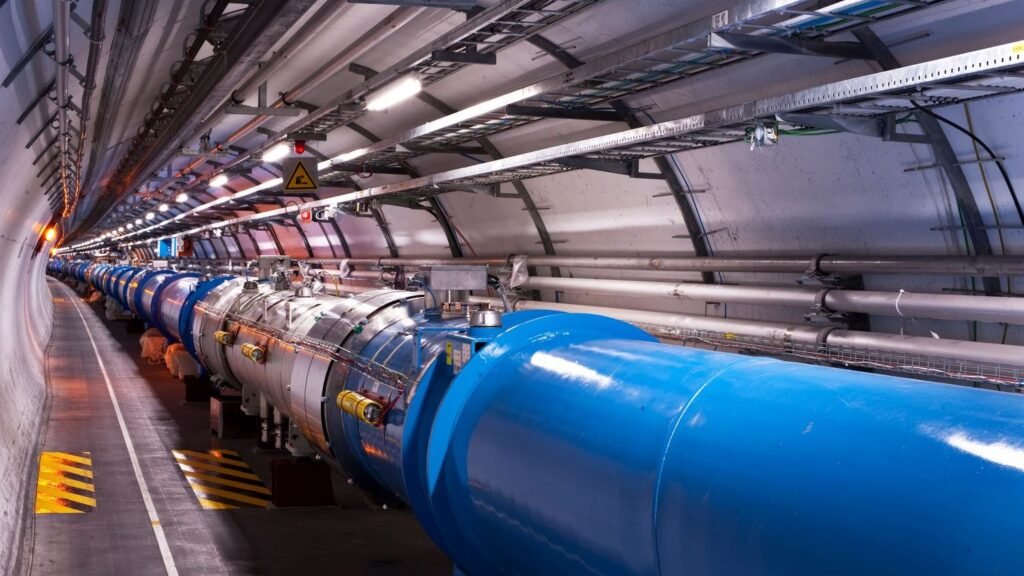

If you had to build the most complex machine humanity has ever made just to answer a handful of questions about reality, would it be worth it? That’s basically what (LHC) is: a gigantic underground ring near Geneva smashing protons together so violently that, for a tiny instant, the universe looks like it did a fraction of a second after the Big Bang. It sounds like science fiction, but it’s real, and it has quietly rewritten what we know about matter, energy, and the invisible rules that run the cosmos.
When I first followed LHC news back in 2012, it felt like cheering for a sports team made of nerds and magnets. Every new data run meant the possibility of something wild: new particles, broken theories, hints of hidden dimensions. Some of those dreams are still waiting. But in the meantime, the LHC has already delivered several discoveries so important that future physicists will probably treat “before LHC” and “after LHC” as separate eras in their textbooks.
The Discovery Of The Higgs Boson: Completing The Standard Model
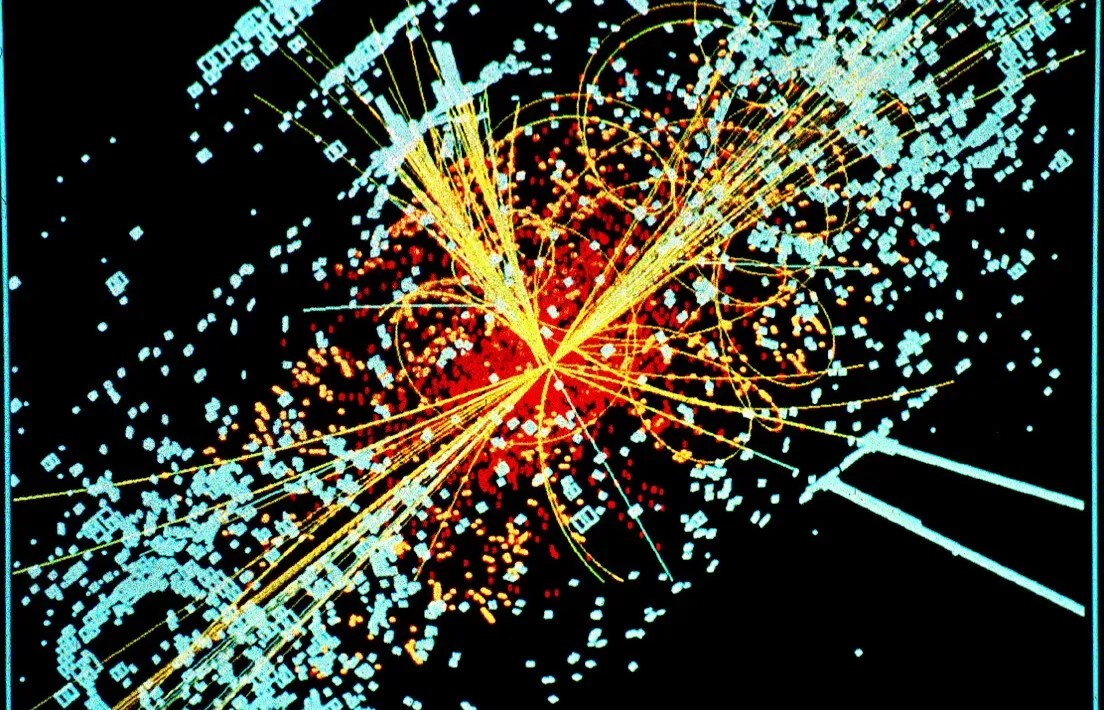
Imagine working on a puzzle for nearly fifty years, with one maddening missing piece everyone keeps talking about but nobody can find. The Higgs boson was that missing piece, predicted in the nineteen sixties, hunted by multiple generations of experiments, and finally observed at the LHC in 2012. Its discovery confirmed the existence of the Higgs field, an invisible energy field spread through the universe that gives fundamental particles their mass. Without this mechanism, atoms as we know them couldn’t exist, stars wouldn’t form, and you and I would not be here to wonder about any of it.
What made the Higgs such a big deal wasn’t just finding a new particle, but proving that the Standard Model of particle physics actually works in this most delicate part of its machinery. Physicists had predicted roughly how heavy the Higgs should be and how often it should appear, and the LHC experiments saw a new particle whose behavior lined up with those expectations. Since then, more precise measurements have shown the Higgs behaves eerily “normal,” which is strangely disappointing and thrilling at the same time: disappointing because many hoped for deviations pointing to new physics, and thrilling because it means our existing theory passes one of the most brutal tests we could throw at it.
Pinning Down The Higgs’ Personality: How It Talks To Other Particles
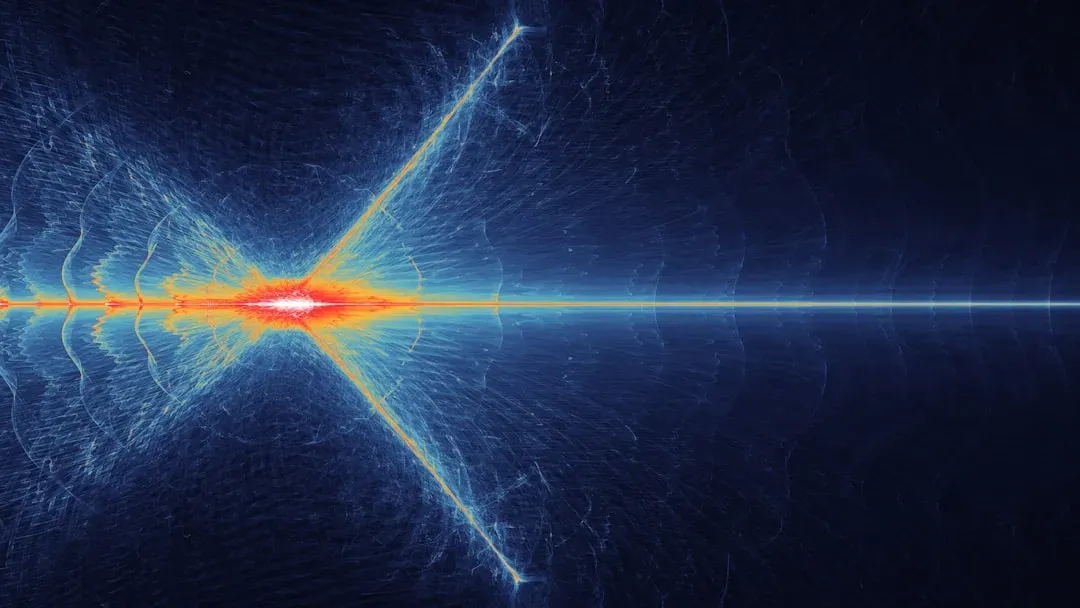
Finding the Higgs was only the beginning; the real fun started when physicists began measuring what the Higgs actually does. The Standard Model says the Higgs should interact more strongly with heavier particles and more weakly with lighter ones, almost like a cosmic social butterfly that prefers hanging out with the big kids. Data from the LHC has shown that, within current precision, this pattern holds: the Higgs couples strongly to heavy particles like top quarks and W and Z bosons, and much more weakly to particles like muons. Even the observation of the Higgs decaying into pairs of bottom quarks and tau leptons has fit this picture.
This might sound like dry detail, but these subtle measurements are exactly where cracks in the Standard Model would show up if there were hidden particles or forces nudging the numbers. So far, the Higgs looks almost too perfect, like that suspiciously clean apartment you walk into where you just know something is being hidden behind a locked door. The continued effort to measure the Higgs’ properties more precisely in the LHC’s newer runs may eventually reveal small discrepancies, and even a tiny mismatch between prediction and measurement could be the first sign of entirely new physics lurking beyond what we currently understand.
W Boson Mass, Precision Tests, And The Stress Test Of The Universe
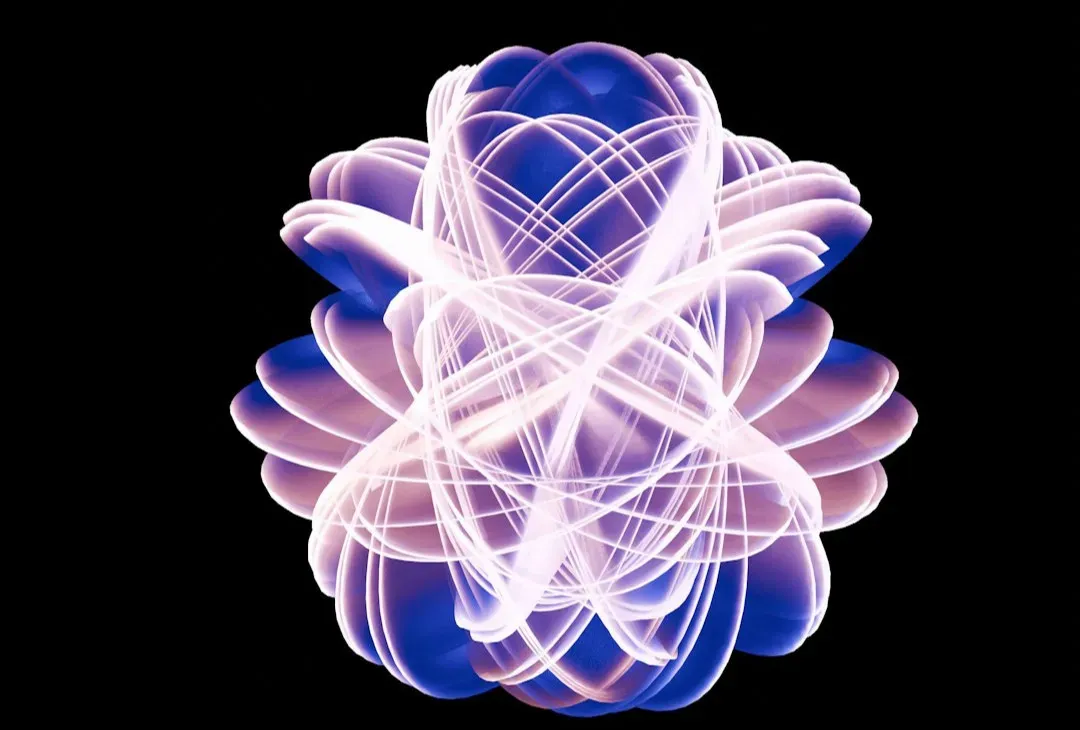
One of the LHC’s less flashy but incredibly important achievements is turning particle physics into a brutal stress test for our fundamental theories. By measuring quantities like the mass of the W boson, the behavior of top quarks, and a whole zoo of other observables with extreme precision, the LHC has been checking whether the Standard Model holds up under a microscope. Most of the time, the results have lined up remarkably well with theory, which is impressive when you realize those calculations combine quantum mechanics, relativity, and complicated statistical analyses all at once.
There have been some tensions and intriguing hints along the way, including debates sparked when certain measurements seemed to disagree with previous results from other experiments. But as more LHC data has come in and methods have been refined, many dramatic claims have softened or shifted, reminding everyone how careful you have to be when pushing the limits of measurement. Still, the overall picture is striking: the Standard Model, a theory built in the twentieth century, continues to survive a twenty-first century onslaught of data from the world’s most powerful collider. It’s almost annoyingly robust, like a vintage car that keeps starting on the first try no matter how hard you push it.
Probing Dark Matter And New Physics: The Dog That Hasn’t Barked (Yet)
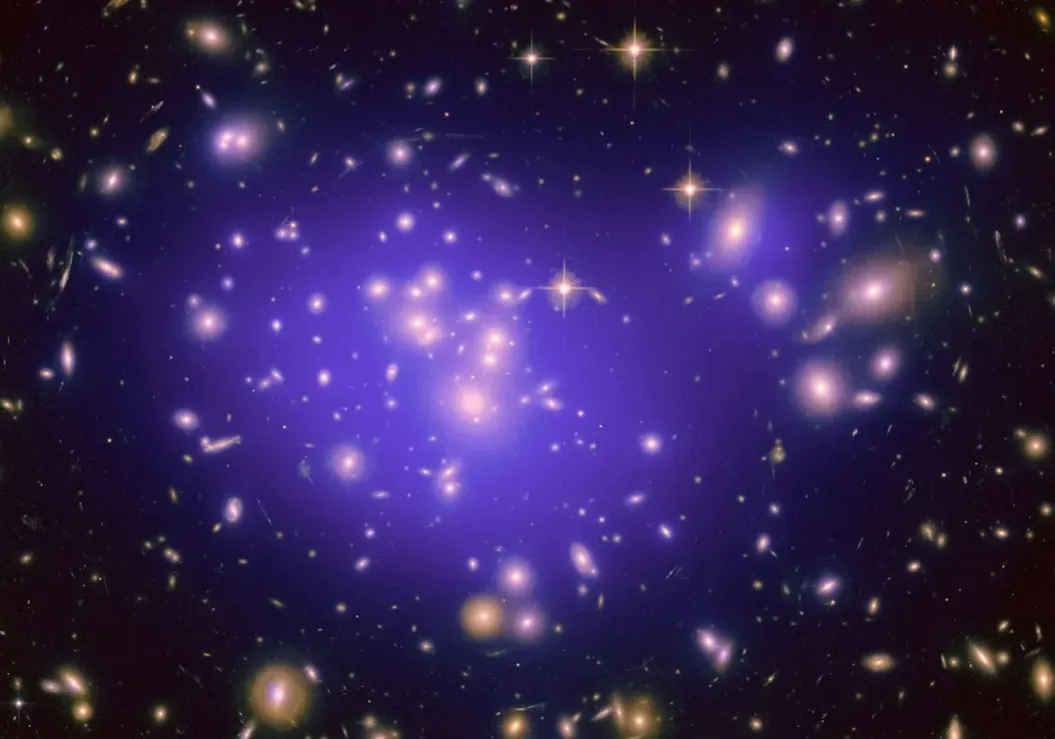
One of the boldest hopes for the LHC was that it would crash open a doorway to “new physics” beyond the Standard Model, especially in the form of particles that could make up dark matter. Dark matter is the mysterious stuff that seems to outweigh normal matter by several times when we look at galaxies and galaxy clusters, yet it doesn’t emit light or interact with us in obvious ways. The idea was that LHC collisions might occasionally produce dark matter particles that would escape the detector, leaving a kind of missing energy fingerprint. So far, no clear, direct sign of such particles has appeared in the data.
This absence is itself a kind of discovery, like going to a forest known for its wildlife and realizing that a certain kind of animal just isn’t there. The LHC has ruled out a huge range of popular theories that predicted easy-to-spot dark matter or dramatic new particles at energies already reached. Supersymmetric particles, extra Z bosons, and many other once-fashionable ideas now have far less room to hide. As frustrating as that can feel, it also forces theorists to get more creative and precise, pushing them away from simple fixes and toward deeper, more subtle possibilities that future LHC runs or next-generation colliders might finally unravel.
Revealing The Inner Life Of Protons: Gluons, Quarks, And Tiny Fireballs
While the Higgs tends to grab the headlines, the LHC has also quietly revolutionized how we see the humble proton. A proton is not a solid little ball; it’s more like a buzzing storm of quarks and gluons constantly flickering in and out of existence. By smashing protons together at unprecedented energies, the LHC experiments have mapped out how often different configurations of these quarks and gluons occur, and how they behave under extreme conditions. This has led to improved “parton distribution functions,” which are fancy maps of what’s going on inside protons over a wide range of energies.
On top of that, LHC heavy-ion collisions, where lead nuclei are smashed instead of single protons, have created tiny droplets of quark–gluon plasma, a state of matter that likely filled the universe microseconds after the Big Bang. These fireballs behave surprisingly like a nearly perfect fluid with very low viscosity, flowing more like honey than like a chaotic gas. By studying how particles spray out from these collisions, physicists are learning how strongly interacting matter behaves when pushed to the absolute limit. In a way, the LHC has turned protons and nuclei into laboratories for extreme physics, letting us watch matter melt and reform under conditions that would be impossible to reproduce anywhere else.
A Machine That Keeps Changing The Questions
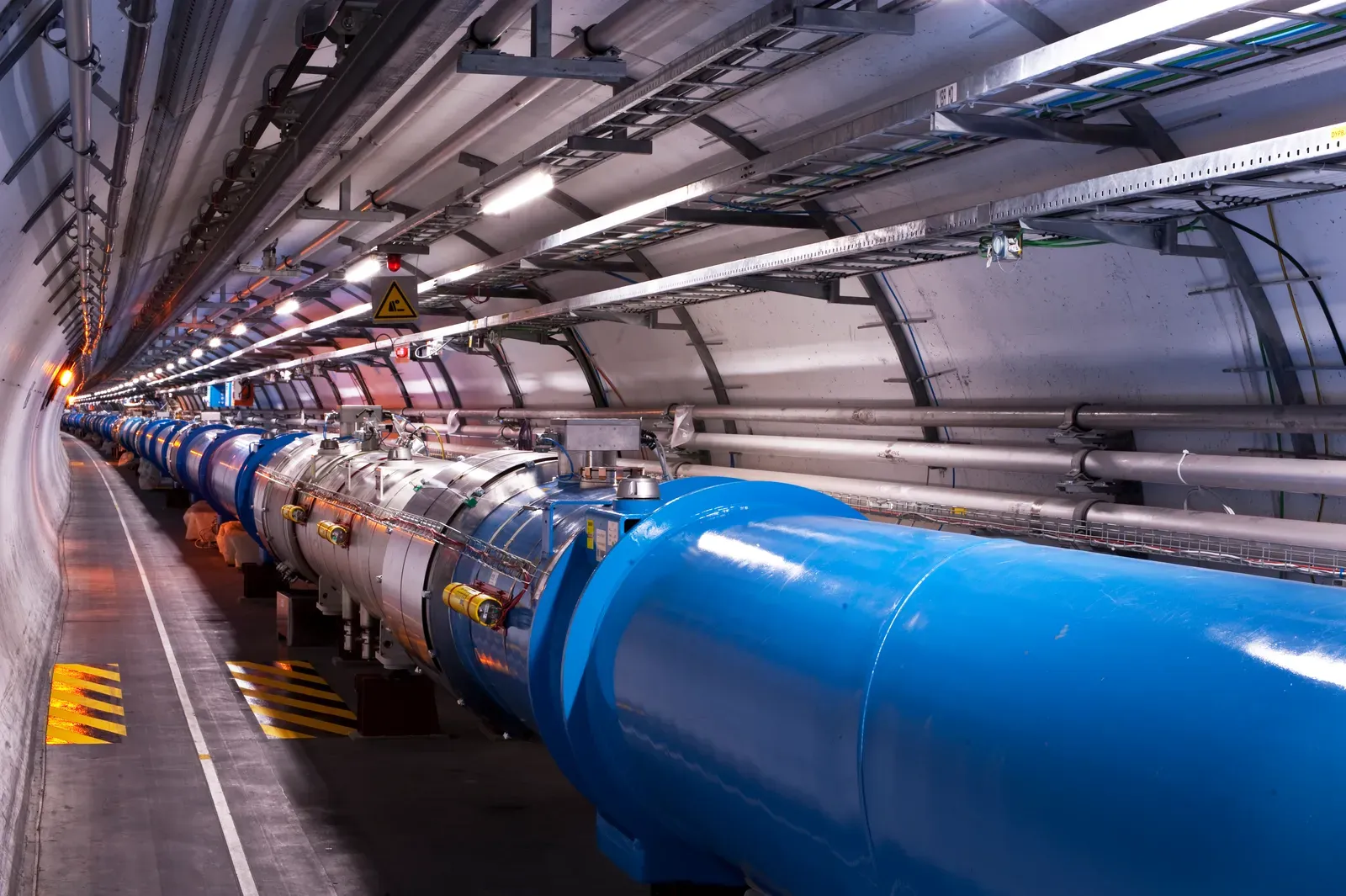
has already delivered the headline discoveries many people dreamed about, especially the confirmation of the Higgs boson and the detailed tests that have kept the Standard Model standing strong. At the same time, it has narrowed the options for new physics, placing tight constraints on dark matter candidates and other speculative ideas. Instead of handing us a simple new theory, it has made the landscape more complex and more interesting, like turning on a brighter light in a room only to realize how many corners you still haven’t explored.
What makes the LHC so remarkable is that its biggest impact may not be a single particle or measurement, but the way it keeps reshaping the questions we know how to ask. As upgrades increase its luminosity and future runs gather even more data, the collider will continue to probe deeper into the structure of matter, the behavior of forces, and the hidden patterns in the universe’s most fundamental laws. In a world where so much feels temporary, it’s oddly comforting to know that a giant ring of magnets under the Franco-Swiss countryside is quietly, relentlessly, helping us understand what everything is made of. Who would have guessed that learning how the universe works would require building a machine that almost feels like a science fiction character in its own right?