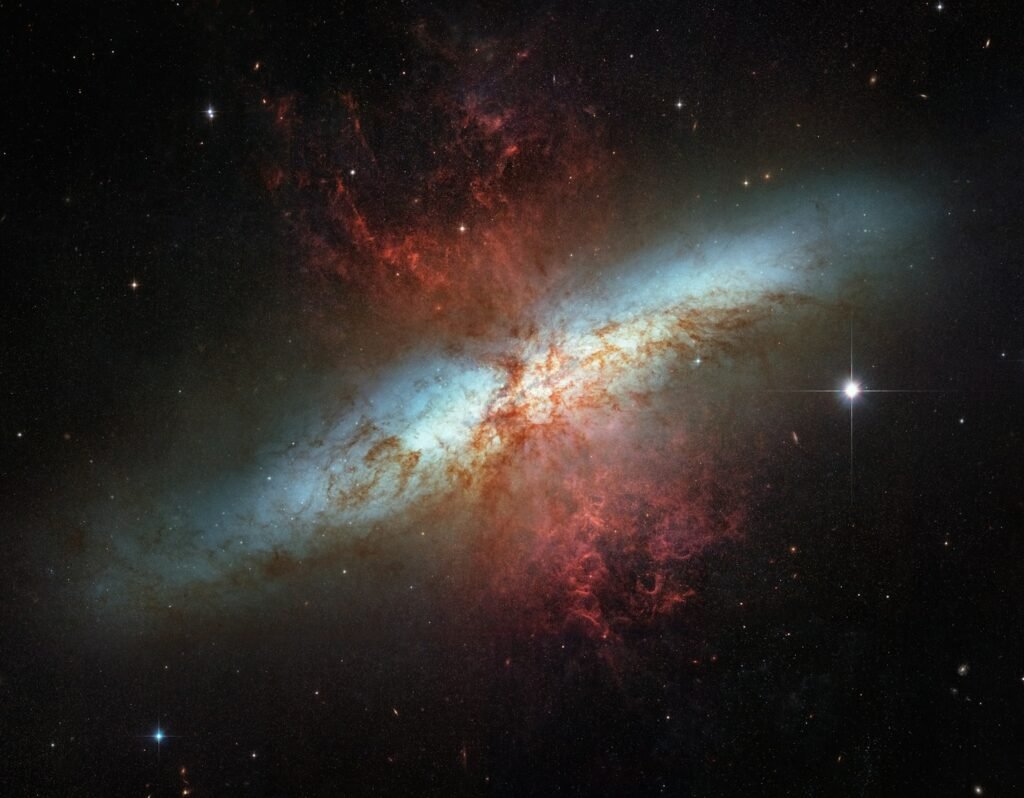

Every night sky looks calm, but it’s anything but. The universe is stretching, gently and relentlessly, turning yesterday’s constellations into a wider, thinner tapestry. Scientists have chased this mystery across a century, building clever tools to measure a cosmos that refuses to sit still. The surprise isn’t just that space expands; it’s that the more we learn, the weirder the story gets. Buckle in – this is a tale where light lengthens, time slows, and the far edge of what we can see races away faster than we’d ever expect.
The Hidden Clues: Light That Stretches With Space
Starlight carries a secret: as the universe expands, its waves are pulled to longer, redder colors. This cosmological redshift isn’t the same as a car’s Doppler pitch change; it’s space itself expanding and gently stretching every photon. When astronomers plot distance against redshift, a pattern emerges that acts like a ruler for cosmic history.
That ruler reveals something astonishing – the farther a galaxy is, the faster it appears to recede. The pattern is so consistent that it turned a hazy idea into a measurable law of expansion. It’s the foundational clue that lets us turn the sky into a timeline.
Space Itself Expands: No Center, No Edge
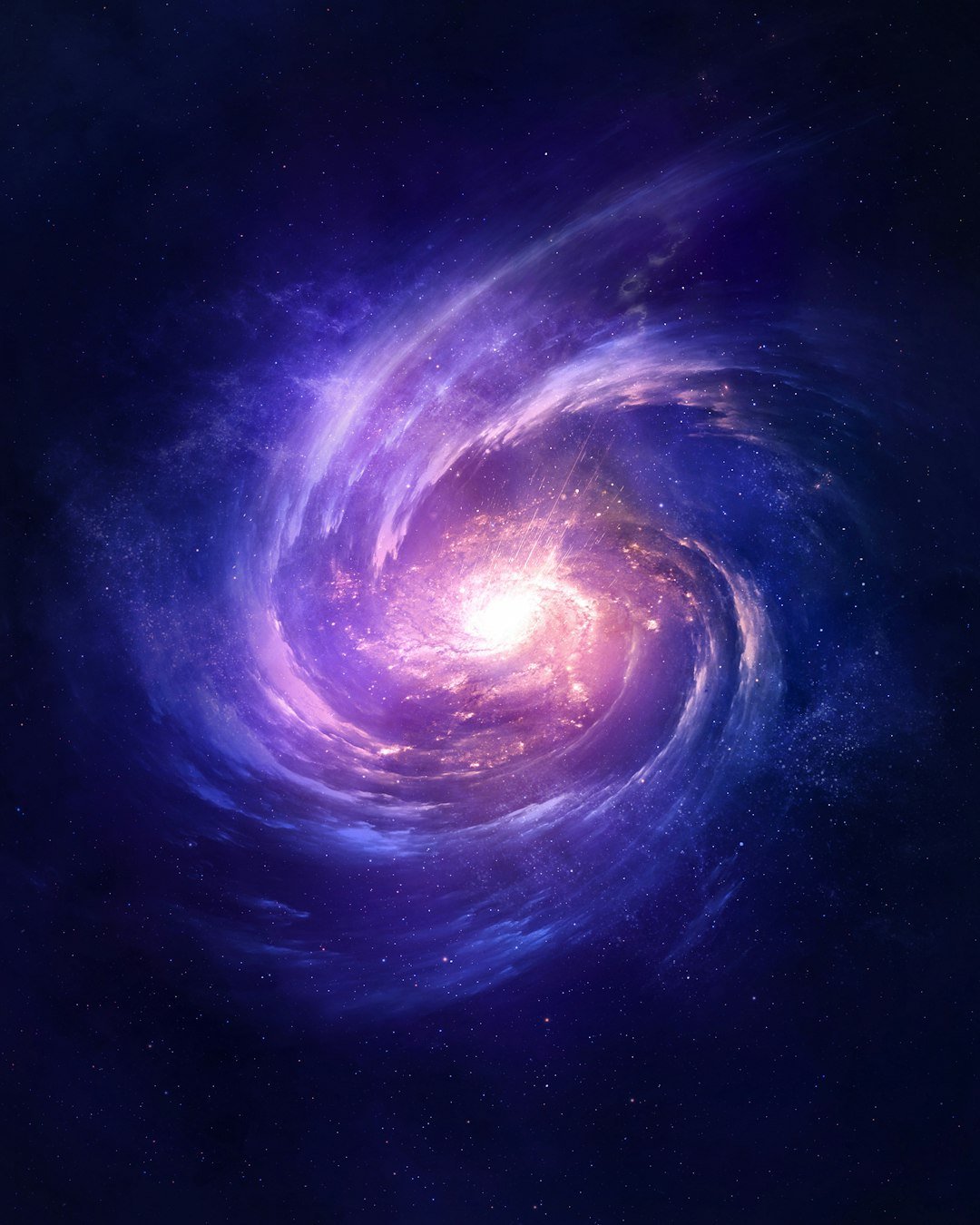
Imagine dots on a rising loaf of bread; as the dough expands, every raisin sees all others moving away. That’s our universe in a kitchen metaphor: no single center, just space growing everywhere at once. From any galaxy’s point of view, it looks like they’re at the middle of the action.
This simple picture packs a profound punch. Expansion isn’t a wind pushing galaxies through space; it’s the growth of space itself. That’s why the “center of the universe” is a trick question – there isn’t one.
The Accelerating Surprise: Dark Energy Steps In

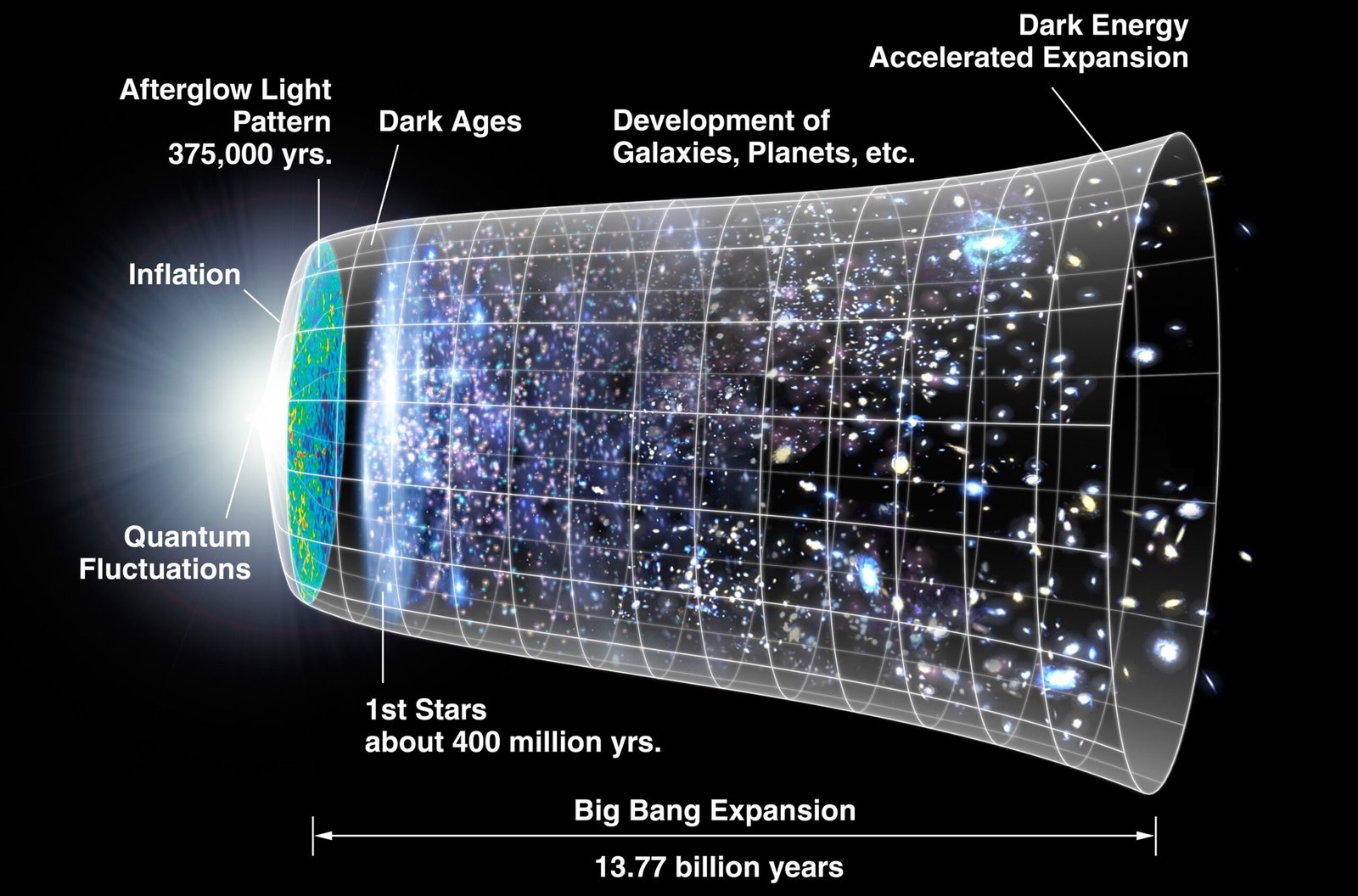
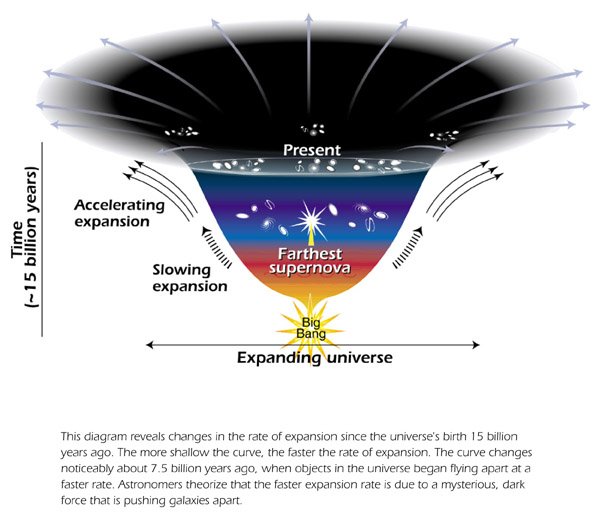
In the late 1990s, two teams measuring stellar explosions discovered a plot twist: cosmic expansion is speeding up. Some unseen component, nicknamed dark energy, behaves like a gentle antigravity, nudging galaxies apart more and more over time. It’s not a small tweak; it reshaped modern cosmology overnight.
Dark energy likely makes up approximately 68% of the universe’s total energy budget. We don’t know what it is, but we can see what it does. The acceleration it drives is now baked into every serious model of cosmic history and fate.
A Baby Picture of Everything: The Microwave Afterglow
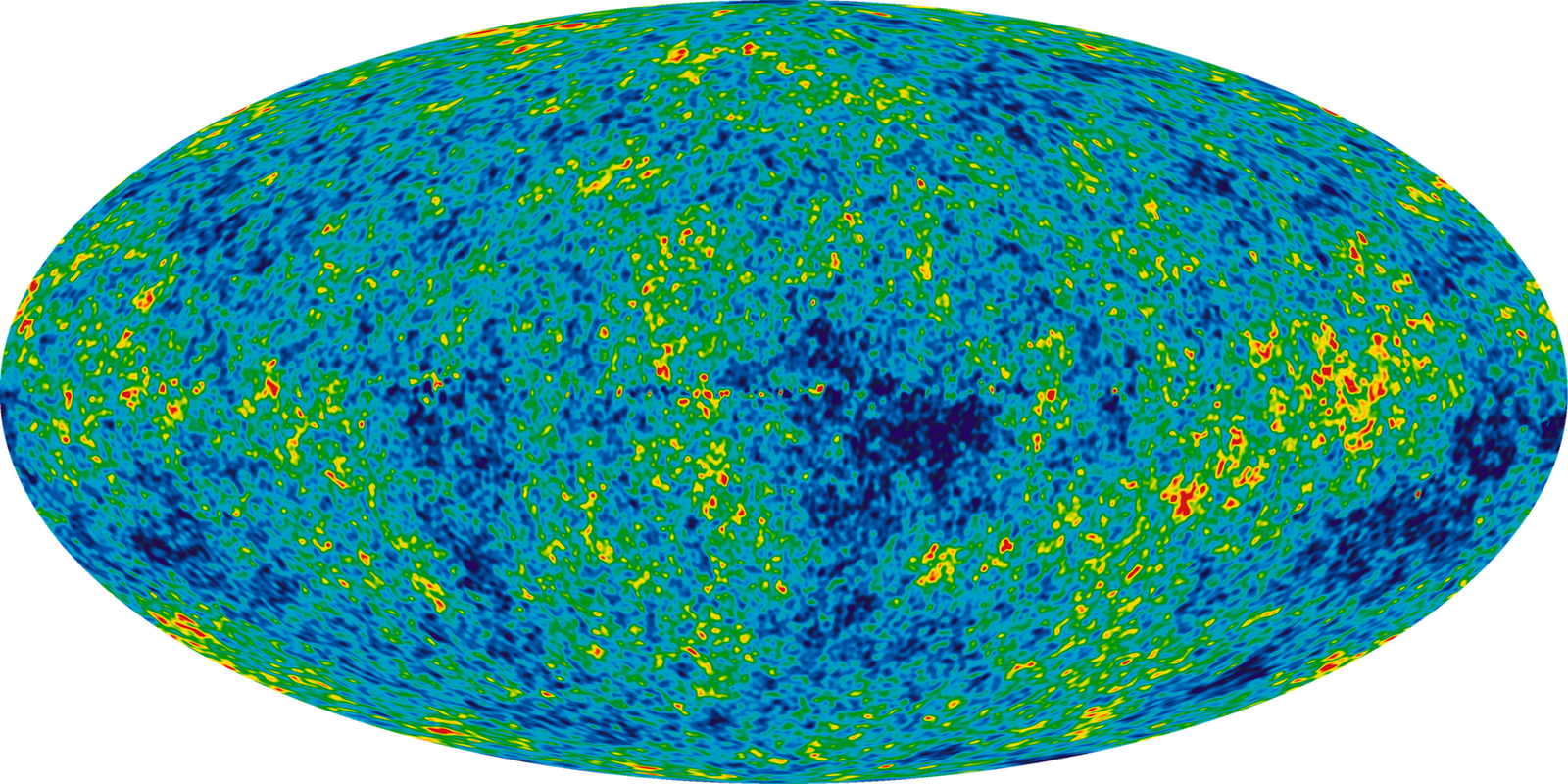
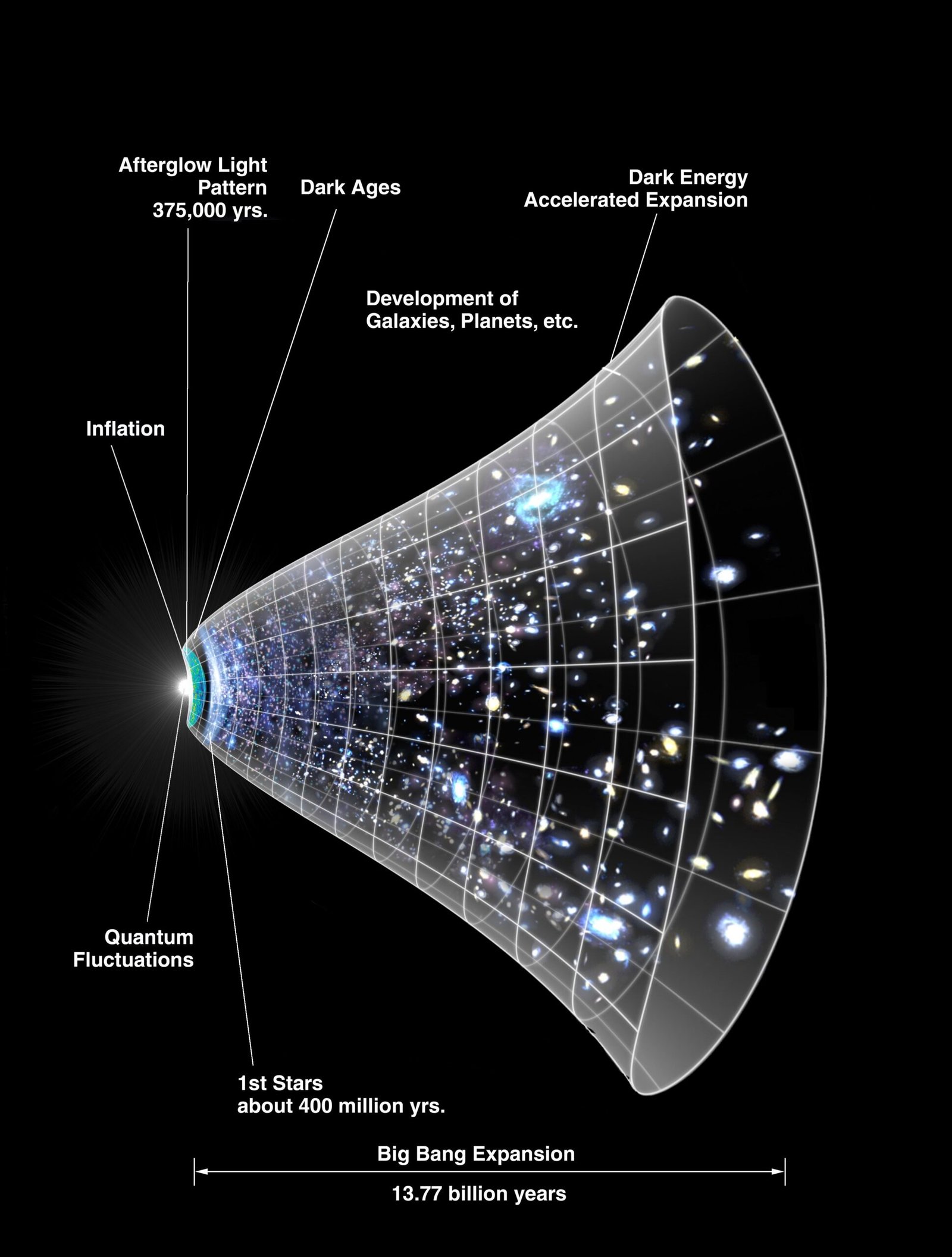
The universe left us a faint, cold whisper: the cosmic microwave background, a glow just a few degrees above absolute zero. Spacecraft have mapped its tiny temperature ripples, revealing the seeds of today’s galaxies. Those subtle blotches are fossil fingerprints from when the cosmos was a hot, dense fog.
From that map, scientists infer the universe’s age and the mix of its contents. The afterglow’s patterns match an expanding universe beautifully. It’s as if the cosmos took a snapshot of its own first moments and filed it where we could find it.
Time Machines in the Sky: Looking Back, Not Far
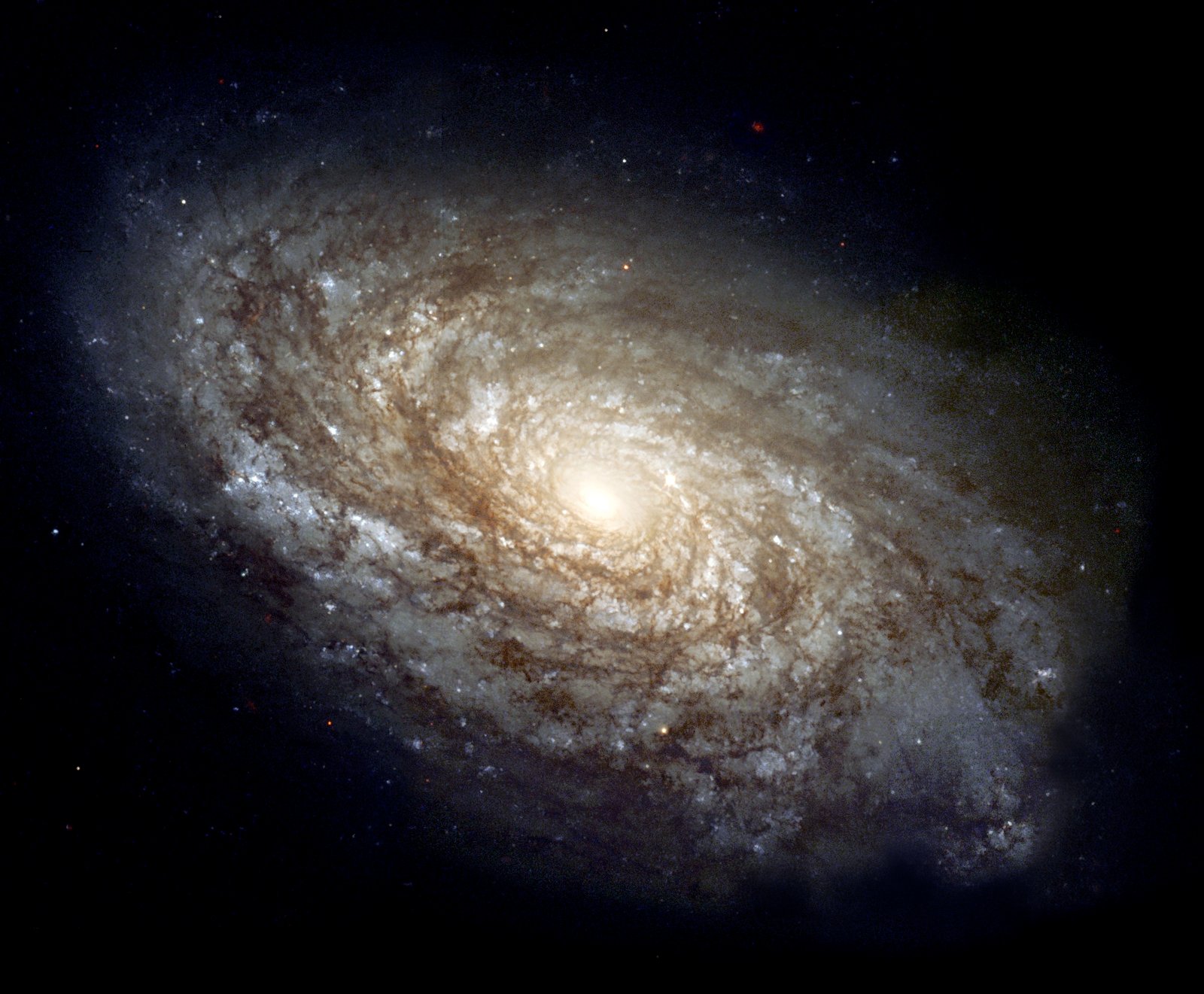
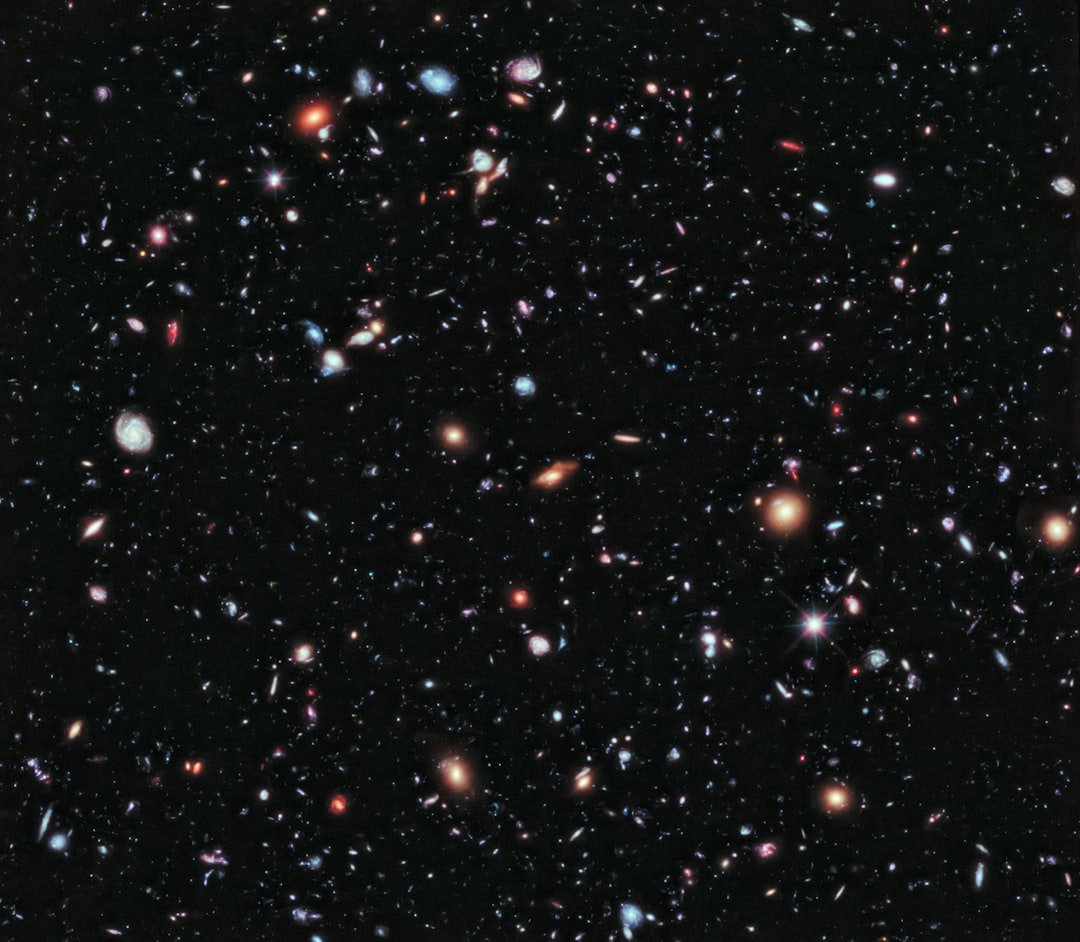
Light takes time, so distant galaxies are time capsules. A galaxy billions of light‑years away shows us its younger self, not how it looks today. Every deep image is a layered archive of eras stacked along our line of sight.
That’s why new telescopes can feel like time travel. They are tuned to catch ancient, stretched light from the universe’s first stars. When we say “far,” we quietly mean “long ago.”
The Hubble Tension: A Puzzle Hiding in Plain Sight
Two precise yardsticks disagree about how fast the universe is expanding right now. One approach reads the early universe’s afterglow; another builds a local distance ladder using nearby stars and supernovae. Both are careful, both are clever, and their answers don’t quite match.
This stubborn mismatch is called the Hubble tension, and it could be an instrumental quirk – or new physics peeking through. The stakes are high because a resolution might rewrite part of the standard cosmic story. Scientists love a good disagreement when it points to discovery.
Gravity’s Skeleton: Dark Matter Shapes the Growth
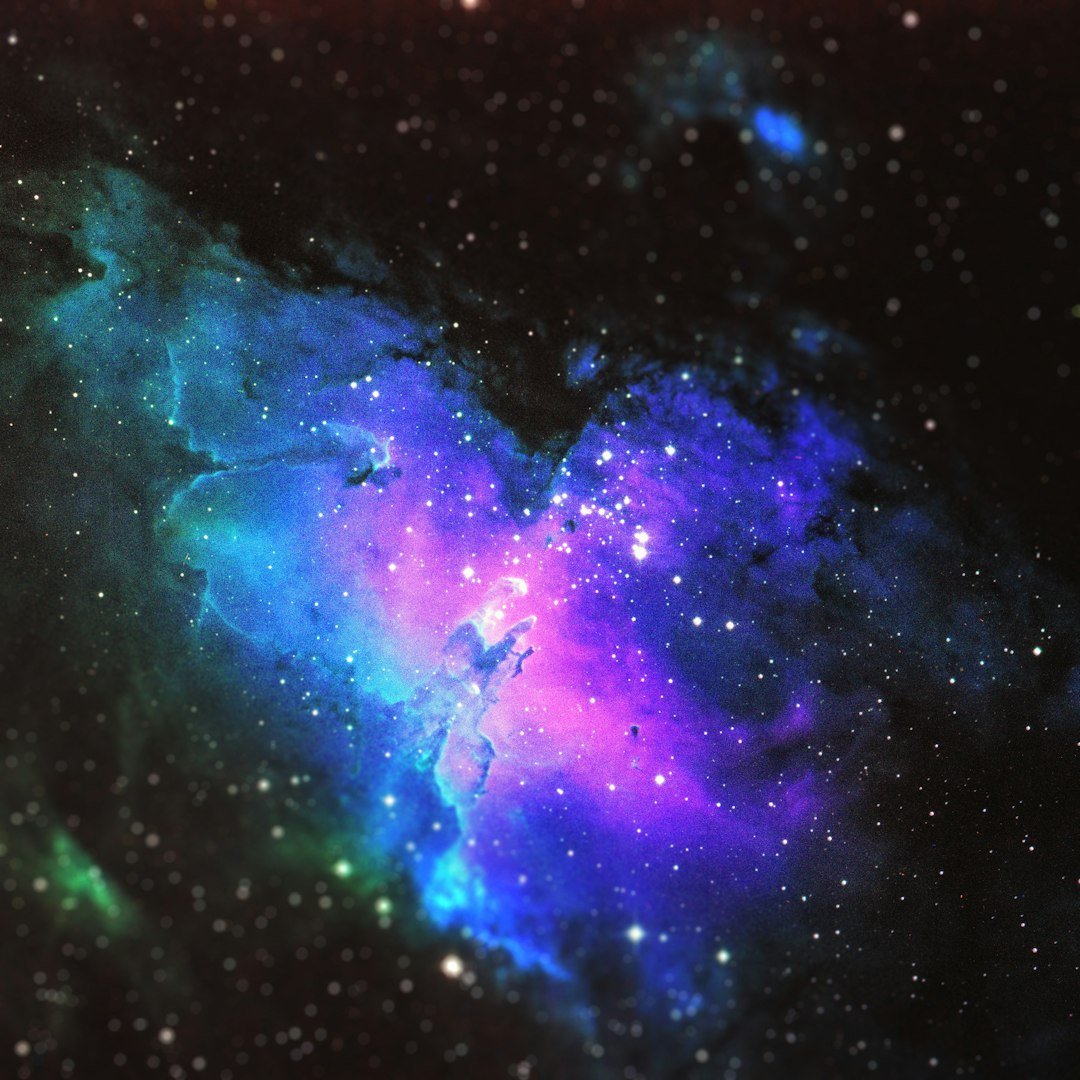
Galaxies didn’t appear randomly; they grew where invisible mass pooled. Dark matter, which interacts mainly through gravity, formed a scaffolding that ordinary matter could fall into and ignite as stars. Computer simulations that include it produce filaments and clusters that look uncannily like the real sky.
Without this hidden framework, the universe would be a thinner, slower place to form structure. Expansion and gravity dance together, but gravity needs that extra mass to keep the beat. The result is a cosmic architecture both delicate and immense.
Islands in the Stream: Why Galaxies Don’t Rip Apart
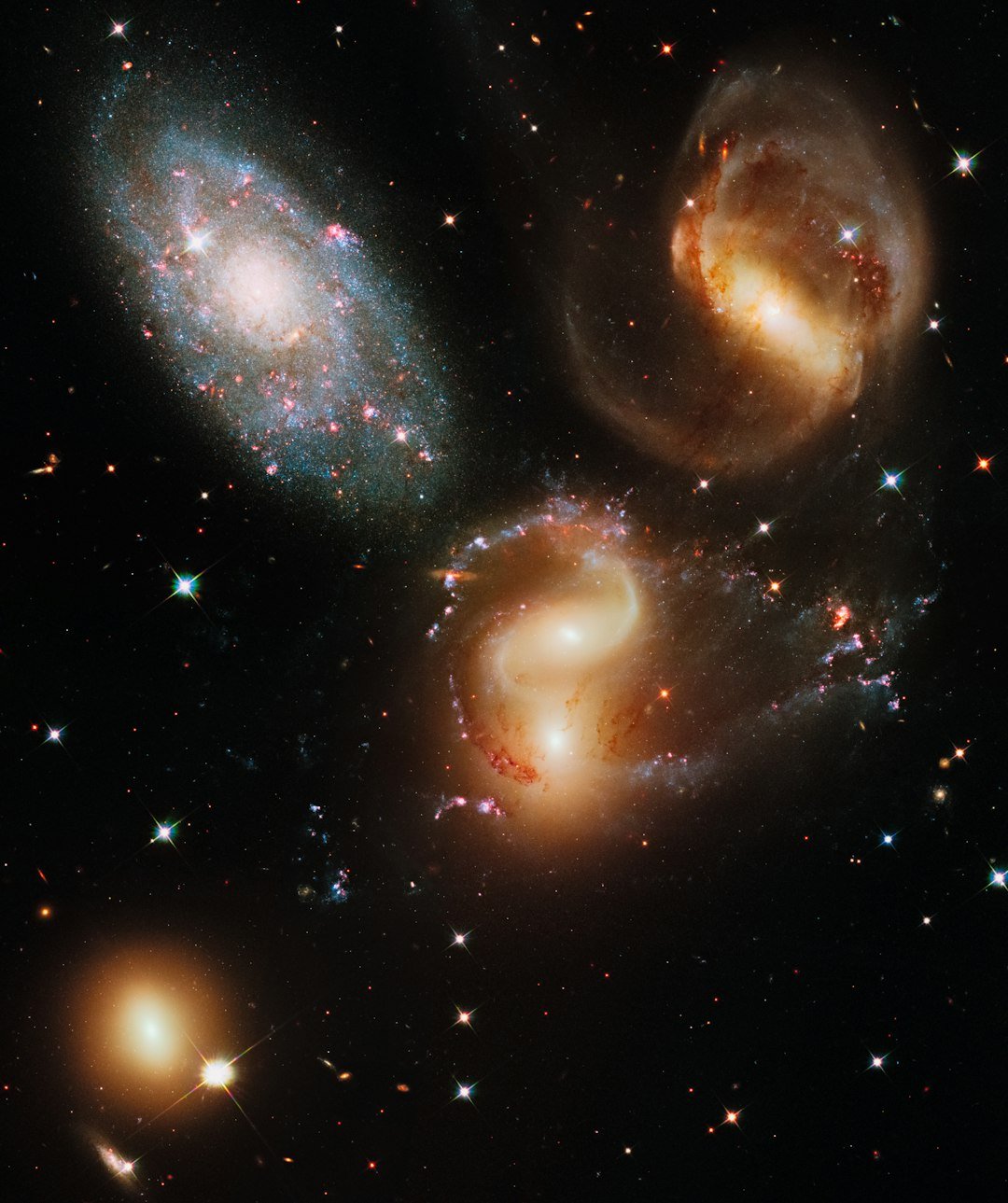
Expansion is powerful on large scales, but it’s weak inside gravitationally bound systems. The Milky Way, the Solar System, your coffee cup – none are stretching with the universe. Local gravity and other forces hold them tighter than cosmic expansion can pull.
This is why we don’t worry about the Earth drifting away from the Sun as the cosmos grows. Expansion dominates between galaxy groups, not within them. The universe chooses its battles, and it only wins the very big ones.
The Cosmic Web: Filaments, Nodes, and Vast Voids
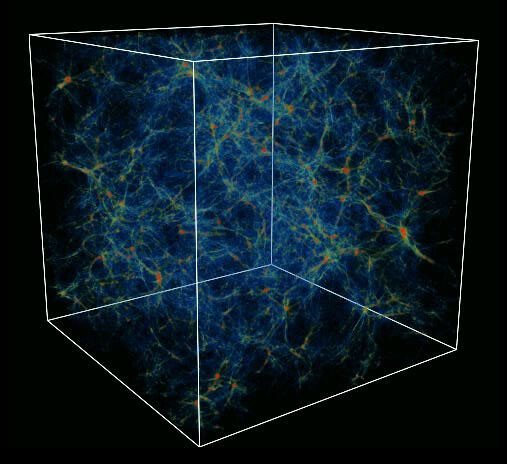
Zoom way out and galaxies trace a webby structure: bright knots linked by tendrils around cavernous voids. Voids steadily empty as matter flows toward the filaments and clusters, subtly amplifying the large‑scale pattern. Expansion helps this process, stretching low‑density regions faster than crowded ones.
The web explains why some directions in space look bustling and others look barren. It’s a city map written by gravity over cosmic time. The emptiness is part of the design, not a flaw.
Standard Candles and Sirens: Measuring the Stretch
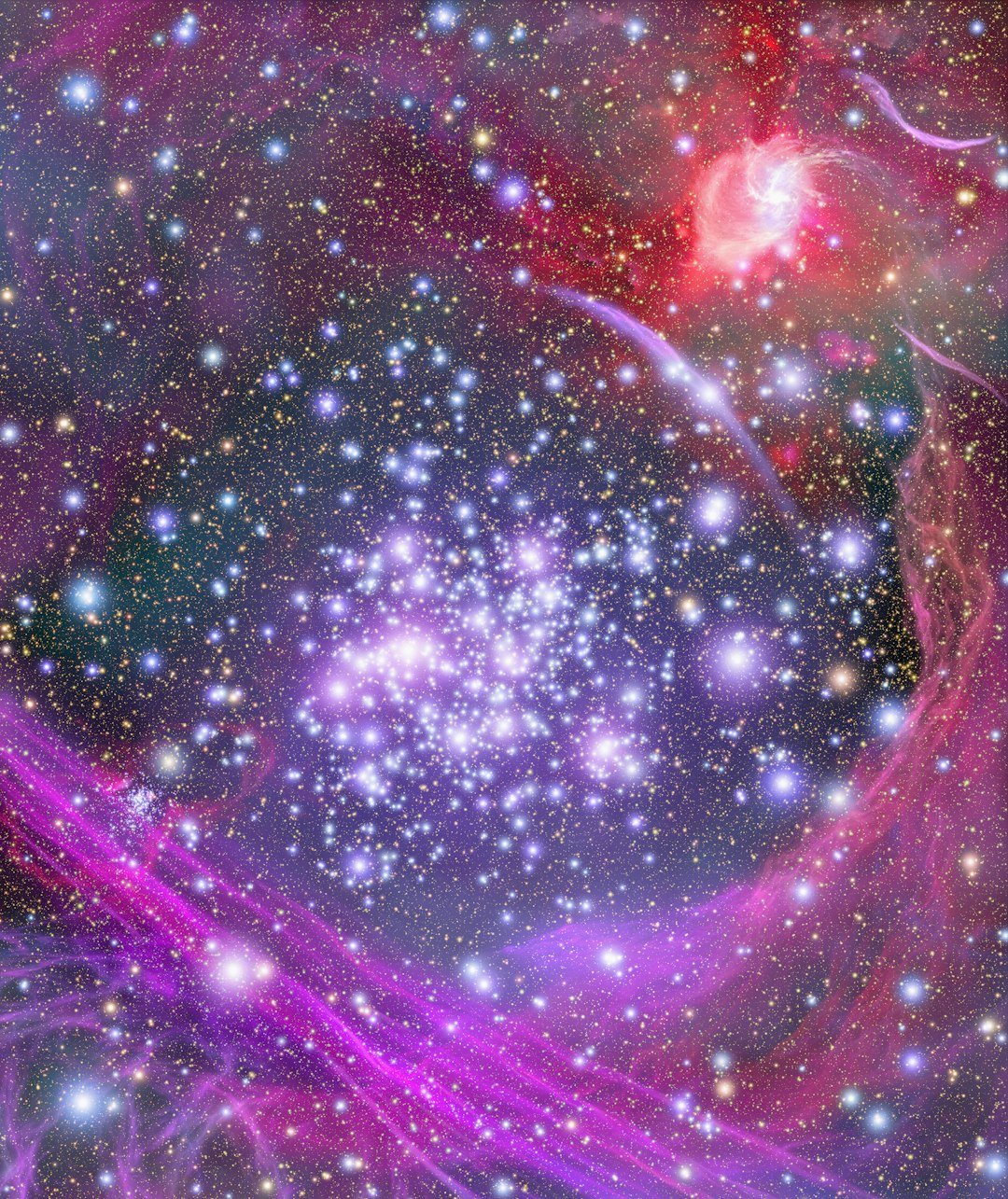
Astronomers rely on predictable beacons to measure vast distances. Type Ia supernovae, which reach a known peak brightness, act like standard candles that can be compared across the universe. Their brightness and redshift together trace the expansion history.
Now a new tool is joining the kit: standard sirens from gravitational‑wave events. When collisions of massive objects shake spacetime, the ripples carry distance information in a different, independent way. Combining candles and sirens tightens the cosmic ruler and checks our assumptions.
From Ancient Tools to Modern Science: A Ladder Rebuilt
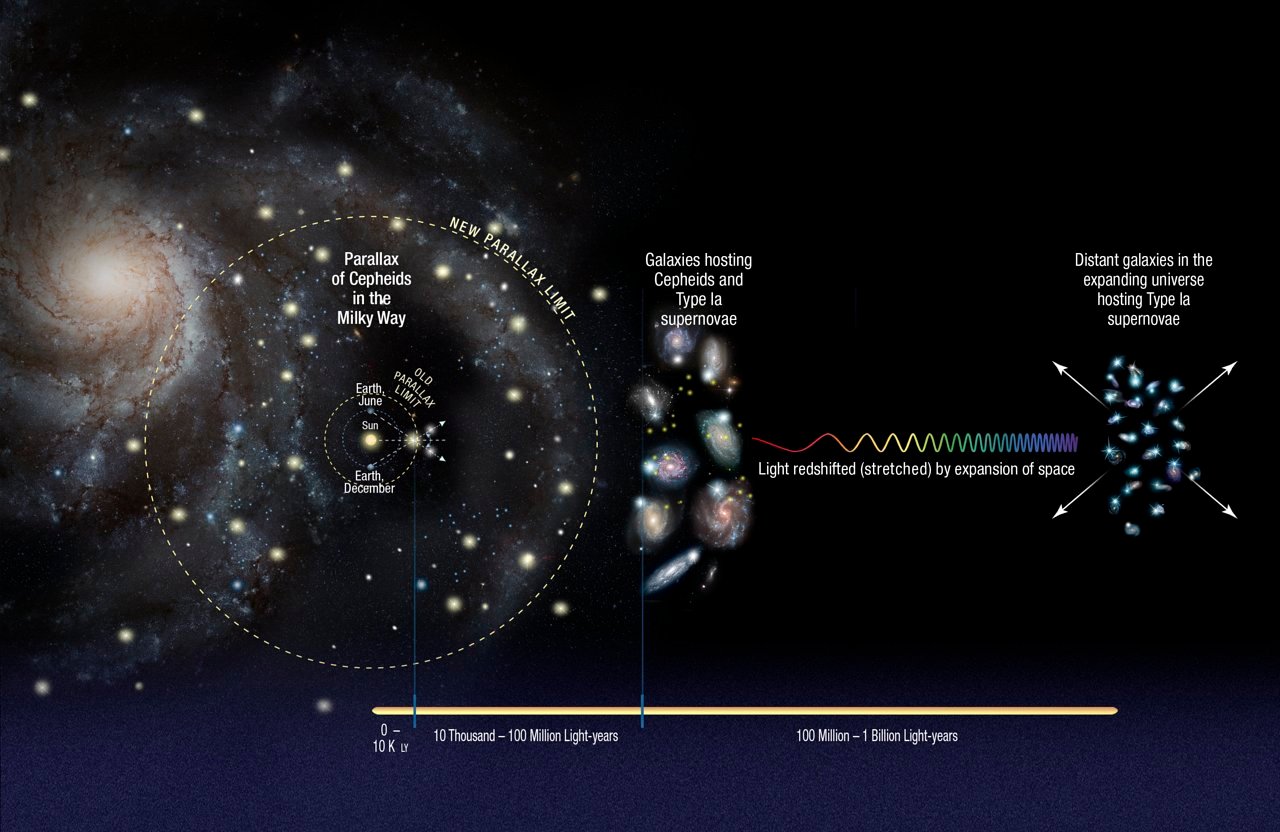
A century ago, careful observers linked the blinking of certain stars to their true power, giving us the first rungs of a distance ladder. That ladder has been rebuilt with lasers, satellites, and pixel‑sharp detectors, yet its logic remains elegant. Each rung anchors the next, stepping outward to the deep sky.
New facilities will soon add more precise rungs and cross‑checks. The goal is a distance network that’s redundant enough to catch every hidden bias. It’s old‑school craftsmanship, upgraded for a universe that doesn’t sit still.
Slow‑Mo Cosmos: Time Dilation You Can See
In an expanding universe, faraway fireworks play in slow motion. Supernova light curves from distant galaxies stretch out in time exactly as the redshift predicts. It’s a test the universe passes over and over again.
I still remember plotting one of those curves and feeling the hairs lift on my arm. You can watch the clock itself bend with distance, like a cosmic magic trick explained by math. It’s hard not to grin at a law of nature that courteous.
Why It Matters: The Stakes Behind the Stretch
Understanding expansion isn’t academic nitpicking; it defines our origin story and our fate. It influences how galaxies grow, how elements spread, and how the night sky will evolve for future generations. It also sets the stage for physics we haven’t discovered yet.
Compared with earlier eras that assumed a steady, unchanging cosmos, today’s picture is braver and more precise. We trade simplicity for accuracy and win tools that spill into daily life – sensors, imaging, algorithms. The payoff is knowledge that anchors culture, not just equations.
The Future Landscape: New Eyes, New Tests

Wide‑field surveys from next‑generation observatories will map billions of galaxies and track how structures bend and lens light. Space missions designed to measure dark energy’s fingerprints will cross‑check the expansion with multiple, independent probes. Gravitational‑wave catalogs will expand, turning rare sirens into routine yardsticks.
The challenge is less about taking data and more about taming systematics. Calibration, cross‑validation, and open methods will decide whether the Hubble tension survives. Either outcome moves the field forward in a big way.
Beyond Our Local Bubble: What Expansion Means for Us
Cosmic growth won’t tear apart neighborhoods, but it will redraw the grand map. Distant galaxies will drift beyond visibility, their light stretched into oblivion over unimaginable timescales. Our descendants – human or otherwise – will inherit a quieter sky if acceleration continues.
That thought adds urgency to our curiosity. This is the best era to read the full cosmic library because the shelves are still in view. If wonder has a deadline, it’s a very long one, but it’s real.
Call to Action: Join the Cosmic Measurement
You can help, and it’s simpler than it sounds. Support science education and local planetariums that turn curiosity into careers, and advocate for dark‑sky policies that bring back the stars. Join citizen‑science projects that classify galaxies and spot transients, adding your click to the global dataset.
Share the story of expansion with someone who thinks the sky never changes. A single conversation can light the fuse for a lifetime of questions. Curiosity is a public good – treat it that way.
Conclusion: A Universe That Refuses to Sit Still
The expanding universe is a humbling headline that keeps unfolding into new chapters. Light stretches, clocks slow, structures grow, and our tools learn to keep up. What started as a curious pattern in red light has become a grand test of reality.
We’re lucky to live in a moment when the evidence is rich and the questions are sharper than ever. If the cosmos is still teaching, the least we can do is listen – what surprised you most today?
Suhail Ahmed is a passionate digital professional and nature enthusiast with over 8 years of experience in content strategy, SEO, web development, and digital operations. Alongside his freelance journey, Suhail actively contributes to nature and wildlife platforms like Discover Wildlife, where he channels his curiosity for the planet into engaging, educational storytelling.
With a strong background in managing digital ecosystems — from ecommerce stores and WordPress websites to social media and automation — Suhail merges technical precision with creative insight. His content reflects a rare balance: SEO-friendly yet deeply human, data-informed yet emotionally resonant.
Driven by a love for discovery and storytelling, Suhail believes in using digital platforms to amplify causes that matter — especially those protecting Earth’s biodiversity and inspiring sustainable living. Whether he’s managing online projects or crafting wildlife content, his goal remains the same: to inform, inspire, and leave a positive digital footprint.