
If you think physics is a rigid monument of unshakable laws, the last decade has been a rude awakening. Ideas that senior theorists staked their careers on have been bent, patched, or quietly retired as new data arrived that simply refused to fit the old stories. It has been a strange mix of humiliation and exhilaration: cherished models breaking under pressure, only to be rebuilt stronger and sometimes almost unrecognizable.
What makes this era so gripping is not just the pace of discovery, but the way it has forced physicists to say something they hate saying: “We were too confident.” From gravity to dark matter, from quantum fields to the early universe, a surprising number of once-stable assumptions have had to be redrawn. Let’s walk through fourteen of the most important cases where hard data forced theorists to rewrite models they had defended for decades – and why that matters for how we understand the universe right now.
1. Gravitational Waves Turned General Relativity From Assumption Into Precision Target
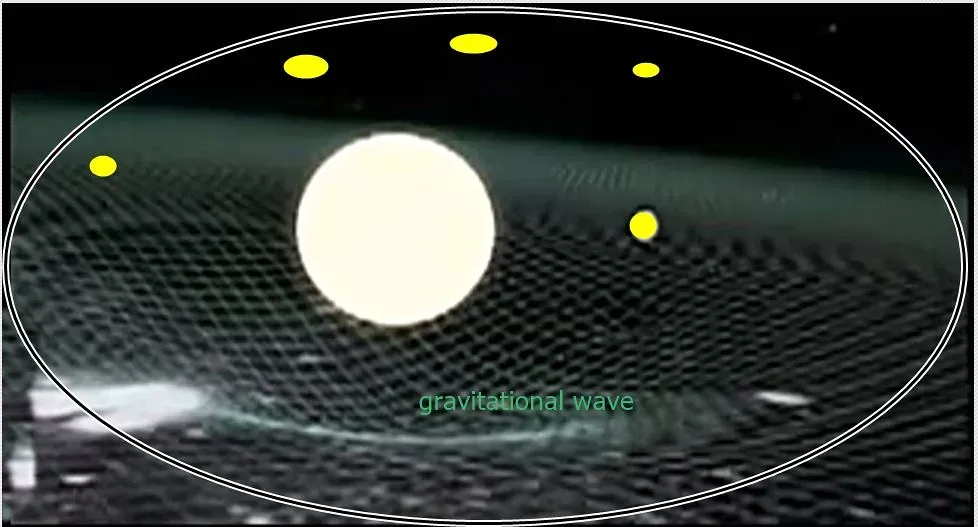
For roughly a century, general relativity was tested mostly through a handful of exquisite but limited measurements: Mercury’s orbit, gravitational lensing, time dilation, and later, the cosmic expansion story. Many theorists treated the theory’s big predictions – like gravitational waves from colliding black holes – as beautiful but, practically speaking, out of reach. That distance created a comfort zone: alternative gravity theories could flourish with small tweaks while remaining hard to falsify in detail.
The first direct detection of gravitational waves in 2015, and the flood of events since, blew that comfort zone apart. By 2026, hundreds of detections have allowed teams to test relativity in the strong-field regime with unprecedented precision, including detailed consistency checks of how merging black holes ring down. Analyses show the signals match general relativity remarkably well, forcing many modified-gravity models to be trimmed, constrained, or abandoned. Instead of “GR is probably right,” theorists now face something sharper: if your model deviates even slightly in the wrong way, the data will catch you.
2. The Hubble Tension Shook the “Standard” Cosmology Out of Its Complacency
For about two decades, the Lambda–Cold Dark Matter (ΛCDM) model reigned as the neat, self-consistent narrative of the cosmos. It used a handful of parameters – matter density, dark energy density, Hubble rate, fluctuation amplitude – to fit a huge range of data, especially cosmic microwave background (CMB) measurements. Many cosmologists spoke of it as “the” standard model of the universe, with the expectation that refinements would be small and technical, not conceptual.
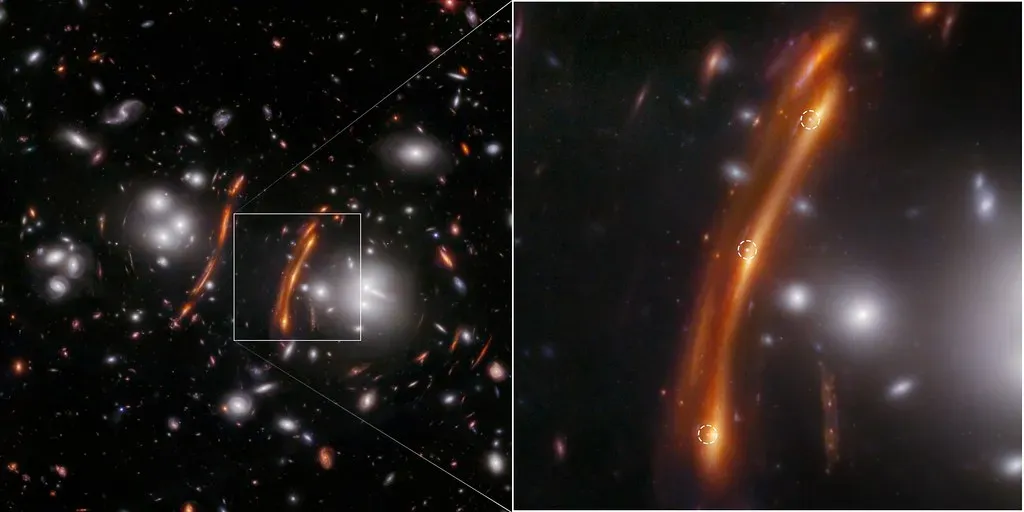
Then the cracks widened into what we now call the Hubble tension. Early-universe measurements, especially from Planck, implied one value for the present expansion rate, while late-universe distance-ladder measurements landed significantly higher, with the disagreement reaching well beyond what one would expect from statistical flukes or simple systematics. At the same time, a related tension in the parameter describing matter clustering (often packaged as S₈) emerged between weak-lensing surveys and CMB-based predictions. This double anomaly forced theorists to stop treating ΛCDM as untouchable; now, they actively explore models with early dark energy, decaying dark matter, exotic neutrino interactions, or other ingredients that had previously been considered speculative side notes.
3. The “Cold and Boring” Dark Matter Story Had to Warm Up
For something that makes up most of the matter in the universe, dark matter had a surprisingly simple story for a long time. The default view was a sea of cold, slow-moving, weakly interacting particles that shaped structure formation but otherwise kept to themselves. The success of ΛCDM on large scales reinforced this picture, and many theorists spent decades exploring particle candidates that fit the “cold, collisionless” template almost by reflex.
Recent theoretical and cosmological work, however, has pushed against that template. Studies in 2026 and just before have shown that conventional cold dark matter scenarios are not the only way to match observed structures and may even be too restrictive if we try to reconcile all the existing tensions at once. Models where dark matter starts out hotter, interacts weakly with neutrinos, or has non-trivial self-interactions are now taken seriously, not as fringe curiosities but as viable contenders that might explain why the universe seems less “clumpy” than the simplest model predicts. The old mantra that dark matter must be cold has given way to a much more agnostic, flexible framework.
4. James Webb’s “Little Red Dots” Forced a Rewrite of Early Black Hole Growth
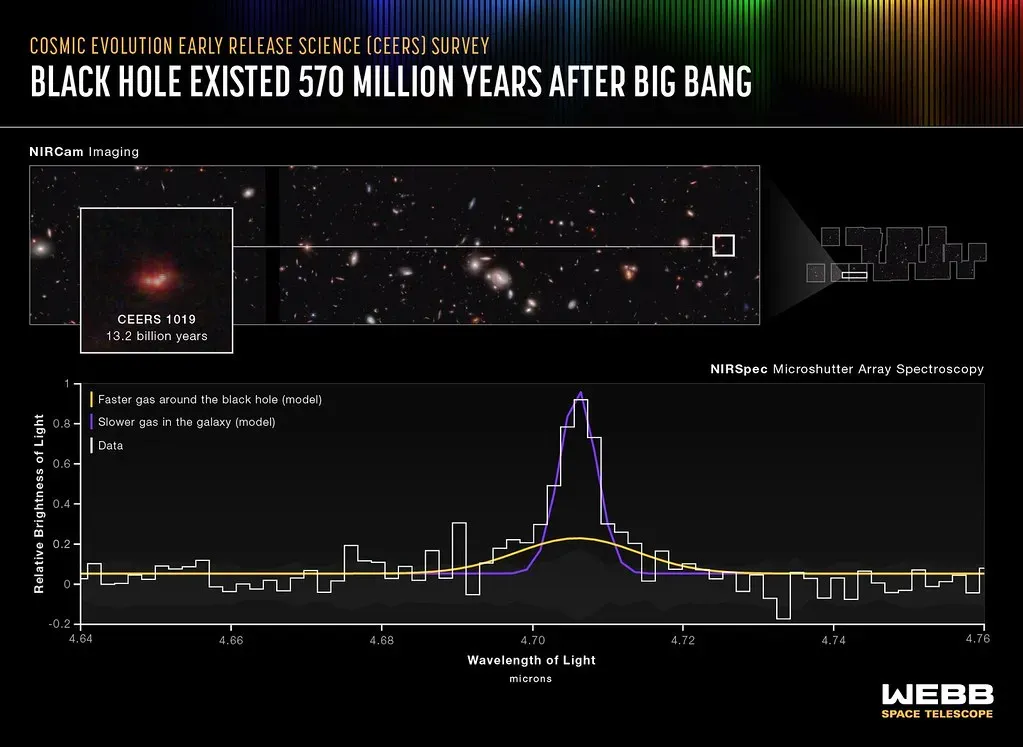
For years, theorists had a fairly comfortable script for how supermassive black holes formed: start with stellar-mass seeds, let them accrete gas and merge over cosmic time, and slowly climb to millions or billions of solar masses. That picture already pushed the limits of how fast things could grow, but most people assumed that with detailed tweaks it could manage. Then the James Webb Space Telescope (JWST) pointed deep into the early universe and showed us something far stranger than expected.
Among its most disruptive discoveries were the so-called “little red dots” – compact, extremely red, high-redshift objects that at first seemed to defy established models of galaxy and black hole formation. Over a few intense years, competing explanations fought for dominance: exotic starbursts, dust-enshrouded galaxies, or radically different kinds of objects. By mid-2026, detailed lensed spectra and careful analysis have pushed the community toward a new consensus: many of these dots look like rapidly growing supermassive black holes wrapped in dense gas cocoons, possibly linked to black-hole-star–like scenarios. In other words, the universe did not politely follow the slow-build narrative; early black holes appear to have grown far faster and earlier than the mainstream models allowed, forcing a rewrite of how we think about seeding and feeding giants at cosmic dawn.
5. The Muon g‑2 Anomaly Put the “Complete” Standard Model on Notice
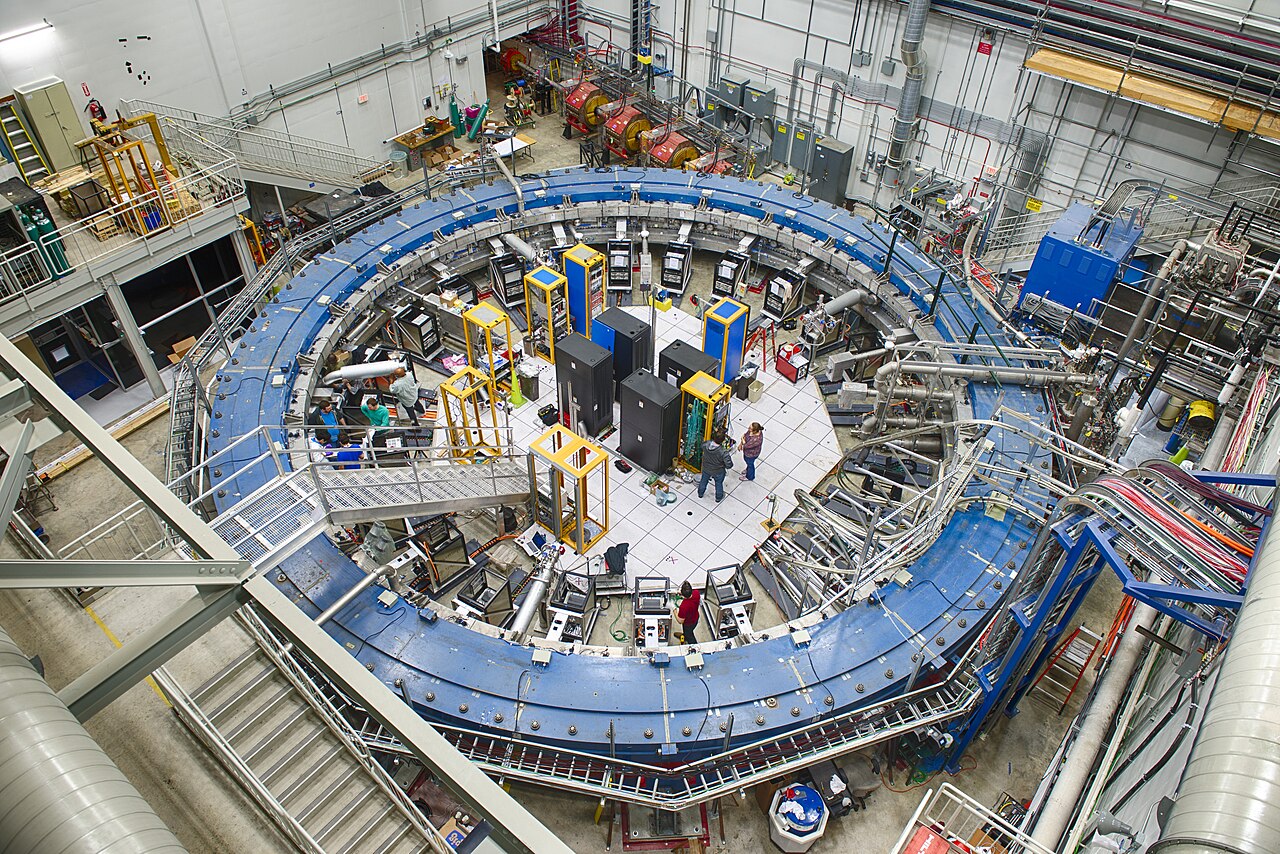
By the early 2000s, the Standard Model of particle physics felt almost overconstrained. Precision tests of electroweak processes, collider measurements, and flavor physics all seemed to converge on a consistent, closed story. The anomalous magnetic moment of the muon – g‑2 – had been an intriguing outlier for years, but many people suspected it would eventually fall into line as theoretical calculations improved. The model, after all, was supposed to be done, at least at accessible energies.
The renewed Fermilab measurements and refined averages in the last decade have refused to quietly fade away, continuing to show a significant deviation from the most widely used Standard Model predictions. At the same time, some lattice QCD calculations have suggested that parts of the theoretical prediction might need reworking, leading to an uneasy split between “maybe new physics” and “maybe we underestimated hadronic effects.” The result is that theorists can no longer treat the Standard Model as a fully settled input; they have been forced to revisit long-standing computational frameworks, loop contributions, and even the structure of possible extensions. Whether the resolution is a subtle correction or a new particle, the era of blithe confidence in the Standard Model’s completeness is over.
6. BICEP2’s Vanishing Primordial Waves Taught Cosmologists a Hard Lesson in Dust
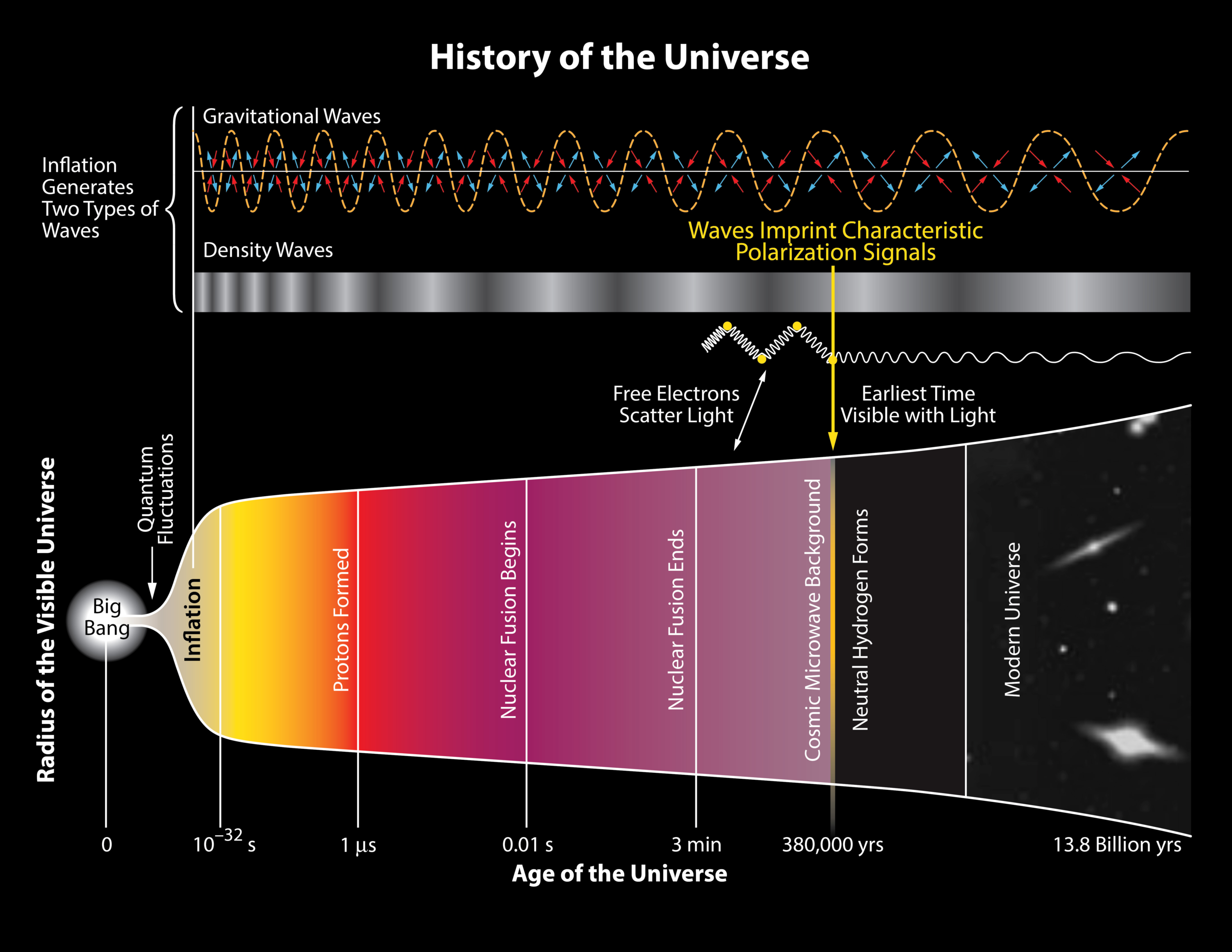
In 2014, the BICEP2 collaboration announced a potential detection of primordial gravitational waves through B-mode polarization in the CMB, hinting at violent inflationary physics in the earliest moments of the universe. For a brief, breathless period, some theorists rushed to adjust inflation models, raising tensor-to-scalar ratios and reworking potentials to match what looked like a landmark result. It felt like a confirmation many had waited decades to see.
Then the follow-up analyses, including joint work with Planck, made it painfully clear that Galactic dust, not primordial waves, could explain the signal. The inflation community had to walk back not just specific parameter choices but a whole wave of prematurely reshaped models. Over the decade that followed, inflationary theory became more cautious and more tightly intertwined with detailed foreground modeling. The correction did not kill inflation – if anything, CMB and large-scale-structure data are now used to stress-test inflationary ideas in more sophisticated ways – but it forced a cultural shift: bold claims now come with much more scrutiny of astrophysical systematics.
7. The Proton Radius Puzzle Forced a Rethink of “Settled” Quantum Electrodynamics Details
Ask an older theorist about the proton’s charge radius a couple of decades ago and you would likely get a shrug: it was a number, measured primarily with electron scattering and electronic hydrogen spectroscopy, that fit neatly into textbooks. Few would have guessed it could cause real headaches for quantum electrodynamics (QED) or nuclear structure theory. That complacency shattered when measurements using muonic hydrogen produced a significantly smaller radius than the traditional value.
This discrepancy, which persisted through repeated experiments, forced theorists to probe the subtleties of QED corrections, nuclear structure effects, and experimental methodologies that had been treated as essentially “solved.” Over the last decade, new measurements have moved the community toward a resolution, suggesting that the older electron-based radius was likely biased and that the smaller value is more accurate. The incident did not overthrow QED, but it did crack the illusion that high-precision atomic physics was a completely mature, closed field. Even in something as apparently mundane as a proton’s size, long-defended assumptions had to be re-evaluated from the ground up.
8. Neutrino Oscillation Results Rewrote Flavor Models and Mass Hierarchies
For many years, neutrinos hovered at the edge of the Standard Model narrative: massless, barely-interacting, and often treated as afterthoughts. The discovery of neutrino oscillations already broke that picture, but through the 2000s and 2010s, many theorists still hoped for a clean, elegant pattern – simple mass hierarchies, symmetric mixing, tidy textures that would plug into grand unified theories. The data of the last decade have not been so accommodating.
As long-baseline experiments, reactor measurements, and global fits have sharpened, they have nudged theorists away from the earlier, beautifully symmetric mixing schemes and toward more awkward, data-driven mass and mixing patterns. Hints about the mass ordering, CP-violating phase, and potential sterile neutrino scenarios have periodically flared and faded, forcing theorists to update or abandon flavor models in real time. Instead of a neat add-on to the Standard Model, neutrino physics has become a messy, evolving testbed for theories of mass generation, with many once-popular models now either tightly constrained or effectively ruled out.
9. The Quark–Gluon Plasma Turned Out to Be a Perfect Liquid, Not a Simple Gas
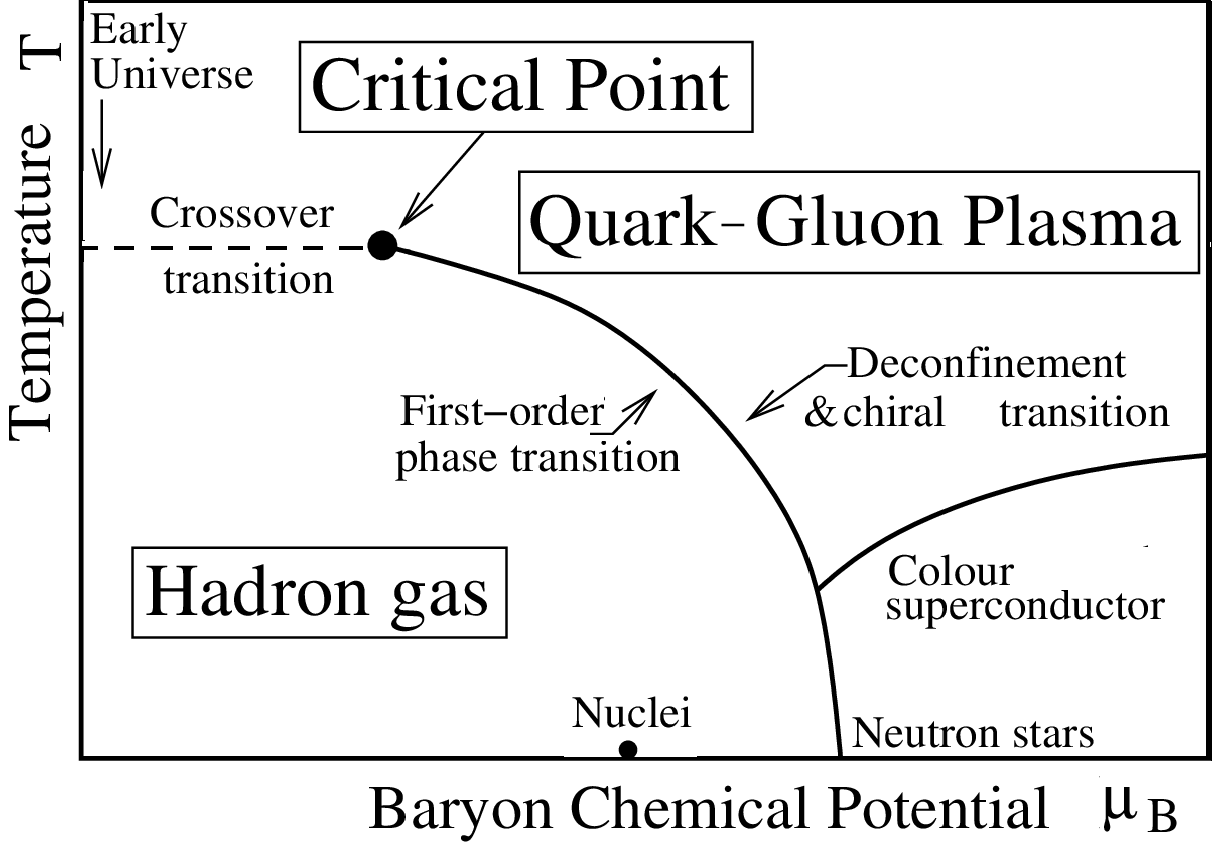
Before the Relativistic Heavy Ion Collider (RHIC) and the Large Hadron Collider (LHC) began producing heavy-ion collisions at scale, many theorists pictured the quark–gluon plasma (QGP) as a weakly interacting gas of quarks and gluons, loosely bound and relatively simple to describe with perturbative QCD. That mental image lingered for years, shaping models and expectations even as early data hinted at something much stranger.
Over the last decade, improved measurements of flow, correlations, and jet quenching have cemented a very different reality: the QGP behaves more like an almost perfect liquid with extremely low viscosity, closer to a strongly coupled fluid than a dilute gas. Hydrodynamic modeling, holographic techniques, and lattice QCD have taken center stage, while the older, weakly coupled gas picture has been largely abandoned for the conditions probed in experiments. Theorists who once defended that perturbative view now teach a radically different story: in the hottest matter humans have ever created, strong coupling rules.
10. Black Holes as Information Vaults, Not One-Way Shredders
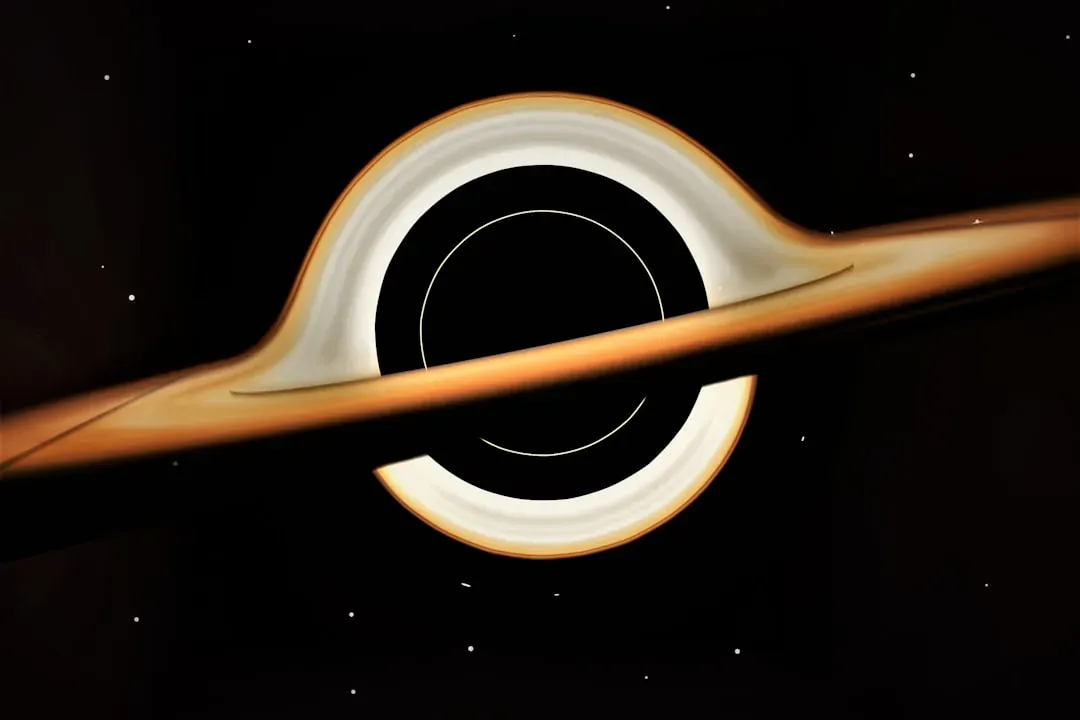
For decades, the black hole information paradox divided theorists into camps. One camp defended the idea that information is somehow preserved, even if we did not understand the microscopic mechanism, leaning on unitarity in quantum mechanics and hints from string theory. Another camp was more willing to entertain radical breakages, such as information-destroying processes or event-horizon drama. Semi-classical black hole evaporation calculations seemed to favor loss; quantum theory screamed for preservation.
In the past decade, new calculations of so-called Page curves using quantum extremal surfaces and replica wormholes have tilted the landscape decisively. These tools, born from the merger of holography and quantum information, show that under conditions very similar to semi-classical gravity, one can recover an entropy evolution consistent with information preservation. That does not mean we have a full, microscopic movie of how every bit escapes, but it has forced many defenders of information loss to yield ground and rework their models. The fashionable view now is that black holes act like extremely complex scramblers, not cosmic shredders – an enormous shift from what many senior theorists argued for in the 1990s and early 2000s.
11. Event Horizon Telescope Images Killed Off “Anything Goes” Black Hole Geometries
Before the Event Horizon Telescope (EHT) delivered its first image of a black hole’s shadow, theoretical papers exploring exotic compact objects were plentiful. Wormholes, gravastars, and various modified-gravity black hole mimickers inhabited a niche where they could be wildly imaginative yet hard to test. Many of these models were defended as serious possibilities because, frankly, we had never seen the region around an event horizon in enough detail to call their bluff.
The EHT images of M87* and Sgr A* changed that. The observed ring sizes and shapes, as well as polarization structures, are tightly consistent with predictions from general relativity’s Kerr black holes. This has dramatically constrained alternative geometries and many modified-gravity scenarios that would have produced noticeably different shadows. Theorists who once championed certain horizonless objects or large deviations from the Kerr metric have had to either fine-tune their models or move on. Black hole phenomenology is no longer a playground where anything goes; images now bite back.
12. Precision Cosmology Turned Dark Energy from a Wild Field to a Narrow Target
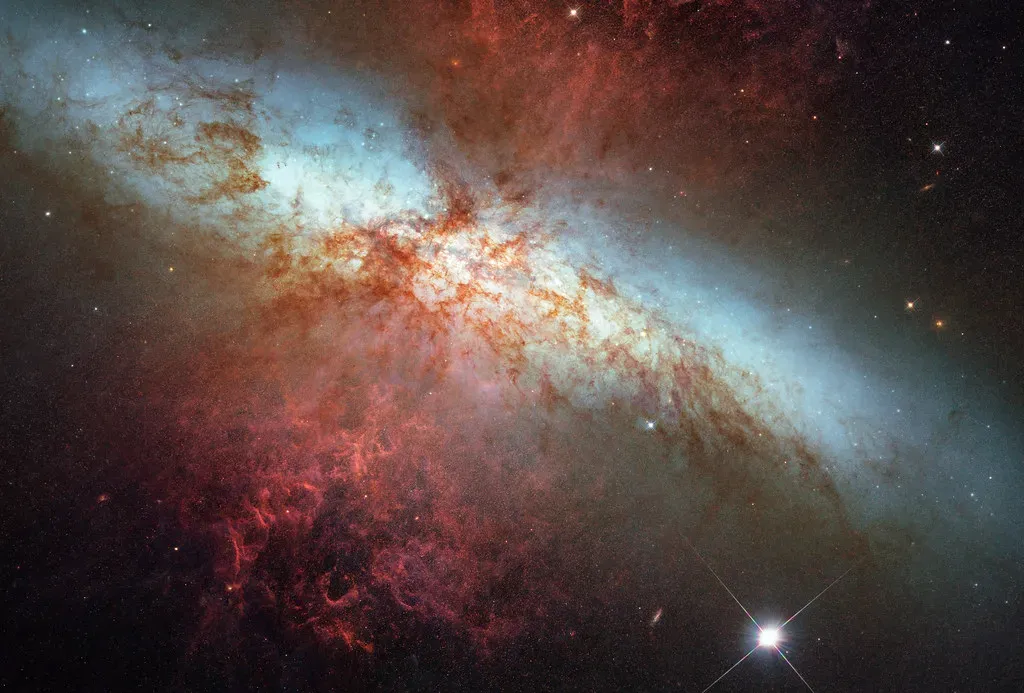
When cosmic acceleration was discovered in the late 1990s, the theoretical explosion that followed was almost dizzying. Scalar-field quintessence models, k-essence, modified gravity, chameleons, and more crowded the literature, many of them defended as plausible alternatives to a simple cosmological constant. For roughly two decades, you could make a decent career proposing a new dynamic dark energy model, as long as it did not blatantly contradict existing supernova data.
The last decade’s precision cosmology – combining CMB, galaxy surveys, weak lensing, and supernova datasets – has ruthlessly winnowed the field. Observations have nailed the dark energy equation-of-state parameter close to the value expected for a plain cosmological constant, with only modest room left for time variation or exotic behavior. Many of the more flamboyant dynamical models that theorists promoted in the 2000s are now heavily constrained or effectively ruled out. While modified gravity remains under investigation, especially in the context of small tensions, the once-popular narrative that dark energy is likely a rolling field has been downgraded from “fashionable expectation” to “speculative possibility that must squeeze through very tight observational windows.”
13. Quantum Information Rebuilt the Way Theorists Talk About Spacetime Itself
Two decades ago, the idea that spacetime geometry could literally emerge from quantum entanglement sounded like philosophical garnish on top of mainstream quantum field theory. Most working theorists still thought in terms of classical spacetime backgrounds perturbed by fields, with entanglement as a technical detail, not an organizing principle. Quantum information theory was, for many, something computer scientists played with, not a foundational toolkit for gravity.
Over the last decade, that attitude has flipped. Concepts like entanglement entropy, quantum error-correcting codes, and tensor networks have become central to modern thinking about holography, black holes, and even the structure of the vacuum. Instead of defending old views where spacetime is a static stage, theorists now seriously entertain models where geometry is woven from patterns of quantum correlations, with error correction providing the robustness that we experience as smooth space. It is not an experimental “discovery” in the traditional sense, but it is a conceptual revolution driven by tight mathematical developments and their surprising consistency with gravitational phenomena. The theoretical models that treated information as an afterthought have, in many circles, been left behind.
14. Quantum Computing Experiments Forced a Rethink of Decoherence and Error Models
On paper, the theory of decoherence and quantum noise seemed beautifully clean. For decades, textbooks and models described simple noise channels – bit flips, phase flips, depolarizing environments – that were easy to analyze and plug into quantum error-correction schemes. Many theorists defended these simplified models as “good enough” to capture reality, arguing that the messy details of devices would not change the big conceptual picture.
The last decade of actual quantum hardware has humbled that viewpoint. Real devices show correlated noise, non-Markovian environments, crosstalk, and architecture-specific quirks that simply do not map neatly onto the toy channels of earlier theory. In response, new families of error-correcting codes and noise-tailored protocols have emerged, explicitly designed for the weird, structured errors that experiments reveal. Theorists who once insisted that abstract models were sufficiently universal are now collaborating closely with experimentalists to build phenomenological noise models that are ugly but accurate. Quantum information theory is still elegant, but it is no longer allowed to ignore the inconvenient ways physical qubits misbehave.
Conclusion: Physics Is Stronger When It Admits It Was Wrong

Looking across these fourteen stories, there is an uncomfortable pattern: many of the models that had to be revised were not obviously foolish or fringe. They were well-motivated, widely defended, and often taught as near-facts to students for years. From the “cold and simple” dark matter paradigm to the hands-off attitude toward quantum noise, the last decade has repeatedly shown that elegant, long-lived theories can still be incomplete, or just plain wrong, in crucial details.
Personally, I think this is the healthiest thing that could happen to physics. A field that never has to admit its mistakes is a field that is not looking hard enough. Theoretical models should not be monuments; they should be ladders we are willing to kick away once we climb higher. As gravitational waves, JWST, precision cosmology, and quantum devices continue to push into new territory, the only truly dangerous belief is that the big questions are basically settled. Which of today’s “untouchable” models do you think will be the next to crack?