
You probably think of physics as this rock-solid monument of truth: equations carved in stone, constants that never change, and models that have been nailed down for generations. But if you look closely at the last decade or so, you see something a lot more dramatic. You see Nobel-level surprises, thousand-person collaborations, and quiet revolutions that forced some of the most stubborn theorists to finally say, “Okay, the old model doesn’t work anymore.”
In the span from roughly the mid‑2010s to today, you’ve watched ideas that had been defended for twenty years get re-written because reality simply refused to cooperate. Gravitational waves actually showed up. Black holes turned camera‑real. The universe’s expansion started misbehaving. Even humble neutrinos and protons turned into troublemakers. As you go through these fourteen discoveries, you’ll see a pattern: nature keeps saying, “You are not done yet,” and you, if you love understanding how the universe works, get a front-row seat.
1. Gravitational Waves: When Space-Time Itself Started “Ringing”
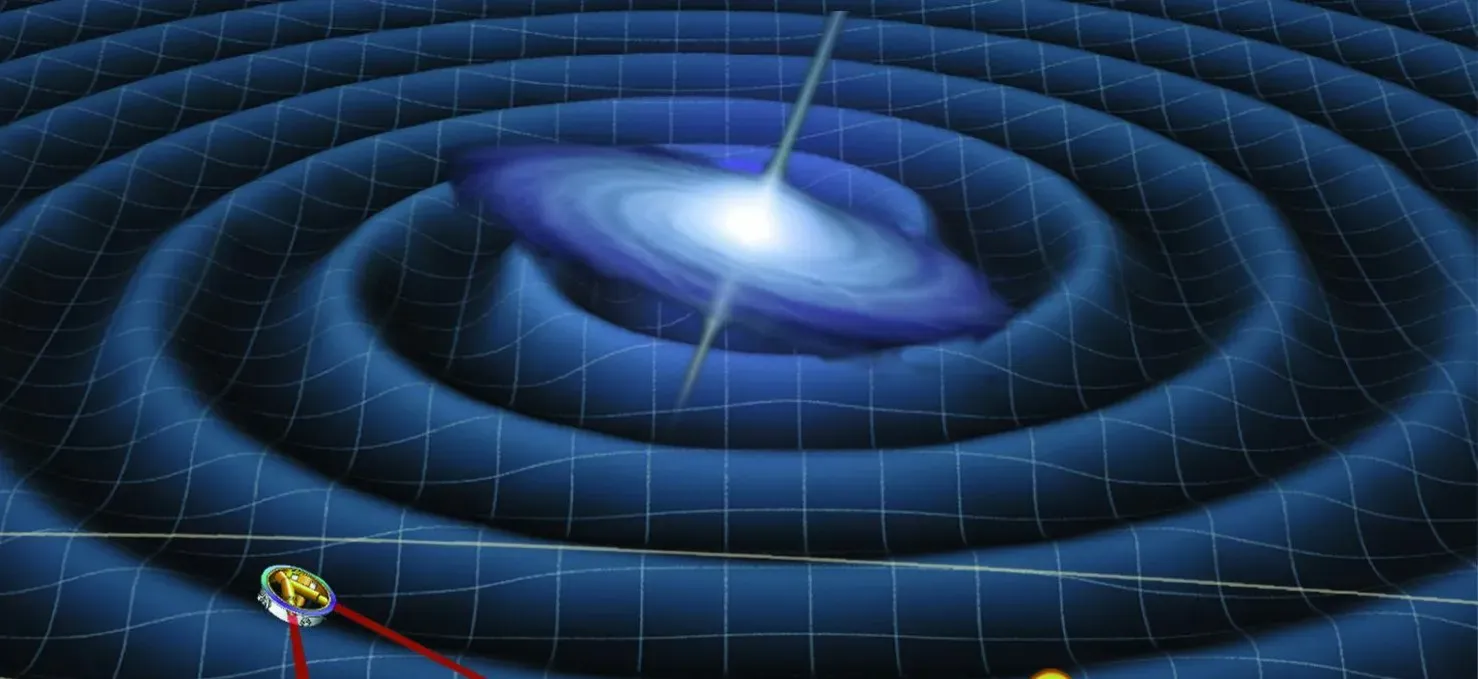
If you had asked a theorist in the early 2000s whether you would soon be listening to black holes collide, most would’ve told you it was a beautiful idea but probably too hard to detect in practice. For about a hundred years, gravitational waves lived mostly as a mathematical prediction in Einstein’s equations, something people could calculate but not touch. Then in 2015, LIGO picked up the first clear signal from two distant black holes spiraling into one another, and suddenly space-time went from theory to something you could literally measure stretching and squeezing the Earth.
That one detection didn’t just confirm Einstein; it forced you to extend your mental model of the universe to include an entire new way of doing astronomy. Instead of only seeing light, you now “hear” gravity. Theorists who had spent decades refining models of black hole populations, stellar evolution, and even cosmic history had to go back and re-check their assumptions. You now have to ask: how many black holes are really out there, how often do they collide, and are their masses and spins what your old models predicted, or is the universe hinting that something in your understanding of gravity or stellar life cycles needs an update?
2. The First Black Hole Image: Smashing Old Assumptions About “Unseeable” Objects
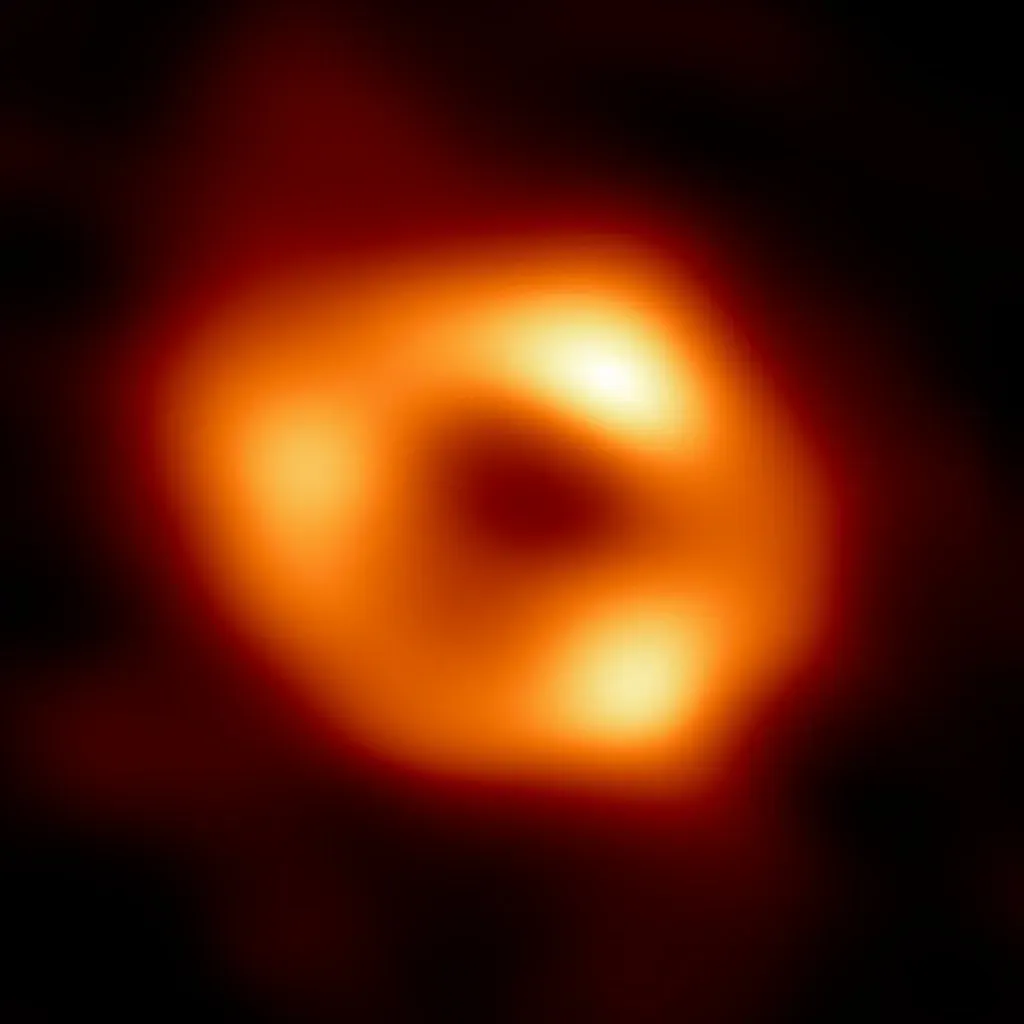
For most of your life, a black hole was something you only “saw” as an artist’s impression in a documentary. The equations said the event horizon should be there, but no one expected you to get a direct picture of one. When the Event Horizon Telescope collaboration released that now-iconic orange ring in 2019, you were looking at light bent by gravity so extreme that it circled the object before escaping. You suddenly had a visual test of general relativity in a regime that had only lived in notebooks and simulations.
What made theorists squirm a little was not just that the picture existed, but how well it matched some models and challenged others. The brightness and shape of that ring forced you to rethink how matter and magnetic fields behave near an event horizon. Accretion disk models, jet formation theories, and assumptions about how black holes are fed all had to be revisited. When you see that fuzzy ring, you are literally looking at a decades-long argument about how strong gravity really behaves, and you’re watching some long-defended ideas quietly retire.
3. The Hubble Tension: When the Universe’s Expansion Stopped Agreeing With Itself
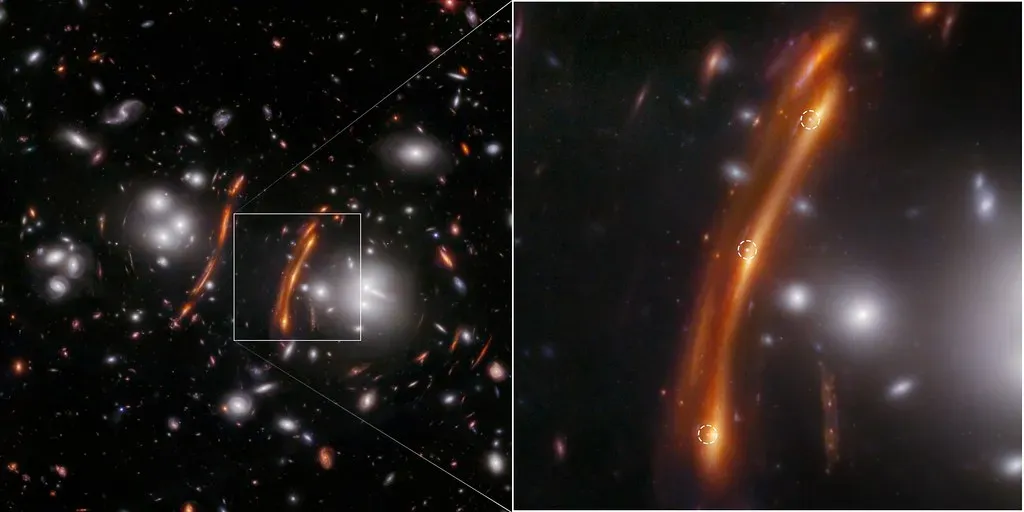
For around twenty years, cosmologists were feeling pretty confident about the so‑called “standard model of cosmology.” You had dark energy, dark matter, and a pretty neat story: the universe started with a bang, expanded, cooled, and now is speeding up. Everyone agreed there might be details to iron out, but the framework looked solid. Then you started measuring how fast the universe is expanding using two different methods – and they stubbornly refused to match.
On one side, you use the cosmic microwave background, the relic light from the early universe, to infer an expansion rate. On the other, you use nearby stars and supernovae to measure it directly today. Those two numbers should be the same if your model is right, but over the last decade, the disagreement has gotten sharper instead of fading. That “Hubble tension” is not a cute little error bar; it forces you to consider that maybe your two‑decade‑old picture of dark energy, early-universe physics, or even gravity itself is incomplete. You are living through the part of the story where theorists openly admit, “Something in the model has to give.”
4. Neutrino Oscillations and Mass: Tiny Particles That Shattered a “Perfect” Theory
For a long time, the Standard Model of particle physics treated neutrinos as essentially weightless, ghost-like particles that rarely interact and zip through your body by the trillions every second. That view had been baked into calculations, textbooks, and mental models since the late twentieth century. But careful experiments watching neutrinos from the Sun, nuclear reactors, and accelerators showed that these particles morph from one type to another as they travel. That shape-shifting behavior, called oscillation, only makes sense if neutrinos actually have mass.
Once you accept that, you have to admit something deeper: the Standard Model, which you might have been told was basically complete, is fundamentally incomplete. The original framework doesn’t allow massive neutrinos, so theorists had to start extending or revising it. You now have to ask what mechanism gives neutrinos their mass, what it says about symmetries in nature, and whether this tiny tweak points toward a much larger new layer of physics. A particle you barely notice in everyday life quietly forced you to redraw the map of fundamental matter.
5. The Discovery of the Higgs Boson: Finishing One Story While Starting Another
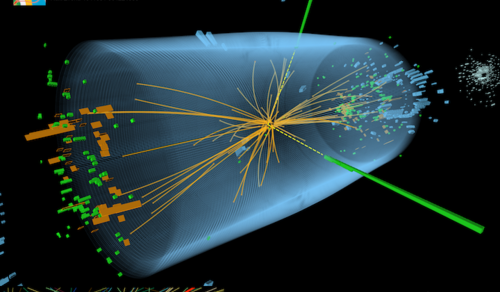
For about fifty years, the Higgs boson was this missing puzzle piece – a particle that had to exist if your theory of how particles get mass was right. The Standard Model had been absurdly successful, predicting particles and interactions over and over. Many theorists in the 1990s and early 2000s defended very specific versions of that model, including expectations that new physics would appear alongside the Higgs at energies probed by the Large Hadron Collider. When the Higgs was finally discovered in 2012, you did get the missing piece – but not quite the fireworks many expected.
The Higgs looked very Standard-Model-like, and no obvious new particles popped up around it. That forced you to revise an entire generation of “beyond the Standard Model” ideas that had assumed, almost as a given, that elegant extensions like simple supersymmetry would show themselves quickly once the Higgs appeared. Instead of a clear path, you got a more awkward question: if the Higgs is real and so ordinary, why is its mass what it is, and why is the rest of the universe so stable? The discovery solved one twenty‑year issue and simultaneously blew up the comfortable expectation of what the next step in particle physics should be.
6. Proton Radius Puzzles: When a Simple Number Refused to Behave
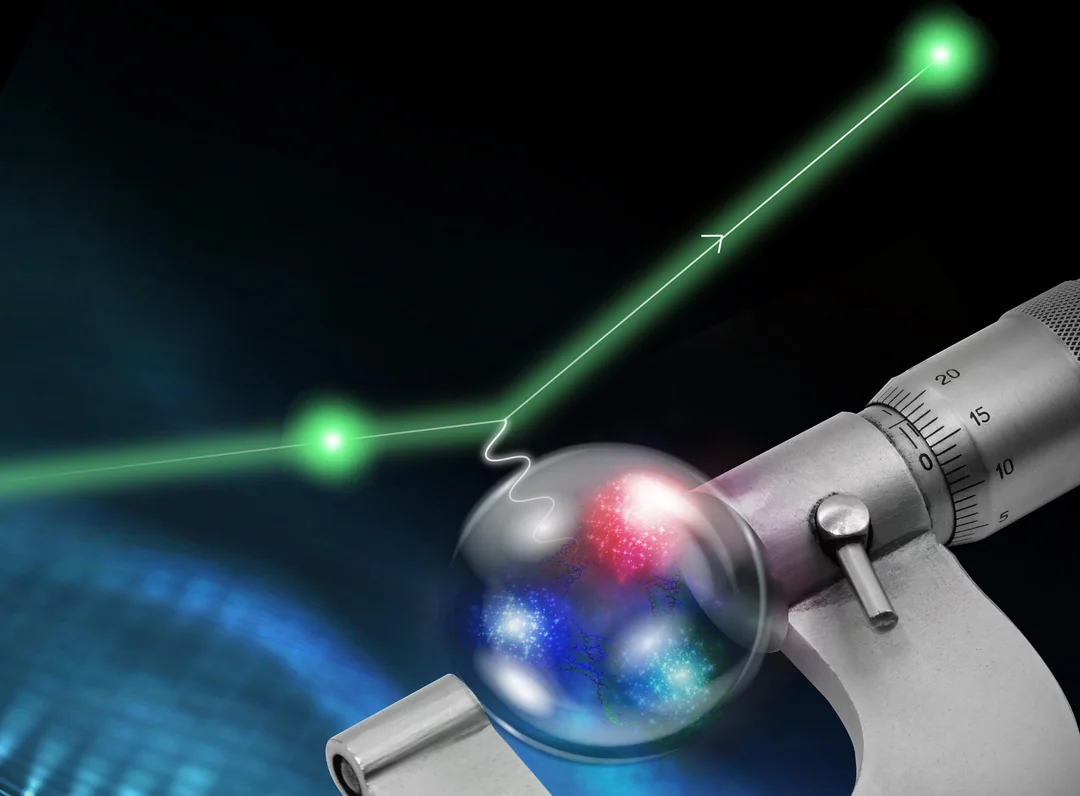
You might think that something as basic as the size of the proton would be nailed down by now. For decades, physicists used measurements from scattering electrons off protons and felt pretty good about the results. Then experiments that used a slightly different setup – replacing the electron with a heavier cousin called the muon – started reporting a noticeably smaller proton radius. That mismatch was not just tiny noise; it was big enough that you had to take it seriously.
As the measurements kept improving over the last decade, you saw a clash between long-standing values and these new, highly precise results. Theorists had to revisit details of quantum electrodynamics calculations, re-check assumptions about atomic structure, and even entertain the idea that muons might interact differently with protons than electrons do. The proton radius puzzle pushed you to admit that even in a realm you thought was thoroughly measured, your models could still be missing something subtle, either in the theory or the way you interpret experiments.
7. Dark Matter’s Elusiveness: Null Results That Quietly Killed Beloved Theories
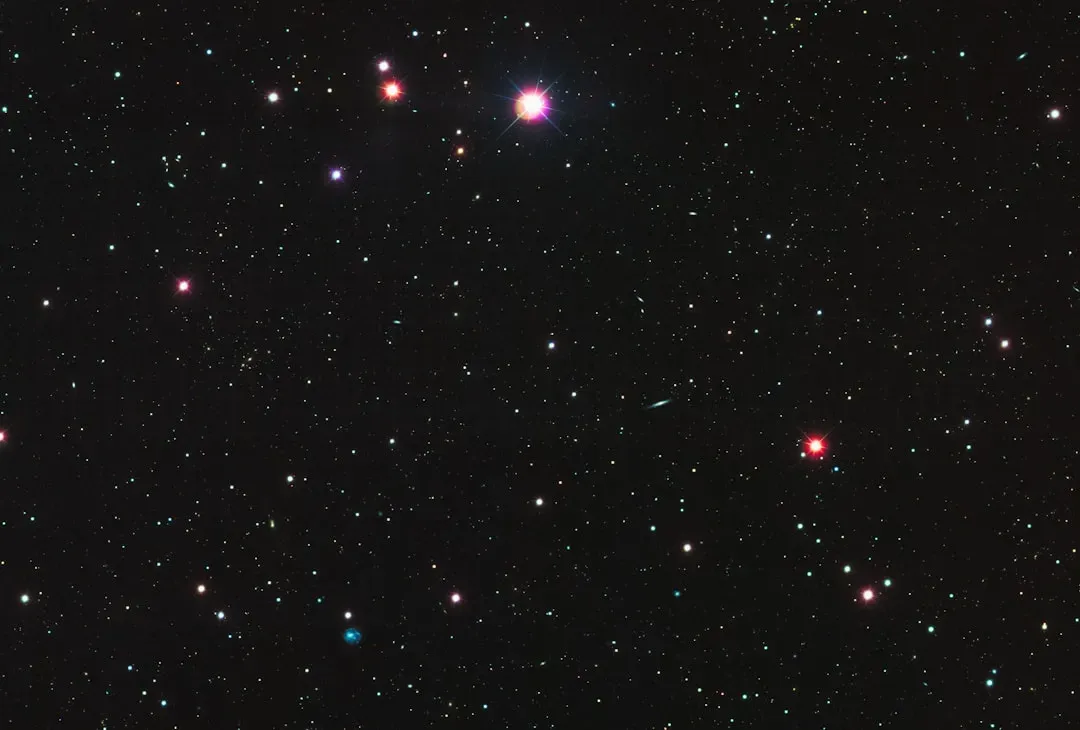
For more than twenty years, one class of dark matter candidates, called WIMPs (weakly interacting massive particles), dominated theoretical thinking. They fit beautifully into extended models of particle physics, and a lot of people were emotionally and intellectually invested in them. If you were building a dark matter theory in the early 2000s, chances are you were betting on some version of WIMPs. Huge underground detectors were designed specifically to catch a rare dark matter particle bouncing off a nucleus.
Over the last decade, those detectors have become mind‑bogglingly sensitive, and yet you still have not seen a convincing WIMP signal. Each null result quietly slices away large chunks of parameter space that theorists had defended for years. The absence of a signal is itself a result: it has pushed you to take seriously alternative ideas, from ultra-light particles to more exotic scenarios. You are watching a slow-motion shift where a beloved, neat, twenty‑year story about dark matter is being forced to evolve into something messier and more open-ended.
8. Cosmic Inflation Under Pressure: New Data Squeezing Old Early-Universe Models
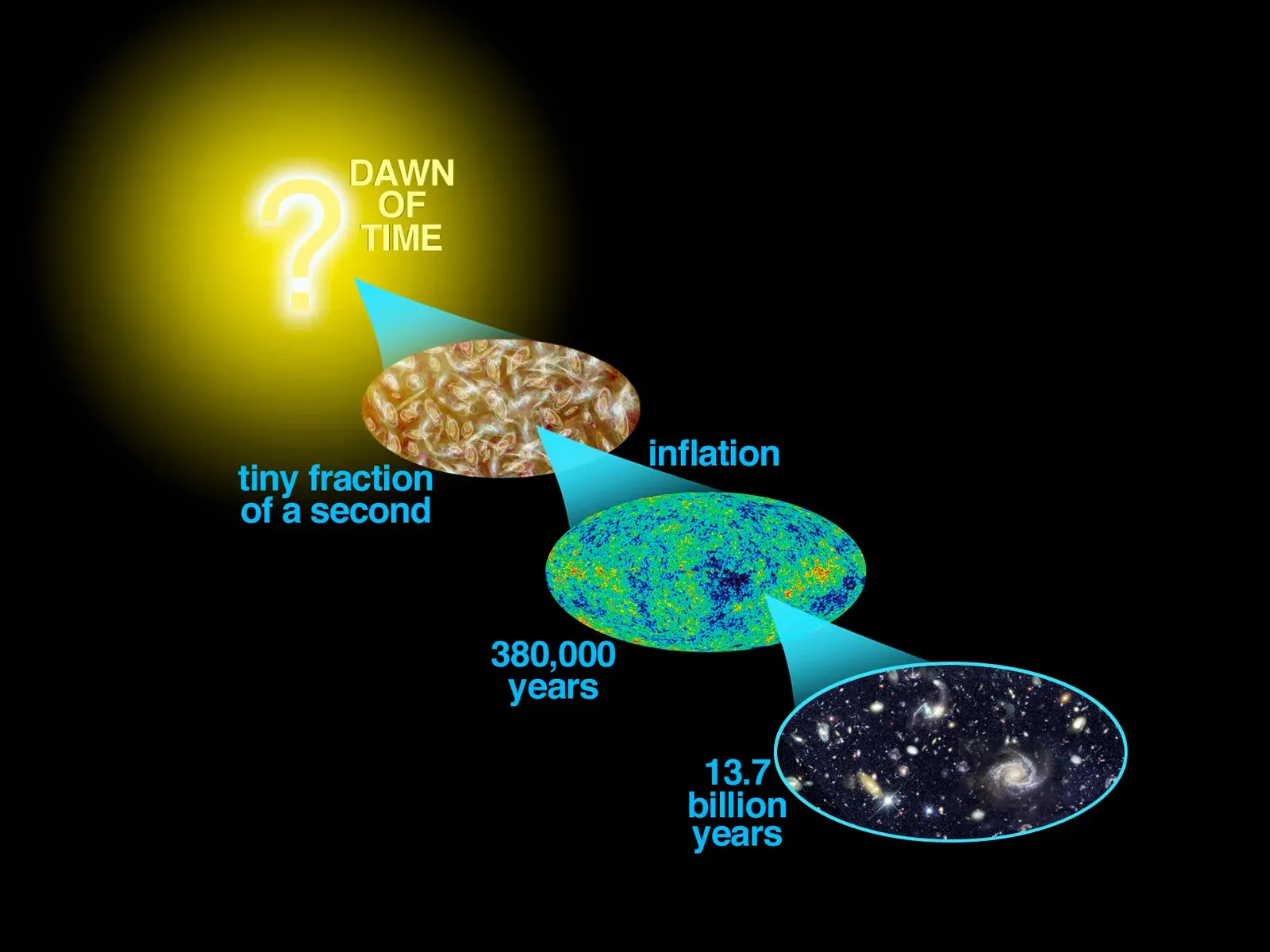
Inflation – the idea that the universe underwent a mind-blowingly fast expansion in its first tiny fraction of a second – has been a central story in cosmology for decades. By the early 2000s, you had a zoo of inflation models, many of them defended fiercely. They made slightly different predictions for the pattern of temperature fluctuations and polarization in the cosmic microwave background. Over the last decade, as satellite and ground-based experiments sharpened those measurements, some of those once-respected models simply stopped fitting.
When you see newer data rule out entire families of inflation scenarios, you are watching theory adapt to reality. Models that predicted strong gravitational waves in the early universe, for instance, have been pushed into a corner or effectively ruled out by the lack of certain signals in the cosmic microwave background. That does not kill inflation as a whole, but it forces you to trim away comfortable, elegant versions that survived on aesthetics more than hard evidence. In practical terms, your mental picture of the universe’s first instants is being re-drawn, one careful measurement at a time.
9. Fast Radio Bursts: Mysterious Signals That Didn’t Fit Anyone’s Old Playbook
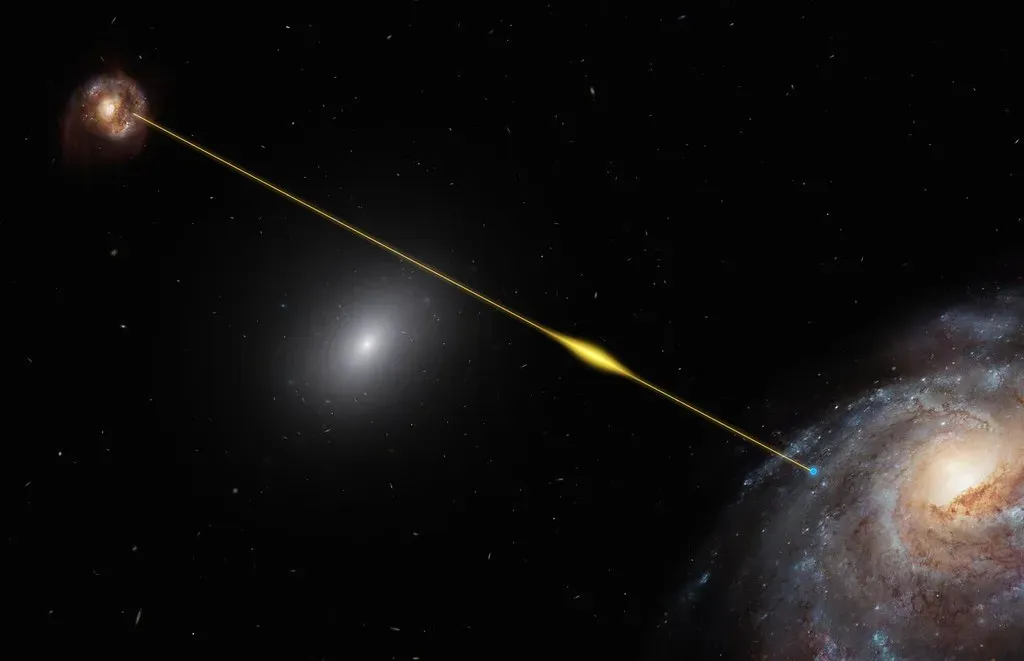
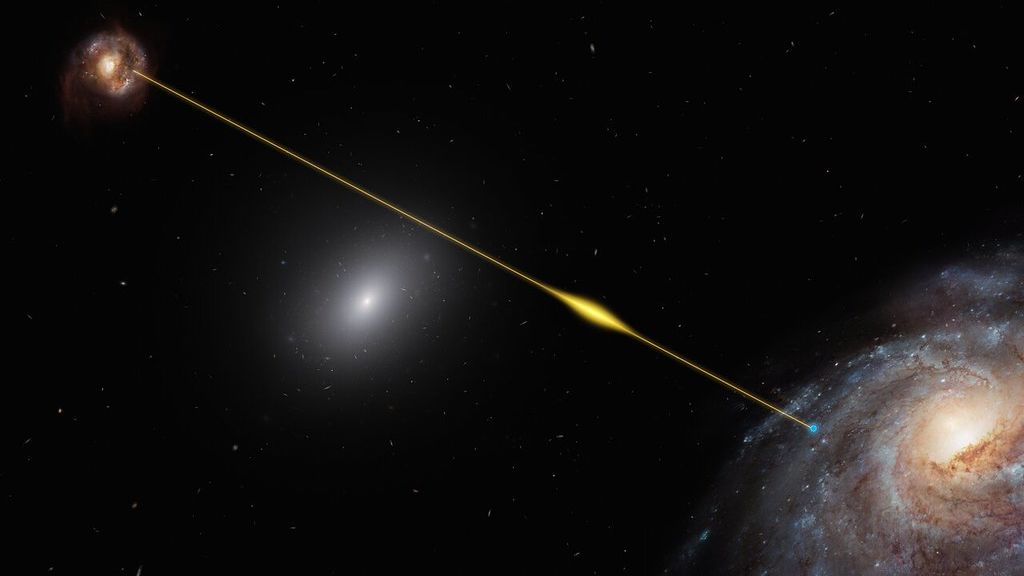
Imagine tuning into the cosmos and hearing incredibly bright, millisecond-long radio flashes from far outside your galaxy. If you had described that to a radio astronomer twenty years ago, they would probably have filed it under “interesting, but unlikely.” Yet over the past decade, fast radio bursts (FRBs) have gone from odd curiosities to a full-blown new field. You now see them happening all over the sky, from distant galaxies, and sometimes from sources that repeat in bizarre patterns.
Theorists had to scramble, because these bursts did not fit neatly into the usual catalogs of supernovae, gamma-ray bursts, or pulsars. You had to expand your models of magnetars, plasma physics, and extreme magnetic fields to account for the energy and timescales involved. Some ideas that had been dismissed or barely considered got revived and tested. In effect, FRBs forced you to admit that your twenty‑year-old checklist of “ways the universe gives off energy” was unfinished, and your models needed new chapters.
10. Quantum Entanglement at Macroscopic Scales: Pushing “Weirdness” Into the Everyday World
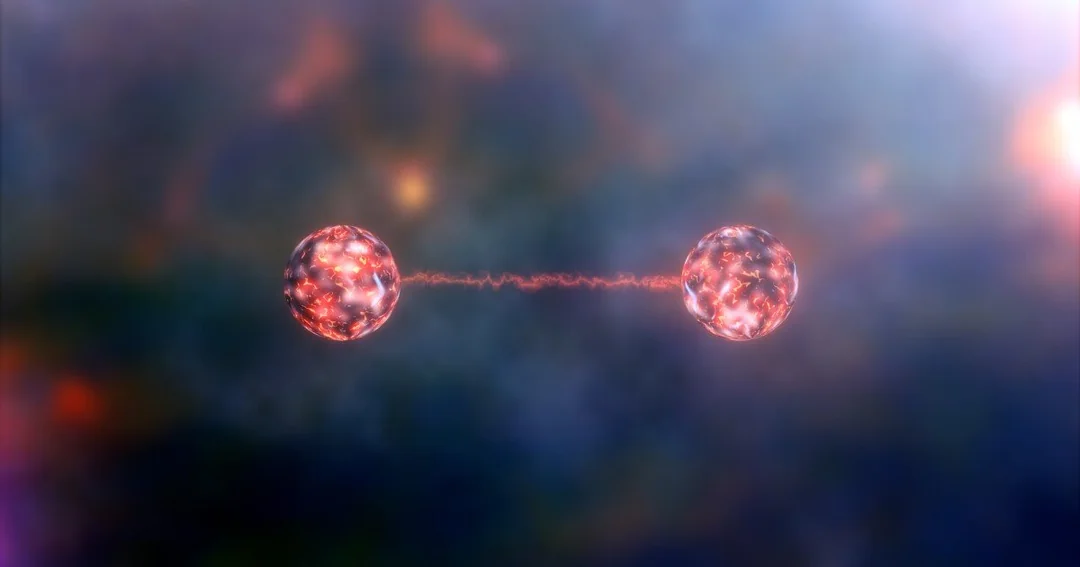
For a long time, you were used to thinking of quantum entanglement as something that lived in the microscopic world – photons, electrons, maybe a few atoms. Many theorists comfortably treated it as a resource for thought experiments and small lab setups, but not necessarily something you’d see in systems big enough to touch. Over the last decade, experiments have pushed entanglement into larger and more massive systems, including mechanical devices and increasingly complex quantum processors.
When you realize that relatively large objects can share entangled states and violate classical expectations, your boundary between “quantum” and “classical” starts to blur. Theories about where quantum behavior should fade and everyday physics should take over have had to be softened or abandoned. You now have to treat decoherence, environment, and measurement in a more nuanced way, because experiments keep showing that quantum strangeness can survive in conditions you once assumed would kill it. The weirdness is no longer confined to the abstract; it is marching steadily into real-world technology and forcing you to refine decades-old philosophical and mathematical assumptions.
11. Precision Tests of Bell’s Inequalities: Slamming the Door on Hidden-Variable Comfort
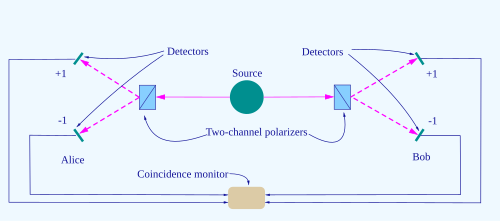
For decades, there was a subtle escape hatch in the debate over quantum mechanics: the idea that maybe there were hidden variables beneath the surface, preserving some deeper form of classical reality. Bell’s inequalities told you how to test that, but early experiments always had little “loopholes” that skeptics could point to. Over the last decade, several teams have performed so-called loophole-free Bell tests, using entangled particles separated by large distances and closing those experimental gaps.
The results consistently favor the quantum view and rule out a huge class of local hidden-variable theories. If you had spent years hoping that some clever substructure would rescue a classical picture of the world, these experiments force you to let that go. You now live in a universe where, as far as experiments can tell, measurement outcomes are not predetermined by local hidden information in any simple way. That pushes you to revise long-defended interpretations and to accept that any deeper theory has to respect this stubborn experimental fact: nature does not behave like a secretly classical machine in disguise.
12. Modified Gravity Under Fire: When Galaxy Surveys Corner Your Alternatives
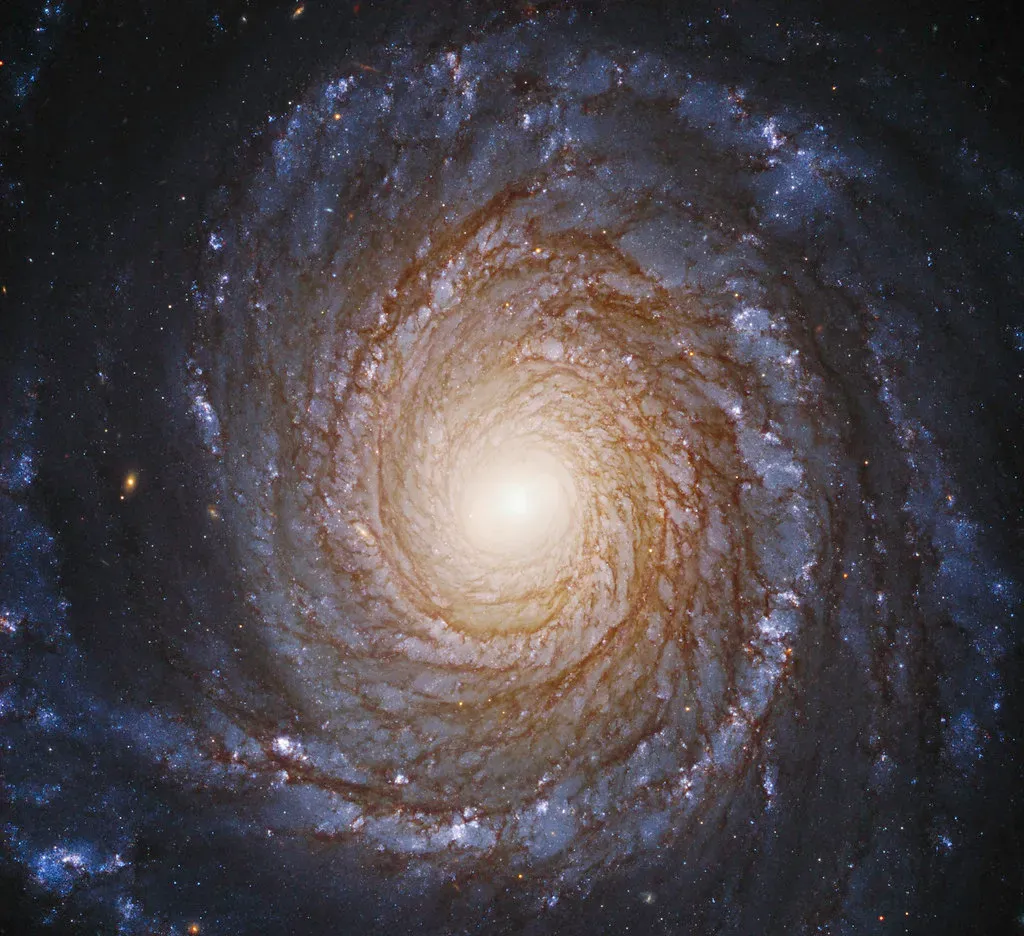
Because dark matter and dark energy sound so mysterious, many theorists spent the last two decades exploring modified gravity instead: the idea that maybe your equations for gravity just change on large scales. Some of these models were tuned to reproduce known data while avoiding invisible matter or strange vacuum energy. For a while, they looked like serious alternatives to the standard cosmological picture, with devoted communities defending them and polishing the math.
But as you mapped galaxies, galaxy clusters, and large-scale structure more precisely over the last decade, many of those modified gravity theories failed key tests. They could not reproduce the observed pattern of structure growth, or they clashed with precise measurements of gravitational lensing and cosmic expansion. Each new survey tightened the noose on models that had once seemed plausible. That does not mean every alternative is dead, but it does mean you’ve had to revise or abandon some of the most popular versions, and admit that the vanilla dark matter plus dark energy picture stubbornly continues to fit more of the data.
13. High-Energy Cosmic Neutrinos: Opening a New Window on Violent Cosmic Engines
When neutrino observatories started catching neutrinos with energies far beyond what your own accelerators can produce, you suddenly realized you were probing truly extreme corners of the universe. Over the last decade, instruments buried deep in ice or water have recorded neutrinos that likely come from distant galaxies, active black holes, or other cosmic engines. These detections forced you to confront the fact that your old models of high-energy astrophysical processes were missing key details.
By tracing some of these neutrinos back to likely sources, you’ve had to revise your theories of how jets from supermassive black holes accelerate particles, how gamma-ray bursts work, and how cosmic rays are produced. Neutrinos barely interact, so when you see them, they carry relatively clean information about their birthplace. That means you can no longer hide the shortcomings of your favorite high-energy models behind messy electromagnetic signals. The data pushes you to refine or replace stories about how the most violent events in the universe really operate.
14. Time-Symmetric Quantum Theories and Retrocausality Debates: Rethinking “Before” and “After”

Over the last decade, as quantum experiments and theory sharpened, a strange idea has become harder to ignore: maybe the fundamental laws are more time-symmetric than your everyday sense of cause and effect suggests. Some formulations of quantum mechanics treat past and future boundary conditions on more equal footing, and clever experiments probing weak measurements and post-selection have given these ideas renewed attention. If you grew up with a one-way arrow of cause leading to effect, this can feel deeply unsettling.
While the field is still developing, the discussions have already forced you to rethink long-held assumptions about what counts as a “cause” in quantum theory. Models that quietly assumed a strict, classical-style ordering of events have had to be revised or at least heavily qualified. You now have to entertain the possibility that your intuitive picture of time – carefully defended for decades in many interpretations – might be an emergent story sitting on top of a more symmetric, less comfortable underlying reality. Even if retrocausality never becomes the mainstream view, the pressure it puts on existing models has already reshaped how you talk about measurement, information, and the flow of time.
Conclusion: Living With a Universe That Refuses to Sit Still
If you step back from all these discoveries, a clear pattern emerges: the universe keeps ambushing you with data that refuses to fit neatly into theories that felt “done” for twenty years. Gravitational waves, black hole images, neutrino surprises, cosmic tensions, and quantum experiments have all conspired to push you out of your comfort zone. Each time you think the big picture is basically settled, some new observation quietly asks, “Are you sure?” and forces a rewrite of the story. It is humbling, but also strangely reassuring, because it proves that physics is still alive and kicking, not a finished monument gathering dust.
When you look ahead, you should expect more of this, not less. The instruments are getting sharper, the datasets are exploding, and the questions you can ask are more precise than anything your scientific grandparents could have imagined. That means some of the models you take for granted right now will almost certainly be the ones future physicists joke about revising. The real takeaway is this: if you love understanding reality, you have to get used to loving the feeling of being wrong, then updating. In a universe this weird and generous with surprises, would you really want it any other way?