
Most people assume scientists have the deep ocean mostly figured out by now – a few loose ends, maybe, but nothing major left to explain. Talk to actual oceanographers, though, and a very different picture shows up. The abyss keeps breaking rules we were taught in school, from sounds with no known source to currents that vanish the moment you try to map them.
Researchers have quietly started admitting how much still doesn’t add up. Some of these gaps sound like ghost stories. Others quietly undercut how confident we should be about climate forecasts, ocean life, and even the basic shape of the planet under the waves. Here’s what scientists still can’t fully explain – starting with a sound so strange the Navy once wondered if it was even natural.
#13 – The “Bloop” And Other Deep-Ocean Sounds No One Can Explain
For decades, military hydrophones have caught noises in the deep that refuse to fit any textbook category. The most famous is the “Bloop,” a powerful, ultra-low frequency sound recorded in 1997 that seemed to rise out of the South Pacific. It was loud enough that microphones thousands of miles apart picked it up at the same time – and that fact alone still bothers acoustics experts, because no known animal call scales that way.
Some researchers now lean toward ice-related explanations, like massive icequakes or collapsing shelves, since the spectral pattern looks similar. Others quietly admit the data are simply too thin to be sure. We still don’t have a complete catalog of natural undersea sounds below 3,000 meters, and other named signals – “Julia,” “Slow Down,” “Upsweep” – stubbornly resist confident identification. Stick around, though, because #12 is where entire pools of the planet’s missing heat seem to disappear without a trace.
#12 – The “Missing Heat” Problem In The Deep Sea
Climate models say Earth has absorbed a staggering amount of extra heat in recent decades, yet surface temperatures alone don’t fully reflect it. So where did the rest go? The leading answer is that the deep ocean quietly swallowed it. But when scientists try to map exactly how and where that heat sits below 2,000 meters, the numbers get fuzzy fast.
Instrument coverage down there is patchy, and tiny measurement errors multiply across millions of cubic kilometers of water. We know deep water slowly mixes over centuries, but the fine details – narrow jets, spinning eddies, overflows plunging into trenches – are still poorly captured. Some abyssal regions run warmer than models predict, others strangely cooler, and there’s still no precise, globally consistent account of where all that “missing” heat sits. That gap matters, because if deep heat suddenly mixes upward, surface warming could spike faster than anyone expects.
Fast Facts
- Oceans have absorbed the vast majority of the extra heat trapped by rising greenhouse gases since the 1970s.
- Most of that heat sits in the upper 2,000 meters, the range where floating sensor networks can actually measure it well.
- Below 2,000 meters, monitoring gets sparse fast, leaving huge volumes of deep water essentially unaudited.
- Even small errors in these deep estimates can shift global heat budgets by measurable amounts.
But it’s nothing compared to #11, where entire rivers of water go missing from our maps.
#11 – Deep “Rivers” Of Water We Can’t Properly Map
Oceanographers talk about deep boundary currents – massive, slow-moving “rivers” of cold, dense water creeping along the seafloor, usually hugging the edges of continents. These currents quietly steer global climate and nutrient cycles. The problem is that in many places, what should be there and what instruments actually measure simply don’t match.
Sensors keep turning up branching pathways, unexpected recirculation, and jets that appear and vanish without warning. Below 3,000 meters, direct measurements are shockingly rare – moorings snap, floats get crushed, and seafloor terrain diverts flows in maze-like ways. Computer models tend to smooth this chaos into neat, wide streams, but real ship surveys sometimes find narrow, kilometer-wide jets carrying far more water than predicted. Until that mapping catches up, our projections for future climate and carbon storage are still partly guesswork. Up next, scientists found something in the dark that flat-out shouldn’t exist by the numbers we trusted for decades.
#10 – The Unexpected Biomass In The Midnight Zone
Most people picture the deep ocean as nearly empty – a few scattered fish, the odd squid, not much else. But when scientists lowered more sensitive sonar and nets into the mesopelagic (“twilight”) and bathypelagic (“midnight”) zones, they found something almost embarrassing: there’s far more life down there than any model allowed for.
Some estimates now suggest the twilight zone alone may hold several times more fish biomass than all the world’s surface fisheries combined. The catch is we barely know what these animals are doing. Their diets, lifespans, and breeding habits are still largely guesswork, even though acoustic backscatter shows billions of organisms migrating hundreds of meters up at night and back down by day.
Quick Compare
- Sunlight zone (0-200m): Where most marine life and all photosynthesis happens.
- Twilight zone (200-1,000m): Dim light, surprising biomass, home to nightly migrators.
- Midnight zone (1,000-4,000m): Total darkness, crushing pressure, still packed with life.
- Abyssal & hadal zones (4,000m+): Near-freezing, pitch black, and barely explored at all.
If that biomass estimate holds up, it could rewrite our understanding of the entire ocean carbon cycle – yet scientists still disagree on the real numbers by orders of magnitude. The real shock is one level down, where life itself seems to be running in impossibly slow motion.
#9 – Microbes Living In “Impossibly” Slow Motion
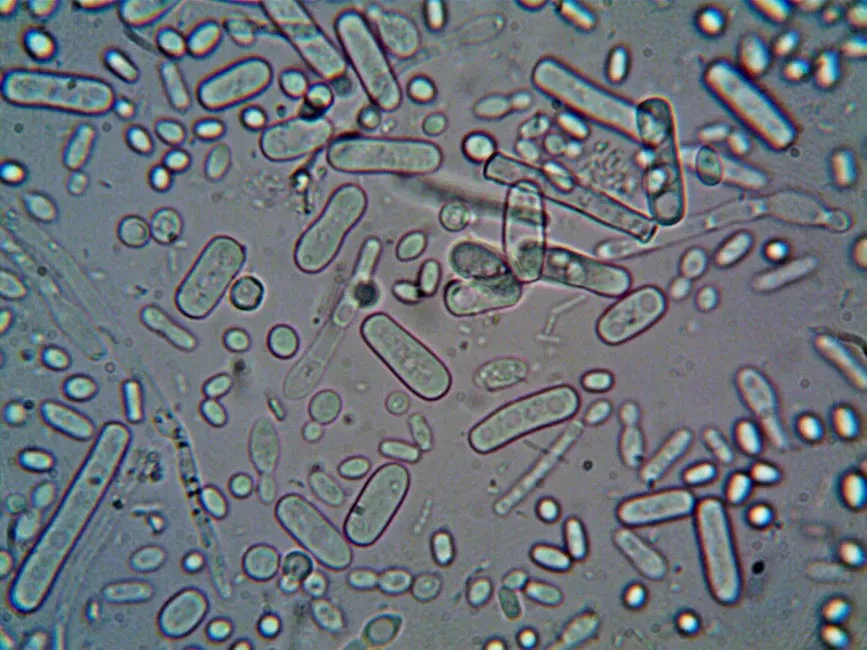
Deep within seafloor sediments, sometimes hundreds of meters below the bottom, scientists keep finding microbial cells clinging to life in conditions once assumed to be sterile. The strange part isn’t just that they exist – it’s how slowly they’re living. Some estimates suggest individual cells may divide only once every hundreds or even thousands of years.
That pace breaks every lab-based assumption about what life actually needs to keep running. We still don’t fully understand how these microbes repair their own DNA, maintain cell membranes, or scrape together enough energy from such a thin trickle of resources. Chemical gradients are weak, food is nearly nonexistent, and yet metabolism never fully shuts off. Many microbiologists now argue that “active versus dormant” is too simple a label for life at these depths – there’s still no single agreed-upon framework for how energy budgets work down there. Next up, the ocean’s carbon books simply refuse to balance.
#8 – The Deep Ocean’s Carbon “Accounting Error”
On paper, the biological carbon pump sounds tidy: plankton fix carbon near the surface, die or get eaten, and the leftover material sinks, locking that carbon away in the deep ocean for centuries. In reality, when scientists actually track sinking particles with traps and sensors, the math falls apart fast.
Much of the carbon that should reach the deep ocean mysteriously disappears on the way down. Some gets respired by microbes, some gets eaten and repackaged, some dissolves into what’s called dissolved organic carbon. But there’s a persistent, stubborn gap between what the models predict and what the instruments actually find, especially below 1,000 meters. Huge pools of that dissolved carbon seem to linger for thousands of years with no clean explanation for why they resist breaking down – and nobody can fully account for where this “recalcitrant” carbon reservoir really ends up. That blind spot makes precise climate forecasting a lot harder than most headlines admit. But nothing quite prepares you for the giant waterfalls hiding under the sea.
#7 – Giant Underwater Waterfalls That Rewrite The Seafloor
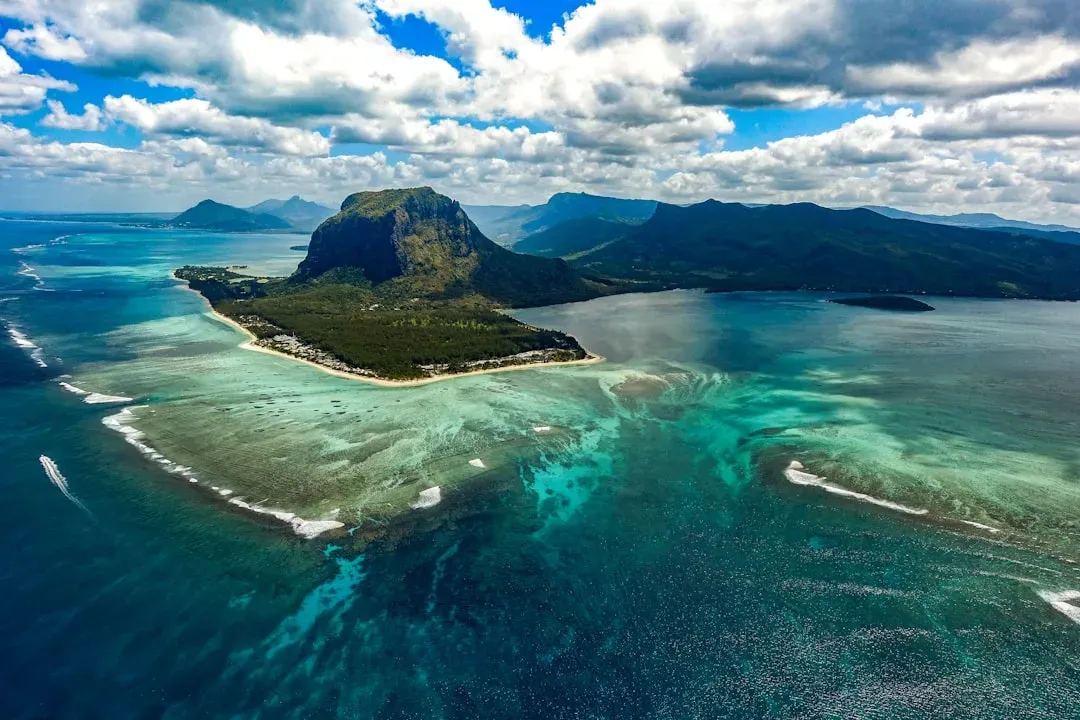
Most people don’t realize the world’s largest waterfall isn’t on land at all – it’s underwater, between Greenland and Iceland, where dense Arctic water plunges thousands of meters into the North Atlantic abyss. Similar underwater cascades exist in other straits and sills around the planet, some just as towering.
Scientists know these features exist, but they’re still struggling to measure their real impact on erosion, mixing, and heat transport. High-resolution surveys reveal rugged scours and grooves carved into the seabed where these dense overflows roar downhill, yet we don’t have decades of continuous data to know how stable they are.
Fast Facts
- The Denmark Strait cataract plunges roughly 3,500 meters (about 11,500 feet) – more than triple the height of Angel Falls.
- NOAA estimates its flow at well over 123 million cubic feet of water every second.
- Despite that volume, the water actually creeps downhill at only about 1.6 feet per second because it’s so cold and dense.
- It was only formally confirmed by oceanographers in 1989 – recent, by science standards.
Do they shift with climate cycles? Do sudden surges reshape local ecosystems overnight? Even basic numbers like their long-term volume are uncertain, because keeping instruments in place down there is brutally hard. Up next, oxygen itself starts disappearing in places nobody predicted.
#6 – Growing “Dead Zones” In Places We Didn’t Predict
Everyone’s heard of coastal dead zones, where fertilizer runoff strips the water of oxygen. What’s less known is that low-oxygen layers are also expanding out in the open ocean – and models keep struggling to predict where and how fast.
Measurements show oxygen minimum zones in the eastern tropical Pacific and Indian Ocean quietly shifting in depth, thickness, and intensity in ways that don’t line up with simulations. Small changes in mixing or productivity can flip an area from low-oxygen to functionally anoxic, where only specialized microbes survive. Strangely, when researchers revisit some regions a decade later, oxygen levels are sometimes higher, sometimes lower than expected, suggesting we’re missing key processes in our equations entirely. Some blame fine-scale eddies, others blame gaps in historical data – there’s no consensus, and as oxygen wobbles, entire food webs wobble with it. That’s mild compared to what’s hiding in trenches nobody can fully track.
#5 – Life (And Water) In Ultra-Deep Trenches We Barely Understand
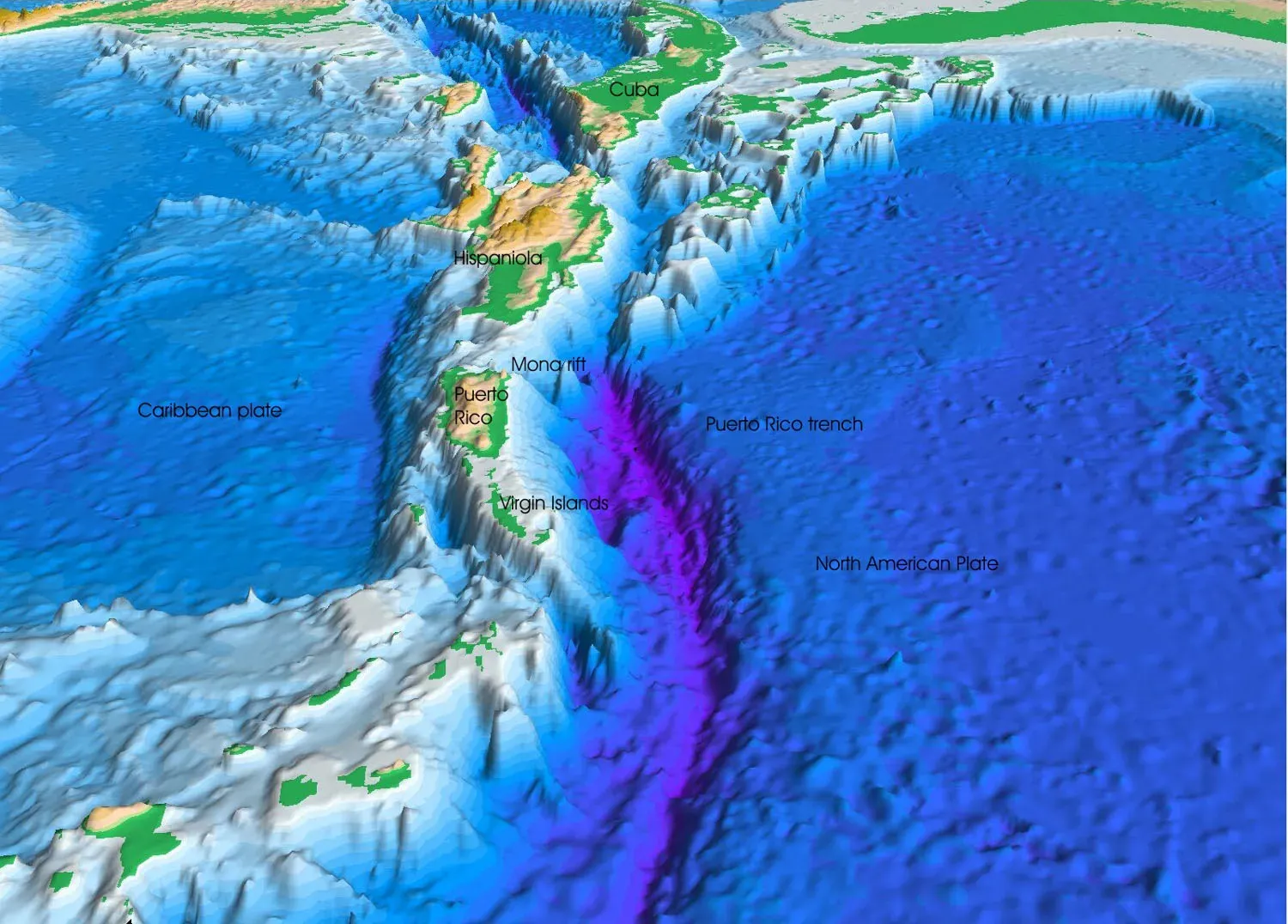
Hadal trenches – those gashes deeper than 6,000 meters – were long assumed to be barren wastelands. Now, every time a new expedition sends cameras or samplers to the bottom, scientists end up rewriting their notes. Amphipods, sea cucumbers, snailfish, jelly-like creatures, dense microbial mats: life turns up everywhere, even at pressures over 1,000 times what we feel at the surface.
Yet most trenches have only been visited once, if that. Even the basic water structure down there is confusing – some trenches show layered, isolated “pockets” of water with their own distinct chemistry that may linger far longer than the surrounding abyssal water. How often these pockets mix, how resilient their ecosystems really are, and how trenches trap organic matter are all still open questions. Different trenches behave so differently that broad generalizations keep collapsing. We genuinely understand hadal zones less than we understand the surface of Mars – that’s not an exaggeration, that’s a direct quote from more than one deep-sea researcher’s frustration. Next up: the largest migration on Earth, and nobody can actually count it.
#4 – The Planet’s Largest Migration We Still Can’t Count
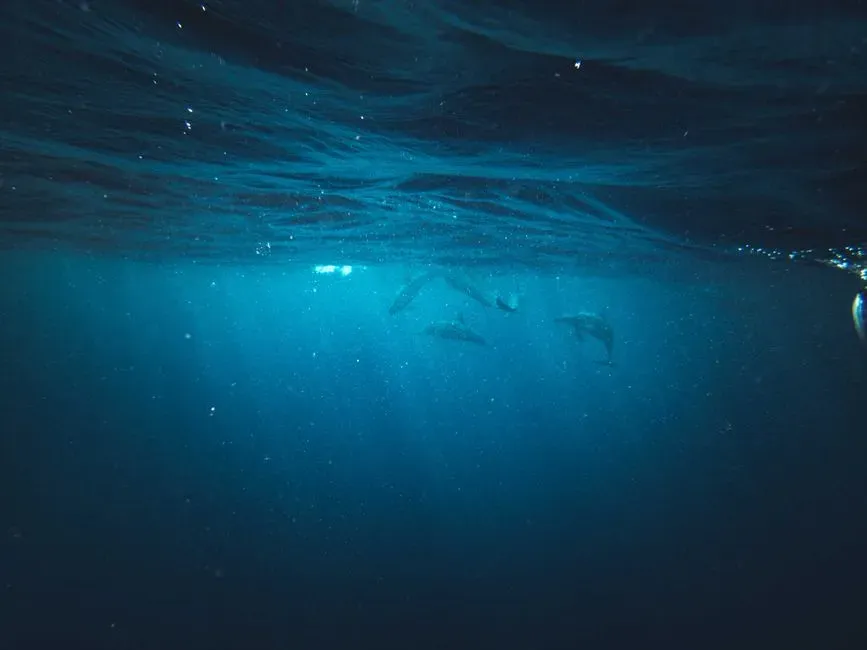
Every night, like clockwork, billions of organisms rise from the deep toward the surface, then retreat again before dawn. This diel vertical migration may be the largest animal migration on Earth by sheer biomass, yet no scientist can give you a precise number. Acoustic data shows broad layers of “scattering” organisms, but researchers often can’t tell species, sizes, or exact densities apart.
Why does this matter? Because these daily commutes shuttle carbon, nutrients, and even pollutants up and down the water column on a schedule tuned to light and predators. Some models suggest the carbon carried by migrating animals rivals major ocean circulation processes – others say that’s a wild overestimate. Until there’s a unified, observation-backed model that turns acoustic echoes into firm biomass numbers, the true role of these animals in climate regulation stays half-guesswork. But #3 might be the strangest entry on this whole list: vents that ignore the chemistry rules we invented for them.
#3 – Hydrothermal Vents That Don’t Follow The Rules
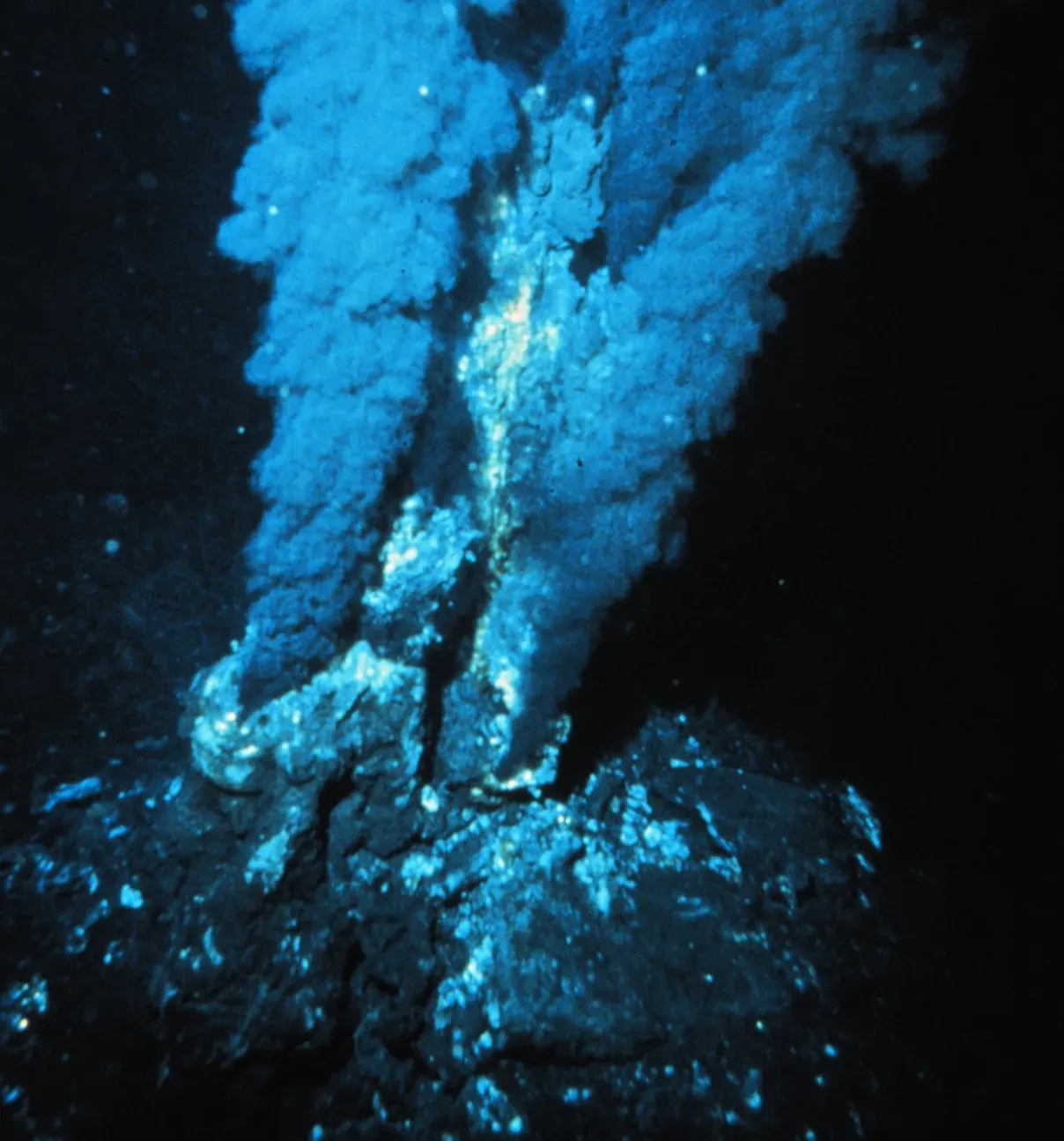
Hydrothermal vents – those black smokers spewing superheated, mineral-rich water – were once sold as a tidy origin-of-life story: chemistry plus heat equals thriving ecosystem, simple as that. Then scientists found low-temperature, alkaline vents like Lost City, with strange chemistries that don’t fit the classic model at all. Now nearly every new vent field discovered comes with its own odd mix of fluids, metals, and microbes.
Some vents host ecosystems fueled almost entirely by chemical energy, barely connected to surface photosynthesis, while others lean more heavily on falling organic matter from above. The interplay between geology, fluid flow, and biology varies wildly from site to site. Even the total global heat and chemical output of vent systems is uncertain by a wide margin, since we’ve only mapped a fraction of the mid-ocean ridges where they form. Scientists genuinely don’t know how representative the handful of sites we’ve studied actually are – which leaves huge open questions about both deep-sea life and the early history of our planet. Up next: sheets of light in total darkness, with no clear source at all.
#2 – Unexplained Flashes And Bioluminescent Displays
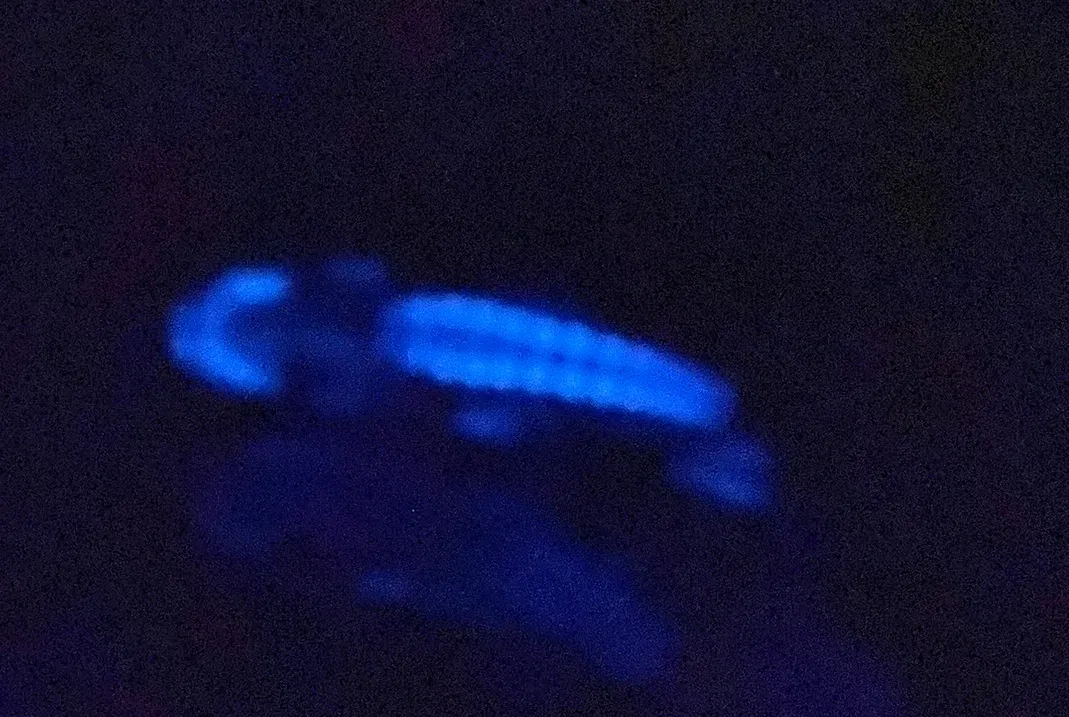
Bioluminescence in the deep sea is expected – plenty of animals glow down there. What’s not expected are large, coordinated bursts of light picked up by cameras and sensors that don’t match any known species’ behavior. In some cases, ROV footage has captured brief, sheet-like glows sweeping past the lens with no obvious single animal responsible.
In others, sensor arrays detect repeated flashes at fixed depths with nothing visible causing them. There are guesses – maybe huge plankton aggregations, or several species reacting at once to a passing predator or vehicle – but the patterns don’t line up cleanly with existing catalogs. Sampling bias makes it worse, since bright lights and noisy thrusters can scare off or attract creatures and distort what researchers see. Experts openly admit we’re likely missing entire guilds of light-producing species and behaviors. As instruments get more sensitive, we keep seeing more light, not less mystery. None of that compares, though, to the final admission on this list – the actual shape of the ocean floor beneath all of it.
#1 – The Shocking Truth: We Still Haven’t Really Mapped The Deep Ocean
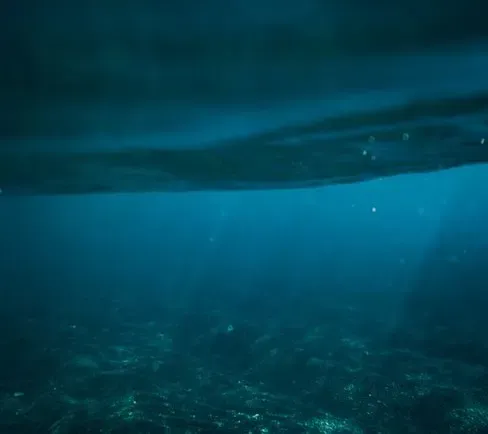
Here’s the part that quietly infuriates a lot of scientists: for all our talk of “understanding” the deep ocean, we haven’t even properly mapped it. Detailed bathymetry currently exists for only a portion of the seafloor. Huge stretches are still rendered as blurry approximations pieced together from satellite gravity data, with vertical errors in some regions running to hundreds of meters – not a rounding error, but “wrong mountain, wrong valley” territory.
This matters because everything else depends on that underlying shape – currents, ecosystems, resource distribution, even the safety of submarine cables. Researchers keep stumbling on uncharted seamounts, unexpected trenches, and ridges that silently reroute entire ocean currents. Until there’s a dense, global grid of ship-based or advanced sonar data, every model built on the “known” seafloor is standing on shaky ground.
Worth Knowing
- In 2017, only about 6% of the global seafloor had been mapped to modern, high-resolution standards.
- By 2025, that figure had climbed to roughly 27%, according to the international Seabed 2030 project.
- The goal is a complete high-resolution map of the entire ocean floor by 2030 – an ambitious deadline that’s closing fast.
- Until then, huge stretches of seafloor are still filled in using rough satellite-gravity estimates, not direct soundings.
How inappropriate to call this planet Earth when it is quite clearly Ocean.
Arthur C. Clarke
The Bottom Line
Line these thirteen mysteries up – from phantom sounds and missing heat to slow-motion microbes and a half-finished seafloor map – and the message is blunt: we’ve been overstating how well we understand the deep ocean. For years, the public story made it sound like only a few loose ends remained. Behind closed doors, plenty of experts will admit that some of our most confident models are resting on genuinely shaky ground.
That doesn’t mean scientists know nothing. It means the deep ocean is still actively humbling our tidiest theories about climate, life, and how this planet actually works. My honest take: any sweeping claim about what’s “definitely” happening below 2,000 meters deserves a raised eyebrow, not blind trust. We’ve charted more of the Moon’s surface than we have our own ocean floor, and until that changes, the abyss gets the final word.
Did we miss a deep-sea mystery you think belongs on this list – or disagree with one here? Drop it in the comments and defend your take.