Most people assume the dinosaur posters on classroom walls are settled science. They’re not. They’re educated guesses, frozen in paint, based on whatever bones happened to survive first – and some of those guesses were embarrassingly wrong until a second fossil walked in and blew the whole picture up.
This isn’t a story about tiny corrections. It’s about creatures that flipped from monster to misfit, from predator to plodding herbivore, from reptile to distant cousin of your dog. Some of the images you still picture in your head right now are already outdated. Here’s what changed the moment specimen number two showed up.
#13 – The Coelacanth: From “Living Fossil” Relic To Active Deep-Sea Predator
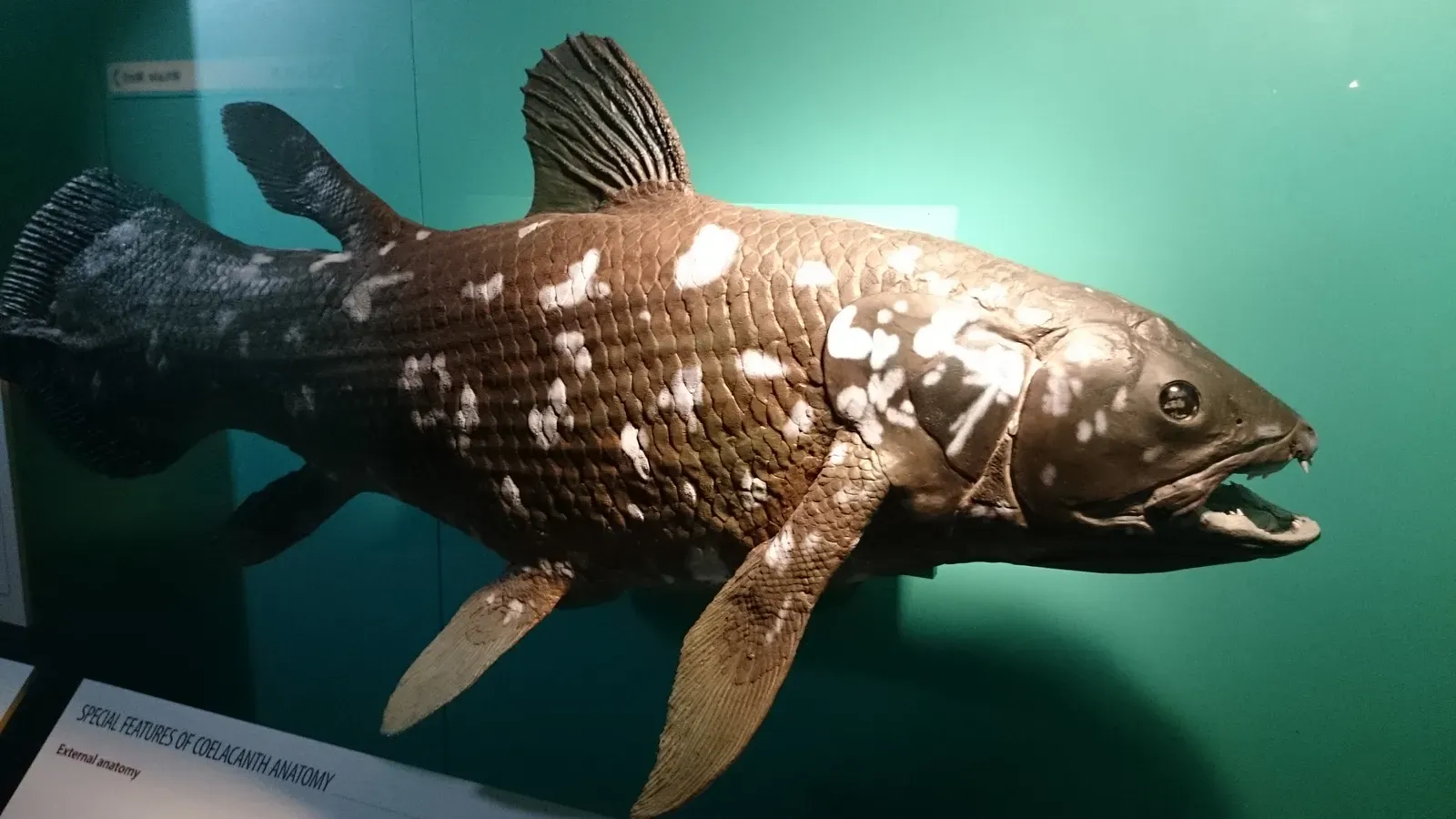
Most people still picture the coelacanth as a slow, half-dead relic drifting along the seafloor, more museum piece than animal. Early reconstructions, based on dried and flattened specimens pulled up in the 1930s, leaned into that idea hard.
Its lobed fins were even drawn like awkward proto-legs, suggesting something barely clinging to existence. Then live-caught individuals and deep-sea footage arrived, and biologists found powerful musculature, flexible joints, and a genuinely efficient swimming style. Instead of crawling, coelacanths hover and glide with surprising control – a specialized hunter, not a fossil that forgot to die.
#12 – Archaeopteryx: From Awkward Half-Bird To Fully Capable Flier
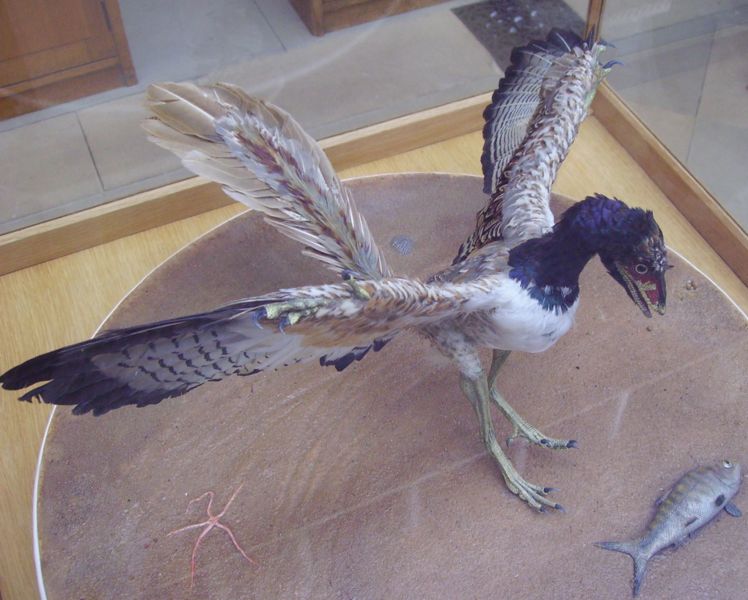
For decades, the single famous Archaeopteryx specimen was drawn as a shaky, half-formed experiment – a gliding lizard wearing feathers. With only one skeleton to study, scientists sketched narrow wings, weak chest muscles, and a tail held stiffly like a reptile’s, dragging behind an animal that looked more hesitant than airborne.
Then more specimens surfaced, each preserving different bones. Stronger shoulder joints, a sturdier wishbone, and asymmetrical flight feathers across multiple individuals told a different story. The tail turned out to be a dynamic stabilizer, not a limp leftover. Archaeopteryx wasn’t a nervous first draft of a bird – it could actually fly.
#11 – Iguanodon: From Horn-Nosed Monster To Thumb-Spiked Herbivore
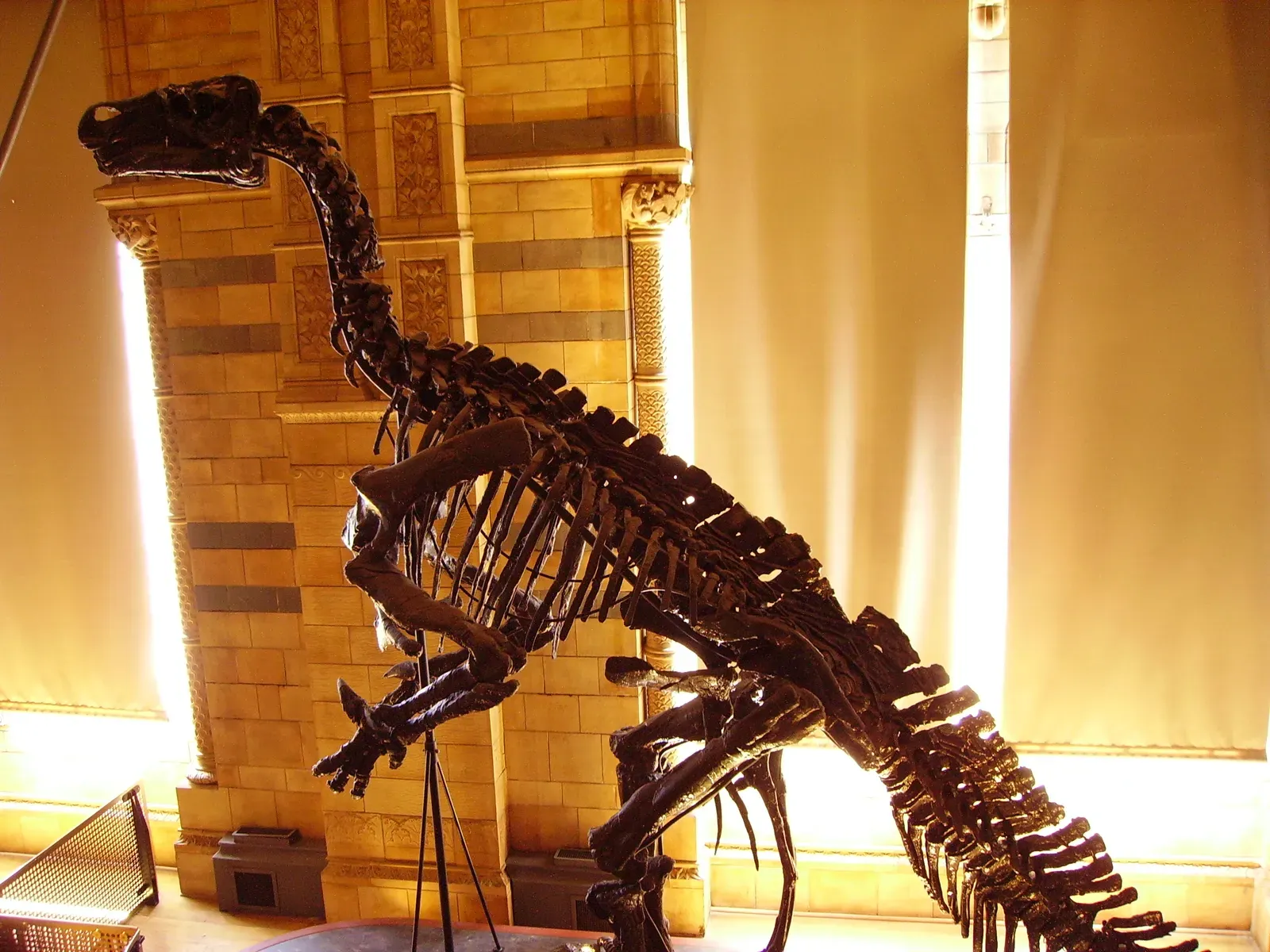
The original Iguanodon reconstruction is almost meme-worthy today. Nineteenth-century scientists had one chunky spike and scattered bones, so they stuck the spike on its nose and drew a rhino-like reptile lumbering on all fours – a mistake so confident it got cast in stone at Crystal Palace before anyone could double-check it.
Then a second wave of far more complete skeletons turned up in Belgium, and that “horn” suddenly made sense as a thumb spike. Multiple articulated fossils revealed a semi-bipedal browser with powerful hind legs, capable of rearing up and moving in herds. The lizard-rhino image quietly vanished, replaced by something far more agile.
Fast Facts
- Iguanodon was named in 1825 by Gideon Mantell, based on teeth his wife found near a quarry in England three years earlier.
- The Crystal Palace reconstruction, unveiled in 1854, showed a rhino-like quadruped with the mystery spike planted on its nose.
- In 1878, miners in Bernissart, Belgium struck a clay pocket 322 meters underground packed with dozens of nearly complete skeletons.
- Those articulated Belgian fossils finally revealed the “horn” as a thumb spike on an otherwise ordinary hand.
#10 – Spinosaurus: From Classic T. Rex Rival To Semi-Aquatic Oddball
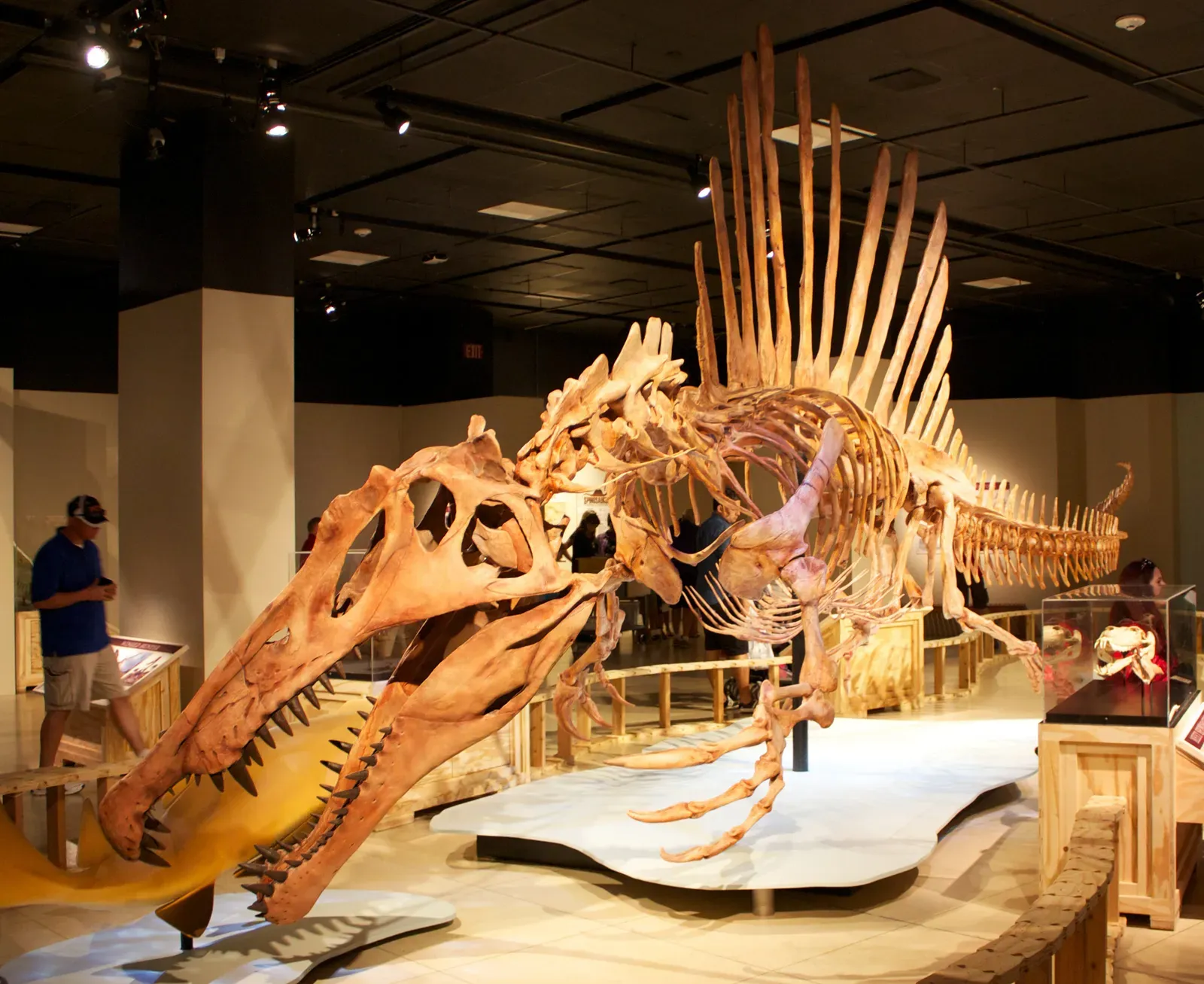
Spinosaurus might be the ultimate case of guessing big from almost nothing. The original remains were destroyed in World War II, leaving artists to blend it with other giant theropods into one iconic image: a T. rex-style land predator with a sail, striding across the dunes like a desert king. Textbooks sold that version for decades.
Then better-preserved fossils turned up in North Africa, and the story cracked open. Shorter hind limbs, dense bones, and a paddle-like tail pointed to a creature built for water, not sprinting. Multiple skulls added crocodile-like, pressure-sensing snouts built for hunting fish. The land-based rival to T. rex quietly became a specialized river hunter.
#9 – Megalosaurus: The First Dinosaur That Barely Looked Like A Dinosaur
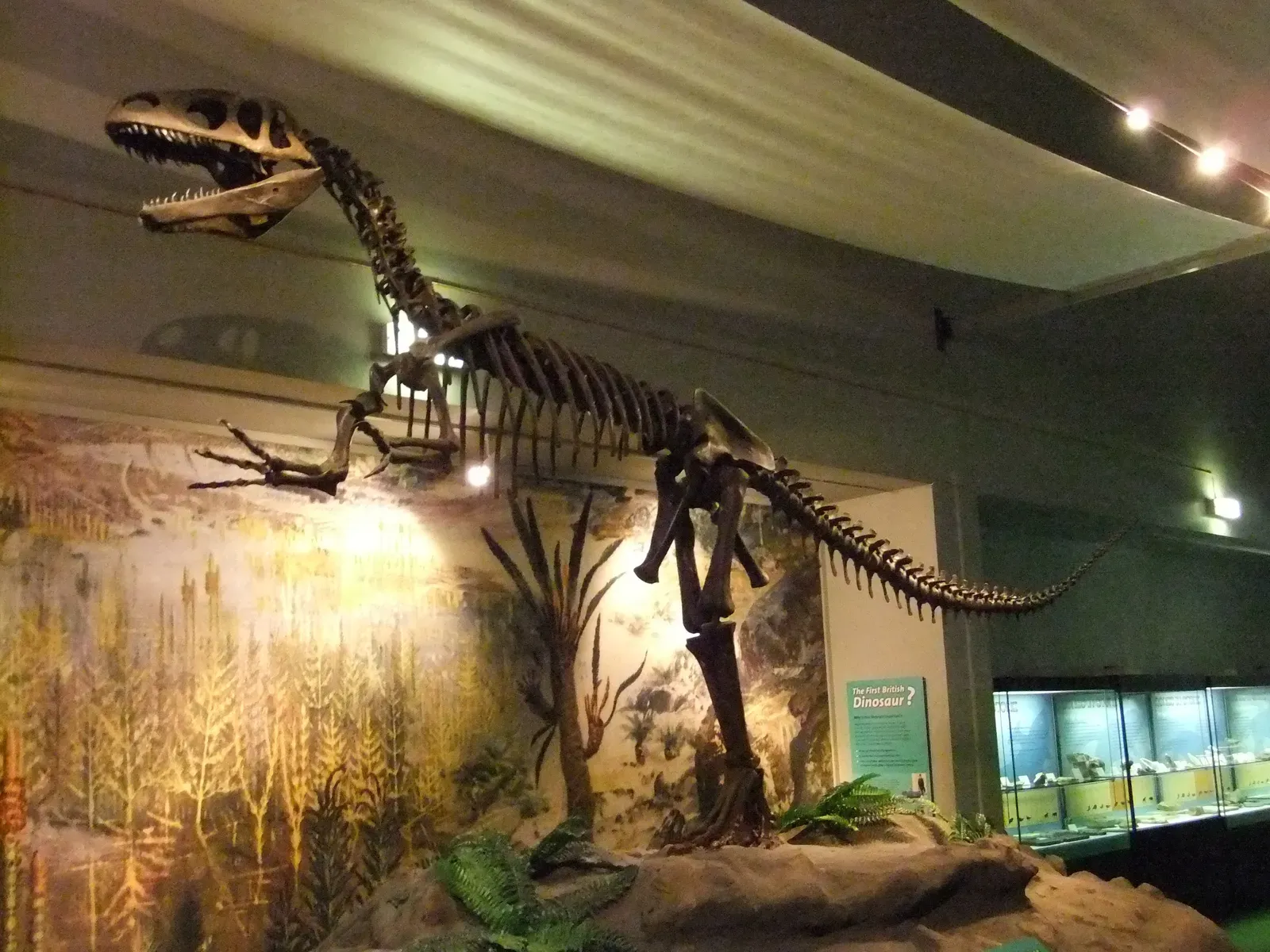
Megalosaurus was the very first dinosaur ever named, and almost everything about its debut portrait was wrong. With only isolated bones to work from, Victorian scientists forced it into a familiar shape: a low, crocodile-like lizard crawling on all fours, barely taller than a person in some illustrations.
That image stuck for decades simply because nobody had anything better. Then more complete megalosaurid relatives emerged, revealing a big, bipedal theropod with a massive head, long tail, and powerful hind limbs. Once paleontologists reread the original bones through that new lens, the crawling-lizard version collapsed for good.
#8 – Deinocheirus: From Mystery Murder-Arms To Duck-Billed Giant
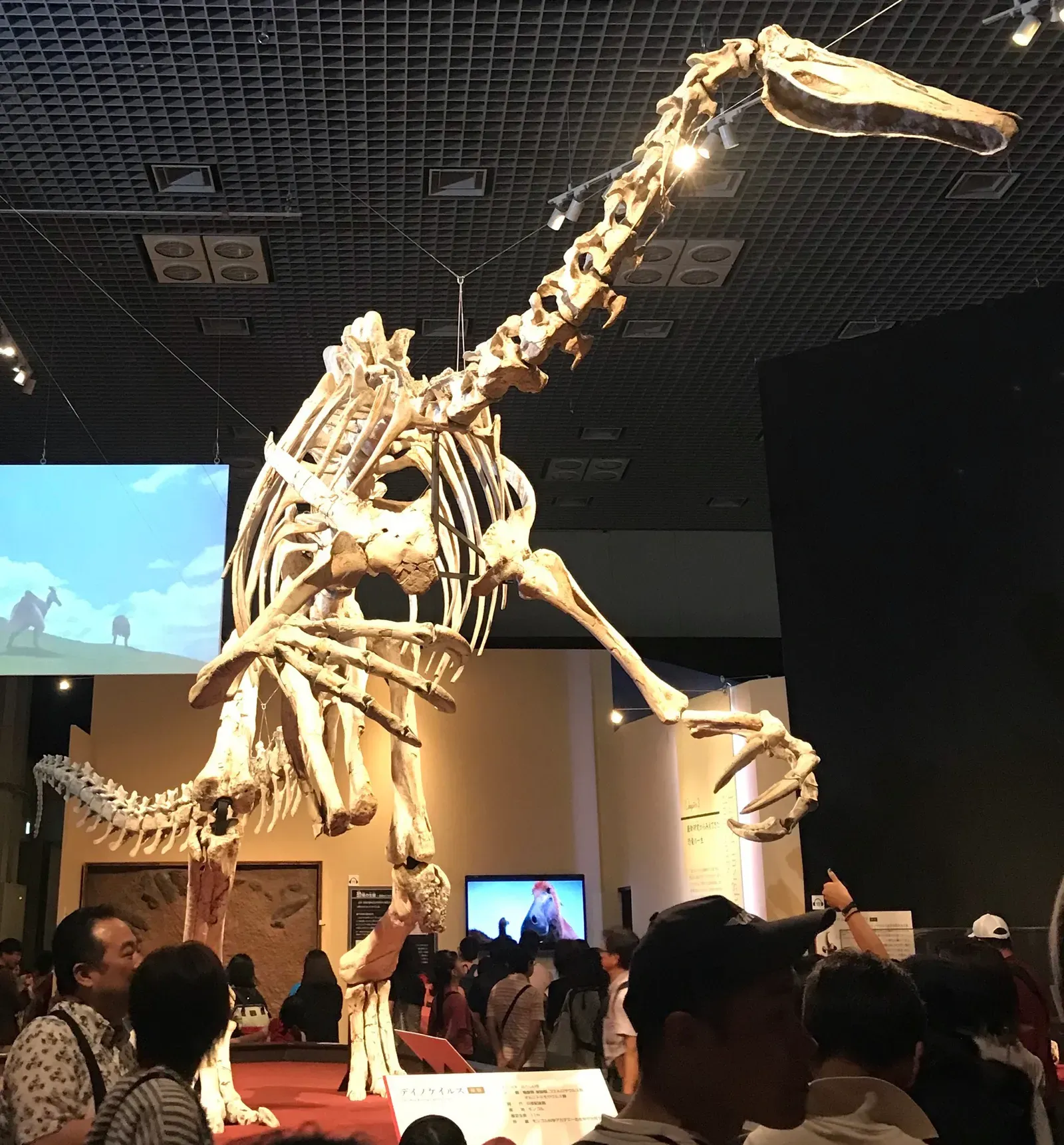
When Deinocheirus was first described, scientists had two enormous clawed forelimbs and a shoulder fragment. That was it. Artists ran wild, turning it into a slashing super-predator, a nightmare with no torso, no legs, and no skull – just terrifying arms and imagination filling the gaps.
Then nearly complete skeletons surfaced in Mongolia, and the reveal was almost comedic. Deinocheirus had a long duck-like snout, a humped back, and a pot-bellied body on sturdy, birdlike legs, with wear patterns suggesting it foraged rather than hunted. The horror-movie killer turned into part ostrich, part duck, part camel-backed oddity – and somehow that’s more memorable than the monster ever was.
Quick Compare
- 1965 to 2014: Known only from two 2.4-meter forelimbs and a shoulder girdle dug up in Mongolia’s Gobi Desert.
- Early theory: The huge arms fueled guesses of a slashing predator that might have rivaled Tyrannosaurus in size.
- 2014 reveal: Two nearly complete skeletons showed an 11-meter, humpbacked omnivore with a duck-like bill instead.
- Diet check: Fish scales and plant material found with the skeletons confirmed it foraged near rivers rather than hunted.
#7 – Anomalocaris: From Three Different Animals To One Bizarre Predator
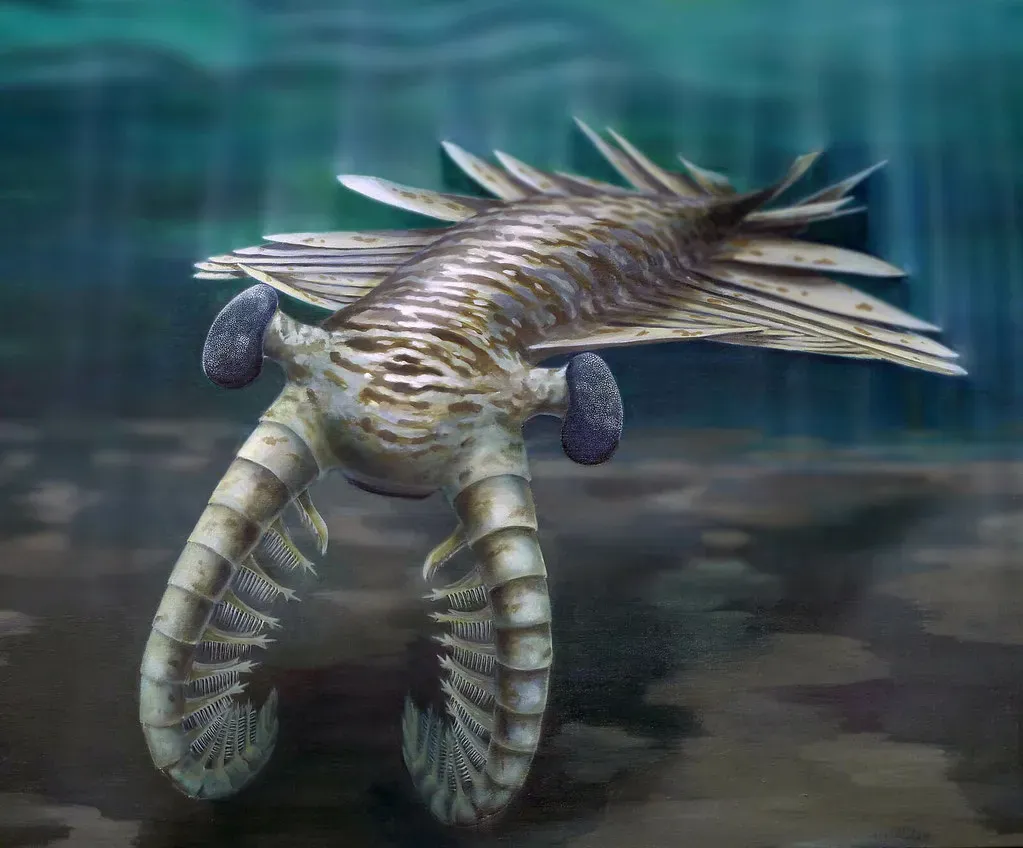
Few creatures were misread as badly as Anomalocaris. Early fossils were so fragmented that scientists split it into three unrelated “species”: a jellyfish for the mouth, a shrimp-like crustacean for the arms, and something else entirely for the body. For decades, textbooks presented these as separate organisms with no connection at all.
Only when better-preserved specimens showed mouth, arms, and body fused together did the truth click into place. Anomalocaris was one large, streamlined predator with compound eyes and grasping frontal appendages, ruling the Cambrian seas alone. What looked like three odd animals turned out to be one very effective one.
Worth Knowing
- Fragmented fossils were once split into a jellyfish-like mouth, a shrimp-like body, and separate grasping arms.
- Fully articulated specimens eventually fused all three into a single, streamlined predator.
- Its compound eyes reached up to 3 centimeters across and packed in more than 16,000 lenses each.
- At roughly a meter long, it was a genuine giant by Cambrian standards and likely the era’s top predator.
#6 – Dimetrodon: From Lizard-Like Reptile To Mammal Relative With A Makeover
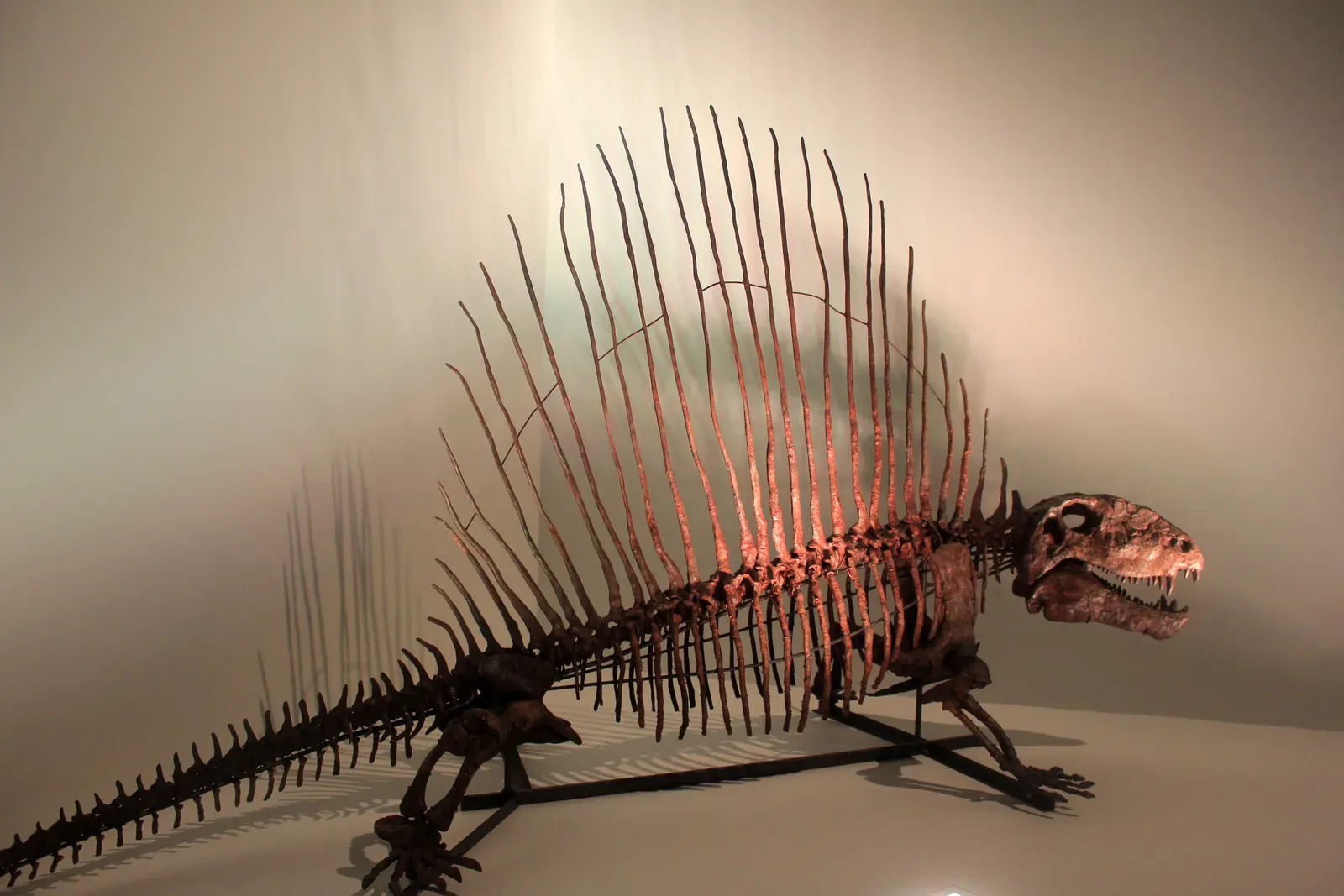
Dimetrodon still gets called a dinosaur online, which is wrong on every level. Early sparse skeletons pushed artists toward the generic “big lizard with a sail” look – belly low, legs sprawled out like an iguana, head smoothed into a vague reptilian shape.
As more specimens of different sizes accumulated, the anatomy sharpened considerably. Limb joints suggested a more upright stance, and differentiated teeth across multiple skulls linked Dimetrodon to early synapsids – the distant ancestors of mammals, not reptiles at all. The swamp-lizard cliché didn’t die from one dramatic find; it died from dozens of overlapping ones.
#5 – Early Pterosaurs: From Bat-Winged Monsters To Precision Fliers
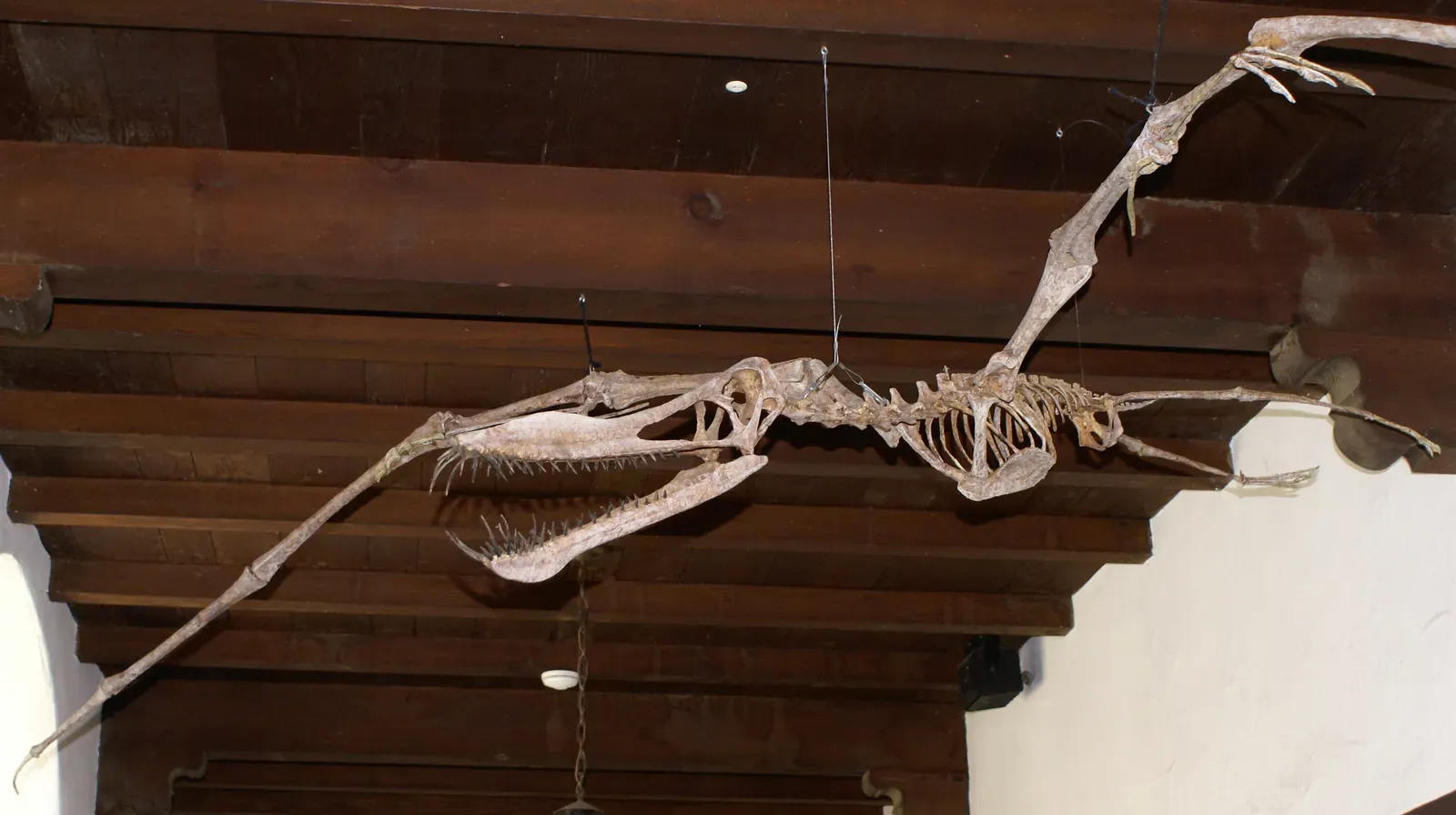
Early pterosaur reconstructions were almost offensively wrong by today’s standards. Based on scattered partial skeletons, artists gave them sagging, bat-like wings and weak chests, sometimes drawing them shuffling on land like injured bats dragging themselves along the ground.
Once multiple species and individuals were properly described, wing membranes preserved with fine internal fibers revealed something far stronger and more controlled. Reinforced, lightweight bones and confident quadrupedal trackways replaced the painful shuffle entirely. Pterosaurs turned out to be long-distance, highly capable fliers – not the sky’s clumsiest experiment.
#4 – Tiktaalik And Early “Fishapods”: From Land-Crawlers To Water-Edge Specialists
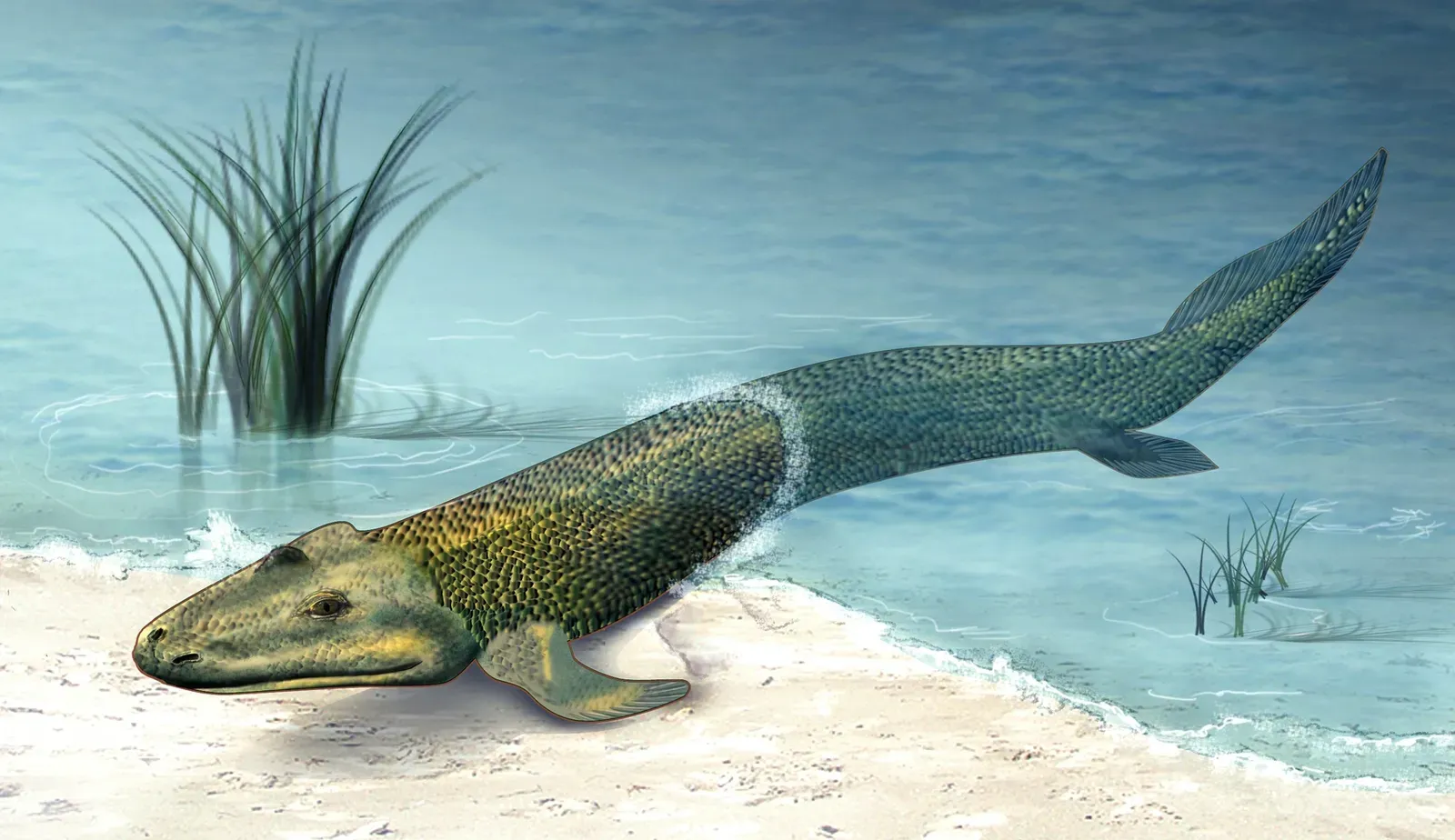
Transitional creatures between fish and tetrapods have always tempted artists into overconfidence. Early partial fossils led to reconstructions of animals hiking through forests on fully developed legs, based on little more than a handful of limb bones and skull fragments.
As more complete specimens of Tiktaalik and its relatives turned up, preserving fins, joints, and ribcages together, the story got humbler and more interesting. These creatures had strong shoulders built for propping and pivoting in shallow water, not marching inland. It’s a sharp reminder that one over-interpreted fossil can rewrite an entire chapter of evolution – until it can’t.
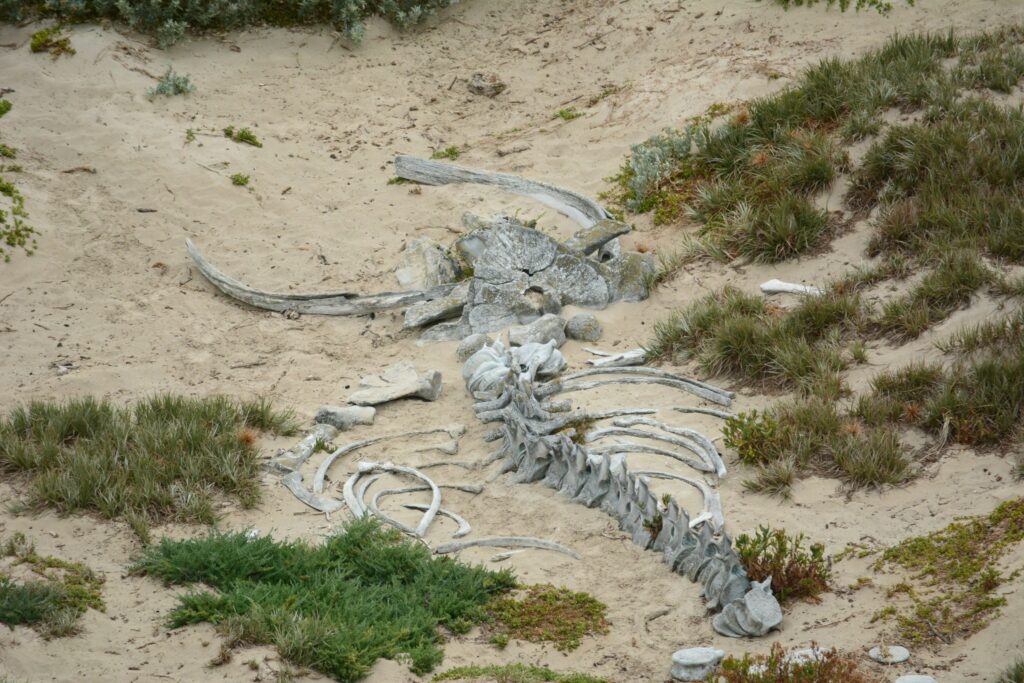
#3 – Basilosaurus: From Sea-Serpent Myth To Early Whale With Legs
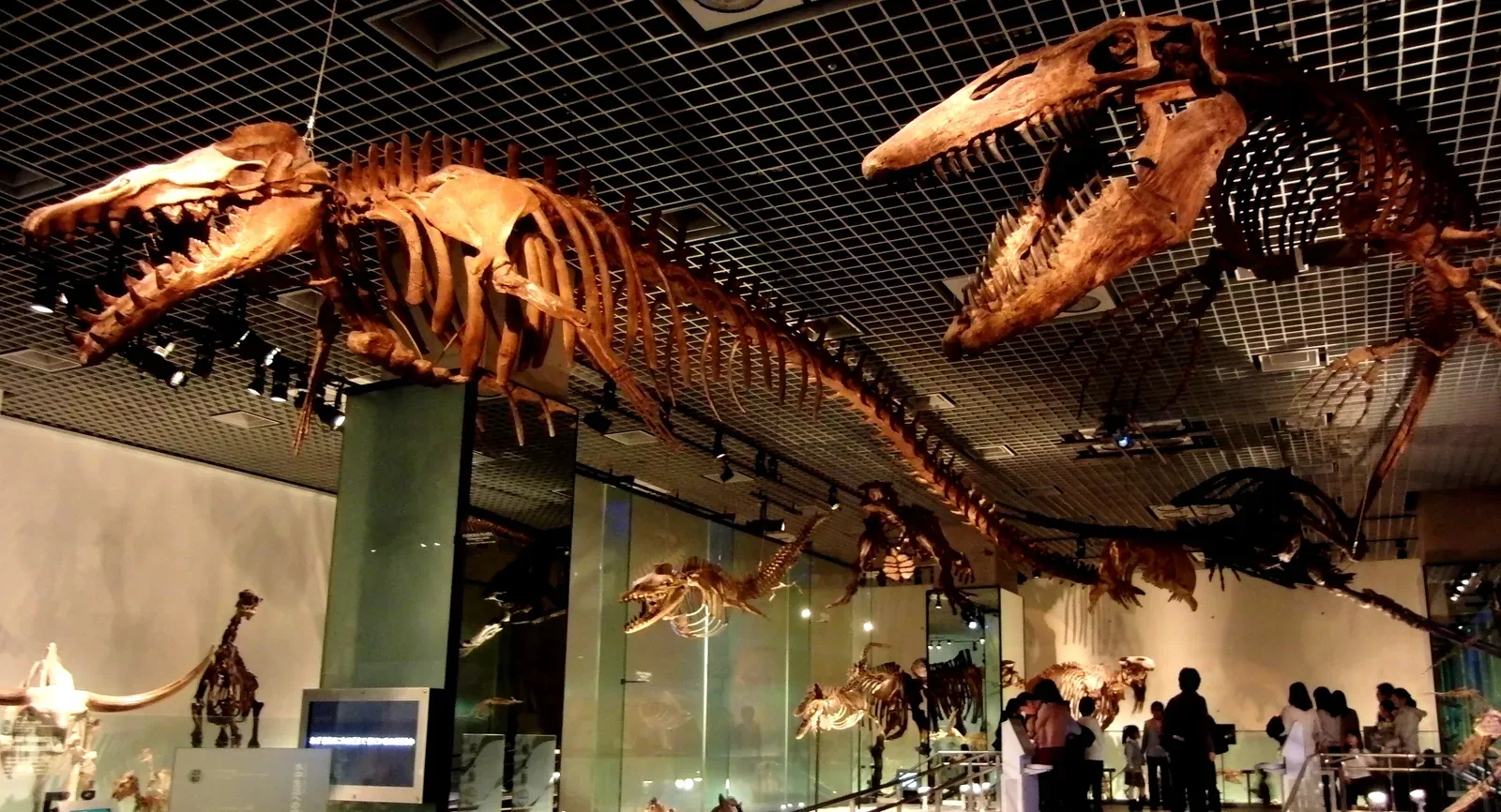
When Basilosaurus was first discovered, paleontologists genuinely believed they’d found a giant marine reptile. The long, serpentine body fit the sea-serpent idea so well that the name itself – “king lizard” – locked the bias in before anyone could correct it.
More complete skeletons, including skulls and pelvic bones from multiple individuals, flipped the story completely. Teeth patterns and ear bones matched early whales, not reptiles, and some specimens even preserved tiny, useless hind limbs – a leftover evolutionary fingerprint. Basilosaurus turned out to be a mammal wearing a sea monster’s body.
#2 – Stegosaurus: From Tail-Dragging Lizard With Flat Plates To Armored Show-Off
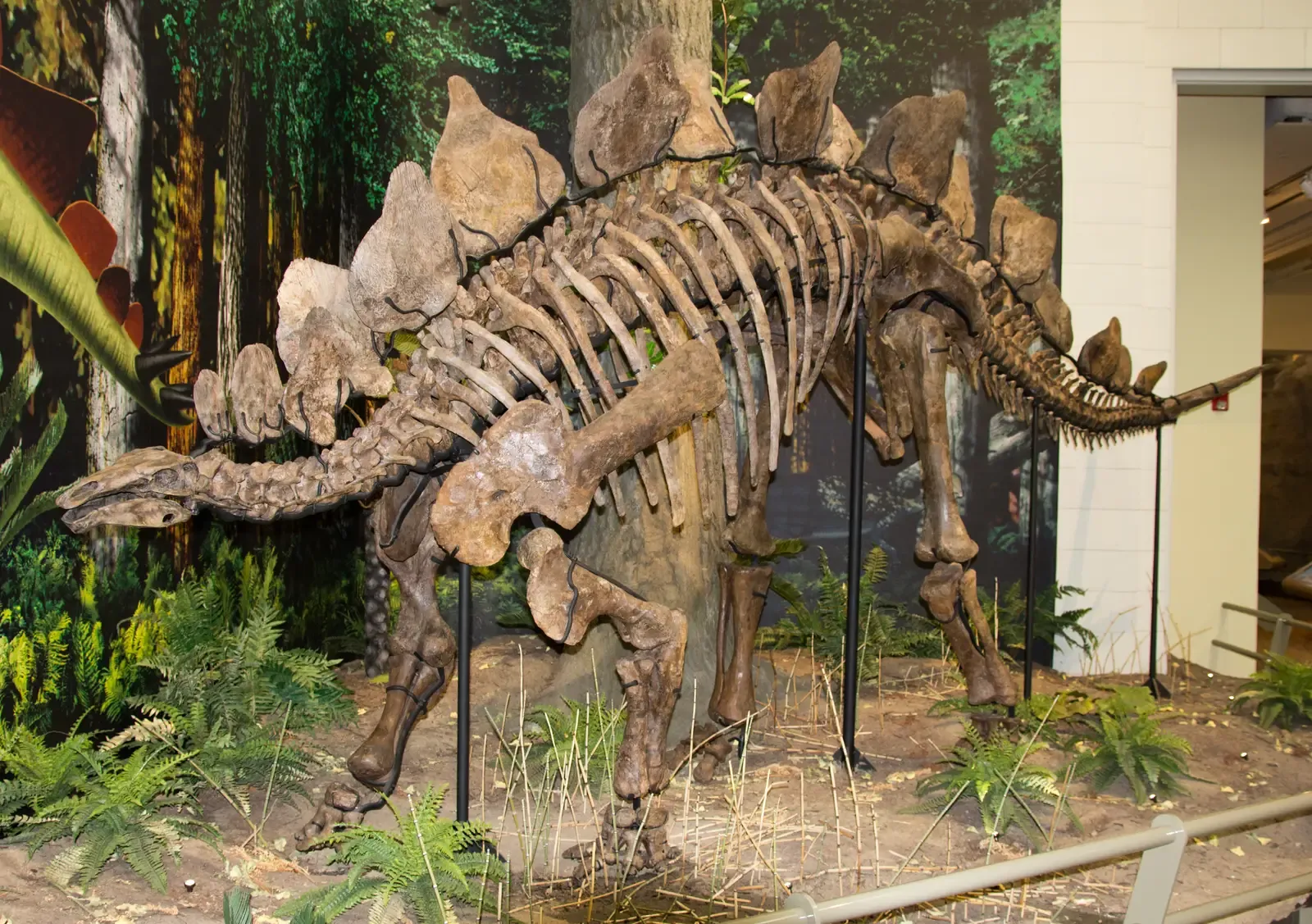
Stegosaurus might be the dinosaur people are most confidently wrong about. Early mounts, built from the first decent skeleton, showed a single flat row of plates and a low, tail-dragging slouch, with the spikes shrunk down to almost decorative nubs on a slow, dim-witted grazer.
As more skeletons were unearthed, plate size, shape, and positioning varied enough to suggest a staggered, alternating arrangement instead. Muscle scars and tail vertebrae pointed to a raised, flexible tail that could actually swing those spikes as real weapons. Stegosaurus evolved on paper from a walking hedge into an armored animal with a built-in mace.
Why It Stands Out
- Early mounts placed the plates in a single flat row instead of the double, staggered arrangement confirmed by later articulated fossils.
- Its tail spikes now carry the nickname “thagomizer,” a term borrowed from a 1982 comic strip and later adopted by paleontologists.
- A fossilized Allosaurus tail bone was found punctured by a matching spike, hard evidence the thagomizer was a real weapon.
- No two plates on the same animal were ever quite the same size or shape.
#1 – T. Rex: From Tail-Dragging Monster To Dynamic, Bird-Adjacent Apex Predator
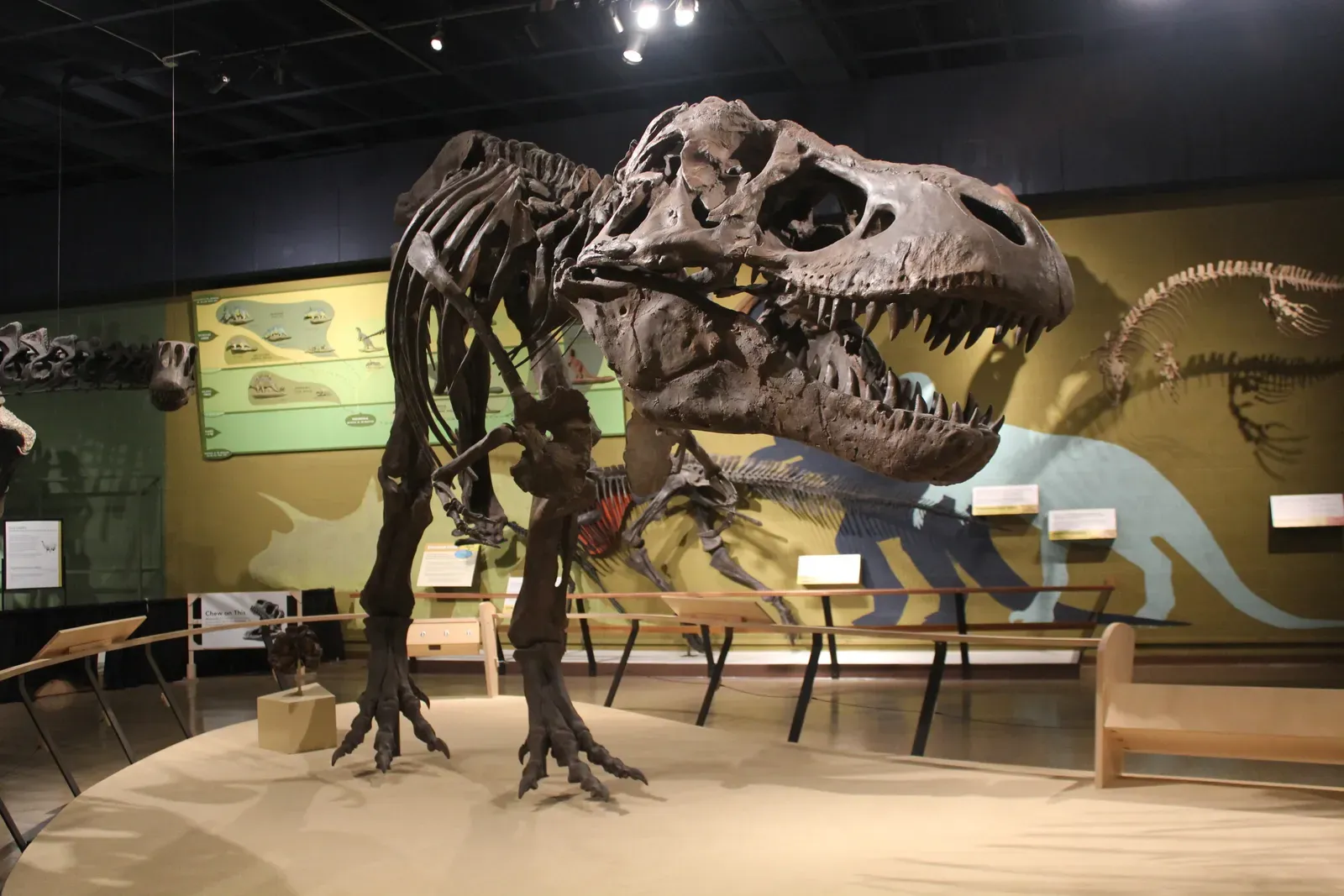
No creature shows the power of a second specimen – and a fiftieth – quite like Tyrannosaurus rex. Early mounts stood it nearly upright, tail scraping the ground, body looming like a skyscraper on legs. It looked like a man in a rubber suit from an old monster movie, and that image became iconic long before anyone had enough skeletons to question it.
As juveniles, adults, and partial skeletons piled up, the pattern shifted hard. Limb joints and tail vertebrae pointed to a horizontal posture with the tail acting as a counterbalance, while skull comparisons revealed stronger bite mechanics than anyone expected. Even the tiny arms started making sense as specialized tools once studied across multiple individuals. The king stayed the king – but the throne room changed completely.
The Bottom Line
Line these stories up and a brutal pattern appears: our first reconstructions are usually wrong in the most flattering, cinematic way possible. One dramatic fossil shows up, we rush to fill in the blanks, and culture falls in love with the guess before the evidence can catch up.
The second, third, and tenth specimens don’t just tweak details – they routinely overturn the entire vibe, from monster to specialist, from lizard to mammal-kin, from clumsy to elite. That’s not a failure of science. That’s the whole point of it.
The real mistake is treating the first draft as sacred. So which reconstructions do you think we’re still getting wrong right now – and what creature do you bet flips completely the next time a new skeleton hits the lab?