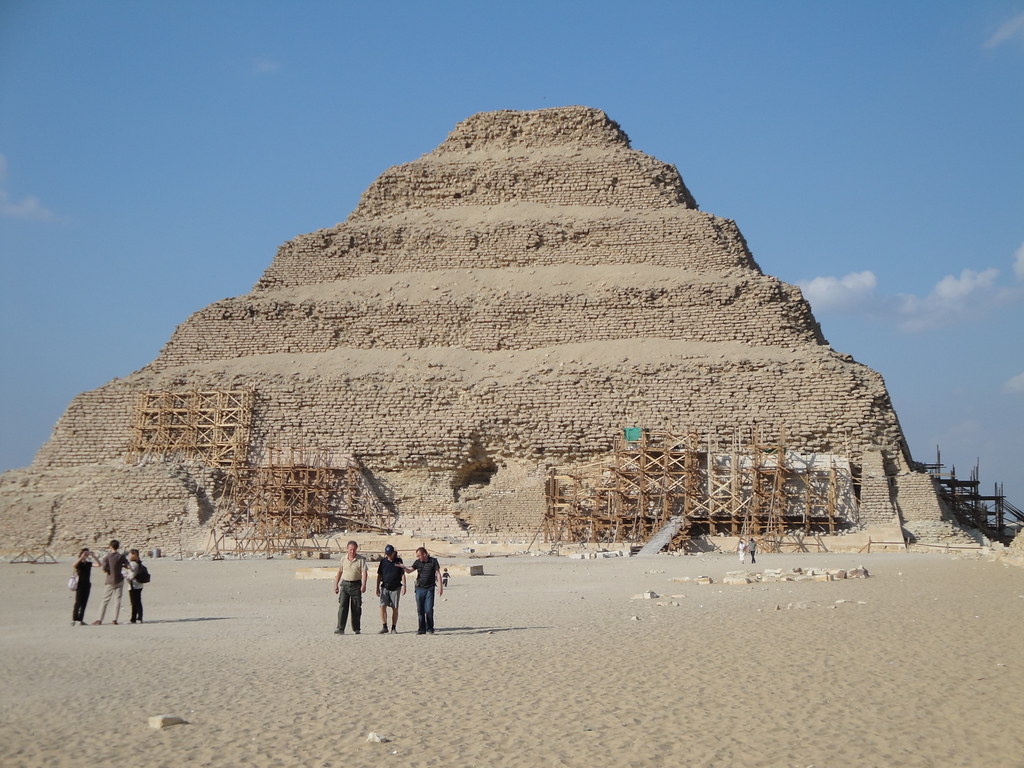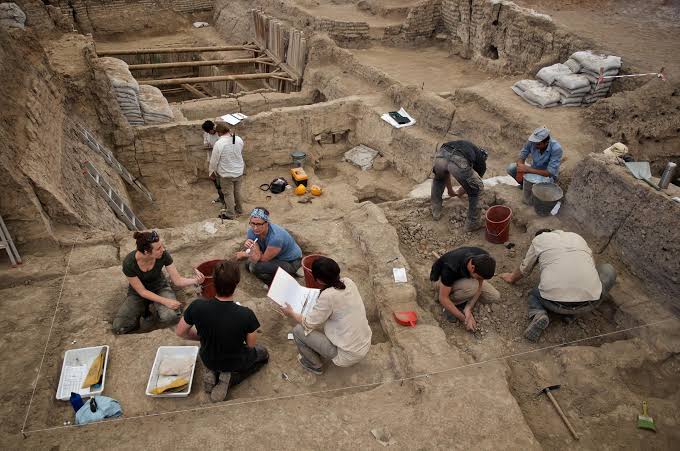

Most people assume archaeology moves in a straight line: dig, date, confirm what we already suspected. That’s not how it actually works. Roughly once a decade, a single trench, cave, or laser scan detonates an entire regional timeline overnight, and historians spend the next twenty years cleaning up the wreckage.
The Fertile Crescent, the Amazon, southern Africa, the American Southwest – all of them have been quietly rewritten by finds nobody was looking for. These aren’t minor footnotes buried in obscure journals. They’re discoveries that made entire university textbooks obsolete within a few years, and the archaeologists who dug them up still sound a little stunned describing what they found. Here’s the list, starting with the one that embarrassed an entire coastline’s reputation.
#13 – Huaca Prieta and the Myth of the “Late” Andes
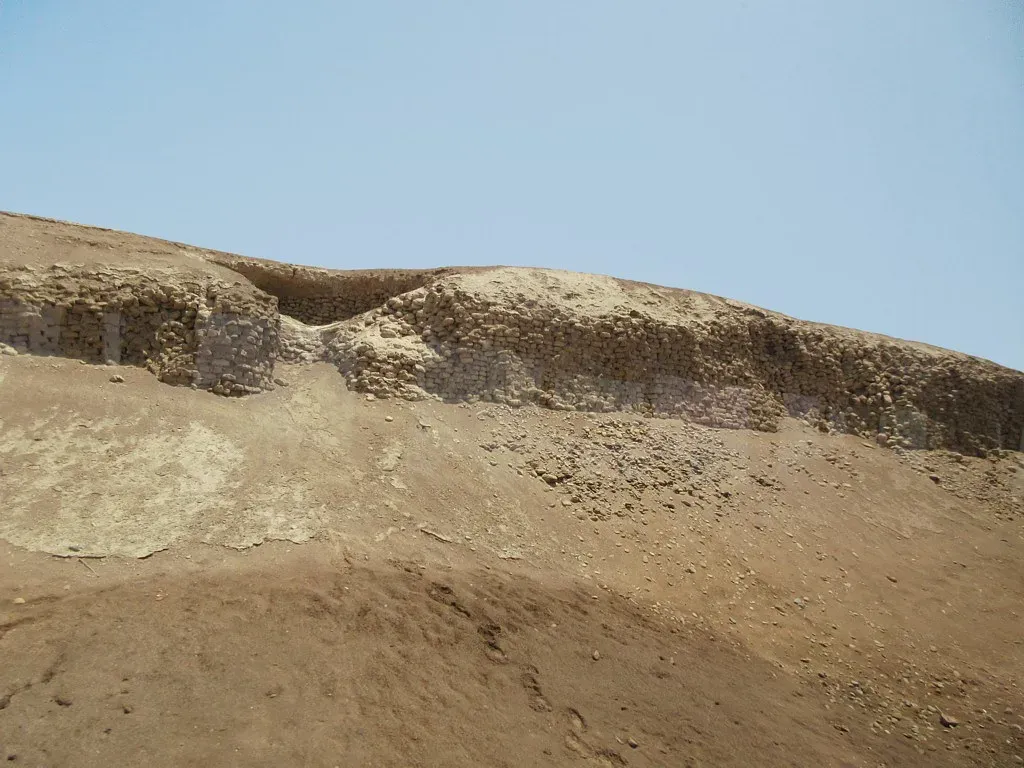
Peru’s Pacific coast was supposed to be a backwater compared to the highland civilizations everyone learned about in school. For decades, textbooks treated the Andes as a region where complex society arrived relatively late, trailing behind Mesopotamia and Egypt by thousands of years.
The mound at Huaca Prieta, first excavated in the 1940s and re-examined with modern dating techniques starting in the 2000s, pushed evidence of organized ritual construction, textile production, and coastal-to-highland trade back thousands of years earlier than expected. Cotton textiles, ceremonial platforms, and long-distance exchange of Amazonian and highland goods showed up before any large-scale agriculture existed in the region. The “primitive fishing village” model didn’t just look outdated – it looked backward, since ritual and social organization apparently came first, not farming.
#12 – The Hidden Shafts That Reframed Stonehenge’s Entire Landscape
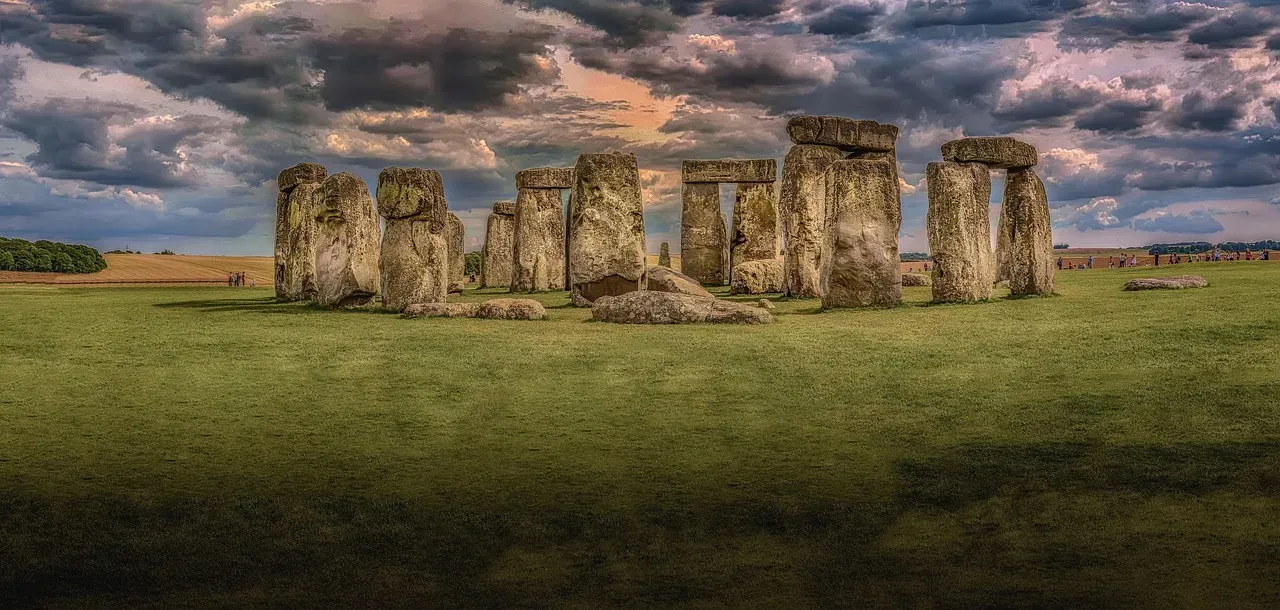
Stonehenge was never meant to be understood alone, and a 2020 discovery finally proved it. Using ground-penetrating radar, researchers mapped a massive ring of deep pits surrounding Durrington Walls, a few miles from Stonehenge itself.
The shafts, arranged in a rough circle over two kilometers wide, showed that Neolithic Britain was capable of large-scale, coordinated landscape engineering that had nothing to do with the stones tourists photograph today. Archaeologists had spent a century treating Stonehenge as an isolated monument, and that assumption collapsed almost instantly. Coordinating a project of that scale required shared measurement systems and communication across scattered communities – proof that southern England wasn’t a sparse cluster of monuments, but a deliberately engineered ritual landscape.
#11 – The Wooden Idol That’s Older Than the Pyramids
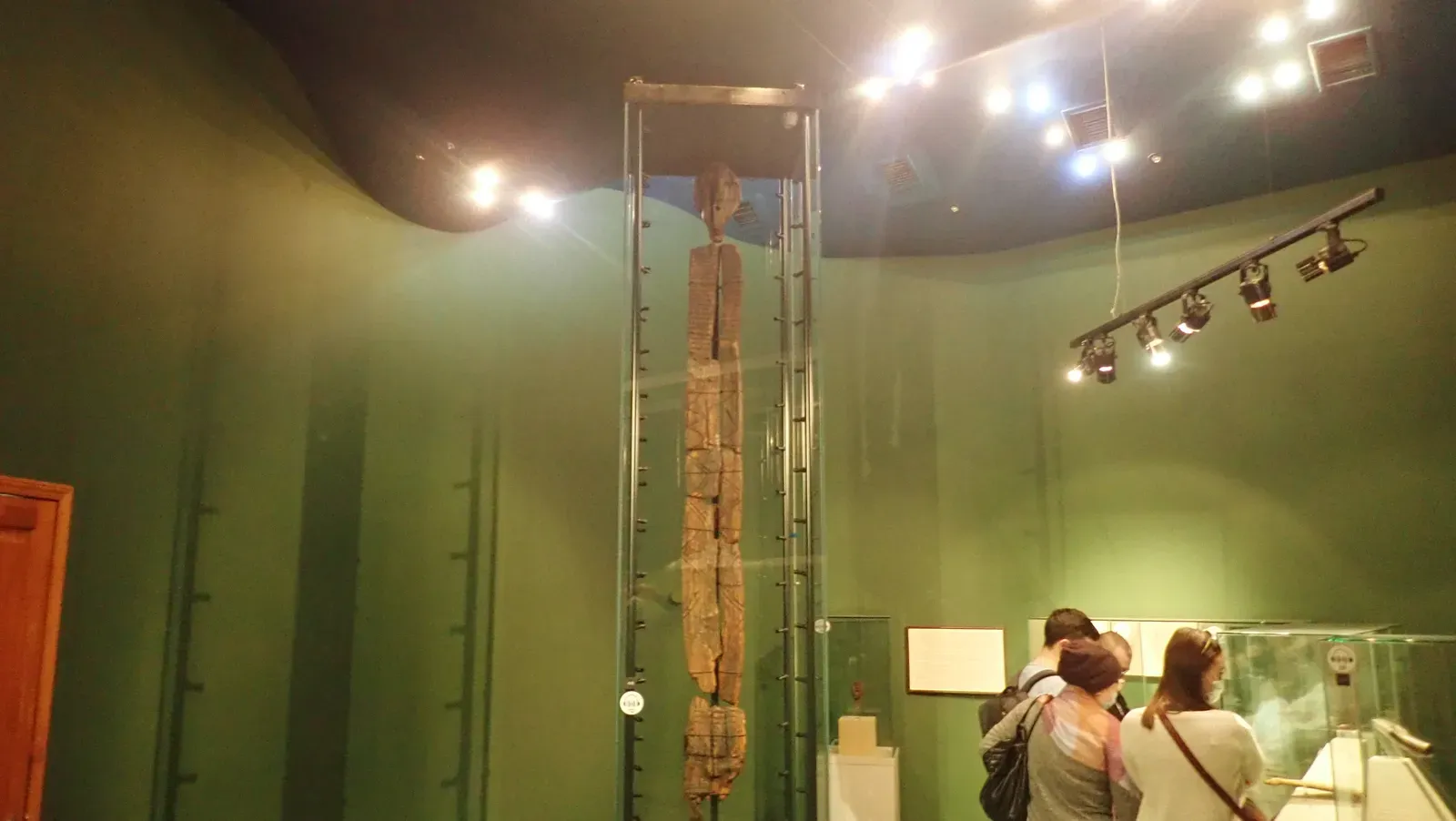
Buried in a peat bog in the Ural Mountains sits a carved wooden figure that shouldn’t have survived – and definitely shouldn’t be that old. The Shigir Idol, pulled from a Russian peat bog in the 19th century, was largely dismissed for decades because wood rarely survives that long.
Radiocarbon testing eventually confirmed an age of roughly 11,000 years, making it older than Stonehenge, older than the pyramids, and older than written language itself. The carvings covering its surface – faces, geometric patterns, symbolic markings – showed that Mesolithic hunter-gatherers in Siberia already had complex symbolic thinking long before agriculture reached the region. A swamp in the Urals proved the old assumption that figurative art started in the Near East was regionally blind from the start.
#10 – The Greek Shipwreck Gadget That Broke the Technology Timeline
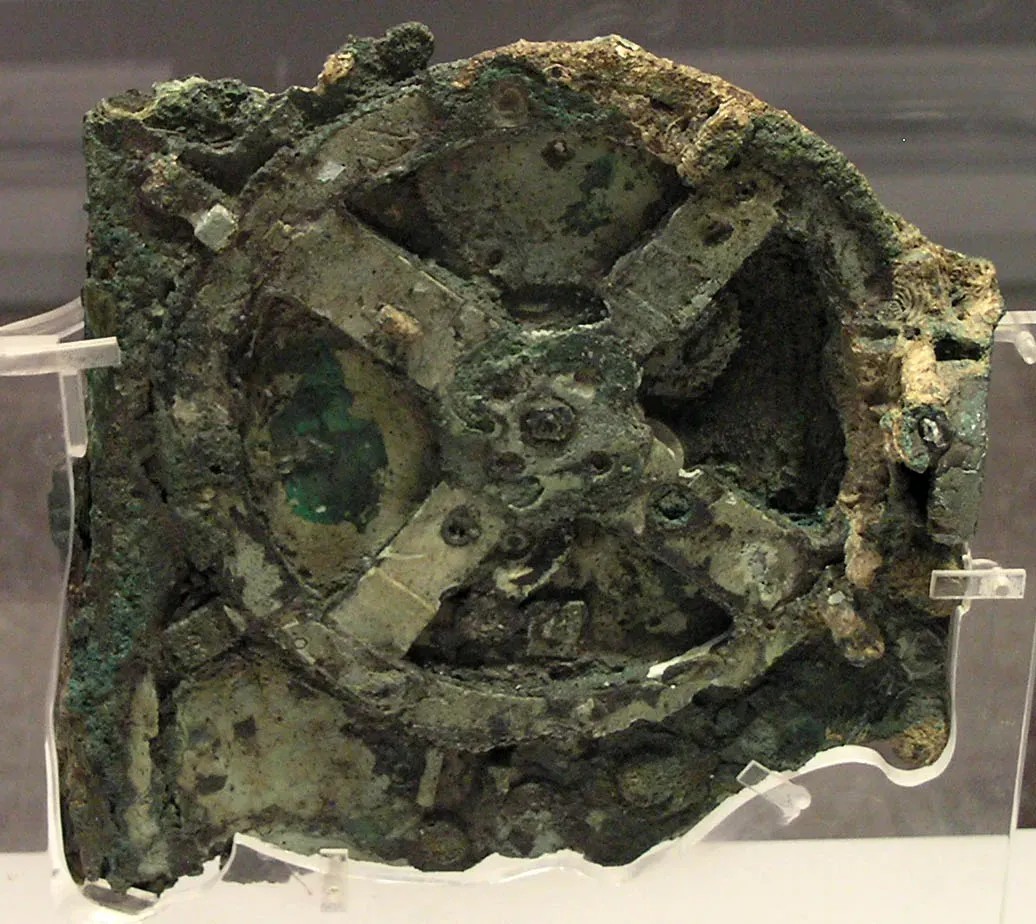
A corroded lump of bronze fished out of the Aegean in 1901 turned out to be more advanced than anything built for the next 1,000 years. The Antikythera Mechanism sat in a museum for decades before X-ray and CT scanning revealed its true nature.
It was a hand-cranked analog computer with dozens of interlocking bronze gears, designed to track lunar cycles, eclipses, and planetary positions. Nothing this mechanically complex was believed to exist until medieval European clockwork appeared over a millennium later. Greek and Hellenistic workshops clearly had precision metalworking and gear-based calculation skills that vanished from the historical record simply because nothing else like it survived shipwrecks or looting.
Fast Facts
- The device relied on at least 30 bronze gears to predict astronomical and social events including eclipses, phases of the moon, positions of the planets in the sky, and even the dates of the Olympic Games.
- It was recovered from a shipwreck in 1900–1 and consists of 82 corroded and calcified fragments.
- Its inner workings weren’t understood until a new set of high resolution imaging and X-ray computed tomography images were acquired in 2005.
- The mechanism is technically more complex than any known device for at least a millennium afterward.
#9 – Sanxingdui and the Civilization China’s Own Records Forgot
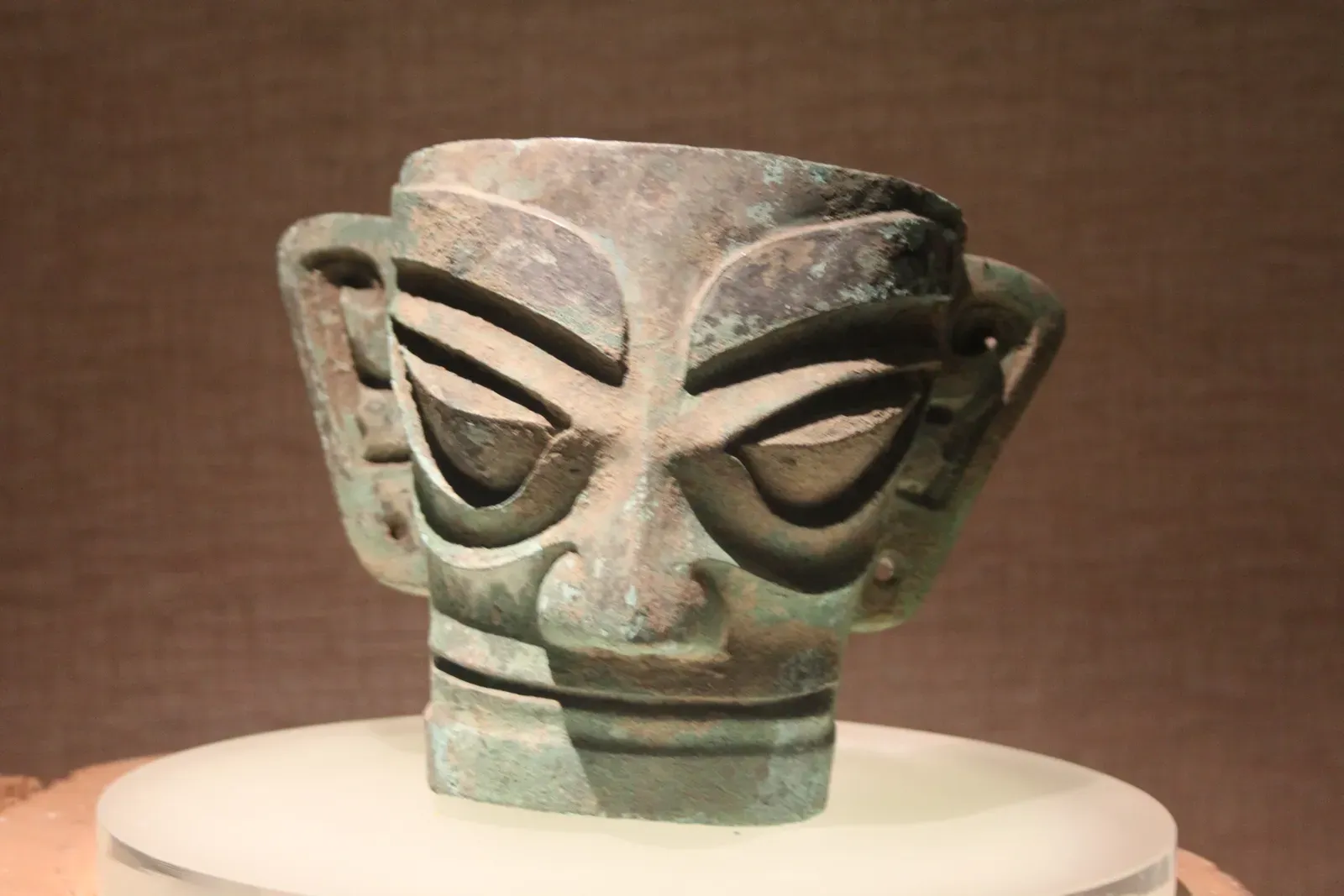
In 1986, farmers digging a brick kiln in Sichuan Province stumbled onto bronze masks with alien-looking, exaggerated features unlike anything in China’s known ancient art. The Sanxingdui site revealed an entire Bronze Age culture – massive bronze trees, gold masks, elongated bronze heads – that flourished roughly 3,000 to 4,500 years ago and left almost no trace in traditional Chinese historical records.
Mainstream Chinese archaeology had long centered the Yellow River basin as the singular cradle of civilization. Sanxingdui proved that a distinct, technologically advanced culture thrived hundreds of miles away, largely independent of that narrative. New excavation pits opened in 2019 and 2020 kept producing artifacts with no clear stylistic ancestor and no clear descendant, and the culture’s writing system, if it had one, remains undeciphered.
#8 – The “Hobbit” Skeleton That Rewrote Human Evolution in Southeast Asia
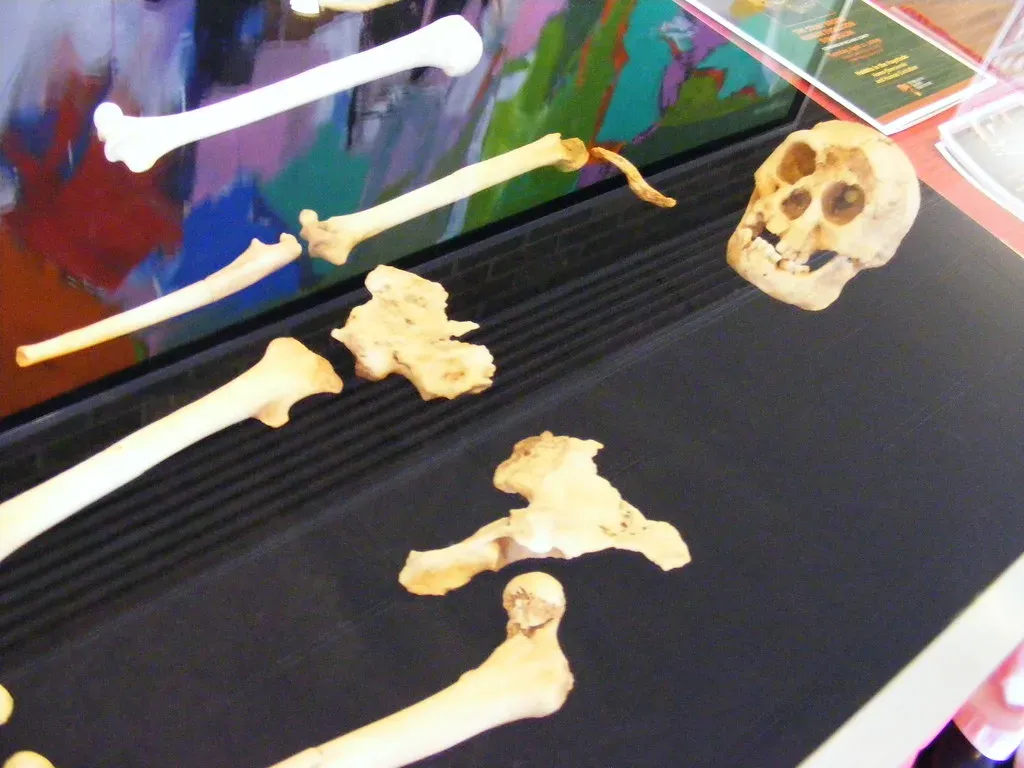
A skeleton barely three feet tall, found in a cave on the Indonesian island of Flores in 2003, initially looked like a diseased modern human. It wasn’t. Homo floresiensis, nicknamed the “hobbit,” turned out to be a distinct, small-bodied hominin species that survived on Flores until surprisingly recently in evolutionary terms.
Southeast Asian human evolution had been treated as a simple side-branch of the bigger out-of-Africa story. This discovery proved isolated island populations could evolve dramatically different body plans, independent of the mainland narrative entirely. Researchers still debate exactly how floresiensis got so small – island dwarfism is the leading theory – but what’s undisputed is that a tiny cave on a tiny island proved island Southeast Asia was far stranger than anyone modeling evolution from African and mainland Asian fossils ever predicted.
#7 – The Skulls in Georgia That Moved “Out of Africa” Back in Time
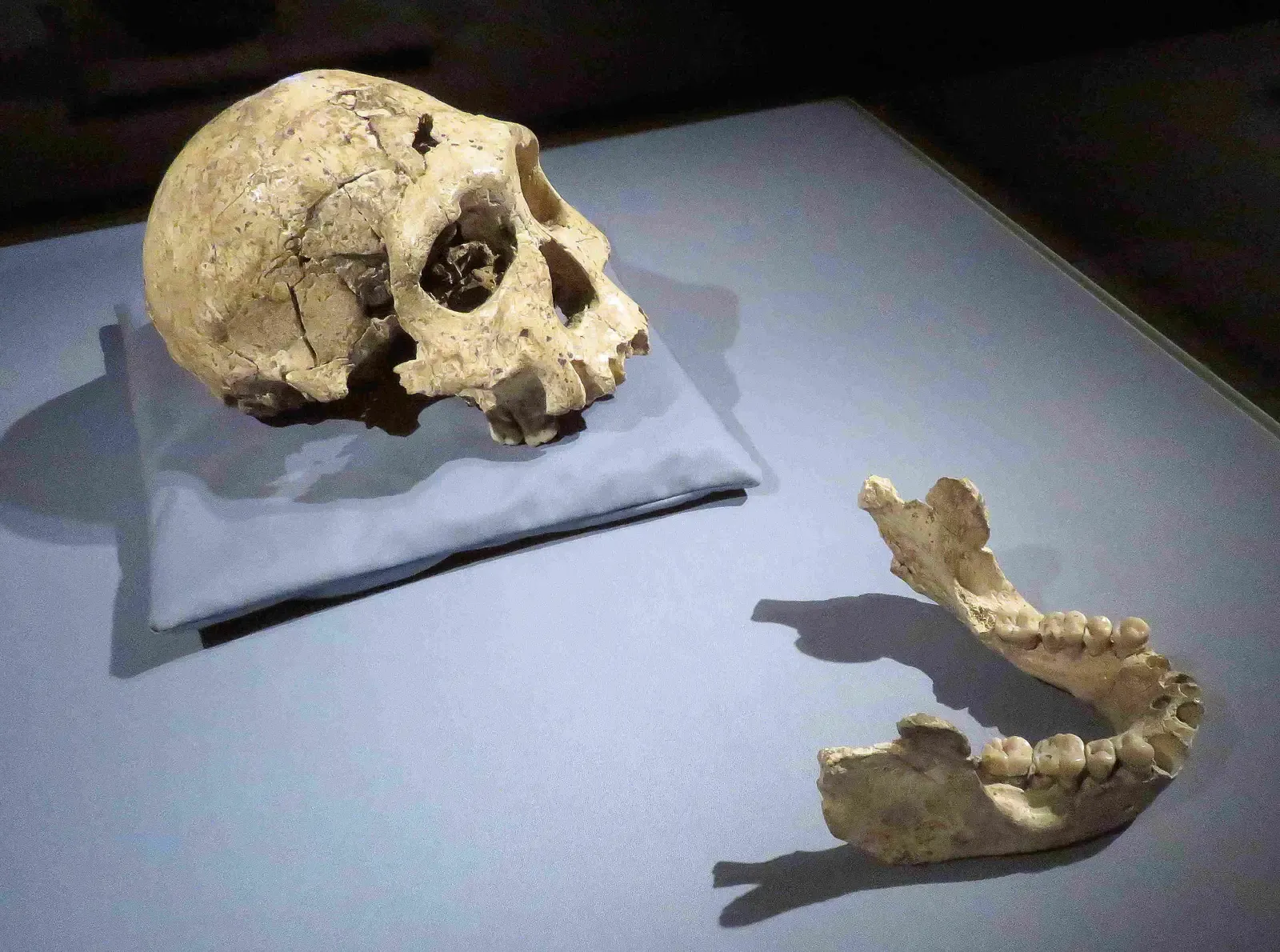
A hillside town in the Caucasus turned out to hold the oldest early human fossils ever found outside Africa – and they didn’t match the story anyone expected. The Dmanisi skulls, excavated in the Republic of Georgia starting in the 1990s and 2000s, date to roughly 1.8 million years old.
That pushed the timeline for early Homo migrating out of Africa back significantly earlier than models built on East Asian and European sites had suggested. Even stranger, the skulls found together showed enormous physical variation in brain size and facial structure despite apparently belonging to the same population. That variation challenged the idea of a single, uniform species spreading in a tidy wave. The Caucasus went from an archaeological afterthought to ground zero for rethinking the earliest human migrations.
#6 – The Siberian Cave That Revealed a “Ghost” Human Species
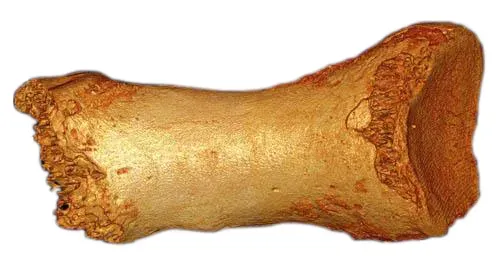
A single finger bone and a few teeth, pulled from a cold Siberian cave, revealed an entire human lineage nobody knew existed. Denisova Cave in the Altai Mountains produced fossil fragments in 2010 that, once genetically sequenced, belonged to neither Homo sapiens nor Neanderthals.
Scientists named this new lineage the Denisovans, and genetic testing later showed their DNA persists today in some modern populations across Asia and Oceania. The cave’s real shock came from stratigraphy: Denisovan, Neanderthal, and modern human remains were all found layered in the same small cave system, meaning multiple distinct human species were cycling through the exact same shelter, possibly overlapping in time. Central and Northern Asia had been treated as a genetic dead zone in the human story. One cave proved it was actually a crossroads.
Worth Knowing
- The finger bone that started it all belonged to a girl who was between 5 and 7 years old when she died.
- Researchers sequenced her genome from DNA extracted from the bone and found the group contributed 4–6% of the genomes of present-day Melanesians.
- A later bone fragment nicknamed “Denny” turned out to be the daughter of a Neanderthal mother and a Denisovan father – the first direct evidence of interbreeding between two archaic hominin groups.
- Despite the overlap in remains, researchers now think occupation of the cave was most likely sequential rather than simultaneous.
#5 – The Illinois Mounds That Proved Pre-Columbian North America Had Real Cities
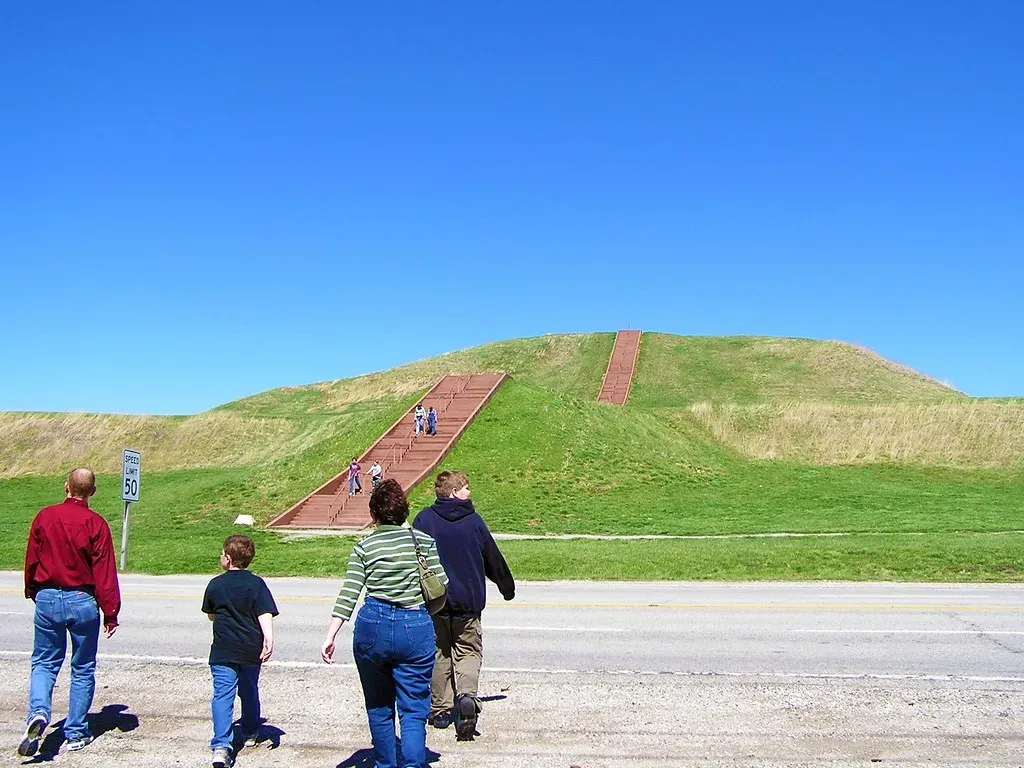
Just across the Mississippi River from modern St. Louis sits proof that “primitive hunter-gatherer” was never an accurate description of pre-contact North America. At its peak, from A.D. 1050 to 1200, Cahokia was larger than many European cities of its day, spreading across 6 square miles and encompassing at least 120 mounds.
Archaeologists still disagree about Cahokia’s exact population, but many estimate the city housed 10,000 to 20,000 people, with up to 50,000 more living in the surrounding area – a population that rivaled or exceeded concurrent European cities. Artistic finds included stone tablets carved with images, along with sophisticated copper jewelry and headdresses. The city’s decline is still debated, with climate shifts and internal political strain as leading suspects, but Cahokia forced a total rewrite of how historians describe pre-contact Mississippi Valley society. Most school curricula still haven’t caught up.
#4 – The Amazon Was Never “Untouched” Wilderness
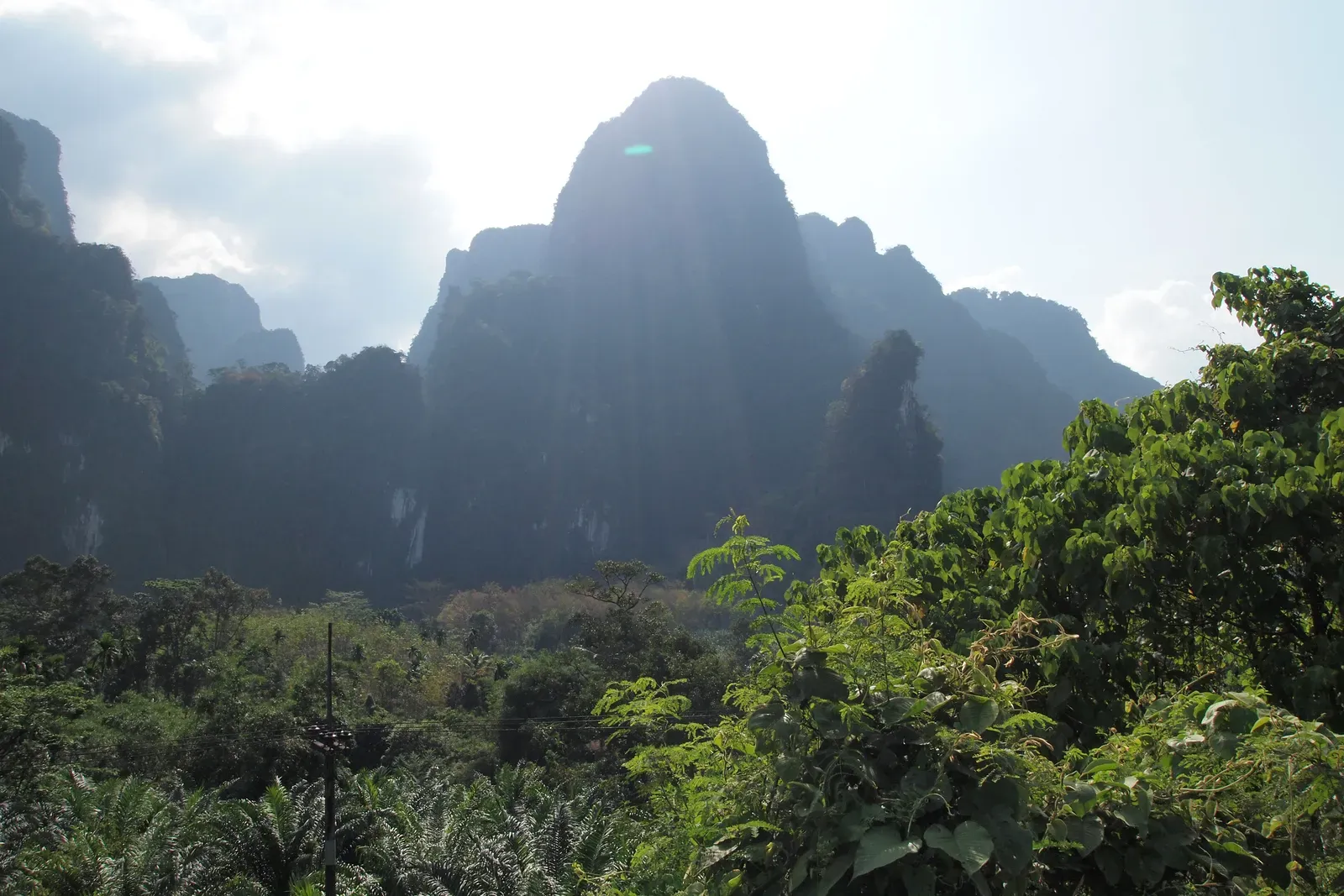
For over a century, the Amazon rainforest was described as one of the last truly pristine, unpopulated wildernesses on Earth. New airborne laser scans just proved that was completely wrong. Until two decades ago, the scientific consensus held that no civilization had occupied the Amazon before Spanish and Portuguese conquistadors arrived.
New scans surveying over 1,737 square miles of western Brazil’s rainforest have rewritten that history entirely. Researchers led by archaeologist Martti Pärssinen at the University of Helsinki uncovered more than 400 well-preserved earthwork monuments belonging to a civilization now called the Aquiry, with an estimated population of 1.25 to 3 million people across roughly 71,000 square miles. If similar densities exist elsewhere in Amazonia, the total pre-Columbian population of the region could reach tens of millions. Not every archaeologist agrees with those extrapolations – some caution the numbers may reflect repeated relocation rather than dense permanent settlement – but it’s a healthy scientific fight that’s nowhere near settled.
Quick Compare
- Old assumption: pristine, unpopulated wilderness untouched until European contact.
- New evidence: laser scans of over 1,737 square miles turned up more than 400 earthwork monuments from the Aquiry culture.
- Scale: an estimated 1.25 to 3 million people once lived across roughly 71,000 square miles of that region.
- Still contested: some researchers question whether those densities apply across the wider Amazon basin.
#3 – The Cave Species That Complicated Human Evolution in Africa Itself
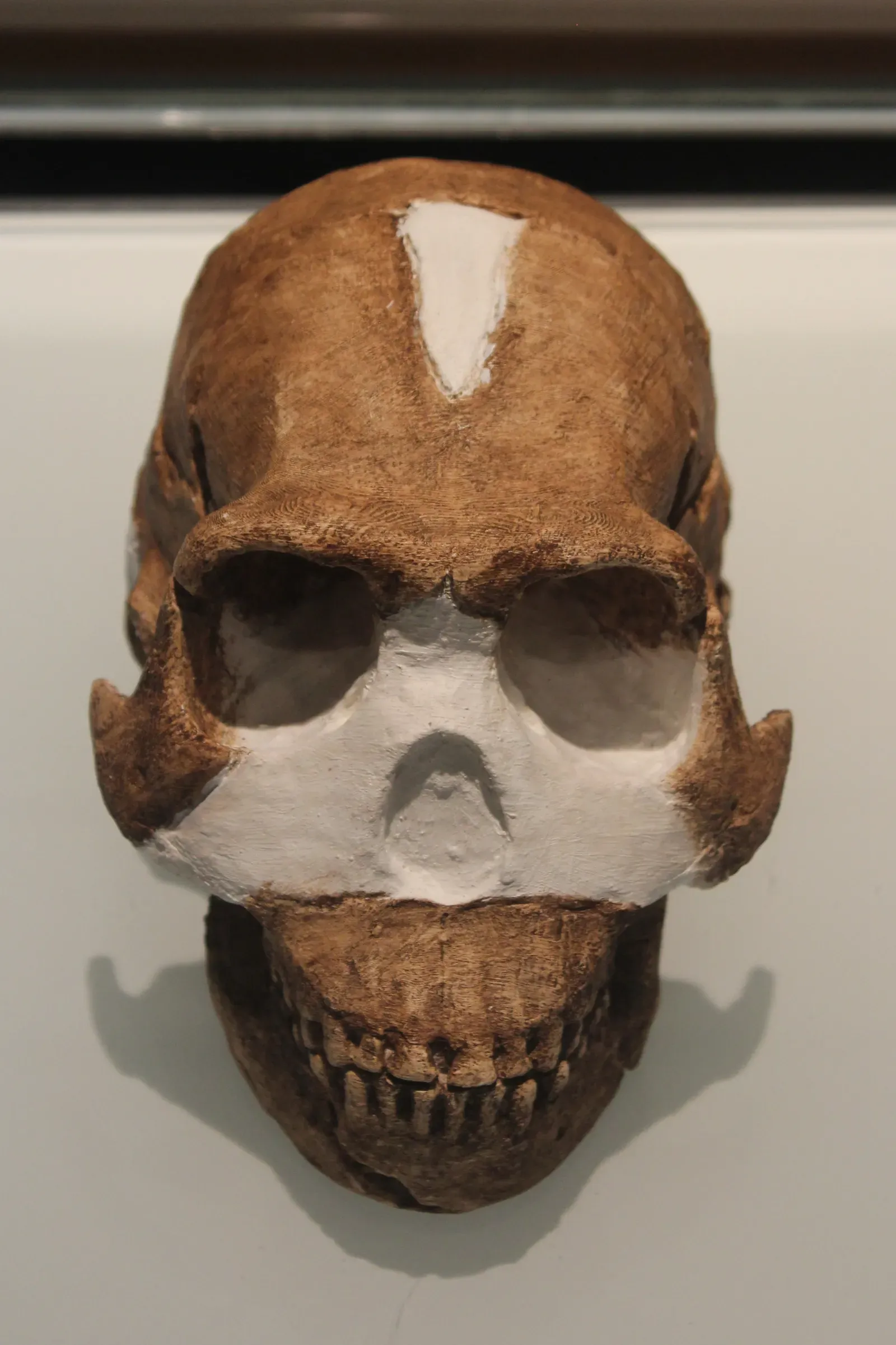
Everyone assumes human evolution in Africa was a single, tidy path leading straight to us. A cave outside Johannesburg proved that’s dead wrong. Fossil hominins were first discovered in the Dinaledi Chamber of the Rising Star Cave system in October 2013, and over 1,550 specimens from at least 15 individuals were eventually recovered from the site.
The species, Homo naledi, had a brain roughly the size of an orange but humanlike hands, wrists, and feet – a combination nobody expected to find together. In 2017, the fossils were dated to between 335,000 and 236,000 years ago, meaning this small-brained species was alive at roughly the same time modern humans were emerging elsewhere on the continent. Previously, only large-brained modern humans or their close relatives were thought to exist that late in subequatorial Africa. Recent claims of deliberate burial and even engraved rock art at the site remain contested, but the core finding already forced a total rewrite of southern Africa’s evolutionary story.
#2 – Footprints in the New Mexico Desert Rewrote the Entire American Timeline
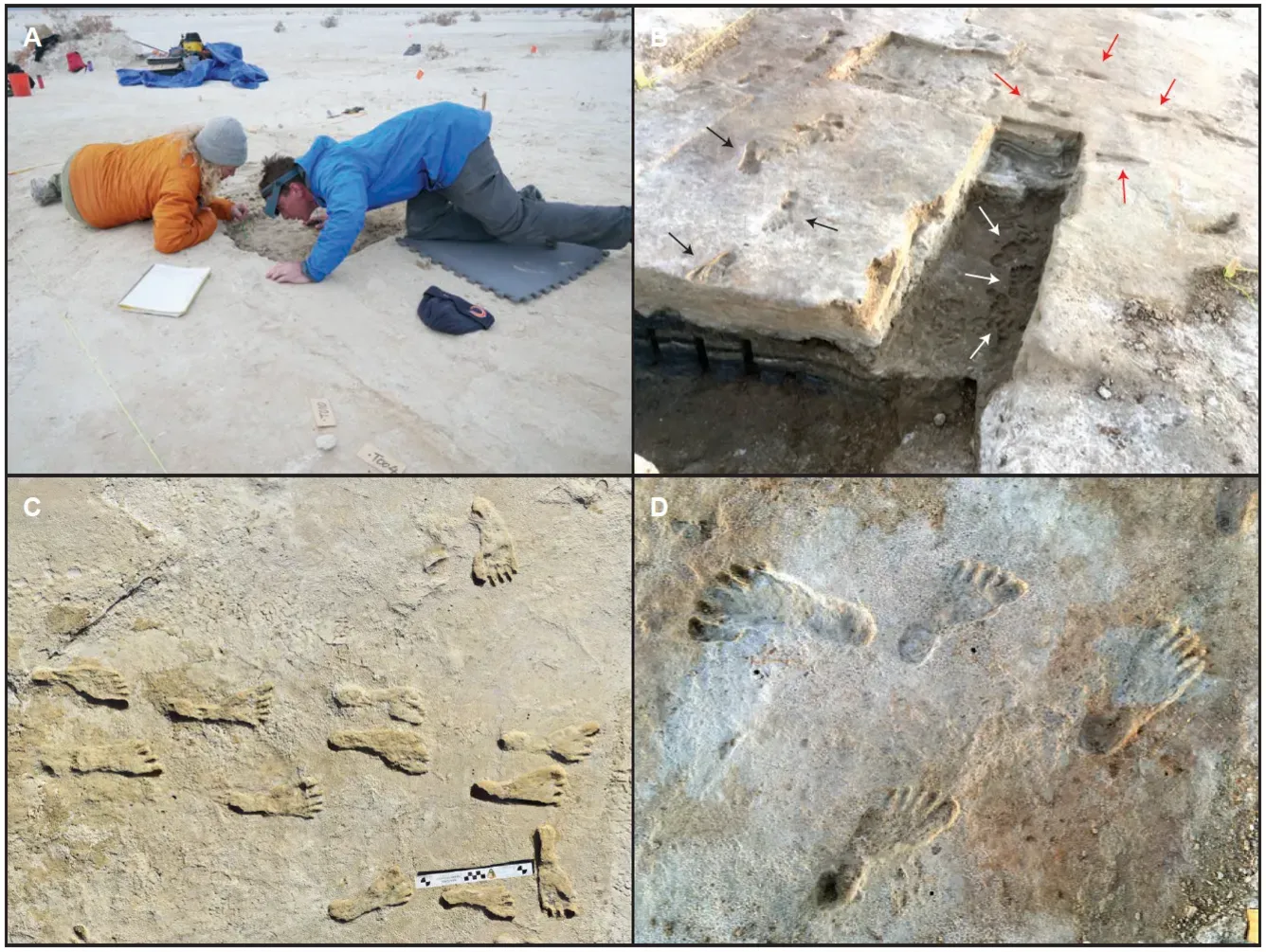
For nearly a century, the “Clovis-first” model insisted no human set foot in the Americas earlier than about 13,000 years ago. A set of fossilized footprints just buried that theory for good. Research at White Sands National Park in New Mexico uncovered the oldest known human footprints in North America, revealing occupation of the Tularosa Basin beginning at least 23,000 years ago.
Excavation revealed eight separate horizons of footprints, containing 61 human tracks left by up to 16 people, mostly teens and children. The dates were fiercely contested for years since they contradicted decades of Bering land bridge migration models, but after the tracks were first dated to between 20,000 and 23,000 years ago in 2021, researchers returned with multiple independent dating methods and confirmed the same range. One doctoral researcher on the team put it bluntly: “It basically contradicts everything that we’ve been taught about the peopling of North America.” An entire hemisphere’s settlement timeline just got pushed back roughly 10,000 years.
#1 – Göbekli Tepe Broke the Oldest Rule in Archaeology
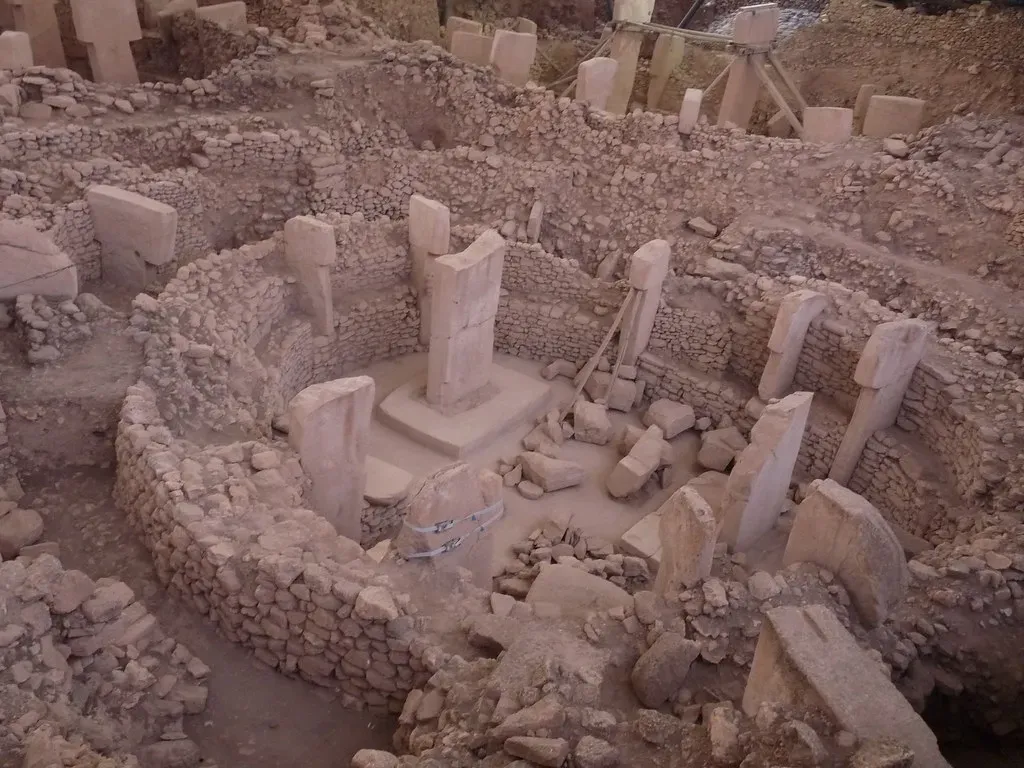
For over a century, one rule was treated as archaeological gospel: agriculture comes first, then religion and monuments follow. A hilltop in southeastern Turkey proved that rule backward. In 1994, German archaeologist Klaus Schmidt uncovered a massive temple complex built around 9500 BCE by hunter-gatherers who, according to everything archaeologists thought they knew, shouldn’t have been capable of such monumental construction.
Dating to roughly 9600–8000 BCE, the site predates Stonehenge by over 6,000 years and predates the advent of agriculture by several millennia. The social organization required to build and maintain a site like Göbekli Tepe likely created the conditions under which agriculture became necessary – and eventually inevitable. Excavations even recovered thousands of grinding tools, evidence that feeding huge gathered crowds may have driven farming’s invention rather than the other way around. Schmidt argued the enormous labor force needed to build the enclosures pushed people toward agriculture just to keep workers fed, flipping causation on its head – and quietly rewriting an entire region’s founding myth about the birth of civilization.
Why It Stands Out
- Predates Stonehenge by more than 6,000 years and predates farming itself by several millennia.
- Built starting around 9600 BCE by hunter-gatherers with no known permanent villages, metal tools, or domesticated crops.
- Discovered in 1994 by German archaeologist Klaus Schmidt, who spent much of the rest of his career excavating it.
- Thousands of grinding tools recovered on site suggest feeding construction crews may have driven the invention of farming, not the other way around.
The Bottom Line
Here’s the uncomfortable truth these 13 finds share: almost every regional history we’ve been taught was built on incomplete evidence and confident guesswork, not settled fact. Göbekli Tepe proved religion came before farming. White Sands proved humans crossed into the Americas 10,000 years earlier than the textbooks claimed. The Amazon proved it was never empty at all.
Archaeology isn’t a finished story – it’s an active argument, and the ground keeps winning. I’d argue the real lesson isn’t that experts were lying to us; it’s that they were working with maybe 5% of the picture and presenting it as 100%, because that’s what confident institutions do until a shovel proves them wrong. Which of these findings genuinely surprised you the most? And if we missed a discovery that flipped your own region’s history upside down, that’s the gap in the record worth chasing next.