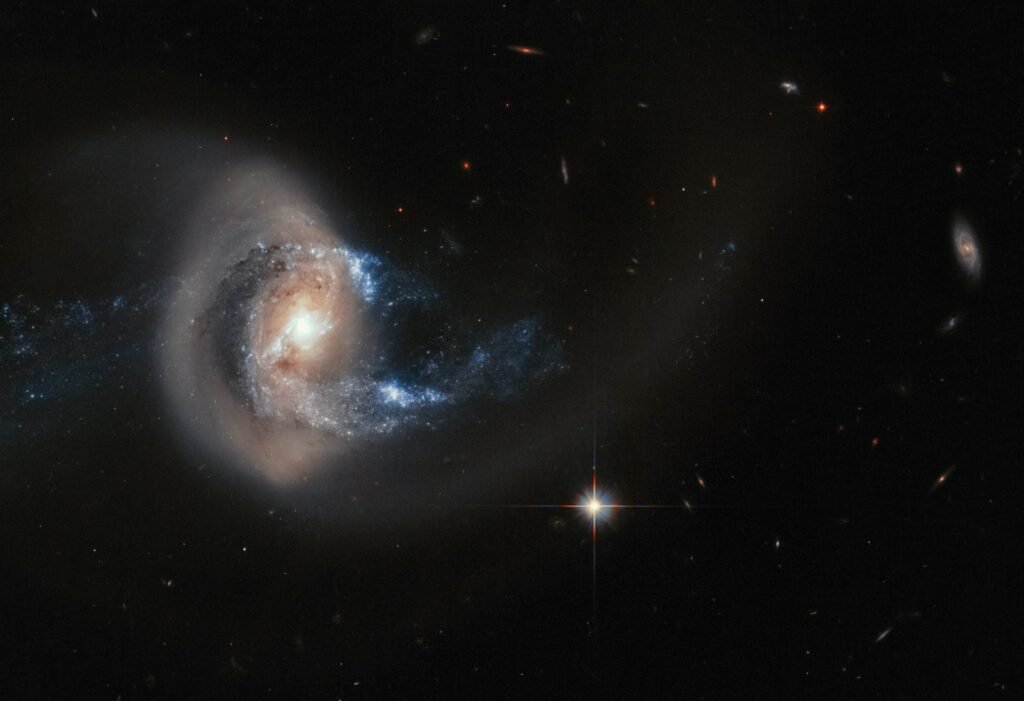

The universe is supposed to play by rules, yet the more precisely astronomers measure those rules, the stranger the cosmos begins to look. From galaxies that rotate as if gripped by invisible hands to cosmic flashes that outshine entire galaxies for a heartbeat, the sky keeps slipping out of our theoretical grasp. Every major telescope upgrade in the last two decades has solved some puzzles but opened even deeper ones, like pulling on a loose thread and watching the whole cosmic sweater unravel. These mysteries are not just scientific curiosities; they hint that our understanding of gravity, matter, and even time itself may be incomplete. Here are twelve astronomical phenomena that continue to defy full explanation, even in 2025.
The Dark Matter Problem: Invisible Mass, Visible Impact
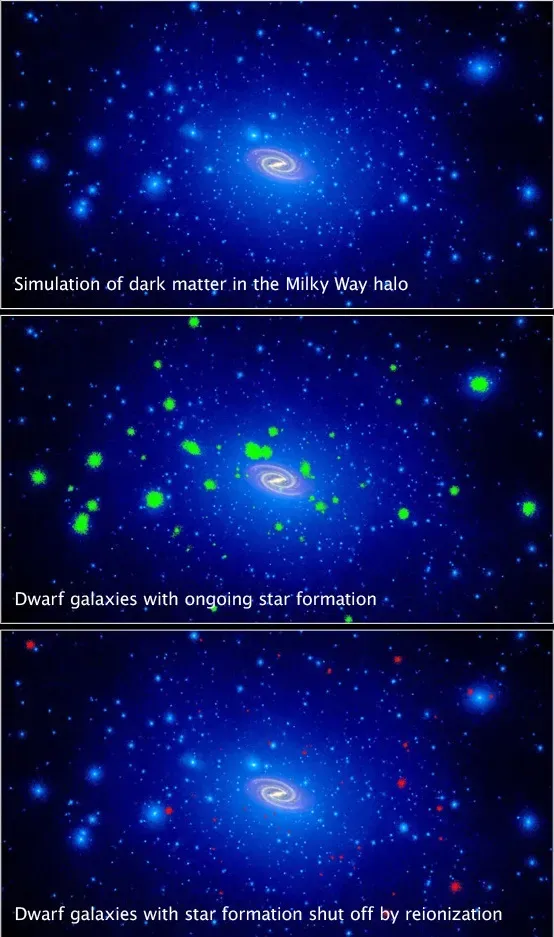
It is hard to overstate how unsettling dark matter really is: most of the matter in the universe appears to be something we cannot see, touch, or detect directly. Astronomers first stumbled onto this problem when they noticed galaxies rotating too fast; by all normal calculations, stars at their edges should have flown off into space long ago. Instead, they hold together as if cocooned in massive halos of unseen material. Gravitational lensing – where massive objects bend light – adds to the evidence, revealing far more mass than what telescopes can actually observe in stars and gas.
Despite decades of effort, detectors buried deep underground and experiments at particle colliders have not yet produced a definitive dark matter particle. Some researchers suspect exotic particles like WIMPs or axions, while others argue that perhaps gravity itself needs to be modified at large scales. This debate is not just academic; dark matter shapes the large-scale structure of the cosmos, from galaxy formation to cosmic filaments stretching across billions of light-years. Until we pin down what dark matter truly is, every cosmological model we build carries a massive asterisk. It is the universe’s biggest missing piece of the puzzle.
Dark Energy and the Runaway Expansion of the Universe
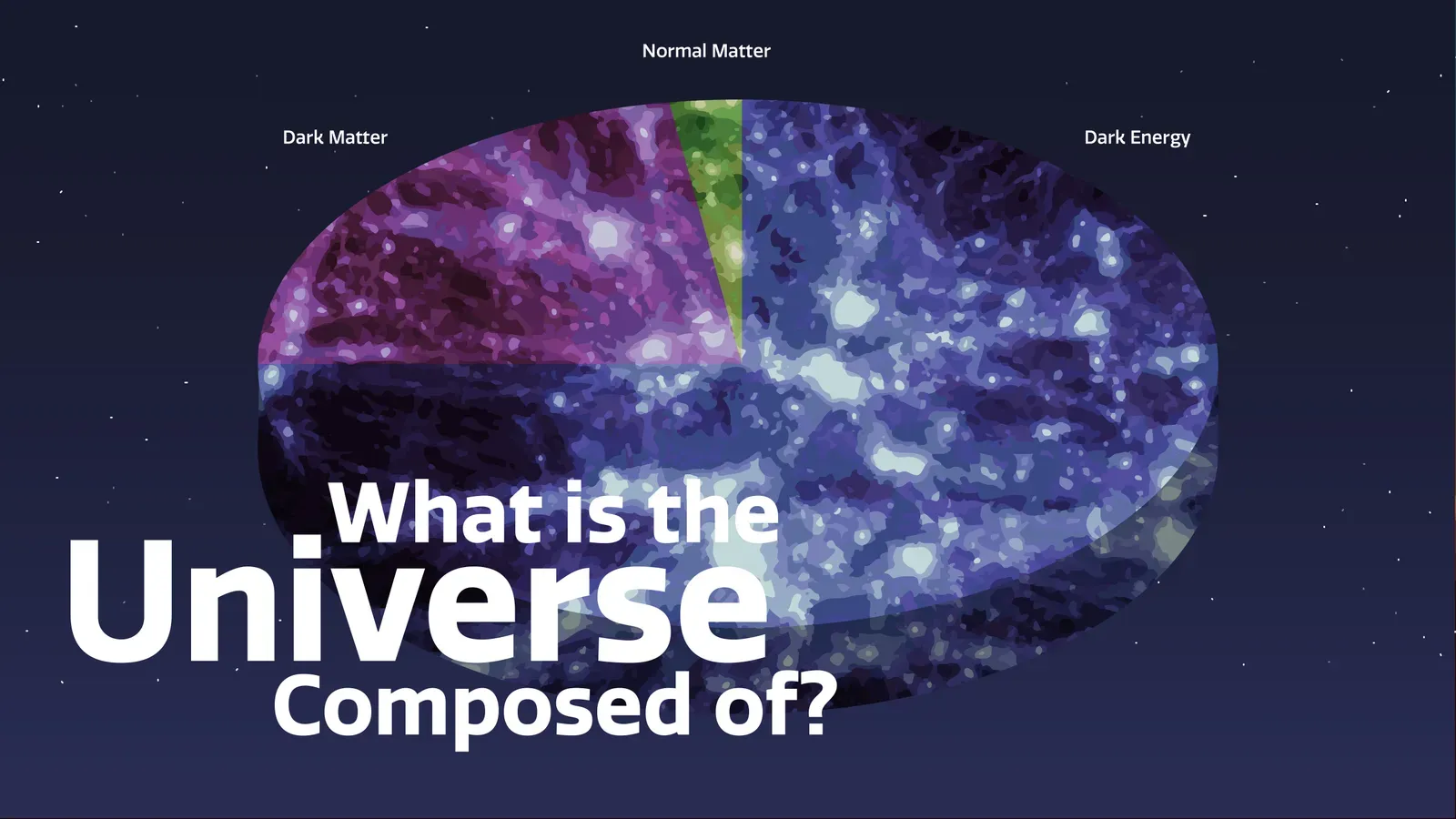
Just when astronomers thought they had the expansion of the universe roughly figured out, distant exploding stars delivered a shocking twist: the expansion is speeding up, not slowing down. This discovery in the late nineteen-nineties forced scientists to revive a long-abandoned concept now called dark energy, a kind of energy embedded in space itself that drives galaxies apart. Today, dark energy is thought to make up roughly about two thirds of the universe’s total energy budget, yet we have no clear idea what it actually is. It behaves like a repulsive pressure, pushing on the fabric of spacetime and accelerating the cosmic expansion.
Competing theories try to tame this phenomenon, from a simple cosmological constant that never changes to more exotic ideas where dark energy slowly evolves over time. Observations from cosmic microwave background maps, galaxy surveys, and supernova catalogs help narrow the possibilities, but they also expose tensions: different measurement methods sometimes disagree on the exact expansion rate. That mismatch might just be measurement error – or it might be a sign that something profound is missing from our understanding of the cosmos. Dark energy is less like a solved equation and more like a haunting whisper in the data, reminding us that our grasp of cosmic fate is still shaky. In a sense, the ultimate future of the universe is governed by a force we cannot yet define.
Fast Radio Bursts: Millisecond Flashes from the Unknown
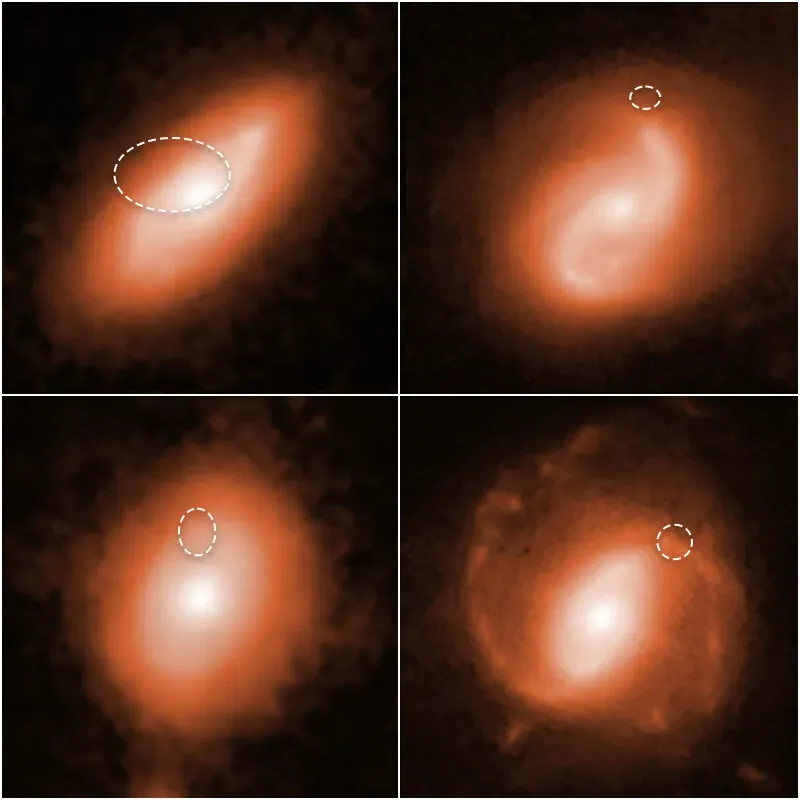
Imagine staring at a dark, quiet sky and suddenly, for a thousandth of a second, the universe screams in radio waves before going silent again. That is the drama of fast radio bursts, or FRBs, mysterious flashes that carry tremendous energy across billions of light-years. They were first discovered accidentally in archived data, and for a while many astronomers wondered if they were glitches, or even interference from human technology. But the detections kept mounting, with telescopes around the world spotting more of these millisecond pulses, often from far outside our galaxy. Some sources even repeat, flashing again and again from the same spot in the sky.
The leading ideas range from highly magnetized neutron stars to collisions between compact objects, but none can fully explain the diversity of FRBs now cataloged. A few have been linked to magnetars – extreme neutron stars with powerful magnetic fields – yet others originate in environments that do not match those conditions. What makes FRBs so tantalizing is that they are not rare blips; the sky might be producing them thousands of times a day, most too faint or too fleeting for our instruments to catch. That turns every new radio telescope into a kind of cosmic eavesdropper, listening for these strange, distant shouts. Until we understand their engines, FRBs remain a reminder that the universe still has ways of surprising us in less than the blink of an eye.
Tabby’s Star and the Puzzle of Flickering Suns
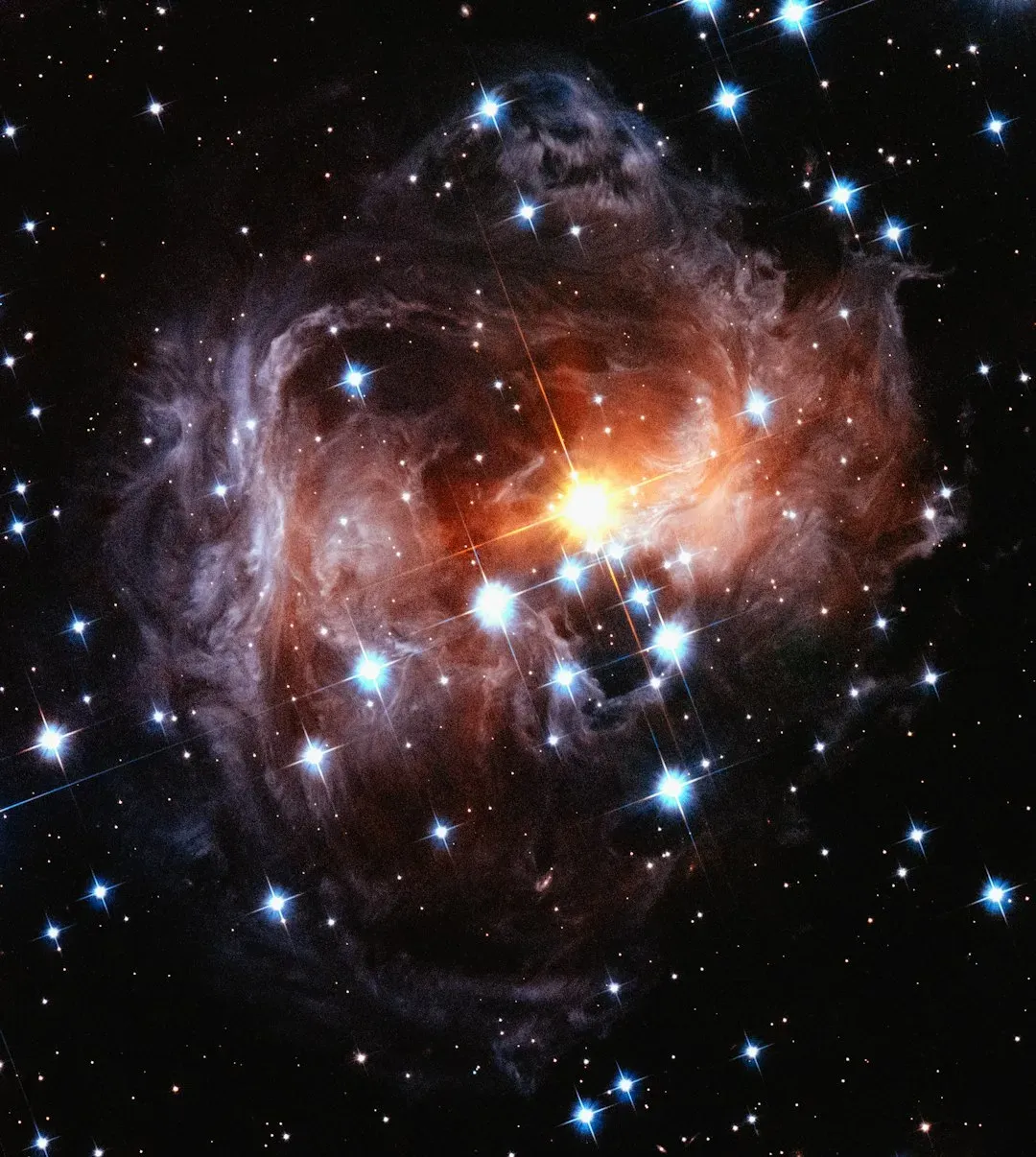
When citizen scientists combing through space telescope data flagged one particular star dimming in bizarre, uneven patterns, astronomers at first suspected a simple software issue. Instead, they had stumbled on Tabby’s Star, a sunlike star whose light drops by odd amounts and at irregular intervals, as if huge, misshapen objects were drifting across its face. Unlike the smooth, predictable dips caused by planets, this star’s light curve looked jagged and chaotic. Early speculations spiraled from swarms of comets to giant dust clouds, with some even floating the idea of advanced civilizations building megastructures. That more sensational angle grabbed headlines, but the mystery did not go away when the hype faded.
Follow-up observations suggest that dust is likely involved, because the dimming is stronger at some wavelengths than others, yet the exact pattern remains hard to reproduce with standard models. More puzzling still, the star appears to have slowly faded over years or decades, a behavior that is not common for stars of this type. Many other odd “dippers” have now been found, hinting that Tabby’s Star might be part of a broader, poorly understood class of variable stars. The episode revealed something profound about astronomy today: even in the age of precision space telescopes, a strange light curve can still leave experts shrugging. It also showcased the power of public involvement, since sharp-eyed volunteers were the first to notice that this star simply did not behave like it should.
Ultra-High-Energy Cosmic Rays That Should Not Exist
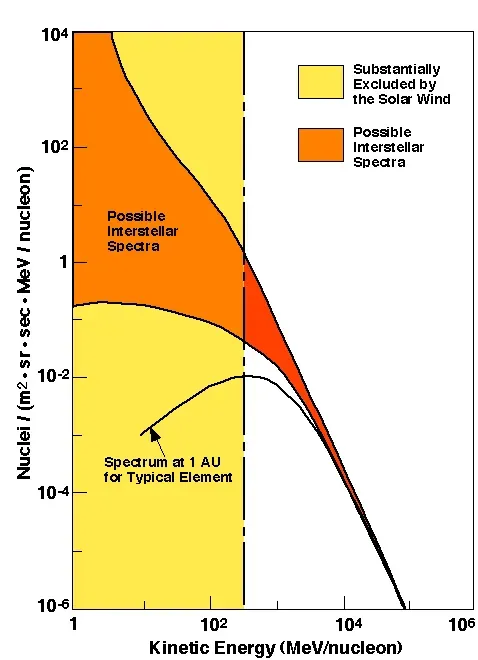
Every second, Earth is bombarded by subatomic bullets called cosmic rays, mostly harmless particles from the sun and distant stars. But hidden in that steady drizzle are occasional monsters: ultra-high-energy cosmic rays so powerful that they make particle accelerators like the Large Hadron Collider look almost modest. These rare particles carry energies that, according to theory, should be nearly impossible to maintain over vast intergalactic distances. Interactions with the cosmic microwave background radiation ought to sap their energy long before they arrive here, a limit known in theory. Yet observatories in the Americas and Asia have recorded particles seemingly right up against, and sometimes apparently beyond, that threshold.
The big question is where such particles are born. Candidates include active galactic nuclei, the turbulent jets around supermassive black holes, or violent shocks in galaxy clusters, but the arrival directions of the highest-energy particles do not clearly point back to any obvious source. Even the exact composition – whether they are mostly protons or heavier nuclei – remains under debate, changing how easily they are bent by cosmic magnetic fields. Understanding these particles would open a window on the most extreme accelerators nature has built, far beyond anything human engineers can manage. For now, each event is like finding a single, cryptic postcard from some ferocious corner of the universe, with the return address half-smudged.
The Axis of Evil: Strange Alignments in the Cosmic Microwave Background
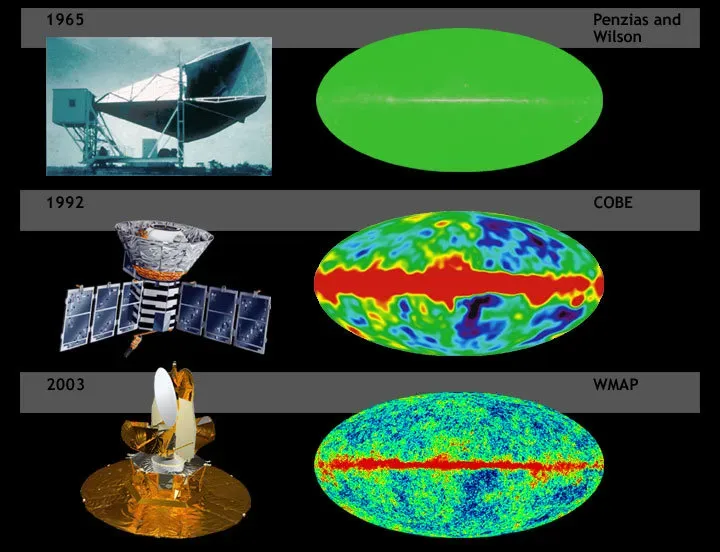
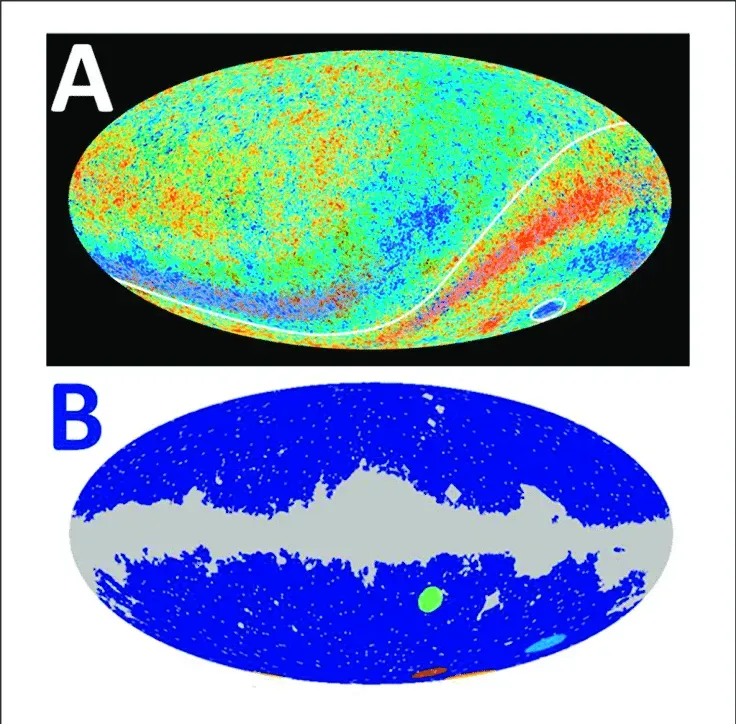
When satellites mapped the cosmic microwave background – the afterglow of the Big Bang – they produced one of the most beautiful and important images in science. Embedded in that faint radiation are tiny temperature variations, the seeds of all future galaxies and clusters. But buried in the data is something awkwardly nicknamed the Axis of Evil: large-scale patterns and alignments that seem to pick out a special direction in the sky. That is troubling because standard cosmology says the universe on the largest scales should look statistically the same in every direction.
Some researchers argue that these alignments might be flukes, the cosmic equivalent of seeing faces in clouds when you stare long enough. Others suspect subtle data-processing artifacts or foreground contamination from our own galaxy. Yet the oddities have persisted across multiple satellite missions, each with improved instruments and independent analysis pipelines. If they turn out to be real, they might hint at new physics in the early universe, or even a breakdown of the assumptions behind our cosmological models. It is an uncomfortable possibility: that our map of the primordial universe carries a faint fingerprint we do not yet know how to interpret.
Matter–Antimatter Imbalance: Why Anything Exists at All
On paper, the laws of physics treat matter and antimatter almost like mirror twins. When the universe was young and hot, it should have created nearly equal amounts of both. But if that were the whole story, matter and antimatter would have annihilated each other, leaving behind only a sea of light and no atoms, no stars, and certainly no people to wonder about it all. Instead, for reasons not fully understood, matter won by a slim margin, leaving a tiny surplus that now makes up everything we see. The question of why the universe has more matter than antimatter is one of the most profound open puzzles in cosmology.
Experiments have found small asymmetries in how certain particles and their antiparticles decay, but these known effects are not nearly strong enough to explain the cosmic imbalance we observe. That suggests there must be additional, hidden processes that tipped the scales shortly after the Big Bang. Physicists are hunting for clues in high-energy collisions, rare decays, and precise measurements of neutrinos, which might behave very differently from other particles. This problem is not just an abstract curiosity; it is the reason there is a physical universe rather than a featureless bath of radiation. In a way, every galaxy in the night sky is evidence that something crucial is still missing from our understanding of fundamental physics.
Why These Cosmic Mysteries Matter
It is tempting to see these puzzles as isolated oddities, like a handful of weird stars and equations that do not quite balance. But step back and a pattern emerges: dark matter, dark energy, cosmic rays, and matter–antimatter asymmetry all point to gaps in our most successful theories. The standard model of particle physics and the standard cosmological model together describe a universe whose visible matter and well-understood forces are only a small fraction of the whole. That is like mastering the rules of chess but realizing the board is sitting on an ocean you barely understand. Each anomaly challenges comfortable assumptions about gravity, spacetime, and the nature of energy itself.
Historically, such cracks in established theory have led to revolutions. The failure of Newtonian mechanics to explain Mercury’s orbit helped usher in general relativity, and small irregularities in blackbody radiation paved the way to quantum mechanics. In the same way, today’s astrophysical oddities could hint at a deeper, more unified picture of reality, one that might tie gravity and quantum physics into a single framework. There is also a humbling human element here: these mysteries remind us that scientific knowledge is not a static monument but a living, evolving conversation with the universe. The fact that the cosmos still outruns our models is not a failure; it is an invitation to keep asking better questions.
The Future Landscape: New Telescopes, New Anomalies
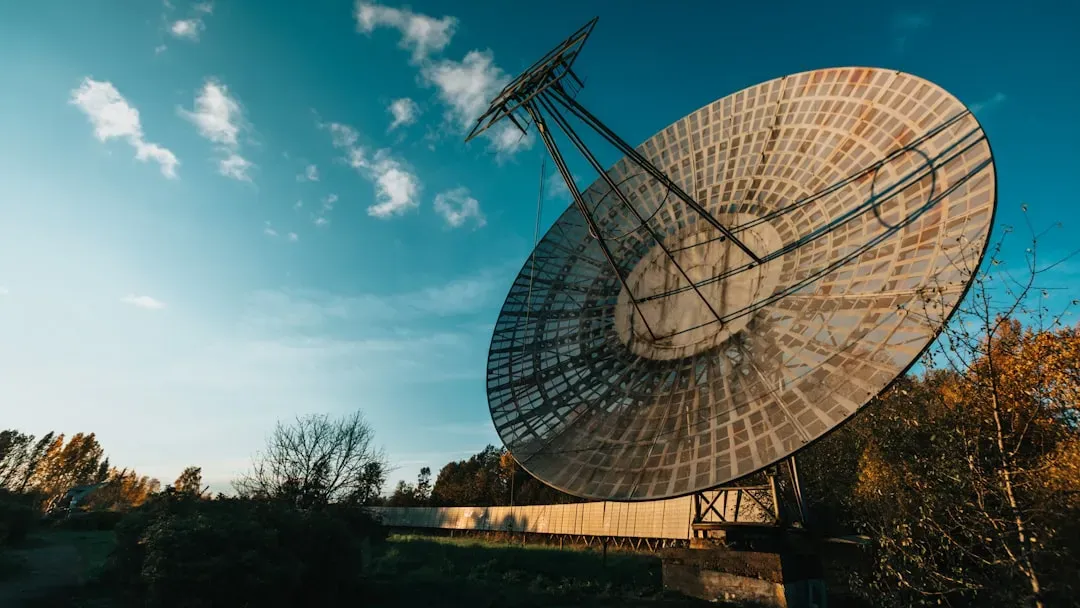
Over the next decade, an armada of new observatories will turn these questions from hazy speculation into sharper tests. Ground-based projects mapping the distribution of galaxies will probe dark energy’s fingerprints with far greater precision, while powerful radio arrays will catch thousands of fast radio bursts and maybe pin down their sources. Space telescopes sensitive to infrared light will peer back to the first generation of galaxies, where the influence of dark matter and the early universe’s conditions are encoded. At the same time, upgraded cosmic-ray detectors and neutrino observatories will continue watching for the most energetic events nature can produce. Each of these tools is designed not only to confirm existing models but to stress-test them to the breaking point.
Yet progress will not be smooth. Big telescopes are complex, expensive, and politically fragile, often depending on international cooperation that can be shaken by events on Earth. Data analysis will be another bottleneck, as astronomers drown in petabytes of observations that require new machine-learning tools just to sift for anomalies. There is a real chance that some of the universe’s odd behaviors will become clearer, while others only grow more confusing under the spotlight of better instruments. Still, that is the bargain scientists accept: better measurements do not guarantee neat answers, only more honest ones. The global effort to map, time, and weigh the cosmos is really an effort to see how far into the dark our curiosity can reach.
How You Can Stay Engaged with Cosmic Discovery
These mysteries might seem distant, but the process of uncovering them is surprisingly open to anyone with curiosity and a bit of persistence. Many of the strangest findings of the past decade, including stars with odd dimming patterns and unusual transient events, have involved volunteers sifting through real telescope data online. Citizen-science platforms allow people to classify galaxies, flag unusual light curves, and help train algorithms to spot rare phenomena. You do not need a physics degree; you just need patience and a willingness to learn a new kind of pattern recognition. In a quiet way, it turns stargazing into a collaborative, global investigation.
There are also simpler ways to plug in. Following updates from major observatories, science journals, and reputable outreach organizations can turn breaking cosmic news into part of your daily information diet. Supporting public funding for basic research, whether through voting, advocacy, or education, helps keep ambitious telescopes and experiments from being quietly shelved. Even sharing accurate, nuanced explanations of these cosmic puzzles in your own circles can counter misinformation and spark new interest. The universe does not get less mysterious just because we ignore it; but it does become more meaningful when more of us take part in the search to understand it.
Suhail Ahmed is a passionate digital professional and nature enthusiast with over 8 years of experience in content strategy, SEO, web development, and digital operations. Alongside his freelance journey, Suhail actively contributes to nature and wildlife platforms like Discover Wildlife, where he channels his curiosity for the planet into engaging, educational storytelling.
With a strong background in managing digital ecosystems — from ecommerce stores and WordPress websites to social media and automation — Suhail merges technical precision with creative insight. His content reflects a rare balance: SEO-friendly yet deeply human, data-informed yet emotionally resonant.
Driven by a love for discovery and storytelling, Suhail believes in using digital platforms to amplify causes that matter — especially those protecting Earth’s biodiversity and inspiring sustainable living. Whether he’s managing online projects or crafting wildlife content, his goal remains the same: to inform, inspire, and leave a positive digital footprint.