
You’d think a retracted study comes with an autopsy report – a clear, public explanation of exactly what went wrong so nobody repeats the mistake. That’s the myth. The reality is messier and a lot more unsettling.
Dozens of high-profile findings have been pulled from journals over the years with nothing more than a one-line “withdrawn” tag, no post-mortem, no accounting of what was fabricated or flawed, and no roadmap for the doctors, policymakers, and readers who already built decisions on top of them. Below are 11 real categories of research that vanished from the record without a proper correction ever following them out the door – and why that silence is doing more damage than most people realize.
#11 – Nutrition Studies That Quietly Vanished

It sounds almost comic, but some of the most shared “superfood” and “miracle diet” claims trace back to studies that were later withdrawn with no correction explaining the flaws. A paper disappears from a journal’s website or gets tagged “withdrawn,” while the sensational headline it triggered stays permanently indexed on blogs, in press releases, and in your aunt’s Facebook feed.
Most people never see the quiet publisher’s note. They just remember that red wine, dark chocolate, or some fad diet was “proven by science.” The real reasons are usually mundane but serious – undisclosed conflicts of interest, statistical errors, unapproved protocol changes – yet instead of a transparent breakdown, the record is left with a black hole. Researchers call this a “ghost retraction,” because the paper is technically gone but its influence keeps haunting future work.
Fast Facts
- Retraction: a paper is formally pulled, ideally with a public notice explaining exactly what went wrong.
- Withdrawal: a quieter removal, often used instead of a full retraction, frequently with little to no explanation attached.
- Correction: the paper stays published, but specific errors are fixed and explained openly for readers.
- Ghost retraction: the original paper vanishes from view, yet its headline claim keeps circulating in articles and social feeds.
#10 – Psychology Experiments That Failed Replication
Psychology has spent the last decade in the middle of a full-blown replication crisis, and some of its flashiest findings were withdrawn without journals ever publishing a full correction or a real post-mortem. A study claims a dramatic effect – subtle “priming” cues supposedly changing how people behave – and then independent teams simply can’t reproduce it. When the questions pile up high enough, someone quietly requests a withdrawal, but almost nobody explains exactly why the original conclusion collapsed.
For the public, this creates a strange split reality. Popular science books and TED talks keep citing the original “wow” result while insiders privately treat the paper as dead weight. Without an explicit correction, future meta-analyses may still fold in the withdrawn data or overstate how strong the evidence really was – and that ripple effect reaches workplace training programs and school policy decisions that have nothing to do with academia.
#9 – Preclinical Cancer Papers With Irreproducible Data
In oncology, early-stage research on cell lines or lab mice can spark enormous excitement – and, frankly, enormous funding. But some of the most hyped cancer targets were later tied to irreproducible Western blots, image manipulation, or missing raw data, leading to a retraction or withdrawal with no corrective article ever published. The original paper sparks a wave of follow-up studies, patents, and startup companies, while the eventual “withdrawn” label gets buried on a publisher’s database page that almost nobody visits.
The downstream cost is what makes this genuinely troubling. Labs can spend years and millions of dollars chasing a target that never had solid evidence behind it in the first place. Patients sometimes enroll in early-phase trials based on a biological mechanism described in a paper that no longer stands, and when journals pull the plug without explaining which specific findings are unreliable, entire research teams are left guessing whether to abandon the whole line of work or salvage pieces of it.
Worth Knowing
- A landmark 2012 industry review found Amgen scientists could reproduce the results of only 11% of 53 “landmark” preclinical cancer papers they tried to confirm.
- A separate review at Bayer reported a similarly rough track record, successfully replicating roughly a quarter of the in-house cancer studies it revisited.
- In many cases, the original papers had already spawned patents, startups, and follow-up funding long before any of these concerns became public.
#8 – COVID-Era Clinical Analyses Pulled in Silence
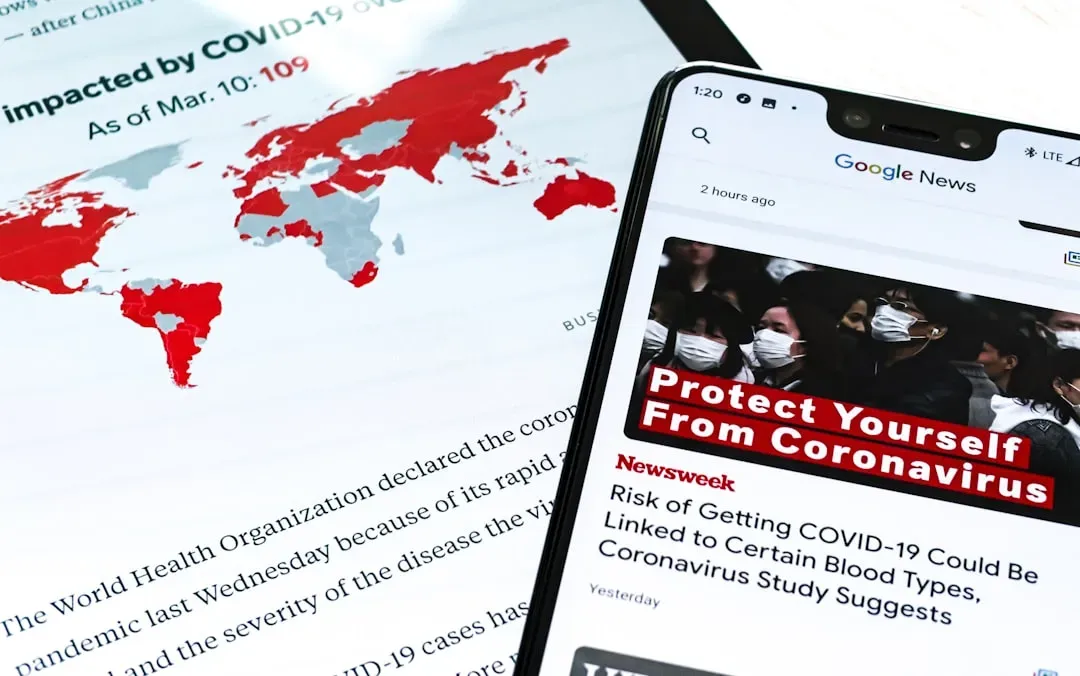
During the early pandemic, data moved faster than data quality control. Several high-profile observational studies and modeling papers were later withdrawn or retracted after data sources couldn’t be verified or key assumptions collapsed, yet no full correction article ever unpacked the damage. The journal’s tag might read “withdrawn at authors’ request,” followed by a single vague sentence, leaving readers to guess which numbers can still be trusted.
The stakes here were never abstract. These papers touched questions like which drugs might work, how deadly a variant really was, or whether early lockdown measures made a measurable difference. Policy decisions and media narratives moved faster than any editorial correction ever could. When the papers quietly disappeared, the tweets, TV segments, and government memos built on them did not – leaving an erased line in the record where a hard, public conversation should have happened instead.
#7 – “Too Good to Be True” Genomics Breakthroughs

Genomics produces headlines like “Scientists Find the Gene For X,” even though the underlying science is almost always far messier than that. Several bold claims about single genes “causing” complex diseases or traits were later withdrawn once sample sizes turned out to be inadequate or statistical thresholds were misused – yet instead of a full correction, some journals simply mark the paper withdrawn and move on with their day.
That difference matters more than it sounds. A proper correction would spell out exactly how the effect size got exaggerated and whether later work supports or contradicts the original claim. Without that, database entries and review articles keep citing the initial “association,” especially when it fits a trendy narrative about personalized medicine. Genomics is already hard enough for non-specialists to interpret; silent withdrawals turn it into a minefield for the clinicians and patients who actually need solid answers.
#6 – Behavioral Economics Papers With Questioned Data

Behavioral economics built its fame on clever experiments proving people don’t behave as rationally as classical theory assumed. Some of the flashiest results – especially the ones with suspiciously large or “cute” effects – later attracted intense data-integrity scrutiny. In a few cases, journals withdrew the papers after anomalous patterns suggested fabrication or heavy-handed “cleaning,” but stopped short of publishing a detailed forensic correction.
That leaves a strange gap between reputation and record. Popular books, corporate trainings, and government “nudge” policies were built on findings that are now technically withdrawn. Because there’s no full correction dissecting what actually went wrong, fans insist the “core insight” still holds while skeptics argue the whole field is built on sand – and a one-word label like “withdrawn” settles absolutely nothing.
#5 – High-Impact Cardiology Trials With Post-Hoc Problems

Clinical trials in cardiology – the ones testing stents, drugs, and interventions – can reshape treatment guidelines and billions of dollars in prescribing overnight. On rare but consequential occasions, a major trial has been withdrawn after site-level irregularities or inconsistencies in event adjudication came to light. Instead of a formal correction detailing every affected endpoint, some journals issue a withdrawal notice barely a page long.
For frontline clinicians, that’s close to a nightmare scenario. Guidelines may still cite the original trial while committees “await clarification” that never really arrives, and hospital formularies sometimes lag years behind a quiet editorial action. Doctors are left combing through conference rumors and partial re-analyses to decide whether to keep following a trial’s recommendations – and when life-or-death decisions hang on that choice, a bare-bones withdrawal isn’t just unsatisfying, it borders on reckless.
Quick Compare
- A real correction: names the flawed data, explains exactly how the conclusions change, and tells clinicians what to do next.
- A bare withdrawal notice: often just a single line, with no breakdown of which results are still usable.
- The practical difference: one gives doctors a clear signal to act on; the other leaves them guessing mid-treatment.
#4 – Environmental Health Papers With Unresolved Conflicts

Studies linking pollutants, industrial chemicals, or pesticides to health outcomes are politically radioactive by nature. Some have been withdrawn after undisclosed industry funding or flawed exposure assessments surfaced, yet no full correction ever mapped out how those problems changed the actual risk picture. The public is left with a withdrawn PDF and a vague note – no transparent recalculation, no clarity, just a gap.
That vacuum fuels both extremes. Industry advocates wave the withdrawal around as proof the risk was “exaggerated all along,” while activists insist the original conclusions are still directionally correct regardless. Without a correction that re-analyzes the data – or at least explains why that’s impossible – regulators and journalists are stuck triangulating between partial information and political pressure, which ironically makes the science look shakier than it may actually be.
#3 – “Miracle Supplement” Trials That Melted Under Scrutiny

Dietary supplements live in a regulatory gray zone, and journals aren’t immune to publishing over-spun trials funded by the manufacturers who benefit from them. Randomized trials of “miracle” supplements for weight loss, cognitive enhancement, or joint pain have been quietly pulled after questions arose about randomization or selective reporting. Instead of an explicit correction explaining each flaw, the paper simply gets marked withdrawn.
Meanwhile, the marketing never stops. Companies plaster “published in a peer-reviewed journal” across labels and websites and rarely bother updating the ads once the underlying trial is gone. A detailed correction could help separate a genuinely promising ingredient from outright junk science – instead, the entire conversation gets reduced to a cryptic notice almost no customer will ever read before buying the bottle.
#2 – Meta-Analyses Built on Tainted Studies
Meta-analyses and systematic reviews sit near the top of the evidence hierarchy, the kind of research that shapes guidelines and “what actually works” headlines. Yet some have been withdrawn after it turned out several underlying trials were themselves unreliable, retracted, or never properly registered. Instead of publishing a fully updated meta-analysis with the bad data stripped out, some journals opt for a withdrawal with minimal explanation and zero formal correction.
This is especially dangerous because meta-analyses feel authoritative by design. Clinicians rarely drill down into every constituent study – they trust that the review already did that work for them. When the review disappears without a corrected version, entire fields are left in limbo about the actual size, or even the direction, of a treatment effect. Silent withdrawals like this don’t offer a roadmap. They just leave a warning sign and walk away.
#1 – Fraud-Tainted Clinical Research With No Full Autopsy

The most disturbing category is also the one with the highest stakes: clinical research where strong evidence of outright fabrication or misconduct exists, yet the journal never publishes a complete, transparent accounting of the findings. Papers get formally retracted, but instead of a detailed correction naming exactly which figures were fabricated and which analyses are unusable, readers get a brief, lawyered statement and nothing else.
That leaves a toxic residue sitting in the literature. Downstream papers keep citing secondary analyses or related mechanistic work without realizing the foundation underneath them is rotten, and clinicians who already changed their practice based on the original data get no clear signal on how urgently they should reverse course. This is where the gap between “retraction” and “correction” stops being an academic technicality and becomes something closer to indefensible – the patients enrolled in those trials deserve a precise, public accounting, not a disappearing act.
At a Glance
- The Retraction Watch database now tracks more than 66,000 retractions across scientific publishing.
- Its running list of COVID-19-related retractions alone is approaching 700 papers.
- Many entries list only a short reason code rather than a full public accounting of what actually went wrong.
The Bottom Line
Stepping back, a pattern emerges that most outsiders never notice: withdrawal is easy, and real correction is hard. A journal can slap a “withdrawn” label on a PDF in minutes. Producing a thorough, transparent explanation of what failed – and what, if anything, still holds up – takes time, money, and a willingness to air genuinely uncomfortable details in public.
The result is a scientific record dotted with silent black boxes where clarity should be. In my view, that’s the actual scandal here. Not that mistakes and misconduct exist – they always will, in every field, forever – but that we keep tolerating half-finished cleanups in areas that touch clinical care, public policy, and everyday health decisions.
If science is supposed to be self-correcting, the correcting part can’t stop at deletion. A retraction that teaches nobody anything isn’t accountability. It’s just tidiness.