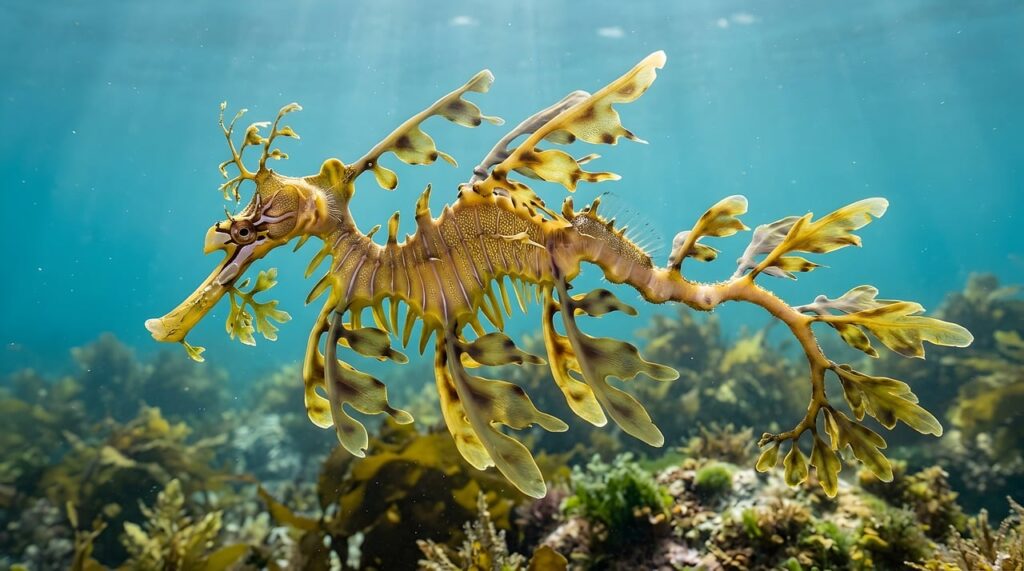
You know those photos online that make you pause and think, there’s no way that’s real? Sea dragons are exactly that kind of creature. They look like someone crossed a dragon, a seahorse, and a drifting bunch of seaweed, then turned the saturation up to maximum. Yet they’re absolutely real, living quietly in the temperate waters off southern Australia while the rest of the world assumes they’re Photoshop. Before you dive into their world, brace yourself: sea dragons do not behave like “normal” fish, they do not look like “normal” animals, and they definitely do not fit into your usual idea of what evolution is supposed to produce. Once you’ve met them properly, it’s hard not to feel that the ocean is still hiding plenty of things that seem impossible at first glance.
1. You’re Looking at a Fish That Pretends to Be Seaweed
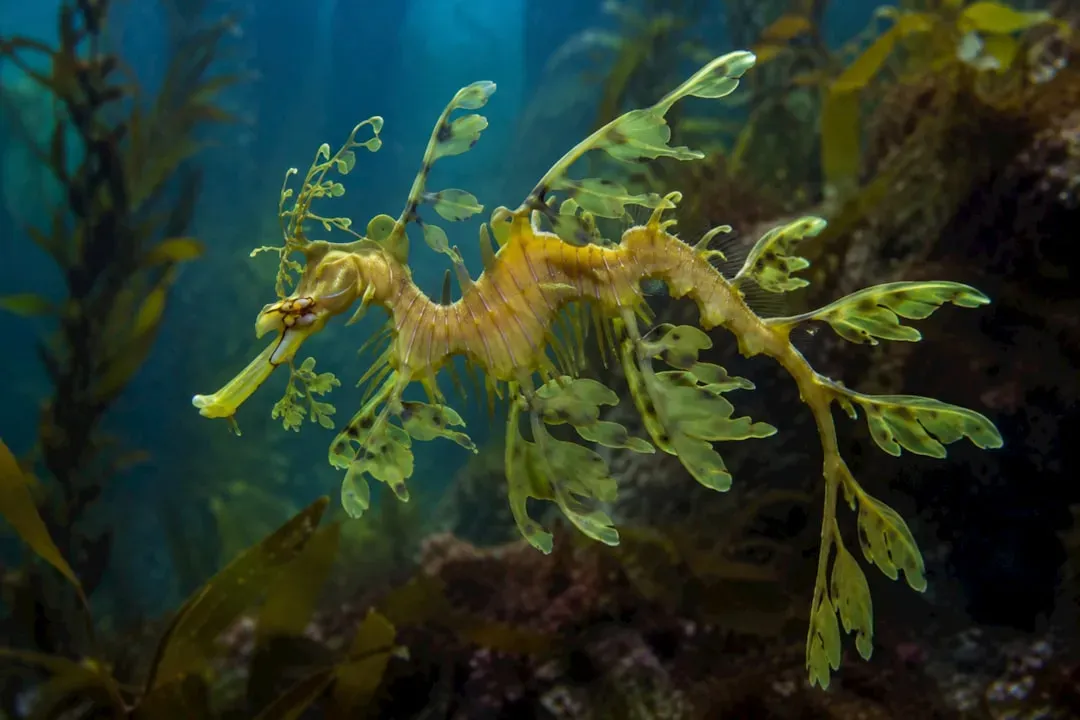
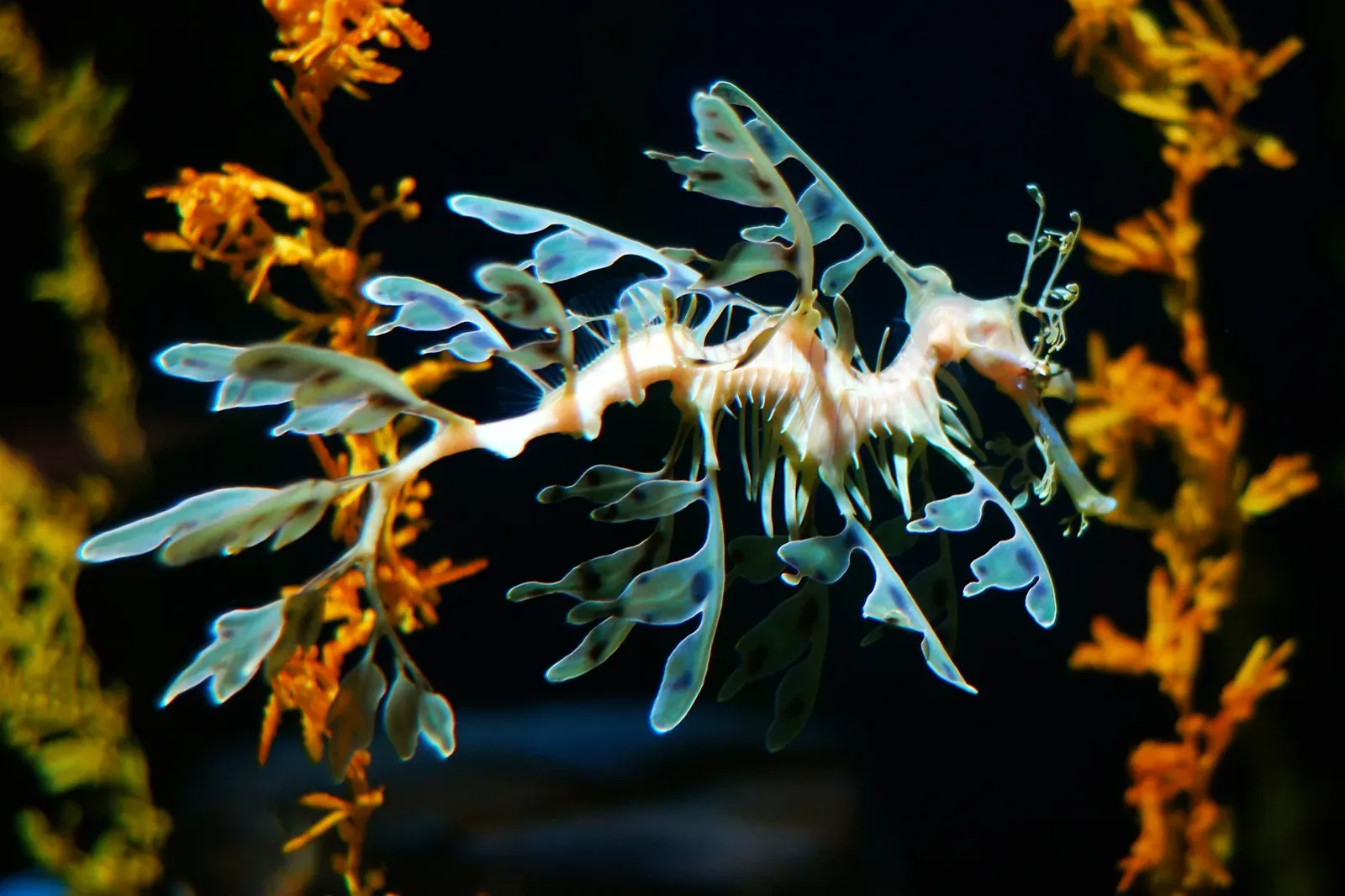
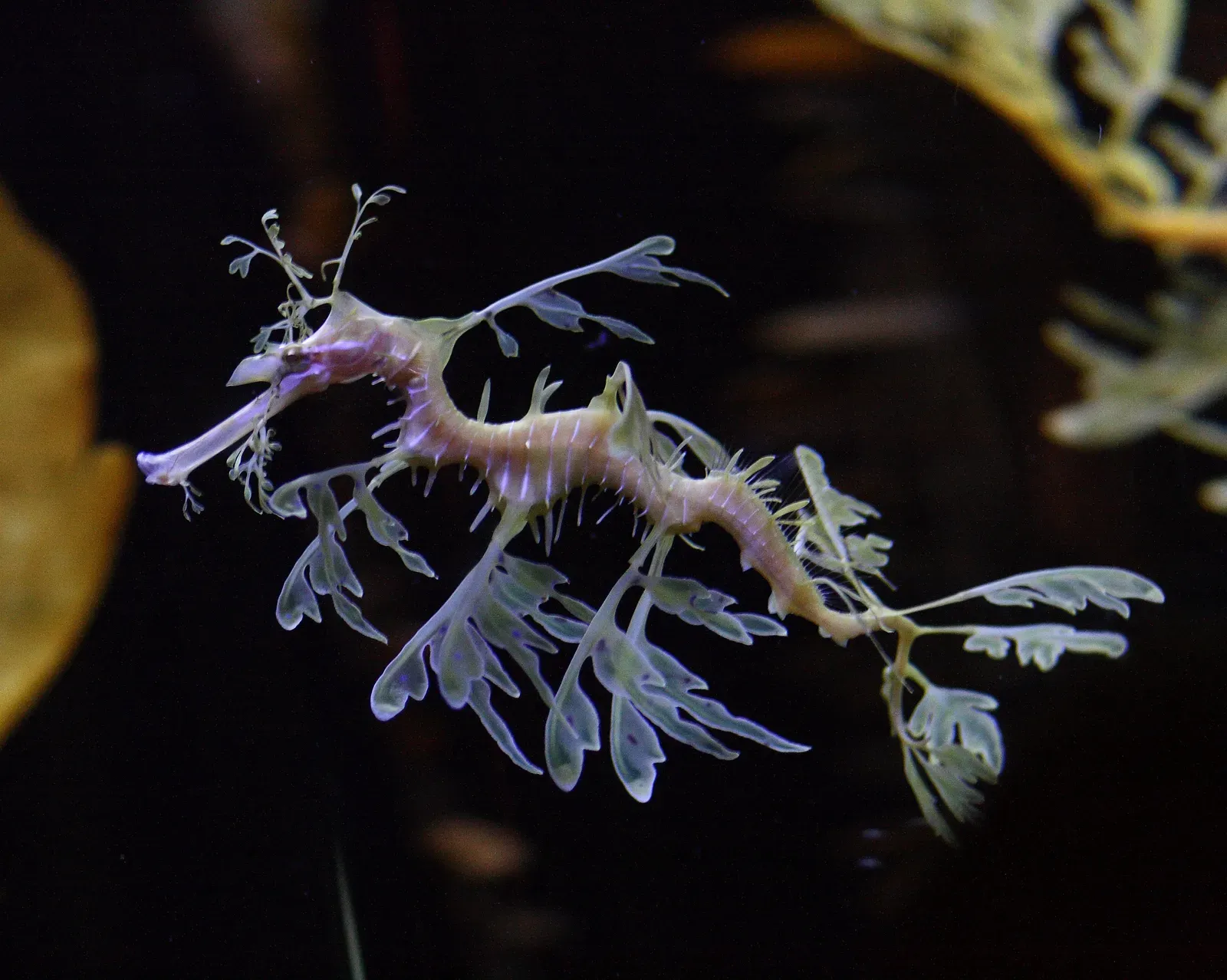
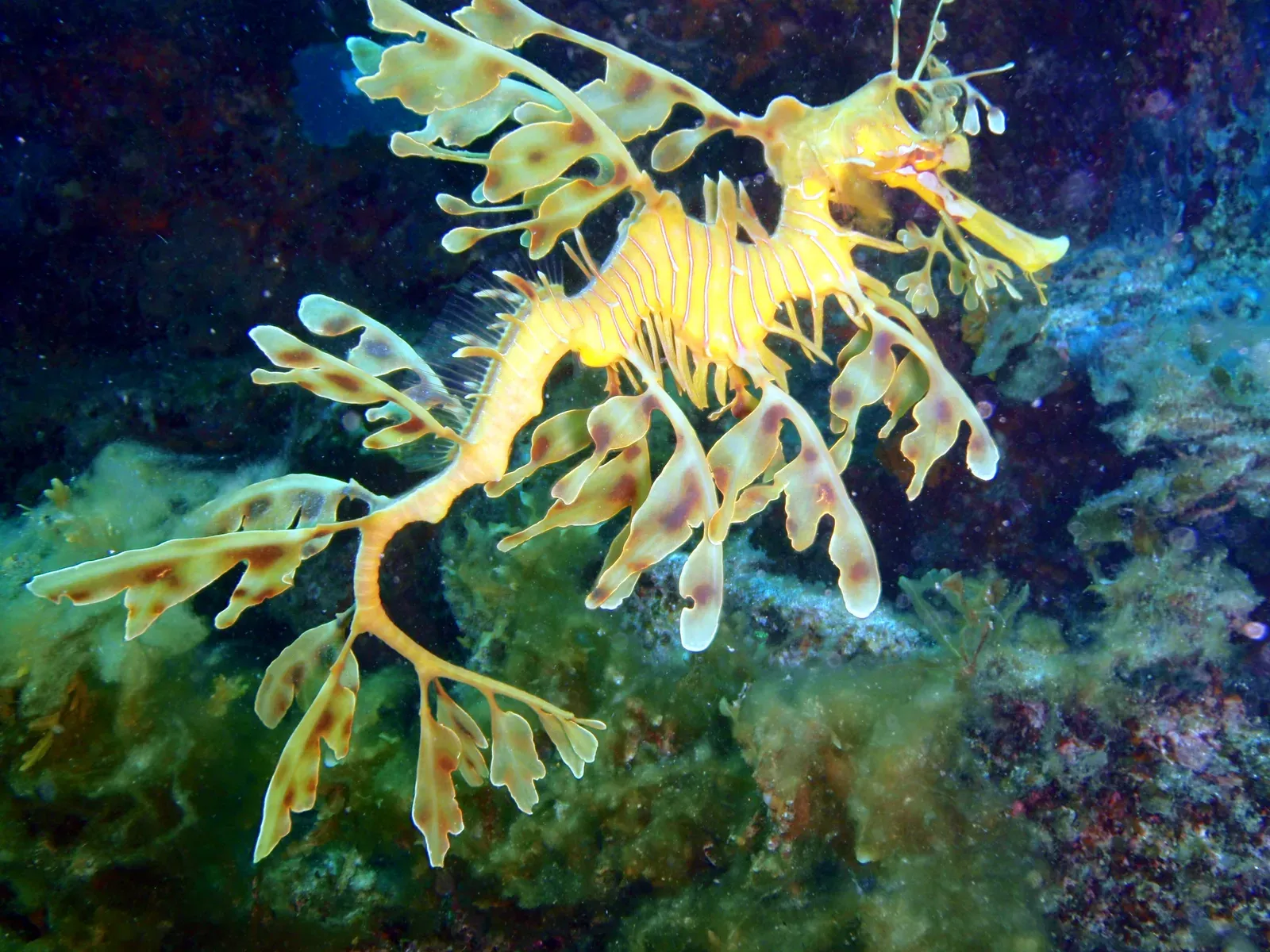
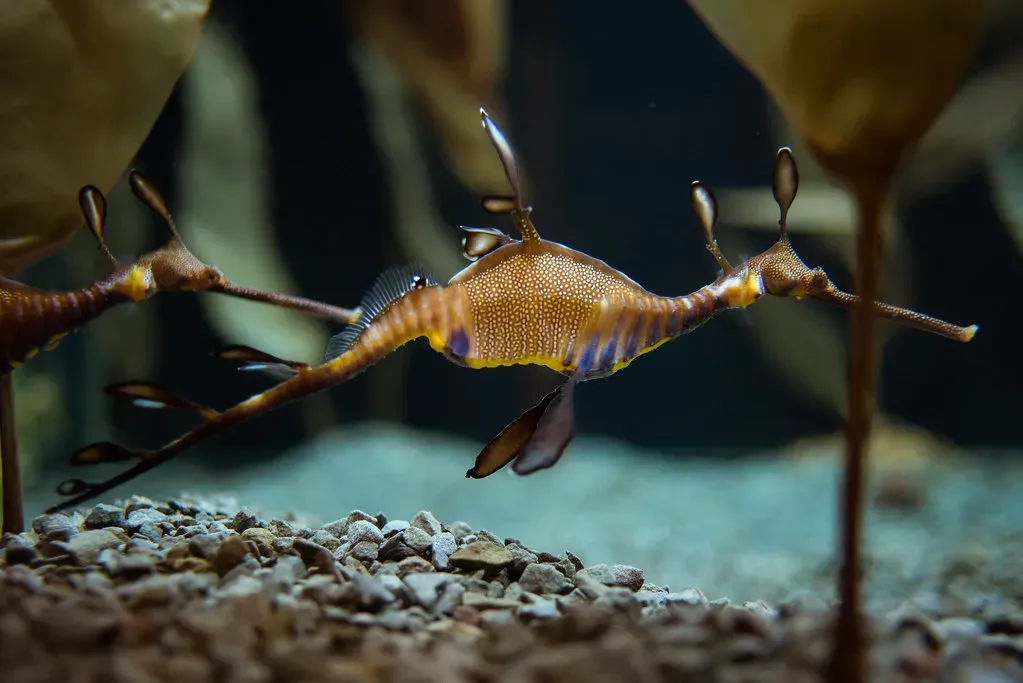
When you first see a leafy sea dragon, your brain probably tells you you’re just looking at a clump of drifting kelp. Only when it tilts slightly and you notice a tiny eye and a long, pipe‑like snout do you realize you’re staring at a fish that has turned camouflage into an art form. Instead of smooth scales, it’s covered in delicate, leaf‑shaped appendages that hang off its body like fronds on a plant. ([nationalgeographic.com](https://www.nationalgeographic.com/animals/fish/facts/leafy-sea-dragon?utm_source=openai)) These leafy bits are not fins and they don’t help it swim; they’re purely there to help it vanish into the background. Imagine walking into a forest and seeing a deer that literally looks like a moving bush. That is what a sea dragon is doing in kelp forests and seaweed beds, drifting just enough to match the sway of the plants around it so predators and prey both overlook it completely. ([cdn.environment.sa.gov.au](https://cdn.environment.sa.gov.au/landscape/docs/hf/leafy-seadragon-bio-region-fact.pdf?utm_source=openai))
2. You Only Find Them in One Small Corner of the Planet
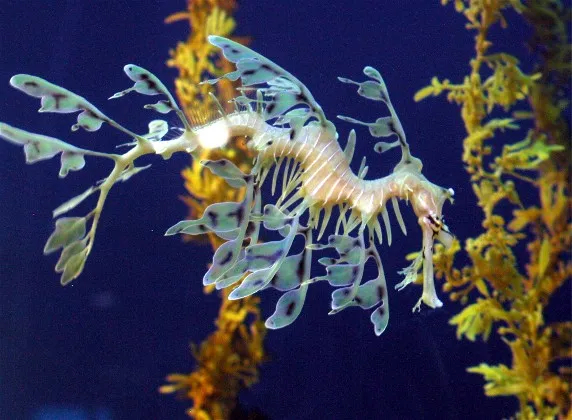
If you want to see a wild sea dragon, you can’t just jump into any ocean and hope for the best. You have to go to a very specific stretch of coastline: the temperate waters off southern and western Australia. Leafy, weedy (also called common), and ruby sea dragons are all endemic there, which means you don’t naturally find them anywhere else on Earth. ([thoughtco.com](https://www.thoughtco.com/sea-dragon-facts-4176792?utm_source=openai)) They tend to stick close to rocky reefs, kelp forests, and seagrass meadows, where their bizarre shapes blend perfectly into the scenery. Think of them as the ultra‑local celebrities of the southern Australian coast: if you are not in their neighborhood, you simply do not see them. That limited range makes their habitats incredibly important, because losing those patches of reef and seagrass would mean losing sea dragons too. ([cdn.environment.sa.gov.au](https://cdn.environment.sa.gov.au/landscape/docs/hf/rapid-bay-seadragon-study-april-2020-rep.pdf?utm_source=openai))
3. The Male Gets Pregnant, Not the Female
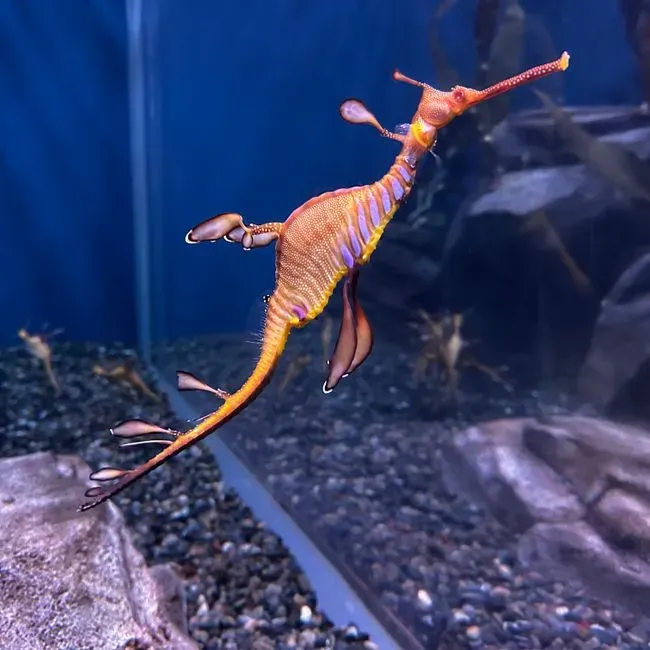
One of the wildest things about sea dragons is that they flip the usual parenting script you’re used to in the animal kingdom. In their world, the female does not carry the developing young; the male does. During courtship, the female transfers her eggs to a special area under the male’s tail, where he fertilizes them and then incubates them until they hatch. ([oceanservice.noaa.gov](https://oceanservice.noaa.gov/facts/seahorse.html?utm_source=openai)) You can think of it like a built‑in nursery stuck to the underside of his tail, sometimes packed with more than a hundred glowing, pinkish eggs. Over several weeks, the eggs change color as the embryos develop, and the male gently aerates them with small movements. When they finally hatch, each tiny sea dragon drifts off to fend for itself, while the exhausted father simply resumes looking like a piece of seaweed again. ([seaworld.org](https://seaworld.org/animals/facts/bony-fish/leafy-sea-dragon/?utm_source=openai))
4. They Swim With Invisible Fins and Hardly Move at All
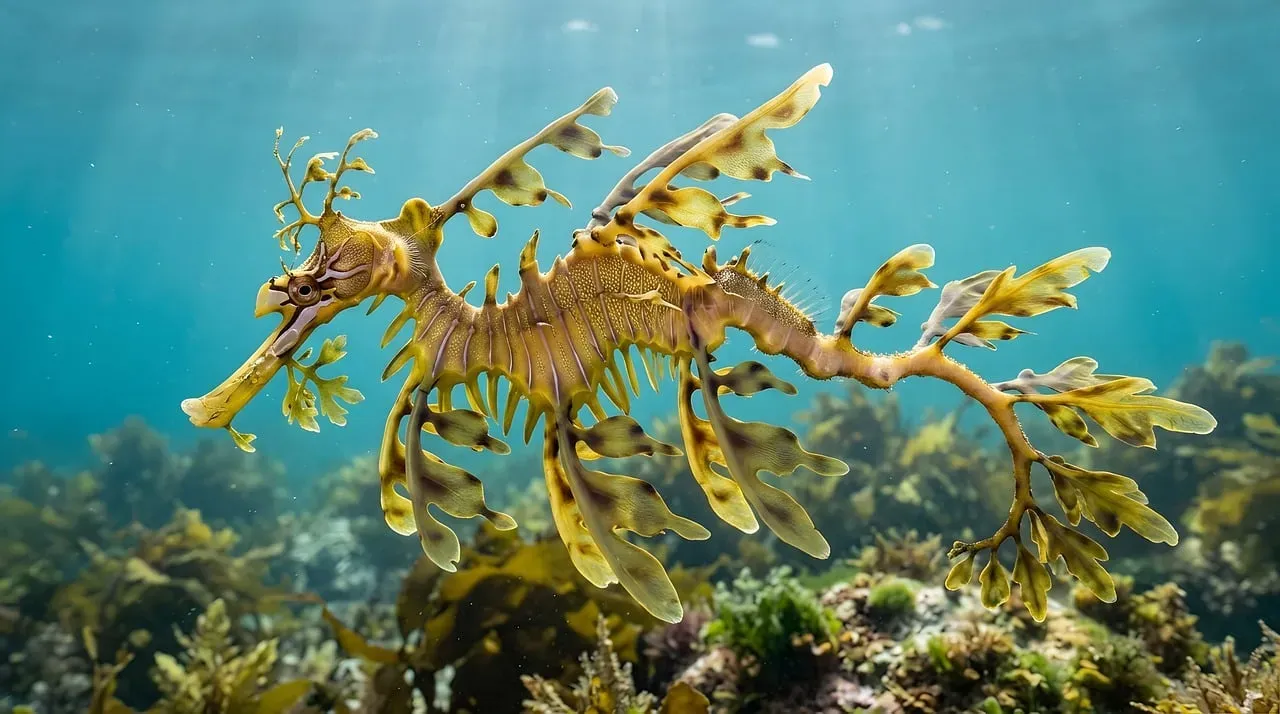
If you watch a sea dragon long enough, you might feel slightly uneasy because it hardly seems to move, yet it’s gliding along. That’s because it swims with two almost invisible fins: a small one on its back and another near its neck. These fins beat rapidly, giving it slow, precise control, while the leafy “decorations” on its body just drift passively, helping it keep up the illusion of being a plant. ([nationalgeographic.com](https://www.nationalgeographic.com/animals/fish/facts/leafy-sea-dragon?utm_source=openai)) Instead of racing around like many other fish, a sea dragon prefers to hover and creep, letting the current do most of the work. It’s a bit like someone moving through a crowded room by shuffling half a step at a time, just enough to avoid bumping into people. That slower lifestyle makes sense when your survival strategy depends on not being noticed in the first place. ([montereybayaquarium.org](https://www.montereybayaquarium.org/animals-the-ocean/animals-a-to-z/leafy-sea-dragon?utm_source=openai))
5. There Are Only Three Known Species, and One Was Just Discovered
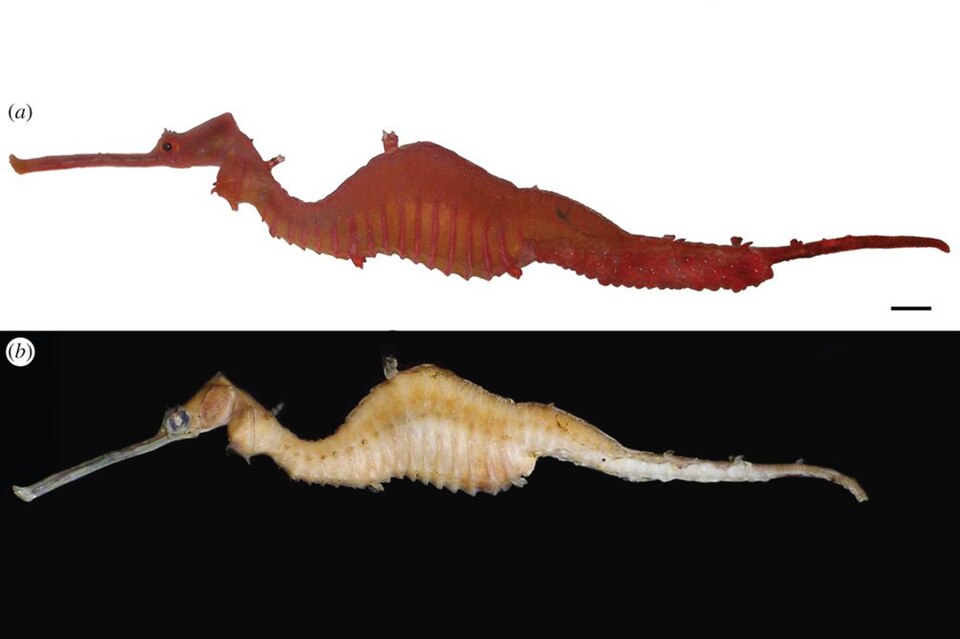
You might assume a group this strange would include lots of different species, but right now you only have three: the leafy sea dragon, the common (or weedy) sea dragon, and the ruby sea dragon. For more than a century, scientists only knew about the leafy and the weedy; the ruby was described as a new species in the mid‑2010s after careful study of museum specimens and genetic data. ([en.wikipedia.org](https://en.wikipedia.org/wiki/Genome_evolution_in_seadragons?utm_source=openai)) The ruby sea dragon adds a twist to the family story because it looks and behaves differently from its relatives, with a deep red color and a prehensile tail that can curl. That tail feature is especially interesting, because the common sea dragon does not have a flexible tail, so you suddenly have close cousins with very different body designs. It’s like discovering a long‑lost branch of your family that evolved an extra joint no one else has. ([scripps.ucsd.edu](https://scripps.ucsd.edu/news/new-species-ruby-seadragon-discovered-scripps-researchers?utm_source=openai))
6. Their Dragon Look Comes From Armor, Not Just Decoration
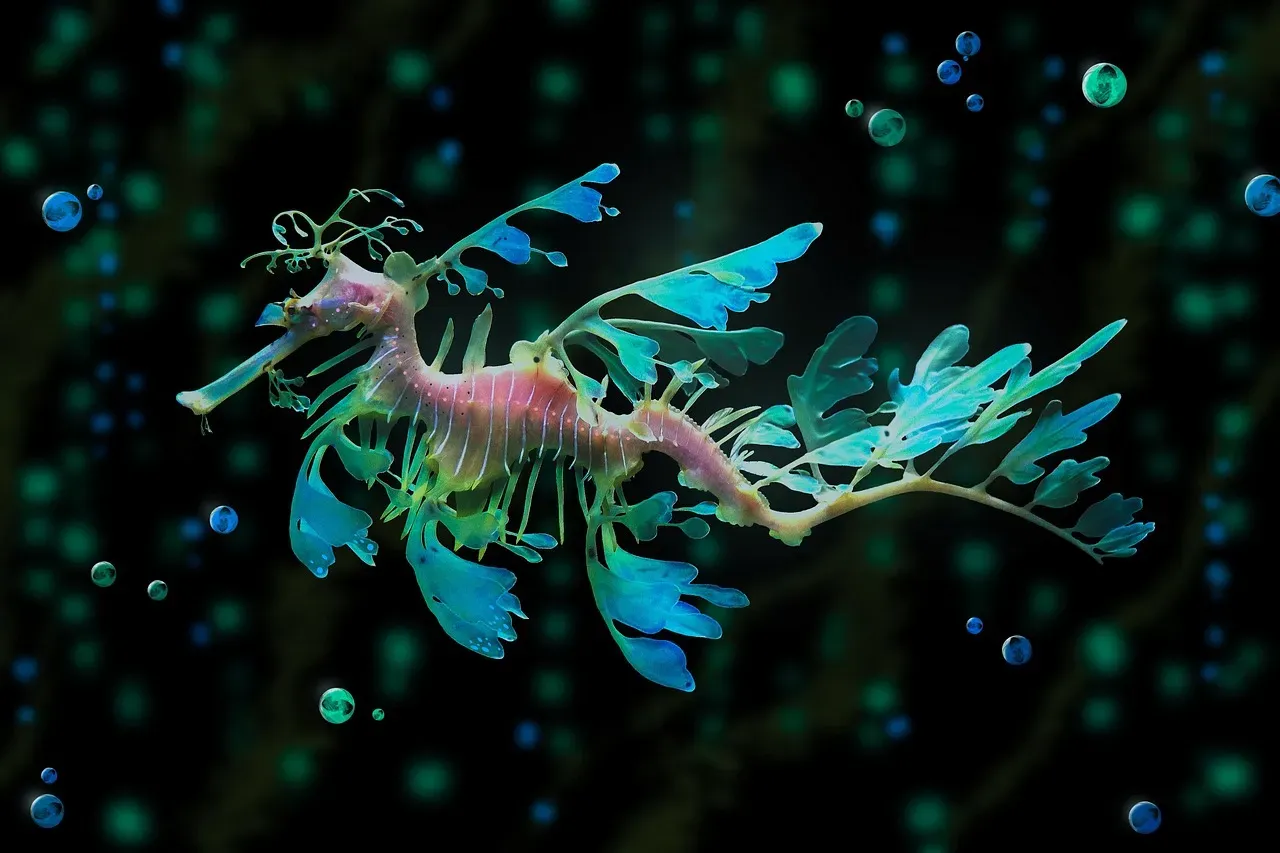
When you picture a dragon, you probably think of something armored, and sea dragons quietly fit that description. Under the leafy frills and delicate colors, their bodies are reinforced with bony plates arranged along their length. Those plates give them a rigid, almost stick‑like profile, similar to seahorses and pipefish, which are their closest relatives. ([oceanservice.noaa.gov](https://oceanservice.noaa.gov/facts/seahorse.html?utm_source=openai)) That body armor comes with trade‑offs. It helps protect them from being swallowed easily by predators, but it also means they can’t bend and twist as freely as many other fish. In a sense, they’ve chosen to be well‑defended statues that drift, rather than flexible sprinters that flee. If you’ve ever worn a stiff backpack and tried to run, you already understand the compromise they’re living with every day. ([en.wikipedia.org](https://en.wikipedia.org/wiki/Common_seadragon?utm_source=openai))
7. They Have No Teeth and Vacuum Up Tiny Prey
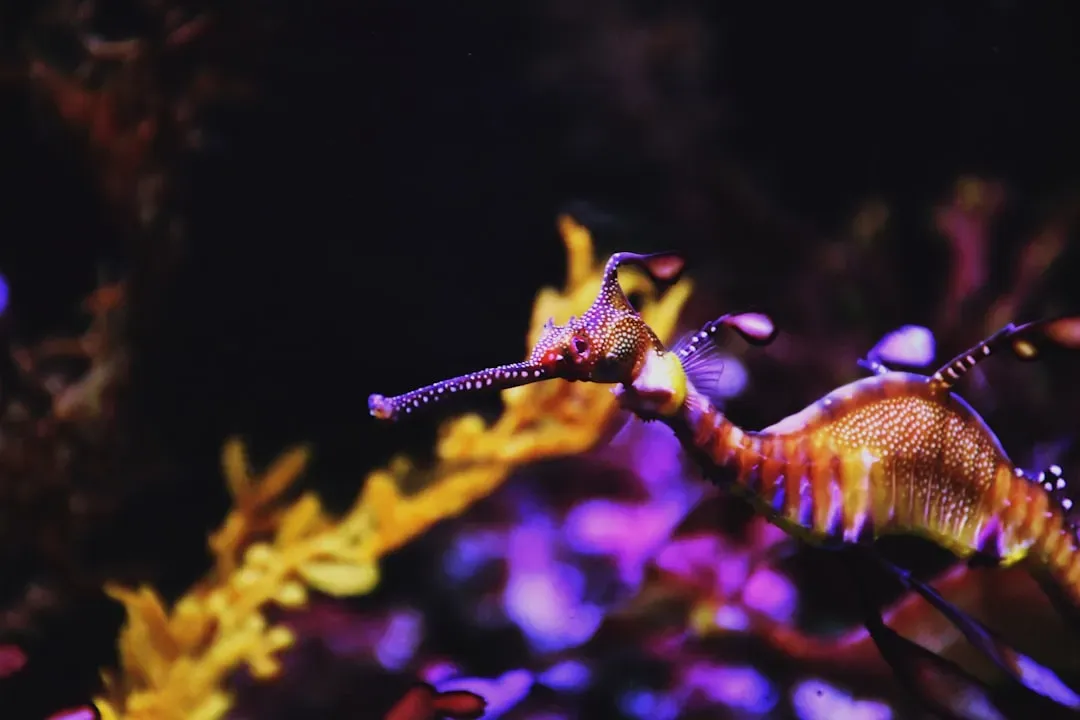
Despite the fierce “dragon” name, sea dragons are not biting into anything. They have a long, tubular snout with a small mouth at the tip and no teeth. Instead of chewing, they create suction and slurp up tiny prey like mysid shrimp and other small crustaceans, snapping them out of the water column in little bursts. ([thoughtco.com](https://www.thoughtco.com/sea-dragon-facts-4176792?utm_source=openai)) You can imagine them as slow‑moving, underwater vacuum wands, gently hoovering up clouds of microscopic snacks from between strands of seaweed. Because their prey is small and scattered, they spend a lot of their time feeding, taking advantage of any patch of water where little shrimp‑like creatures gather. It is not a glamorous dragon diet, but it is perfectly tuned to the places they live. ([montereybayaquarium.org](https://www.montereybayaquarium.org/animals-the-ocean/animals-a-to-z/leafy-sea-dragon?utm_source=openai))
8. Their Love Lives Are Surprisingly Dedicated
For an animal that looks so alien, sea dragons have a social side you might actually relate to. Observations in the wild suggest that leafy sea dragons can form stable pair bonds, returning to the same general area and potentially the same partner across breeding seasons, although there is still a lot scientists do not know. ([en.wikipedia.org](https://en.wikipedia.org/wiki/Leafy_seadragon?utm_source=openai)) During courtship, you see synchronized swimming and careful “dances” as the pair rises in the water column together before transferring eggs. It is oddly tender to watch: two creatures that look like walking algae matching each other’s moves like practiced dance partners. Even if the details of their relationships are still being studied, it’s hard not to feel that there’s something quietly loyal happening beneath all those leaves. ([seaworld.org](https://seaworld.org/animals/facts/bony-fish/leafy-sea-dragon/?utm_source=openai))
9. One Species Is the Marine Emblem of a State
If you ever wondered how proud a region can be of its local wildlife, sea dragons give you a clear answer. The leafy sea dragon is officially recognized as the marine emblem of South Australia, and the common sea dragon holds a similar honor for the state of Victoria. That means you’re not just looking at a weird fish; you’re looking at a symbol that people in those places use to represent their coastal identity. ([thoughtco.com](https://www.thoughtco.com/sea-dragon-facts-4176792?utm_source=openai)) You’ll see them on tourism posters, logos, and art, celebrated almost the way some cities celebrate famous landmarks. This kind of cultural spotlight actually helps the animals, because locals and visitors become more invested in protecting their habitats. When a species graduates from “what on Earth is that?” to “that’s our emblem,” it tends to get more attention and more care. ([thoughtco.com](https://www.thoughtco.com/sea-dragon-facts-4176792?utm_source=openai))
10. They’re Delicate, Threatened, and Still Mysterious
For all their beauty, sea dragons are surprisingly vulnerable. Leafy sea dragons, for example, are listed as near threatened, largely due to habitat loss, pollution, and past collection for the aquarium trade and traditional medicine. When kelp forests and seagrass beds are damaged by coastal development, storms, or warming waters, the dragons that depend on them have nowhere else to go. ([nationalgeographic.com](https://www.nationalgeographic.com/animals/fish/facts/leafy-sea-dragon?utm_source=openai)) What makes this more worrying is how little baseline data exists about their population sizes and trends. You are dealing with animals that are naturally hard to spot, well camouflaged, and spread out over rocky, sometimes difficult diving sites. Because of that, scientists still have big gaps in their knowledge, and every careful survey or citizen‑science sighting helps fill in an important piece of the puzzle. ([seaworld.org](https://seaworld.org/animals/facts/bony-fish/leafy-sea-dragon/?utm_source=openai))
11. They’re Living Proof That the Ocean Still Has Surprises
The existence of sea dragons is a quiet reminder that the ocean is nowhere near fully understood. Remember, the ruby sea dragon was only identified as a distinct species in the twenty‑first century, and the first video of it in the wild came even later, filmed in deeper, dimmer waters than its relatives usually inhabit. That means you live in a time when brand‑new “dragons” are still being revealed, not in myth, but in actual scientific papers. ([scripps.ucsd.edu](https://scripps.ucsd.edu/news/new-species-ruby-seadragon-discovered-scripps-researchers?utm_source=openai)) When you put all of this together – the male pregnancy, the plant‑like camouflage, the tiny range, and the recent discoveries – you get a creature that feels like an inside joke between evolution and the sea. Next time someone tells you everything interesting on Earth has already been found, you can picture a leafy sea dragon drifting along a reef in South Australia and know that is not true. How many other impossible‑looking animals do you think are out there, still hiding in plain sight beneath the waves?