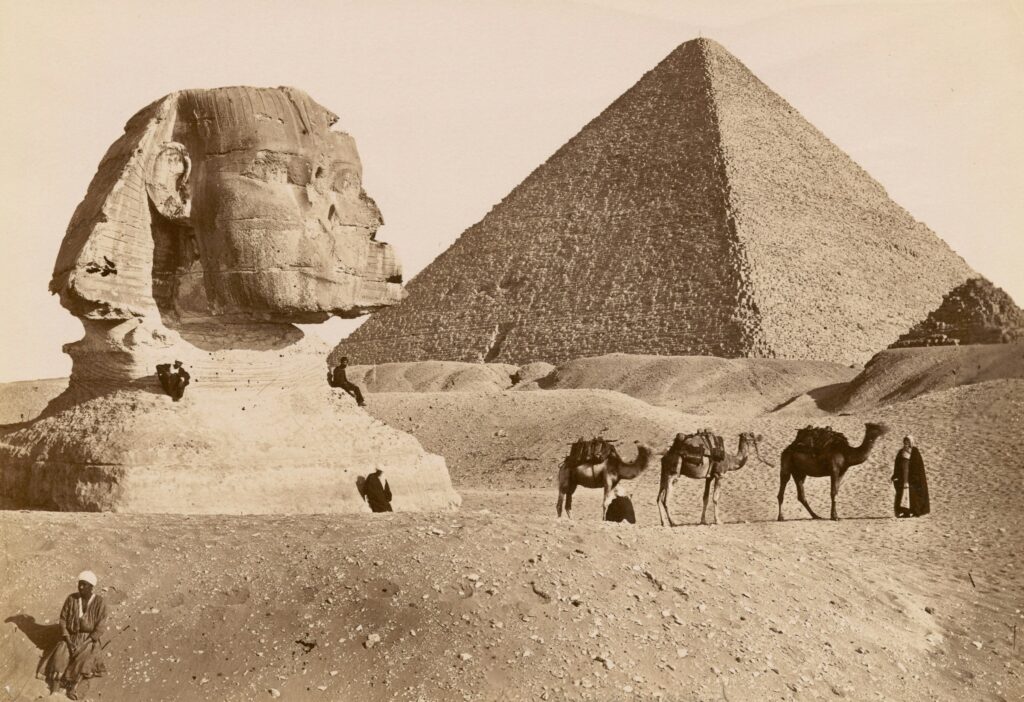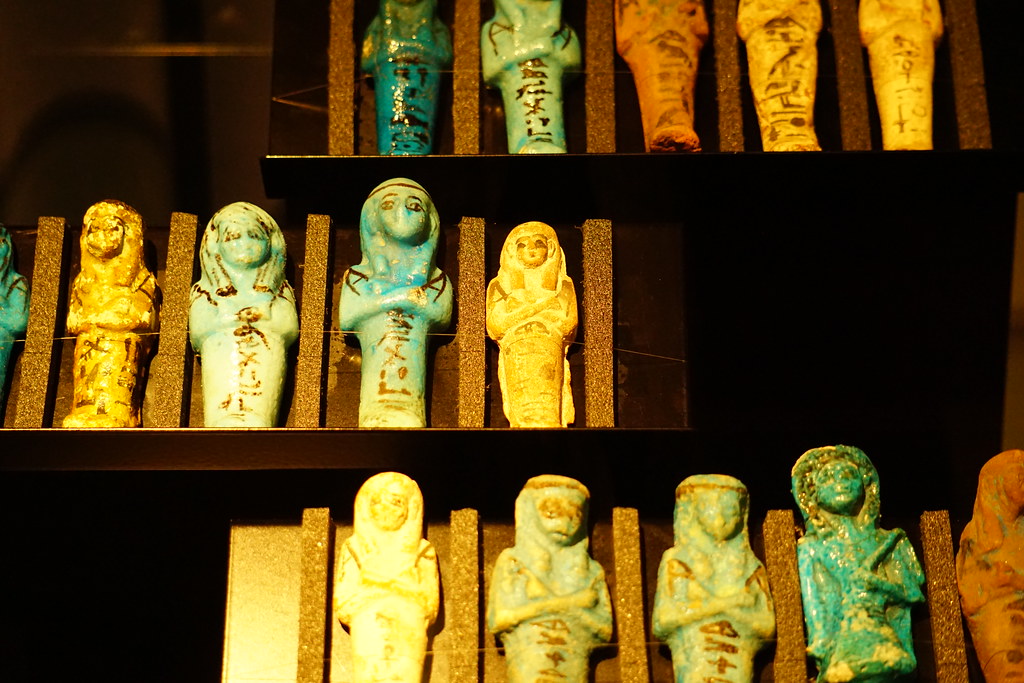

Most people picture Egyptian tombs as neatly cataloged time capsules – sarcophagi, gold masks, canopic jars, all labeled and understood. That’s not entirely true. Scattered across museum basements and glass cases from Cairo to London sit objects that excavators genuinely can’t agree on, even after a century of digging, cataloging, and arguing about them.
Some defy the tools available when they were made. Others are built from materials that, by the science of their own era, shouldn’t exist in a tomb at all. Egyptologists have spent over a hundred years fighting about what these things actually are, and the fighting hasn’t stopped. Here’s what the archaeological record – not the internet – actually says about the ten objects that still make trained experts shrug.
#1 – The Disc of Sabu
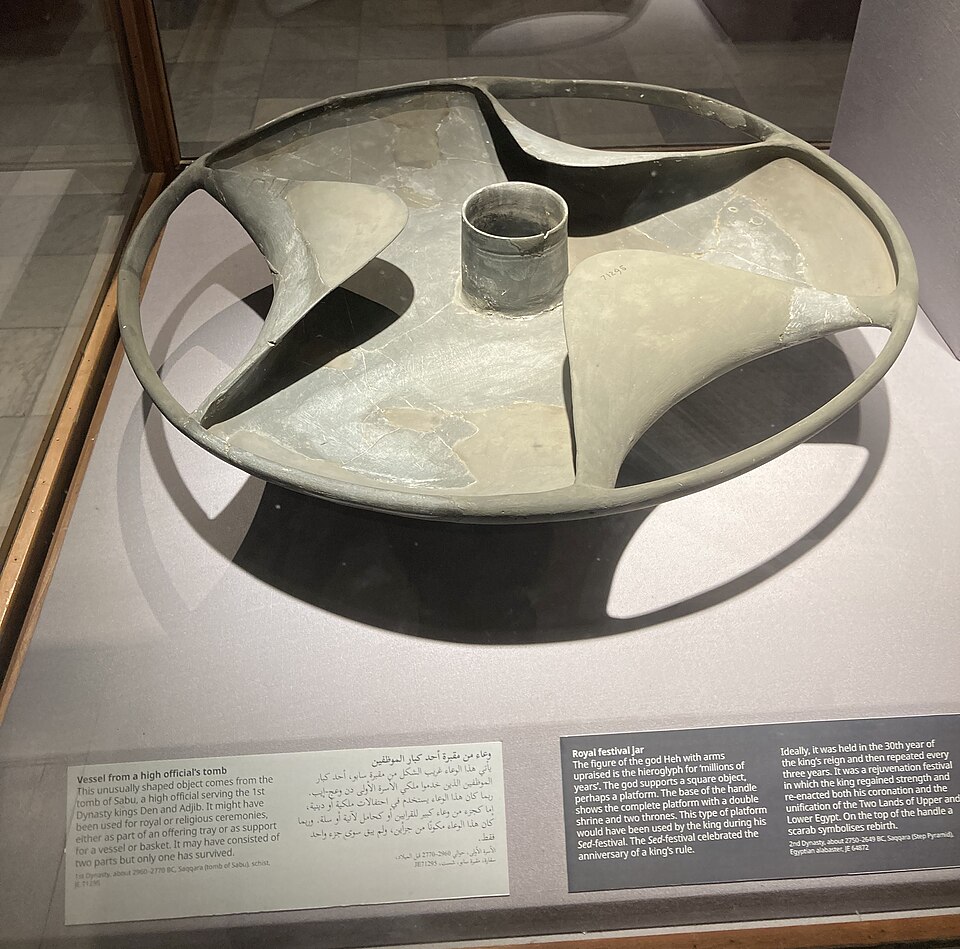
Buried beside a First Dynasty prince nearly 5,000 years ago, this stone bowl still has no agreed-upon job description. Walter Emery uncovered it in 1936 inside a mastaba at Saqqara belonging to the official Sabu, carved from delicate schist into a tri-lobed shape with a central socket and a wide hole surrounded by three elegantly curving lobes. The material choice alone is baffling – schist is brittle, difficult to work, and an odd pick for anything meant to survive daily handling.
Emery himself hedged his bets, suggesting it might have sat mounted on some kind of support, though no trace of that support was ever found. Most modern Egyptologists lean toward something far more mundane – a bowl for food or oil, similar to other wide, flat vessels from the period. That tidy explanation has one problem: it’s the only object of its kind ever discovered, and nobody can explain why an ordinary bowl would need such an extraordinary, one-off design.
#2 – The Saqqara Bird
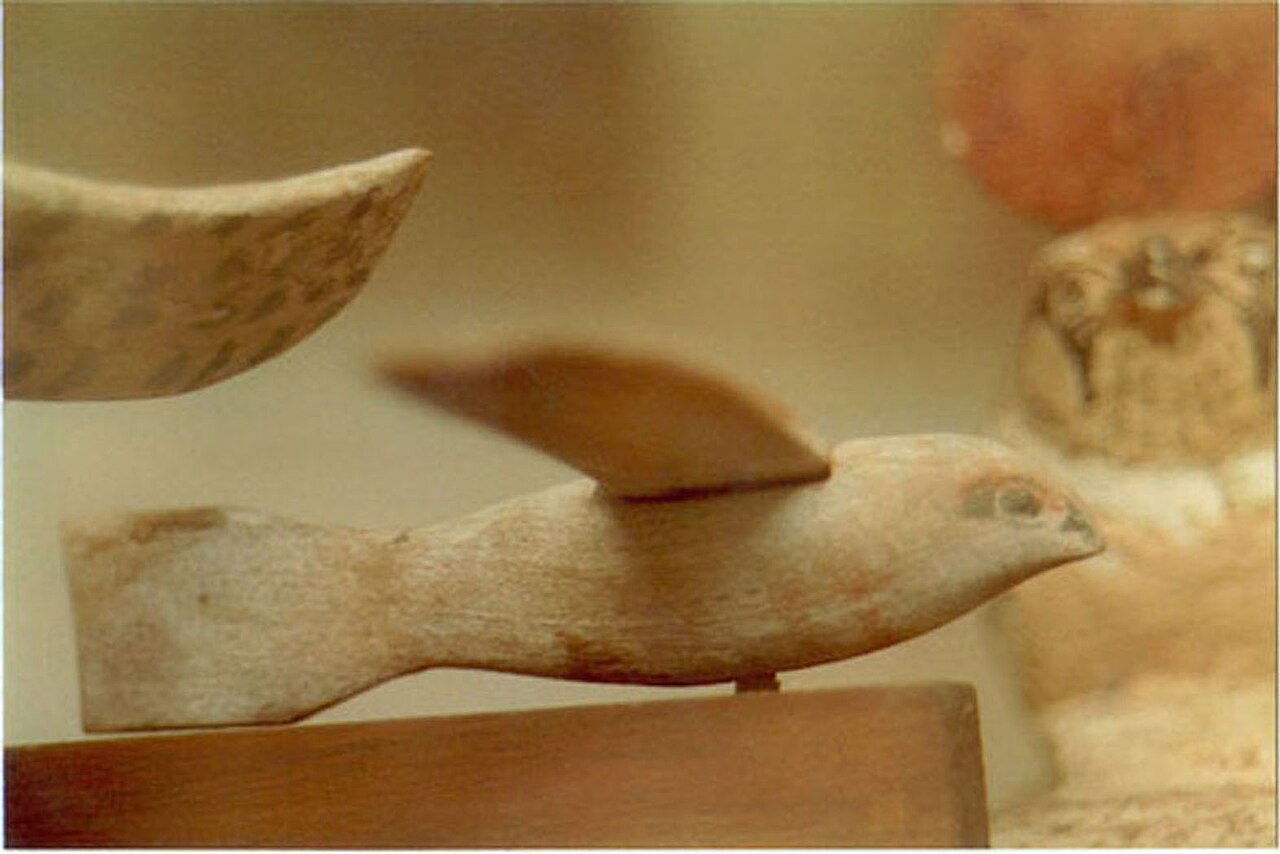
A palm-sized wooden falcon has been dividing aviation engineers and Egyptologists for over a century. Found in 1898 near the Saqqara necropolis, the hand-carved artifact dates to around the 3rd century BCE and features straight, slightly dihedral wings, a vertical tail fin instead of a bird’s usual horizontal tail, and a smooth, streamlined body. Those aerodynamic details are what keep the debate alive. Egyptian physician Khalil Messiha argued in 1969 that the shape mirrors a monoplane glider, sparking decades of “ancient aviation” speculation that mainstream researchers have never accepted.
Recent engineering tests haven’t been kind to that theory. A 2023 computational fluid dynamics simulation run by the Institute of Aerospace Technology Bremen found the artifact has a poor glide ratio, with its center of mass sitting behind the neutral point – a fatal flaw for any real glider. It clearly wasn’t built to fly. What it was built for is still anyone’s guess: a ceremonial stand-in for the falcon god Horus, a child’s toy, or even a weather vane. No manual survived to settle it.
At a Glance
- Discovered: 1898, tomb of Pa-di-Imen at Saqqara
- Material: carved sycamore wood, wingspan of about 18 cm
- Weight: roughly 39 grams
- Distinctive design: vertical tail fin, unlike any known bird species
- 2023 CFD verdict: poor glide ratio, center of mass behind the neutral point
#3 – The Gerzeh Meteoric Iron Beads
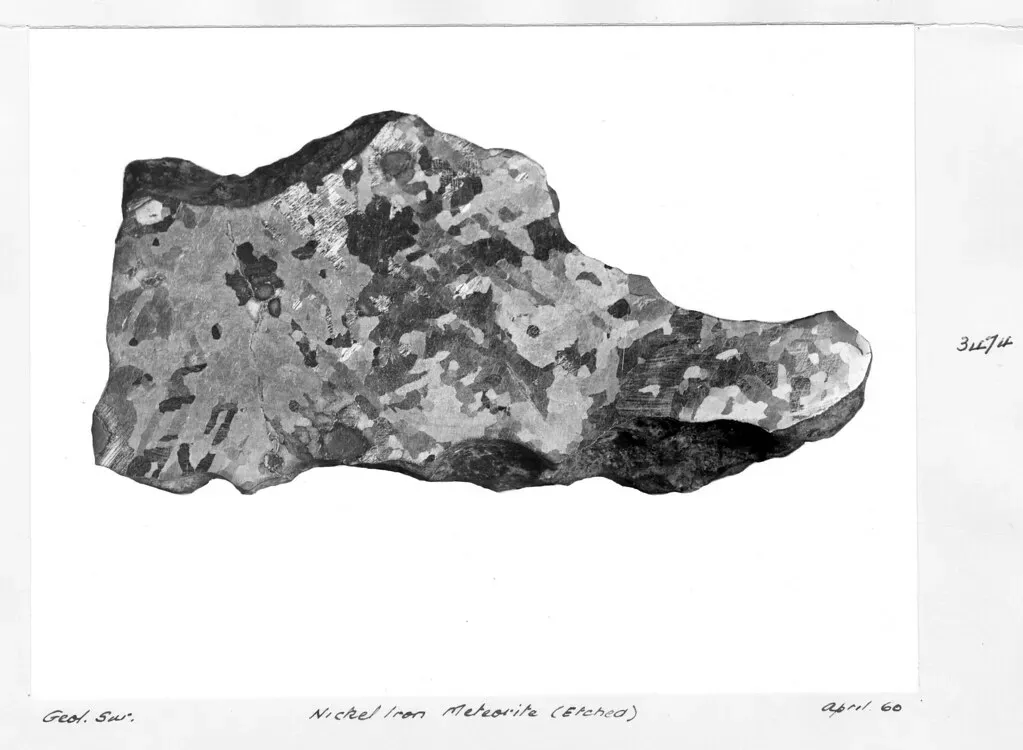
Nine tiny tube-shaped beads, tucked into a predynastic grave, turned out to be older than iron smelting itself. Excavated in 1911 from a tomb at Gerzeh, an ancient cemetery in northern Egypt, early chemical testing revealed traces of nickel – the signature of meteoric iron, not earthly ore. They predate deliberate iron production in Egypt by roughly two millennia. Dated to around 3600-3350 BC, the beads significantly outdate the earliest known iron smelting in Egypt, which didn’t begin until the 6th century BC.
Decades of doubt followed the discovery, until modern imaging finally settled it. A joint study by the Open University and the University of Manchester used scanning electron microscopy and micro X-ray computed tomography to confirm the beads really are meteoric in origin. The manufacturing process alone required serious skill – ancient smiths rolled thin sheets of metal, tough as modern stainless steel, into narrow tubes without cracking them. What still isn’t settled is intent: were these worn as ordinary jewelry, or treated as literal fragments of the sky?
#4 – The Egyptian Blue Pigment Cakes

The world’s oldest synthetic color was buried alongside the dead for thousands of years – and its exact recipe vanished from human memory. Egyptian blue first appeared around 3100 BCE, making it the oldest known human-made inorganic pigment. Chemists have only recently cracked how it was actually made. It shows up on artwork and artifacts across the ancient world, but at some point the original formula was simply lost.
Rediscovering it took real detective work. Researchers consulted mineralogists and Egyptologists to shortlist likely ingredients, then varied the proportions and heated batches for anywhere from one to eleven hours at around 1,832 degrees Fahrenheit. Small changes wrecked the results every time.
One of the things that we saw was that with just small differences in the process, you got very different results.
McCloy
The pigment even has a strange modern afterlife – it glows faintly under near-infrared light, letting conservators spot traces of it on statues and reliefs long after the visible color has faded. No single intact tomb-workshop recipe has ever turned up.
#5 – The Apotropaic Ivory Wands
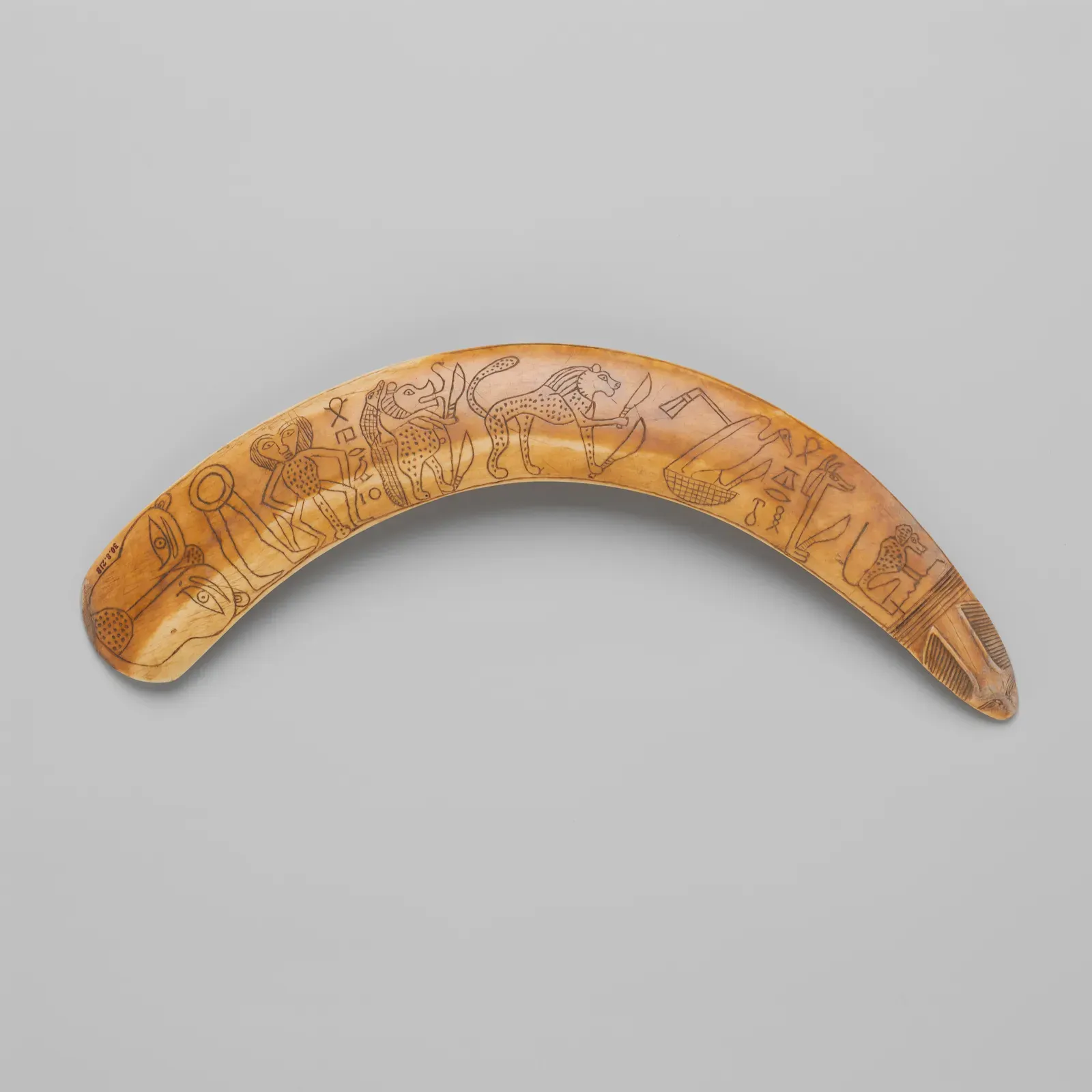
Curved ivory “knives” placed near mummies weren’t weapons at all – they were magical insurance policies. Known as birth tusks or apotropaic wands, these Middle Kingdom objects were carved mostly from hippopotamus ivory and tied to Taweret, the goddess of childbirth and fertility, then inscribed with rows of protective figures. Their curved, blade-like shape has confused generations of curators. “Knife” is actually the wrong word for them – the shape has more in common with a throwstick, similar to a modern boomerang, than any weapon.
The carvings themselves tell a story of ancient anxiety. Deities like Taweret and Bes appear again and again, guarding women and children through the dangerous business of childbirth. Wear patterns prove these weren’t shelf decorations either – many show heavy use, and some were even repaired, meaning families relied on them again and again. Exactly which rituals they accompanied, and in what order the carved animals were meant to be invoked, is still argued over by specialists today.
Fast Facts
- Era: Middle Kingdom Egypt
- Material: primarily hippopotamus ivory
- Also known as: birth tusks or magical wands
- Associated deity: Taweret, goddess of childbirth and fertility
- Telltale sign: heavy wear and occasional repairs, pointing to repeated ritual use
#6 – The Gebel el-Arak Knife Handle
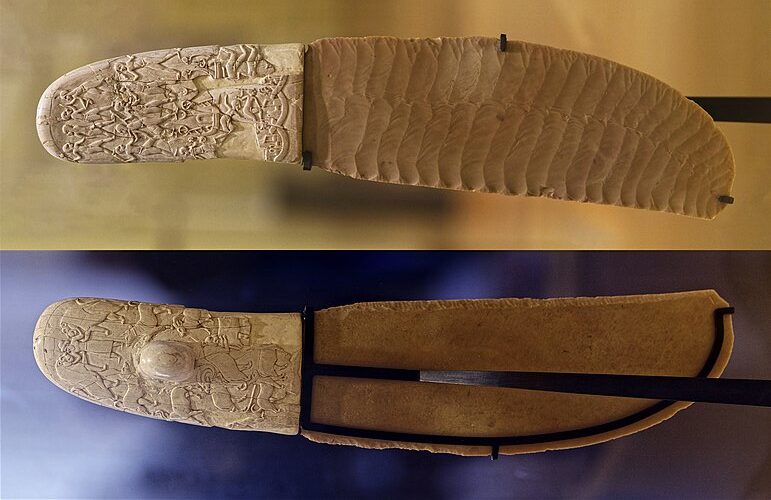
A carved ivory handle from a predynastic flint blade has scholars arguing about contact between Egypt and Mesopotamia thousands of years before written history connects the two. The blade itself is ripple-flaked flint fitted with a handle carved from hippopotamus ivory, generally dated to the Naqada II period, roughly 3300-3200 BCE, and now sitting in the Louvre. What makes it genuinely puzzling is where it came from. Unlike almost everything else on this list, it wasn’t recovered during a controlled dig – it surfaced on the antiquities market, so its exact tomb and findspot were never scientifically recorded.
The carvings are the real mystery. One side shows a bearded figure gripping two rearing lions in a “Master of Animals” pose that closely echoes Mesopotamian and Elamite art from the same era, while the other depicts a chaotic battle scene featuring boats unlike any typical Nile river craft. Egyptologists still debate whether this points to direct trade contact with Sumer, a shared symbolic language passed through go-betweens, or pure coincidence. Without a documented burial, nobody can say which elite family commissioned it, or why.
#7 – The Precision Stone Vessels of Djoser’s Galleries
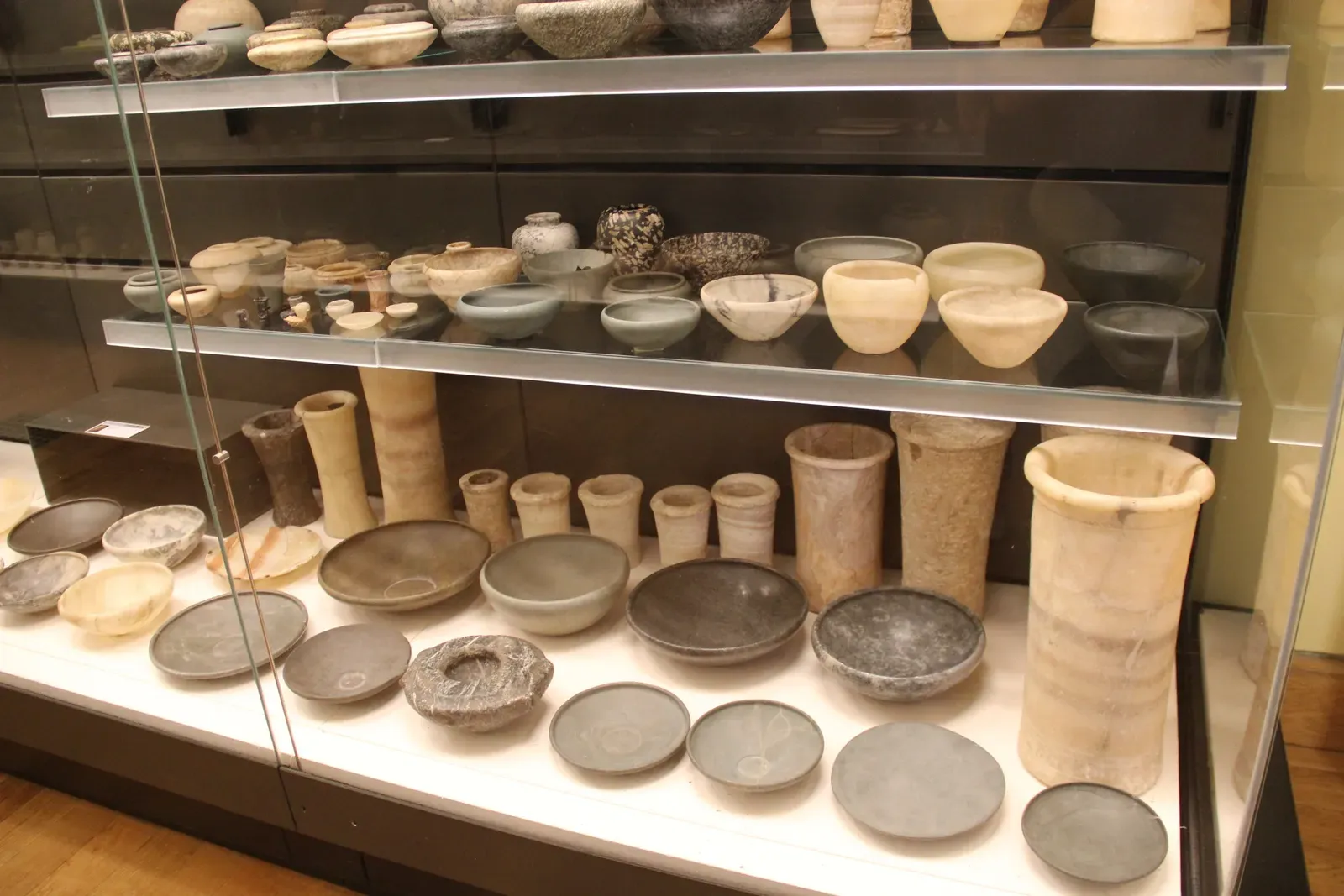
Beneath the Step Pyramid at Saqqara sit tens of thousands of stone vessels, and nobody can fully explain how some of them were carved so precisely with Bronze Age tools. Excavators working under Djoser’s pyramid uncovered vast underground galleries packed with stone bowls, plates, and jars made from brutally hard materials like schist, diorite, and breccia – stones that resist even modern steel tools without serious effort. Some vessels have walls so thin and symmetry so exact that early researchers assumed lathes must have been involved, despite zero evidence that Egyptians had rotary lathe technology at the time.
Later experimental archaeology pushed back on the “lost technology” theory. Researchers like Denys Stocks have shown that copper tools, abrasive sand, and enormous amounts of patient hand-grinding can reproduce similarly fine results without any machinery unknown to the era. The real debate isn’t whether Egyptians could do this by hand – it’s how many specialists it took, how long each piece required, and why tens of thousands of finished vessels ended up sealed underground instead of on display. That question is still formally unresolved.
Worth Knowing
- Location: underground galleries beneath Djoser’s Step Pyramid at Saqqara
- Quantity: tens of thousands of stone vessels recovered
- Materials used: schist, diorite, and breccia – among the hardest stones available
- Modern replication: copper tools plus abrasive sand can reproduce similar precision by hand
- Unsettled question: how many workers and how long the full collection took to complete
#8 – The Libyan Desert Glass Scarab
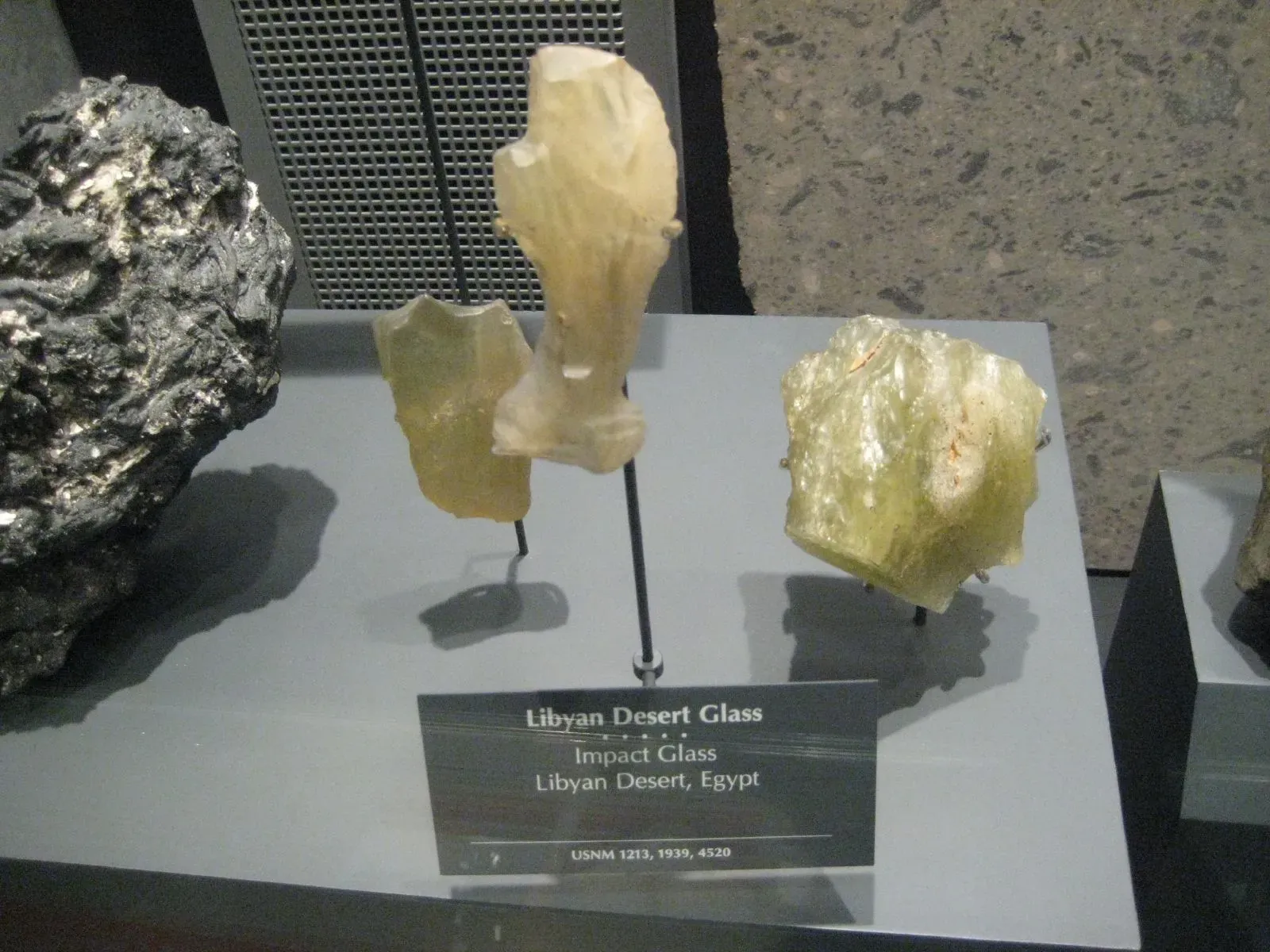
Sitting at the center of one of Tutankhamun’s most famous pieces of jewelry is a stone that fell from space. The pectoral’s central scarab is carved from a canary-yellow material called Libyan Desert glass, pulled from the sand dunes of Egypt’s western desert and formed roughly 29 million years ago when quartz melted at temperatures topping 3,000 degrees Fahrenheit – hotter than the inside of a volcano. Scientists still argue about exactly how it formed. Some think an airburst meteor exploded above the desert; others argue for a direct meteorite impact.
Curiously, no crater has ever been matched to the glass field. The glass, rediscovered by modern science in 1932, is an ultrahigh-temperature material made almost entirely of pure silica, and it does contain extra-terrestrial components – yet there’s still no scarred landscape to point to as its birthplace. Recent zircon studies have tried to close the case, with mixed acceptance across the geology community. What’s certain is that ancient craftsmen recognized this material as something extraordinary, rare enough to reserve for a pharaoh’s most sacred jewelry.
#9 – Tutankhamun’s Meteoric Iron Dagger
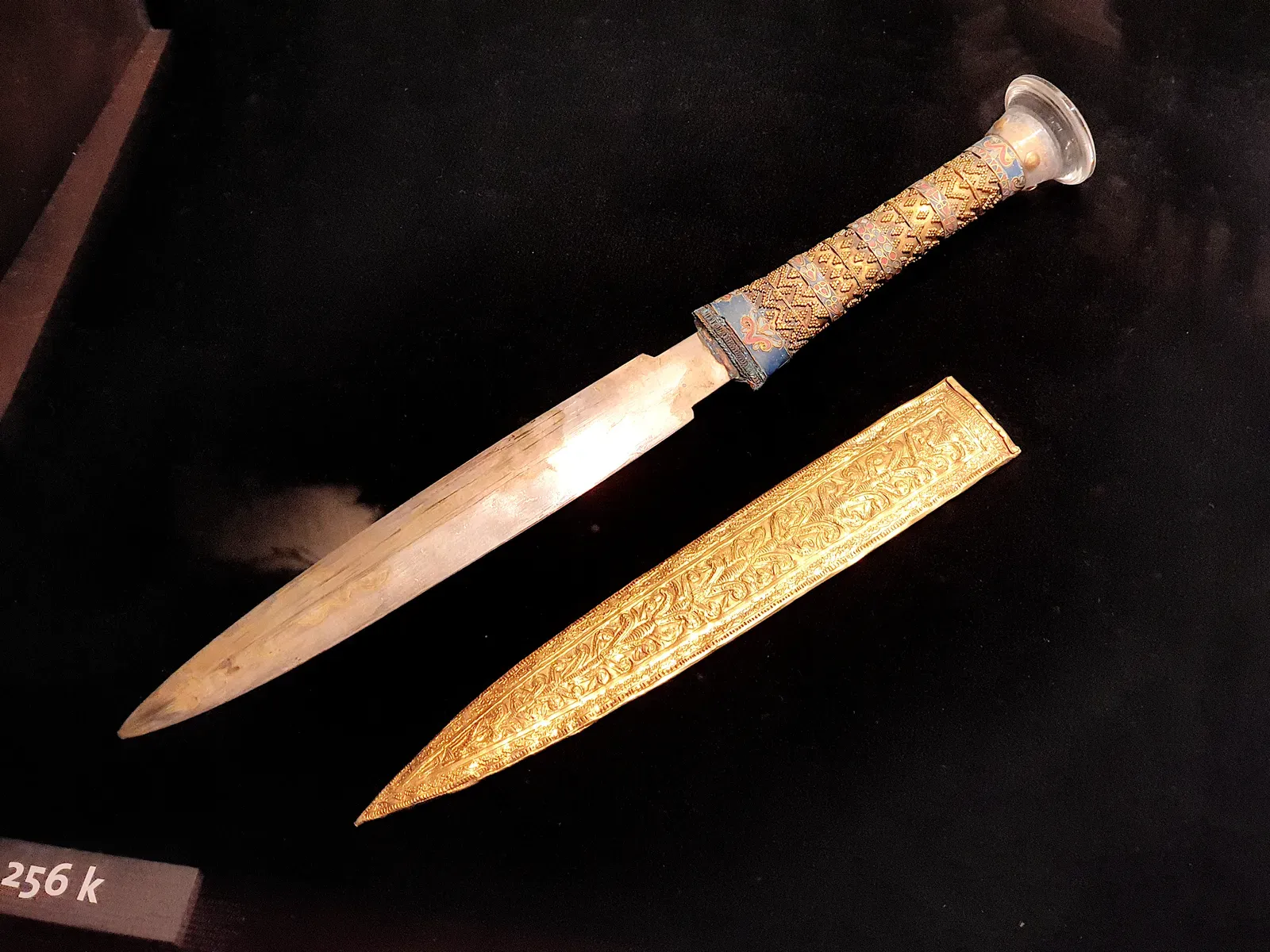
A dagger buried with a teenage pharaoh turned out to be made from material that had never touched a furnace. Tutankhamun’s iron-bladed dagger shows a composition and internal homogeneity that closely matches known meteorites, strong enough evidence that researchers now consider the blade’s origin extraterrestrial rather than smelted. The chemistry lines up almost perfectly with known space rock. A 2016 X-ray fluorescence study found the blade is mostly iron with 11% nickel and 0.6% cobalt, landing squarely within the range of 76 previously catalogued iron meteorites.
How it was actually made hasn’t fully closed the debate, though. Iron was also a byproduct of Bronze Age copper and bronze smelting, and the 14th-century Amarna letters record gifts of valuable iron sent from the King of Mitanni, fueling an argument that’s run since 1925. Other iron pieces were tucked directly against the mummy – a miniature headrest hidden inside the golden death mask, an amulet on a golden bracelet, and the dagger itself with its gold-wrapped haft. Why so much rare celestial metal was reserved for a single teenage king’s burial is still an open question.
Quick Compare
- Meteoric origin: composition matches 76 catalogued iron meteorites (11% nickel, 0.6% cobalt)
- Meteoric origin: internal structure shows no clear signs of furnace smelting
- Diplomatic gift theory: Amarna letters record iron gifts sent from the King of Mitanni
- Diplomatic gift theory: Bronze Age smelting occasionally yielded usable iron as a byproduct
#10 – The Dendera “Light” Reliefs
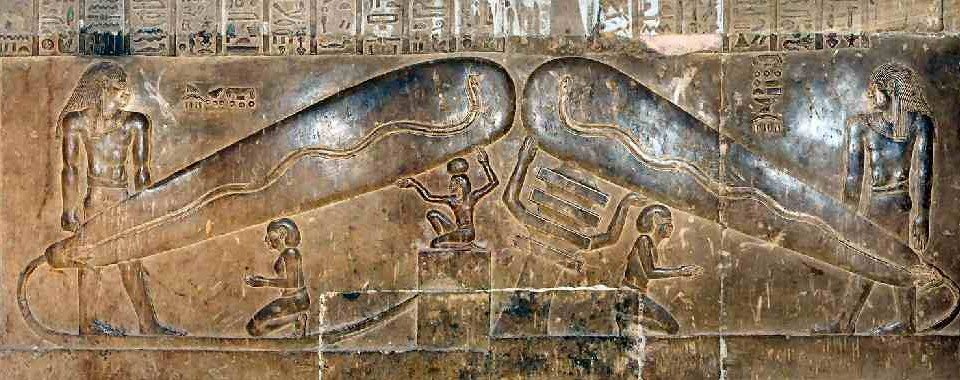
This is the one entry on this list where the label “unclassified” doesn’t actually hold up – and that’s exactly why it deserves the final spot. Deep in the crypts and rooftop chapels of the Hathor Temple complex at Dendera, carved reliefs show elongated lotus blossoms with serpents coiled inside them, connected to Djed-pillar supports. Online, these carvings get constantly relabeled as ancient light bulbs, complete with filaments and cables, supposedly proving Egyptians had hidden electrical technology buried alongside their dead. That theory has been thoroughly rejected by every credentialed Egyptologist who has actually read the accompanying hieroglyphic captions.
The scene is part of a well-documented mythological motif: a cosmic serpent emerging from a lotus flower, tied to creation stories involving deities like Harsomtus, a child form of Horus, and the inscriptions name every figure involved. In other words, Egyptology already has an answer – the imagery is symbolic, not electrical. What genuinely remains debated among specialists is far narrower: which specific ritual text the scene illustrates, and how it fits into the temple’s broader Osirian resurrection theology. The gap between the viral myth and the actual scholarly argument is, frankly, the most interesting mystery on this entire list.
The Bottom Line
Here’s the uncomfortable truth: most of these objects aren’t unexplained because ancient Egyptians had secret technology – they’re unexplained because context was lost, provenance was botched, or a single object simply has no known parallel. The Sabu Disk, the Saqqara Bird, and the Gebel el-Arak knife stay puzzling precisely because early excavation standards weren’t rigorous enough to preserve the details we’d need today.
The Gerzeh beads and the Libyan Desert Glass scarab prove the opposite point – that patient, modern science eventually does solve these riddles, given enough time and better instruments. And Dendera proves that sometimes the “mystery” is really just misinformation outrunning the facts. My money’s on the precision stone vessels deserving the next serious research grant – not because they prove lost technology, but because nobody has definitively counted how many hands, hours, and generations it actually took to fill those galleries. Which of these do you think deserves more serious research funding? Drop your pick in the comments.