

There is a strange kind of thrill that comes from realizing you understand nothing about the universe. Quantum physics does that to you. It takes every sensible assumption you have about reality and quietly, methodically dismantles it. Particles in two places at once. Objects that change simply because you looked at them. A vacuum that is actually boiling with invisible energy. Honestly, it sounds like science fiction.
Yet all of this is real, tested, verified science. The deeper physicists dig into the quantum realm, the stranger the universe turns out to be. From entangled photons bouncing in space to a hidden 48-dimensional structure found inside light itself just weeks ago in early 2026, the discoveries keep coming. Be surprised by what follows.
1. The Universe Is Not Locally Real – And Scientists Have Proven It
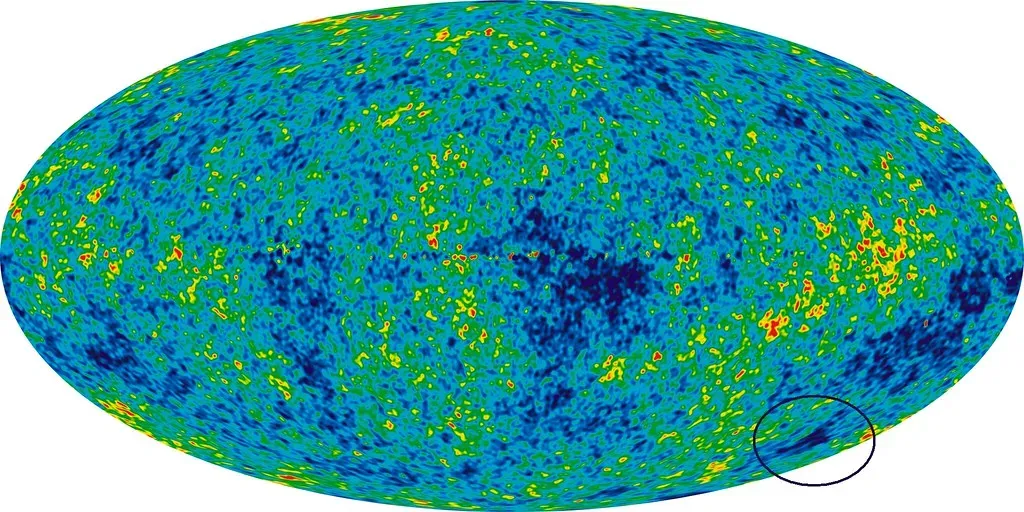
Here is something that should stop you in your tracks. Researchers who won the Nobel Prize in Physics proved that the universe is not locally real. “Local” means any object can be influenced only by its immediate surroundings, not by happenings on the other side of the universe. That sounds obvious, almost boring. Except it turns out to be completely false at the quantum level.
“Real” means every object has definite properties regardless of how it is observed. Yet careful, repeated experimentation with entangled particles has conclusively shown such seemingly sensible restrictions do not always apply to the quantum realm. What you thought was bedrock turns out to be a comfortable illusion. Even the physicists who proved this are still puzzled by what it means.
2. Quantum Entanglement Now Has Universal Laws That Span All Dimensions
Researchers have demonstrated that quantum entanglement follows universal rules across all spacetime dimensions. The team showed that Rényi entropy, a key measure of entanglement, is governed by a small set of parameters, including Casimir energy, regardless of dimensionality, revealing structural universality in complex quantum systems. That is a jaw-dropping finding. It means the “spooky” rules of entanglement are not just local quirks. They are woven into the very fabric of all dimensions.
This marks the first application of thermal effective theory to quantum information, potentially advancing simulations of many-body systems and contributing to the theoretical foundations of quantum gravity. Think of it like discovering that gravity obeys the same laws on every planet in every galaxy. The universe appears far more elegantly structured than anyone expected. I think that is one of the most quietly stunning results physics has produced in years.
3. A Hidden 48-Dimensional World Was Found Inside Quantum Light
A hidden 48-dimensional structure inside entangled light could revolutionize how quantum information is stored and protected. Scientists at the University of the Witwatersrand in South Africa, working with collaborators from Huzhou University, uncovered a surprising feature in widely used quantum optics tools. They found that standard methods for producing entangled photons can contain previously unseen topological structures. In their experiments, these structures reached a record 48 dimensions and included more than 17,000 distinct topological signatures, creating a vast new “alphabet” for encoding stable quantum information.
Although orbital angular momentum entanglement has been widely explored, it has often been considered fragile. The researchers now suggest that viewing it through the lens of topology could change that perspective. By leveraging these newly discovered structures, scientists may be able to develop more reliable quantum systems, opening the door to practical, real-world applications. Let’s be real, finding hidden structure inside something physicists have been using for decades is a bit like discovering your kitchen has a secret room. It changes everything about how you thought you knew the place.
4. Quantum Superposition: Everything Exists in Multiple States at Once

Quantum particles can exist in multiple states or positions simultaneously. This phenomenon, known as superposition, leads to bizarre scenarios where particles seem to be in multiple places at once until observed. It is not a metaphor. It is not a limitation of measurement. The particle genuinely has no fixed state until the moment it is detected. Nature itself refuses to commit until forced.
This makes quantum physics all about probabilities. You can only say which state an object is most likely to be in once you look. These odds are encapsulated into a mathematical entity called the wave function. Making an observation is said to “collapse” the wave function, destroying the superposition and forcing the object into just one of its many possible states. The staggering implication is that reality, at its deepest level, is not a fixed landscape. It is more like a fog of possibilities that condenses only when you shine a light on it.
5. Quantum Tunneling Is Why the Sun Shines At All
Quantum tunneling demonstrates the ability of a particle to overcome a barrier which, in classical physics, it could not because it doesn’t have the energy needed to do so. The phenomenon arises because of Heisenberg’s Uncertainty Principle. It sounds like rule-breaking. It is actually rule-following, just following very different rules than the ones your everyday intuition knows. Imagine a ball rolling up a hill it has no energy to crest, yet somehow appearing on the other side anyway.
This may seem esoteric, but quantum tunneling is essential for life itself to exist. The thermonuclear fusion processes that power the Sun, as well as every other star in the universe, would not be possible if hydrogen nuclei couldn’t use it to overcome the electromagnetic repulsion keeping them apart. No quantum tunneling, and there is no starlight. The universe would be a cold, dark, and empty place without it. Every sunrise you have ever seen, every plant that ever photosynthesized, every warm day you have enjoyed, is downstream of this single quantum phenomenon.
6. Heisenberg’s Uncertainty Principle Proves Reality Is Inherently Unpredictable
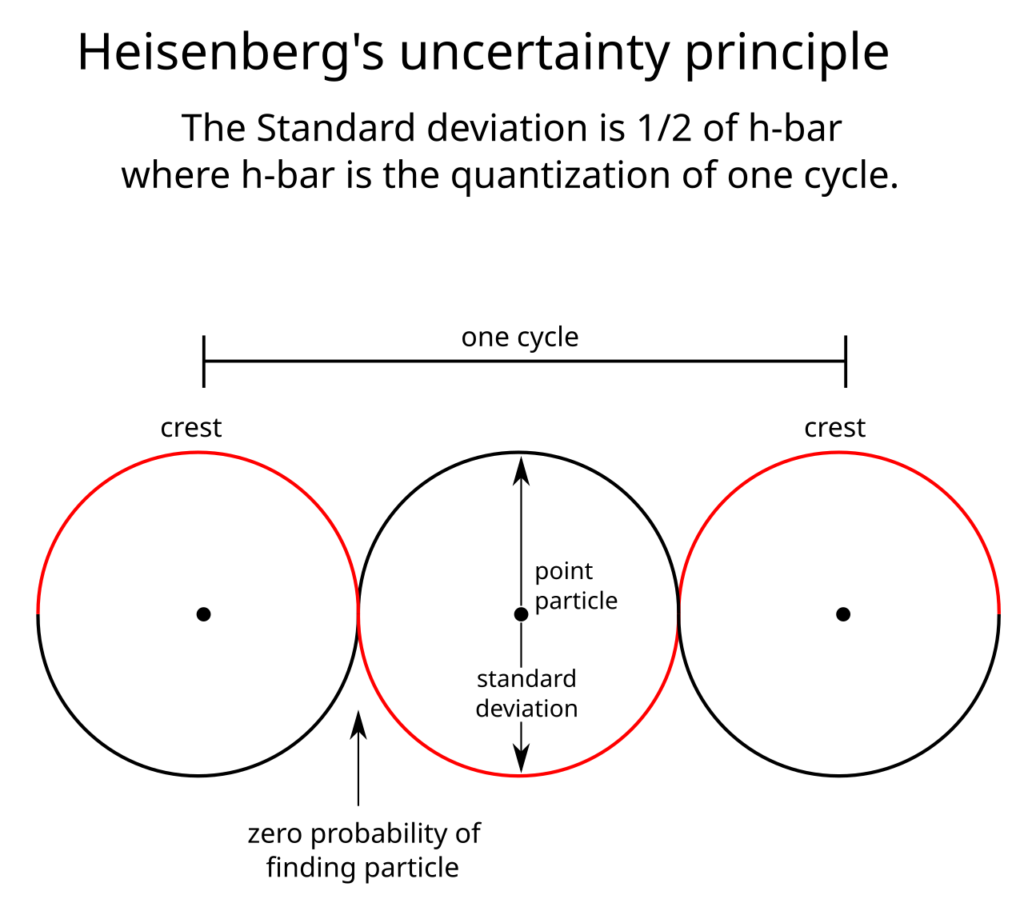
The Uncertainty Principle states that you cannot simultaneously know both the exact position and momentum of a particle with perfect precision. This fundamental concept in quantum mechanics, formulated by Werner Heisenberg in 1927, reveals the inherent limitations of measurement at the quantum level and challenges our classical understanding of physics. This is not about having bad instruments. It is a mathematical truth baked into reality itself.
This concept, often referred to as the Heisenberg law of uncertainty, shattered the classical idea of a deterministic universe where knowing the present state allows perfect prediction of the future. Einstein famously hated this. He insisted “God does not play dice.” This led to famous debates between Einstein, who believed in determinism, and Bohr, who defended the probabilistic interpretation of quantum mechanics. Modern physics largely sides with Bohr, accepting that quantum systems are inherently probabilistic. The universe, it turns out, does play dice and it does not apologize for it.
7. The Double-Slit Experiment Revealed That Observation Changes Reality
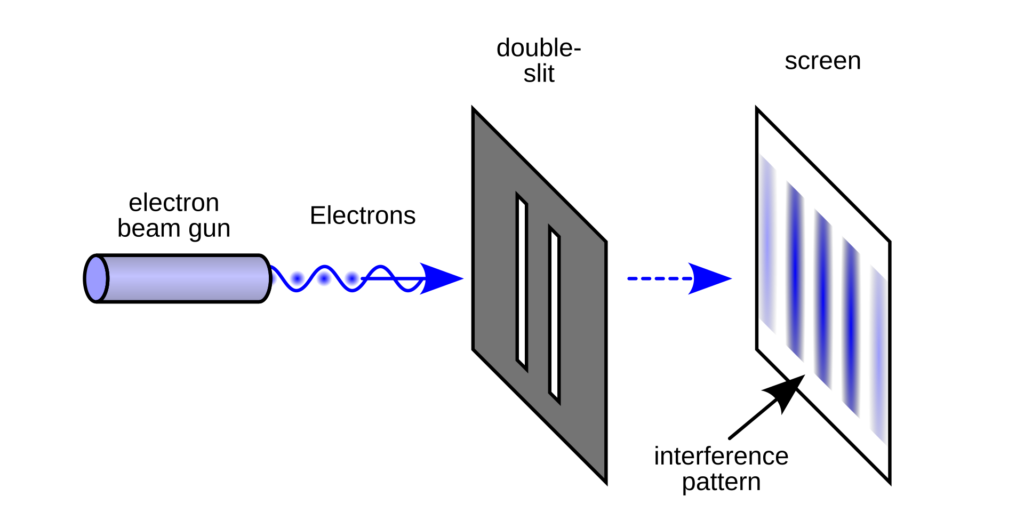
A hidden universe beneath everyday experience exists – a universe in which particles behave like waves, observation can alter outcomes, and reality itself appears woven from probability rather than solidity. The double-slit experiment is not just a scientific test but a philosophical earthquake, challenging our assumptions about what is real, what is knowable, and what it even means to “observe” something. The experiment is deceptively simple. Fire particles at two slits in a barrier. What you see on the other side defies everything classical physics predicts.
While the double-slit experiment might seem like a purely philosophical puzzle, its discoveries have led to technologies that shape our modern world. Quantum mechanics, which grew directly from experiments like this one, has given us computers, lasers, smartphones, solar cells, and medical imaging devices. Every time you scan a barcode, use GPS, or undergo an MRI scan, you rely on principles derived from quantum physics. Here’s the thing, one of the most reality-shattering experiments in history is also the foundation of your phone in your pocket. That connection is genuinely remarkable.
8. Quantum Fluctuations in Empty Space Seeded the Entire Universe
In the beginning, there was the Big Bang. Then in the 1980s, that theory was modified to include the theory of inflation. A new idea was formed: the universe grew rapidly before quantum fluctuations linked to the Heisenberg uncertainty principle had a chance to fade away. As a result, energy is concentrated in some areas rather than others, seeds around which material can gather to form the clusters of galaxies we are able to observe now. Every galaxy, every star, every planet, including ours, traces its origin back to a microscopic quantum hiccup.
Physicists speak of this coming and going of virtual particles and their quantum fields as vacuum or zero-point fluctuations. While the particle pairs quickly vanish into nothingness again, their existence leaves behind a certain amount of energy. The vacuum of space is not actually empty. It seethes with temporary particle pairs constantly winking in and out of existence. A leading theoretical explanation links dark energy to vacuum energy arising from virtual particles – temporary fluctuations in empty space as predicted by quantum field theory. “Empty space” may actually be the most eventful place in the universe.
9. Quantum Entanglement Has Been Tested in Outer Space
SEAQUE contains a device known as a waveguide that makes two entangled photons, as well as a series of detectors that measures the state of each photon. The whole apparatus has been mounted on the outside of the International Space Station since November 2024. This experiment’s waveguide entanglement source is smaller and sturdier than any other quantum entanglement experiments that have been flown in space so far. Not only did it survive launch, its first results show that it is working extraordinarily well.
China’s Micius satellite, launched in 2016, enabled the first demonstrations of quantum-encrypted data sent from space. In 2025, the Jinan-1 microsatellite pushed this work further by establishing a 12,900 km quantum connection between China and South Africa. That is a quantum link stretching nearly halfway around the planet. Quantum communication technology could securely connect two far-apart quantum computers, overcoming the limitations of traditional fiber optics. This could be very useful to transmit information across the vast distances of space, or enable a quantum version of cloud computing. The quantum internet is no longer a fantasy. It is being built right now, piece by entangled photon by piece.
10. Wave-Particle Duality: Everything Is Both, Nothing Is Just One
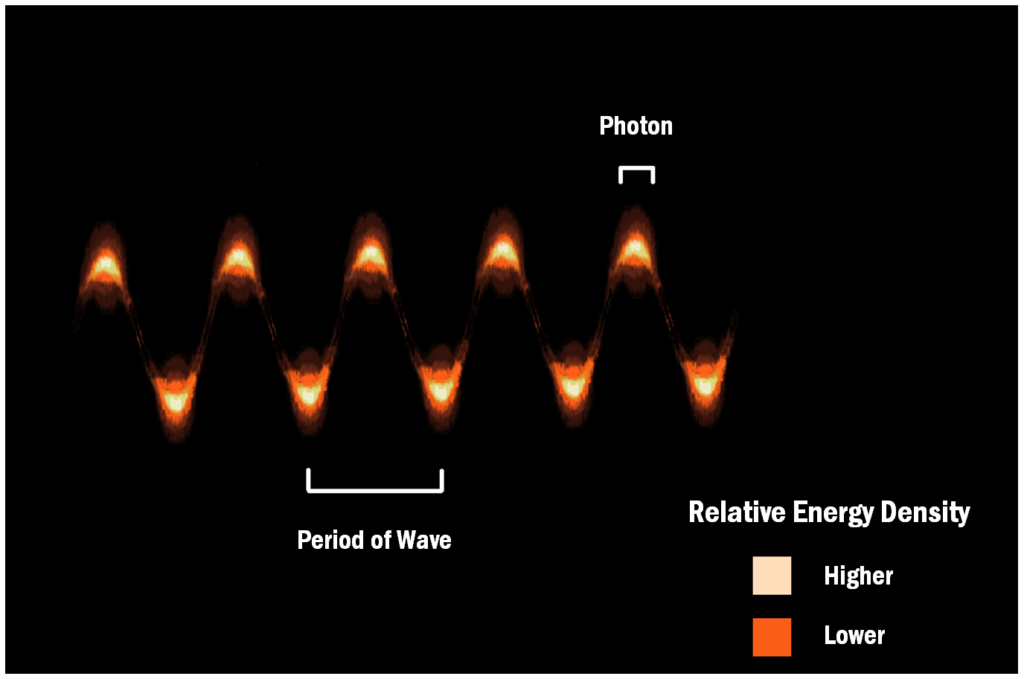
In 1906, J. J. Thomson won the Nobel Prize for showing that electrons are particles. In 1937, his son George won the same prize for showing that electrons are waves. Both were right. The phenomenon is now termed wave-particle duality and is a cornerstone of quantum physics. Father and son. Two Nobel Prizes. Two opposite conclusions. Both completely correct. You almost have to laugh at how aggressively the universe refuses to be simple.
This problem extends to electrons and protons and other particles as small or smaller than atoms. Every elementary particle has properties of both a wave and a particle. That idea is called wave-particle duality. It is one of the biggest mysteries in the study of the smallest parts of the universe. At the most fundamental level of existence, on the quantum scale of subatomic particles and forces, nothing works according to familiar rules of mechanics, electromagnetism, or thermodynamics. In other words, everything you were taught about the building blocks of matter was not wrong exactly. It was just not nearly strange enough.
Conclusion: The Universe Is Stranger Than You Were Ever Told
Quantum physics is not a collection of dry equations on a chalkboard. It is a genuine revolution in what it means to know something about the universe. It tells you that particles live in superposition until observed, that entangled photons share information across continents and across space, that empty space is actually full of energy, and that the very structure of reality is built on probability, not certainty.
What makes all of this so extraordinary is that these are not thought experiments or philosophical guesses. They are tested, proven, and increasingly being turned into real technologies. Quantum satellites, quantum computers, quantum encryption. The strange is becoming the practical.
Perhaps the most humbling part is this: physicists have made all of these staggering discoveries and still openly admit they do not fully understand why the quantum world works the way it does. There is a glaring gap in our knowledge of the physical world, and none of our well-established theories describe gravity’s quantum nature. Yet physicists expect that this quantum nature is essential for explaining extreme situations such as the very early universe and the deep interior of black holes. The universe keeps its deepest secrets close. Every answer reveals ten new questions.
Which of these ten discoveries surprised you most? Tell us in the comments, because honestly, any of them could be the answer.