
If you have ever walked through a museum and thought a piece from thousands of years ago looked like it belonged in a designer showroom or a sci‑fi movie set, you are not alone. Some ancient artifacts seem to break time itself, echoing modern technology, minimalist design, or even current fashion trends. They make you question how “primitive” the past really was and how much of what we think is new is actually just a clever remix.
What fascinates me most is that these objects are not just curiosities; they are proof that human imagination and ingenuity have always been wild, daring, and surprisingly familiar. When you look closely, you start seeing smartphones in clay tablets, high‑tech gadgets in bronze dials, and contemporary jewelry in Neolithic stone. Once you notice it, you can’t unsee it – and it changes how you think about both the past and the present.
The Antikythera Mechanism: The “Analog Computer” From Ancient Greece
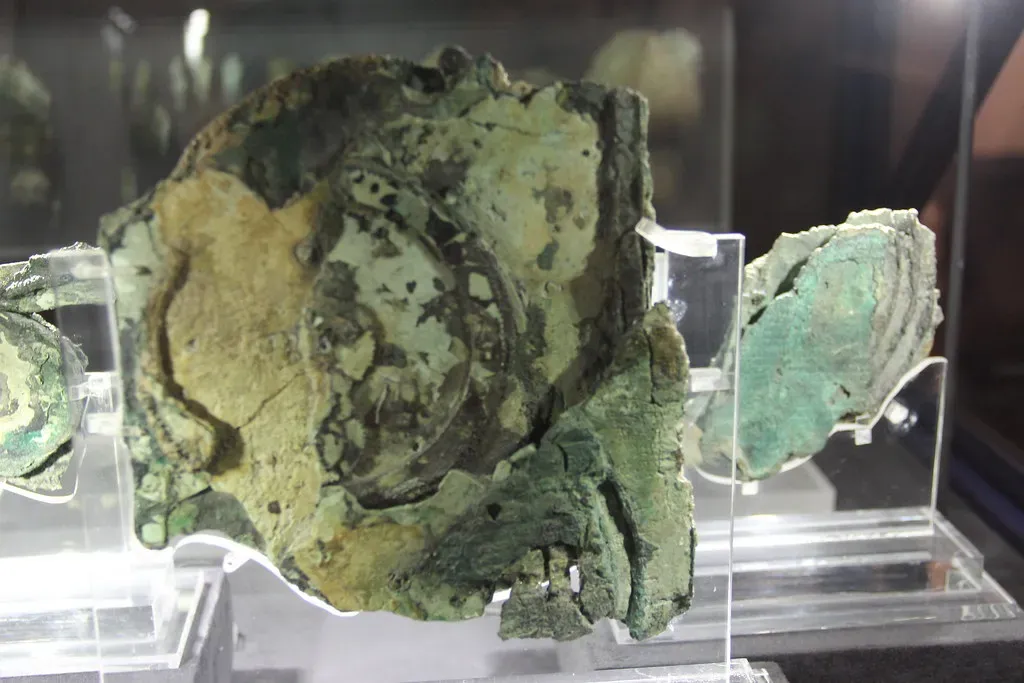
At first glance, the Antikythera mechanism looks like a corroded mass of bronze pulled from the bottom of the sea – which it is. But under X‑ray scans, it revealed a labyrinth of perfectly cut gears and dials so intricate that it has been called an ancient analog computer. It was built in Greece more than two thousand years ago, yet its complexity would not be matched again for well over a millennium. Seen in reconstruction, it resembles a compact, gear‑driven device you might expect to find in a modern watchmaker’s workshop.
Its purpose was to predict eclipses and track the cycles of the sun, moon, and possibly planets, all displayed through rotating pointers and inscribed scales. If you placed it on a desk today with a sleek casing, most people would assume it was some kind of specialized scientific instrument, not a relic from a shipwreck. To me, it is a humbling reminder that technological ambition is not a modern invention; the ancient Greeks were already thinking in terms of systems, precision, and data long before the word “technology” had today’s meaning.
Roman Glassware That Looks Like Contemporary Designer Pieces
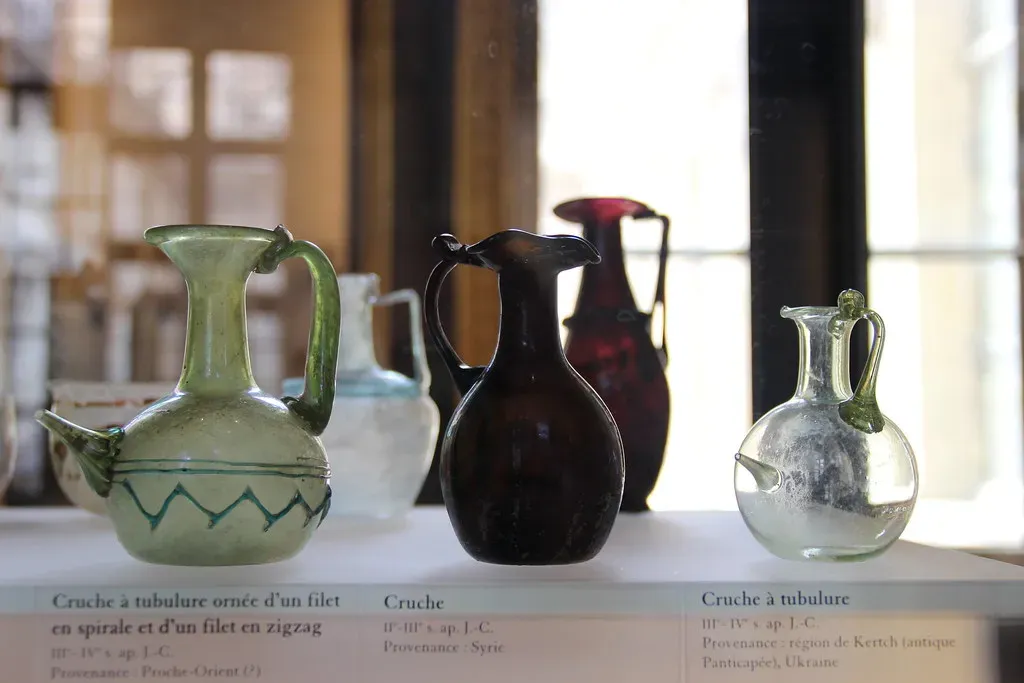
Walk into a high‑end home store and you will see tinted glass vases, iridescent bowls, and delicately blown cups proudly marketed as modern design. Then you step into a Roman gallery and see almost the same thing – except it was made nearly two thousand years ago. Roman glassmakers mastered techniques like mold‑blowing, cutting, and controlled impurities that created colors and sheens that feel surprisingly fresh. Some pieces have clean, cylindrical forms that would fit neatly into a minimalist Scandinavian living room.
What really shocks me is the sophistication of their mass production. Glassware was not just for elites; the Romans scaled production in a way that feels oddly similar to today’s global manufacturing, with workshops pushing out large quantities of elegant, practical vessels. When you realize that a delicate blue Roman drinking glass could easily be mistaken for something from a trendy boutique, the line between “ancient” and “modern” starts to blur. It makes our obsession with novelty feel a bit ironic – we are often just rediscovering what people already nailed centuries ago.
Egyptian Faience Amulets and Beads With a Futuristic Glow
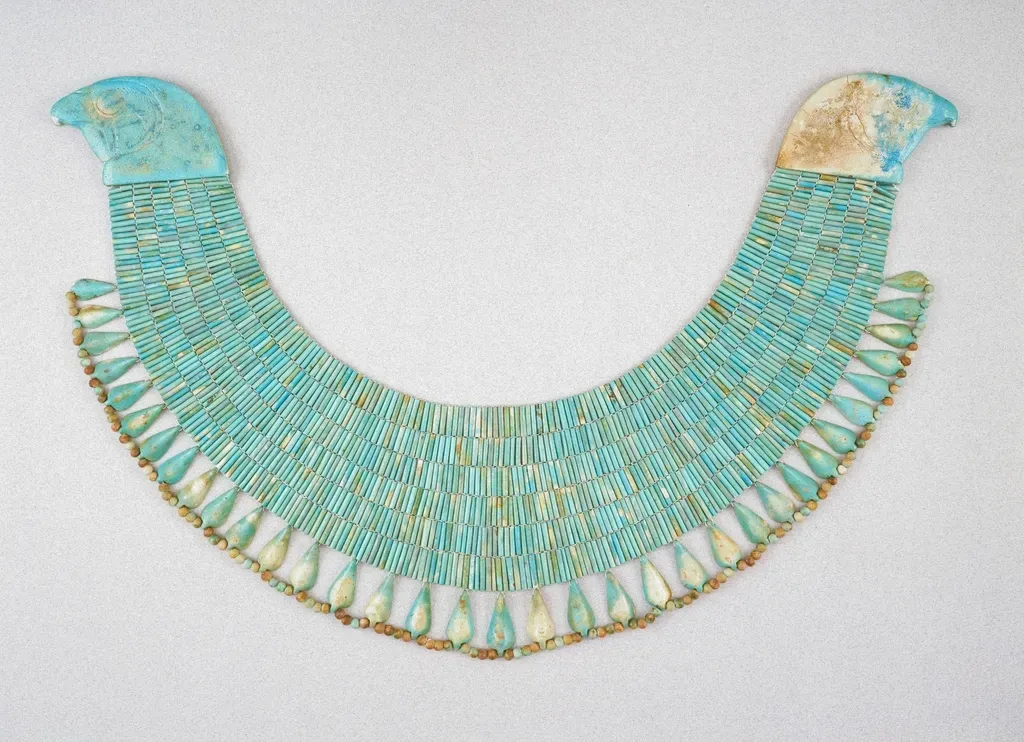
Egyptian faience – those small, bright blue‑green beads, amulets, and figurines – has such an electric, saturated color that it almost looks synthetic, like something 3D‑printed or coated with neon enamel. Yet these objects are made from crushed quartz or sand with a self‑glazing process mastered thousands of years before modern chemistry. When you see a faience scarab or bead necklace up close, the glossy surface and bold, uniform hue feel more like futuristic plastics than ancient ceramics.
The way Egyptians used faience is also eerily familiar: as symbolic accessories, decorative elements, and wearable expressions of identity and belief. In a way, they were pioneering what we now treat as brand colors or aesthetic signatures – think of that instantly recognizable, specific shade you see in modern tech products or luxury packaging. To my eye, faience proves that visual branding and color obsession are not new; humans have always been drawn to surfaces that pop, shine, and send a message before a single word is spoken.
Minoan Frescoes That Could Hang in a Modern Art Gallery
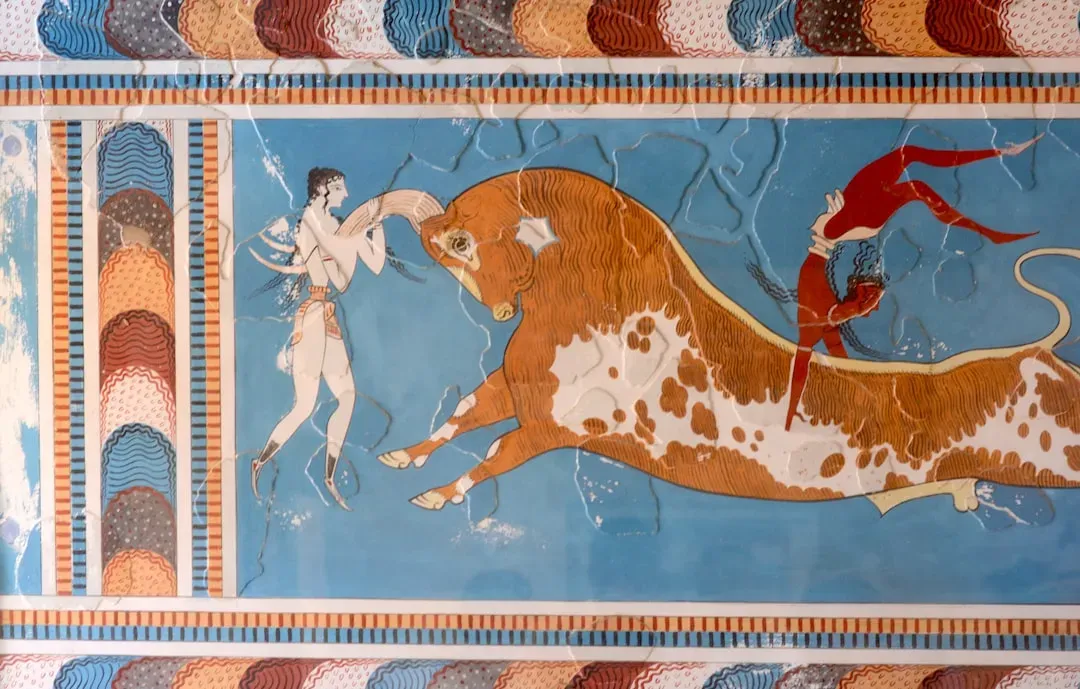
Some Minoan wall paintings from Bronze Age Crete look like they could have come straight from a mid‑century modern art show. The figures are stylized and fluid, with bold outlines and limited, saturated color palettes that feel surprisingly contemporary. Scenes of acrobats vaulting over bulls, women with elaborate hairstyles, and marine life are rendered with an almost graphic‑design sensibility – flat areas of color, rhythmic curves, and playful abstraction rather than strict realism.
What makes them seem modern to me is not just the style, but the attitude. There is a sense of motion and joy in many of these works that feels more like dynamic poster art than solemn ancient decoration. If you framed some of these fresco fragments and hung them in a stylish café or design studio, most people would assume they were from the last century at most. They show that the so‑called “modern” appetite for stylized, simplified forms was alive and well more than three thousand years ago, long before modernism got its name.
Neolithic Stone Bracelets With Minimalist, Sculptural Design
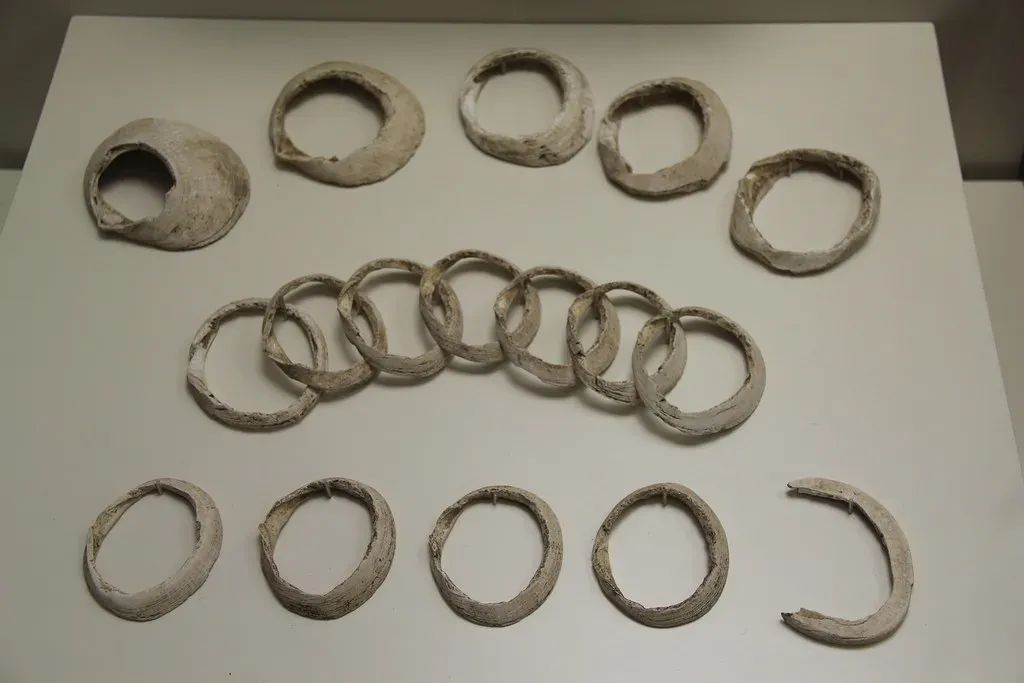
In several ancient sites, especially in parts of Europe and Asia, archaeologists have found polished stone bracelets with such clean, rounded geometry that they could easily pass as luxury minimalist jewelry today. Some have almost impossibly smooth inner and outer surfaces, with subtle asymmetries that feel intentional and artistic rather than rough or crude. They look like something you might see in a curated fashion spread or a high‑end concept store, not objects carved with Stone Age tools.
Holding a replica, you get this strange sense of déjà vu – like you have seen it on someone’s wrist on the subway or in a street‑style photo. These bracelets suggest that the desire for sleek, understated accessories is deeply rooted in human taste. I find it almost funny that we pay a premium for “timeless” pieces now, while these literal timeless pieces were already doing the same trick thousands of years ago. The modern obsession with minimalism feels less like a new movement and more like a recurring memory humanity keeps coming back to.
The Baghdad Battery: Clay Jars That Resemble Experimental Tech
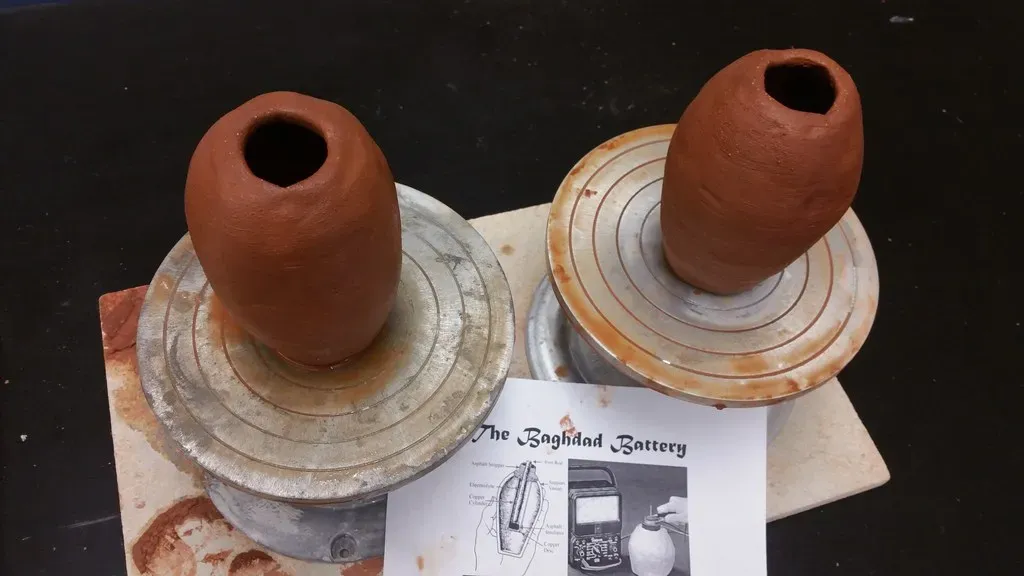
The so‑called Baghdad Battery – ceramic jars with metal rods and possible electrolytes found in Mesopotamian contexts – has sparked endless debate. Whether or not they were truly used as primitive galvanic cells, they have an uncanny resemblance to modern experimental lab gear. A ceramic container, a metal core, traces of acidic substances: if you showed it to someone in a science classroom, they might assume it was part of a simple battery demonstration or a corrosion experiment.
What interests me most here is not the endless arguments about their exact function, but how easily they slide into our mental category of “prototype gadget.” The idea that people two thousand years ago might have been tinkering with materials in ways that accidentally brushed against electricity is both plausible and deeply exciting. Even if they were used for plating or some ritual purpose, the visual echo of a battery forces us to confront an uncomfortable thought: maybe we underestimate how often ancient experimenters pushed into domains we think belong only to modern science.
Terracotta Warriors With Realistic Armor and Lifelike Detail

The Terracotta Army of China’s first emperor is famous for its scale, but the individual warriors are startlingly modern in their detail. Their armor plates, laced sections, and layered garments look like something a historical costume designer would build today using careful research and modern tools. Many of the faces carry subtle expressions; some scholars liken them to portraits rather than generic figures, which feels very aligned with contemporary ideas of individuality and realism in sculpture.
Standing in front of them, you get the same sense you might feel watching a hyper‑realistic 3D rendering or a meticulously crafted movie prop line‑up. The modular construction of the warriors – different torsos, heads, and arms combined in variation – almost mirrors modern manufacturing and character design pipelines. To me, they reveal that the line between “ancient art” and “modern visual culture” is thinner than we like to admit; both aim to create believable, emotionally resonant human figures using the best tech of their time.
Bronze Age Scandinavian “Sun Discs” and Solar Symbols
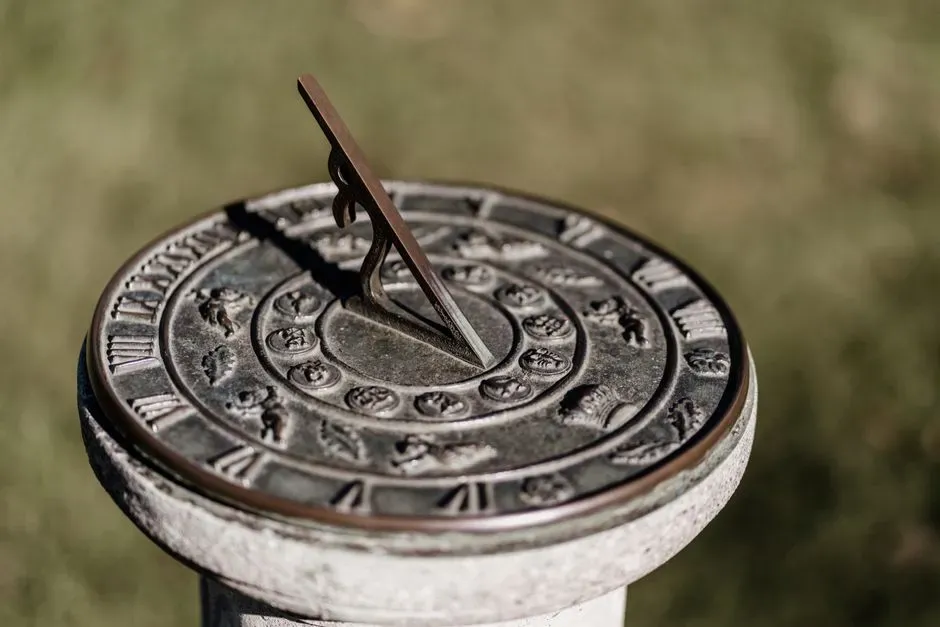
Bronze Age sun discs and solar symbols from Northern Europe, particularly Scandinavia, often look like minimalist logo design. Many are simple circles with radiating lines or geometric divisions that strongly resemble contemporary graphic icons used in apps, branding, or product interfaces. The reduction of something as complex as the sun into a clean, repeatable symbol feels incredibly modern, like an early exercise in visual identity design.
Some of these discs were mounted on wagons or worn as ornaments, turning abstract cosmic concepts into wearable or movable symbols – basically, mobile branding for belief systems. When you see one of these discs out of context, it is easy to imagine it as the logo for a solar‑energy startup or a boutique design agency. In my view, this shows how deeply human brains are wired to compress big ideas into small, sharp images, long before Adobe Illustrator or corporate style guides ever existed.
Incan Quipus: Corded Data That Echoes Modern Information Storage
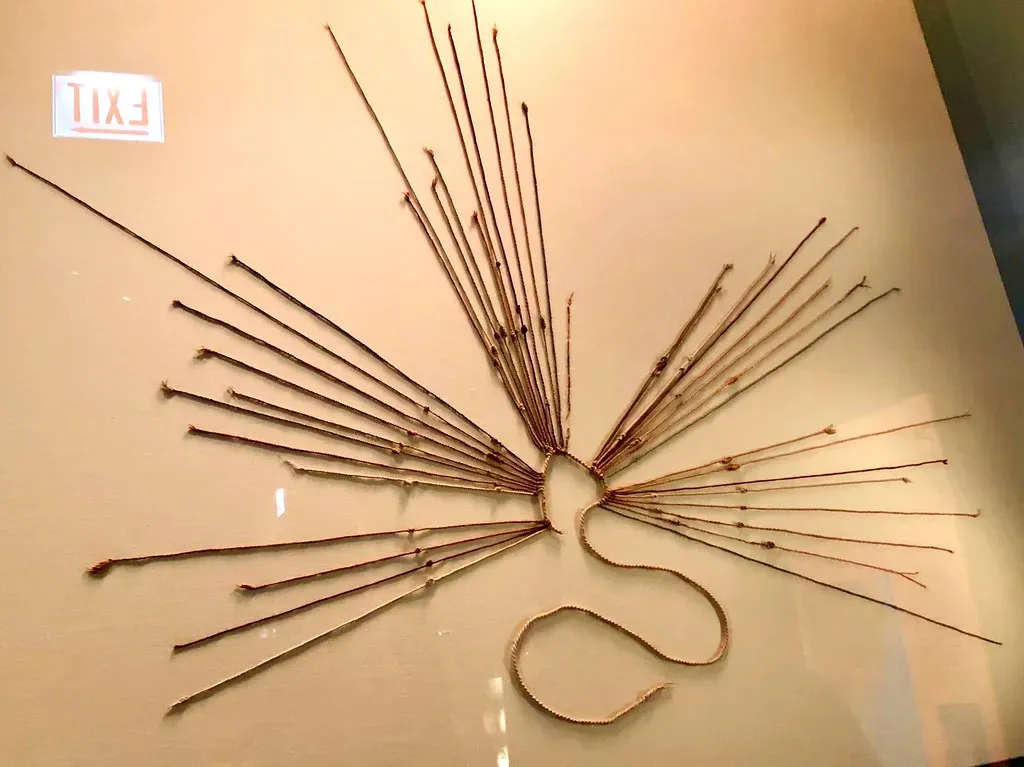
At first, Incan quipus look like bundles of colorful strings with knots, but they functioned as a sophisticated information system. Different knot types, positions, and cord colors encoded data such as counts, categories, and possibly even narrative or administrative records. When you hear that, it is hard not to compare them to modern data structures – rows and columns in a spreadsheet, or bytes in a storage device – except here the medium is fiber instead of silicon.
Visually, a quipu has a strange resemblance to cable management systems, wiring harnesses, or even the back of a server rack where each colored cable has a specific meaning and route. The idea that an empire could manage its logistics and census information through knotted cords feels shockingly close to how we route information through physical and digital networks today. I find it genuinely moving that, in their own way, these cords are as much “information technology” as a USB drive or a data center, just built from a different understanding of materials.
Greek and Roman Surgical Instruments That Look Like Modern Tools
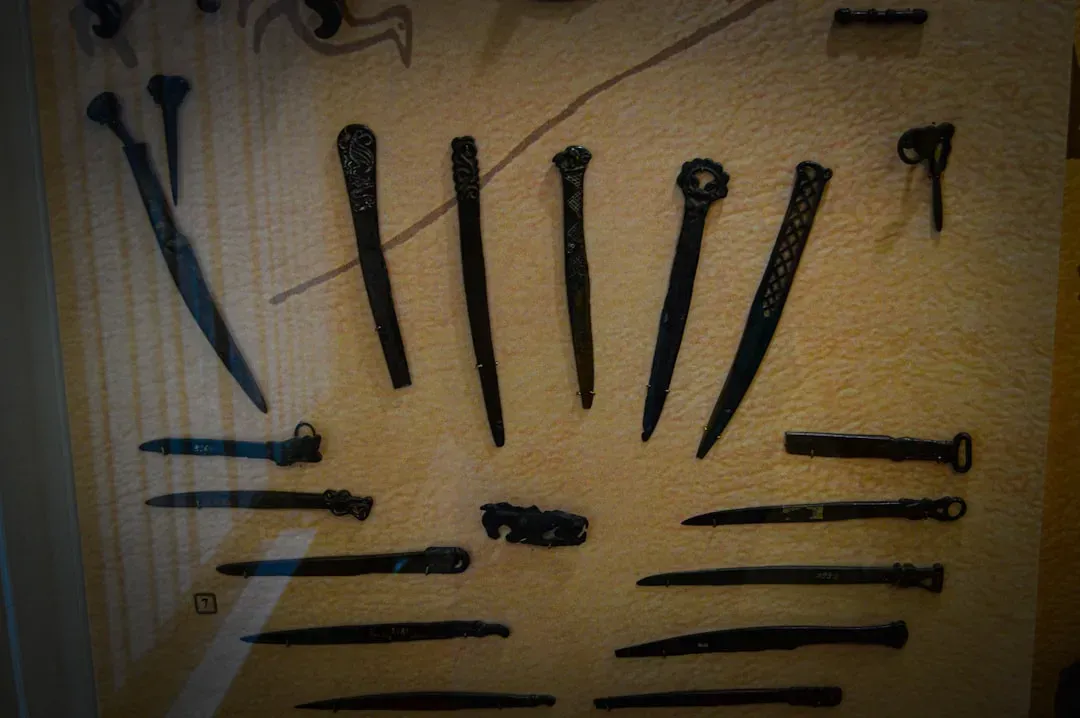
Ancient Greek and Roman surgical instruments – scalpels, forceps, speculums, and probes – often look so familiar that a modern doctor might instinctively know how to hold them. Many pieces are made of bronze or iron, with carefully shaped handles and blades that mirror the ergonomics of today’s stainless‑steel tools. When displayed in rows in a museum, they can easily be mistaken for a slightly old‑fashioned but still usable set of medical instruments.
What this tells me is that some problems, like how to cut, grasp, or inspect the human body, have design constraints that do not change much over time. Once someone discovers an effective form – like a gently curved scalpel or a two‑pronged forceps – there is only so far you can refine it. In a world obsessed with constant innovation, it is quietly radical to realize that certain “modern” forms were basically perfected in antiquity. It makes the continuity of medical practice feel less like a series of revolutions and more like a very long, careful conversation between generations.
Conclusion: The Past Is Not Primitive; It Is Familiar
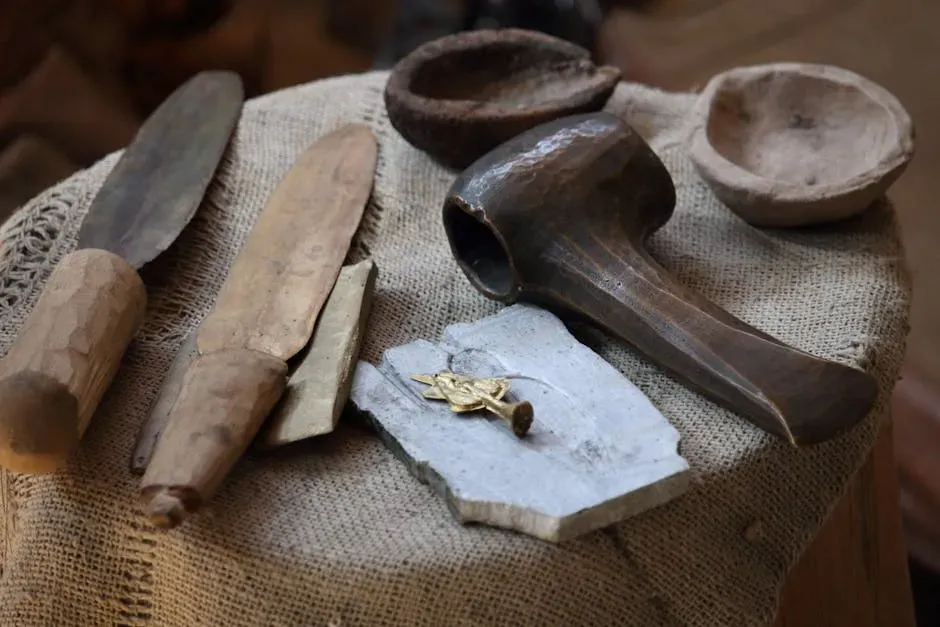
Looking across these artifacts, a pattern emerges that I think we often resist: the ancient world was not a dim, clumsy prelude to our supposedly enlightened age. Instead, it was full of people who thought in ways that look startlingly like our own – designers who loved clean lines, engineers who embraced complex mechanisms, artists who played with abstraction, and administrators who invented clever ways to handle information. The fact that their creations can pass for modern objects is not a coincidence; it is a mirror held up to our assumptions about progress.
My opinion is that we cling too hard to the idea that we are uniquely advanced, partly to feel special and partly to justify ignoring the wisdom of those who came before us. These “modern‑looking” artifacts quietly argue the opposite: that ingenuity is ancient, that taste cycles in loops, and that our sleek gadgets and minimalist aesthetics are just the latest verse in a very old song. Next time you pick up a device or admire a piece of design, it might be worth asking yourself whose hands, thousands of years ago, already solved a version of that same problem. When you look at history this way, does the future still feel as brand‑new as we like to think?