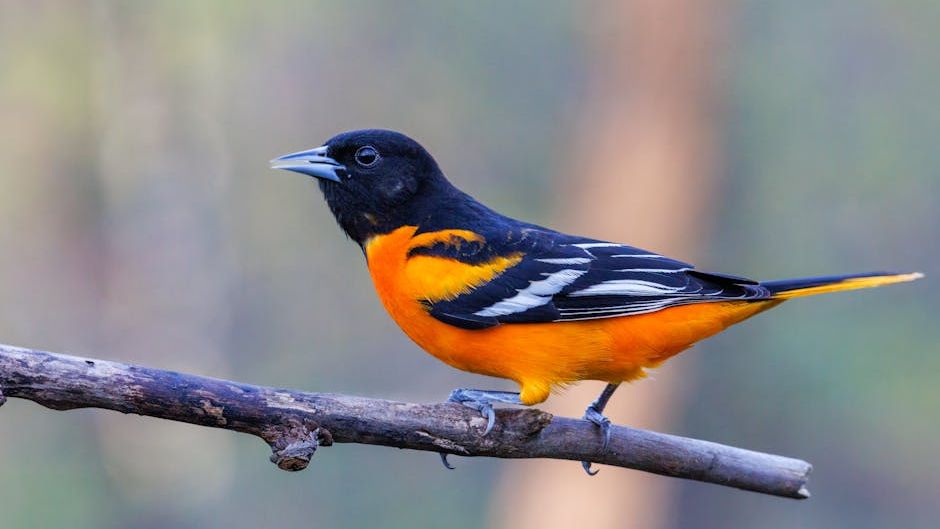

There’s a special kind of thrill in looking out at an ordinary backyard and suddenly spotting a bird that looks like it flew straight out of a tropical postcard. That’s exactly what it feels like when a Baltimore oriole flashes past in a burst of orange and black. They’re not rare in much of the eastern United States, but they feel rare every time you see one, which is part of what makes people so obsessed with attracting them.
I still remember the first time I hung orange slices on a makeshift clothesline and thought, “There’s no way this actually works.” An hour later an oriole was perched on the rind, glowing like a little lantern. That mix of wild beauty and backyard closeness is what this species does better than almost any other songbird. Once you learn a bit more about them, it’s hard not to root for them – and even harder not to redesign your whole yard around their visits.
1. Their Flaming Colors Aren’t Just for Show
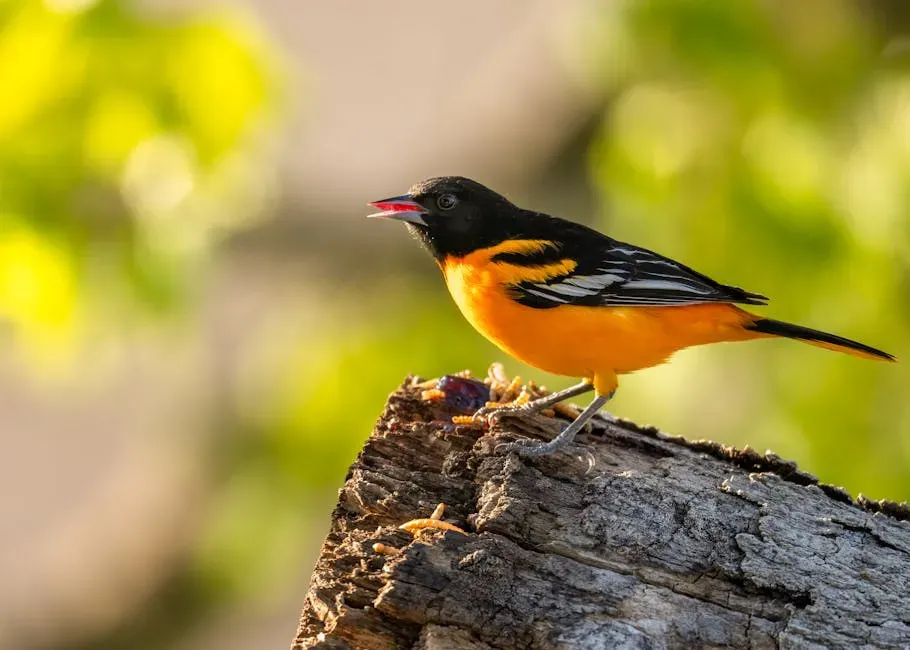
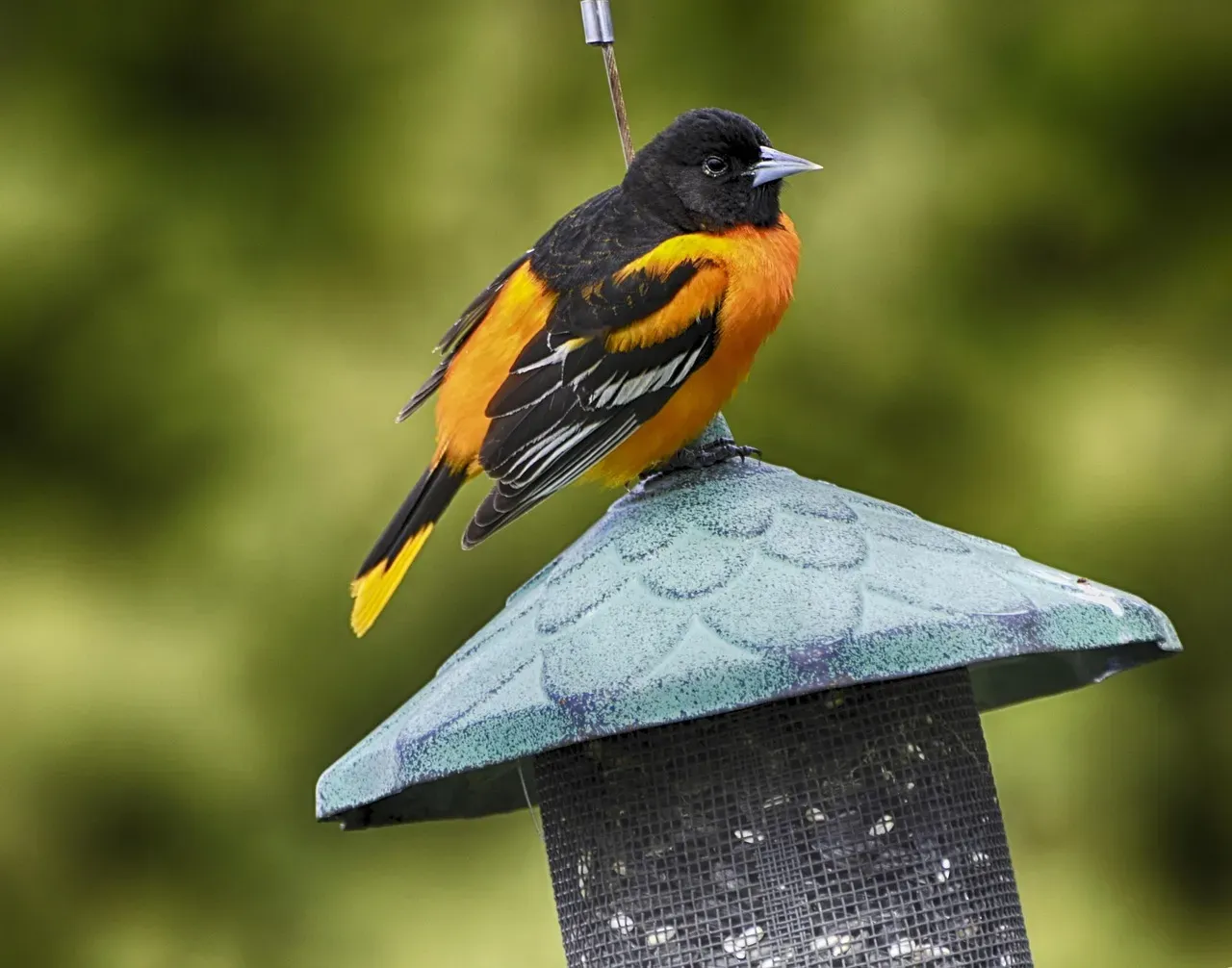
When you see a male Baltimore oriole in breeding season, it almost doesn’t look real: that deep orange body, black hood, and crisp white wing bars feel like someone turned the saturation up too high. Those colors come from pigments called carotenoids, which the birds can’t make on their own – they have to get them from their diet, mainly from fruits and insects. In a way, you can think of an especially bright male as a walking billboard saying, “I’m healthy enough to find good food.”
Females and young birds are more muted, usually yellowish-orange with grayish backs, but that difference is also part of the story. The softer colors give females a bit more camouflage when they’re sitting on eggs and raising young, which is a practical trade-off between beauty and survival. People often assume they’re seeing a totally different species when a pale bird shows up at the feeder, but most of the time it’s just an oriole at a different age or stage of life.
2. They Build Hanging Nests That Look Like Forest Purses
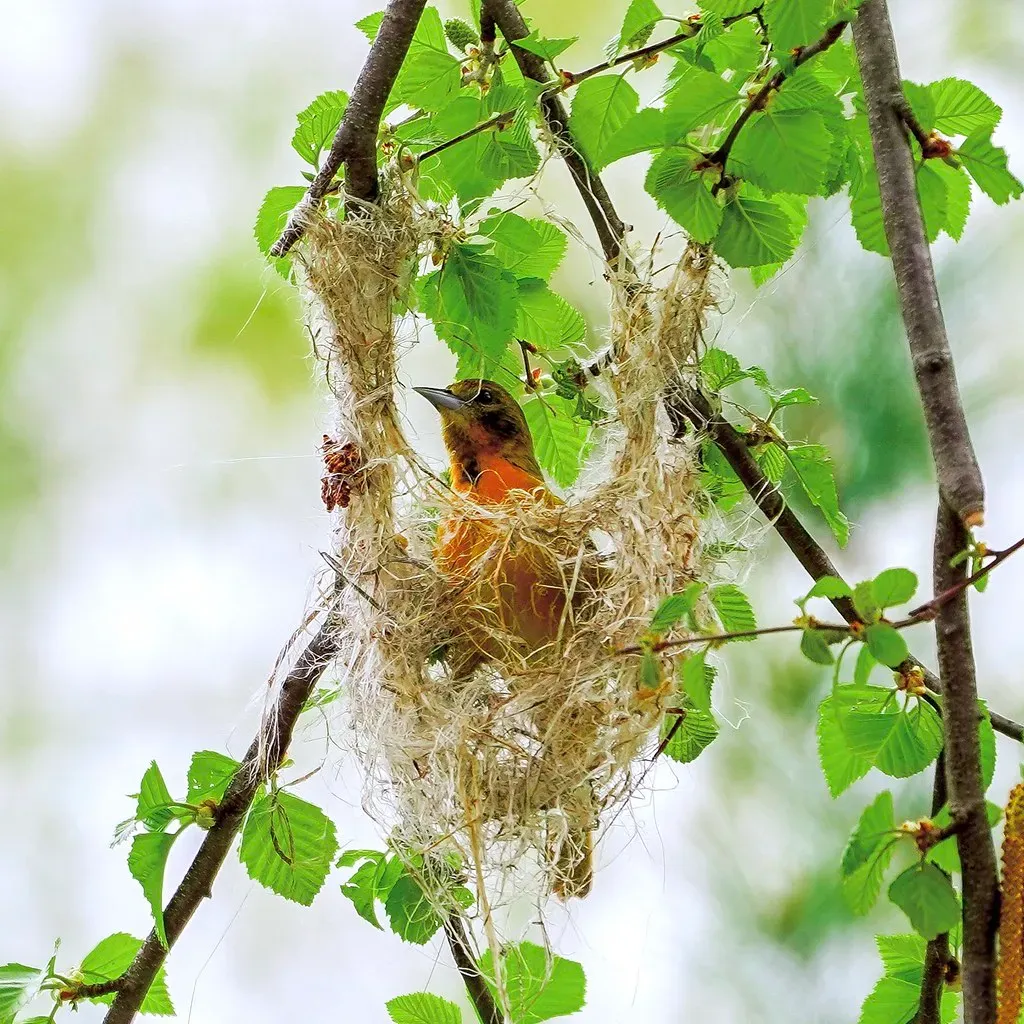
One of the coolest secrets about Baltimore orioles is that their nests look like tiny, handwoven handbags dangling from the branches. Instead of building a simple cup, the female weaves a deep, flexible pouch that hangs from the fork or tip of a branch, often high up in a shade tree. She uses plant fibers, grasses, strips of bark, and sometimes even bits of string or yarn scavenged from human spaces.
This clever design is more than just stylish. A hanging nest sways in the wind, which helps discourage some predators that prefer stable footing, and the depth of the pouch protects eggs and chicks from rolling out. If you watch from the ground over several days, you can actually see the nest go through phases – from a loose hammock to a firm, rounded bag. It’s one of those moments where you realize just how much engineering is happening quietly in the treetops above you.
3. They Have a Serious Sweet Tooth (That Helps You Attract Them)
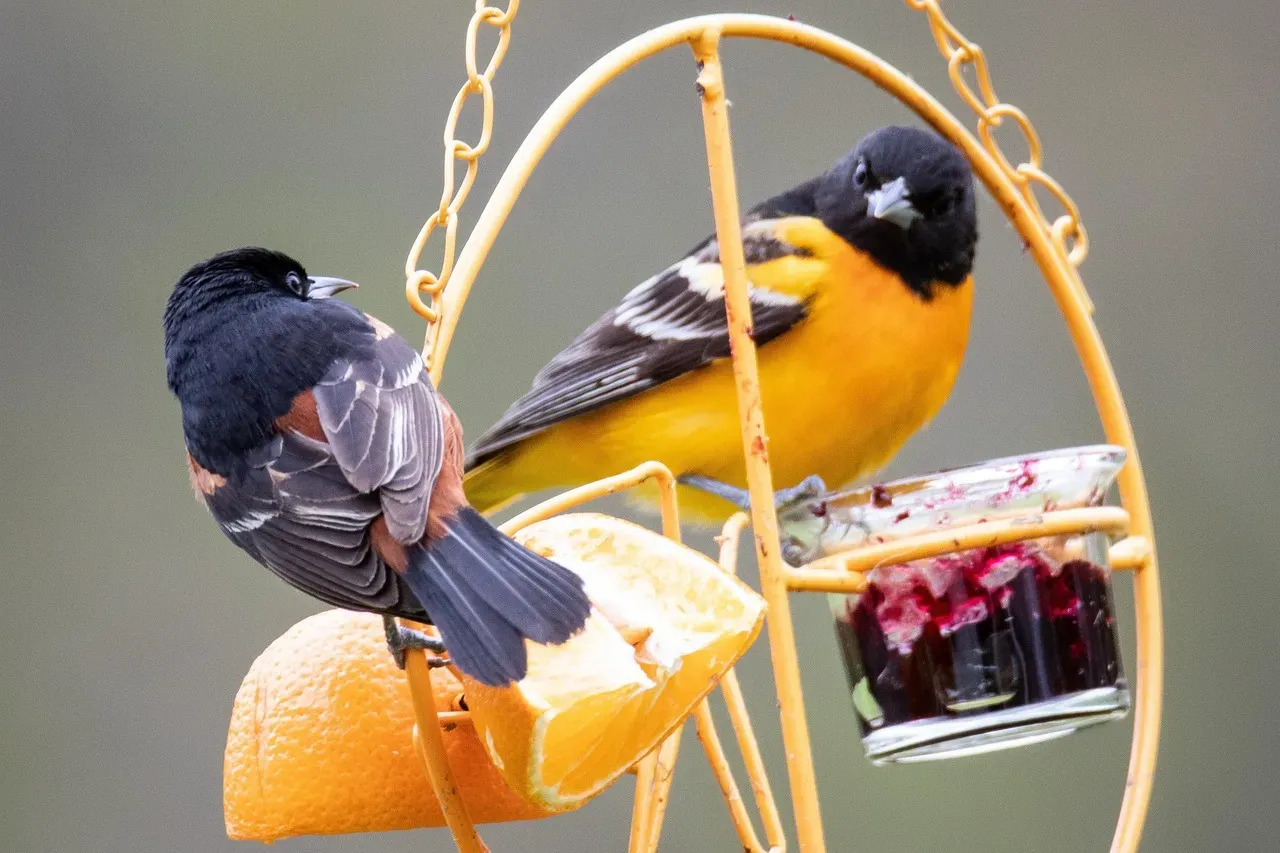
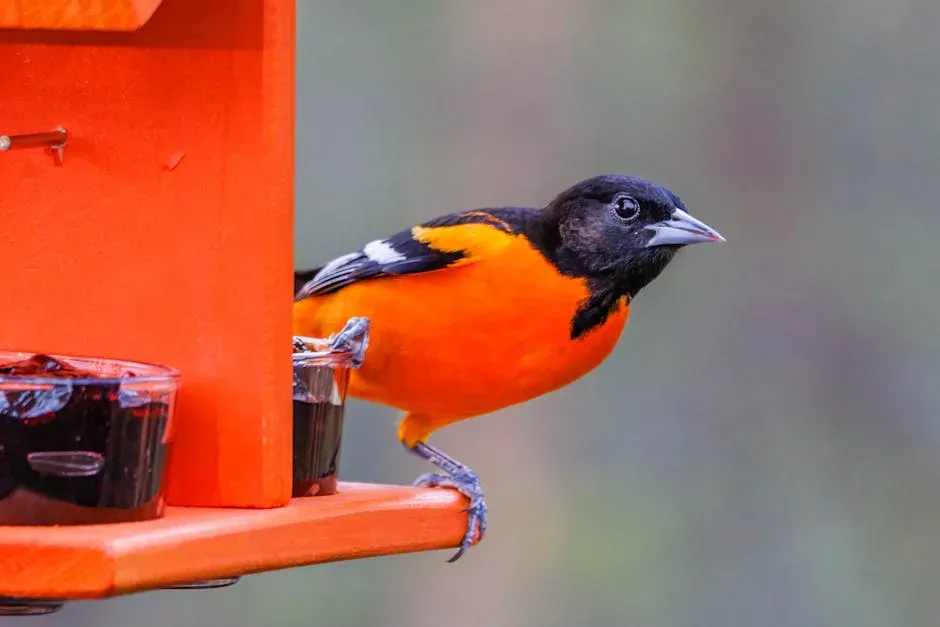
Ask any backyard birder what finally brought orioles in, and you’ll almost always hear the same answer: fruit and sugar. Baltimore orioles are famously drawn to oranges, grape jelly, and nectar, especially during spring migration when they’ve burned through a lot of energy. Specialized oriole feeders usually offer small cups for jelly and pegs or trays for orange halves, and it’s honestly surprising how quickly word seems to spread once one bird finds them.
That sugar craving is not just a quirky preference; it’s a very efficient way for birds to refuel after long flights. High-sugar foods give them quick energy, and fruit also adds water and vitamins. The key is to keep portions modest and fresh – think a spoonful of jelly, not a jar – and to avoid artificial sweeteners or heavily dyed products. When done right, your feeder becomes less of a snack bar and more of a well-timed energy station on their seasonal commute.
4. Their Songs Are Whistled Duets of the Tree Tops
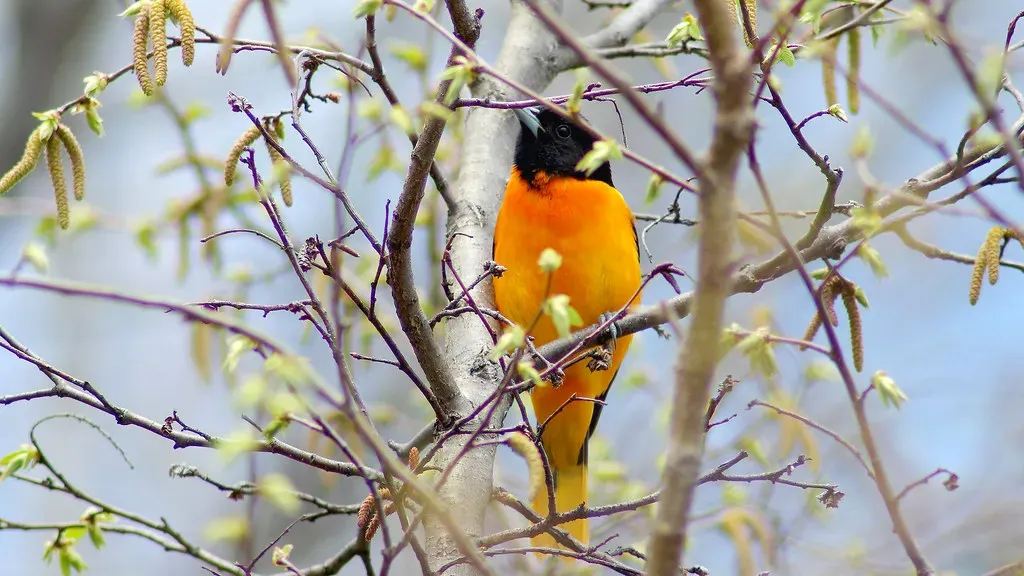
If you’ve ever heard a clear, whistled song drifting from the canopy and thought it sounded almost like a person trying to imitate a bird, there’s a good chance it was a Baltimore oriole. Their typical song is a series of rich, fluted notes, often repeated in little phrases with a slightly questioning or rolling tone. Many people actually detect orioles with their ears before they ever catch a glimpse of that orange flash against the leaves.
What makes them even more charming is that both males and females can sing, though the male’s song is usually louder and more elaborate. They use these calls to defend territories, communicate with mates, and help family groups stay in touch among the branches. If you learn just a rough sense of their voice, you can start turning your morning coffee outside into a small listening game – “Was that a robin, or was that an oriole up high?” – and suddenly the yard feels more alive.
5. They’re Migratory Marathoners With Caribbean Vibes
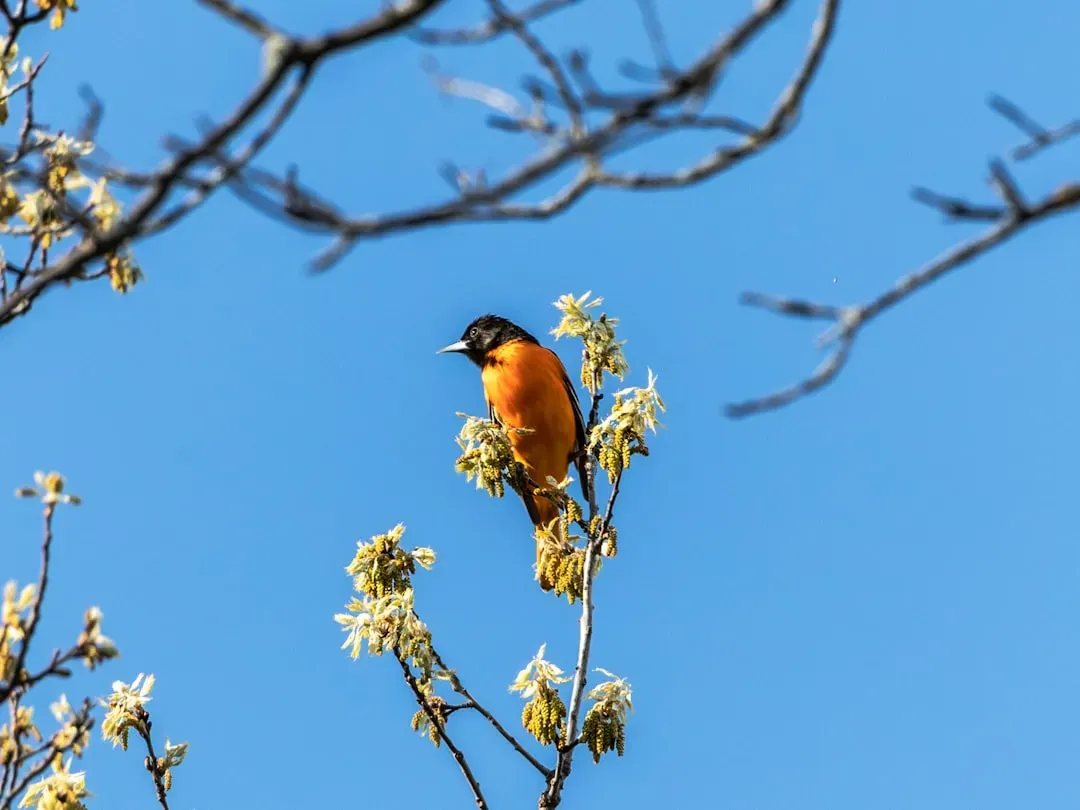
For a bird that might spend part of the summer in an ordinary suburban neighborhood, the Baltimore oriole lives a double life worthy of a travel magazine. These birds breed across much of eastern and parts of central North America, but they spend winters far to the south, in Central America, the Caribbean, and northern South America. That means the same bird that visits your jelly feeder in May might be foraging in a tropical forest or shade-grown coffee plantation by January.
To pull this off, they migrate thousands of miles twice a year, often crossing the Gulf of Mexico or skirting its coastline. This journey demands careful timing, abundant food, and safe stopover habitat, which is one reason conservationists care so much about both their breeding and wintering grounds. When you spot an oriole in your yard, you’re really seeing just one chapter in a much bigger story that stretches across countries and seasons, like a commuter who knows two very different worlds equally well.
6. They Help Control Insects While Looking Gorgeous Doing It
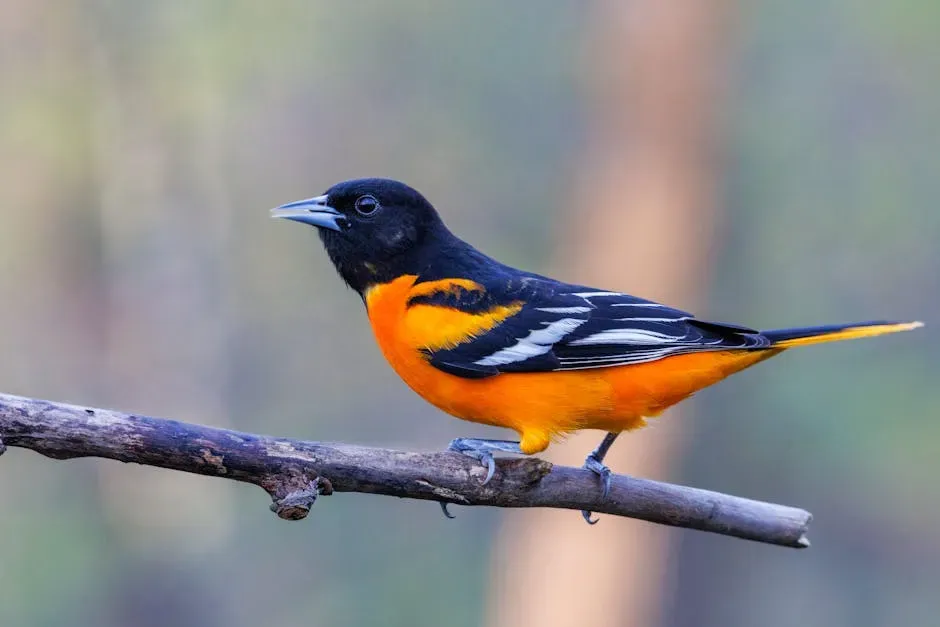
Orioles may be famous for loving fruit and jelly, but a huge part of their diet is actually insects, especially during the breeding season. They eat caterpillars, beetles, wasps, and other invertebrates they glean from leaves and branches, and they’re agile enough to hang upside down or probe into clusters of foliage. That quiet foraging habit means they’re often doing pest control work you never see, especially on large shade trees where many harmful insects like to feed.
This insect appetite has real value in a backyard or garden setting. Instead of blasting every leaf with chemicals, having birds like orioles around is like hiring a micro clean-up crew that also happens to be beautiful. They focus especially on soft-bodied insects, which are rich in protein and perfect for growing chicks. So when you’re cheering them on at the feeder, you’re also indirectly supporting a built-in, natural form of yard maintenance that operates all season long.
7. Their Name Comes From Old Royal Colors, Not Just the City
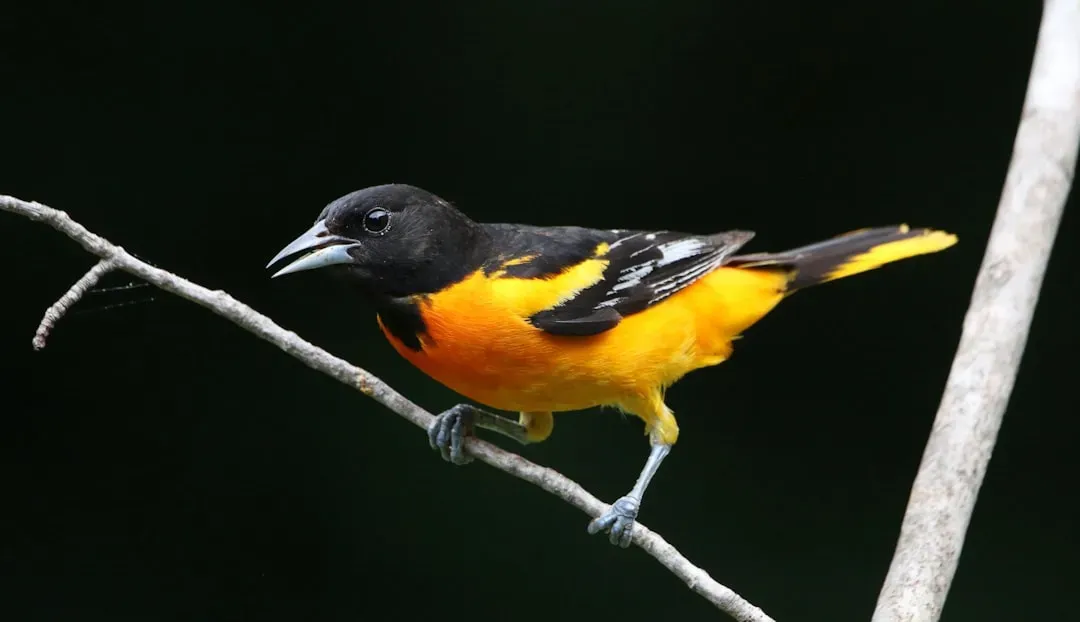
Most people instantly connect the name “Baltimore oriole” with the baseball team and the city, which makes perfect sense. But the deeper origin of the name goes back even further, to the black and orange colors associated with the heraldic crest of the Lords Baltimore, the English family after whom the city of Baltimore, Maryland, was named. Early European settlers noticed the bird’s striking resemblance to those colors and linked the species to that family’s name.
So when you see this bird in your yard, you’re also looking at a living slice of colonial history and old-world symbolism. Over time, the oriole has become a regional icon, deeply tied to Maryland identity and, through sports, to a wider American audience. Yet the bird itself has no idea about coats of arms or team mascots; it just happens to wear this royal color scheme that humans found impossible to ignore. It’s a reminder of how nature and culture tangle together in unexpected ways.
8. They’re Choosy About Trees and Subtle About Where They Hang Out
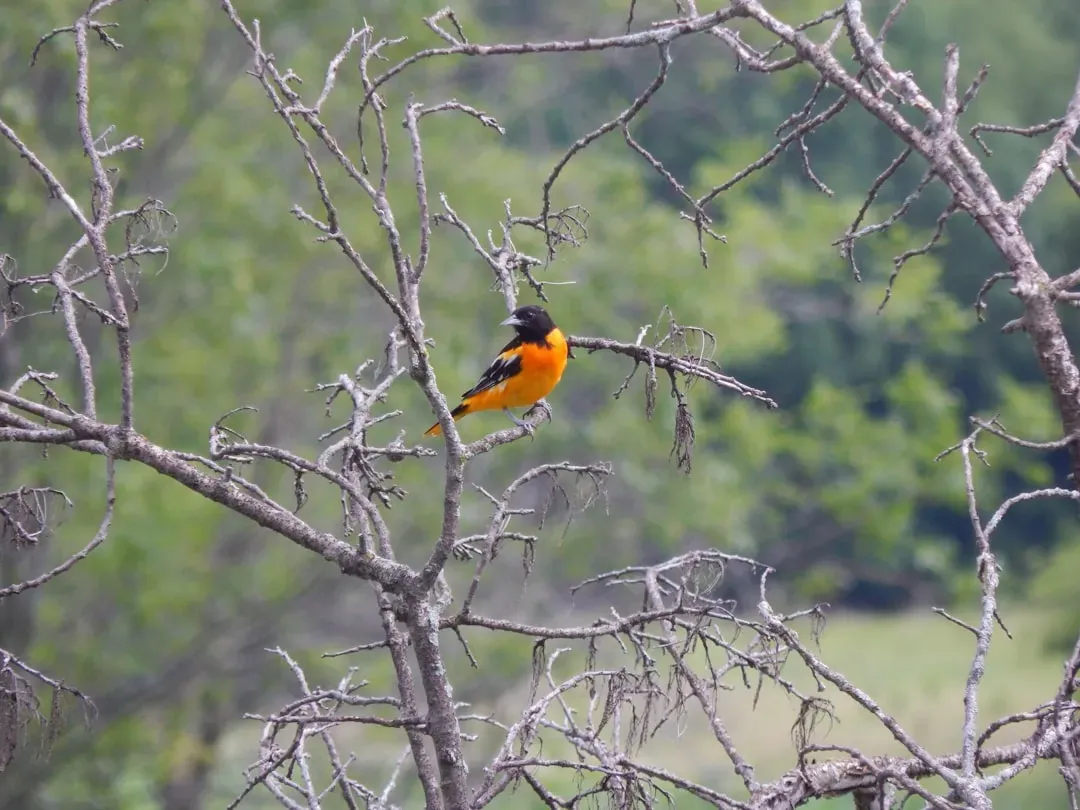
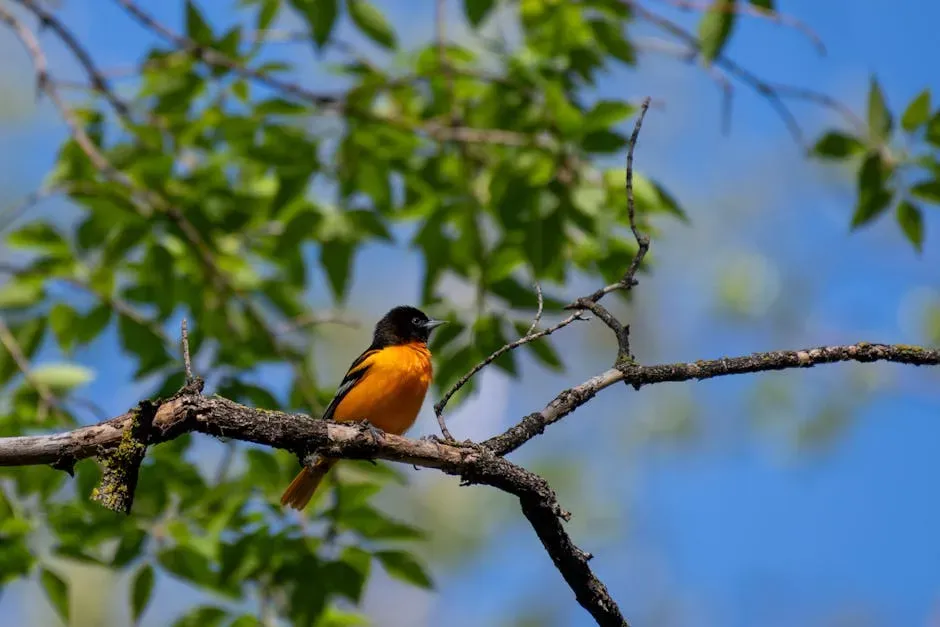
Baltimore orioles are not the type of birds that crowd a platform feeder in the open; they’re more like the half-shy guests at a party who linger near the edges. In the wild, they prefer deciduous trees – especially large ones like maples, elms, sycamores, and cottonwoods – where they can forage among leaf clusters and build hanging nests. Yards with tall, mature trees or nearby woodlots tend to see more orioles than bare, newly planted landscapes.
Even in good habitat, they usually stick to the upper and outer parts of the canopy, which makes them easy to hear but surprisingly hard to see. This can frustrate new birders who expected them to behave like chickadees or finches that come right up to the porch. The trick is to think vertically: scan high branches, edges of tree crowns, and spots where two limbs form a hanging point. Over time, you start to realize that they were there all along – you just weren’t looking in the right layer of the sky.
9. Backyard Choices Can Directly Help (Or Hurt) Their Future
It’s tempting to think that one small yard doesn’t matter much to migratory birds, but for species like the Baltimore oriole, those little spaces add up fast. When people plant native trees and shrubs, avoid broad-spectrum pesticides, and offer clean water, they’re essentially stitching together a patchwork of safe rest stops across the landscape. For a bird that has to navigate cities, farms, highways, and fragmented forests, those small oases can make the difference between a smooth trip and a deadly one.
On the flip side, heavily manicured lawns with few trees, lots of glass, and frequent chemical treatments are almost like deserts from a bird’s perspective. That doesn’t mean every yard has to turn into a jungle, but there’s a clear, practical case for meeting orioles halfway. A couple of well-chosen native trees, a small patch of flowering plants that attract insects, and some attention to window safety can transform a sterile space into meaningful habitat. In that sense, being an oriole fan is not just a hobby – it’s a low-key conservation choice.
10. They Turn Ordinary People Into Passionate Bird Nerds
There’s something almost addictive about that first season when an oriole discovers your yard. One day you’re casually putting out oranges “just to see,” and the next you’re rearranging furniture to get a better window view, checking the feeders before you’ve had coffee, and texting friends blurry photos like it’s breaking news. These birds have a knack for sparking curiosity in people who never thought they cared much about birds at all. They’re dramatic enough to stand out, but approachable enough that you can actually lure them in with simple steps.
In my experience, once orioles hook you, they open the door to noticing everything else: the woodpecker calls you used to ignore, the way chickadees scold from the hedges, the sudden silence before a storm. I honestly think Baltimore orioles might be some of the best “gateway birds” out there, turning casual observers into engaged, observant neighbors of the natural world. Not everyone will end up buying field guides or joining bird clubs, but a surprising number do – and it often started with one bright orange visitor on a slice of fruit.
Conclusion: Why Baltimore Orioles Deserve Their Backyard Celebrity Status
If you ask me, Baltimore orioles absolutely earn their cult following among backyard birders. They’re not just pretty decorations that drop by once in a while; they’re long-distance travelers, master weavers, insect hunters, and surprisingly picky diners, all wrapped in a color scheme that could rival a sunset. When people roll their eyes at the fuss over jelly feeders and orange halves, I think they’re missing the point. This is one of the few wild creatures that will meet us in that thin middle ground between “truly wild” and “right outside the kitchen window,” and that’s worth celebrating.
At the same time, I think we should be honest: if we want to keep enjoying orioles in our yards, we owe them more than just snacks and selfies. Planting real habitat, cutting back on chemicals, and paying attention to the bigger picture of migration are not optional extras anymore – they’re part of what it means to be a good host. In a world where so many wild things are pushed to the margins, the fact that a brilliant, tropical-looking songbird still chooses to visit us feels like a small daily miracle. The real question is, now that you know what they’re bringing to your backyard, what are you willing to do to make sure they keep coming back?