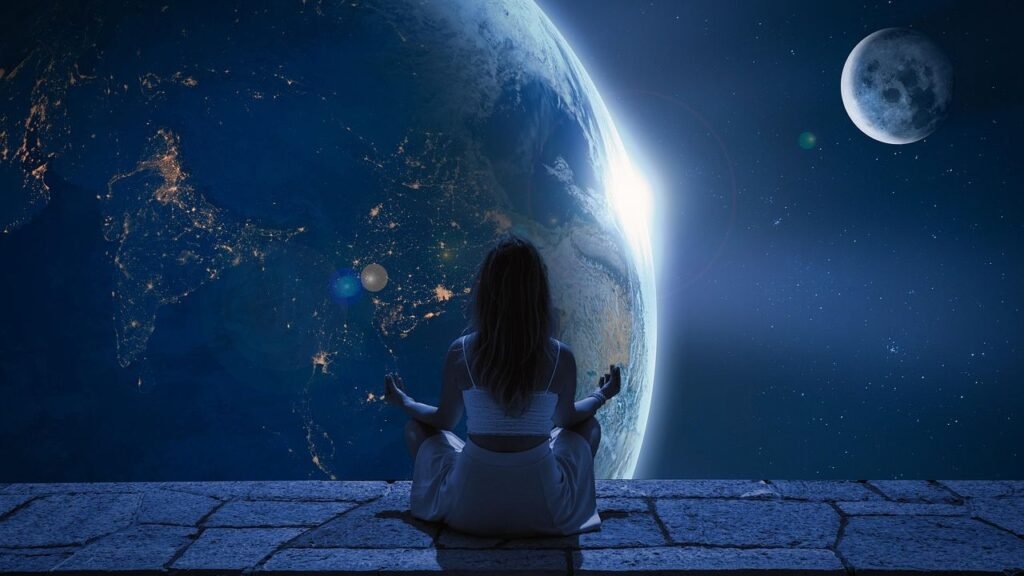

You wake up feeling restless, even though you slept through the night. Maybe you had bizarre dreams that lingered in your mind. Perhaps you’ve felt an inexplicable shift in your mood without any obvious reason. Here’s the thing: what if I told you that these experiences might not be entirely random? Scientists are beginning to uncover something that our ancestors may have intuitively understood all along. Your internal world, particularly your subconscious mind, might actually be responding to forces far beyond this planet.
We’ve always known that the Sun dictates our days and nights. The rotating Earth, the changing seasons, even our circadian rhythms are all connected to our star. However, emerging research suggests that the relationship goes deeper than simple daylight exposure. The solar system itself, from planetary electromagnetic fields to lunar phases, could be influencing your brain in ways you never imagined. Let’s be real, it sounds like something out of science fiction. Yet the evidence is starting to pile up, and it’s honestly fascinating once you dig into it. So let’s dive in.
Your Brain Actually Responds to Earth’s Magnetic Field
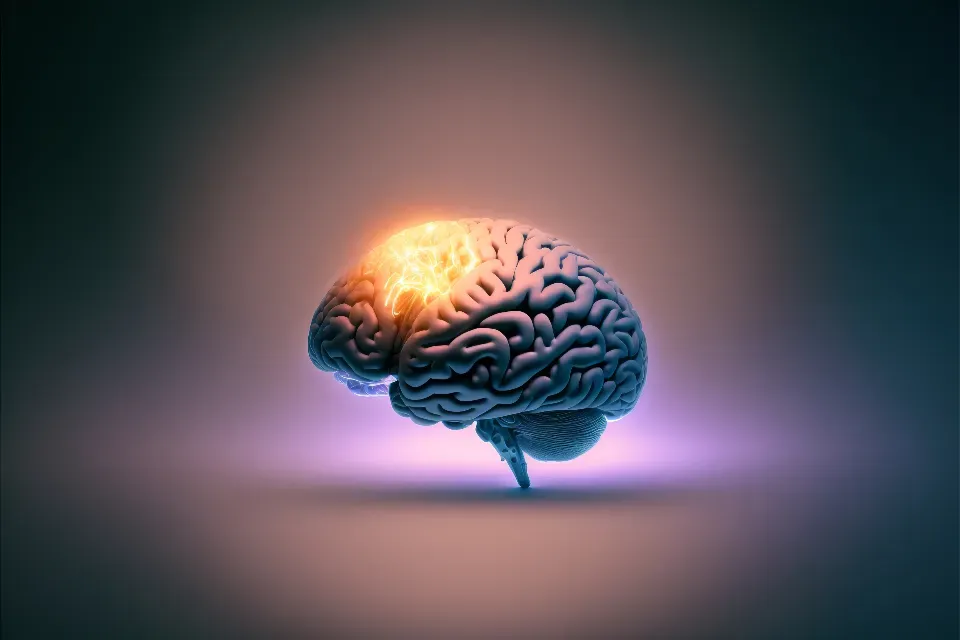
You probably never thought about it, but humans do have a geomagnetic sense that allows your brain to detect Earth’s magnetic field. A strong, specific human brain response to Earth-strength magnetic field rotations has been reported, with drops in amplitude of electroencephalography alpha-oscillations occurring in a repeatable manner. This process, termed alpha-event-related desynchronization, is typically associated with sensory and cognitive processing of external stimuli.
What makes this even more intriguing is that biogenic crystals of magnetite were found in tissues of the human brain. These tiny iron magnets appear throughout our brains, and their widespread presence suggested that the particles likely served some kind of biological purpose. Think about it this way: your brain essentially contains natural compass materials that may be picking up on magnetic signals you’re completely unaware of. The subconscious mind processes information constantly, filtering stimuli before it ever reaches your conscious awareness.
Circadian Rhythms Evolved From Planetary Cycles
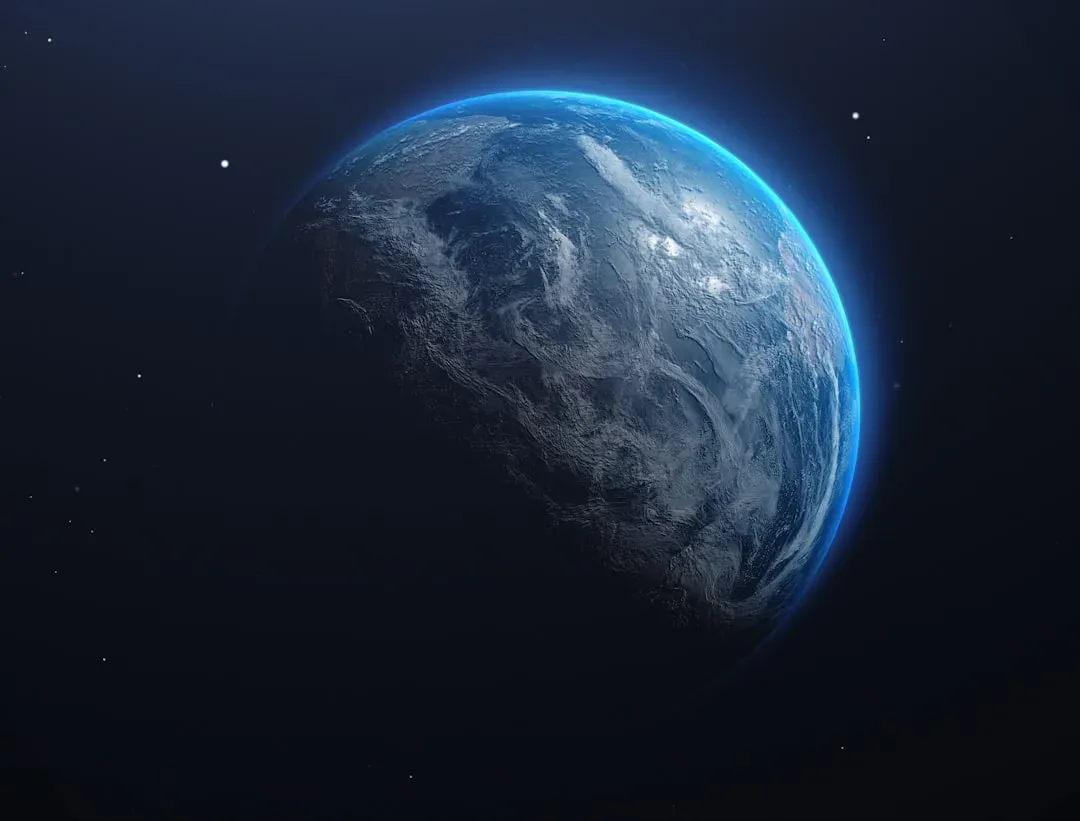
Our physiology and behavior are shaped by the Earth’s rotation around its axis, and this isn’t just about light exposure. Intrinsic circadian clocks generate circadian rhythms that provide capabilities to adapt to cycling environmental cues resulting from the self-rotation of the Earth. Your body literally evolved over millions of years to sync with planetary motion, developing an internal master clock that regulates everything from sleep to hormone release.
Circadian rhythm is largely affected by the solar cycles of different planets. Scientists studying space travel have discovered fascinating patterns. Life on Earth evolved to accommodate the biochemical and biophysical boundary conditions of the planet millions of years ago, and complex life forms developed electromagnetic fields as part of their functioning that could be impacted by magnetic fields. This creates a subtle but powerful feedback loop between you and the cosmic environment. Your subconscious is constantly calibrating itself to these planetary rhythms, even when you’re completely unaware.
Solar Activity Directly Influences Your Emotional State

Here’s where things get really interesting. Many studies have described a broad range of physiological, psychological, and behavioral changes associated with changes or disturbances in geomagnetic activity and solar activity. When the Sun releases massive bursts of energy through solar flares or coronal mass ejections, it doesn’t just create beautiful auroras. The electromagnetic activity of the Sun affects our electronic devices and the human electromagnetic field, physically, mentally, and emotionally altering us by the electromagnetic charges.
Geomagnetic and solar influences affect a wide range of human behavioral and health outcomes, with sharp or sudden variations acting as stressors that alter regulatory processes such as melatonin/serotonin balance, blood pressure, breathing, and cardiac system processes. I know it sounds crazy, but your irritability, anxiety, or even that unexplained headache during certain times might have a cosmic origin. A 2014 study found that periods of high geomagnetic activity were associated with an increase in mental health symptoms such as anxiety and depression. Your subconscious brain is picking up on these electromagnetic disturbances long before you consciously register any change in how you feel.
The Moon Controls More Than Just Ocean Tides

You’ve probably heard people blame the full moon for strange behavior, but it turns out there’s actual science behind it. In some people, the circadian clock is susceptible to lunar influences, creating measurable changes in sleep patterns and brain activity. Around full moon, electroencephalogram delta activity during NREM sleep decreased by 30%, time to fall asleep increased by 5 minutes, and total sleep duration was reduced by 20 minutes, with these changes associated with decreased subjective sleep quality and diminished endogenous melatonin levels.
Sleep starts later and is shorter on nights before the full moon when moonlight is available during hours following dusk. But here’s the fascinating part: these effects happened even in controlled laboratory conditions where participants couldn’t see the moon or know its phase. The moon’s ability to cause electromagnetic fluctuations on Earth may be responsible, as it passes through the magnetotail during the full moon phase and becomes negatively charged, then influences Earth’s electromagnetic field. Your subconscious is attuned to these subtle electromagnetic shifts in ways that science is only beginning to understand.
Dreams Respond to Lunar and Solar Rhythms

Full moon dreams are often intense, emotional, or even unsettling, as this phase may amplify feelings and subconscious thoughts, leading to vivid dreams or even nightmares. It’s not just folklore or imagination. For about a week surrounding the full moon, the content of dreams are noticeably more strange, with people reporting surreal experiences and unusual themes.
Neptune’s influence is often felt in the ethereal, otherworldly quality of dreams, and when Neptune is strong in charts or during its transits, dreams may become more vivid, symbolic, and difficult to decipher. While astrology remains controversial, the underlying principle is compelling: celestial rhythms correlate with subconscious activity. The full moon is thought to bring unresolved feelings or anxieties to the surface, which might manifest in the form of nightmares or emotionally charged dreams as a way for your subconscious mind to process heightened emotions. Your dreaming brain acts like a receiver, tuning into cosmic frequencies that shift your internal psychological landscape.
Electromagnetic Fields Create a Bridge Between Mind and Cosmos

Your brain generates its own electromagnetic field through neuronal activity, and electromagnetic field theories of mind/brain integration posit that current flow across neuronal membranes generates an electromagnetic field which permits computation and integration of information, with consciousness arising from a dynamic electromagnetic field reflecting synaptic and discharge currents of neurons throughout the brain. Essentially, you’re walking around with an electromagnetic signature that’s constantly interacting with the environment.
Studies have shown that conscious experience correlates not with the number of neurons firing, but with the synchrony of that firing, and synchronous neuron firing amplifies the influence of the brain’s electromagnetic field fluctuations to a much greater extent. This creates a feedback loop: external electromagnetic forces from the solar system influence your brain’s electromagnetic patterns, which in turn affect your conscious and subconscious processing. Entire universe is floating into vibration from larger mass to lower mass and vice versa, with formations in the universe being clear depiction of the vibrational connectivity of smallest particle to largest particle that are continuously on move and affecting their surroundings. You’re literally part of this cosmic electromagnetic dance, whether you realize it or not.
Historical Patterns Link Solar Cycles to Human Consciousness Shifts

Russian scientist Alexander Chizhevsky and Professor Raymond Wheeler of the University of Kansas discovered that the Sun’s activity, as it interacts with Earth’s magnetic field, effects extensive changes in human beings’ perspectives, moods, emotions and behavioral patterns. Looking back through history reveals stunning correlations. Wheeler compared his findings with human history and found a startling pattern traced back 2,500 years, with solar cycle peaks corresponding to major conflicts like Iraq invading Kuwait, 9/11, wars in Afghanistan and Iraq, and uprisings in Tunisia, Egypt, Yemen, Syria, Libya, Iran and China.
On a larger societal scale, increased rates of violence, crime, social unrest, revolutions and frequency of terrorist attacks have been linked to the solar cycle and resulting disturbances in the geomagnetic field. It’s hard to say for sure, but this suggests that collective human consciousness responds to cosmic rhythms. According to Russian scientist A.L. Tchijevsky, 80% of the most significant human events occurred during a 5 year period surrounding the peak of solar activity. Your subconscious mind isn’t operating in isolation; it’s part of a larger planetary consciousness that pulses with solar and geomagnetic activity.
The Subconscious as a Cosmic Receiver

Moon has impact on sleep and psychological activities of human beings, and if impact of moon has been proven, then other planets might also have an impact on the human body and mind. This opens up profound questions about consciousness itself. The Moon relates to emotions, instincts, and subconscious thoughts, functioning like a cosmic tuning fork for your internal emotional landscape.
Russian biologist Georges Lakhovsky, on the basis of his research, openly declared his strong belief that radiations from stars and planets can affect the personality and future destiny of an individual at conception and birth. Modern neuroscience is beginning to validate these intuitions with hard data. There is a statistically significant negative influence of solar activity on happiness which holds even after controlling for other factors. Your subconscious mind is constantly processing information from electromagnetic fields, gravitational fluctuations, and light variations that never reach your conscious awareness. You’re not separate from the solar system; you’re intimately connected to it through invisible threads of electromagnetic and gravitational influence.
Conclusion: Connected to Something Larger

The evidence paints a picture that’s both humbling and extraordinary. Your subconscious mind appears to function as a sophisticated receiver, tuned to frequencies and forces extending far beyond the boundaries of your skull. From the electromagnetic fluctuations caused by solar storms to the subtle gravitational pull of the Moon, your internal psychological landscape is shaped by cosmic forces in ways science is only beginning to understand.
It makes you wonder how much of what we attribute to random moods, restless nights, or vivid dreams is actually the result of planetary and solar influences. We evolved on this planet, under these specific conditions, surrounded by these electromagnetic fields. Perhaps it shouldn’t surprise us that we’re still connected to those rhythms at the deepest levels of our being.
What’s your take on this cosmic connection? Have you noticed patterns in your sleep or mood that seem to align with lunar phases or solar activity? The universe might be speaking to your subconscious in ways you never imagined.