
Most of us were told to “stop asking so many questions” at some point in childhood. Funny, isn’t it? Because science now tells us that the drive to ask those questions, to explore, to wonder, is one of the most powerful physiological forces your brain can experience. It’s not just a personality trait or a charming quirk. It is a full-blown biological event happening inside your skull.
What unfolds when curiosity strikes is genuinely fascinating. Chemicals surge, brain regions light up, memories get forged, and neural pathways restructure themselves, all because you wondered about something. If you’ve ever gone down a rabbit hole at midnight trying to understand how black holes work, your brain was actively rewiring itself in real time. Let’s dive into exactly what’s happening when your mind lights up with wonder.
The Curiosity State: What Your Brain Enters When Wonder Strikes

There’s a specific neurological mode your brain shifts into when something genuinely piques your interest. When something piques your curiosity, your brain enters what’s called the “curiosity state.” First, the parts of the brain that are sensitive to unpleasant conditions light up, showing that you are slightly uncomfortable because you recognize you are lacking certain knowledge. It’s a fascinating paradox: curiosity begins with a mild itch of discomfort, almost like being intellectually hungry.
Then, the parts of your brain responsible for learning and memory kick into high gear, so that you can learn and remember what you’ve learned more efficiently. It is at this point that you are primed to begin your search for answers. When you actually begin learning new facts in your curiosity state, something even more interesting than heightened memory happens: your reward circuitry kicks in. In other words, you’re not just passively absorbing information. You’re being actively rewarded, at a chemical level, for chasing the answer.
Dopamine: The Chemical Engine Driving Your Curiosity
At the heart of curiosity lies the brain’s reward system, primarily involving structures such as the nucleus accumbens, amygdala, hippocampus, and the prefrontal cortex. These regions interact in a delicate dance, driven by neurotransmitters like dopamine, to create the sensation of pleasure associated with acquiring new information. When you stumble upon something novel or mysterious, the reward system kicks into gear, releasing dopamine. This release not only generates a pleasurable sensation but also motivates further exploration and learning, solidifying the intrinsic link between curiosity and the brain’s reward mechanisms.
Here’s the thing about dopamine: it’s not just a reward chemical. The neurotransmitter dopamine activates neurons and stimulates specific regions that receive dopaminergic input when you encounter something novel. Think of it like gasoline in a car engine. When you explore and satisfy your curiosity, your brain floods your body with dopamine, which makes you feel happier. This reward mechanism increases the likelihood that you’ll try to satisfy your curiosity again in the future. So curiosity, quite literally, feeds itself.
Your Hippocampus Gets a Workout Every Time You’re Curious
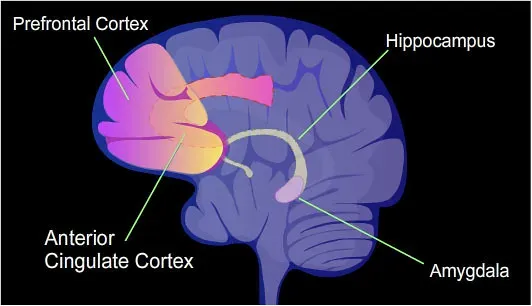
You’ve probably heard of the hippocampus as the brain’s memory center, but what happens to it specifically when you’re genuinely curious? When curiosity motivated learning, there was increased activity in the hippocampus, a brain region that is important for forming new memories, as well as increased interactions between the hippocampus and the reward circuit. That interaction between memory and reward is not a small detail. It’s actually the whole ballgame when it comes to understanding why curious people learn so much more effectively than disinterested ones.
What makes this even more remarkable is a side effect no one quite expected. When people were highly curious to find out the answer to a question, they were better at learning that information. More surprising, however, was that once their curiosity was aroused, they showed better learning of entirely unrelated information that they encountered but were not necessarily curious about. People were also better able to retain the information learned during a curious state across a 24-hour delay. Honestly, that’s extraordinary. Your brain on wonder doesn’t just absorb what you’re curious about. It soaks up everything in the vicinity, like a sponge dropped in water.
The Specific Brain Regions That Light Up Like a Christmas Tree
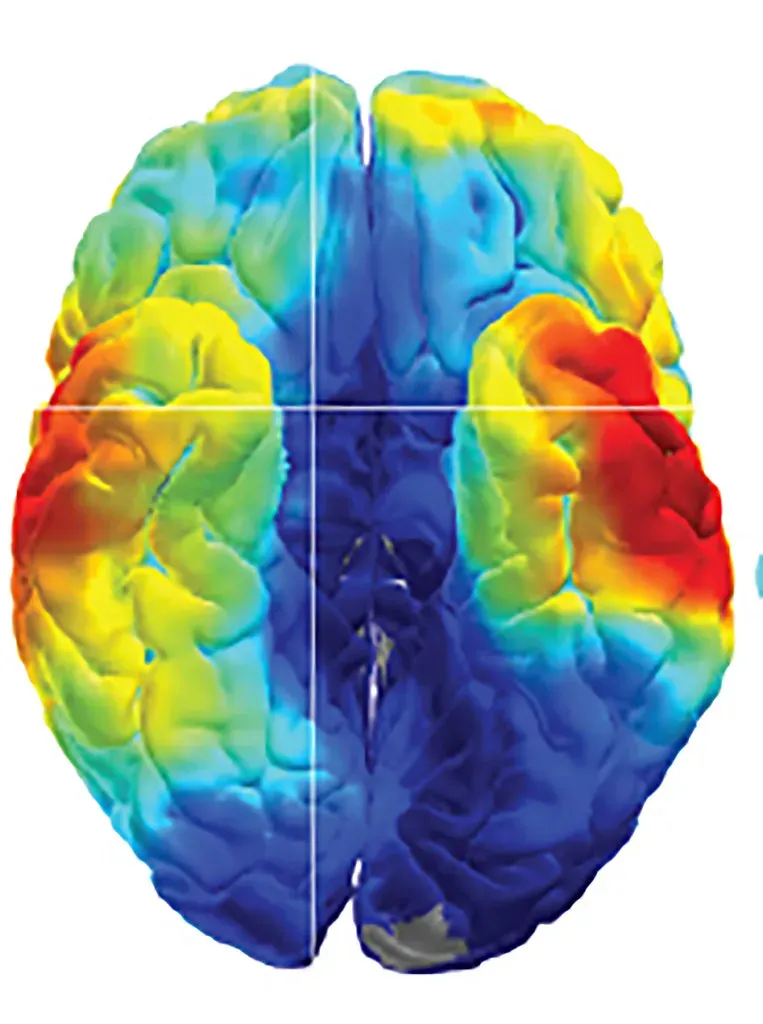
You might imagine curiosity as a vague warm feeling, but fMRI scans paint a much more precise picture. Curiosity leads to activation of several areas of the brain, particularly the regions known as the substantia nigra, ventral tegmental area, and the hippocampus. Connectivity between these same regions is associated with learning. These aren’t random structures. They form a deeply interconnected circuit that evolved to push you toward new information.
Human subjects read trivia questions and rated their feelings of curiosity while undergoing fMRI. Brain activity in the caudate nucleus and inferior frontal gyrus was associated with self-reported curiosity. These structures are activated by anticipation of many types of rewards, so these results suggest that curiosity elicits an anticipation of a reward state. This is significant because it means your brain processes the prospect of learning something new through the same neural architecture it uses when anticipating food, money, or other tangible pleasures. You’re wired to want knowledge the way you’re wired to want a meal.
Curiosity and Neuroplasticity: How Wonder Literally Reshapes Your Brain
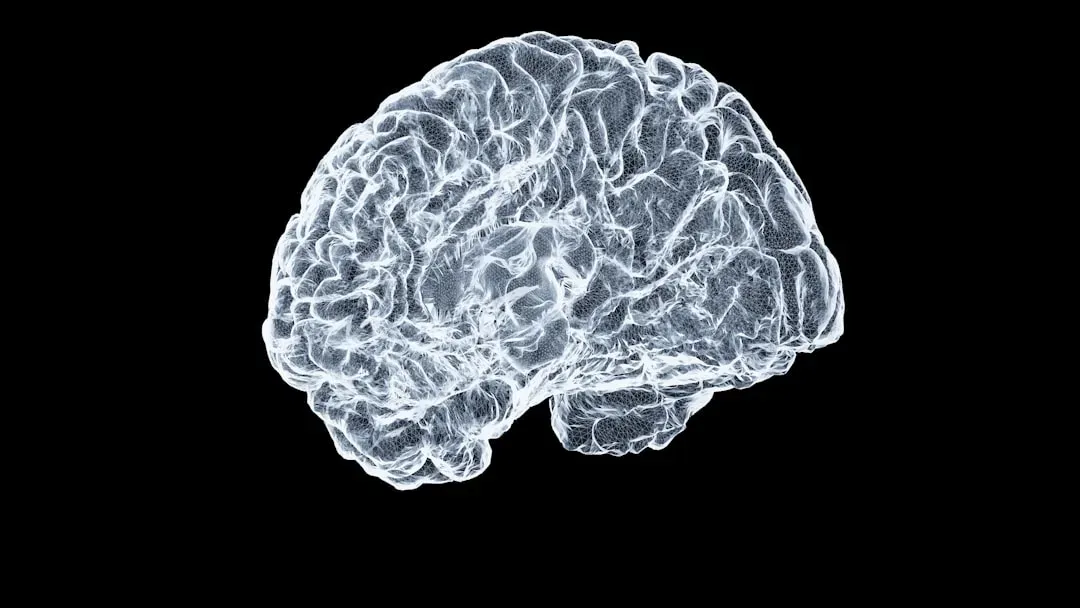
Neuroplasticity is one of the most exciting concepts in modern neuroscience. It refers to your brain’s ability to physically rewire itself based on experience. And curiosity is one of its most potent activators. Curiosity promotes neuroplasticity, the brain’s ability to rewire itself in response to new experiences. This makes it an ideal cognitive state for those inevitable moments of change when you need to break established neural patterns and form new connections. Think of the brain as a city. Curiosity is the infrastructure project that keeps building new roads.
When you’re curious, the brain’s dopaminergic system, the same one that lights up when you anticipate a reward, kicks into gear. Simply put, curiosity makes you feel good about the prospect of discovering something new. It also helps you learn more efficiently, enhancing hippocampal activity and boosting your capacity to form and retain new memories. This is why people who remain intellectually curious throughout their lives tend to show greater cognitive flexibility over time. Curiosity isn’t just good for the mind. It physically rebuilds it.
Curiosity as Your Brain’s Natural Buffer Against Stress

Here’s where curiosity earns perhaps its most underappreciated superpower. The brain often responds to change and uncertainty by activating the amygdala, triggering the same stress responses as physical danger. Curiosity helps reframe uncertainty as an invitation, not a threat. That shift, from threat to invitation, is not just philosophical. It’s a measurable neurological event that changes how your stress systems respond.
Consider what happens without curiosity, when chronic stress dominates instead. Chronic stress can take a toll on brain function by increasing levels of cortisol, a hormone that can damage neurons and inhibit neuroplasticity. Prolonged cortisol exposure is genuinely destructive to the same hippocampal regions that curiosity actively strengthens. Curiosity increases your tolerance for prediction error: the gap between what you expect and what you actually experience. This makes you more flexible in your thinking, less reactive, and better at updating your mental models. So curiosity and chronic stress are, in a very real neurochemical sense, opposing forces in your brain.
Curiosity, Aging, and the Long Game for Your Brain’s Health

There’s growing evidence that maintaining a curious mind may be one of the most effective defenses you have against age-related cognitive decline. New research suggests that while general curiosity tends to decline with age, specific curiosity, or “state curiosity,” actually increases later in life, potentially protecting against cognitive decline. That distinction matters enormously. You may naturally become less broadly curious with age, but your capacity for deep, focused curiosity about specific things can actually grow.
Stimulating curiosity is really important across all ages, from schools, to the workplace and to elderly care. In patients with neurological disorders such as Alzheimer’s or dementia, carrying out engaging tasks can help people remember things that are important, and also encourage new learning. The implications of this are profound. If curiosity actively engages the same brain circuits involved in memory formation and reward, then keeping those circuits stimulated through wonder and inquiry may slow their deterioration over time. The more curious you are about information in general, the better the connections between brain networks associated with learning, information seeking, and motivation. It’s not a guarantee, but it’s a compelling reason to never stop asking questions.
Conclusion: Wonder Is a Physiological Act

What you’ve just discovered is that curiosity is far more than a mindset or a mood. It is a physical, biological, neurochemical event that reshapes your brain, floods your body with reward chemicals, supercharges your memory, and even guards against the erosion that time and stress bring. Every moment of genuine wonder is your nervous system running one of its most sophisticated and beneficial programs.
The next time you find yourself pulling out your phone at midnight to answer a question that popped into your head, don’t fight it. Your brain is doing something extraordinary. It is learning more efficiently, forming stronger memories, releasing dopamine, and strengthening its own architecture all at once. Curiosity, it turns out, is not a distraction from living well. It is one of the most powerful physiological tools you were born with.
So here is the question worth sitting with: knowing that your sense of wonder is actively rebuilding your brain as you use it, what would you allow yourself to be more curious about today?