
XRISM Delivers Unprecedented X-ray Precision (Image Credits: Cdn.mos.cms.futurecdn.net)
Astronomers have captured the clearest views yet of the violent gas motions encircling supermassive black holes, revealing pockets of relative calm directly around these cosmic giants.[1][2]
XRISM Delivers Unprecedented X-ray Precision
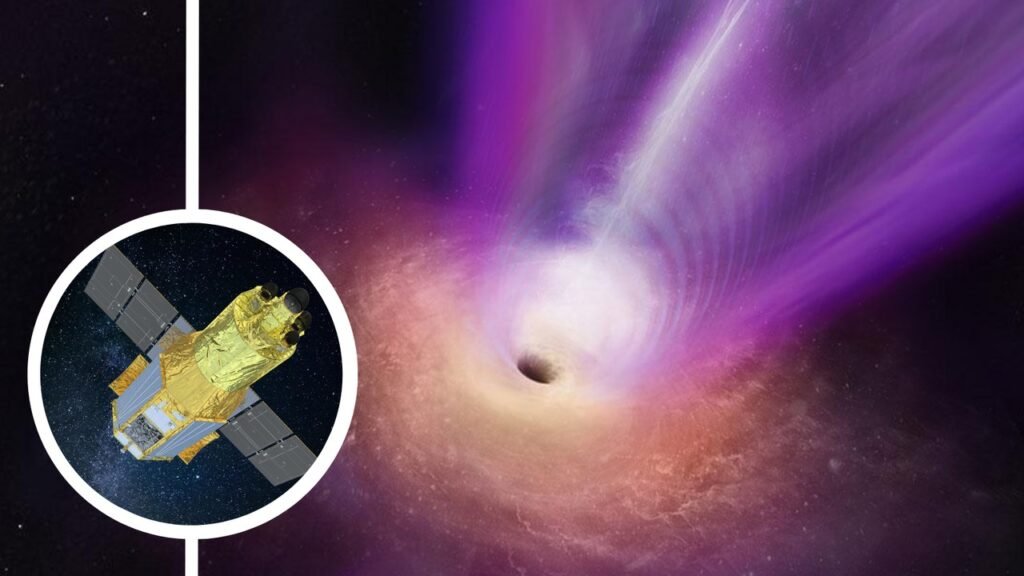
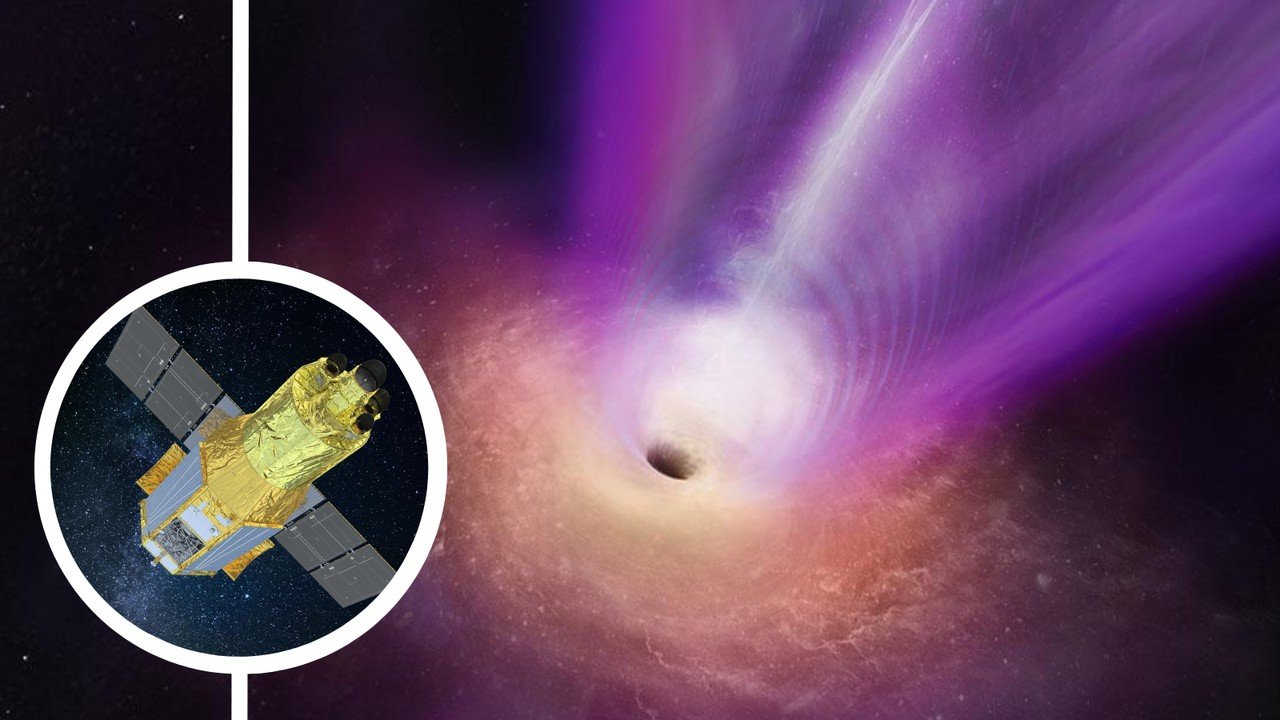
The X-ray Imaging and Spectroscopy Mission, known as XRISM, launched in 2023 by NASA, JAXA, and ESA. This spacecraft carries two key instruments: Resolve, a high-resolution spectrometer, and Xtend, an imaging system. Scientists noted that XRISM surpasses its predecessor, Hitomi, which operated briefly before failing.
Resolve distinguishes X-rays from different elements and ionization states with exceptional accuracy. Researchers applied this capability to map gas velocities and chemical compositions around black holes. The mission targeted active galactic nuclei, where supermassive black holes drive powerful outflows.[2]
Turbulence in the Perseus Cluster
XRISM observed the supermassive black hole at the center of the Perseus galaxy cluster, located about 240 million light-years from Earth. Data showed the strongest turbulence ever measured in a galaxy cluster core. Gas velocities peaked near the black hole and fell sharply farther out.
“For the first time, we can directly measure the kinetic energy of the gas stirred by the black hole,” said Annie Heinrich, a University of Chicago graduate student and lead author on a related Nature study. Fastest motions arose from turbulent eddies and shockwaves of outflowing gas. These effects overlaid larger-scale motions from merging galaxies in the cluster.[1]
Revelations from the Virgo Cluster’s M87
In the Virgo Cluster, roughly 53 million light-years away, XRISM examined the black hole powering M87*, famous from the Event Horizon Telescope image. Velocity dispersion peaked centrally, aligning with known active galactic nucleus structures. This suggested black hole feedback as the main driver of local gas motions.
Hannah McCall, another University of Chicago graduate student, led analysis for this cluster. She explained that velocities remained high closest to the black hole before dropping off rapidly. The findings appeared in a paper accepted by The Astrophysical Journal.[2]
Black Hole Feedback and Galaxy Growth
Supermassive black holes influence their host galaxies by injecting energy into surrounding hot gas. This process heats the gas, countering cooling that would otherwise fuel excessive star formation. Galaxy cluster centers host fewer stars than models predict, likely due to this feedback.
Turbulence plays a key role in this energy transfer. If fully converted to heat, the measured gas motions could balance cooling rates. Congyao Zhang, formerly at University of Chicago, noted that XRISM separates black hole-driven motions from other cosmic processes.[1]
- Direct kinetic energy measurements of black hole-stirred gas.
- Strongest turbulence detected in cluster cores.
- Velocity peaks near black holes, rapid drop-off outward.
- Distinction between black hole outflows and merger-driven motions.
- Evidence for turbulence in regulating star formation.
Key Takeaways:
- Black holes reside in calm “eyes” amid turbulent gas storms.
- XRISM quantifies outflow energies for the first time.
- Feedback mechanisms explain subdued star formation in clusters.
These observations mark a pivotal advance in understanding black hole-galaxy interplay. Irina Zhuravleva, a University of Chicago astrophysicist, expressed optimism that further XRISM data will clarify energy injection dynamics and heating efficiency. What do you think about these cosmic storms? Share your thoughts in the comments.