Imagine standing in a vast, silent pit, surrounded by thousands of clay soldiers staring blankly into eternity. Each face is different—eerily lifelike, frozen in time as if waiting for a command that will never come. The Terracotta Army, one of humanity’s most astonishing archaeological discoveries, guards the secrets of China’s first emperor, Qin Shi Huang, whose unopened tomb remains one of the world’s greatest unsolved mysteries. What secrets slumber beneath that ancient mound? What wonders or dangers might be waiting to be found? The truth is both thrilling and unsettling, and the very air around the site feels electric with possibility.
The Discovery That Shook the World
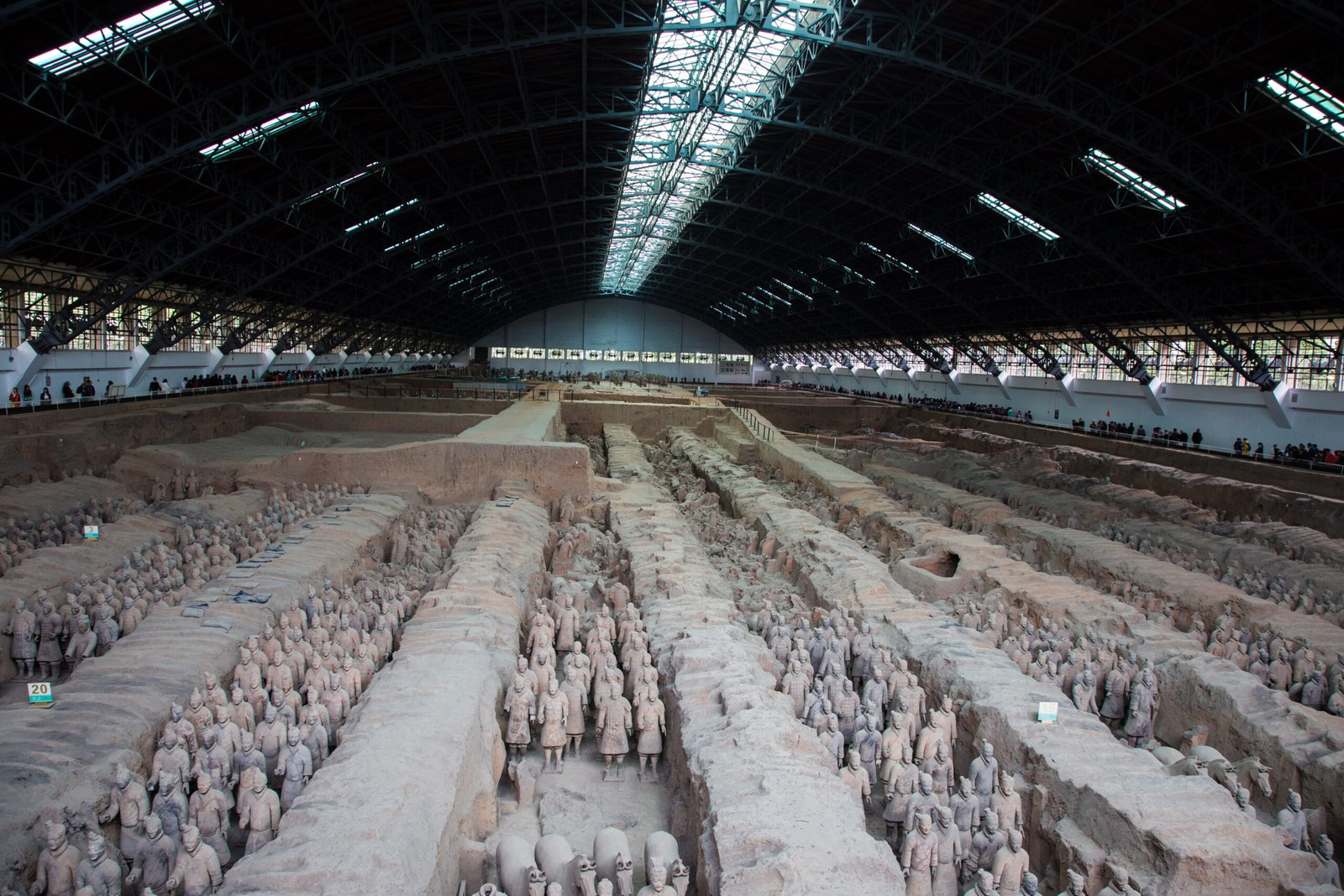
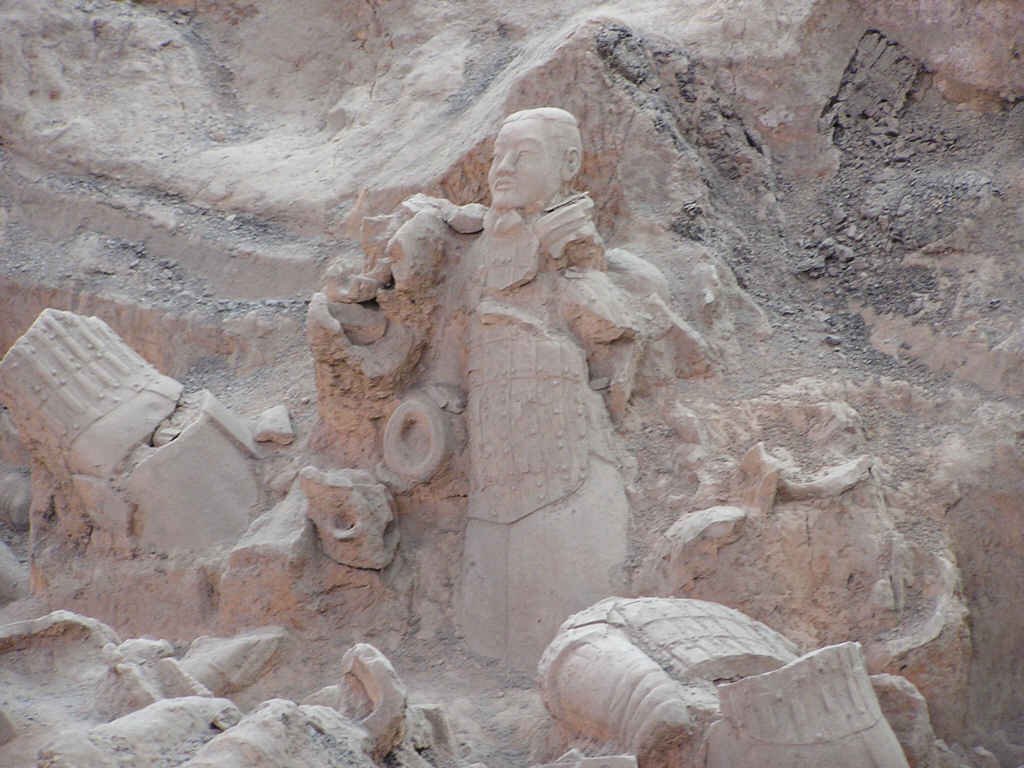
In 1974, farmers digging a well in the dry plains near Xi’an stumbled upon fragments of what would soon be called the Terracotta Army. Their shovels hit something hard, and soon, archaeologists descended upon the site, realizing they had found thousands of life-sized clay warriors. The discovery was nothing short of earth-shattering. It opened a window into a long-lost world, giving us our first real glimpse into the burial customs, military discipline, and artistic achievements of ancient China. The sense of awe that greeted the first cracked clay face has never quite faded.
Who Was Qin Shi Huang?
Qin Shi Huang, crowned in 221 BCE, was China’s first emperor, uniting warring kingdoms into a single, powerful empire. Ruthless and ambitious, he ordered the construction of the Great Wall and standardized everything from currency to writing. Yet, his obsession with immortality and the afterlife might be his most memorable legacy. The Terracotta Army was built not just as a display of power, but as an eternal guard for his spirit. The emperor’s desire to control his fate, even in death, shaped every detail of his burial complex.
The Craftsmanship Behind the Warriors
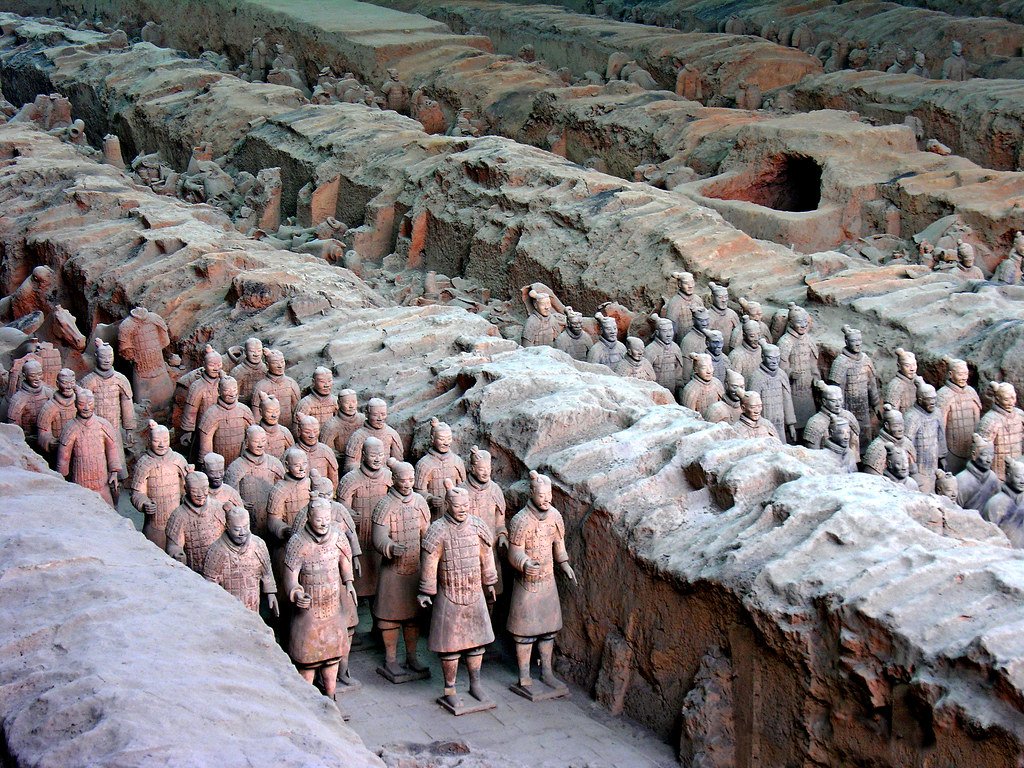
What makes the Terracotta Army truly remarkable is the individuality of each figure. No two faces are the same—some scowl, some smile, some are youthful, others weathered. The craftsmen who built them nearly 2,300 years ago achieved a level of realism that’s almost haunting. Using assembly-line techniques, they molded heads, torsos, and limbs separately, then assembled and painted them. Even the details on their armor and weapons show incredible care; you can almost feel the weight of history pressing into each clay fold.
A Burial Complex of Staggering Scale
The warriors are just the tip of the iceberg. Archaeologists believe the emperor’s mausoleum complex covers nearly 56 square kilometers—bigger than many modern cities. Besides soldiers, the pits contain chariots, horses, musicians, acrobats, and even life-sized birds. The site is so vast that only a fraction has been unearthed. Exploring it feels like wandering through a city built for the afterlife, where every detail was carefully planned to serve the emperor in his next world.
The Unopened Tomb: A Monument to Mystery
At the heart of the complex lies a huge, grass-covered mound—the supposed resting place of Qin Shi Huang himself. Unlike the pits where warriors stand guard, the emperor’s tomb remains sealed. Chinese authorities have chosen not to excavate it, fearing damage to its contents and respecting ancient taboos. This unopened tomb is a riddle wrapped in layers of earth and history, its secrets protected by time, myth, and possibly even deadly traps.
Ancient Texts and Chilling Legends
Historical records like Sima Qian’s “Records of the Grand Historian” offer tantalizing hints about the tomb’s contents. They describe rivers of liquid mercury, palaces studded with jewels, and mechanical traps designed to kill intruders. Some stories even suggest that the tomb was constructed by thousands of workers, many of whom were entombed alive to keep its secrets. Whether these tales are fact or fancy, they add an irresistible layer of danger and fascination to the site.
The Mercury Enigma
One of the most intriguing scientific findings at the site is the presence of high levels of mercury in the soil around the tomb mound. This seems to support ancient stories about rivers and lakes of mercury built to mimic the real world. Modern scientists, using soil analysis and remote sensing, have detected mercury concentrations far above normal. Mercury is toxic, and its presence could be both a deterrent and a clue to the incredible lengths the emperor’s builders went to recreate his world underground.
Engineering Marvels Buried in Time
The construction of the mausoleum complex is a feat of engineering that rivals anything from the ancient world. Builders dug deep underground chambers, created sophisticated drainage systems, and constructed massive burial vaults. The sheer scale of earth moved—millions of cubic meters—defies belief, especially considering the tools available in the third century BCE. Many of these features are still being mapped with radar and other modern technologies, revealing new layers of complexity every year.
The Science of Preservation
One of the reasons the tomb remains unopened is the fear of irreversible damage to its contents. When the Terracotta warriors were first unearthed, their vibrant paints faded and flaked almost immediately upon exposure to air. Scientists are now racing to develop new conservation techniques—using inert gases, climate-controlled environments, and advanced polymers—to preserve both what has been found and what still lies beneath layers of earth.
What Lies Beneath the Tomb Mound?
Despite years of research and tantalizing clues, no one knows exactly what treasures or secrets lie inside the emperor’s burial chamber. Some believe it may contain a complete model of the Qin empire, with miniature rivers (possibly of mercury), palaces, and cities. Others speculate about scrolls, weapons, and perhaps even the remains of the emperor himself, untouched by time. The unanswered question haunts archaeologists and dreamers alike.
Dangerous Traps or Clever Myths?
Ancient accounts speak of crossbows set to fire at intruders, mercury vapors, and collapsing tunnels. While some dismiss these as poetic exaggerations, others warn that the ancient Chinese were masters of both engineering and psychological warfare. The possibility of booby traps, whether real or imagined, has added to the sense of caution and reverence that surrounds the tomb.
The Role of Technology in Uncovering Secrets
Today’s archaeologists use a dazzling array of tools—ground-penetrating radar, 3D mapping, chemical sensors—to probe the depths of the site without disturbing it. These technologies are revealing the outlines of chambers, tunnels, and possible artifacts, all while preserving the delicate balance of the underground environment. It’s a slow process, but one that promises to bring the past to life in breathtaking new ways.
The International Impact of the Terracotta Army
Since its discovery, the Terracotta Army has become a symbol of China’s ancient glory and a global cultural treasure. Millions of visitors flock to Xi’an each year, and traveling exhibitions introduce the warriors to audiences around the world. The site has inspired novels, movies, and even fashion, igniting imaginations far beyond the borders of China.
Nature’s Role: Earth, Plants, and Decay
Nature has played a tricky part in preserving and threatening the Terracotta Army. The local loess soil helped shield the figures for centuries, but changes in humidity, temperature, and plant roots can also cause damage. Scientists study the interactions between soil chemistry, plant growth, and ancient artifacts, hoping to find ways to protect the site for future generations.
Human Emotions and the Power of Legacy
Standing among the Terracotta soldiers, it’s impossible not to feel the weight of human ambition, fear, and hope. The warriors represent not just a king’s desire for immortality, but the efforts of countless unnamed artisans, laborers, and dreamers. Their legacy is more than clay and earth—it’s a story of humanity’s age-old struggle to be remembered.
Debates Over Opening the Tomb
Should the tomb be opened, or left undisturbed? Scholars, government officials, and the public are deeply divided. Some argue that modern science can protect and reveal the tomb’s treasures, while others insist that disturbing it would invite disaster—either practical or spiritual. The debate is heated, reflecting both scientific curiosity and deep cultural respect for the past.
Comparisons with Other Ancient Wonders
The Terracotta Army is often compared to Egypt’s pyramids, Mesopotamia’s ziggurats, or Machu Picchu. Each site has its mysteries, but what sets Xi’an apart is the combination of military might, artistic achievement, and technological ingenuity. The army is both a monument to one man’s ego and a testament to an entire civilization’s genius.
Lessons for the Future
The ongoing study of the Terracotta Army and the unopened tomb offers important lessons. It shows how the past can inspire innovation in science, art, and engineering. It also teaches humility—reminding us that despite all our advances, some secrets remain beyond our reach, waiting for the right moment to be revealed.
The Pull of the Unknown
There’s something deeply human about our fascination with unopened tombs and lost civilizations. They remind us that history is not just about dates and facts, but about stories, mysteries, and questions that may never be fully answered. The Terracotta Army stands as a silent challenge, daring us to keep searching, keep dreaming, and keep wondering what lies just out of reach.
A Living Legacy in Xi’an
Today, the city of Xi’an pulses with the energy of its ancient past. Locals and visitors alike feel connected to the legacy of the first emperor, whether through festivals, art, or the simple act of standing in awe before a clay soldier. The Terracotta Army is not just a relic—it’s a living part of the city’s identity, shaping the dreams and imaginations of all who encounter it.
What Would You Do?
If you had the chance, would you open the tomb, risking its mysteries for the chance to see what lies inside? Or would you let it rest, untouched, a silent guardian of history’s deepest secrets? The choice may never be yours or mine, but the question lingers, haunting and irresistible, at the heart of Xi’an’s greatest wonder.