
Picture this: you’re lounging on a Hawaiian beach, watching surfers catch perfect waves, when suddenly someone shouts about a tiger shark sighting close to shore. It’s not your imagination – these apex predators really are showing up in places they didn’t frequent before. The culprit? Our changing climate is literally reshaping where these magnificent yet formidable creatures call home.
Scientists have been tracking something remarkable and slightly unsettling. For every 1 degree increase in sea-surface temperature anomalies, tiger sharks have arrived in northern waters 14 days earlier, and they’re not just arriving sooner – they’re traveling much farther than before. This isn’t just about sharks following warmer currents; it’s about how climate change is fundamentally altering marine ecosystems in ways we’re only beginning to understand.
The Temperature Connection That’s Changing Everything

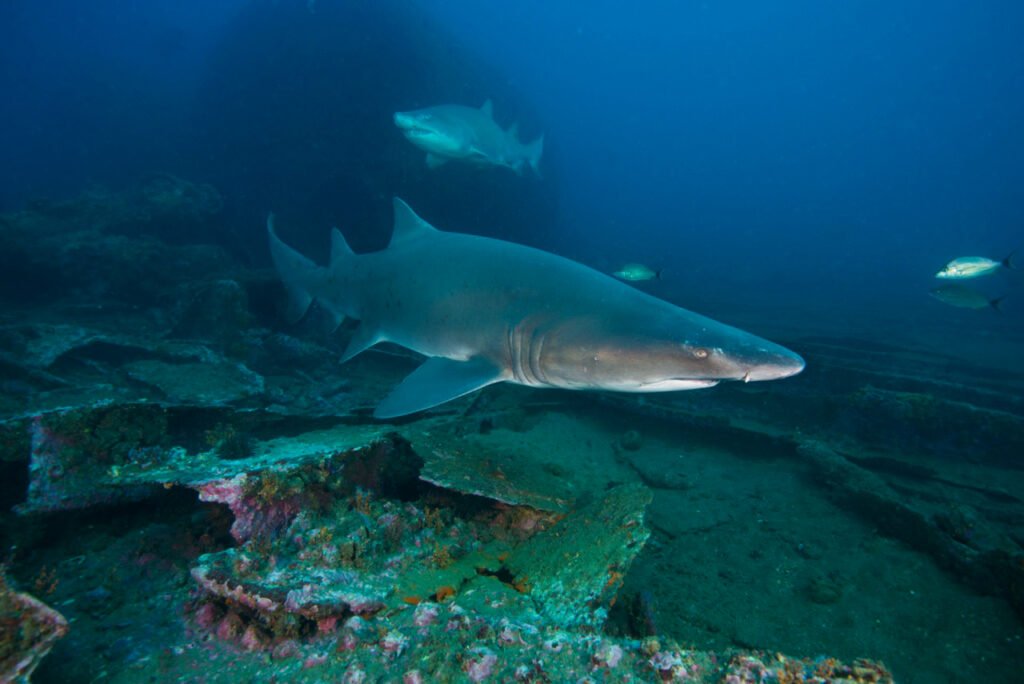
Tiger sharks are essentially living thermometers with fins and teeth. The movements of tiger sharks, (Galeocerdo cuvier) the largest cold-blooded apex predator in tropical and warm-temperate seas, are constrained by the need to stay in warm waters. Think of them like your friend who always complains about being cold – except these friends can bite.
While waters off the U.S. northeast coastline have historically been too cold for tiger sharks, temperatures have warmed significantly in recent years making them suitable for the tiger shark. It’s like nature installed a new heating system in the ocean, and the sharks got the memo first. What used to be too chilly for comfort has become their new vacation destination.
Hawaiian Waters Are Getting Hotter Than Ever

Hawaii isn’t just dealing with rising air temperatures – the ocean itself is becoming a giant hot tub. In Hawai’i, average temperatures could increase by 2-6° F at sea level by the end of the century. That might not sound like much, but in ocean terms, it’s enormous.
Marine heatwaves have doubled in frequency since 1982, and Hawaii is feeling every degree of it. The water around the islands has become increasingly attractive to tiger sharks who follow these warm currents like underwater highways. It’s creating perfect conditions for these predators to expand their territory closer to where people swim, surf, and play.
Migration Patterns That Defy Previous Understanding

Remember when scientists thought tiger sharks were homebodies who stuck to familiar territories? Those days are over. For years tiger sharks were believed to be territorial in nature. Individuals were thought to remain for the most part in a fairly limited area. Recent evidence suggests this is not the case. Tiger sharks have been found to navigate between the main Hawaiian islands, and thus appear to occupy home ranges much larger than had been previously suspected.
Now, researchers are discovering that climate change has turned these creatures into long-distance travelers. They also extended their movements farther north by nearly 4 degrees of latitude when temperatures spike. That’s like a person from Los Angeles suddenly deciding to vacation in Seattle – it’s a big shift that signals something major is happening.
The Maui Connection That Scientists Can’t Ignore

Maui has become ground zero for understanding this phenomenon. This type of shelf habitat is home to a wide variety of shark prey, and Maui Nui has more of this shelf habitat than all of the other main Hawaiian Islands combined. It’s like having the ocean’s equivalent of a massive buffet restaurant right off the coast.
The island of Maui has the highest recorded encounters in the islands now at 71 since 1995, according to the Hawaii Department of Aquatic Resources. This isn’t just bad luck – it’s geography meeting climate change in ways that put sharks and humans in closer contact than ever before.
Why Warmer Waters Equal More Dangerous Encounters

Here’s where things get concerning for beachgoers. Tiger sharks are often attracted to stream mouths after heavy rains, when upland fishes and other animals are swept out to sea. They can easily locate prey in such murky waters. Warmer water temperatures are creating more of these perfect hunting conditions near popular beaches.
Given their role as apex predators, these changes to tiger shark movements may alter predator-prey interactions, leading to ecological imbalances, and more frequent encounters with humans. It’s a domino effect where rising temperatures push sharks into new areas, disrupting established patterns and bringing them closer to human activity zones.
The Breeding Season Factor That Makes Everything Worse

Timing, as they say, is everything – and climate change is messing with nature’s calendar. An increase in encounters with sharks in the main islands of Hawaii occur during fall months, coinciding with the period when the female tiger sharks migrate from the Papahānaumokuākea (northwestern islands) down to the main Hawaiian islands to give birth.
A recent study shows that female tiger sharks migrate to the Hawaiian Islands during these months to give birth. The migration and pupping season go hand-in-hand with increased shark bites. Pregnant and protective mother sharks in warmer waters that extend their range? It’s a recipe for more dramatic encounters.
Ocean Acidification Creates Perfect Storm Conditions

It’s not just about temperature – the ocean’s chemistry is changing too. The rising ocean temperatures and increased acidification have damaged Hawaii’s coral reefs and marine ecosystems. Since the beginning of the Industrial Revolution, the acidity of global surface ocean waters has increased by about 30 percent and could increase by as much as 150 percent by 2100.
When coral reefs die from these changes, the entire food web gets reorganized. Tiger sharks, being opportunistic apex predators, adapt by hunting in new areas – often closer to shore where stressed marine life congregates. It’s like when your favorite restaurant closes and you have to find a new place to eat, except these diners have razor-sharp teeth.
The Vulnerability of Marine Protected Areas

Here’s an ironic twist that conservationists didn’t see coming. These climate-driven changes have subsequently shifted tiger shark movements outside of protected areas, leaving the sharks more vulnerable to commercial fishing. Marine protected areas were designed based on historical movement patterns that no longer apply.
Increasing water temperatures have shifted tiger shark movements beyond management areas that are closed to longline activities, increasing their vulnerability to these fisheries. It’s like building a fence to protect something, only to have that something grow wings and fly over it – except in this case, it’s swimming around it.
The Ecosystem Collapse That’s Already Underway

The changes happening to Hawaiian waters go far beyond just shark movements. By 2048, severe coral bleaching is expected to occur on an annual basis across Hawaiʻi. However, because the ocean is not warming at the same rate across Hawaiʻi, annual severe bleaching is projected to occur as early as 2030 in some areas and as late as 2066 in others.
When coral reefs collapse, tiger sharks lose traditional hunting grounds and have to venture into new territories – including nearshore areas where people recreate. From a purely market-based standpoint, Hawai’i’s coral reefs alone bring in $385 billion a year. Under the high-emissions pathway, coral reef loss in Hawaii is projected to result in an economic loss of up to $1.3 billion per year by 2050.
What This Means for Hawaii’s Future

The writing is on the underwater wall, so to speak. The issue of shark conservation becomes all the more critical as global temperatures increase, leading some sharks to head into new areas where they can find the temperatures they can thrive in. This isn’t a temporary blip – it’s the new normal that Hawaiians and visitors alike will have to navigate.
Scientists are scrambling to understand these rapid changes, but one thing is clear: the Hawaii of tomorrow will have different ocean dynamics than the Hawaii of today. We can expect this to severely affect our communities, ecosystems, and economy. The question isn’t whether these changes will happen – they’re already happening – but how quickly we can adapt to them.
Conclusion

The movement of tiger sharks closer to Hawaiian shores represents more than just a single species following warmer water – it’s a canary in the coal mine for how dramatically climate change is reshaping our oceans. As temperatures continue to rise and marine ecosystems transform, we’re witnessing the beginning of a new chapter in Hawaii’s relationship with its apex predators.
These changes demand that we rethink everything from beach safety protocols to marine conservation strategies. The traditional boundaries between shark territory and human recreation areas are blurring, creating new challenges that require innovative solutions. What was once predictable about shark behavior and distribution is now in flux, forcing us to adapt to an ocean that’s changing faster than anyone anticipated. The question that remains is whether we can adapt quickly enough to coexist with these magnificent predators in their expanding territory.