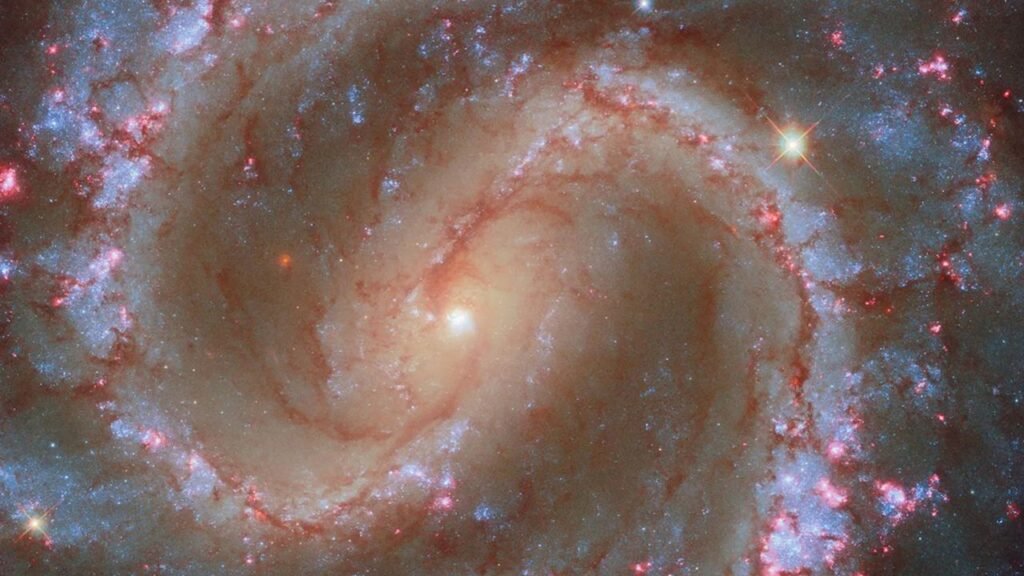

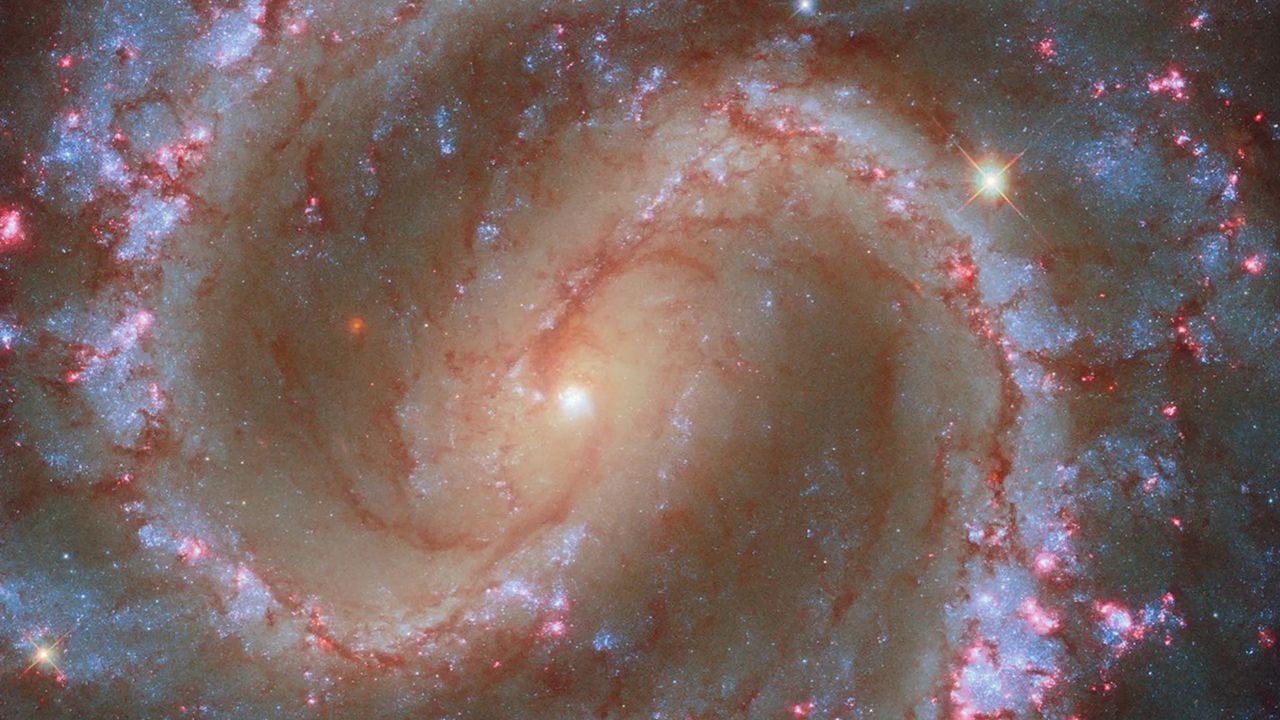
The Elusive Charm of NGC 4535 (Image Credits: Cdn.mos.cms.futurecdn.net)
Imagine swirling arms of cosmic dust and newborn stars lighting up the vast blackness, a reminder of how the universe keeps surprising us with its hidden wonders.
The Elusive Charm of NGC 4535
Picture this: a galaxy so faint that even dedicated amateur astronomers often miss it. That’s NGC 4535 for you, tucked away in the Virgo constellation about 50 million light-years from our own Milky Way. For years, it’s earned the nickname “Lost Galaxy” simply because spotting it requires more than a backyard telescope – it’s like trying to find a whisper in a storm.
Yet, that very elusiveness makes it all the more intriguing. Virgo, one of the largest constellations visible from Earth, hosts this spiral beauty among its starry crowds. Recent observations have pulled it into sharper focus, revealing details that were once just a blur.
How Hubble Turned the Tide
Hubble Space Telescope has a knack for finding what others can’t, and its December 2025 image of NGC 4535 proves it once again. With its powerful 2.4-meter mirror, Hubble cuts through the faintness, showcasing the galaxy’s intricate structure like never before. This isn’t just a pretty picture; it’s a window into active star formation happening right now.
The telescope’s advanced instruments captured the glow of young stars and surrounding gas clouds, painting a vivid portrait of cosmic evolution. Scientists love these views because they help track how galaxies like ours grow over time. It’s a testament to Hubble’s enduring legacy, even as newer scopes come online.
Spotting the Stars in the Spiral
At the heart of this galaxy lie clusters of brilliant blue stars, fresh from their stellar nurseries. These hotspots dot the spiral arms, surrounded by pinkish hues from ionized hydrogen gas. It’s a chaotic dance of creation, where gravity pulls matter together to ignite new suns.
Zooming in, you see how these clusters vary in age and brightness, offering clues about the galaxy’s history. Some areas burst with activity, while others simmer quietly. This mix keeps astronomers busy, piecing together the story of NGC 4535’s life cycle.
Virgo’s Role in Cosmic Exploration
Virgo isn’t just any constellation – it’s a hotspot for deep-space discoveries. Home to massive galaxy clusters and ancient light, it challenges our understanding of the universe’s expansion. NGC 4535 fits right in, adding to the tapestry of spirals that dominate our cosmic neighborhood.
Stargazers in the Northern Hemisphere get prime views of Virgo during spring evenings, but Hubble makes it accessible year-round. This region has yielded countless Hubble gems, from colliding galaxies to solitary wanderers, fueling excitement for what’s next.
Unpacking the Science of Starbirth
What drives the frenzy in NGC 4535? It’s a combination of gas, dust, and gravitational tugs that trigger star formation. Hubble’s data reveals how these processes mirror those in the early universe, helping refine models of galaxy development.
Key features include:
- Bright blue star clusters signaling recent births.
- Pink emission nebulae where gas glows under stellar radiation.
- Dark lanes of dust outlining the spiral’s elegant curves.
- Faint outer arms hinting at ongoing mergers.
- A central bar that funnels material toward the core.
These elements combine to show a galaxy in its prime, neither too young nor fading away.
Looking Ahead to More Revelations
As Hubble continues its mission, paired with upcoming telescopes like the James Webb, we’ll see even deeper into NGC 4535. Infrared views could uncover hidden stars or distant companions, expanding our knowledge exponentially. It’s exciting to think how these faint signals travel across space to reach us.
For now, this “lost” find reminds us that the universe holds endless secrets, waiting for the right tools to unveil them.
Key Takeaways
- NGC 4535’s faintness earned it the “Lost Galaxy” moniker, but Hubble’s clarity changes everything.
- Young star clusters and glowing gas highlight active formation in Virgo’s spiral wonder.
- These observations boost our grasp of galaxy evolution, with more discoveries on the horizon.
In a cosmos full of mysteries, rediscovering something “lost” feels like striking gold. What catches your eye most about this galactic spectacle? Share your thoughts in the comments below.
Jan loves Wildlife and Animals and is one of the founders of Animals Around The Globe. He holds an MSc in Finance & Economics and is a passionate PADI Open Water Diver. His favorite animals are Mountain Gorillas, Tigers, and Great White Sharks. He lived in South Africa, Germany, the USA, Ireland, Italy, China, and Australia. Before AATG, Jan worked for Google, Axel Springer, BMW and others.