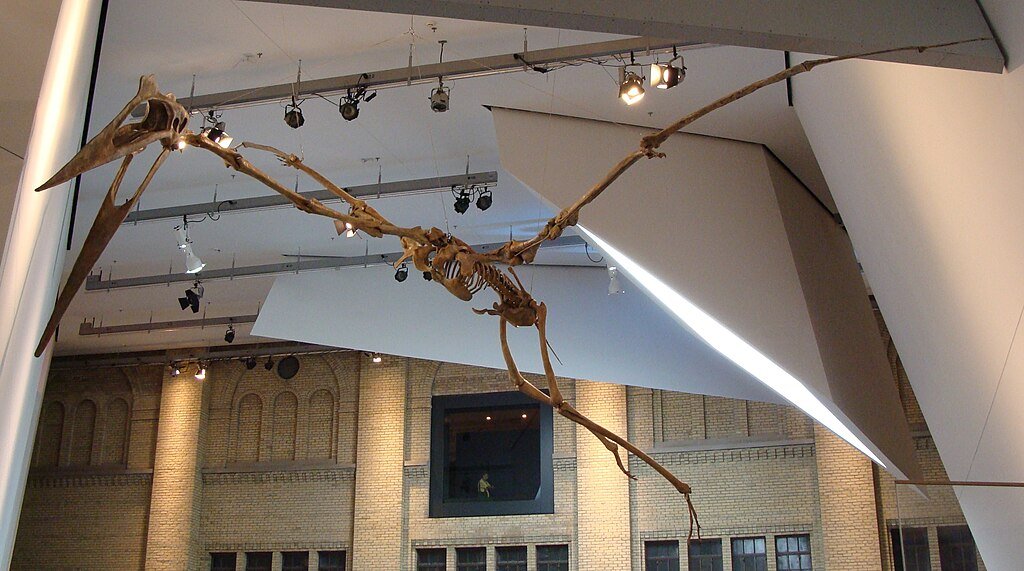

Picture a wingspan wider than a small plane’s propeller arc, shadow skimming the sea, wing joints hardly moving at all. That’s the paradox of deep time’s aerial giants: the bigger they were, the less they flapped. Paleontologists have spent decades untangling how creatures like Pelagornis and Argentavis ruled the air by surrendering much of the effort of flight to wind and warm rising air. The latest reconstructions tell a counterintuitive story about power, physics, and design that seems almost unfair to our mammalian intuition. If you’re imagining thunderous wing beats, think instead of a silent sailboat catching a perfect breeze.
The Hidden Clues
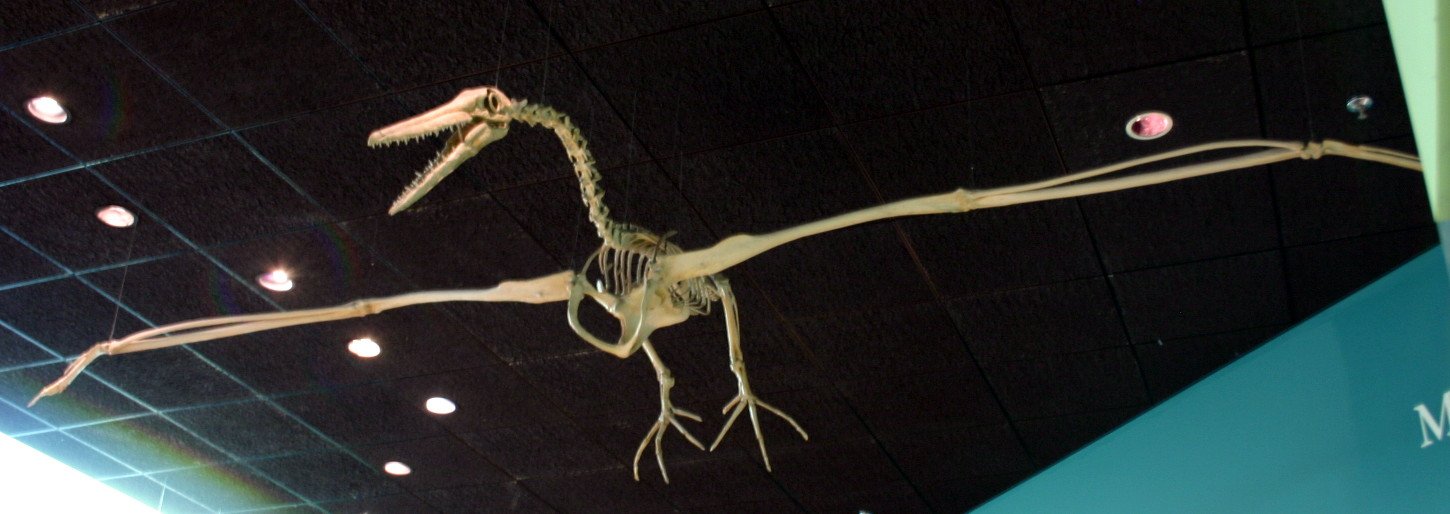
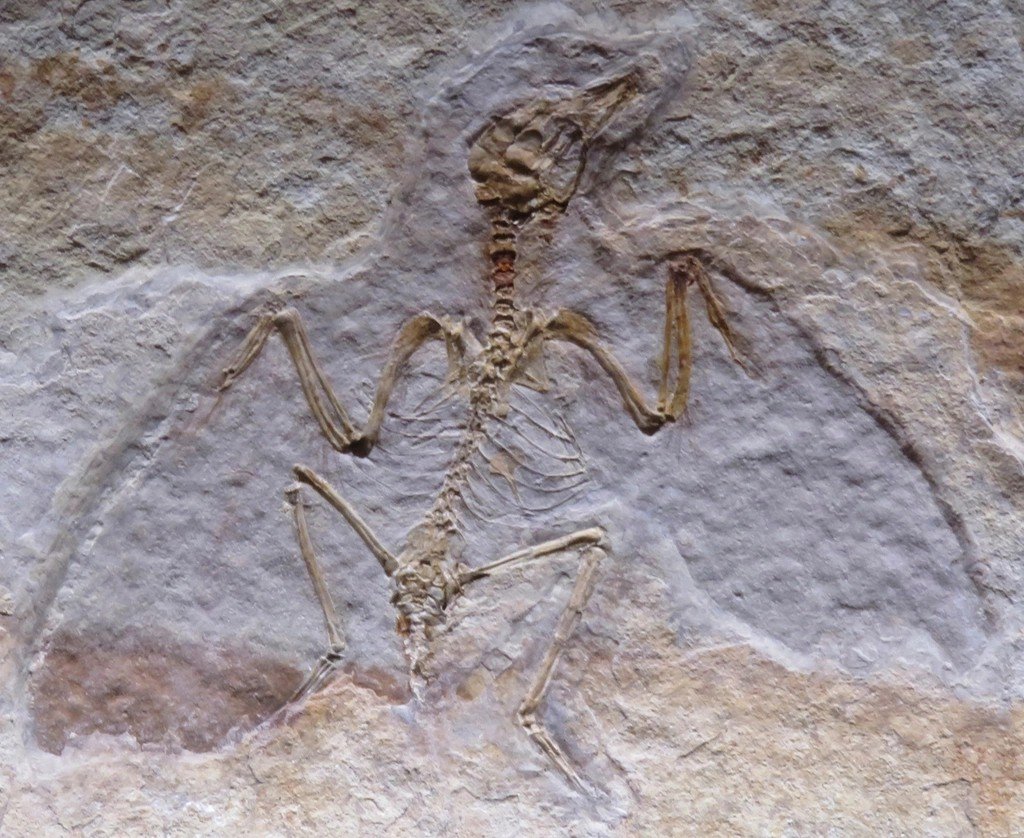
The truth starts in the bones, where delicately thin walls and internal struts broadcast a singular purpose: stay light, spread wide, and let air do the work. Fossils pulled from coastal sediments and high plains show long, narrow wings that would slice rather than churn. Jaw edges armed with bony pseudoteeth hint at a life over open water, snapping fish from the surface without dramatic pursuit. Even the shoulder and chest architecture tell a story of endurance over brute force.
Put together, these clues paint a portrait of a soaring specialist tuned to winds the way a violin is tuned to pitch. In some specimens the sternum’s keel and the attachment sites for flight muscles look strong yet not oversized, a sign that raw flapping power wasn’t the star of the show. The vertebrae fuse into a stiff, stable platform, perfect for holding a massive wing steady through long glides. It’s the anatomy of patience, not sprinting.
From Ancient Bones to Modern Science
Reconstructing how a fossil bird flew used to rely on educated guesswork and modern analogies; today it’s closer to engineering. Researchers scan bones with high-resolution imaging, rebuild wing geometry in three dimensions, and run airflow simulations that mimic gusts, thermals, and ocean wind shear. They estimate mass by comparing bone thickness and body volume to living birds, then test different flight styles against real-world wind profiles.
On top of that, field biologists track modern soarers with GPS loggers and tiny accelerometers, capturing when they flap, glide, or bank – behavioral blueprints that help decode ancient possibilities. Wind tunnel experiments with scaled models link shape to lift and drag, validating the computer predictions. The result is a converging picture: enormous wings, modest muscle, and a flight plan built around lift that nature provides for free.
Anatomy That Chose the Wind
In giant fliers, the ratio of wingspan to wing width tends to be high, an aspect ratio that reduces drag and rewards steady air rather than explosive flapping. The shoulder joint and robust coracoid brace the wing like a spar in a glider, prioritizing rigidity over a huge stroke amplitude. Hollow bones sprinkled with reinforcing struts keep mass down without sacrificing strength, the avian equivalent of aerospace honeycomb.
Look at the chest and you see the compromise: a keel capable of anchoring big flight muscles but not the outsized engines you’d expect for sustained flapping. Tendons and ligaments act like stay cables, holding posture through long, energy-cheap arcs. Even the feet and legs, slim and tucked, cut drag during hour-long glides – every gram spared is a minute more aloft.
The Physics of Almost-Impossible Flapping
Flapping is expensive, and the cost rises faster than size can keep up, a problem of scaling that dogs any truly huge flyer. Lift grows with wing area, but body mass grows even faster, so muscle must work harder for each extra kilogram. Past a certain threshold, the power that chest muscles can deliver struggles to meet the power that flapping demands, especially during takeoff or prolonged climbs.
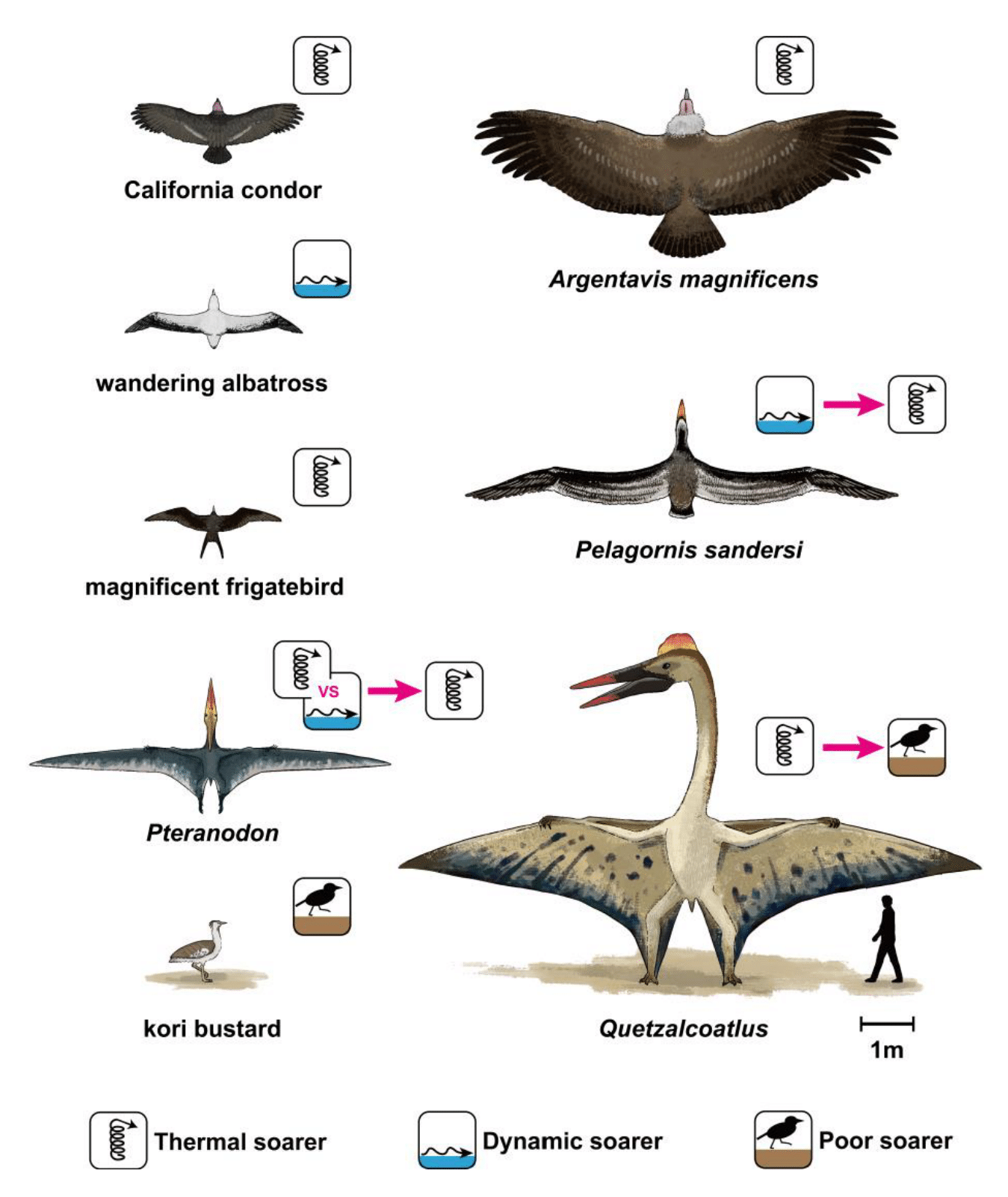
So the giants hacked the problem: they let the atmosphere do the heavy lifting. Over the sea, strong wind gradients allow dynamic soaring – arcing up through faster air to harvest energy, then diving back down, a graceful rollercoaster that pays for itself. Over land, rising columns of warm air work like invisible elevators; circle, climb, glide, repeat. In both cases, flapping shrinks to brief corrections and launch boosts, barely a footnote in a day’s flight log.
Why It Matters
Understanding how the largest fliers solved the power problem reframes more than paleontology; it sharpens modern engineering and conservation. Gliders, sailplanes, and long-endurance drones borrow directly from these principles, trading speed for breathtaking efficiency. In a world chasing cleaner tech, nature’s blueprint for slow, steady, almost effort-free flight is more than a curiosity – it’s a design manual written in bone.
It also corrects a popular myth that bigger always means stronger and faster. The lesson is subtler: bigger means smarter about energy, stricter about timing, and more dependent on the right conditions. When we compare these ancient strategies to today’s birds, we find a continuum where condors and albatrosses inherit the same rules, proving the physics never left the stage.
Global Perspectives
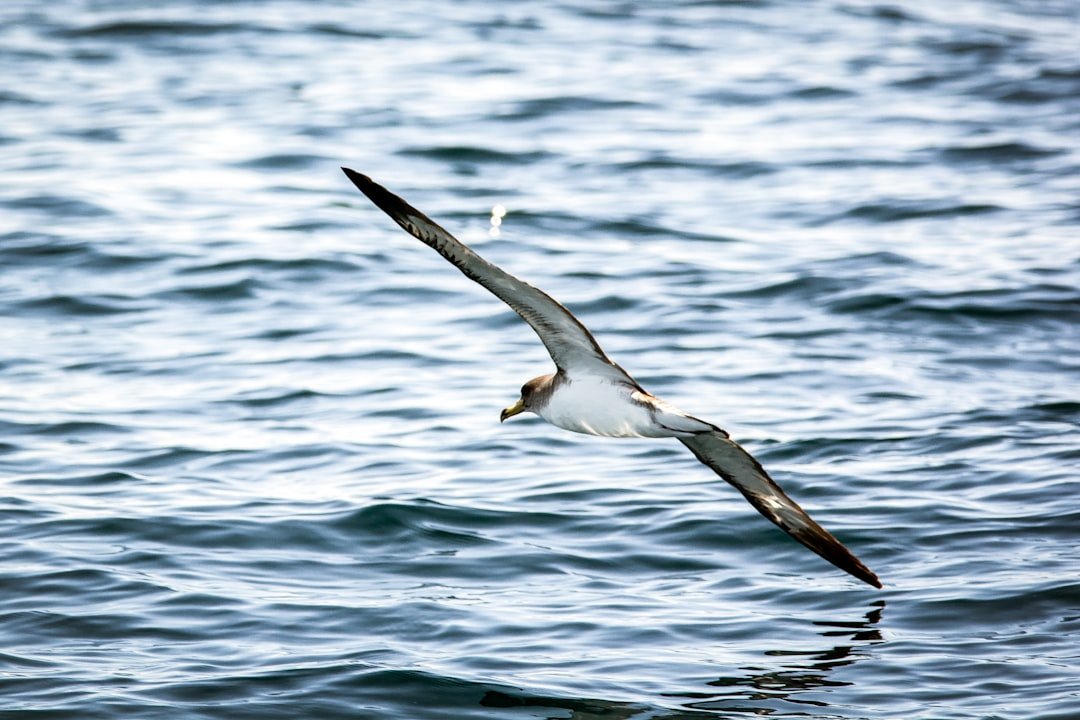
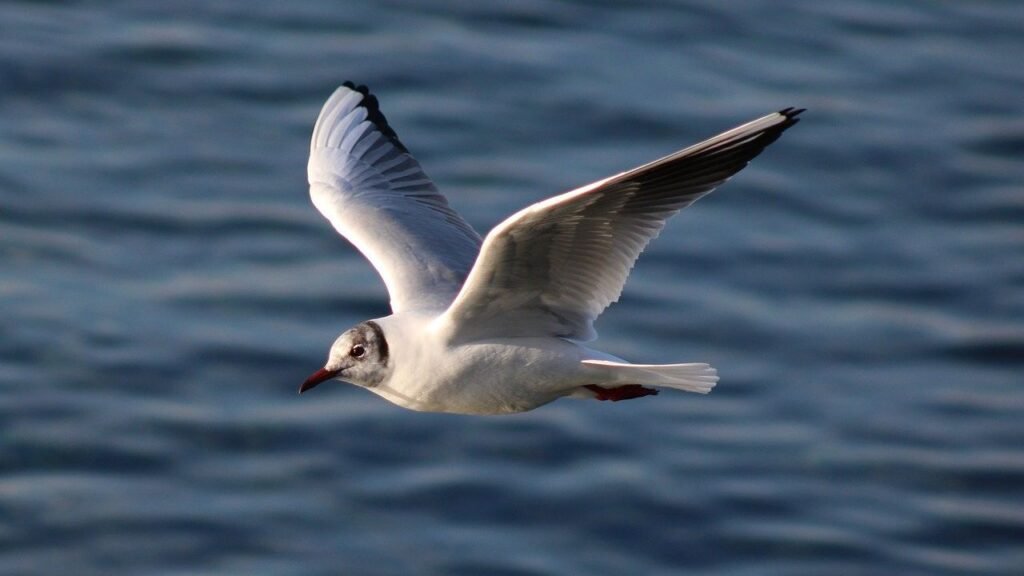
Ocean-borne winds made the open sea a moving highway for giants, much as it does for modern albatrosses that can circumnavigate vast distances with only flickers of effort. Inland, mountain thermals and ridge lift turned valleys and escarpments into reliable escalators for soaring specialists. The distribution of fossils near coasts and uplift-prone regions isn’t an accident; it’s a map of atmospheric opportunity.
I remember standing on a windy bluff watching a living albatross glide, and the silence felt almost confrontational – no flapping, no rush of air, just a masterclass in patience. That moment makes the fossil record feel less distant: the same winds, the same tricks, a different cast of characters. It’s a global system in motion, and these birds were its most elegant co-pilots.
The Future Landscape
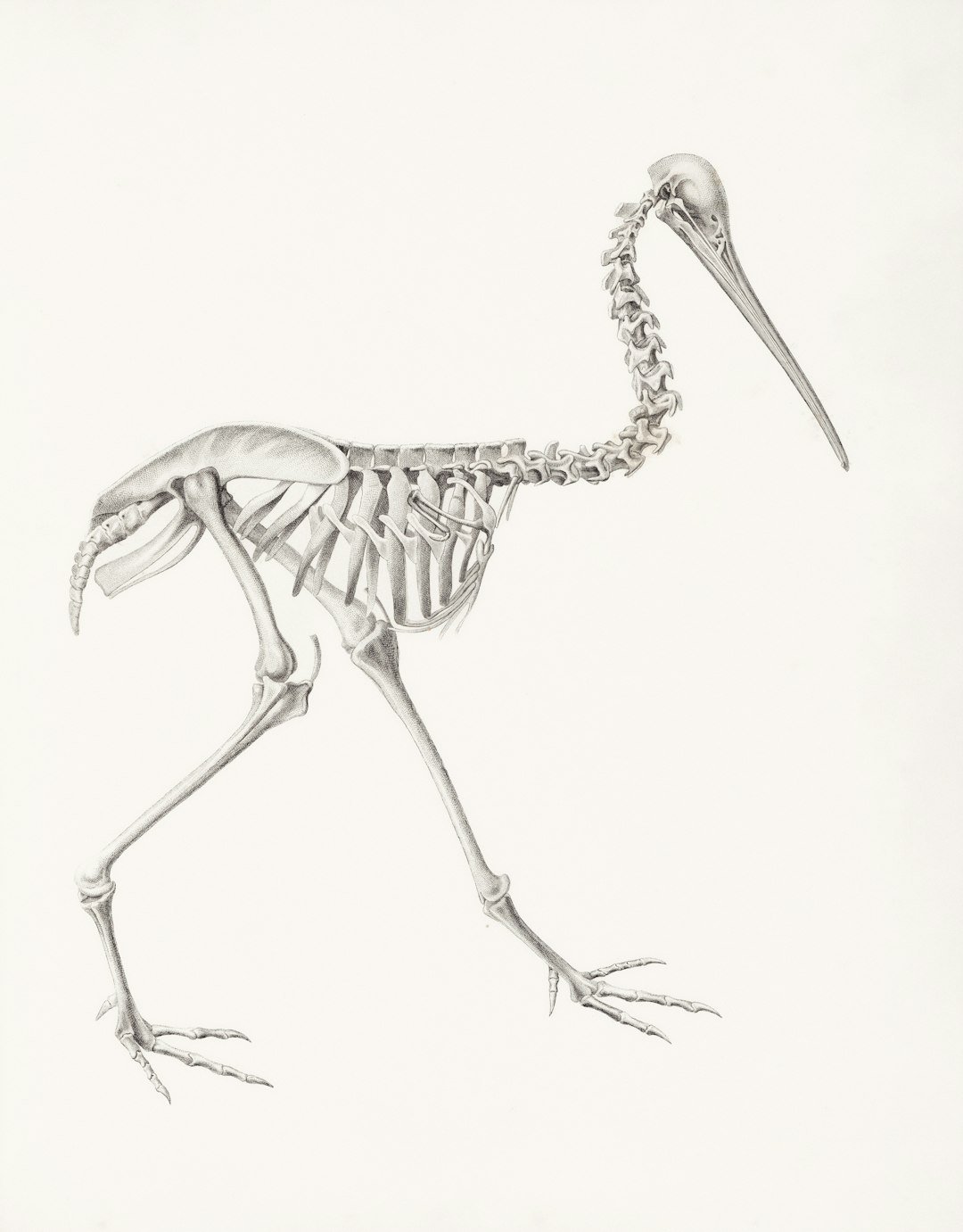
Emerging tools are poised to sharpen the picture even more. Micro-CT scans can reveal microscopic growth patterns that refine body mass estimates, while biomechanical models integrate bone elasticity to test the limits of launch and landing. Machine-learning systems are already classifying fragmentary fossils, matching tiny pieces to species with a speed that once took months of expert effort.
Meanwhile, aviation engineers are building autonomous gliders and drones that read gusts and thermals in real time, mimicking the dynamic and thermal soaring of these giants. There are challenges ahead – battery limits, regulatory hurdles, and the messy unpredictability of weather – but the payoff is obvious: aircraft that fly farther on less energy by listening to the sky. Fossils inspire code, and code helps explain fossils, a feedback loop with wings.
How You Can Help
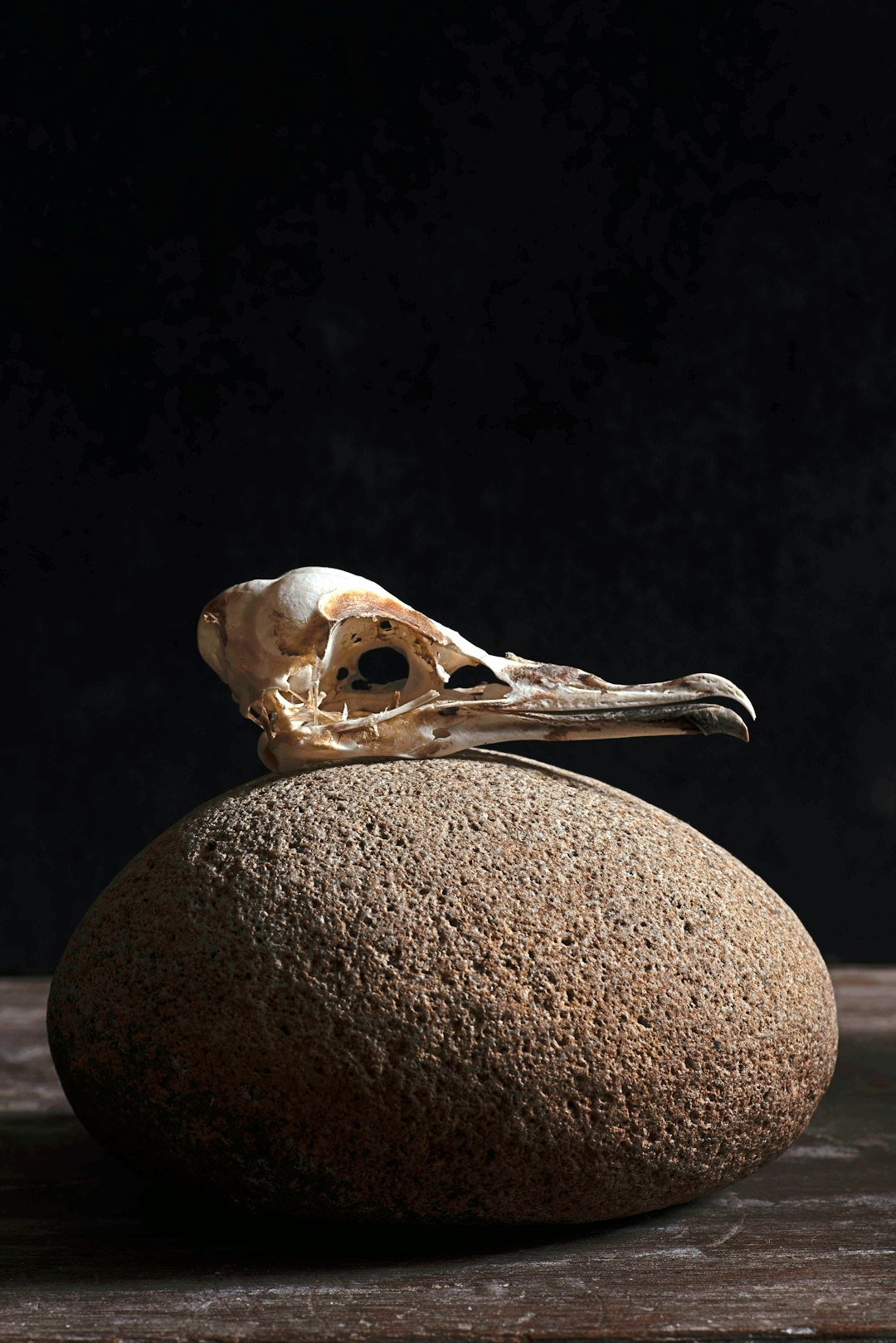
You don’t need a lab to matter in this story. Support local natural history museums that conserve fragile fossils and fund fieldwork, because a single well-preserved bone can rewrite an entire flight model. If you live near coasts or ridgelines, back efforts that protect wind corridors and nesting habitats for modern soaring birds; their behaviors are living data sets that illuminate the past.
Curiosity counts too: read, ask questions, and when you see a big bird barely flapping, recognize the mastery on display. Share that sense of wonder with kids and neighbors – new paleontologists start with moments like that. The sky still teaches, and the lesson is simple: the greatest flyers didn’t overpower the wind; they partnered with it – would you have guessed?
Suhail Ahmed is a passionate digital professional and nature enthusiast with over 8 years of experience in content strategy, SEO, web development, and digital operations. Alongside his freelance journey, Suhail actively contributes to nature and wildlife platforms like Discover Wildlife, where he channels his curiosity for the planet into engaging, educational storytelling.
With a strong background in managing digital ecosystems — from ecommerce stores and WordPress websites to social media and automation — Suhail merges technical precision with creative insight. His content reflects a rare balance: SEO-friendly yet deeply human, data-informed yet emotionally resonant.
Driven by a love for discovery and storytelling, Suhail believes in using digital platforms to amplify causes that matter — especially those protecting Earth’s biodiversity and inspiring sustainable living. Whether he’s managing online projects or crafting wildlife content, his goal remains the same: to inform, inspire, and leave a positive digital footprint.