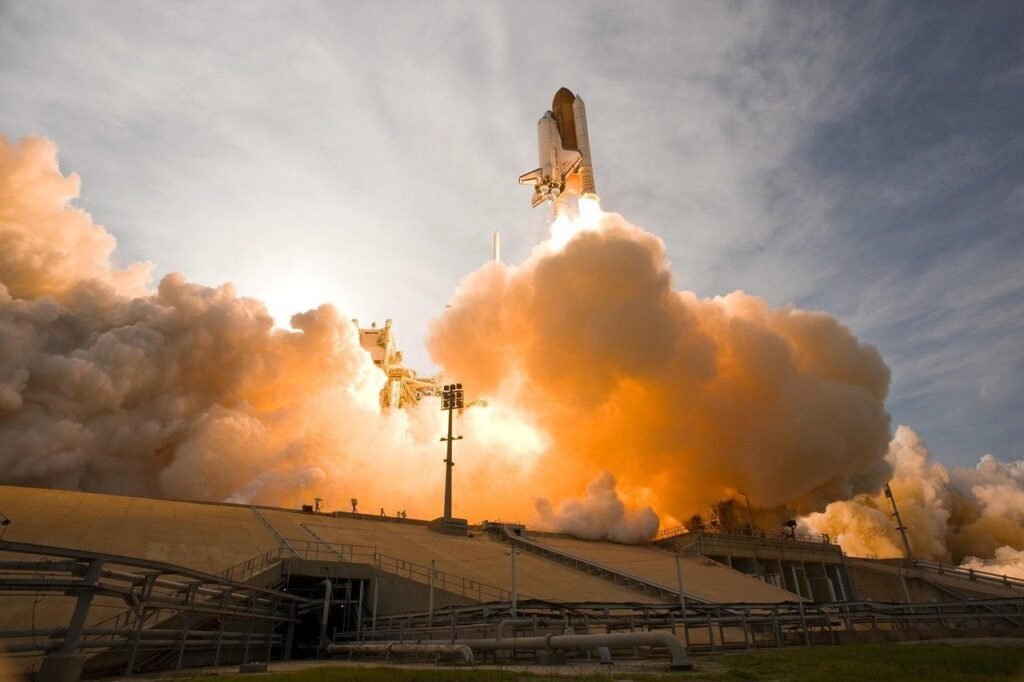

A Visceral Shock That Reshaped NASA (Image Credits: Pixabay)
Kennedy Space Center, Florida – The Challenger disaster on January 28, 1986, exposed the fragility of human spaceflight when the shuttle broke apart 73 seconds after liftoff, killing its seven-member crew.[1][2]
A Visceral Shock That Reshaped NASA
Ron Doel, then a Ph.D. candidate watching from NASA’s Jet Propulsion Laboratory, described the moment as a “visceral, immediate” shock as monitors replayed the explosion endlessly.[1] Reporters scrambled, briefings canceled, and the space community grappled with the unthinkable. The Rogers Commission later pinpointed a failed O-ring seal in cold weather, compounded by flawed launch decisions and unwarranted assumptions.[1]
That tragedy halted shuttle flights for nearly three years. Investigators highlighted not just technical flaws but deeper cultural issues, like schedule pressures overriding safety concerns. Engineers had warned of O-ring vulnerabilities beforehand, yet managers proceeded. The event forced NASA to confront its optimism about making space routine.
Tragedies That Echo Through Decades
Challenger was not an isolated incident. The Columbia shuttle disintegrated during reentry in 2003, killing another seven astronauts due to foam debris damaging its wing.[1] Earlier losses included the Apollo 1 fire on the launch pad in 1967 and Soviet Soyuz missions in 1967 and 1971. Each prompted exhaustive probes revealing human and technical failures.
- Apollo 1: Three astronauts perished in a cabin fire during a test.
- Soyuz 1: One cosmonaut died in a crash-landing.
- Soyuz 11: Three cosmonauts succumbed to depressurization on reentry.
- Columbia: Wing damage led to breakup over Texas.
These events underscore a pattern: spaceflight demands perfection amid inherent unpredictability. Investigations produced voluminous reports, yet new vulnerabilities emerged with evolving technology.
Near-Misses in Today’s Busy Skies
Recent operations reveal ongoing hazards despite advances. In 2013, astronaut Luca Parmitano’s helmet filled with water during an ISS spacewalk, nearly drowning him. Debris damaged Soyuz-MS 22 and China’s Shenzhou 20, requiring crew swaps and safe returns in 2023 and 2025.[1]
Private ventures face scrutiny too. Boeing’s Starliner encountered thruster failures and helium leaks on its 2024 crewed debut, stranding astronauts Butch Wilmore and Suni Williams until a SpaceX ride home nine months later. SpaceX has managed minor Falcon 9 anomalies, while Blue Origin’s New Shepard suffered uncrewed failures. Launch rates have surged to every few days, amplifying risks as hindsight reveals flaws post-flight.[1]
Applying Lessons to Artemis and Beyond
NASA applies “lessons learned” rigorously for missions like Artemis 2, slated for early February with four astronauts looping the moon. Officials stress deliberate pacing, avoiding rushes even with overlapping schedules like SpaceX’s Crew-12.[1] Heat shield concerns from Artemis 1 persist, prompting trajectory tweaks rather than redesigns. Pauline Barmby noted exhaustive pre-launch testing but acknowledged untestable space surprises.[1]
| Era | Launch Frequency | Safety Focus |
|---|---|---|
| Shuttle Years | Every few weeks | Post-accident halts, redesigns |
| Today | Every few days | Real-time data, private oversight |
Experts like Doel caution that evolving systems challenge direct analogies from past disasters. History “rhymes” rather than repeats, urging vigilance against complacency.
- Risks stem from both hardware failures and decision pressures.
- Increased launches demand faster learning curves.
- Private players add innovation but new variables.
Forty years on, Challenger reminds us that spaceflight thrives on bold risks tempered by unyielding caution. As Artemis pushes boundaries, the core truth endures: no mission is truly routine. What lessons from this anniversary resonate most with you? Share in the comments.