
Picture staring up at the stars, contemplating the vastness of the cosmos, and then suddenly wondering if everything you see is actually happening inside something else entirely. It’s one of those thoughts that makes your brain hurt a little. Scientists have long pondered the mysteries of where we came from and what existed before the beginning of everything.
While most of us learned about the Big Bang in school, a growing number of physicists are now asking a rather peculiar question. What if that wasn’t really the beginning at all? What if instead of exploding out of nothing, our universe actually formed inside a black hole that exists within a much larger cosmos? This might sound like science fiction, yet this theory is rooted in legitimate physics and is gaining traction among researchers trying to solve some of the biggest mysteries about reality itself.
The Surprising Similarities Between Black Holes and Our Universe
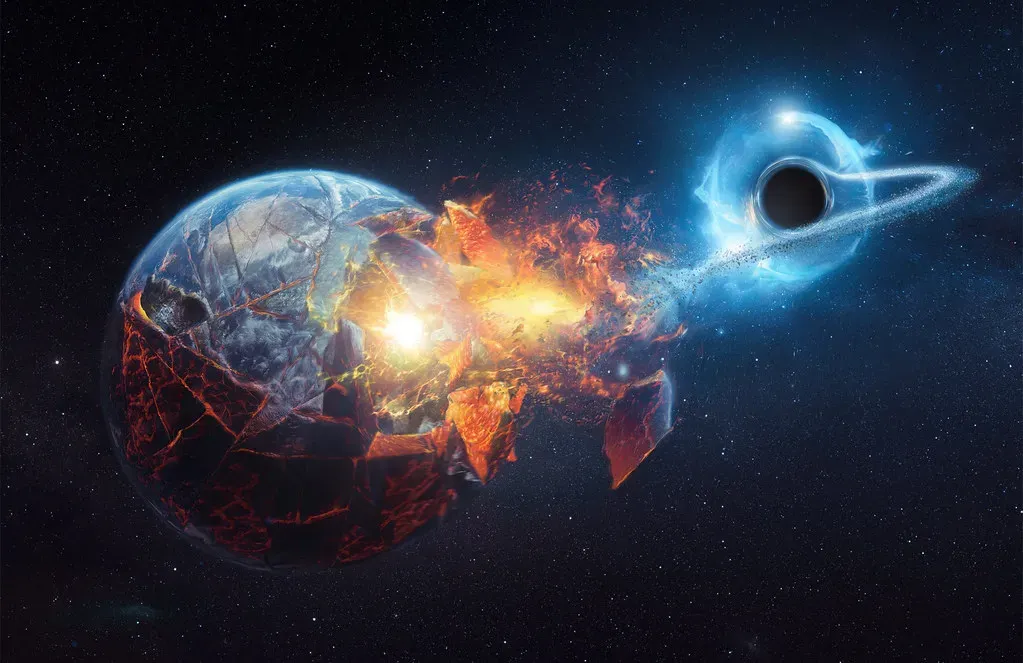
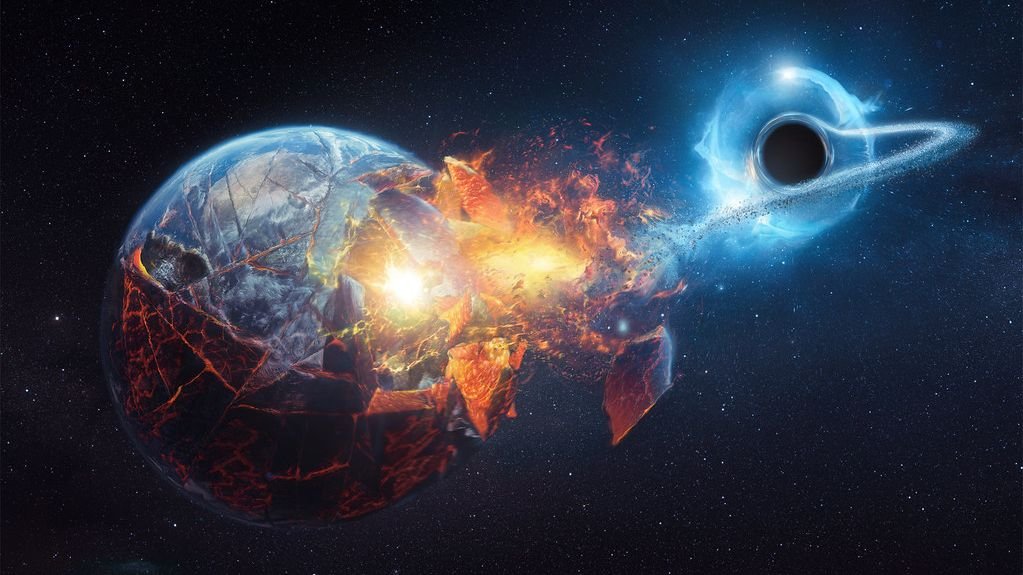
When you really think about it, black holes and our universe share some striking parallels, both containing singularities and event horizons. The universe began with what we call the Big Bang, a point of seemingly infinite density from which everything expanded. Meanwhile, black holes are thought to contain singularities at their cores where matter becomes infinitely compressed.
The resemblance doesn’t stop there. Black holes have event horizons beyond which nothing can escape, while the universe has its own cosmological horizon set by its finite age and the speed of light. However, there’s a crucial difference that makes this comparison tricky: the Big Bang singularity isn’t actually a location in space like the center of a black hole.
The Mathematical Foundation: When Physics Gets Weird
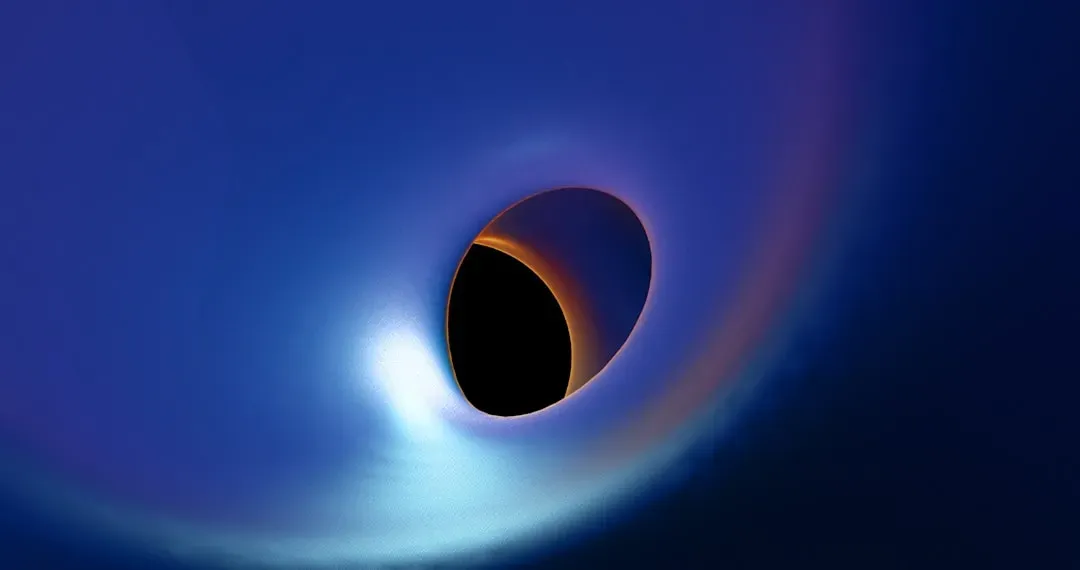
For this model to work, the universe’s Hubble radius must equal its Schwarzschild radius, which is indeed observed to be nearly satisfied, though it could just be a cosmic coincidence. Let’s be real, when you start calculating the size of a black hole containing all the mass and energy in the observable universe, you get a result that’s eerily close to the actual size of our cosmos.
Here’s where things get even stranger. The more massive a black hole is, the less dense it becomes, meaning a black hole with the universe’s radius would have roughly the average density we observe. It’s hard to say for sure if this means anything definite, yet the math certainly checks out in a way that makes physicists pause and reconsider their assumptions.
Nikodem Poplawski and the Bounce Theory
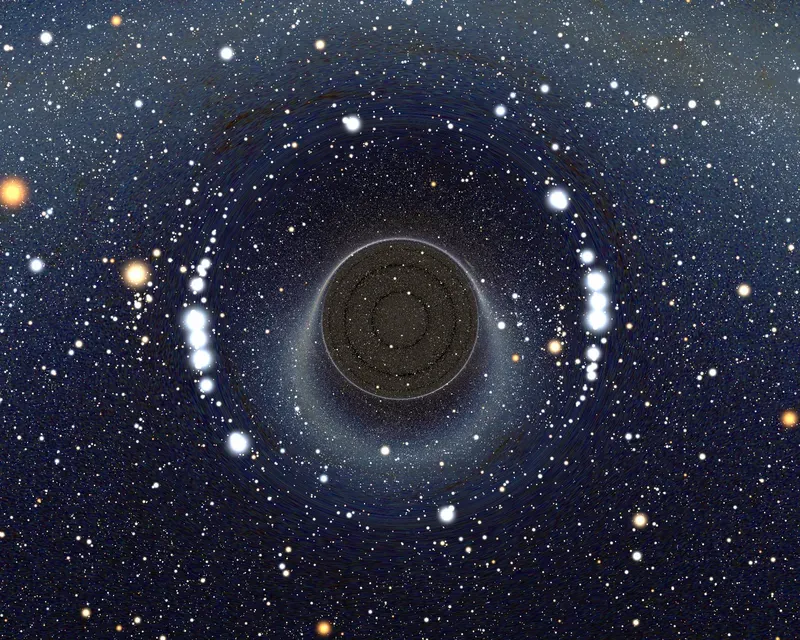
Polish theoretical physicist Nikodem Poplawski is widely noted for proposing that every black hole could be a doorway to another universe. His theory isn’t just wild speculation. In 2010, Poplawski proposed a physically grounded mechanism where black holes undergo a non-singular gravitational bounce and create new, expanding universes inside their event horizons.
The key to this idea involves something called torsion, a twisting property of spacetime. According to Poplawski, torsion manifests as a repulsive force that prevents matter from collapsing into a singularity, causing it to bounce and expand into a new universe connected through a wormhole. Think of it like a cosmic trampoline preventing total collapse. Instead of crunching down to nothingness, matter rebounds and explodes outward, creating what we experience as our expanding universe.
The Holographic Principle: Reality as a Projection
Some researchers have taken this concept even further with the holographic principle. This principle suggests all information within a volume of space can be represented on its boundary, like a 3D image projected from a 2D surface. It’s honestly pretty mind-bending when you first encounter it.
Physicist Gerard ‘t Hooft showed that the total degrees of freedom inside a black hole are defined by the surface area of its horizon rather than its volume. Information is encoded on the two-dimensional surface of a black hole like a hologram, and could be completely restored during quantum evaporation. If this applies to our universe, everything we perceive might actually be information patterns encoded on some cosmic boundary.
Evidence From the James Webb Space Telescope
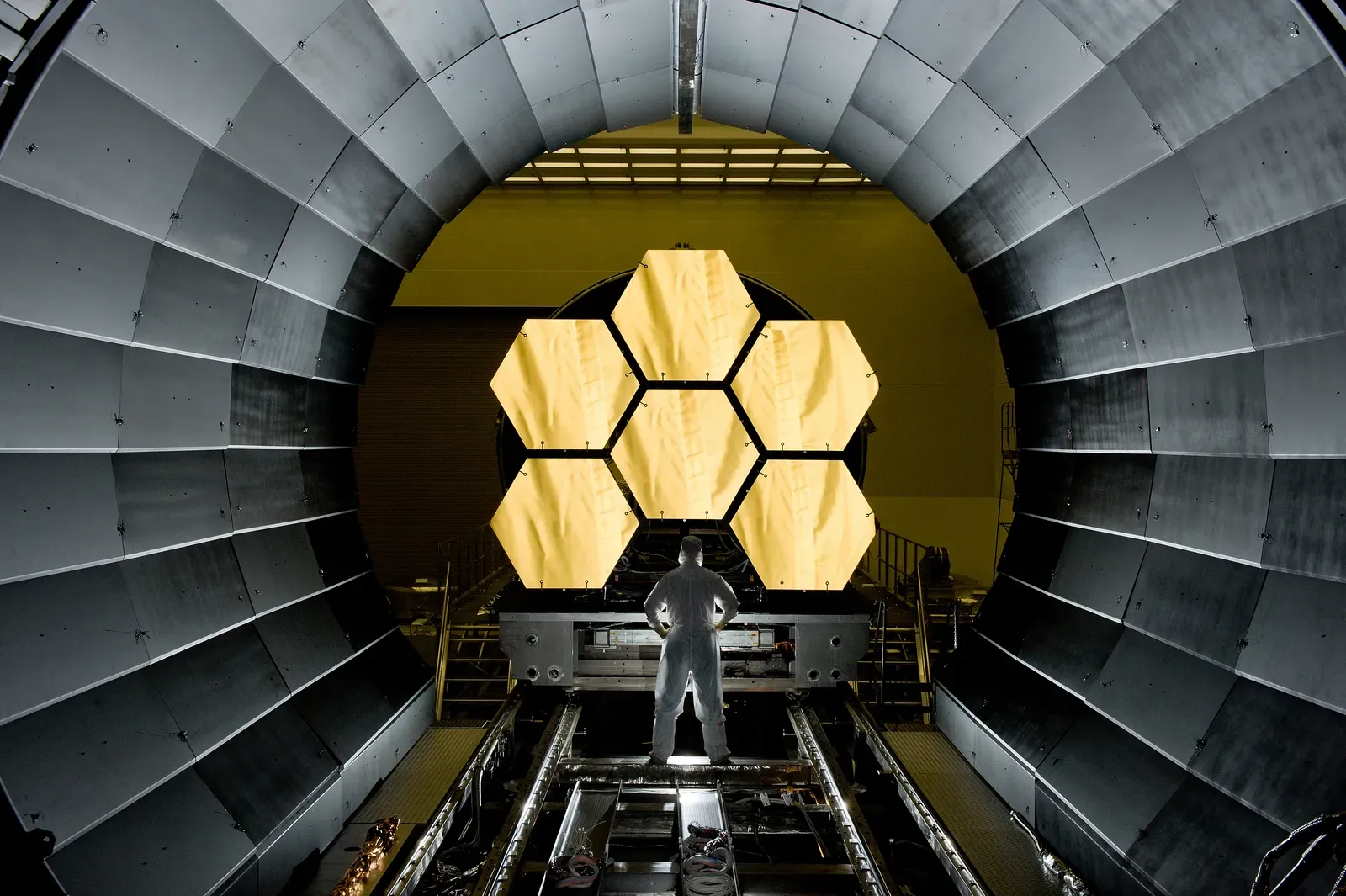
A 2025 analysis of over 200 early galaxies observed by the James Webb Space Telescope revealed that around two thirds spin clockwise, whereas only half would be expected to do so. This asymmetry is surprising because we’d normally expect galaxies to spin randomly in all directions.
One possible explanation is that the universe might be inside a rotating black hole, with the spin manifesting as a preferred axis influencing all galaxies. If our universe’s parent black hole was spinning, one direction might be preferred at large scales. Still, scientists remain cautious because there could be other explanations for this galactic spinning pattern.
The Black Hole Universe Model and Cosmic Mysteries
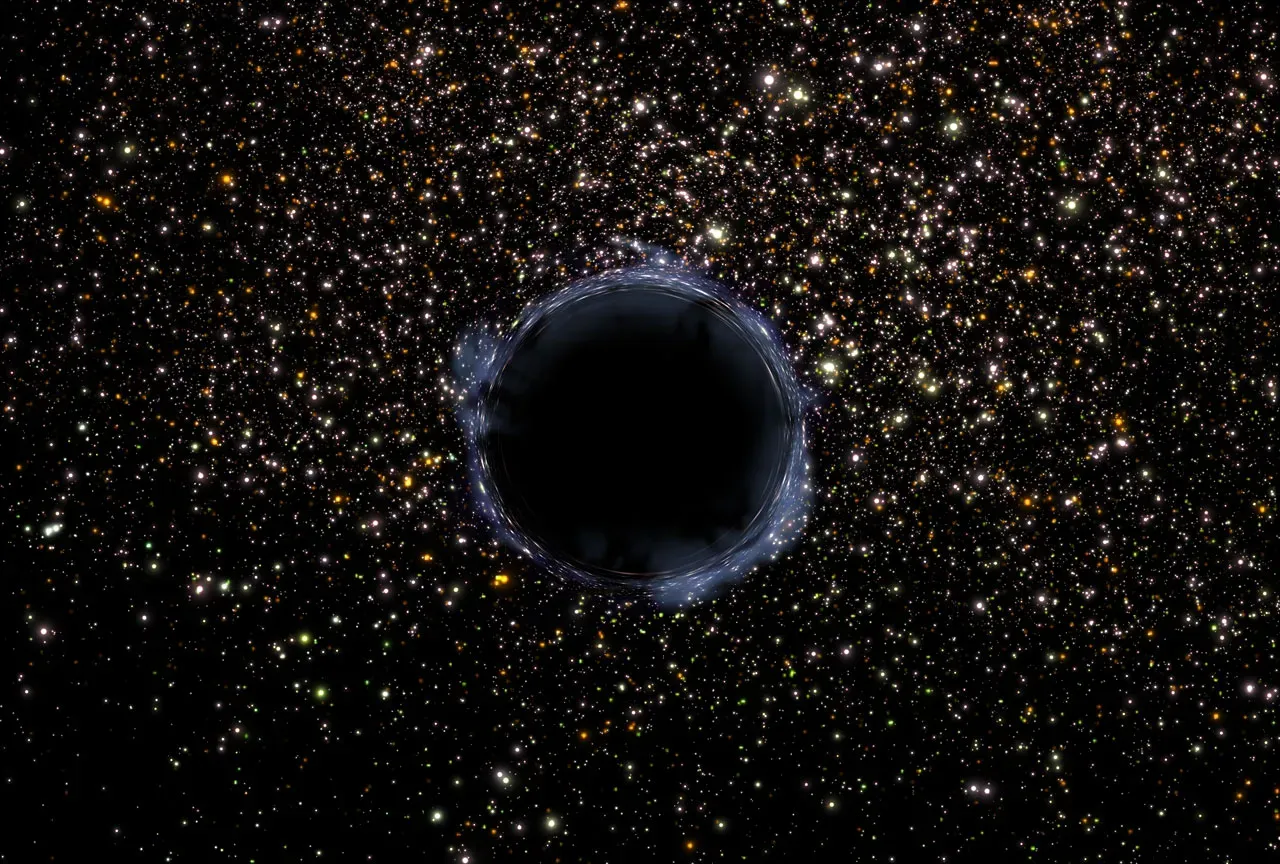
An international team led by Professor Enrique Gaztañaga from the University of Portsmouth proposed in Physical Review D that the universe’s formation resulted from gravitational collapse generating a massive black hole followed by a bounce inside. They’re calling it the Black Hole Universe model, offering a radically different perspective grounded entirely in known physics.
Their calculations suggest the Big Bang wasn’t the start of everything but the outcome of a gravitational collapse that formed a massive black hole, followed by an interior bounce. This scenario might naturally solve the horizon problem and flatness problem in cosmology, which have long puzzled scientists trying to explain why the universe appears so uniform and geometrically flat.
Why Scientists Remain Skeptical Yet Intrigued
It doesn’t seem likely we live inside a rotating universe or black hole, and while it can’t be ruled out completely, there’s no compelling evidence yet. The cosmological principle states the universe has no special direction and looks pretty much the same everywhere, which contradicts what we’d expect if we were inside a rotating black hole.
Getting a better handle on these issues requires figuring out how to combine general relativity with quantum mechanics, creating a theory of quantum gravity that has so far eluded scientists. The theory isn’t the most compelling idea to explain our universe, with standard physics still describing best what we observe, though there are reasons people take it seriously. Until testable predictions emerge, this remains a fascinating but unproven hypothesis that pushes the boundaries of cosmological thinking.
Conclusion
The idea that we’re living inside a black hole challenges everything we thought we knew about cosmic origins. From mathematical similarities between black holes and our universe to recent observations of spinning galaxies, there are tantalizing hints that make this hypothesis worth exploring. Scientists like Nikodem Poplawski and Enrique Gaztañaga have developed sophisticated models incorporating torsion, bounces, and wormholes that avoid the problematic singularities plaguing traditional Big Bang cosmology.
Yet honestly, we’re still far from proving this wild concept. The theory remains speculative, requiring better observations and that elusive theory of quantum gravity before we can say anything definitive. Future missions might provide the data needed to test these predictions. Whether we’re in a black hole or not, the mere fact that physicists are seriously considering this possibility shows how much we still don’t understand about reality. What do you think about this cosmic possibility? Does it change how you view the universe around you?