

Imagine waking up one morning, stepping outside, and somehow knowing – with pinpoint certainty – that you need to fly several thousand miles south, cross an ocean, and land on the exact same patch of coastline you visited last year. No GPS. No road signs. No map. You just… know. That is the daily reality of millions of migratory birds, and it is honestly one of the most mind-blowing things happening in nature right now.
Scientists have spent decades trying to crack this mystery, and what they’ve found is far stranger and far more extraordinary than anyone expected. It involves quantum physics, invisible magnetic fields, ancient starlight, and even smells carried on the wind. If you think you know how birds find their way, prepare to be surprised. Let’s dive in.
The Sheer Scale of What Birds Actually Do
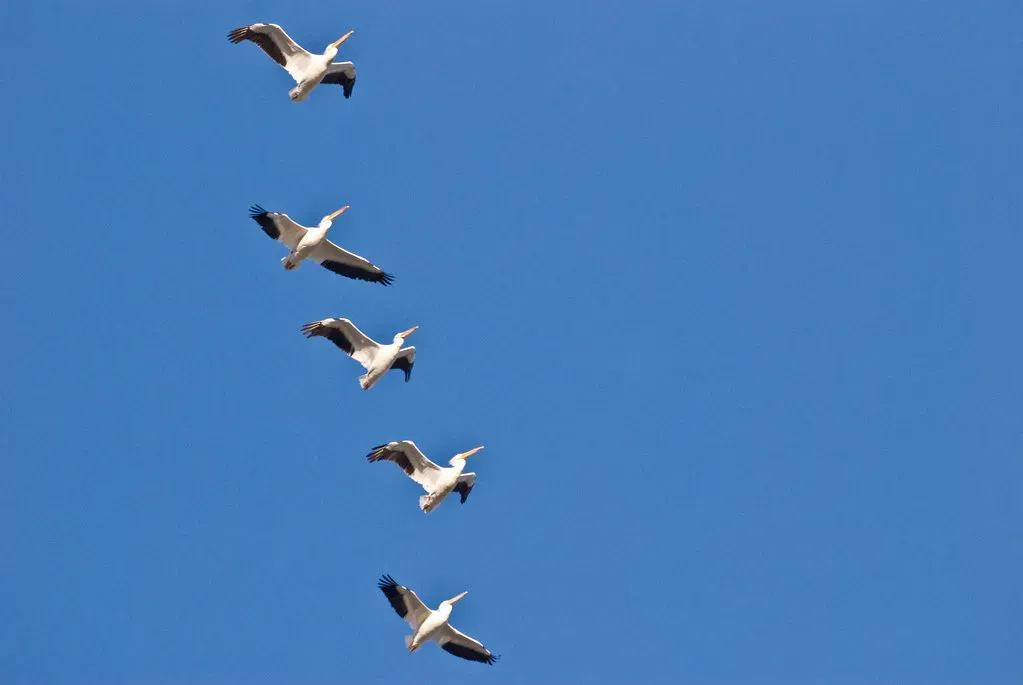
The Arctic Tern travels nearly 44,000 miles annually between the Arctic and Antarctic – the longest known migration of any animal. Let that sink in for a moment. That is roughly the circumference of Earth, completed every single year, by a creature that fits in your palm. It is the kind of statistic that sounds made up but is very much real.
A bar-tailed godwit once flew 7,258 miles from Alaska to New Zealand without stopping – no GPS device, no map, no landmarks for most of the journey across open ocean. She navigated with precision that would impress any pilot, yet she carried nothing but the biological instruments embedded in her own body. Stories like this are not outliers. They are the rule, repeated across hundreds of species, season after season, with astonishing consistency.
You Are Born With a Built-In Compass: The Genetics of Navigation
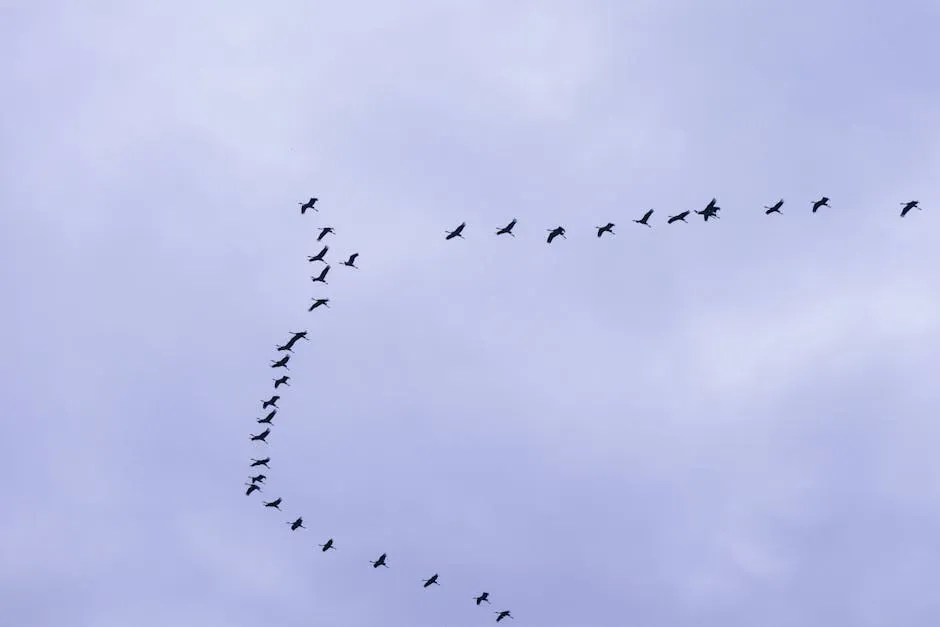
Here’s the thing that really gets me – birds don’t always learn their routes from their parents. Many of them come into the world pre-programmed. First-time migrant birds possess an innate orientation system that’s genetically programmed. Specific genes like MARB-a and InvP-Ch1 have been identified as determining migration direction through complex mechanisms. This genetic programming follows what scientists call the “clock-and-compass” concept – young birds instinctively fly in a specific direction for a genetically determined amount of time, eventually arriving at their species’ traditional wintering grounds.
Migratory birds have an internal clock with an annual rhythm that tells them when to migrate. They also inherit from their parents the directions in which they need to fly in autumn and spring, and if the parents each have different genetically encoded directions, their offspring will end up with an intermediate direction. For example, if a southwest-migrating bird is crossed with a southeast-migrating bird, their offspring will head south when the time comes. Think of it like inheriting a set of turn-by-turn driving directions inside your DNA, before you’ve ever seen the road.
Earth’s Invisible Field: The Magnetic Compass in a Bird’s Body

Perhaps the most enigmatic and remarkable navigation system in birds is their ability to sense Earth’s magnetic field. This geomagnetic sense allows them to detect the planet’s magnetic poles, offering an invisible compass that functions day and night, through clouds, fog, and darkness. You don’t need sunshine or a clear sky. The compass is always on.
Birds carry a magnetic compass in their beaks and brains, using magnetite-based receptors and the trigeminal nerve to detect Earth’s magnetic field. This allows them to align with the north pole, particularly during nocturnal migration. Birds detect magnetic inclination, which measures the angle of field lines relative to Earth’s surface, allowing them to estimate latitude without relying on true north. This magnetic compass works across all latitudes, making it universally useful during long migrations. It is, essentially, a living instrument built from biology alone.
Seeing the Magnetic Field: Quantum Physics Inside a Bird’s Eye

This is where things get genuinely weird, in the best possible way. Experimental evidence suggests something extraordinary: a bird’s compass relies on subtle, fundamentally quantum effects in short-lived molecular fragments, known as radical pairs, formed photochemically in its eyes. The creatures appear to be able to “see” Earth’s magnetic field lines and use that information to chart a course between their breeding and wintering grounds.
When blue light strikes cryptochrome, it triggers a chemical reaction that creates what physicists call a radical pair – a pair of molecules that each contain a single unpaired electron, a configuration that makes them chemically reactive in unusual ways. Crucially, these electrons become quantum entangled, meaning the spin state of one is instantaneously correlated with the other regardless of their physical separation. The orientation of Earth’s magnetic field influences the spin states of these entangled electrons, which in turn affects the chemical outcome of the reaction. The ratio of molecular products formed shifts depending on which direction the bird is facing relative to the geomagnetic field. Quantum mechanics. In a bird’s eye. Running on sunlight. Honestly, nothing has ever made physics feel more alive.
Reading the Sun: The Time-Compensated Solar Compass

Using guidance from the sun, birds are able to approximate great circle routes – the shortest route between two points on a sphere – to minimize their travel. Just like humans, birds also have a circadian rhythm. Using this alongside the sun’s position, they can determine the time of day in a process called the time-compensated sun compass. It is surprisingly sophisticated, almost like having a built-in sundial that also knows what time it is.
If a bird’s internal clock is advanced or delayed by six hours, the bird will fly in the wrong direction by 90 degrees in either direction, showing that birds use an internal solar compass to determine their direction. If the internal clock is delayed by 12 hours, the bird will fly 180 degrees in the opposite direction, heading north in autumn when it should be heading south. That experiment, in particular, is the kind of finding that changes how you think about what it means to have a sense of time. Your clock is not just about sleep. For birds, it is literally a navigational instrument.
Navigating by Starlight: The Celestial Star Compass
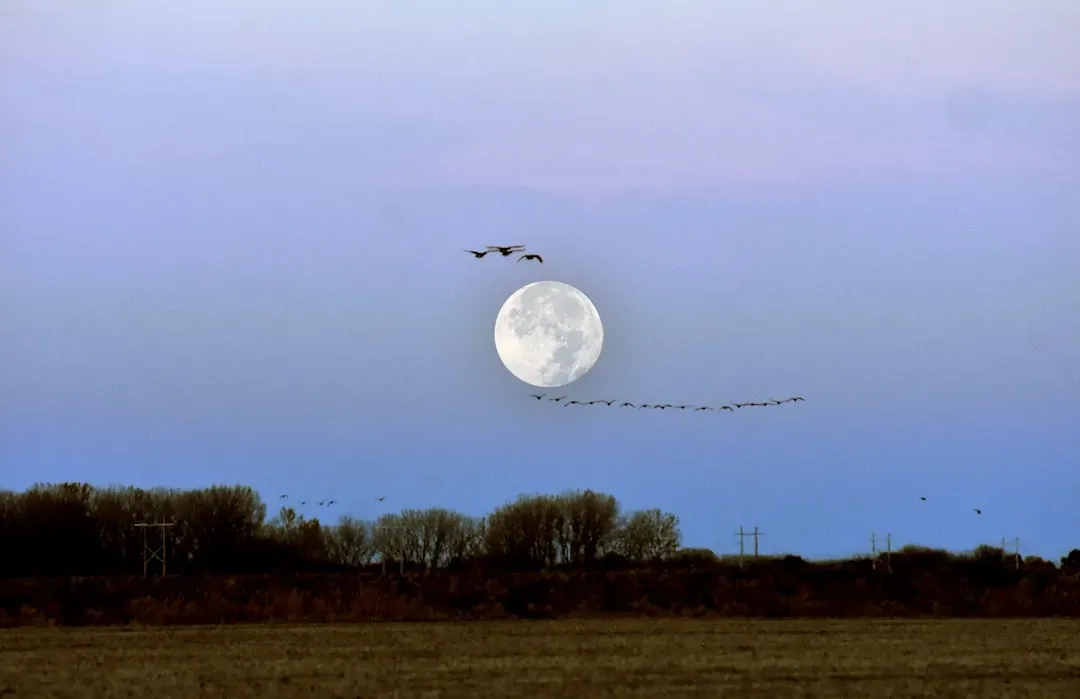
Night-migratory songbirds are born with the information to look for rotating light dots in the sky and to interpret the center of rotation as north. Subsequently, they learn the geometry of the stars relative to the center of rotation so that, during migration, they no longer need to observe the rotation to detect stellar north. Think of it like a child learning the alphabet – at first you need the full song, but eventually the letters just click.
At night, birds navigate using constellations such as the Big Dipper and the North Star. The complex natural sky could be replaced by a simple pattern of only 16 light dots – as long as the birds had observed this pattern rotating once per day, they could later use it to orient in their migratory direction relative to the center of rotation. Celestial rotation was thus identified as the crucial factor for establishing the migratory direction with respect to the stars. It is hard to say for sure, but I think that might be one of the most quietly remarkable experiments ever done with birds.
Following Their Nose: The Surprising Role of Smell in Navigation

You probably didn’t expect smell to show up in this story, but here it is. Pigeons at the home loft learn the odours carried by the winds in association with wind direction. Once at the release site, they determine the direction of displacement on the basis of the odours perceived locally and orient homeward. It is less like following a trail of bread crumbs and more like building an invisible aroma atlas of the landscape.
Scientists tracked the movements of lesser black-backed gulls using satellite transmitters and discovered that the gulls use their sense of smell to locate their migratory corridor and wintering area in Africa. Analysis of the birds’ migratory route revealed that when their olfactory sense was in working order, the gulls constantly moved their route in an easterly direction and got a sense of the locations along their migratory route. It has been shown that volatile organic compounds in the atmosphere are distributed as fairly stable gradients to allow environmental odour-based navigation. The sky, it turns out, has a smell. Birds know how to read it.
Mental Maps and Landmark Memory: The Geography in Their Minds

During its first migration a bird builds up a map in its brain that, on subsequent journeys, will enable it to navigate with an ultimate precision of centimeters over thousands of kilometers. That is not a metaphor. That is a literal internal geographic database, assembled from a single journey and then refined across a lifetime.
While innate compasses provide direction, migrating birds also rely heavily on learned environmental cues and landmarks to navigate more precisely. Coastal lines, mountain ranges, rivers, and even human-made structures serve as reference points during migration. Birds are equipped with highly developed vision capable of recognizing familiar features over vast distances. They also possess remarkable memory and spatial cognition, allowing them to create mental maps of their migratory routes. Studies using GPS tracking and satellite telemetry have confirmed that some species repeatedly follow specific migratory corridors and stopover sites, indicating an ability to remember geographic locations across years. It is, in essence, a living atlas that grows more accurate with every passing season.
A Symphony of Systems: When Everything Works Together

Let’s be real: no single mechanism tells the whole story. Bird migration navigation isn’t dependent on a single mechanism but rather a symphony of complementary systems working together. This redundancy ensures that when one navigation tool becomes unavailable – like stars obscured by clouds – birds can switch to another, such as magnetic field detection. Think of it like a car with multiple backup navigation systems, except this system evolved over millions of years and fits inside a skull the size of a walnut.
What makes bird migration truly remarkable is how these various systems are integrated. Birds calibrate their magnetic compass against celestial cues, verify their position using familiar landmarks, and rely on genetic programming for overall direction – all while making real-time adjustments based on weather and geography. Experimental studies show that disrupting magnetic cues with radio frequency pulses can disorient birds, demonstrating the importance of cryptochromes and quantum mechanisms in detecting geomagnetic fields. The whole system is far more resilient, and far more elegant, than anything humans have ever engineered.
Conclusion: A Wonder That Lives Overhead

What you’ve just read is not science fiction. It is the story of real birds navigating real skies, using tools that blend genetics, quantum physics, celestial mechanics, memory, and scent into one seamless, living system. When you next see a small songbird, pause for a moment to consider that it might recently have flown thousands of kilometers, navigating with great skill using a brain weighing no more than a gram.
There is something deeply humbling about that. We build satellites and carry phones that triangulate our position to within a few meters, and yet a robin, weighing less than a bag of sugar, does something arguably more remarkable every single autumn. Human-generated electromagnetic interference from radio towers and cellular networks, combined with artificial light pollution and habitat fragmentation, disrupts these precisely tuned biological navigation mechanisms that evolved over millions of years. The next time you see a bird in flight, you might wonder: where is it going? How does it know? The answer, it turns out, is one of the most beautiful stories in all of biology.
What surprises you most about how birds find their way? Tell us in the comments.