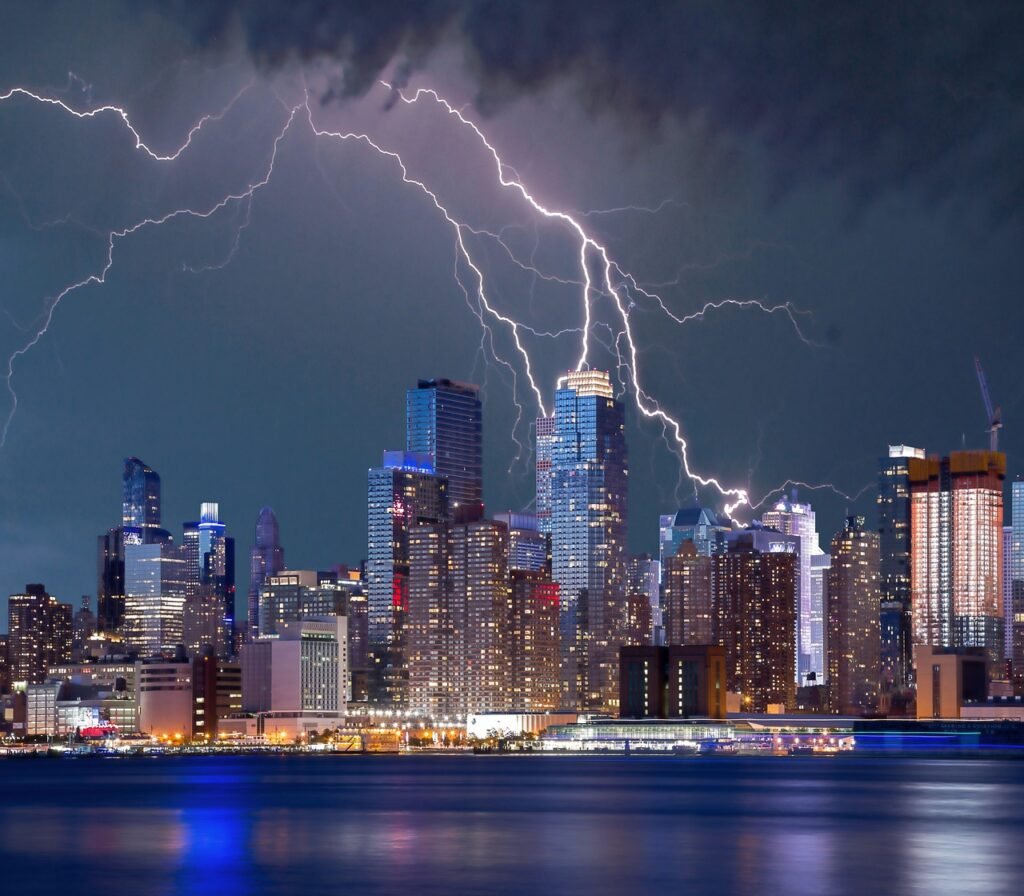

Have you ever watched a summer thunderstorm roll over a sprawling metropolis and wondered why cities seem to attract more lightning than rural areas? The answer reveals a fascinating interplay between human development and atmospheric physics. When urban planners first started building skyward and outward, they unknowingly created perfect conditions for increased lightning activity.
Modern cities transform themselves into lightning magnets through a complex web of environmental changes. From the heat-absorbing concrete and asphalt to towering skyscrapers that puncture the sky, urban environments fundamentally alter the natural atmospheric conditions that govern where and when lightning strikes. Let’s explore the surprising science behind why your city experiences more electrical storms than the peaceful forests beyond its borders.
The Urban Heat Island Effect Creates Lightning Hot Spots
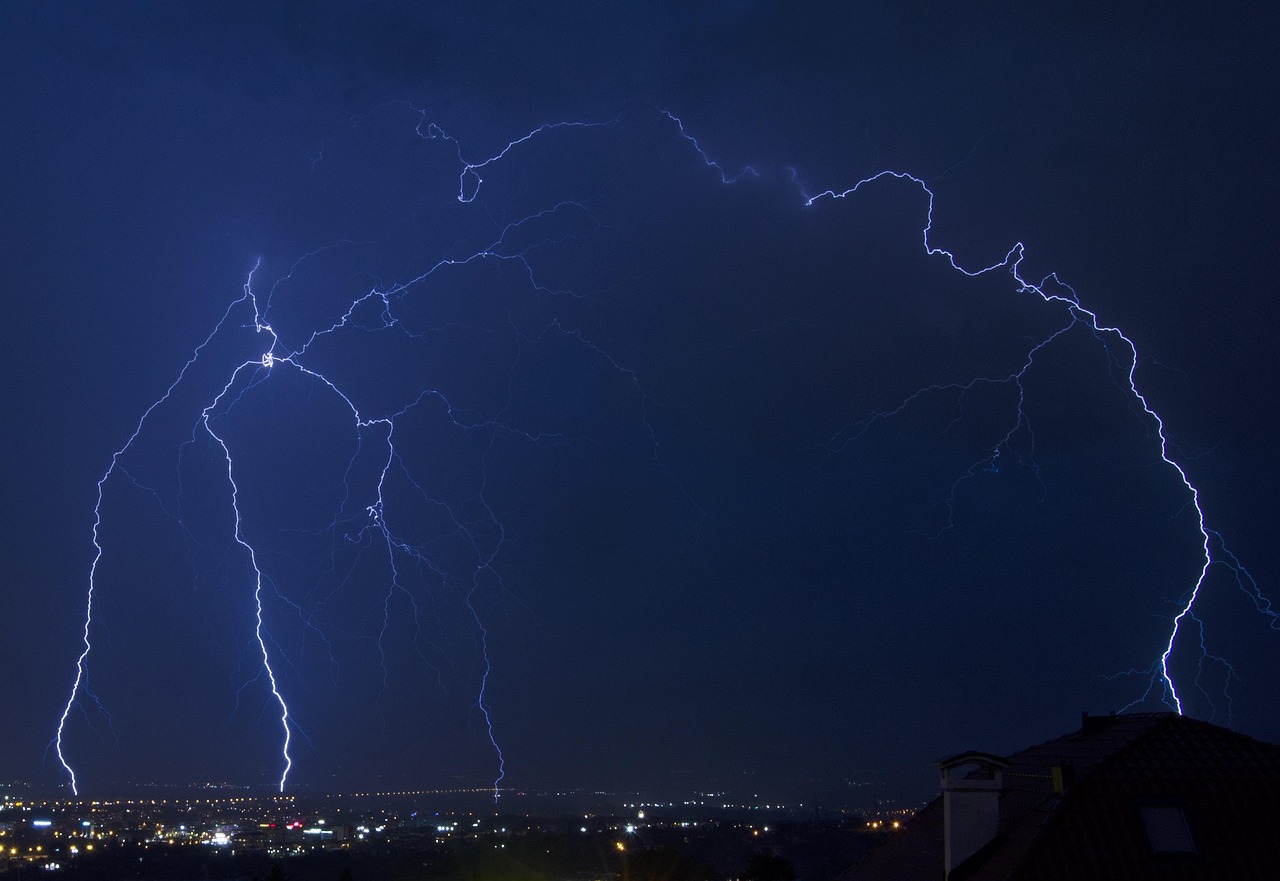
Cities create their own weather systems through a phenomenon known as the urban heat island effect, where temperatures in urban areas become significantly higher than their natural surroundings due to elevated urban temperature and precipitation effects. According to the U.S. Environmental Protection Agency, temperatures in U.S. cities can be 1.8–5.4°F warmer on average annually, with daily differences of 1-7°F during the day and 2-5°F at night compared to their surrounding areas. This temperature difference doesn’t just make summers more uncomfortable for city dwellers.
These localized heat islands may lead to the formation of more thunderstorms and, consequently, an increase in lightning strikes. Think of cities as giant heating elements that create their own atmospheric instability. The heated air rises more rapidly over urban areas, creating the perfect conditions for thunderstorm development that wouldn’t exist in cooler rural environments.
Dark Surfaces Absorb More Solar Energy
City building roofs and asphalt are often dark-colored, which helps drive the urban heat island effect, as darker colored objects are excellent absorbers of light and black surfaces absorb almost all light. When an object absorbs light, it converts that light to thermal energy, and emits it back out as heat, so because black objects absorb more light, they also emit more heat. The contrast becomes stark when you compare a sun-baked parking lot to a lush forest canopy.
Since man-made structures hold onto heat, especially if they have dark surfaces, nighttime temperatures in cities remain higher by about 2-5°F, with temperature differences that can feel enormous, such as a 44.5 °F difference between shaded grass and exposed pavement on a hot day. This persistent heat differential continues to fuel atmospheric instability long after sunset, extending the window for lightning-producing storms.
Pollution Particles Act as Lightning Accelerators
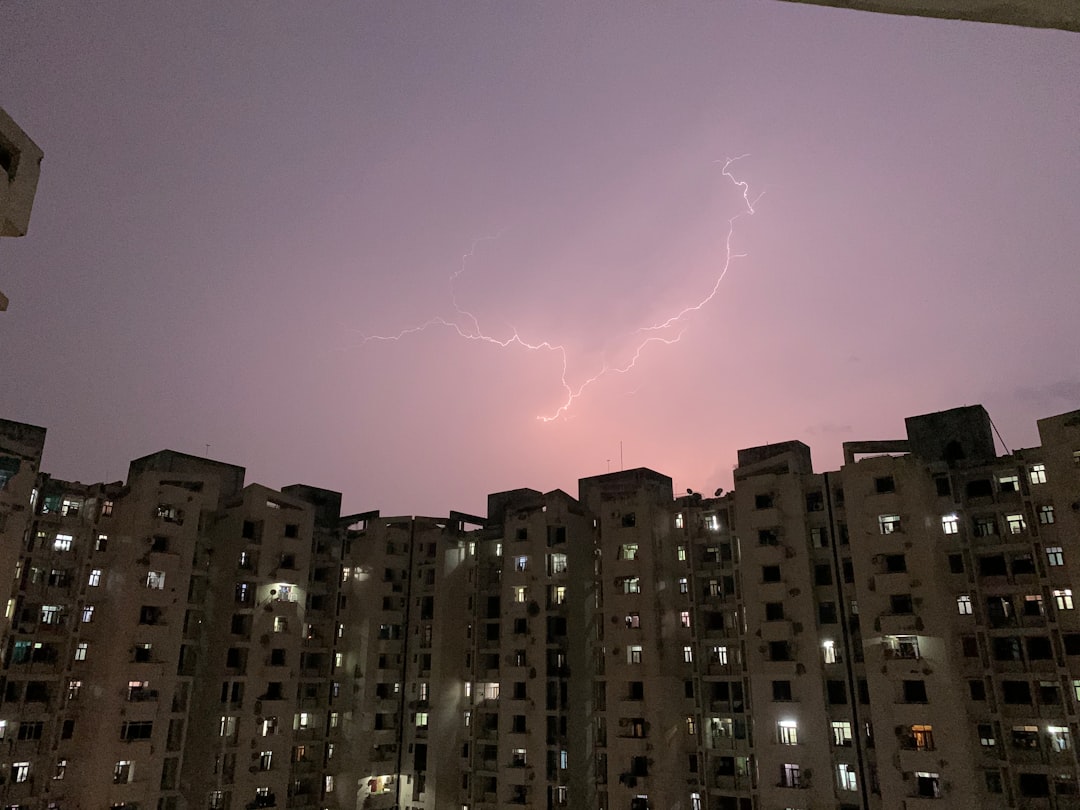
Aerosols play the crucial role of cloud condensation nuclei for the formation of precipitation, and pollution over cities can elevate the cloud condensation nuclei concentration, which might produce changes in the microphysical processes taking place inside clouds, leading to expected changes in charge separation processes in thunderclouds. As one researcher explains, pollution acts as cloud nuclei and gets brought into the cloud through the updraft, where the updraft and downdraft then separate the pollution particles, dividing the electrical charges in the cloud.
Studies have revealed that an enhancement of around 40–64% in the negative flash density and 26–49% in the positive flash density is observed over urban areas compared to their surroundings. The microscopic particles from vehicle emissions, industrial processes, and other urban activities literally serve as building blocks for more intense electrical activity in storm clouds.
Tall Buildings Create Preferred Lightning Targets
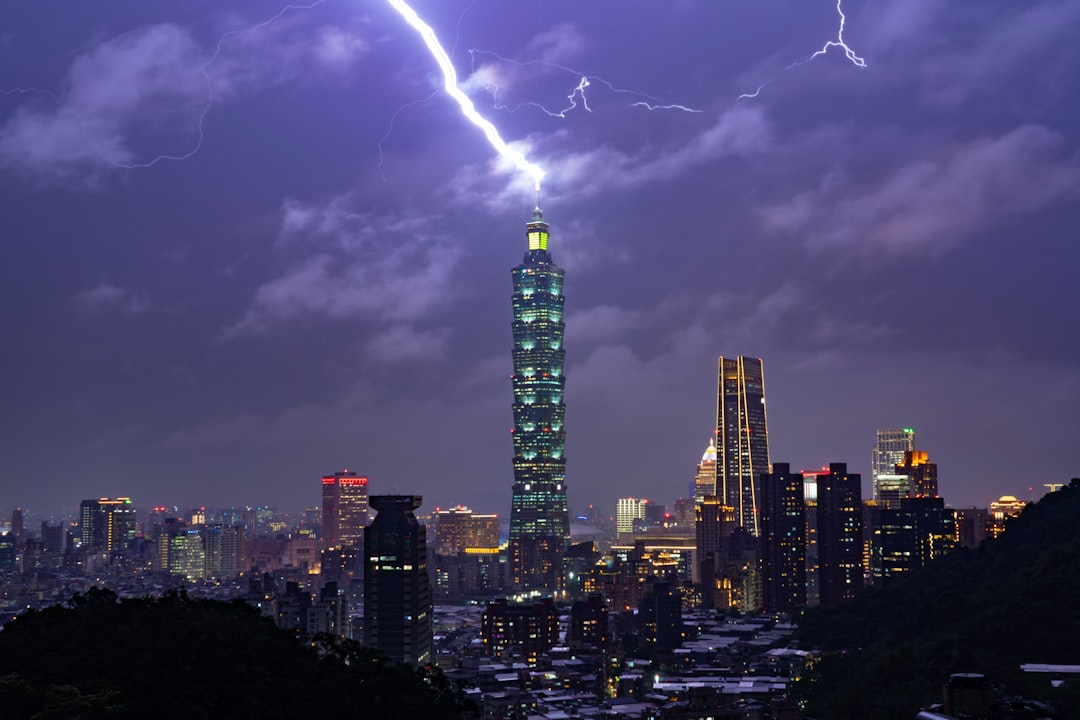
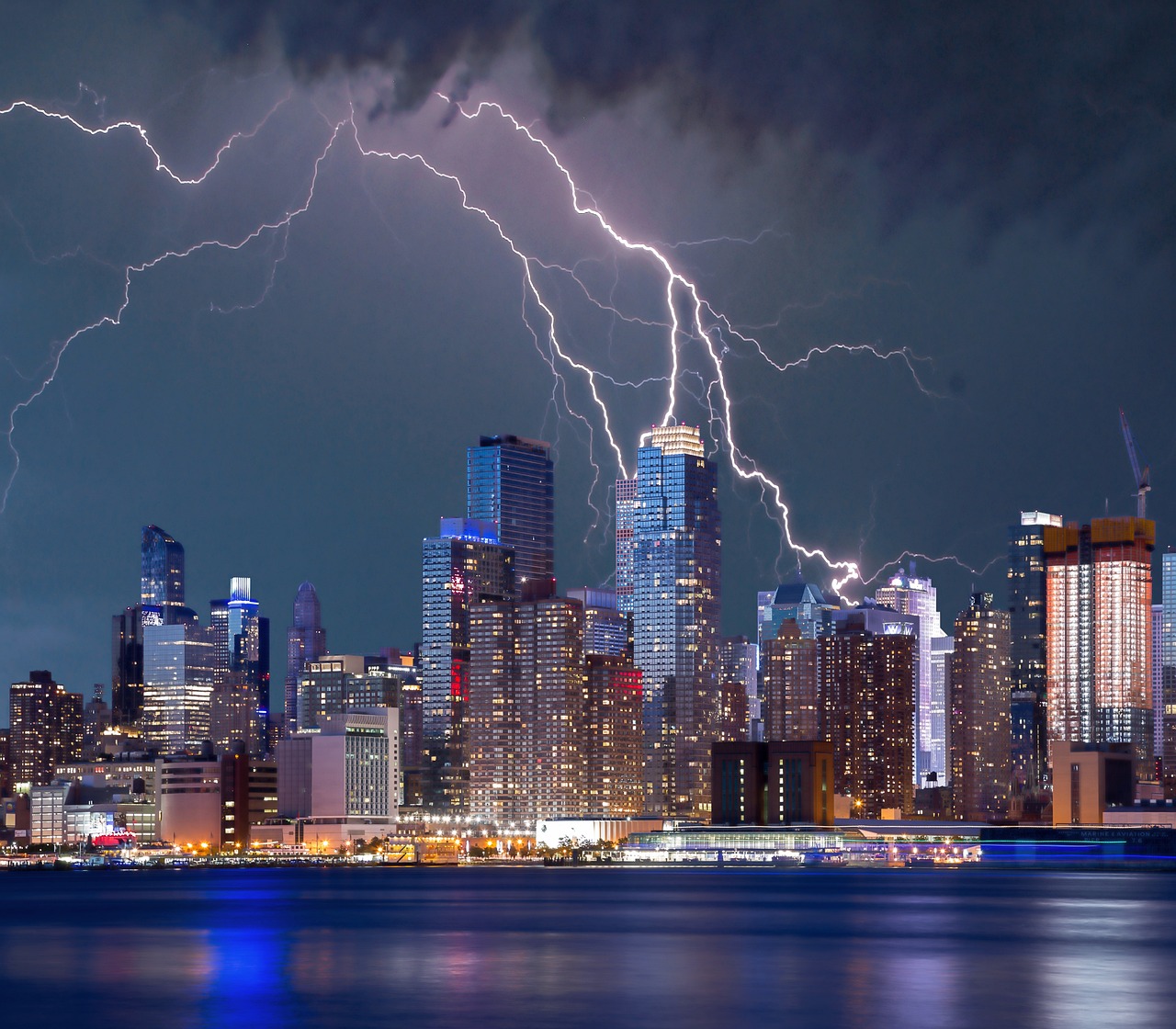
Tall buildings are natural targets for lightning due to their height, and in urban environments, where multiple high-rise structures are closely packed, the potential for damage increases. Lightning usually hits high places, so a lightning rod reaches above the highest point of the building to intercept the charge and redirect it safely to the ground through a system of conductors. However, the presence of these structures doesn’t just provide landing spots for lightning that would strike anyway.
A higher building leads to a higher possibility of a direct lightning strike, and on structures greater than 60 metres high, flashes to the building side elevations may occur, especially to points, corners, and edges of surfaces. Skyscrapers literally reach up into storm systems, creating new pathways for electrical discharge that wouldn’t exist in natural landscapes where the tallest objects might be trees reaching only 100 feet skyward.
Urban Canyon Effects Trap and Intensify Storms
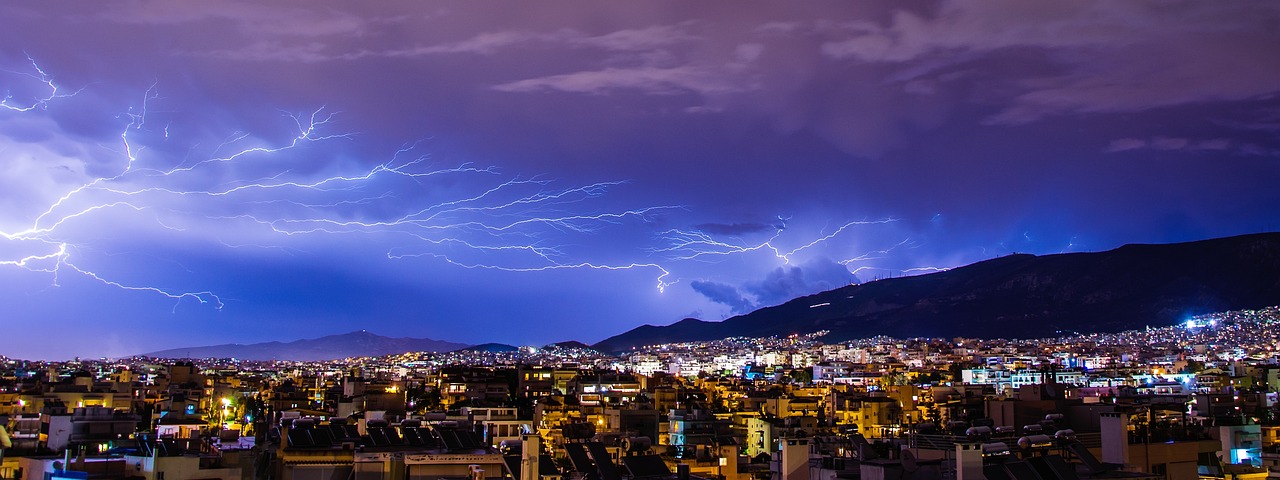
The tall buildings within many urban areas provide multiple surfaces for the reflection and absorption of sunlight, increasing the efficiency with which urban areas are heated in what is called the “urban canyon effect.” These concrete canyons create unique wind patterns and thermal dynamics that can trap storm systems over cities longer than they would linger over flat terrain. The result resembles a natural amphitheater designed to concentrate atmospheric energy.
Monthly rainfall is greater downwind of cities, partially due to the urban heat island effect. This enhanced precipitation pattern extends the zone of increased lightning activity beyond the city limits, affecting suburban and rural areas that lie in the path of urban-modified weather systems.
Reduced Vegetation Eliminates Natural Cooling
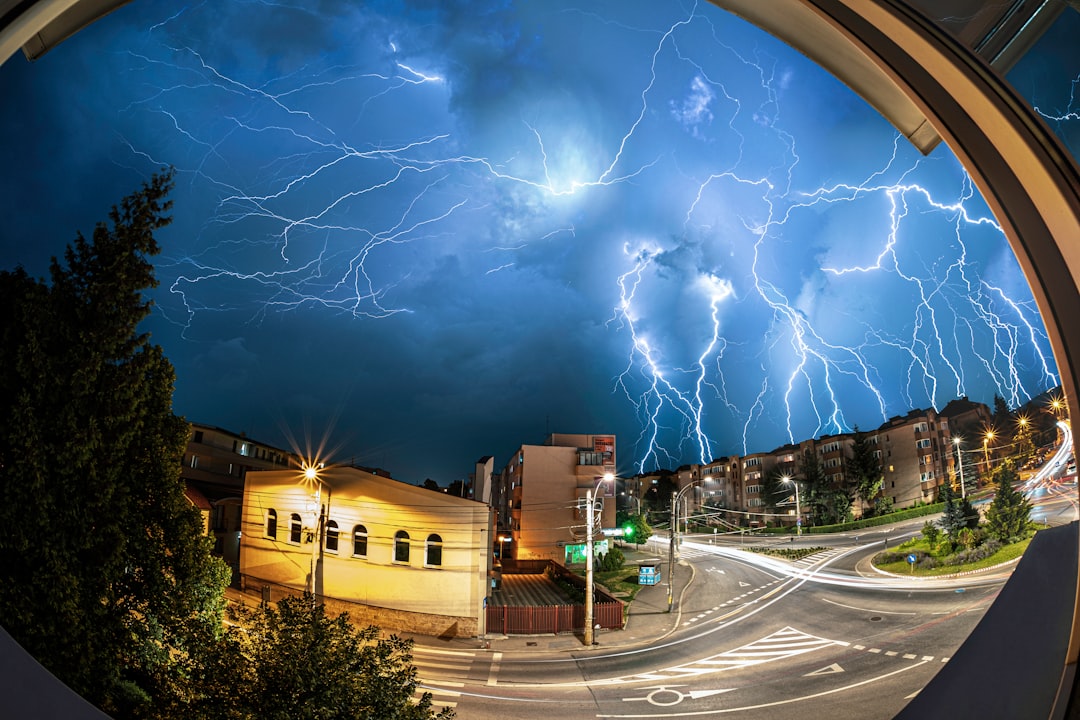
Another major reason is the lack of evapotranspiration in urban areas, and the U.S. Forest Service found in 2018 that cities in the United States are losing 36 million trees each year, meaning cities lose the shade and evaporative cooling effect of trees. Vegetation helps cool cities by providing shade and releasing water vapor through evapotranspiration, but cities tend to have far less vegetation than rural or natural landscapes, lacking this natural cooling process.
Forests act like massive air conditioning systems, constantly releasing water vapor that cools the surrounding atmosphere and reduces the thermal instability that leads to thunderstorm formation. When cities replace these natural cooling systems with heat-absorbing concrete and asphalt, they eliminate one of nature’s most effective lightning prevention mechanisms.
Air Pollution Enhances Electrical Charge Separation
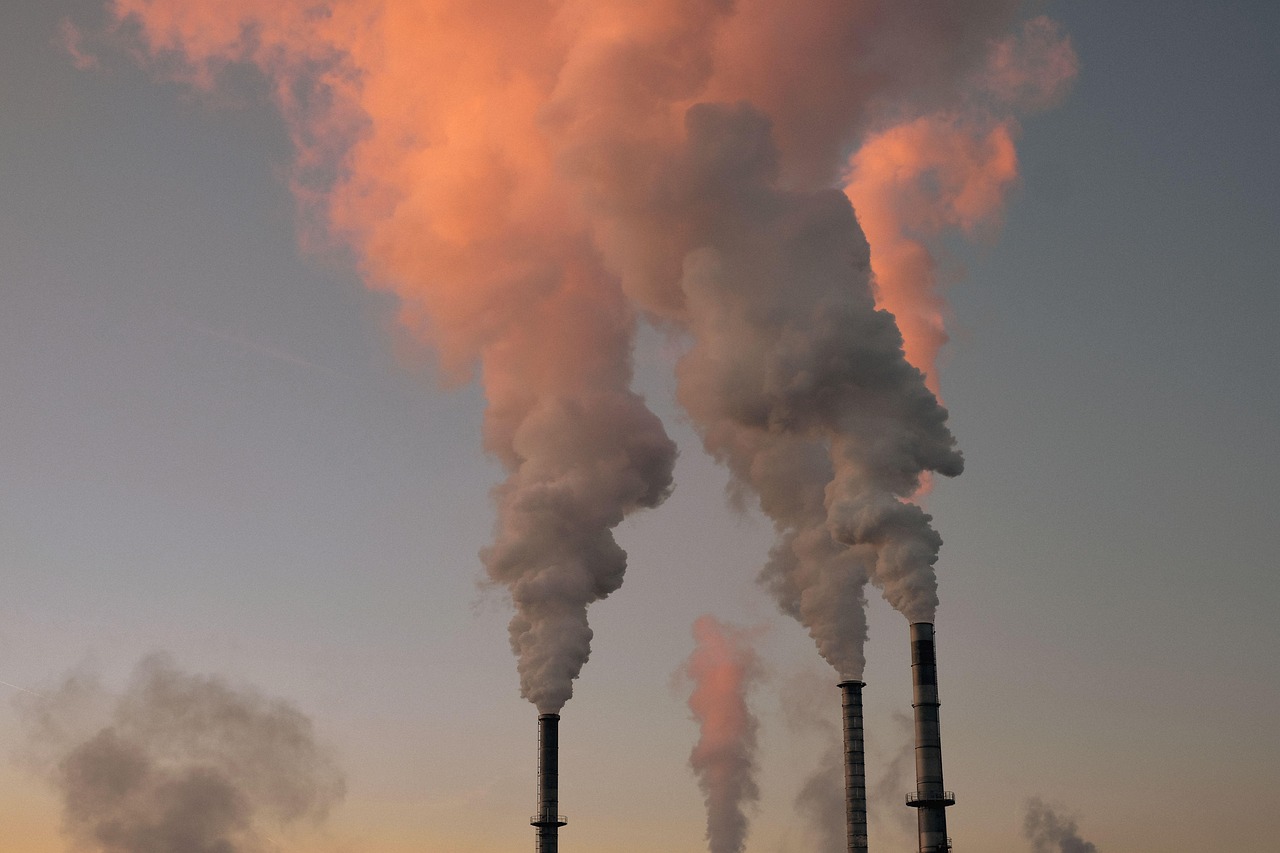
Research indicates that higher concentrations of particulate matter and sulfur dioxide contribute to cloud-to-ground lightning enhancement, with both concentrations exhibiting a positive linear correlation with the percent change in lightning flashes from upwind to urban areas and from upwind to downwind areas. Studies suggest that particulate matter concentration is related to enhanced lightning activity during weekdays over metropolitan regions and tends to increase the lifetime of storms and consequently the number of flashes per storm.
The presumed influence of aerosol particles is to reduce cloud droplet sizes, leading to reduced warm rain coalescence, and therefore an enhancement of cloud water reaching the mixed-phase region. This process fundamentally alters how storms develop, making them more electrically active and longer-lasting than their rural counterparts.
Weekday Versus Weekend Lightning Patterns
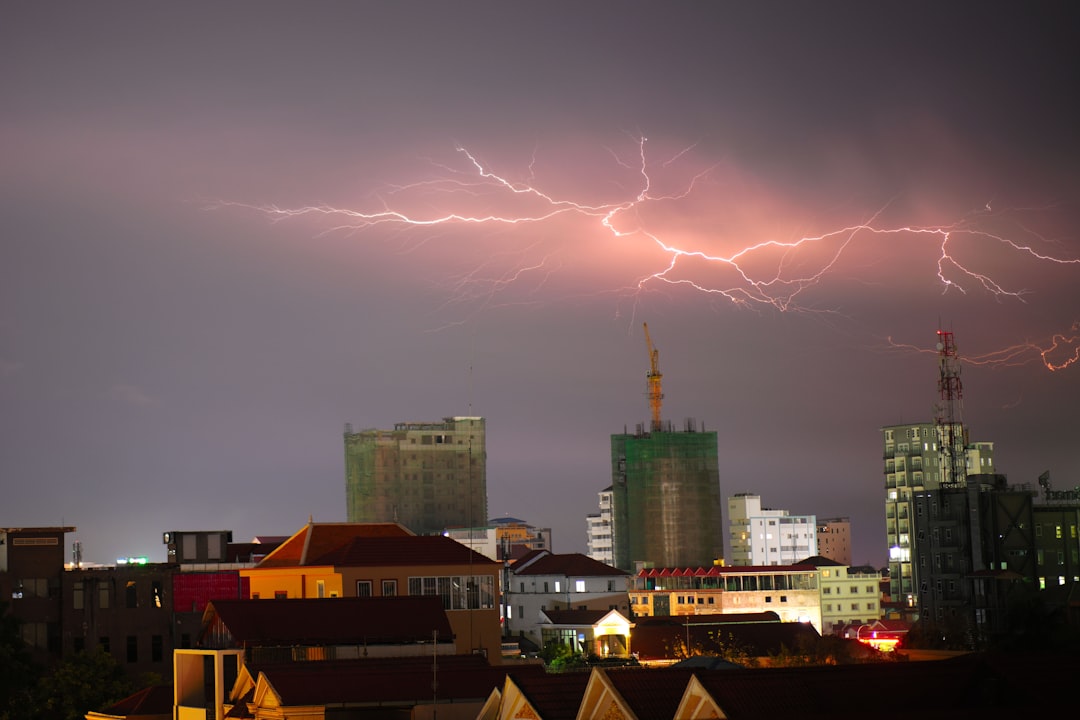
Research shows there is a significant weekly cycle in particulate matter over metropolitan regions and lightning activity on areas involving major cities, both with reduction on the weekend. This fascinating pattern provides some of the strongest evidence for pollution’s role in lightning enhancement. When industrial activity and traffic decrease on weekends, lightning activity measurably drops as well.
Studies using cloud-to-ground lightning strike data during summers showed that the concentration of particulate matter can influence lightning activity through weekly variations. The correlation between human activity patterns and atmospheric electrical activity creates an almost perfect natural experiment demonstrating how urban environments directly influence weather patterns.
Industrial Activity Amplifies the Effect
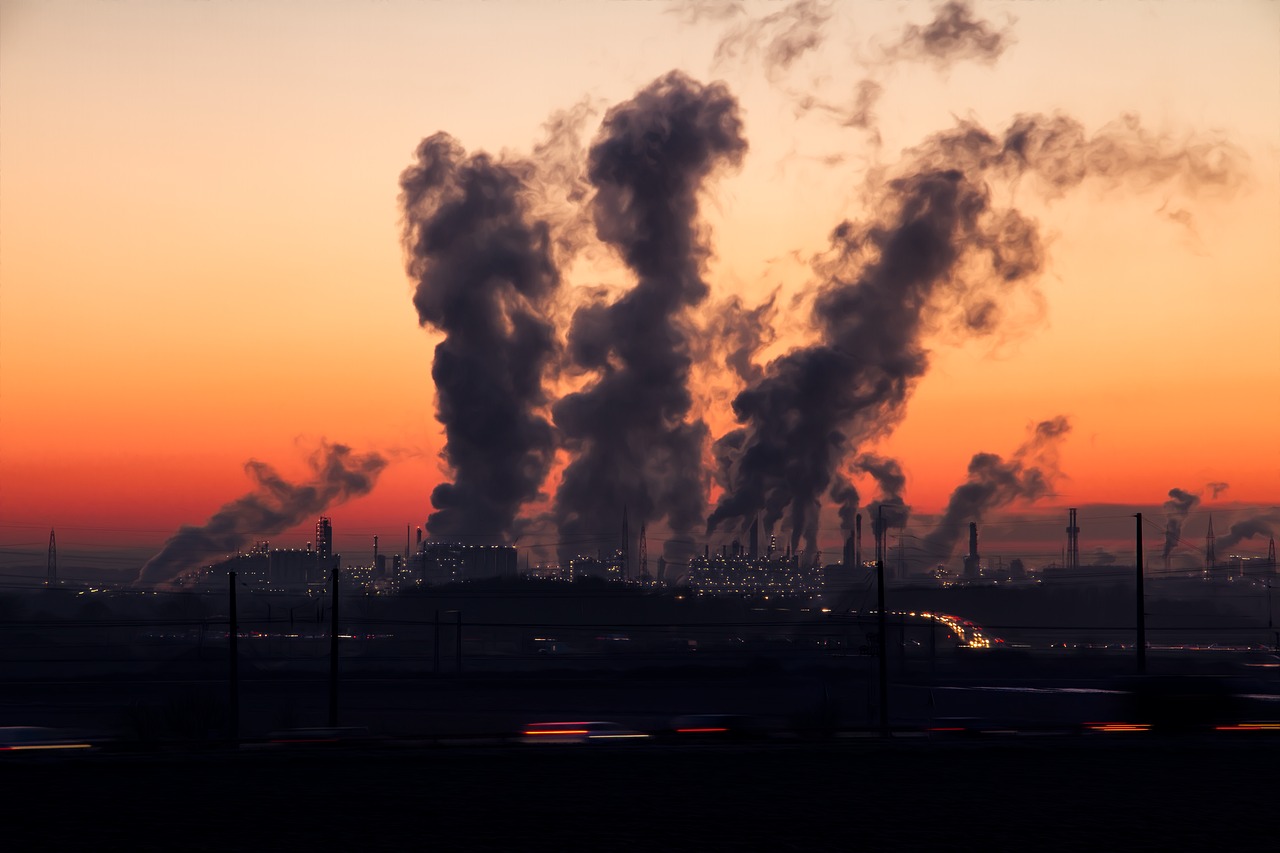
Research has reported an association of urban heat island and anthropogenic pollution in the enhancement of flash density over and downwind of urban areas after conducting long-term analysis over major cities. The urban heat island and increased cloud condensation nuclei concentrations, especially from industrial pollution, are shown to be significant factors in creating lightning enhancement. Manufacturing centers, power plants, and heavy industry create particularly intense pollution plumes that serve as lightning breeding grounds.
As researchers note, no matter where you go in the world, urban pollution appears capable of enhancing thunderstorms and lightning, with data from more than 500,000 thunderstorms showing that having more fine particles in the air is broadly linked to a higher number of lightning strikes. This global pattern suggests that industrialization itself, rather than specific local conditions, drives increased lightning activity.
Climate Change Amplifies Urban Lightning Effects
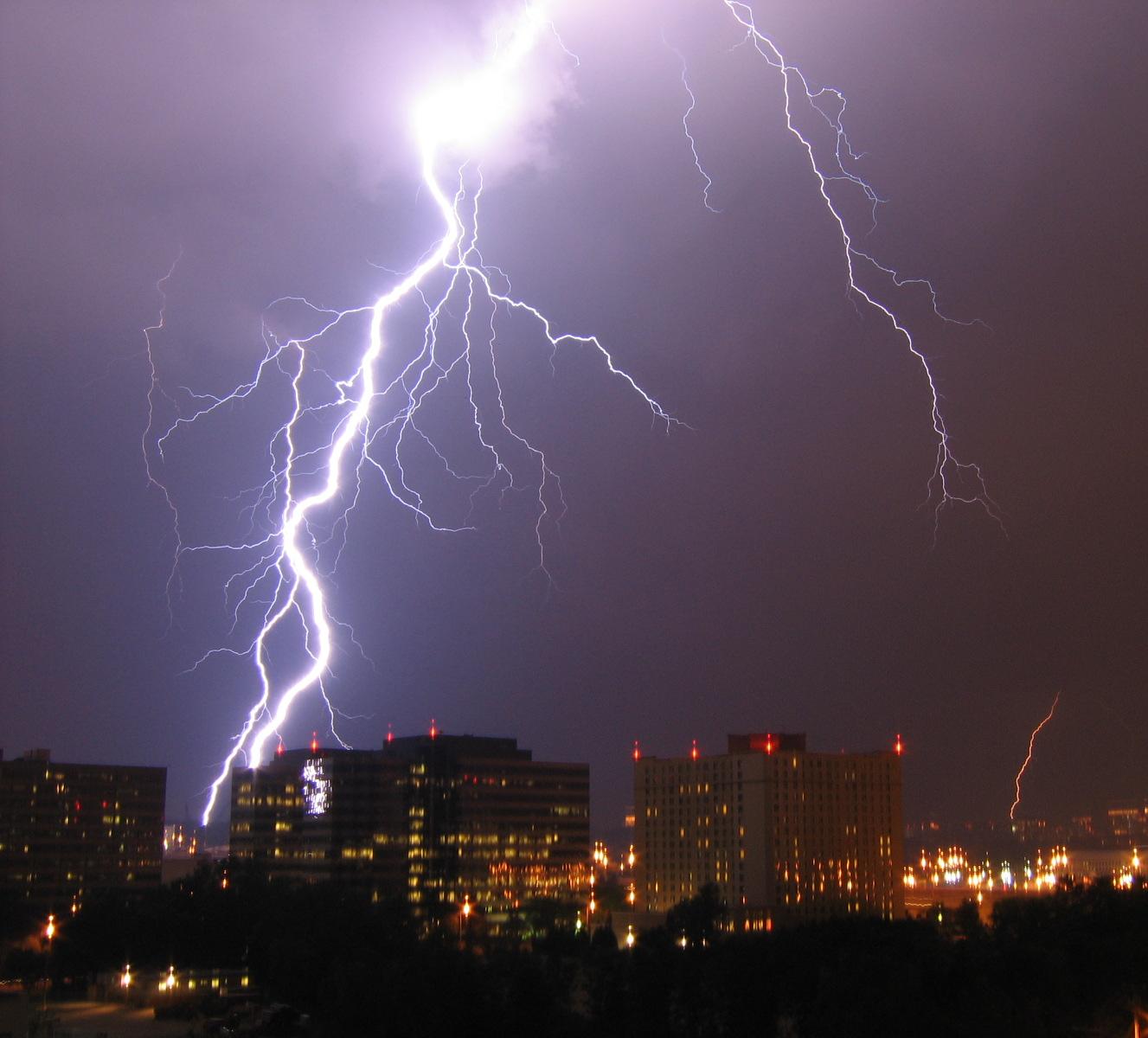
Climate change is not the cause of urban heat islands, but it is causing more frequent and more intense heat waves, which in turn amplify the urban heat island effect in cities, with compact and dense urban development potentially increasing the effect and leading to higher temperatures and increased exposure. Since urban heat island enhancement increases thermodynamic instability and thunderstorm intensity, expanding the amount of per capita green space in urban areas would help to lessen thermodynamic instability and mitigate lightning frequency.
The warming climate acts like a multiplier for all the urban lightning-enhancement effects we’ve discussed. Hotter base temperatures mean urban heat islands become even more intense, pollution effects become more pronounced, and the atmospheric instability that breeds lightning increases exponentially rather than linearly.
Conclusion
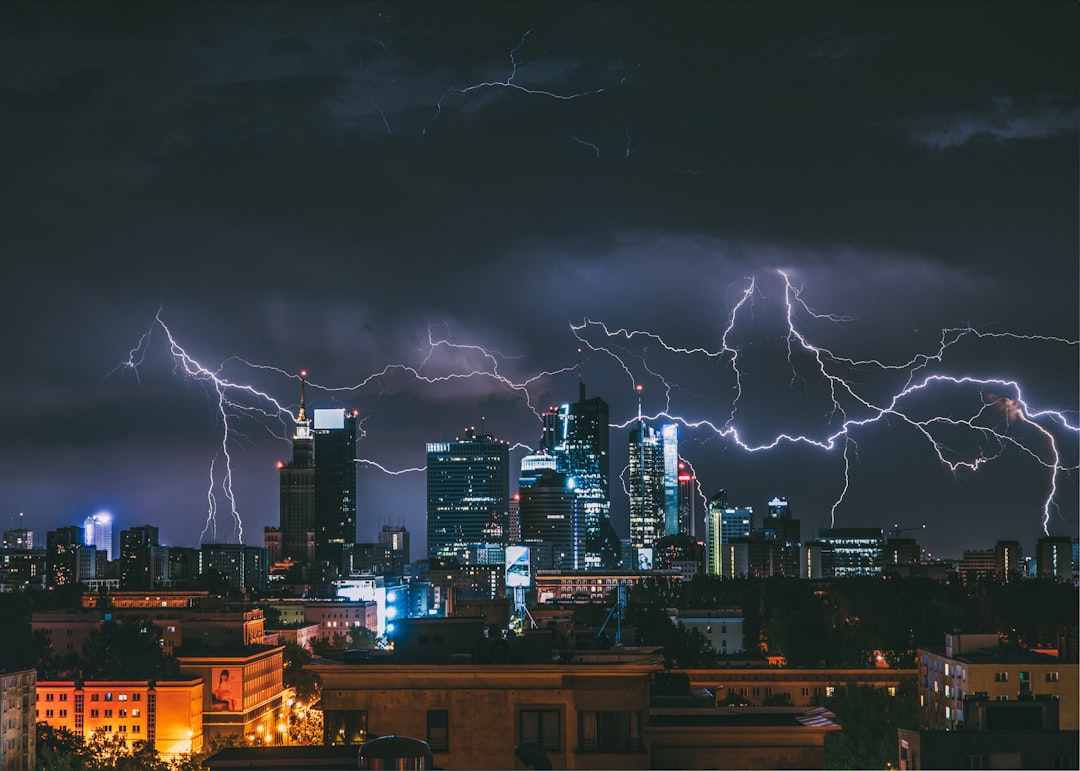
Cities have inadvertently engineered themselves into lightning magnets through a perfect storm of environmental modifications. The combination of heat-absorbing surfaces, towering structures, reduced vegetation, and abundant pollution particles creates atmospheric conditions that naturally favor increased electrical activity. While forests maintain relatively stable temperatures and clean air that discourage lightning formation, urban environments actively cultivate the thermal instability and aerosol concentrations that fuel more frequent and intense thunderstorms.
Understanding these urban lightning patterns isn’t just academic curiosity. As climate change intensifies and cities continue growing vertically and horizontally, the potential for lightning-related damage and safety concerns will only increase. The next time you witness a spectacular lightning display over your city, you’ll recognize it as nature responding to humanity’s dramatic reshaping of the landscape. What aspects of urban lightning enhancement surprised you most?
Jan loves Wildlife and Animals and is one of the founders of Animals Around The Globe. He holds an MSc in Finance & Economics and is a passionate PADI Open Water Diver. His favorite animals are Mountain Gorillas, Tigers, and Great White Sharks. He lived in South Africa, Germany, the USA, Ireland, Italy, China, and Australia. Before AATG, Jan worked for Google, Axel Springer, BMW and others.