If you asked a room full of people why they laugh, most would say it’s because something is funny. Neuroscientists, however, would gently disagree. Laughter, it turns out, is less about punchlines and more about survival, social glue, and the brain’s constant work of predicting the world. Scientists are now mapping laughter across neural circuits, social networks, and even evolutionary timelines, revealing a behavior that is as strategic as it is silly. And as researchers probe deeper – using brain scanners, acoustic analysis, and even robot comedians – the mystery only gets more fascinating.
The Hidden Clues in a Giggle

One of the most surprising findings about laughter is that it rarely starts with a joke. In everyday conversation, people tend to laugh during ordinary comments, awkward pauses, and tiny moments of relief that have nothing to do with classic humor. Those short bursts of sound act like punctuation marks, signaling that things are safe, that we are on the same side, or that a tense moment has just been defused. In that sense, a giggle is less a reaction and more a signal, a kind of social Morse code our brains have learned to read almost instantly.
Scientists studying laughter in natural conversations have found that people are far more likely to laugh when they are speaking themselves than when they are listening. This flips the usual idea that comedians make us laugh and suggests instead that we use laughter to manage how others see us. A shaky laugh after a mistake can say that we know we messed up but are not a threat, while shared laughter after a sarcastic comment can draw a private circle of understanding. Seen this way, laughter is more like a secret handshake than a mechanical response to humor, and that makes it a powerful social tool.
An Ancient Behavior Written in Our Brains

Laughter may feel sophisticated when it comes from a well-crafted joke, but its roots are anything but fancy. Evolutionary biologists point to playful panting sounds in primates as a likely ancestor of human laughter, especially during rough-and-tumble play and mock fighting. Those breathy vocalizations told others that the biting and tackling were just for fun, not actual aggression. Over evolutionary time, those signals appear to have been refined into the rhythmic, contagious cascades of sound we now recognize as laughter.
Brain imaging studies show that laughter lights up a surprisingly ancient set of neural circuits, including areas involved in emotion, movement, and reward. When we laugh, the brainstem coordinates the breathing patterns, the limbic system helps shape the emotional tone, and reward centers release feel-good chemicals that reinforce the behavior. This layered architecture suggests that laughter evolved first as a basic vocal signal and then was gradually woven into more complex social and cognitive systems. In other words, your brain does not just find something funny and then tack laughter on top – laughter is built in at multiple levels.
Inside the Laughing Brain
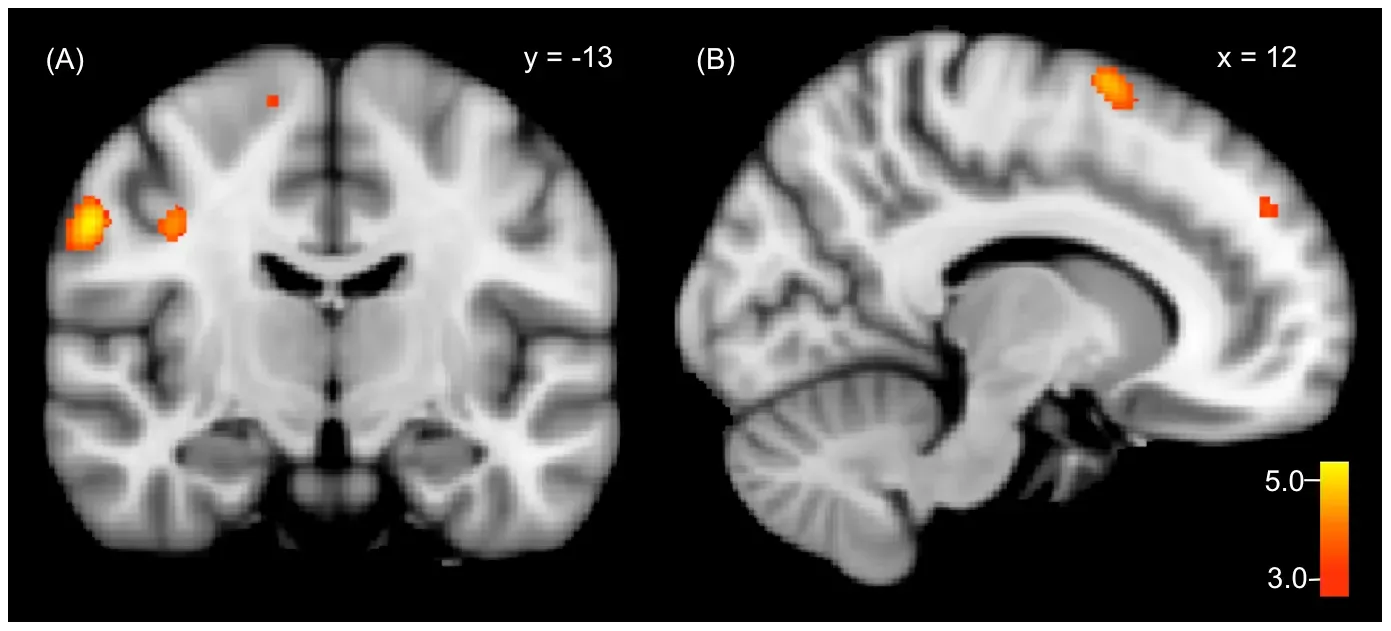
From a neuroscientific point of view, laughter is a full-body event orchestrated by the brain. When something strikes us as funny – or unexpectedly safe after seeming risky – the brain rapidly shifts gears from tension to release. This shift appears to be tied to prediction: the brain constantly tries to forecast what comes next, and humor often subverts those expectations in a way that feels harmless. That sudden mismatch between what we predicted and what actually happens can trigger a burst of activity in reward areas that floods us with a sense of delight.
Different regions of the brain play distinct roles in this process. The frontal lobes help interpret context and detect incongruity, while temporal areas process language and social cues. The motor cortex and brainstem, meanwhile, coordinate the complex muscle patterns needed for the characteristic vocal bursts and facial expressions. When scientists electrically stimulate certain regions in awake patients during surgery, some people report an urge to laugh or smile, while others interpret neutral situations as suddenly funny. That strange finding underscores how much our sense of humor depends on invisible neural tuning, not just on the content of a joke.
Why We Laugh Together More Than Alone

If you have ever rewatched a comedy alone and wondered why it seemed less funny than it did in a crowded theater, you have already experienced one of laughter’s core truths: it thrives in company. Studies in social psychology show that people are several times more likely to laugh when they are with others than when they are by themselves, even when watching the exact same material. Laughter is intensely contagious; hearing someone else laugh lowers your threshold for joining in, even if you do not fully understand the joke. That contagiousness helps synchronize group emotions and smooth over small frictions.
Researchers have even used carefully controlled experiments to measure how laughter can mark group boundaries and reinforce social hierarchies. People tend to laugh more with friends than with strangers, and the style of laughter can subtly change depending on whether someone feels dominant, equal, or subordinate in a group. These patterns play out across cultures, though the specific triggers for laughter can vary widely. The next time you find yourself laughing at something that would seem flat on paper, it might be worth asking whether you are responding to the joke – or simply aligning yourself with the people around you.
When Laughter Hurts Instead of Heals

For all its positive power, laughter is not always kind. Neuroscientists and psychologists distinguish between warm, affiliative laughter and sharper, more derisive forms that can exclude, humiliate, or bully. The same neural machinery that makes shared laughter feel bonding can, in a different context, magnify social pain when we become its target. Being laughed at activates many of the same brain regions involved in physical pain and social rejection, which helps explain why mocking laughter can sting for years after the moment has passed.
There is also a darker side in the form of pathological laughter, where brain injury, neurodegenerative disease, or certain forms of epilepsy cause uncontrollable laughing episodes. In these cases, the outward behavior looks like joy, but the internal experience can be distressing or completely disconnected from emotion. This mismatch shows just how deeply laughter is wired into motor and brainstem circuits, sometimes bypassing conscious emotion altogether. Understanding these disorders is helping clinicians map the precise networks that normally keep laughter in sync with how we actually feel.
Why It Matters: Laughter as Medicine, Messenger, and Mirror

Beyond curiosity, there is a practical reason scientists care so much about why we laugh: it offers a window into mental and physical health. Regular, genuine laughter has been linked to lower stress hormones, improved cardiovascular function, and stronger feelings of social connection. While the popular idea of laughter as a cure-all is exaggerated, many clinical studies suggest that laughter can ease pain perception and help people cope better with chronic illness. It is not that laughter magically fixes disease, but that it changes how the brain and body respond to hardship.
Compared with traditional medical markers like blood pressure or lab tests, laughter is a uniquely human signal that blends emotion, cognition, and social context. Psychiatrists are exploring how patterns of laughter might help in diagnosing mood disorders, autism spectrum conditions, and even early signs of dementia. A shift from spontaneous, warm laughter to more forced or inappropriate chuckling can flag changes in brain function before other symptoms become obvious. In that sense, laughter is both a mirror of the mind and a messenger that something deeper may be evolving beneath the surface.
The Future Landscape: AI Comedians, Laughter Maps, and Ethical Questions

The next decade of laughter research will likely be shaped by technologies that barely existed a few years ago. Artificial intelligence systems are already being trained to recognize different types of laughter in audio recordings, distinguishing polite chuckles from genuine, belly-deep mirth. These algorithms could eventually help therapists track emotional progress, or help social robots respond more naturally in hospitals, classrooms, and elder-care settings. At the same time, there is growing concern about how such tools might be used in advertising or surveillance to measure and manipulate our emotional responses without our explicit consent.
On the neuroscience front, researchers are working to build detailed “laughter maps” of the brain using high-resolution imaging and recordings from individual neurons. These maps could clarify how tiny changes in wiring lead to big differences in humor appreciation or vulnerability to pathological laughter. There is even early work using brain stimulation to modulate mood and laughter in severely depressed patients who do not respond to medication. As with any powerful tool that reaches deeply into what makes us human, the promise is enormous, but so are the ethical questions. How comfortable are we with machines that can read – and maybe even provoke – our joy?
How You Can Engage With

You do not need a lab coat or a brain scanner to take part in the science of laughter. One simple step is to start noticing when and why you laugh during your day, whether it is during a tense meeting, a clumsy mistake, or a shared story with a friend. That awareness can reveal patterns: maybe you laugh more to soften conflict, or mostly with certain people who make you feel safe. Paying attention to those patterns can help you make more deliberate choices about the environments and relationships that support your well-being.
There are also concrete ways to support the growing field of emotion and social neuroscience. Many universities and medical centers recruit volunteers for studies on humor, stress, and social interaction, and public funding for mental health research often depends on voter awareness and advocacy. Sharing accurate science stories about laughter – rather than catchy myths – helps build a culture that takes emotional health seriously. And perhaps most simply, choosing to create moments of genuine, inclusive laughter in your family, workplace, or community is its own small experiment in changing the social climate. In a world that often feels heavy, inviting more honest joy into the room may be one of the most powerful tools we have.
Suhail Ahmed is a passionate digital professional and nature enthusiast with over 8 years of experience in content strategy, SEO, web development, and digital operations. Alongside his freelance journey, Suhail actively contributes to nature and wildlife platforms like Discover Wildlife, where he channels his curiosity for the planet into engaging, educational storytelling.
With a strong background in managing digital ecosystems — from ecommerce stores and WordPress websites to social media and automation — Suhail merges technical precision with creative insight. His content reflects a rare balance: SEO-friendly yet deeply human, data-informed yet emotionally resonant.
Driven by a love for discovery and storytelling, Suhail believes in using digital platforms to amplify causes that matter — especially those protecting Earth’s biodiversity and inspiring sustainable living. Whether he’s managing online projects or crafting wildlife content, his goal remains the same: to inform, inspire, and leave a positive digital footprint.