

Imagine walking into a room and immediately smelling something no one else can detect. Or looking at a green leaf and seeing bursts of red, violet, and orange where everyone around you sees plain green. For most of us, that sounds like science fiction. Yet for a small, fascinating slice of the population, this is just a regular Tuesday.
The human sensory system is, honestly, far more complex and wildly variable than most textbooks ever let on. Some people walk around with what can only be described as biological superpowers – and the most astonishing part is that science still cannot fully explain why. Let’s dive in.
The Hidden Reality: Not Everyone Experiences the Same World
Here’s the thing that will genuinely stop you in your tracks. You think you experience the senses separately – but in reality, the brain links and synchronizes sensory information from many sources in ways you cannot consciously observe, giving you extraordinary gifts you never knew you possessed for perceiving the world. That is not poetry. That is neuroscience.
Neuroscientists are discovering that our sensory systems are much more interconnected and widespread in the brain than previously thought. Think of your brain less like a neatly organized filing cabinet and more like a vast, tangled web of electrical conversations – some of which, in certain people, are turned up to eleven.
Supertasters: When Every Bite Is Almost Too Much

You probably know someone who refuses to eat broccoli, despises black coffee, and cannot stand a single sip of grapefruit juice. Chances are, they are not just being difficult. Heightened taste sensitivity is one of the most common real-life super senses, affecting one in four Americans per the latest estimate. These people, termed supertasters, are fine-tuned to detect the slightest differences in flavor, even noticing subtleties in creaminess between similar dairy products.
Supertasters experience flavors with far greater intensity than the average person. Flavors are amplified. Sugar is sweeter, salt is saltier, and bitterness is often nearly intolerable. This heightened sensitivity extends beyond the five basic tastes to include oral sensations like the burn of chili or the texture of fat. It is less like a superpower and more like being forced to listen to your favorite song at full volume with no volume control. Many supertasters also have genetic mutations in taste receptors that alter sensitivity and preference. One of the most notable is a mutation in the bitter taste receptor gene TAS2R38, which is likely responsible for the extreme aversion to bitter foods. This mutation might even be an evolutionary remnant of a once-crucial survival mechanism to avoid bitter-tasting toxic plants and animals.
Tetrachromacy: Seeing a World of Colors That Doesn’t Exist for Most of Us
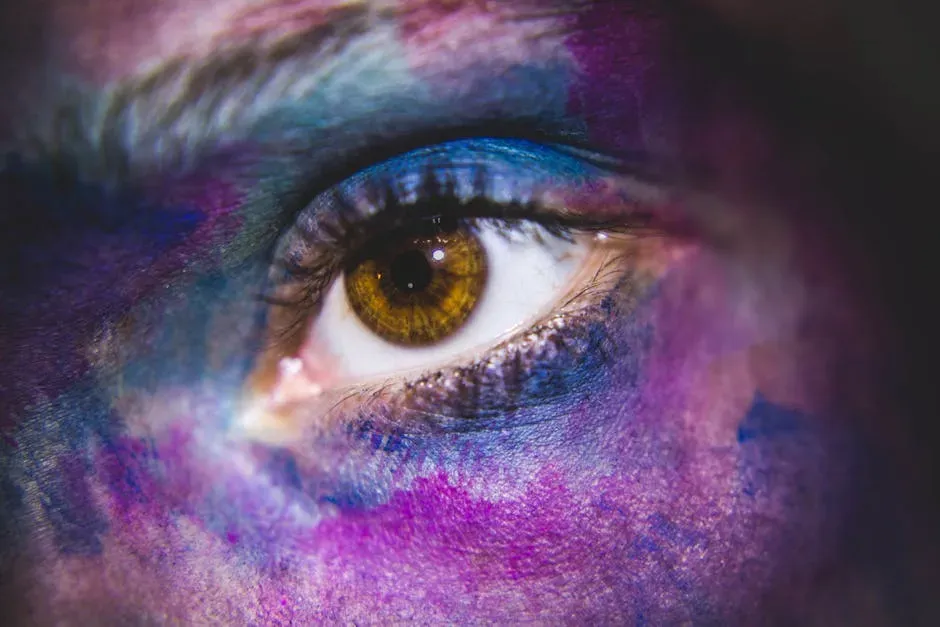
Most humans see the world through three types of color-sensing receptors in the eyes, allowing the perception of roughly one million colors. Honestly, that already sounds like a lot. An incredibly rare mutation grants some people a fourth type of cone receptor and the ability to distinguish around 100 times more colors than average. Let that sink in – a hundred times more. That is not an upgrade. That is a completely different visual universe.
One tetrachromat, an artist named Concetta Antico, describes her vision as a mosaic of colors. Where most see a green leaf, she sees hues of red, orange, and purple. She even sees color in seemingly gray shadows. Yet, despite having 100 million colors to choose from, her favorite is white because it evokes a sense of peace in an excessively vibrant world. Tetrachromacy is a rare condition that is more prevalent in women, with almost 12% of whom may carry it. It is notoriously difficult to accurately test and determine, so there is a chance that you could potentially have it and not even know.
Synesthesia: When Your Senses Have a Conversation Without You
Imagine hearing a song and simultaneously watching a private fireworks show in your mind. Or reading a number and tasting a specific flavor on your tongue. Synesthesia is a fascinating neurological condition where stimulation of one sensory pathway leads to automatic experiences in a second, unrelated pathway. For example, a person might see a specific color when hearing a certain sound, or taste a particular shape. Research suggests it results from dense connections between different brain regions.
People with synesthesia appear outwardly unremarkable, but their inner worlds consist of extraordinary experiences of “merged sensations,” such as the number five tasting of sour oranges or triggering a shiny blue color. Synesthetic experiences are not spontaneous but elicited, and they are subjectively involuntary. Fascinatingly, the etiology of synesthesia is not yet fully understood, with theories including hyperconnectivity in the brain, cross-activation of adjacent sensory areas, or various models of lack of inhibitory function in the brain. Even famous people like musician Pharrell Williams have reported living with synesthesia, with the condition reportedly shaping their creative work in profound ways.
Super Smellers: The Nose That Knows Too Much

Even an average sense of smell is miraculous. Humans can detect over one trillion different odors using just 400 types of receptors. Now imagine turning that extraordinary baseline ability up several more notches. Super smellers, making up less than 10% of the population, have extraordinary olfactory abilities, like identifying one aromatic chemical among thousands in a glass of wine. One super smeller was even able to detect Parkinson’s disease before it was clinically diagnosable.
That last detail deserves a pause. A human nose detecting a disease before hospital equipment can. The cause of super-smelling, or hyperosmia, is not well defined. Hyperosmia can arise from several medical issues such as Lyme disease, migraines, and hormone deficiencies. Pregnancy can also trigger a heightened sense of smell. It is hard to say for sure whether those temporary spikes represent true hyperosmia, but researchers are actively working to figure it out. Super-smelling may also be genetically linked through mutations that alter odor-sensing nerve cell development and function.
Echolocation: The Human Bat Is Real
This one genuinely sounds like a Marvel storyline, but it is absolutely real. Human echolocators make clicking noises that bounce off surrounding objects and return with information about their distance, size, and shape based on the volume and frequency of the returning sound. Though the eyes are not involved, brain scans show that visual processing areas are active during human echolocation.
Think of it like sonar. You are essentially painting a mental picture of the world using sound reflections. Brain scans show that visual processing areas are active during human echolocation, but this ability is only trainable for those who lost their vision early in life, as sensory systems for sighted people develop to see the world visually. This reveals something remarkable about the human brain – it can reassign its own real estate. The brain adapts to the loss by giving itself a makeover. If one sense is lost, the areas of the brain normally devoted to handling that sensory information do not go unused – they get rewired and put to work processing other senses.
The Role of Neuroplasticity: Your Brain Can Rewire Itself
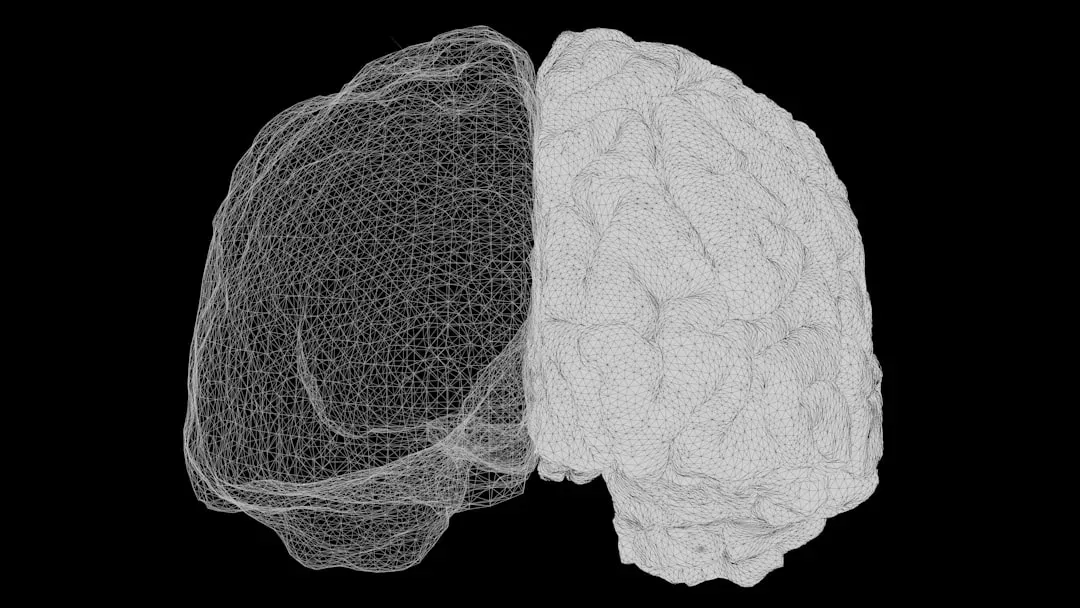
If there is one scientific concept that truly reframes how you think about super senses, neuroplasticity is it. The brain “rewires” itself in the absence of visual information to boost other senses. This is possible through the process of neuroplasticity, or the ability of our brains to naturally adapt to our experiences. It is less like a static organ and more like living, breathing circuitry that constantly renegotiates its own structure.
The extraordinary capacity of the brain to adapt, a phenomenon referred to as neuroplasticity, emerges as a key player in the development of super senses. This remarkable ability allows the neural pathways responsible for sensory perception to undergo restructuring in response to environmental stimuli and experiences. Research has shown that experimental studies demonstrate that cross-modal plasticity causally explains enhanced or “supra-normal” perceptual abilities that develop after sensory loss. Sensory loss induces adaptive neural changes in the remaining non-deprived senses, known as cross-modal plasticity. In other words, when you lose something, your brain quietly starts building something new.
Tactile Sensitivity and Hyperacusis: When Super Senses Become a Burden

Let’s be real – not every super sense feels like a gift. Those with extraordinary senses of touch are referred to as having “tactile sensitivity.” This is also often a bothersome super-sense because a person may feel everything from annoyance to pain in response to normal touch. Those on the autism spectrum are often affected this way. As with the rest of the senses, tactile sensitivity is more about how the brain processes tactile input than about the skin itself.
Similarly, sound hypersensitivity, called hyperacusis, makes standard sound frequencies and volume painful, turning a simple neighborhood walk into an acoustic nightmare. Some of the most common factors behind heightened senses include neurological disorders such as Autism Spectrum Disorder, Sensory Processing Disorder, and Traumatic Brain Injury, which can significantly alter sensory perception. Anxiety can also trigger the brain into a hyper-alert state, a biological survival response designed to detect potential danger. What looks like a superpower from the outside can feel deeply overwhelming from within.
Conclusion

What is genuinely stunning about all of this is not just that super senses exist – it is that science is still scrambling to catch up with them. History is littered with accounts of equally strange departures from what is commonly thought of as ordinary perception. For centuries such stories were considered unexplained curiosities, magical gifts or neurological anomalies. Only in the past few years have neuroscientists begun to suspect that we all may share some of the mechanisms underlying these conditions.
Your sensory world is not the same as the person sitting next to you. Not even close. Some people are tasting colors, hearing shapes, seeing a million shades of violet in what you call plain white, or navigating the world through the echo of their own voice. Science is beginning to understand how – but the why remains beautifully, stubbornly mysterious.
So here is something to sit with: if the average human brain is already this remarkable, what extraordinary senses might still be hiding, undetected, in the people around you – or even in yourself?