

Every once in a while, you meet someone who can recall tiny details you barely noticed: the exact color of a stranger’s jacket, a license plate from last week, or a page from a book they saw once, years ago. It feels almost supernatural, like their brain is secretly taking snapshots while the rest of us are fumbling for the mental equivalent of a blurry camera phone. This ability is often called “photographic memory,” and it has fascinated scientists, students, and frankly anyone who has ever forgotten where they put their keys.
The truth, though, is more complex and more interesting than the myth. What most people imagine when they hear “photographic memory” – a perfect mental photograph that never fades – probably doesn’t exist in the way movies suggest. But there are rare and striking forms of memory that come surprisingly close, and understanding them reveals a lot about how all of our brains work. Let’s dig into what’s real, what’s exaggerated, and what the science actually says about these unusually sharp memories.
Is Photographic Memory Even Real?

The first surprising twist is this: many researchers doubt that a true, flawless photographic memory exists at all. When scientists talk about “photographic memory,” they usually mean eidetic memory, which is the ability to vividly recall images for a short period of time, often just seconds to a few minutes, almost as if the picture is still in front of you. This kind of memory shows up most clearly in a small number of children who can describe an image in remarkable detail even after it’s removed, but it typically fades with age.
What popular culture portrays, however, goes way beyond eidetic memory. The idea that someone can glance at a page, store a perfect photo of it forever, and then “zoom in” on any small detail later, like using a mental camera, has never been convincingly demonstrated under strict scientific conditions. Instead, people with unusually strong memories often rely on a mix of excellent attention, powerful visual imagination, and trained strategies. In other words, what looks like pure magic from the outside is usually a very optimized version of mental tools we all already have.
Different Kinds of Extraordinary Memory

Not all impressive memories are the same, and “photographic” is often used as a lazy label for several very different abilities. One type is highly superior autobiographical memory, where people remember an enormous number of events from their own lives with incredible detail, like what they ate or what day of the week a random date fell on, stretching back decades. Another type is hyper-imagery or extreme visual imagination, where people can mentally picture scenes so vividly they border on hallucinations, which can make recall feel like looking at an internal photo.
Then there are memory champions, the folks who can memorize decks of cards, long strings of numbers, or entire lists of random words in minutes. At first glance, it’s easy to assume their brains are just wired with natural photographic powers. But when they’re tested, they tend to rely on sophisticated techniques: mental “palaces,” vivid stories, and emotional or unusual associations that glue information together. Their skills show that the gap between “ordinary” and “extraordinary” memory is sometimes less about what kind of brain you’re born with and more about how you use the one you’ve got.
How the Brain Stores Visual Information

To understand why some people seem almost photographic, it helps to look at how all of us handle visual information. The brain’s visual system doesn’t simply take a snapshot; it breaks a scene into elements like color, shape, motion, and edges, processing each in slightly different regions before stitching it all back together into what feels like a coherent picture. This processed image then passes into short-term memory, where it lingers briefly, and if it’s important or emotional enough, it can be consolidated into long-term memory.
In people with exceptional visual memory, this chain seems to run unusually efficiently. Regions involved in visual processing and memory, such as parts of the temporal and occipital lobes, often show stronger connectivity or greater activation when they’re recalling information. It’s as if their internal editing team is faster and more precise, keeping fine-grained detail that most brains would simply compress or discard. Rather than storing a literal photograph, they seem to preserve a richer, denser representation of what they saw, which can later feel, subjectively, like looking back at an image.
The Role of Attention, Emotion, and Meaning

One thing that often gets overlooked is that attention is the front door to memory. If your mind is wandering when you glance at something, your brain doesn’t bother investing energy to store it deeply. People who appear to have photographic memory are often hyper-focused in the moment, absorbing details because they’re fully present and tuned in, not half-distracted. In that sense, their memory is less like a camera and more like a spotlight that never flickers.
Emotion and meaning also act like glue. You probably don’t remember every cloud you’ve seen, but you might remember the sky on the day of a breakup or a big win, almost frame by frame. Some individuals automatically attach more emotional weight or personal relevance to what they see, which helps lock in details. When something feels important, the brain boosts chemical signals that strengthen the memory trace, making recall later feel almost shockingly clear, even if it’s not technically photographic.
Genes, Brain Differences, and Neurodiversity
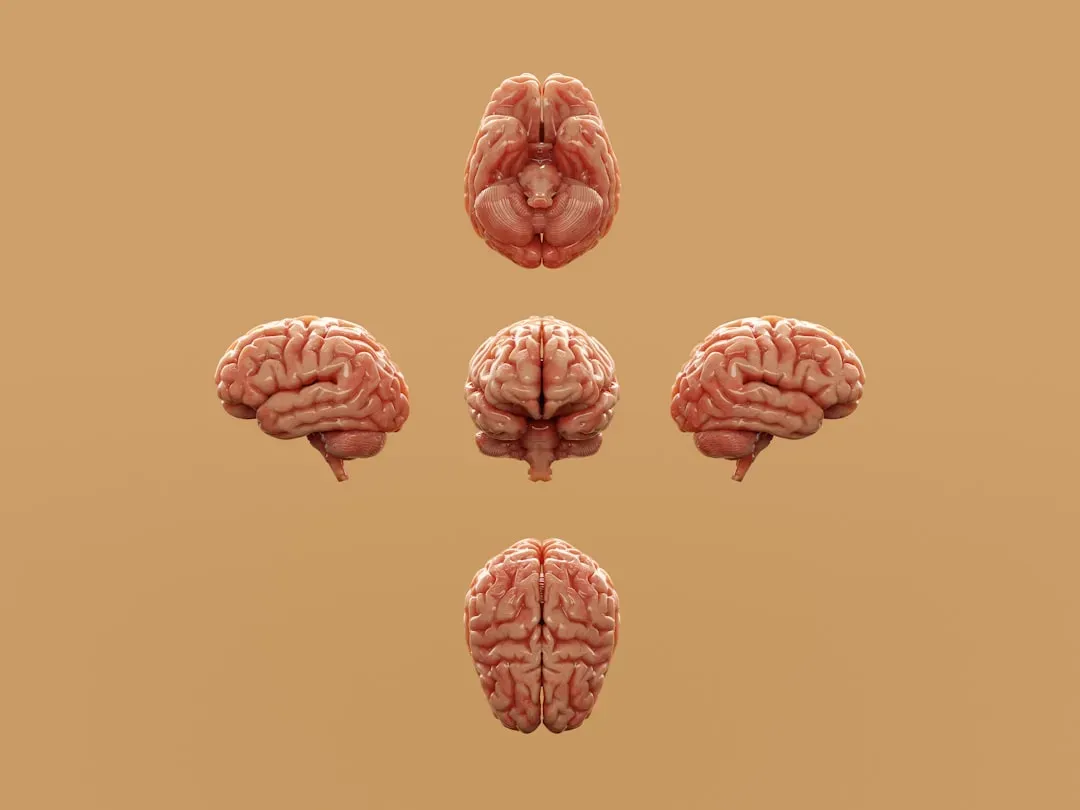
There’s growing evidence that genetics play a role in how strongly we can encode and retrieve memories, including visual ones. Certain gene variants influence how efficiently neurons communicate, how quickly connections strengthen, and how robustly the brain responds to new information. In people with standout memory abilities, scientists have sometimes found subtle structural differences in parts of the brain linked to memory and imagery, like a slightly larger or more active hippocampus and related networks.
Extraordinary memory also shows up in some forms of neurodiversity. For instance, some autistic individuals report powerful visual recall or intense attention to detail, noticing patterns and features others miss completely. This doesn’t mean all autistic people have photographic memory, or that photographic memory equals autism, but it does highlight that brains wired differently can sometimes process and store information in unusual, highly detailed ways. Rather than being a single “superpower,” photographic-like memory might be one extreme expression of the natural variation in how human brains are built.
Can You Train Yourself Toward Photographic Memory?

Here’s the hopeful part: while you probably can’t turn yourself into a flawless mental camera, you can dramatically upgrade your memory from where it is now. Memory experts don’t rely on magic; they use tools like the method of loci (a memory palace), vivid mental imagery, and linking information to wild, emotional stories. These approaches essentially hack the brain’s natural preferences, giving your mind something sticky, strange, or emotional to hold on to instead of bland, forgettable data.
Training also changes how you pay attention. Once you start deliberately visualizing and organizing what you want to remember, your awareness sharpens and you begin noticing details you’d normally skim past. Over time, this can make your recall so fast and rich that friends swear you must have a photographic memory, even if, technically, you don’t. The line between natural talent and practiced skill is blurrier than it looks from the outside, and many people dramatically underestimate how far systematic training can move that line.
The Myths, the Limits, and Why It Still Matters

Despite all the legends, human memory is not perfect, not even in the rare people who seem superhuman. Memories can be distorted, details can shift, and confidence does not always equal accuracy, even for those with extremely vivid recall. The idea of an error-free mental camera gives us a seductive story, but it doesn’t match how the brain actually works, which is more like a skilled painter than a digital sensor, reconstructing events rather than simply replaying them.
Still, studying people with unusual memory abilities has real value, because it shows us what the human mind is capable of under the right conditions. It pushes researchers to understand why some brains encode more detail, how emotion and attention shape our inner archives, and how training can stretch our own limits. In the end, the most important takeaway might not be whether photographic memory exists in a pure form, but that our everyday memories are far more flexible, adaptable, and improvable than we’ve been taught to believe.