
There is something uniquely unsettling about an experience you simply cannot explain. You wake in the dead of night, unable to move, a shadowy presence looming at the edge of your vision. Or you hear a sound no one else can detect. Or you stand at the edge of life itself and come back forever changed. These are not the stories of the gullible or the unstable. They are the accounts of ordinary people, across every culture, every century, and every walk of life.
Science is powerful, but there is much it cannot explain. When you see, hear, or believe something that lacks a conventional explanation, science finds itself in the awkward position of trying to prove things do not exist, and that is truly impossible. So what is really going on? The truth, it turns out, is far stranger and more fascinating than a simple “yes” or “no” answer. Let’s dive in.
The Staggering Scale of Unexplained Human Experience
Let’s be real for a moment. If you believe unexplained experiences only happen to a fringe few, the numbers will genuinely shock you. A survey conducted by researchers from Australia’s Monash University sought to determine the types of phenomena people claim to have experienced, and with over 2,000 respondents from around the world participating, the results revealed that roughly seven out of ten reported having an unexplained paranormal event that changed their life, mostly in a positive way.
About the same proportion also claimed to have seen, heard, or been touched by an animal or person they knew was not there, while roughly four in five reported having a premonition, and nearly half stated they recalled a previous life. Those are not the statistics of a niche quirk. They describe something deeply embedded in the human condition itself, something science still struggles to fully address.
Your Brain Is a Master Storyteller – And Sometimes It Lies to You
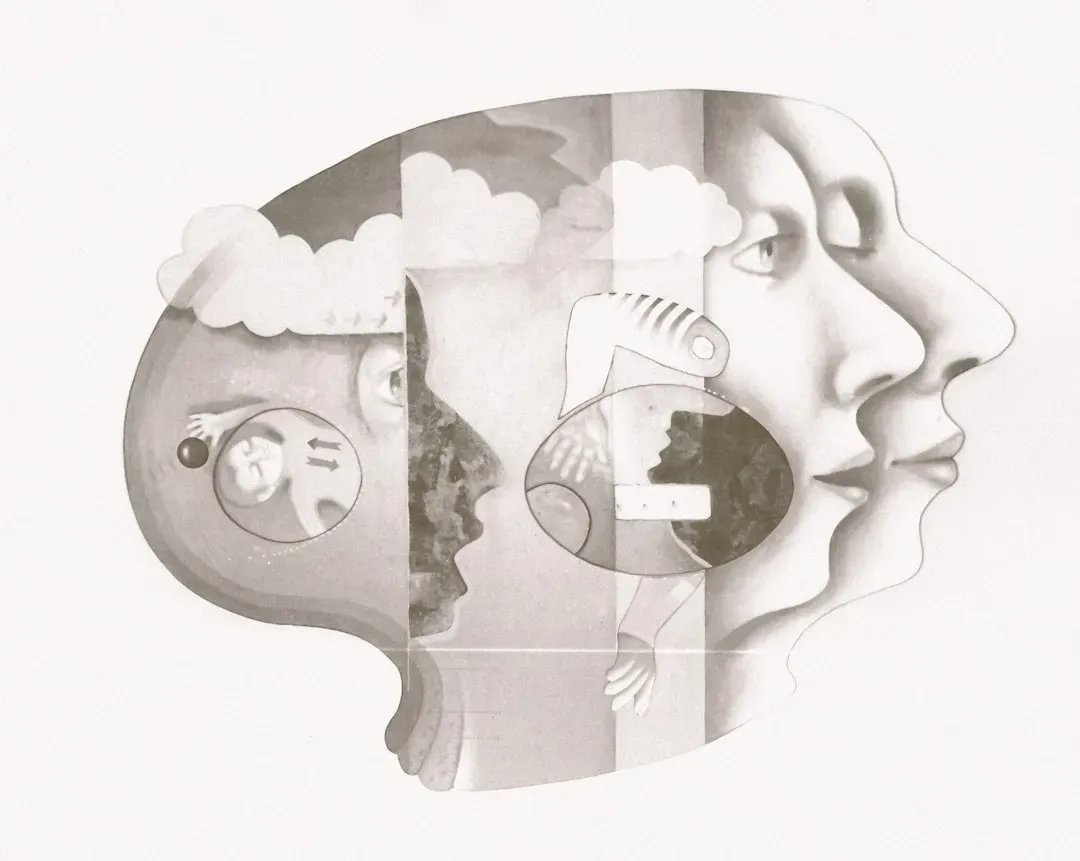
From the perspective of modern neuroscience, all behaviors and all experiences are created by the dynamic matrix of chemical and electromagnetic events within the human brain. Paranormal experiences might be considered a subset of these neurogenic processes. Think of the brain like an overeager novelist – it fills in every gap in the plot, even when the facts just are not there to support it.
The brain’s propensity to fill in gaps in sensory information and interpret ambiguous stimuli can lead to the perception of ghostly apparitions or unexplained phenomena. Pareidolia is a psychological phenomenon where the brain perceives familiar patterns or shapes in random stimuli. In the context of hauntings, pareidolia can lead individuals to interpret vague shadows or reflections as ghostly apparitions. You are not “crazy” for experiencing this. Your brain is, in a sense, just doing its job a little too enthusiastically.
Sleep Paralysis: The Ancient Terror with a Modern Explanation
Imagine waking up in the dark, completely unable to move, while a dark figure presses down on your chest. Terrifying? Absolutely. Supernatural? Probably not. Some scientists have proposed sleep paralysis as an explanation for reports of paranormal and spiritual phenomena such as ghosts, alien visits, demons or demonic possession, and even alien abduction experiences. Honestly, when you understand the mechanism, it becomes almost more disturbing than the ghost story itself.
Scientists link this phenomenon to disrupted REM sleep cycles. When the brain wakes before the body does, dream imagery can spill into waking consciousness. Imagined sounds such as humming, hissing, static, and buzzing are commonly reported, as are voices, whispers, and even screaming. People also feel intense pressure on the chest, and these symptoms are usually accompanied by intense emotions such as fear and panic. What your ancestors called a demon visit, neuroscience now calls a REM disruption. Same experience. Radically different interpretation.
Infrasound: The Sound You Cannot Hear but Absolutely Feel
Here is one of those facts that sounds almost too strange to be true. Just below the range of human hearing, infrasound can cause some strange sensations. Humans cannot hear sound below 20 hertz, but some people subconsciously respond to lower frequencies with feelings of fear or dread. So yes, a building can literally make you feel haunted, not through any supernatural force, but through invisible sound waves bouncing off the walls.
Investigating an eerie laboratory, engineer Vic Tandy traced a source of disturbance to a nearby fan emitting noise at a frequency of 19 Hz. When the fan was switched off, the noise ceased and the feelings of discomfort disappeared. Tandy concluded that these low-frequency vibrations caused symptoms like blurred vision, dizziness, and fear in humans. Infrasound can induce feelings of fear and dread by causing auditory hallucinations and sensory distortions, while low-frequency vibrations can trigger primal fear responses, increasing anxiety and physiological stress without conscious awareness. So the next time a place “gives you the creeps,” check for fans before calling a ghost hunter.
The Psychology of Who Believes – and Why It Matters

A research study by French scholars at the University of Toulouse found that belief in the paranormal is strongly correlated with a certain type of cognitive thinking. After experiencing a bizarre event, reflective thinkers are more likely to simply acknowledge they cannot explain it, while intuitive thinkers are much more likely to desire an explanation and thus attribute it to the supernatural. Neither type is wrong, exactly. They are just wired differently. I think that is a more honest and respectful way to look at it than simply calling one group “irrational.”
Some people are more likely to believe in paranormal phenomena based on their personalities and life experiences. Fantasy proneness is the propensity to believe in things without objective proof. Childhood trauma is a major predictor of fantasy proneness because trauma survivors are more likely to use the adaptive coping mechanism of dissociation. Research shows that people who believe in paranormal phenomena tend to score higher on measures of fantasy proneness than those who disbelieve. This is not a weakness. It is the human psyche doing its best to make meaning out of pain, which, if you stop and think about it, is actually remarkable.
Near-Death Experiences: The Phenomenon That Defies Every Easy Answer
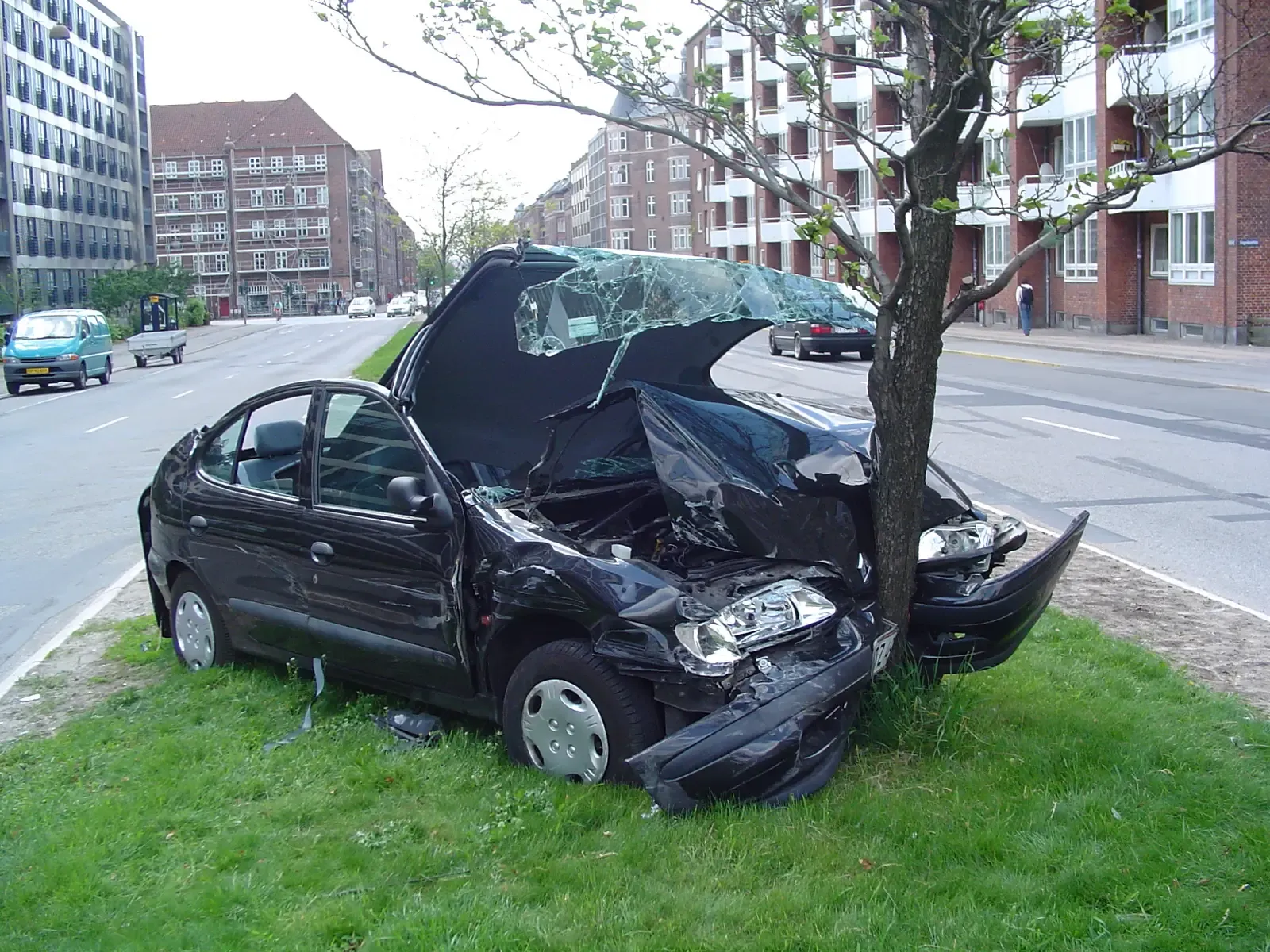
Of all the unexplained phenomena on this list, near-death experiences are the ones that most stubbornly resist a tidy scientific verdict. The near-death experience has been reported since antiquity and has an incidence of roughly ten to twenty percent in survivors of in-hospital cardiac arrest, and these experiences are associated with vivid phenomenology often described as “realer than real,” and can have a transformative effect. That last detail is what gets me every time. Not just vivid. Realer than real.
In 2024, researchers at the University of Michigan published groundbreaking findings from their analysis of brain recordings from four dying patients. The patients were on life support and their brain activity was recorded by electroencephalogram (EEG), and the team made the remarkable observation that two of the patients exhibited a surge of brain activity shortly after their relatives had agreed to the removal of life support. Previously, this kind of end-of-life surge in brain activity had only been witnessed in studies with rats, but here was the first evidence that it might occur in humans too. These are exciting developments, but many experts involved in NDEs are not persuaded by purely neurobiological explanations. The debate, it seems, is far from over.
The Mysteries That Science Genuinely Cannot Yet Explain
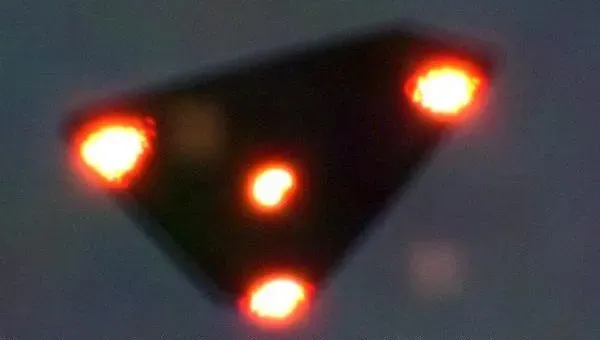
It would be too simple to chalk everything up to psychology and leave it there. Some phenomena are stubbornly, genuinely unexplained even in 2026. For decades, residents of Taos, New Mexico, have reported hearing a persistent low-frequency humming sound. It is not audible to everyone, and those who hear it describe it as a low drone that cannot be located or recorded easily. Scientists have investigated everything from electrical infrastructure to geological factors, but no source has ever been conclusively identified.
Ball lightning is a rare and poorly understood atmospheric phenomenon, characterized by the appearance of glowing spherical objects that can vary in size and color. Although numerous theories have been proposed, including electrical discharges, plasma, and even quantum phenomena, no consensus has been reached among scientists. The unpredictable and transient nature of ball lightning makes it a challenging subject for study, leaving its true nature shrouded in mystery. The nature of consciousness itself, what it is, how it arises, and why it exists, remains one of the most profound unsolved mysteries in modern science. Despite advances in neuroscience and cognitive psychology, the question of how subjective experiences emerge from the complex interactions of neurons in the brain remains unanswered. Researchers continue to grapple with the so-called “hard problem” of consciousness, searching for a comprehensive scientific explanation for this enigmatic phenomenon. When science cannot even explain how you become “you,” it is hard to dismiss everything else as mere illusion.
Conclusion: The Space Between Knowing and Not Knowing

The honest truth is that the line between the explainable and the inexplicable is blurrier than most of us are comfortable admitting. Psychology, neuroscience, and environmental science can account for many unexplained experiences. Sleep paralysis explains demonic visions. Infrasound creates hauntings out of thin air. Cognitive bias shapes what you believe you saw. These are real, verified, and genuinely fascinating explanations that deserve more credit than they usually get.
Yet there remains a stubborn residue of experience that does not fit cleanly into any box. Near-death experiences that defy oxygen-depletion models. Consciousness itself, still unexplained after all this time. Phenomena like ball lightning and the Taos Hum that science has yet to fully decode. These phenomena remind us that science is a constantly evolving process, and that curiosity often leads to more questions than answers. While we may not fully understand these mysteries yet, each one is an invitation to keep exploring, observing, and wondering.
Maybe the most radical thing you can do is hold both truths at once: trust science, and remain genuinely curious about what it has not yet explained. What unexplained experience have you had that you still cannot account for? Share your thoughts in the comments.