The Surprising Scale of Cosmic Voids (Image Credits: Pexels)
Vast cosmic voids stretch across the universe, regions so sparse they challenge perceptions of emptiness while harboring the subtle force accelerating cosmic growth.
The Surprising Scale of Cosmic Voids
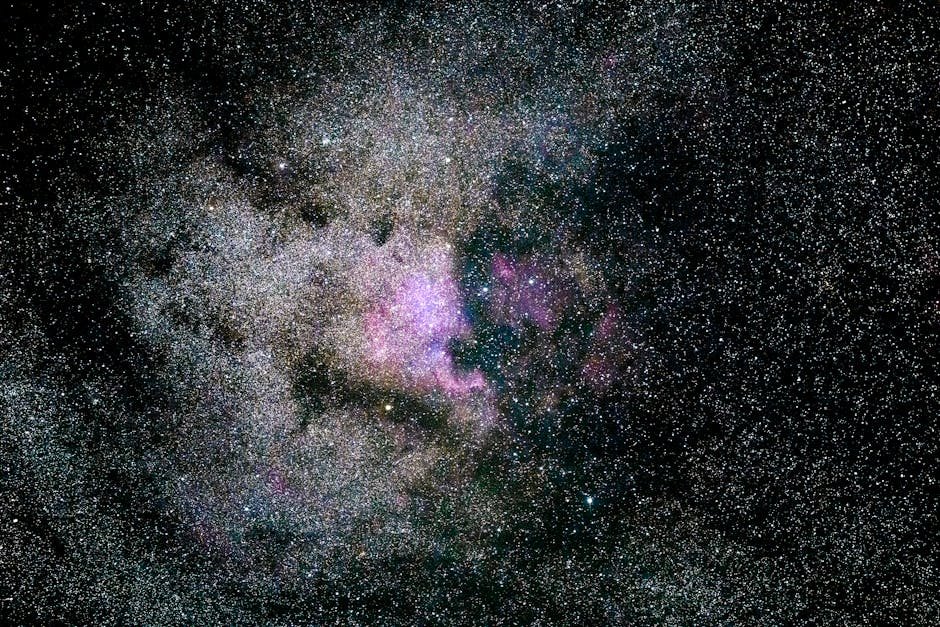
These enormous spaces claim the majority of the observable universe’s volume, spanning tens to hundreds of millions of light-years.[1])[2] Astronomers first identified them through large-scale galaxy surveys, revealing a cosmic web where filaments of galaxies enclose these underdense bubbles. The Boötes Void stands as one prominent example, measuring roughly 330 million light-years across.[1])
Formed from primordial density fluctuations after the Big Bang, voids grew as gravity pulled matter into denser filaments, leaving behind these expansive gaps. Even in their depths, matter density exceeds 15% of the cosmic average, though galaxies remain scarce. Dark matter persists in trace amounts, but overall, voids represent the universe’s most dilute zones.[1])
Vacuum Energy Pervades the Emptiness
Quantum field theory reveals that no region of space achieves true vacuum; fundamental fields permeate everywhere, even voids stripped of ordinary matter, radiation, and most dark matter.[3] These fields carry vacuum energy, arising from constant particle-antiparticle fluctuations dictated by the Heisenberg uncertainty principle. Theoretical predictions for this energy vary dramatically, yet observations confirm its presence as the driver of cosmic acceleration.
In dense galaxy clusters, gravity overwhelms this energy, but voids offer a different story. Here, scant matter allows vacuum energy to assert itself fully, manifesting as dark energy with negative pressure that pushes space outward.[4]
Dark Energy’s Dominance Shapes Expansion
Dark energy constitutes about 68% to 70% of the universe’s energy content, propelling expansion since roughly nine billion years post-Big Bang.[4] Within voids, its influence peaks, causing these regions to expand faster than surrounding structures. This differential growth exerts pressure on the cosmic web, gradually eroding filaments over billions of years.[3]
Scientists measure this through galaxy distributions and supernova light curves, confirming acceleration predominantly unfolds in voids where gravity resists least. Some models, like the timescape cosmology, propose voids alone mimic acceleration without invoking dark energy, though standard views affirm its role.[5]
- Voids span 30 to 300 million light-years in diameter.
- They hold over half the universe’s volume.
- Expansion rates exceed those of galaxy filaments.
- Quantum vacuum energy remains constant across space.
- Dark energy drives 68-70% of cosmic content.
Voids as Windows into Cosmic Puzzles
Astronomers leverage voids to test dark energy properties and resolve tensions like the Hubble discrepancy, where local expansion measures clash with distant ones. Nearby underdensities, such as the proposed KBC void encompassing our galaxy, may bias observations, suggesting we inhabit a slightly emptier patch.[6][2] Upcoming missions like NASA’s Roman Space Telescope will catalog thousands more voids, refining models of structure evolution.
These observations could clarify if dark energy evolves or remains constant, probing quantum origins and the universe’s fate.
Key Takeaways
- Cosmic voids highlight dark energy’s unchecked power in matter-poor regions.
- Vacuum fluctuations ensure no space is truly empty.
- Future surveys will sharpen tests of expansion models.
Cosmic voids underscore a profound truth: the universe’s greatest expanses propel its destiny through invisible energies. As voids swell, they reshape our cosmic neighborhood – what role do you see them playing in unraveling these mysteries? Share your thoughts in the comments.