
What if everything we believe about consciousness is backwards? What if the very awareness that allows us to ponder these questions existed long before the first neurons fired, before the first cell divided, perhaps even before the universe took its current shape? It sounds like something out of science fiction, honestly. Yet a growing number of physicists, philosophers and neuroscientists are seriously entertaining the possibility that consciousness might not be a fortunate accident of evolution but rather something woven into the fabric of reality itself.
This radical shift challenges centuries of scientific thinking. We’re so accustomed to the idea that brains create consciousness that the reverse seems absurd. Let’s be real, though. Despite decades of research, we still can’t explain how neurons and synapses produce the vivid subjective experience of being you. Maybe it’s time to consider that we’ve been looking at the problem from the wrong end.
The Hard Problem That Won’t Go Away
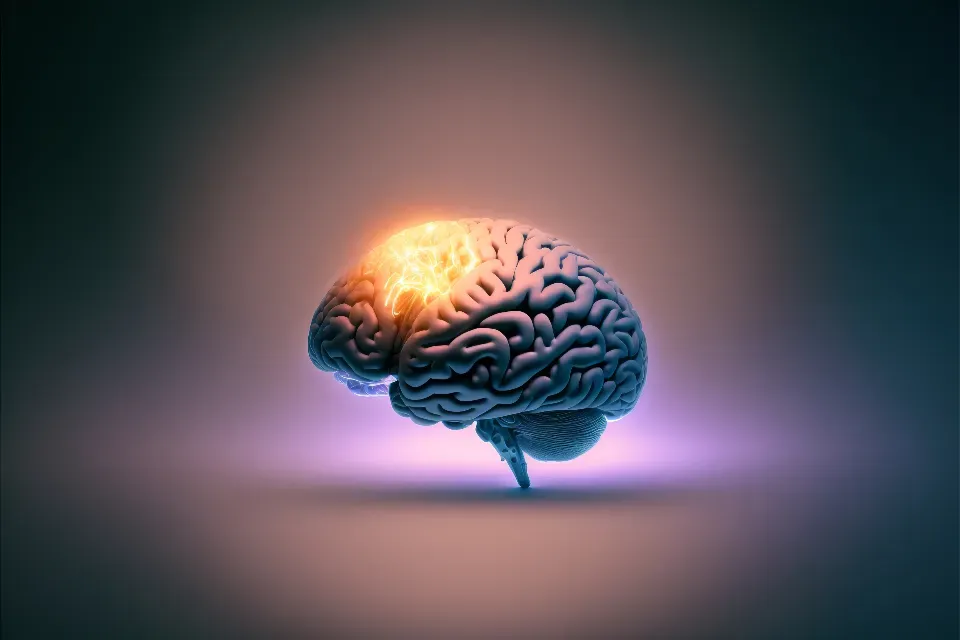
Philosopher David Chalmers dubbed the mystery of how physical processes create subjective experience the “hard problem” of consciousness. Here’s the thing: no amount of brain scanning or neural mapping gets us closer to answering why the electrochemical signals in your brain feel like something from the inside. We can trace every pathway, measure every neuron, but the gap between objective physical processes and subjective felt experience remains stubbornly unbridged.
Scientists understand correlations quite well. We know which brain regions light up during different experiences. Neuroscientists use empirical approaches to discover neural changes which necessarily and regularly correlate with specific experiences. Yet correlation isn’t causation. The deeper mystery persists: why should any physical system give rise to the felt quality of redness, the taste of coffee, or the ache of loneliness?
When Ancient Philosophy Meets Modern Physics
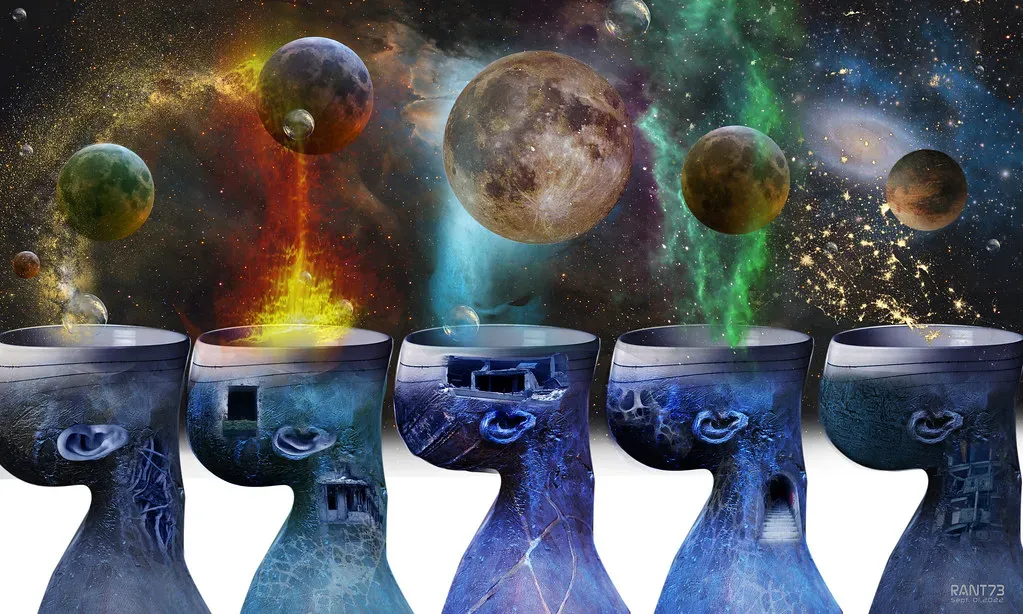
Panpsychism is an ancient concept in Western philosophy, predating even the earliest writings of the pre-Socratics, and was in fact an essential part of the cosmology into which philosophy was born. The view has had illustrious supporters throughout history. William James was a panpsychist, as was the celebrated mathematician Alfred North Whitehead; Nobel Prize-winning physicist Max Planck once remarked in an interview that he regarded consciousness as fundamental.
In the nineteenth century, panpsychism was the default philosophy of mind in Western thought, but it saw a decline in the mid-twentieth century with the rise of logical positivism. Then something interesting happened. As neuroscience hit explanatory walls and quantum physics revealed a stranger universe than anyone imagined, serious thinkers started reconsidering these old ideas. Philosopher Philip Goff wrote that panpsychism used to be laughed at but now we are in the midst of a “full-blown panpsychist renaissance,” spurred by scientific breakthroughs and the way panpsychism is able to bypass the hard problem of consciousness.
Consciousness as Fundamental Field
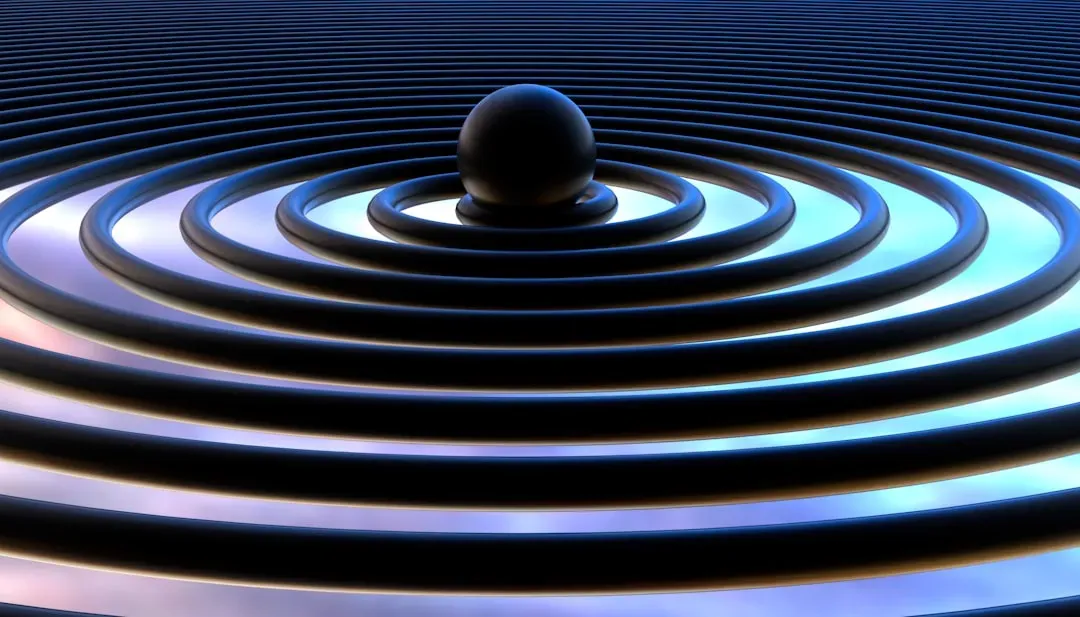
Recent theoretical work proposes consciousness as fundamental, with time, space and matter arising thereafter, presented by materials science professor Maria Strømme at Uppsala University in AIP Advances. This isn’t mysticism dressed in lab coats. The mathematics borrows from quantum field theory, treating consciousness like physicists treat electromagnetic fields.
Strømme treats consciousness itself as a fundamental field where particles look like ripples or excitations in invisible fields, with this consciousness field meant to be present everywhere, all the time. It’s hard to say for sure, but this approach might reconcile quantum mechanics with our everyday experience better than traditional models. The framework aligns with emerging theories in quantum gravity, information theory, and cosmology that posit classical spacetime as emergent from a deeper pre-spatiotemporal order.
Think about it: we accept that electromagnetic fields permeate all space. Why is a consciousness field harder to swallow?
Quantum Mechanics and the Conscious Observer
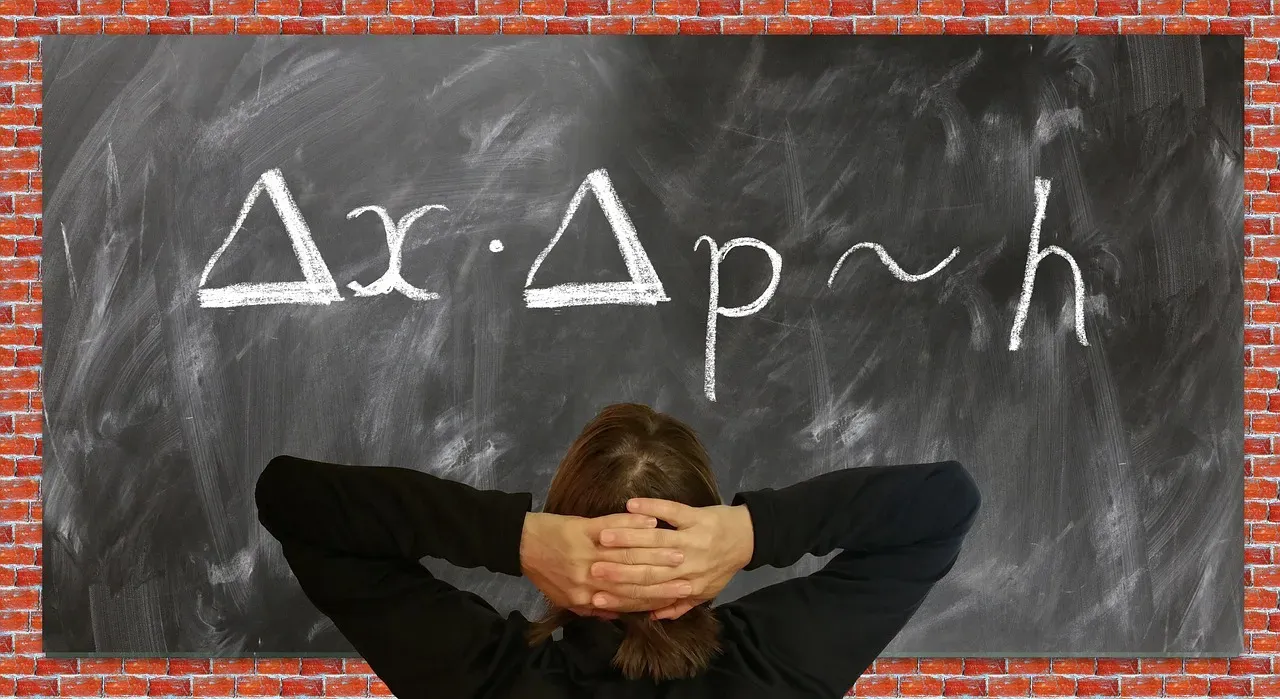
The Orchestrated Objective Reduction theory postulates that consciousness originates at the quantum level inside neurons through a quantum process orchestrated by cellular structures called microtubules, proposed by physicist Roger Penrose and anesthesiologist Stuart Hameroff. Critics initially dismissed the idea that quantum processes could survive in the warm, wet environment of the brain.
Recent evidence changed the conversation. The discovery of quantum vibrations in microtubules inside brain neurons corroborates the theory, with research led by Anirban Bandyopadhyay suggesting that EEG rhythms also derive from deeper level microtubule vibrations. Experimental evidence shows functionally relevant quantum effects occur in microtubules at room temperature, and direct physical evidence exists of a macroscopic quantum entangled state in the living human brain correlated with conscious state and working memory.
What makes this fascinating is the connection to fundamental physics. The theory suggests a connection between the brain’s biomolecular processes and the basic structure of the universe.
The Integrated Information Revolution
Integrated Information Theory, initially proposed by Giulio Tononi in 2004, claims that consciousness is identical to a certain kind of information which can be measured mathematically according to the phi metric. What’s provocative is what the math implies. The theory postulates that consciousness is widespread and can be found even in some simple systems.
According to the theory, even particles may have some phi value above zero and enjoy some very basic form of subjective experience, with the idea that even simple matter has some degree of consciousness known as panpsychism. Simple systems might possess vanishingly small amounts of consciousness compared to human brains. For the panpsychist, consciousness fades as organic complexity reduces but never switches off entirely, extending into inorganic matter with fundamental physical entities like electrons and quarks possessing extremely rudimentary forms of consciousness.
Why Biology Might Not Be the Birthplace
Physical science is confined to telling us about the behavior of matter and tells us absolutely nothing about what philosophers call the intrinsic nature of matter, what matter is in and of itself. We know particles have mass and charge, defined entirely by how they behave. For the panpsychist, consciousness is the intrinsic nature of matter, constituted of forms of consciousness from the inside.
This flips conventional wisdom on its head. Rather than consciousness emerging after billions of years of evolution, creating increasingly complex nervous systems, maybe evolution discovered ways to organize and amplify something that was already there. Life didn’t create consciousness; it concentrated it, channeled it, gave it structure and purpose. Human beings are nothing more than complex arrangements of components already present in basic matter.
Implications That Change Everything
If consciousness predates life, the implications ripple outward in every direction. The theory suggests individual consciousnesses are parts of a larger interconnected field, with phenomena like telepathy or near-death experiences potentially natural consequences of a shared field of consciousness. Before you dismiss that as pseudoscience, remember that quantum entanglement once seemed equally bizarre.
The theory suggests that individual consciousness does not cease at death but returns to the universal field of consciousness from which it once emerged, formulated in quantum-mechanical terms. This isn’t about proving an afterlife in religious terms. It’s about questioning the assumption that consciousness is strictly localized to individual brains during their brief biological operation.
Consciousness might be less a rare jewel than a basic note in the cosmic score, with the challenge being to understand how nature composes simple tones into the symphony we call waking life. We’ve only just begun exploring these possibilities. Whether this radical rethinking proves correct or opens paths to something even stranger, one thing seems certain: the mystery of consciousness runs deeper than neurons and synapses. Maybe it runs as deep as existence itself. What do you think about the possibility that your awareness was woven into the universe from the very beginning?