

There’s a quiet rebellion happening in science and philosophy: awareness keeps slipping through the fingers of every neat, brain-based explanation we throw at it. We can scan brains, map circuits, and track chemicals, yet that raw feeling of “I am here, experiencing this” refuses to sit still like a lab specimen. It’s as if we keep taking apart the radio, hoping to find the song inside, only to realize we’re still missing the one thing that matters most: the music itself.
I remember staring at an fMRI image for the first time and feeling oddly disappointed. There were glowing blobs, beautiful colors, lines of data… but no trace of the warmth of a sunset, the sting of heartbreak, or the weird intimacy of hearing your own inner voice. The more we learn about neurons, the more obvious it becomes that awareness isn’t just another brain function we can tick off on a checklist. Something about it feels too immediate, too first-person, to be captured only by third-person measurements.
The Hard Problem: Why Experience Feels So Mysterious
Here’s the unsettling question at the center of everything: how does electrochemical activity in your brain turn into the taste of coffee, the color red, or the feeling of dread before a big decision? We can describe the brain’s wiring in obsessive detail and still have no satisfying answer to why any of it is accompanied by experience instead of being a dark, silent machine. This gap between physical processes and lived experience is often called the “hard problem” of consciousness, and it keeps haunting people who thought neurons would explain everything.
Think about a weather system: we can model storms, pressure, and temperature without needing to worry about how it feels to be a thundercloud, because there is no such feeling. But with human beings, there is an inside – the shimmering, messy world of moods, images, memories, and awareness. That gap between what can be seen from the outside and what is felt from the inside doesn’t shrink just because we can put someone into a scanner. If anything, the better we get at the physical description, the more brutally obvious the missing piece becomes.
The Explanatory Gap: Third-Person Data vs. First-Person Life
Neuroscience is brilliant at third-person observations: this region lights up, that signal travels, this neurotransmitter spikes under stress. But awareness itself is a first-person reality – you don’t observe it from the outside, you live it from the inside. No matter how detailed the brain map, it doesn’t feel like waking up from a dream, or recognizing your reflection, or realizing you’ve fallen in love. That difference between descriptions and experiences is sometimes called the “explanatory gap,” and it stubbornly refuses to close.
Imagine describing a song only by listing the frequencies and amplitudes of sound waves. Technically you’d be right, but you’d leave out rhythm, meaning, emotion, and that weird way a song can transport you back ten years in an instant. Brain data can be like that list of frequencies: correct, powerful, and yet emotionally and subjectively hollow. Awareness is where the song is actually heard. That’s why many people feel that any purely neural explanation is always going to sound like a map of a place where no one lives.
Qualia: The Private Colors of Inner Life

Awareness isn’t just being awake; it’s full of what philosophers call “qualia” – the raw feels of life. The blueness of the sky, the particular burn of embarrassment, the taste of mint versus chocolate – these are not just data points, they’re private textures of consciousness. You can measure wavelengths of light hitting the eye, or neural firing patterns in the visual cortex, but none of that fully captures what blue actually looks like from the inside for you right now.
Neurons explain how signals travel, how systems integrate information, how patterns form and stabilize. They don’t obviously explain why those patterns are lit up by an inner glow of presence instead of being mere mechanical events. If someone had a brain physically identical to yours but reported no inner experience at all, we’d be horrified – but scientifically, our tools would have a hard time distinguishing that scenario from yours. Awareness feels like a hidden layer that all the wiring diagrams hint at but never quite reach.
The Limits of Brain Scans and Reductionism
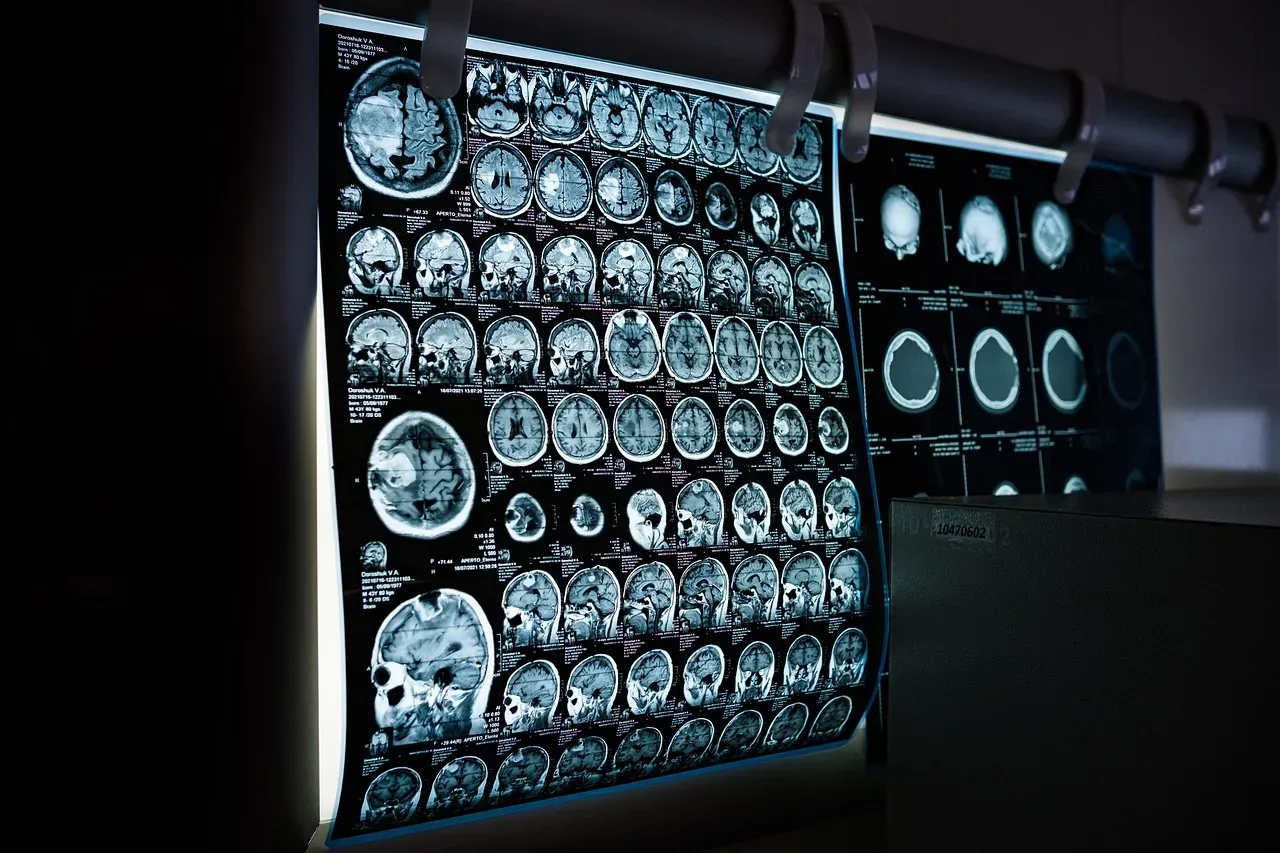
Brain scans have become our modern stained-glass windows: glowing, colorful, and almost sacred in how people treat them as proof of what’s “really going on.” They can show correlations between patterns of activity and conscious states, like pain, visual perception, or decision-making. But correlation is not the same as identity. Seeing a region light up when you feel fear doesn’t mean the red blob on the screen is the fear itself; at best, it’s a footprint, not the creature.
Reductionism – the idea that everything can be explained by breaking it down into smaller parts – works beautifully in chemistry and physics, but awareness keeps wriggling away. You can dismantle a brain into billions of neurons and trillions of synapses and still not find a single atom of “being aware.” At some point, the claim that awareness is “nothing but neurons firing” starts to sound more like faith than explanation. It’s like saying a novel is nothing but ink marks on paper: technically true, but practically missing the entire point.
Emergence, Systems, and the Possibility of Something More
Some researchers argue that awareness might be an emergent property: something that appears when a system is complex and integrated enough, even though none of its parts have it alone. A single neuron isn’t aware, but a massively interconnected web of them, looping signals and integrating information, might give rise to awareness in the same way that wetness arises from H₂O molecules. This idea has a certain elegance, but it still leaves the haunting question: why would complexity ever produce felt experience instead of just more complicated behavior?
Other perspectives lean into the possibility that awareness is more fundamental than we’ve assumed, more like space or time than like digestion or respiration. On this view, neurons are not factories that manufacture consciousness out of dead matter, but filters, shapers, or channels of something already woven into reality. Personally, I find this less absurd than the idea that one day we’ll just “discover” how sodium and potassium bouncing across membranes spontaneously turn into the memory of your first kiss. It may be that our current scientific language simply isn’t built to talk clearly about what awareness really is.
Why This Matters for How We Live and See Ourselves
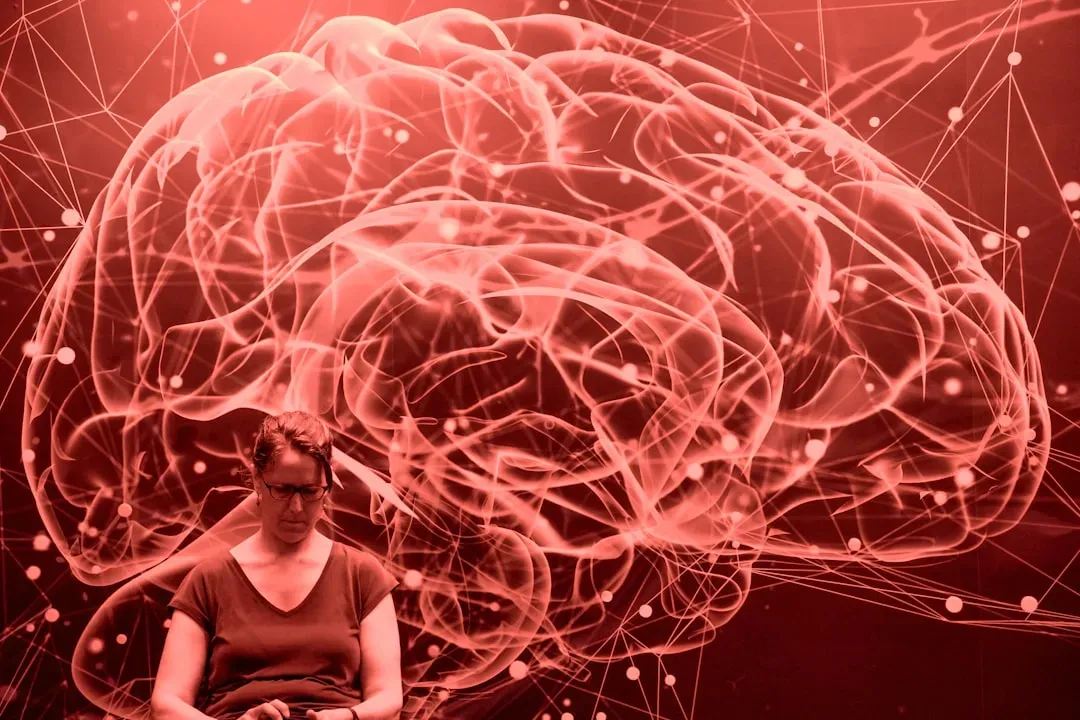
This whole debate isn’t just abstract philosophy for late-night arguments; it quietly shapes how we treat ourselves and each other. If awareness is “nothing but neurons,” it’s tempting to see people as glorified biological machines whose mysteries will all eventually be flattened into charts and models. That can erode our sense of dignity, depth, and responsibility, as if our choices are just side effects of biochemistry playing itself out with no real “someone” in there. A strictly reductionist view can feel oddly cold, like being told your entire life is only a glitchy animation on a very complicated screen.
On the other hand, recognizing that awareness resists being fully leaves space for wonder, respect, and humility. It reminds us that each conscious being is not just a body but also a universe of experiences we can never completely access from the outside. For me, that shifts how I listen, how I argue, and how I forgive; it’s harder to dismiss people when you remember there’s a mysterious light of awareness behind their eyes, just like there is behind yours. In a world obsessed with metrics and brain hacks, that might be the most grounding insight we have.