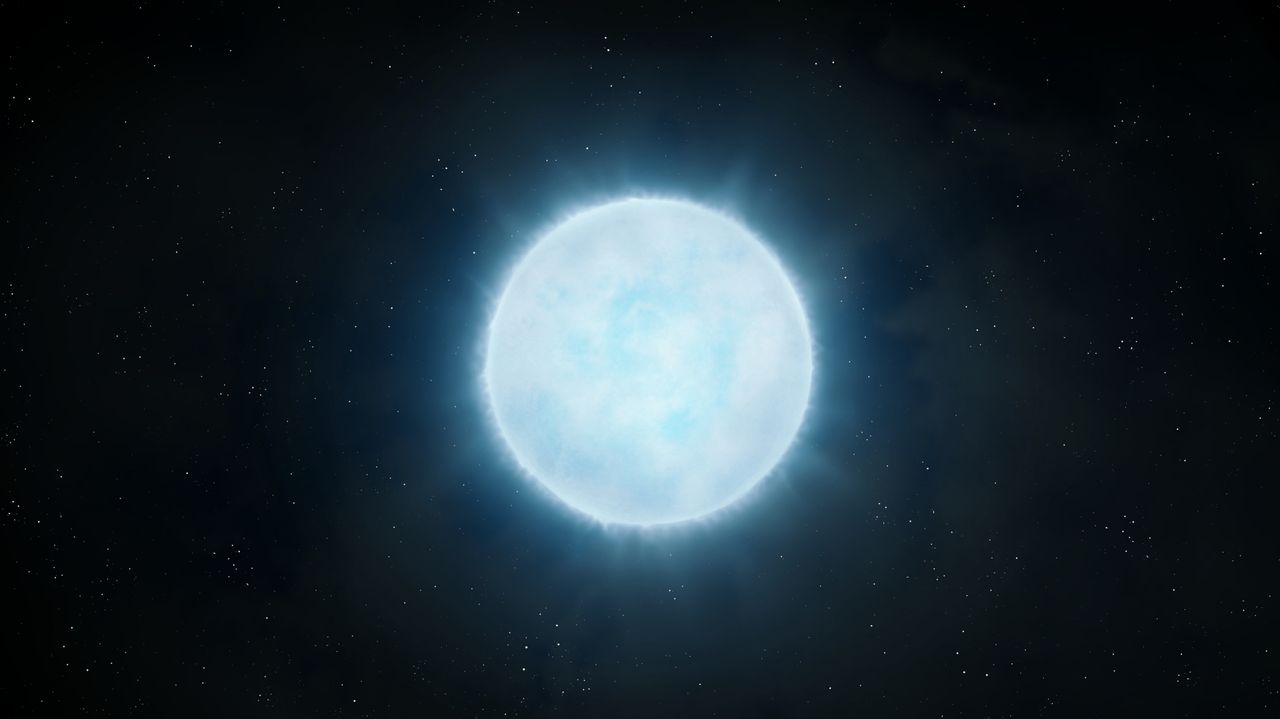
The Elusive Nature of Axions (Image Credits: Cdn.mos.cms.futurecdn.net)
Astronomers have long puzzled over the invisible matter that shapes galaxies, and recent studies of ancient stellar remnants offer fresh insights into one leading suspect: the axion.
The Elusive Nature of Axions
White dwarfs, the compact cores left behind when sun-like stars exhaust their fuel, provide a unique testing ground for dark matter theories. These objects, often billions of years old, cool slowly over time as they radiate away their residual heat. Researchers have turned to this gradual dimming process to probe hypothetical particles that might compose the universe’s missing mass.
Axions emerged as a candidate decades ago, initially proposed to resolve a puzzle in particle physics known as the strong CP problem. Unlike ordinary matter, axions interact extremely weakly with other particles, making them ideal for evading direct detection on Earth. In the dense interiors of white dwarfs, however, their subtle effects could become measurable through accelerated cooling.
White Dwarfs as Cosmic Laboratories
Imagine a star’s corpse, packed with the mass of the sun into a sphere the size of Earth. White dwarfs rely on electron degeneracy pressure to resist collapse, and their evolution follows predictable patterns based on standard stellar models. Any deviation in cooling rates could signal exotic physics at play.
Scientists analyzed data from the Hubble Space Telescope, which captured the luminosities and temperatures of thousands of these remnants. The study focused on how quickly axions, if they exist, would drain energy from the stars’ cores. In models incorporating axions, white dwarfs cool faster than expected, potentially shortening their observable lifetimes.
This approach builds on earlier simulations that predicted axions would convert into photons inside the hot, dense plasma of a white dwarf, carrying away heat more efficiently than neutrinos alone.
Refining the Search with Old Data
A team revisited archival observations to map the white dwarf luminosity function – a distribution of brightness levels that reveals the age and cooling history of stellar populations. By comparing these observations to theoretical predictions, they narrowed the possible mass range for axions.
The analysis suggested that axions lighter than about 10 micro-electronvolts would cause noticeable discrepancies in the observed cooling curves. Heavier candidates, however, align more closely with the data, keeping axions viable as dark matter without contradicting stellar evolution.
These findings complement ground-based experiments like the Axion Dark Matter eXperiment (ADMX), which seek axions through microwave signals. Together, they form a multi-pronged assault on the dark matter enigma.
Implications for Cosmic Mysteries
Beyond white dwarfs, axions could influence other astrophysical phenomena, from the formation of the first stars to the behavior of neutron stars. If confirmed, they would bridge gaps between quantum field theory and cosmology, explaining why galaxies rotate as they do despite the scant visible matter.
Current limits from white dwarf studies exclude certain parameter spaces previously open to axions, guiding future telescope observations. Instruments like the James Webb Space Telescope may soon provide even deeper looks at distant white dwarfs, refining these constraints further.
- Axions interact primarily via the Primakoff effect, converting to photons in magnetic fields.
- White dwarfs outnumber other stellar types in the Milky Way, offering a vast sample for statistical analysis.
- Cooling models must account for both standard processes like neutrino emission and potential new physics.
- Discrepancies in luminosity functions could also hint at modified gravity, though axions fit the data more elegantly.
- Future surveys, such as those from the Vera C. Rubin Observatory, will expand the dataset dramatically.
Key Takeaways
- White dwarfs’ cooling rates set tight bounds on axion masses, supporting their role in dark matter.
- Hubble data from decades ago now informs cutting-edge particle searches.
- Axions remain a frontrunner, blending solutions to multiple unsolved problems in physics.
As astronomers continue to decode the whispers of dying stars, the quest for dark matter edges closer to revelation. These celestial fossils remind us that the universe’s greatest secrets often hide in plain sight. What do you think – could axions finally crack the dark matter code? Share your thoughts in the comments.